Posts Tagged ‘FCC’
 Show Notes #083
 June 2nd, 2012 |
  Author:
 Introduction:
- Back from Dayton and ready to go.
Topics:
- Dayton Hamvention 2012
- LHS had the same booth as last year at North Hall #131. Estimated attendance was 25,000 individuals. Russ recounts the experience. Thanks to Matt, KC8BEW, who stopped by and helped out at the booth. The LowSWR podcasters stopped by, too.
- FCC Dismisses Texas Ham’s Fourth Petition, Calls it “Repetitive”
- Our hosts discuss.
- Contest logging for Linux.
- Several people at Hamvention asked about contest logging software for Linux, but Russ was at a loss for a recommendation. Upon his return, he discovered…
- SO2SDR Contest Logging Software
- Stefano, IZ3NVR/KD2BGM was trying to get so2sdr to work under Linux Mint and while it would compile, it did not run, so Russ set about trying to get it going.
- It’s not packaged for Debian or Fedora, so it must be built from source, available at the link above.
- The program is written in Qt, so it can be run on devices which support that environment, including Linux and Windows. Of course, Qt must be installed in order to compile so2sdr.
- Russ also had to install the following packages on his Linux Mint machine: portaudio19-dev (NOT libportaudio-dev; apparently, libportaudio-dev is too old), fftw3 and fftw3-dev
- The compilation procedure consists of:
qmake make sudo make install - so2sdr compiled and ran fine. It did complain that it wanted a parallel port for switching between radios, but you can ignore that if you don’t need to do that.
- Russ gives an overview of the features and capabilities.
- There are a few drawbacks:
- An apparent lack of SSB support? It seems to be CW-only.
- Frequency input checking is broken.
- Keystrokes are not intuitive, but are well-documented.
- However, the built-in help file is quite useful.
Feedback:
- E-mail from Larry, KG4Q, extolling fldigi and JT65-HF. He wishes there was a version of JT65-HF for Linux. Well, Larry, there is! You can download the source here. Also, WSJT does JT65, too.
- Chris, K4FH, caught up with Russ at Hamvention and talked about his Linux in the Ham Shack presentation. He managed to put together a fine bunch of slides completely without our help. Sorry, Chris!
Contact Info:
- Contact Richard at [email protected], Russ at [email protected], or both at the same time at [email protected].
- Listen to the live stream every other Tuesday at 8:00pm Central time. Check the LHS web site for dates.
- Leave us a voice mail at 1-909-LHS-SHOW (1-909-547-7469), or record an introduction to the podcast.
- Sign up for the LHS mailing list.
- Sign up for the MAGNetcon mailing list.
- LHS merchandise is available at the Merch link on Web site. Check out the Badgerwear or buy one of the other LHS-branded items at PrintFection.com/lhs or Cafe Press. Thanks!
- Thanks to Dave from Gamma Leonis for the theme music.
Music:
- “Down Today” by Jonathan Coulton from the album “Artificial Heart”.
- “Sucker Punch” by Jonathan Coulton from the album “Artificial Heart”.
LHS Episode #083: Smokey & The First Lady
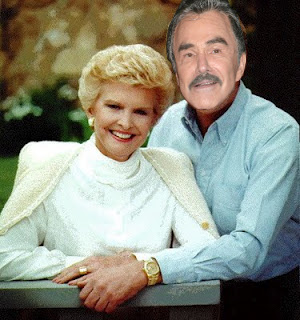 Welcome to the 83rdest episode of Linux in the Ham Shack. Freshly back from the Dayton Hamvention, Russ jumps in by telling everyone his experience at the show this year. The short version: It was great! From there, things move on to a question of FCC rules, at least in the mind of one ham.
One of the topics that kept repeating at Hamvention was: What is a good contest logger for Linux? Up until recently, it was hard to think of one. The ncurses-based application yfktest is out there, but thanks to IZ3NVR, our hosts discuss a new option. Tune in to find out what. There’s also some feedback, occasional rambling and hardcore lunacy. Everything you’ve come to expect from an episode of LHS.
73 de The LHS Guys
My Comments on FCC Proceeding 12-91
 At the direction of Congress, the FCC opened up Proceeding 12-91: COMMISSION SEEKS COMMENT ON EMERGENCY COMMUNICATIONS BY AMATEUR RADIO AND IMPEDIMENTS TO AMATEUR RADIO COMMUNICATIONS.
I decided to file my comments with the Commission, which can be read in full here. I’ll also provide the short version here:
1. The contributions of amateur radio operators during disasters and emergencies is substantial and well documented.
2. The key attributes that make the Amateur Radio Service so valuable in an emergency or disaster situation include the large number of trained operators available, the tendency for many amateur radio operators to prepare their stations for emergency operating conditions, the high degree of flexibility due to the wide range of spectrum and emission types available, and the ability of amateur radio operators to adapt to adverse operating conditions,
3. Restrictions from homeowners associations banning all external antennas is a serious and pervasive impediment to amateur radio emergency communications.
4. Limitations on emission type in Part 97 should be relaxed or eliminated.
5. There is the potential to improve the use of the Amateur Radio Service within the overall planning and organization of the federal government.
There are many different issues that could be highlighted but I decided to focus on these…with an emphasis on restrictive covenants.
What do you think? File your comments with the FCC here.
73, Bob K0NR
LHS Episode #073: Advanced Networking Topics
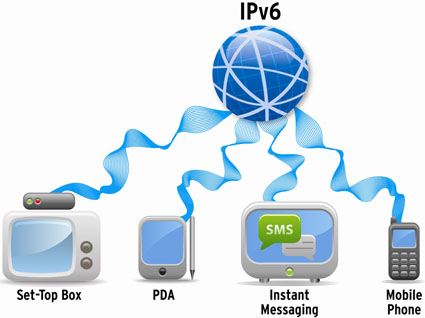 Today the guys delve deep into their geek pockets and come up with a couple of fairly advanced networking topics. One is ham radio related, the other is everything related. Don’t be scared off, however, as the discussion is a 10,000-foot overview of these technologies and how they will be important in YOUR future. Russ tackles IPv6 in a generic way, discussing using it with Linux, and gets on his soapbox about how everyone should already be using it.
Richard discusses a wireless technology called HSMM or High-Speed Multimedia. This is a networking technique that blurs the line between FCC Part 15 and FCC Part 97, but gives ham radio operators some new and exciting things to try with their off the shelf wireless gear. HSMM has some nice features and will definitely earn you your Boy Scout Geek Cred Badge if you decide to dive in.
Thanks as always to our listeners, present and future. Comments and questions, make sure to send them our way. Donations are also appreciated. If you want to promote yourself, your ideas or your projects, leave us an intro to the show at 1-909-LHS-SHOW. Stay geeky!
FCC Makes Changes to 60 Meter Band for US Amateurs
I saw this on Southgate this morning and figured I would simply repost the whole article as it’s got all the info and is to the point. If you work on 60 Meters at all, you may want to make sure you have this info handy. From Southgate ARC’s website here is the info:
By Bonnie Crystal, KQ6XA (used with permission) –
The U.S. Federal Communications Commission released a ‘Report and Order’ on November 18, 2011, with new 5 MHz rules for the Amateur Radio Service.
The effective date is 30 days after publication in the Federal Register.
Some of the FCC changes are to now allow Phone (Upper Sideband), RTTY, Data, and CW; with specific limitations on the use of these modes, as well as the maximum allowed power level is now 100 watts PEP (ERP) effective radiated power referenced to a dipole.
The FCC has deleted a channel and added a channel. The new 60 meter channel list (for General, Advanced, or Amateur Extra Class license only) is as follows (Suppressed Carrier):
VFO Dial frequency
——————
5330.5 kHz USB (center of channel = 5332.0)
5346.5 kHz USB (center of channel = 5348.0)
5357.0 kHz USB (center of channel = 5358.5) New!
5371.5 kHz USB (center of channel = 5373.0)
5403.5 kHz USB (center of channel = 5405.0)PLEASE NOTE: The FCC deleted the channel 5366.5 USB (center=5368.0)
and “replaced it” with channel 5357.0 kHz USB (center=5358.5).For the complete FCC ‘Report and Order’ release, see:
http://www.fcc.gov/document/amateur-radio-service-5-mhz
73.
Rich also writes a Tech blog and posts stories every Tuesday and Thursday on Q103, Albany’s #1 Rock Station website, as well as Amateur Radio stories every Monday thru Friday on AmiZed Studios and hosts a podcast called The Kim & Rich Show with his fiance’ Kim Dunne.
Nationwide EAS Test on November 9th
The FCC, FEMA and NOAA are going to be conducting a nationwide test of the EAS system, November 9th, 2011. Mainly to be sure, that it works, as a national test has never never been done. While states have done local tests on a weekly and monthly basis, no one is sure if an alert on a national scale was to go out, that it would 100% work.

Photo Courtesy of Wikipedia
So on November 9th, at around 2pm, someone, somewhere at the FCC or FEMA or NOAA, will push the activate button, and TVs and radio stations across the US will play the familiar tones we all know, when we hear an alert for a storm warning or some other event. Some of the differences will be that on TVs, you may see a background image on the screen as the scrolling text goes by, telling you this is all just a test. Some may not see the background image. Also the test will last for 3 minutes, as compared to 2 minutes for all others. The main reason is to make sure the code is getting to everyone to activate. So you could see a few systems slow on the catch up. Think of it like dominoes.
Now from my experience with the EAS system, working in broadcasting, sometimes the recording length on the Endec device that radio stations use, are only set for 2 minutes to record the audio. I don’t know if this will override all that and go live as soon as it hears the codes come across, or if the units will record the audio allowing manned studios to replay the alert in a break of the programming. I think there was only 1 or 2 times that we broking into programming to play an alert. Most of the time, it was at a scheduled pause in the programming.
But either way, this should be an event to see. The whole system tested at once. I wish the guys conducting the test good luck that this system works, and I hope we’ll never have to use it either.
73.
Rich also writes a Tech blog and posts stories every Tuesday and Thursday on Q103, Albany’s #1 Rock Station website, as well as Amateur Radio stories every Monday thru Friday on AmiZed Studios and hosts a podcast called The Kim & Rich Show with his fiance’ Kim Dunne
Amateur Extra
For those who have followed my adventure over the past couple of weeks through this blog post and especially this one. The wait is over…the FCC has fully approved, granted and the ULS database shows KD0BIK as an Amateur Extra.
I won’t say this wait has been easy, but at the same time I won’t say I was ever worried I would be denied the license upgrade. I knew I had done nothing wrong to end up on any sort of list and knew once someone manually reviewed my application against the information the FCC was watching for, all would be sorted out. Which actually was exactly what happened in the end with the help of the ARRL.
As with life, the things that don’t kill or injure us….do make us stronger. I have a much, much better understanding of not only the FCC ULS system, but also the ARRL/VEC process and will turn this negative into a positive and share what I’ve learned with others on an upcoming episode of the Practical Amateur Radio Podcast.
Finally, I really can’t say enough great things about the ARRL. The information they shared with me in the form of knowledge about this entire process and their reaching out to the FCC on two different occasions mean so much to me. I hope I never need to seek their assistance again in a matter like this. But I know they are there, not only for me…but for all licensed amateurs in the US.
OK…well 20m sounds like it might be hot today. I just worked a VK on JT65. Let’s see what other wonderful DX I can round up.
Oh…and one more thing. My paperwork to become a VE will be emailed to the ARRL later today. I look forward to serving along side the other many fine VE’s and give back to the hobby of amateur radio.
Until next time,
73,
Jerry KD0BIK/AE 













