Posts Tagged ‘Elecraft’
 Elecraft KX3 demo video
 May 21st, 2011 |
  Author:
 A chance to see the new Elecraft KX3 demonstrated by N6KR at the QRP ARCI “Four Days In May” convention in Dayton 2011.

A K3 in your pocket


Jeff Davis KE9V was among the first to post pictures from Dayton of Elecraft’s latest announcement, a portable all mode HF to 50MHz transceiver – almost literally “a K3 in your pocket.”
Weight: 1.5 lbs
Size: 1.7×3.5×7.4″
KX1 form-factor
internal battery pack & charger
internal wide-range ATU
new adjustable, attached keyer paddle
…and a K3-like front panel, including the same LCD.
I want one!

Ultraportable Elecraft KX3
UPDATE: Steve G4GXL’s 10 minute YouTube video of Wayne N6KR’s quick overview of the new KX3 is available from http://qrparci.org. Also there are early photos on Twitpic here - courtesy of Jeff Davis KE9V including this one:

One of the earliest - and clearest - photos of the new KX3 taken at the Elecraft stand in Dayton by Jeff Davis KE9V
Under the tantalising subject line “Something *really* new at Dayton from Elecraft” and while en route to Dayton – Elecraft’s Wayne Burdick N6KR announced to the Elecraft email lists a very interesting new offering to be launched there – the KX3 and a companion 100W amp, the KXPA100.
According to Wayne, the KX3 handles all modes, SSB/CW/AM/FM/DATA (the latter including built-in PSK31 and RTTY encode/decode/display).
He promised to post full details and photos later this weekend. But that was too intriguing for the list. This is an edited and probably repetitive summary of what they managed to find out about the new set.
KX3: Ultra-compact K3/KX1 hybrid, 160-6 m, 10/100 W, all-mode, 32-bit DSP/SDR, 1.5 lbs.
Ultraportable:
- 1.5 lbs (680g)
- 1.7″ x 3.5″ x 7.4″ (4.3cm x 8.9cm x 18.8cm)
- extended KX1 form-factor (KX1 - 1.2 x 3 x 5.3″ (3 x 7.5 x 13 cm) KX1 base weight 9oz / 255g)
- internal battery pack & charger
- internal wide-range ATU
- new adjustable, attached keyer paddle
…and a K3-like front panel, including the same LCD.
RX-mode current drain ~150 mA. Very efficient on TX, with dual-output-impedance 5W/10W PA.
The optional 100W amp is in an external chassis. The internal amplifier is 10W with switchable impedance matching so it can also operate with maximum efficiency at 5W.
PA output impedance switch allows efficient 5-W use from internal batteries, or 10 W from external supply.
KXPA100 - 100 W+ with new high-performance external amp/ATU that works with most 5W to 10W rigs.
>Same flat layout as the KX-1 – just bigger box I would assume????
Yes, but with new fold-up rear tilt-feet.
>…and a K3-like front panel, including the same LCD.
>
> And it makes use of EVERY display on that LCD?? Carumba!Not quite. I think there are a couple annunciators that are not used. But it’s amazing that the design team managed to fit almost all the features of a 10W K3 into a box that is a small fraction of the size and weight. And with space left over for an internal battery pack!
By the time we’re done, we’ll be using every icon.
Totally different architecture than the K3, of course. (Wayne N6KR)
RX-mode current drain ~150 mA. Very efficient on TX, with dual-output-impedance 5W/10W PA.
> More $$$ or less $$$ that the regular K3?
Much less.
> Dual output impedance 5w/10w pa? I don’t understand.
The MOSFET 10-W amp stage includes an output transformer with both 1:4 and 1:1 windings. When using low power, or when running from internal batteries, the 1:1 winding is used, which optimizes efficiency at about 5 W, greatly reducing transmit current drain. The 1:4 winding is used when running higher power (using an external supply).
> One email said 10w/100w models. Is that correct?
The 1.5-pound radio itself puts out 10 watts+. We’ll also be describing a new, high-performance 100-watt+ companion amplifier/ATU for fixed-station/mobile use. It will work very well with other 5 to 10-W radios besides the KX3.
From follow-up discussion etc it appears as if the base price of the KX3 will be US$799. Availability towards end of 2011. See video for a pretty comprehensive outline of features. Options for the KX3 include roofing filters, internal battery pack and ATU similar to one of K3. Truly an exciting trail friendly radio!
I’ve created a page where I’ll pull together all the available information there is about this ultimate trail friendly radio.
It’s all down to your ears
There was a lot of excitement on the Elecraft email reflector over the fact that the majority of participants in the World Radio Team Championship 2010 (WRTC 2010) were using Elecraft K3s. There was even more glee when it was discovered that Scott Robbins W4PA, former Ten-Tec product manager, and Tim Duffy K3LR of Team Icom had taken K3s. This was like the President of Coca Cola serving Pepsi at his anniversary party!
 There have not been many comments now the results are out, which show that the top two teams, from Russia and Estonia respectively, were using FT-1000MPs. The USA team of N6MJ and KL9A in third place used K3s, as did K5ZD and W2SC who came fifth, but the fourth placed S50A and S57AW again used FT-1000MPs as did the Lithuanian entry in seventh place.
So let’s get this straight: the winning stations and several others in the top ten used a now obsolete radio that was introduced in 1996 which has frequently been criticized as inferior to the K3? I suspect the fact that many international competitors took K3s may have more to do with the fact that the Elecraft radio is small enough and light enough to be taken on an aircraft as hand baggage. And I suspect that the reason for the success of the stations using FT-1000MPs is that there is more to winning a contest than having a receiver with the best performance numbers.
Anyone want to swap an Elecraft K3 for an FT-1000MP? (Only joking.)

KREF3 let-down
I often use WSPR, the very narrow band, low power, automatically reported beacon mode, which operates in a 200Hz wide band and reports the frequencies of received stations to 1Hz accuracy. I also sometimes use other digital modes where I want to be able to set my transceiver to a specific frequency with confidence. So one Elecraft K3 add-on that I had been eagerly awaiting was the KREF3 board that was supposed to allow you to lock the K3 reference oscillator to an external frequency standard. In fact, readers of this blog may recall that only a couple of weeks ago I posted an item about rubidium frequency standards being sold on eBay.
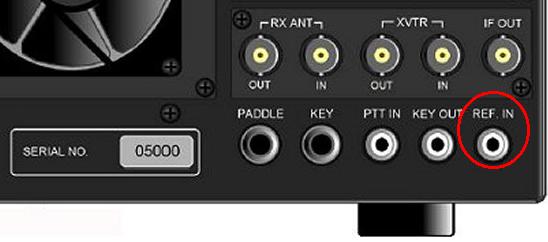 A few days ago Trevor G0KTN, who is actually the person responsible for turning me on to WSPR in the first place, posted a question to the Elecraft reflector asking for a comment from Elecraft as to when the KREF3 might be available. When no answer was received he asked again, and eventually received this reply from Eric WA6HHQ: The KREF3 is not in current planned development. I thought we had removed the references to it in all of our docs. Is it still showing up somewhere?
It is still showing up in the copies of the manuals I have. There is still a labelled, blanked-off hole for it on the back of my radio. More importantly, it showed up in the specification and brochure that Elecraft produced at the time I ordered the radio.
In the past I have been flamed quite harshly by members of the Elecraft fan club for suggesting that Elecraft had broken promises or even acted dishonestly by failing to provide advertised features. But is it being honest, when deciding not to provide a feature that was initially advertised and promised, to quietly delete all references to it and hope no-one notices? Perhaps Elecraft figured that since most hams are in their 60s or later we all have Alzheimer’s and will have forgotten the KREF3 was ever offered.

USB – the shortsighted interface
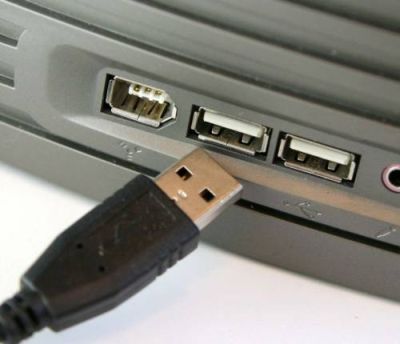 In his review of the Yaesu FTDX5000 in the June 2010 issue of RadCom, Peter Hart G3SJX criticizes Yaesu for not providing a USB interface as Icom does with its IC7600 transceiver. This same criticism is frequently made by new users or prospective users of the Elecraft K3. I think it is an extremely shortsighted view and I’m surprised to hear it from someone of G3SJX’s experience. This seems to be another example of the “it’s newer technology so it must be better” attitude that seems to be taking root in the hobby.
The RS-232 serial port has been around since long before the personal computer. It has not been used for “consumer” equipment since the days when printers and modems came with a serial interface, which is why RS-232 ports are no longer provided with new PCs. But it is nonsense to claim that RS-232 is obsolete because of this. Adding a couple of serial ports to a PC is simply a matter of opening the case and slotting in an RS-232 board. Granted, it isn’t as easy if you are using a laptop, which is why RS-232 to USB adapters exist. But expandable desktop or tower PCs have so many advantages that why anyone would choose to use a laptop for their shack computer beats me.
Icom uses USB not just for computer control but also for audio so the IC7600 doesn’t need the sound card and requires only a single cable to connect it with the PC. This is an innovation that has obvious marketing appeal – which is no doubt why Icom included it. But it’s a benefit that can only be enjoyed by users of specific versions of Windows. If you use Linux, Mac OS, Windows 2000 or earlier or Windows XP 64-bit you’re out of luck. RS-232 on the other hand is supported natively by just about any computer running any OS, by microcontrollers and even by non-computer devices like Ethernet serial port servers. It offers far more choices, even if most of those choices are only of interest to a minority of users.
Buy a device with USB and you are dependent for its continued usability on the willingness of its manufacturer to develop drivers for as yet unreleased operating systems. I’ve had to junk perfectly good printers and scanners in the past because the latest drivers were for Windows 98 or Windows 2000 and the manufacturer did not produce any for Windows XP. Most radios have a life of 20 or 30 years, considerably longer than most computer hardware, so designing into them an interface that itself may have been replaced by something faster and better in the PCs of 10 or 15 years time seems to me very shortsighted.
Icom chose to provide a Windows-only supported USB interface on the IC7600 for purely marketing reasons. Elecraft arguably made the best decision with the K3 by not just providing a true RS-232 interface (not a lame TTL version requiring an extra-cost level converting cable) but also making the DTR and RTS signals optionally usable for PTT control and CW keying. Although separate audio cables and use of a sound card are needed, Elecraft included isolating transformers so no separate interface (RigBlaster etc.) is needed. If Yaesu chose to emulate this aspect of the K3 design as well then it should be commended not criticized.

Measuring milliwatts
One K3 setup adjustment that I have never done is to check the power level of my K3 transverter output, because I don’t have an RF millivoltmeter. I do, however, have an Elecraft DL1 dummy load which has a test point fed by a 1N5711 diode and capacitor. You can take voltage readings there, and then calculate power using the formula:
Power = (( Voltage * 1.414) + 0.15) ^2 / 50
and I normally use this whenever I want an accurate power measurement rather than rely on the readings of analogue meters.
 What I don’t know is whether this is accurate enough to measure power at levels as low as 1mW. So I asked the question on the Elecraft email reflector, rashly forgetting that the function of of the reflector is for users to flame each other and speculate on or redesign Elecraft products. Don, W3FPR, who was usually good for an answer to a technical question, has left the reflector after he was flamed for some imagined breach of netiquette. Frankly, the reflector is now worthless. I wish Elecraft would create an announcements-only mailing list so that one could stay informed of new developments and firmware updates without having to see all the ego clashes and endless questions about problems with USB serial adapters.
When I measured, using the DL1 and my DVM, the output from the K3 transverter port with the level set to 1mW, I got a reading of 36mV. Plugging that into the formula, I get 0.8mW. But the 0.15 is, I presume, a “fudge factor” to compensate for the voltage drop in the detector diode, which gives me a result of 0.45mW even if zero voltage was detected. So I’m wondering if my 0.8mW is within the limits of error of my measurement method and that I should leave my transverter drive level as it is. I assembled my K3 myself and the transverter board was added later so I don’t believe the level has ever been set at the factory.














