Posts Tagged ‘Digital’
 1st Russian WW MultiMode Contest
 November 2nd, 2014 |
  Author:
 Dear Fellow Radio Amateurs,
The Russian Digital Radio Club has the honour to invite the radio amateurs all over the world to participate in the 1st Russian WW MultiMode Contest 2014. The objective of the contest is to establish as many contacts as possible between radio amateurs around the world and radio amateurs in Russia.
We invite all fans of digital modes to take part in contest from 12.00 UTC on Saturday 15th November till 11:59 UTC on Sunday 16th November, 2014. Types of modulation: BPSK63, CW, RTTY, SSB. The repeated contacts are permitted on different bands and different modes providing that a contact will be made not earlier than in 3 minutes. The output power should not exceed 10 watts on 160 meters and 100 watts on other bands. The operator may change the bands no more than 10 times within calendar hour (with zero on 59-th minute of each hour). Only one transmitted signal is permitted at any time.
Bands: 160 m, 80 m, 40 m, 20 m, 15 m, 10 m.
Prizes and certificates in all categories:
- SOAB – BPSK63-CW-RTTY-SSB
- SOAB – BPSK63-CW-RTTY
- SOAB – BPSK63-CW-SSB
- SOAB – BPSK63-RTTY-SSB
- SOAB – CW-RTTY-SSB
- SOAB – BPSK63-CW
- SOAB – BPSK63-RTTY
- SOAB – BPSK63-SSB
- SOAB – RTTY-SSB
- SOAB – CW-RTTY
- SOAB – CW-SSB
- MOAB – BPSK63-CW-RTTY-SSB
The certificate of the PARTICIPANT to all participants who have not borrowed prize-winning places, under condition of carrying out not less than 100 test (confirmed) QSOs.
You should send your log upload via the Web interface. All logs must be sent no later than 14 days after the contest (23:59 UTC on 30th November 2014).
73! de Russian Digital Radio Club


An Amazing Moment in Space Weather – Massive Solar Eruption June 2011
While many are talking about how Solar Cycle 24 is the weakest since the Maunder Minimum (the period starting in about 1645 and continuing to about 1715 when sunspots became exceedingly rare, as noted by solar observers of the time — see this Wiki entry), there are moments when activity on the Sun strongly increases, providing brief moments of excitement.
Here is a case in point, witnessed by the Solar Dynamics Observatory (SDO; see SDO Mission) on June 7, 2011, when the Sun unleashed a magnitude M2 (a medium-sized) solar flare with a spectacular coronal mass ejection (CME). The large cloud of particles mushroomed up and fell back down looking as if it covered an area almost half the solar surface.
SDO observed the flare’s peak at 1:41 AM ET. SDO recorded these images in extreme ultraviolet light that show a very large eruption of cool gas. It is somewhat unique because at many places in the eruption there seems to be even cooler material — at temperatures less than 80,000 K.
This video uses the full-resolution 4096 x 4096 pixel images at a one minute time cadence to provide the highest quality, finest detail version possible. The color is artificial, as the actual images are capturing Extreme Ultraviolet light.
It is interesting to compare the event in different wavelengths because they each see different temperatures of plasma.
Credit: NASA SDO / Goddard Space Flight Center
Video: http://g.nw7us.us/1aOjmgA – Massive Solar Eruption Close-up (2011-06-07 – NASA SDO)
Visit: SunSpotWatch.com
At 522,000,000 miles per watt, Voyager 1 might be the ultimate in QRP.
At 522,000,000 miles per watt, Voyager could be the ultimate in QRP … if you have the right antenna.
Show Notes #097
Introduction:
- Welcome to another episode of Linux in the Hamshackedness, where the Chocolate Shake Fairy visits Richard.
Announcements:
- LHS now accepts micropayment donations via Flattr. It’s been successful for the Linux Outlaws guys, so we’re giving it a try here.
- We now have a countdown timer on the Web site that shows the time remaining until the next live recording. Of course, now that we’re recording on Wednesdays, we’ve decided to move back to Tuesdays. That will happen in January. Keep an eye on the web site for the dates. (Tuesday, January 8, 2013, as of this moment.)
- We also have a Google Community for Linux in the Ham Shack. It’s a great method for leaving feedback, show suggestions, questions, hate mail or anything else.
- The Dayton Hamvention 2013 will be coming up soon, so we’ve added the donation thermometer to the website. Please make a donation and help send LHS to Dayton again in 2013.
- Sign up for the LHS mailing list, too.
- Gnorman has a bio on the LHS About Us page.
Topics:
- Raspberry Pi in the Ham Shack
- Russ has been working on getting an Echolink node running on his Raspberry Pi.
- He’s chosen Raspbian as the operating system, which is based on Debian Wheezy.
- Installation consists of downloading the iso, using dd to copy it to a secure digital card (SD flash memory card), booting the Raspberry Pi with the SD card, and following the prompts to install.
- VK2MEV has posted instructions for configuring a Raspberry Pi as an Echolink node.
- So far, Russ has Raspbian installed, as well as svxlink and qtel, but has not yet connected it to the usb sound card or attached it to his Rascal GLX interface to control the radio. Another option would be to use the Pi’s GPIO bus to control the radio instead of a digital mode interface.
- VK2MEV also has a page describing WSPR on a Raspberry Pi. (Another page is VK2MEV’s blog on WSPRnet.)
- Ted, WA0EIR, says he thinks some folks have his PSK31LX program running on a Raspberry Pi.
- Russ mentions that there is a Slackware build for the Raspberry Pi.
Feedback:
- Cory, KD0QEA, asks if there are any “hangout” radio frequencies for LHS hosts and listeners. Well, Cory, there are none due to lack of time for the hosts to get on the radio. However, perhaps our listeners would like to establish an LHS net. Email your suggestions for bands, frequencies and times and we’ll announce them on the podcast. When Russ gets his Echolink node/Raspberry Pi running, he’ll be there more often. The node number will be 54711 (LHS11 on the telephone pad).
- Doug, N6LMX, left a voice mail about the Raspberry Pi. He has one and wonders which ham radio apps can be used on the Pi. He’s also using Raspbian as the operating system. Doug will be attempting to create a media center with his, as well as ham radio applications. Russ suggests running the Pi headless and using ssh from a smartphone or tablet to access it. That would avoid having to carry a monitor and keyboard around with the Pi. It’s likely that most of the popular Linux ham applications, such as fldigi, would work fine with the Pi, though you may need to compile them yourself. As for the media server idea, the Pi may not be quite powerful enough. Raspbmc is based on XBMC, and might be the best option. Ted, WA0EIR, has several Linux ham radio applications that should work quite well on the Pi. Richard also wonders if there are folks running APRS on the Pi, and there’s at least one. Thanks for the voice mail, Doug. We appreciate it.
- Dave, M0DCM, has been catching up on the show, and responds to episodes 95 and 96. He uses 75-ohm coax as a feedline with a 1:1 balun to horizontal and vertical dipoles, and is able to bypass his tuner on 21 and 24MHz. He goes on to describe his Linux and radio activities. Thanks, Dave.
- Thanks to everyone who sent happy birthday messages to Russ.
- Gorkon, aka Joel, says there may have been a problem with the ogg version of episode 96. Russ will take care of it if he finds the problem.
- Mike, from Sugarland, TX, has been trying to use N3FJP’s Amateur Contact Log (ACLog) program for logging, presumably under WINE, but it crashes and he wonders if anyone else has had any experience with this. If any of our listeners have tried ACLog under Linux, let us know, or respond on the Google+ LHS community. Russ suggests forcing WINE into 16-bit compatibility mode.
Contact Info:
- Contact Richard at [email protected], Russ at [email protected], or both at the same time at [email protected].
- Listen to the live stream every other Tuesday at 8:00pm Central time. Check the LHS web site for dates.
- Leave us a voice mail at 1-909-LHS-SHOW (1-909-547-7469), or record an introduction to the podcast.
- Sign up for the LHS mailing list.
- Sign up for the MAGNetcon mailing list.
- LHS merchandise is available at the Merch link on Web site. Check out the Badgerwear or buy one of the other LHS-branded items at PrintFection.com/lhs or Cafe Press. Thanks!
- Thanks to Dave from Gamma Leonis for the theme music.
Music:
- None this episode.
Get your head in the cloud.
Even though my day job is completely centered around Information Technology I still miss changes and shifts in technology that happen practically under my nose. As much as I hear vendors speak about “The Cloud” I haven’t had much time to investigate and discover if this “new technology” is something I can put to use.
If you already know what “The Cloud” is then you can skip the following paragraph, otherwise please read on:
The easiest way to understand the cloud is to think of it as a utility, like electricity. When you plug a device into a wall outlet, electricity flows. You didn’t generate the electricity yourself. In fact, you probably have no idea where the electricity was generated. It’s just there when you want it. All you care about is that your device works. Cloud computing works on the same principle. Through an internet connection (the equivalent of an electrical outlet), you can access whatever applications, files, or data you have opted to store in the cloud–anytime, anywhere, from any device. How it gets to you and where it’s stored are not your concern (well, for most people they’re not).
There is no end to the stream of interesting projects that are being developed “in the cloud” and its hard to keep track of them all. Some projects have turned into things that we’re all familiar with; Flickr, Facebook & Twitter are a few examples. Some appear and vanish like the proverbial “Flash in the pan” and, since you generally lose access once they run out of steam, it can be disappointing if you have invested any time in those applications.
I’ve collected a few cloud based applications/services here that might be of interest to the radio amateur and/or experimenter. They look like they should stick around for a while and have already reached a fair level of maturity:
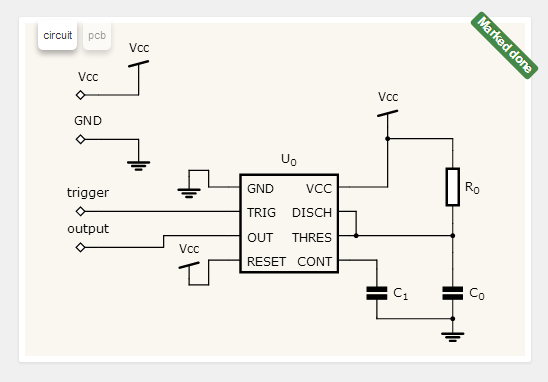
circuits.io: Described as a free circuit editor in your browser, it is actually a lot more. You can not only design practically any kind of circuit using just a web browser, you can turn that circuit into a printed circuit board and then BUY that PCB board online. Several different technologies had to come together to make this into an effective tool. This tool is fairly new but is becoming very popular. Hopefully it will stick around and continue to mature into something great.
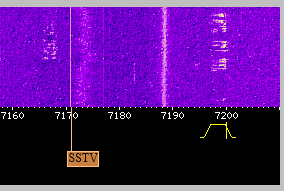
WebSDR: While arguably not a “cloud application” it does allow you listen to software defined radios, using a web browser, from anywhere you have internet access.
There are multiple sdr receivers located across the globe using a variety of receivers and antennas. Some are tuned to the HF bands while others cover VHF & UHF bands.
This is an invaluable free service provided by institutions and individuals at their own cost.
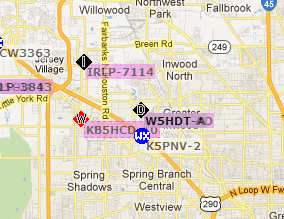
APRS.fi: The distributed network of Automatic Packet Reporting System stations, repeaters, clients and map servers could be considered to be “of the cloud” before the cloud even existed. With an APRS equipped radio you can log your position from a GPS, over the air & through another ARPS receiver. This is then sent out (usually) across the internet to other systems which in turn can map your location or update other APRS clients or radios. APRS has also been extended to include the ability to text message which is particularly useful in locations where cell phone SMS messages or email are not possible!
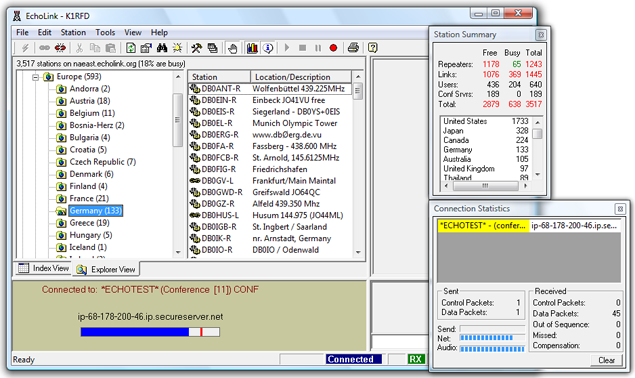
Echolink: Like APRS, Echolink links the Internet to amateur radio. However Echolink links the audio and PTT (push to talk) signals from a radio or software client to a radio in another physical location. If you’re stuck in a hotel room or another location without access to a radio you can still “get on the air” using an Echolink client on your Windows, Linux, iOS or Android computer & handheld device. Most Echolink connected stations are VHF/UHF but there are HF stations connected as well. Echolink is not designed to replace radio to radio communications but instead increases the connectivity of amateur radio operators and allows hams, who otherwise would not be able to operate, the pleasure of getting on the air.
As you can see, some of these “cloud apps” pre-date the idea of cloud computing by quite a while. Just another example of amateur radio folks being ahead of the curve without even realizing it.
Show Notes #090
Introduction:
- Join us this episode as our intrepid hosts, Richard and Russ (mad posstcatter!), interview John Hays of NorthWest Digital Radio.
Topics:
- Interview with John Hays (K7VE) from NorthWest Digital Radio.
- John has been a licensed amateur radio operator for 40 years. His wife and all of his children are hams, too!
- A couple years ago John gave a presentation at TAPR, and discussed his wish for a reasonably priced radio for digital communications with just a few connections: antenna, power and Ethernet.
- Bryan Hoyer (now K7UDR) approached John and volunteered to build one. Their collaboration (with Basil Gunn) resulted in NorthWest Digital Radio.
- Their first product will be the UDR56K-4 Universal Digital Radio, planned for availability in early 2013.
- John goes on to discuss the features of their digital radio and some of the design decisions the company made.
- Specifications (subject to change, of course):
- 25W 70cm Transceiver
- 4800 to 56Kbps
- FSK, GMSK, 4FSK
- Open Source Linux Platform — a full Linux-based web server is built-in. It uses the Debian kernel, running on an ARM processor (faster than a Raspberry Pi).
- Web Interface over Ethernet
- 4 USB Host Ports
- Applications:
- The radio can be completely controlled through the web interface or the command line.
- John talks about other potential applications for their radio platform.
- Keep an eye on the website for more information and to sign up for email announcements.
- You may also be interested in John’s blog.
Contact Info:
- Contact Richard at [email protected], Russ at [email protected], or both at the same time at [email protected].
- Listen to the live stream every other Tuesday at 8:00pm Central time. Check the LHS web site for dates.
- Leave us a voice mail at 1-909-LHS-SHOW (1-909-547-7469), or record an introduction to the podcast.
- Sign up for the LHS mailing list.
- Sign up for the MAGNetcon mailing list.
- LHS merchandise is available at the Merch link on Web site. Check out the Badgerwear or buy one of the other LHS-branded items at PrintFection.com/lhs or Cafe Press. Thanks!
- Thanks to Dave from Gamma Leonis for the theme music.
LHS Episode #090: Purple Hays
 Here we are at Episode #090, just 10 away from the century mark. Things have been rolling along fairly smoothly, and except for Russ being deathly ill for the last eight days, there’s not even a lot to complain about. In this episode, we have yet another interview. This time it’s with John Hays, K7VE, of Northwest Digital Radio. These guys are producing an entirely new purpose-built radio platform called the UDR56K. This technology promises to be a great advance in the amateur radio arena as well as in the computing arena. It’s a bit of kit that’s going to find a use in almost every radio amateur’s shack. If you want to find out why, please sit down and take a listen to this episode of LHS. We promise you will not be disappointed.
73 de The LHS Guys













