Posts Tagged ‘amateurradio.com’
 Trading freedom for safety
 February 27th, 2015 |
  Author:
Courtesy hamnieuws.nl
Privacy and freedom are constantly traded in for a (often false) sense of security. This has nothing to do with ham radio, you’d probably think, but even our hobby isn’t immune.
Repeaters
Repeaters are only useful if the antennas can be placed high above ground. In the Netherlands we use a number of existing locations, most of which were once used for analog TV and radio. The owners of the towers decided that safety and security will prevail over (safe, terrorist-free) ham radio.
The following systems will be affected:
- ATV repeater PI6ATV, both analog and digital,
- 2 meter repeater PI3UTR,
- D-star repeater PI1UTR,
- DMR repeater PI1UTR,
- RX co-location for the 70cm repeater PI2NOS,
- RX co-location for the 10 meter repeater PI6TEN,
- Four Hamnet access points and links.
There is a chance that the equipment can be relocated to a lower section of the tower while keeping the antennas on the original altitude. Even in the best case scenario the costs of relocating will exceed the minimal financial reserves – good coax cable is expensive, and we would need a lot of it.
I’ll end with this quote: Those who would give up essential liberty to purchase a little temporary safety deserve neither liberty nor safety. (Benjamin Franklin)


Pile up rant
The 80 Meter Fox hunting ground takes place on spectrum real estate centering on the QRP Watering Hole of 3.560 MHz. The 80 Meter woods is 10 kHz on each side of that, from 3.550 MHz to 3.570 MHz. One Fox "hides" in the upper half and the other in the lower. You find the Fox calling "CQ FOX", send the required exchange back and forth, and you earn a pelt if successful.
Last night, the two Foxes, Earl N8SS and Dale WC7S decided to do something a bit different. Earl planted himself 1 kHz below 3.560 MHz, while Dale planted himself 1 kHz above the Watering Hole. Both worked split - Earl down and Dale up.
Sounds like good, clean fun, eh? In theory, yes - very good. In practice, good - but not very good. And the difficulty that ensued was not the fault of Earl or Dale. Once again, it was due to the Hounds (AKA, the pile up) not listening.
I caught Earl two minutes into the Hunt at 3.559 MHz. I heard him (key words) call "CQ FOX" and then "DN". That raised my eyebrows a bit, as I wasn't expecting that. But I quickly adjusted VFO B and nabbed him on my third call. At this point, all was peachy keen. Then, going up to the high end of the 80 Acre Woods, I heard Dale's pack of Hounds - not very far away at all. From the location of the Hounds and figuring on a "standard split" of 1 kHz, I figured out that Dale was probably sitting around 3.561 MHz. I tuned over there and indeed, there he was - very weak, around 119 ESP levels.
What made things even more difficult were the Hounds chasing Earl, who weren't listening and were trying to work him by calling "up". And they overwhelmed Dale's weak signal completely. And there lies my complaint. If you can't hear the Fox well enough to determine that he's calling "DN" then what are you doing, calling him at all?
Listen - don't make assumptions!
It got to the point where Dale must have realized something not good was going on, as he moved up a little bit farther. That was nice, but there were other problems to deal with, on that end. I had the KX3 in Dual Watch mode and finally had to turn it off, because some of the shenanigans going on there were pretty bad too. I heard one Hound who blindly sent his call - I kid you not - 10 times in a row without so much as taking a breath! 10 times - really ?!? I think that Dale was able to work two Hounds in the time it took this one guy to send his call that many times. Wow! And obviously, if you are sending your call that many times, then you are not listening - and that's the most important thing you can do in a pile up.
Paul WW2PT is one of the bloggers I list in my blogroll. He has a very good post that contains an interview with the K1N Team, post-Navassa. Go over there and read his post. What you read there will make your eyes wide as saucers. But because this is so important, I am going to take the opportunity re-post the K1N Team's assessment on why many in a pile up are not successful. I wish the Hounds in last night's hunt had read this. The main issues they saw were:
The best advice IS "listen, listen, listen and listen some more". Avoid the temptation to jump in blindly and work shot gun style. In the end, you will work more DX - and Foxes, if you listen. And, by becoming a better operator, you will not only be more successful, you will earn the admiration and esteem of your fellow operators. No one wants to earn the label of "LID".
- Not listening to the DX operator
- LISTEN to and LEARN the rate and rhythm of the operator
- LISTEN to WHERE the operator is listening and his PATTERN of moving his VFO, know where he will listen next!
- Learn to use your radio (split/simplex, etc)
- Do NOT jump to and call on the frequency of the last station worked. The DX station will NOT hear you because the din is total unintelligible chaos. Move UP or DOWN from that frequency, as we on our end were continuously tuning up or down after each Q, so if one jumps onto the last-worked frequency, we will not hear you, even if you were the only one there, as we have tuned off.
- TURN OFF ALL SPEECH PROCESSORS AND COMPRESSION! Do NOT overdrive ALC. There is a night and day difference in listening to NA/AS and EU pileups. The horrible distortion makes it impossible to copy many, if not most EU callsigns. There were MANY loud stations that we did not work, simply because we could NOT understand their terribly distorted callsign. Have you ever listened to yourself in a pileup? We gave many stations a “19” signal report. Very loud, but extremely unintelligible! You want to have INTELLIGIBILITY, not distortion!
- Give your callsign ONCE and ONLY ONCE! DO NOT KEEP CALLING! We would tune on by those who did not stop calling. We are looking for RATE and getting stations into the log. You should be, too!!!
- If the DX station comes back with your callsign, DO NOT REPEAT YOUR CALLSIGN, AS WE ALREADY KNOW IT or we would not have answered you. Many stations (in all modes) would repeat their callsign two, three and even four times! We only want to hear “5NN” or “59” from you. Anything else is a total waste of time and CHEATS others out of a chance to get into the log. Only repeat your callsign if it needs correction, and then let us know it is a correction. Anything else is cheating others out of a contact, as our propagation windows and time on the island are limited and we need to maximize the opportunity for everyone. SPEED.
- Take some time to listen to the next DXpedition working NA and listen to the rate and rhythm of the operator. It is fast, quick and efficient, and more people get into the log! Then listen to him work EU. The wise operator will catch on quickly to what it takes to get into the log!
- SPREAD OUT! Our highest rates (for any continent) were working the edges of the pileup where there was less QRM and weak stations were much easier to work than loud stations in the middle of the pileup. If we say, “Listening 200 – 210,” 70% of the pileup sits exactly on 200 in an unintelligible din, 25% of the pileup sits on 210 and is almost as bad. 5% of the pileup will be spread out somewhere between 201 and 209, making them very quickly put into the log. S P R E A D O U T ! ! ! !
- LOUD is NOT better! MORE AUDIO/COMPRESSION is NOT better! Finding the spot to be HEARD is the MOST important thing you can do to get into the log. My biggest thrill (and I’m sure on both ends) is finding the lone weak station and getting him into the log quickly.
- LISTEN to the DX operator INSTRUCTIONS! As we would constantly tune our VFO, if we find a clear spot, we would often say, “33” (meaning for YOU to transmit on 14033, 28433, etc) and a few would listen and get into the log very quickly. You cannot hear these hints if you keep calling calling calling calling……… Many times I would say, “listening 200-210” and after a while would say, “listening 240-250”. Often 30-45 minutes, even and HOUR later, I would find MANY still calling on the original “200-210”…..of course, they would never show up in our log, as I was not listening there. LISTEN LISTEN LISTEN and LISTEN SOME MORE. The less you transmit, the better chance you have of getting into the log.
- LISTEN
- If you don’t want to get into the DX log, just ignore the above suggestions.
End of rant.
72 de Larry W2LJ
QRP - When you care to send the very least!
Haunted?
You know the story. The other night, I loaded the latest version of TQSL for LotW and requested a new call sign certificate from the ARRL. The certificate came, I tried loading it, it wasn't recognized. I tried re-booting the computer several times - nada. I uninstalled TQSL and re-downloaded it and re-installed it. Zilch.
I e-mailed the League and described my problem. They kindly sent me an eleven page .pdf file, describing what to do with troublesome call sign certificates. I was going to un-install TQSL again, delete my certificates and start from scratch. But then I got this nagging little feeling. Give it one more shot, a little voice said.
I successfully signed and uploaded my ADIF file to Newington, without so much as a hiccup, burp or hitch. I did NOTHING new, different or out of the ordinary. Tonight it worked like a charm, when the other night nothing worked. Then I took a look at the certificate properties. "Successfully loaded 2/23/2015" or words to that effect. What? But that's not possible! At least that's not what it was saying the other night! The other night, the certificate couldn't be found!

Excuse me while I run out for some Holy Water. Computers are dark magic and evil. Either that, or I have just crossed over into the Twilight Zone.
72 de Larry W2LJ
QRP - When you care to send the very least!
Anytone Tech’s new models: User Manuals
As Brick also mentioned in in his last post about Anytone Tech: the reactions on the new models vary wildly. I think Brick said all there is to say, but I’ll add this thought:
– If a radio is cheap but crap, we complain, but buy it anyway.
– If a radio is good but costs more, we complain, but suddenly the price is all that matters.
Let’s see how these radios perform and at what price point before judging them. I know John of Miklor.com gets (or already has) review samples, and I’m on the list too. To give you some more insight in what these radios can and cannot do, here are some preliminary user manuals (PDF).

ANILE-8R User Manual (Preliminary)
NSTIG-8R User Manual (Preliminary)
OBLTR-8R + TERMN-8R User Manual (Preliminary)


Logbook of the World problems
Now that I switched shack computers out, I loaded the latest version of Trusted QSL to my shack laptop. I requested a new callsign certificate from that laptop and it arrived today. I tried uploading the certificate to the Trusted QSL program and I keep getting this error:
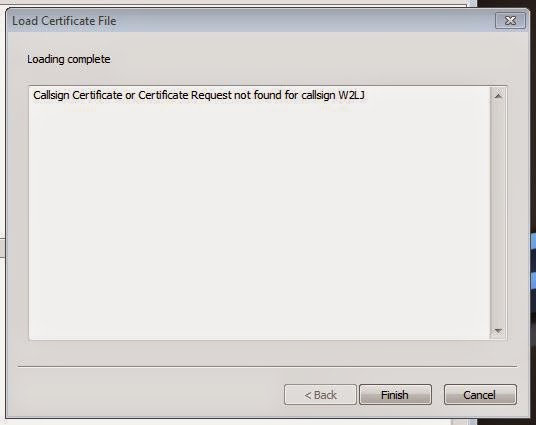
The certificate is there - the League just e-mailed it to me! I even went to the LotW Website and manually downloaded my certificates - still nothing, same message box pops up. I even tried deleting Trusted QSL and re-installed it thinking there might have been some kind of error when it loaded - no dice.
Any LotW gurus out there have any idea as to what might be going on?
72 de Larry W2LJ
QRP - When you care to send the very least!
More SSTV from the ISS
The SSTV activity had been due to last three days starting on Saturday but commencement was delayed by the NASA space walk.
Receiving the signal and decoding is relatively straightforward due to relatively high power used (around 25W) however getting a perfect image is a challenge and dependant on a number of factors.
- The timing of the overhead pass. Due to the time taken to transmit the image and the three minute delay between each image it is possible to only be in reception range for the end of one image and the start of the next.
- The ISS is moving quickly and so the transmission suffers noticeable Doppler shift. FM is more immune to the effect but for optimal performance adjustment of the tuned frequency is required especially on high elevation passes (more information).
- The ISS moves position, both in direction and elevation as it moves across the sky and will show up the peaks and troughs in a static antennas radiation pattern. This leads to bands of noise when the signal level falls. The use of a rotatable (and if possible tiltable) antenna (or even an handheld one) is the dirigour mode of operating satellites (and the ISS) for serious enthusiasts.
- Noise and local interference will also obviously affect the image.
 |
| Mission Control |
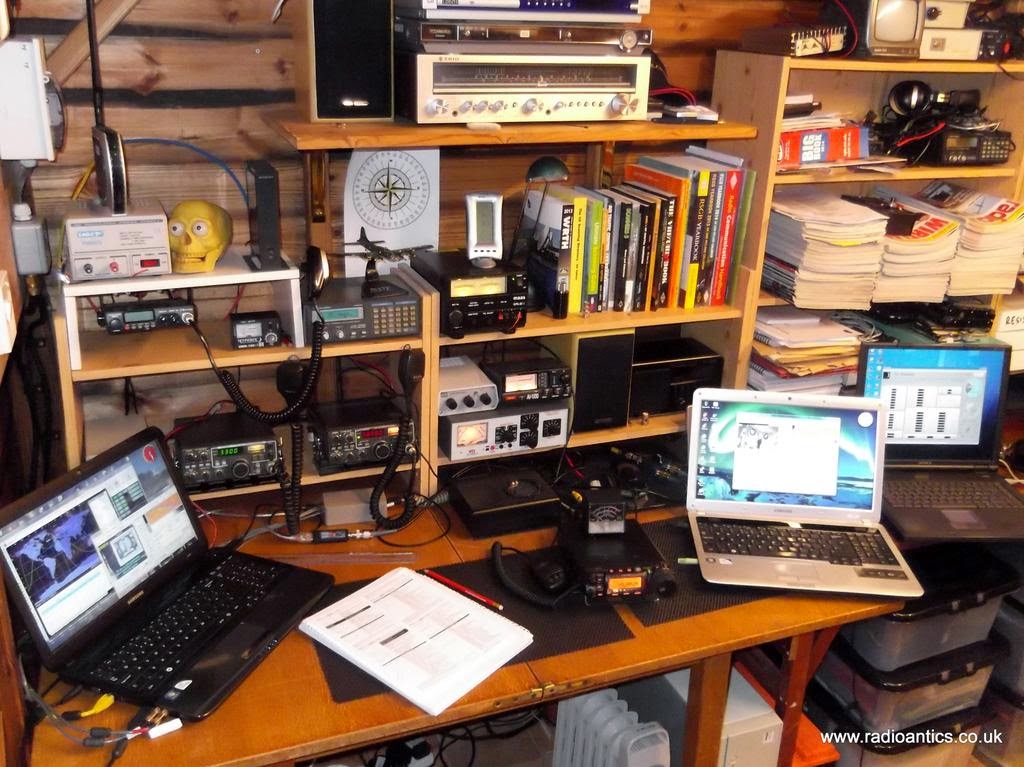
I opted a two pronged approach, the Yaesu FT857D connected to my rotatable four element YAGI which is mounted horizontally for SSB and the old TRIO/KENWOOD TR9000 was connected to the X50 dual-band collinear mounted vertically.
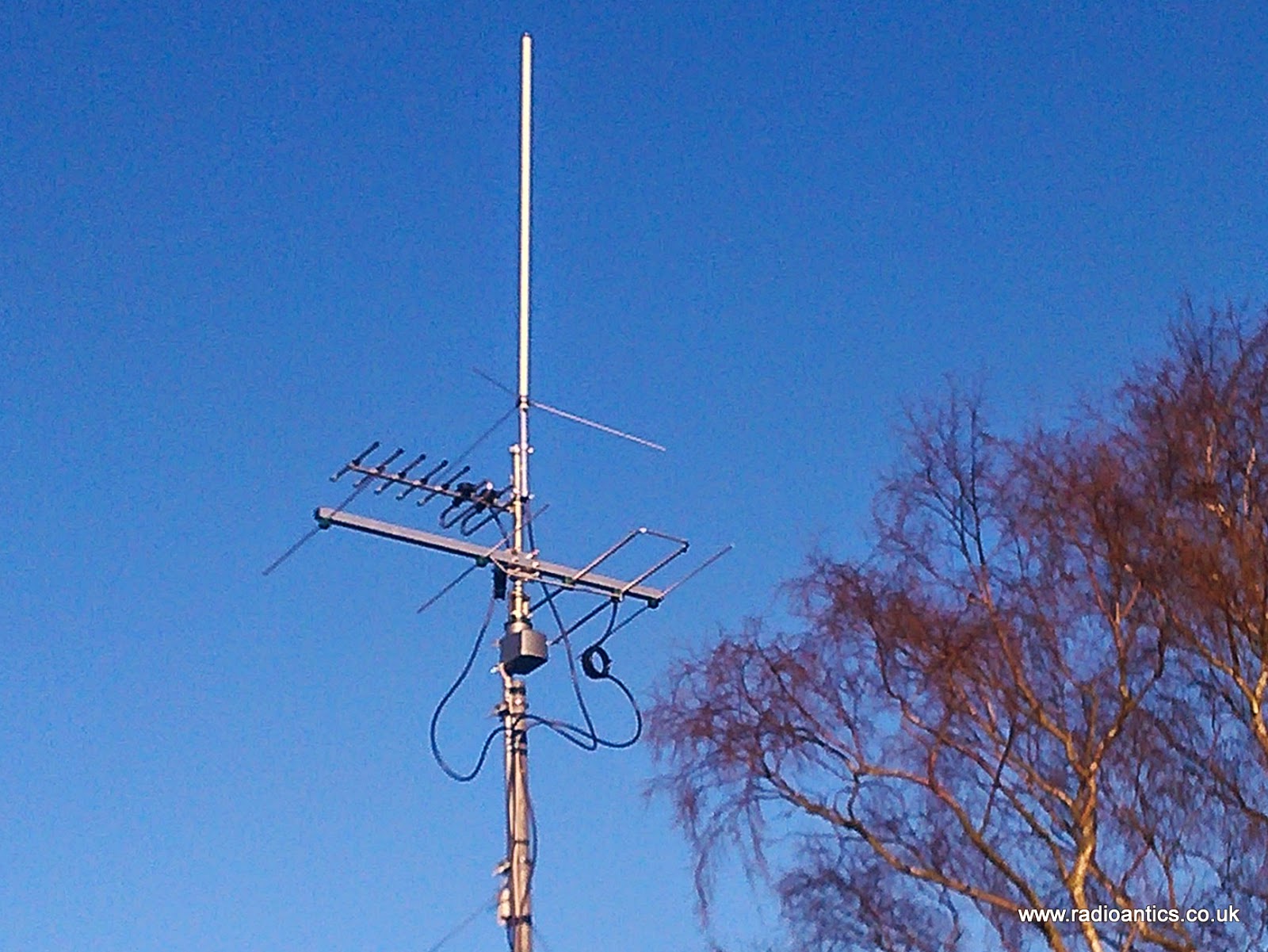
I had two copies of the MMSSTV program running on separate laptops The TR9000 was left running largely unattended tuned to 145.800MHz, while the FT857D was tweaked to the optimum frequency while the YAGI antenna was rotated to the correct azimuth during the pass.
All adjustments were done manually and I use the Orbitron program for prediction and under the Rotor/Radio tab the frequency and azimuth are shown and updated during the pass (as can be seen in the screen show below)

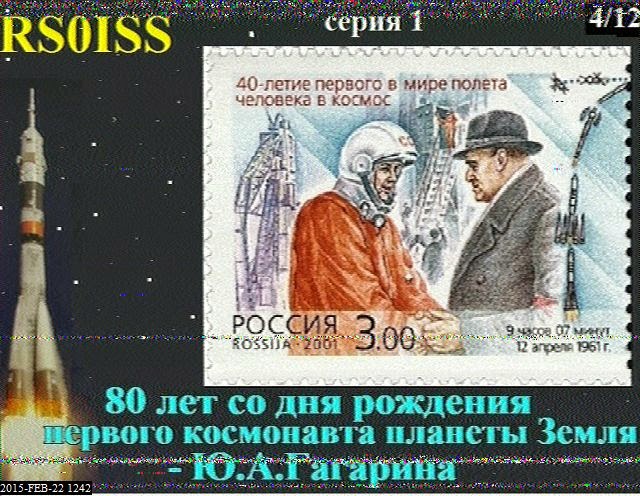
I missed the first low elevation at 11:07UTC, but was able to monitor and decode images on all the remaining passes during the day, with some excellent results, the images show the full images decodes on both radio set ups as a comparison.
 |
| FT857D - Yagi |
 |
| TR9000 - Collinear |
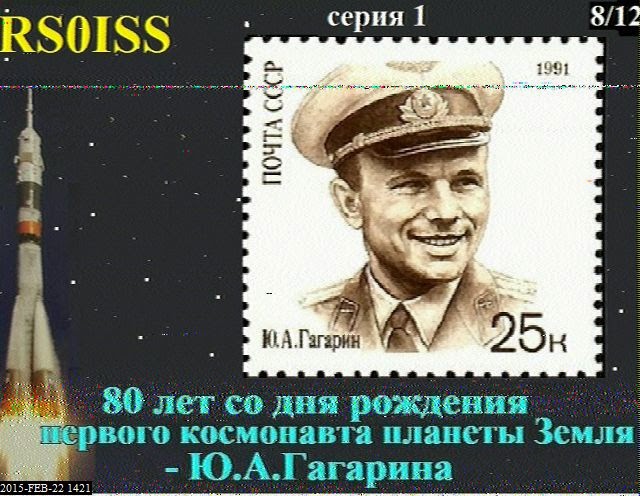 |
| FT857D - Yagi |
 |
| TR9000 - Collinear |
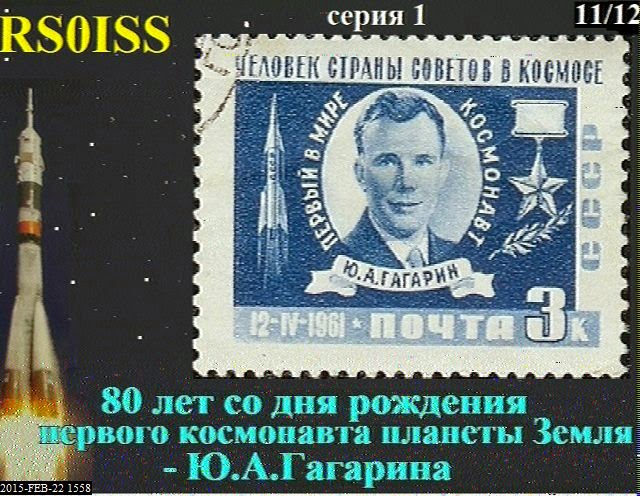 |
| FT857D - Yagi |
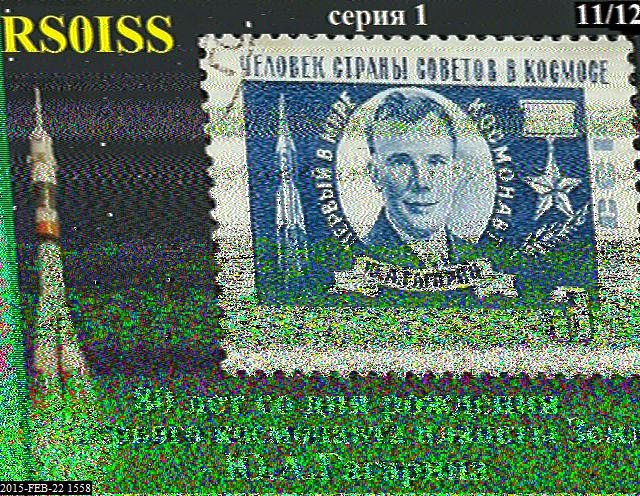 |
| TR9000 - Collinear |
 |
| FT857D - Yagi |
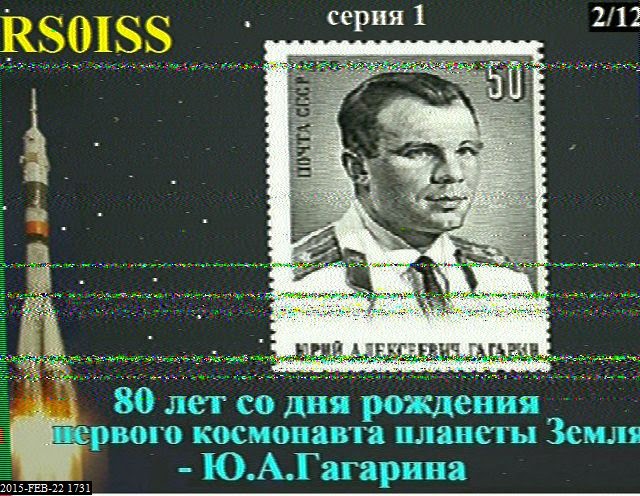 |
| TR9000 - Collinear |
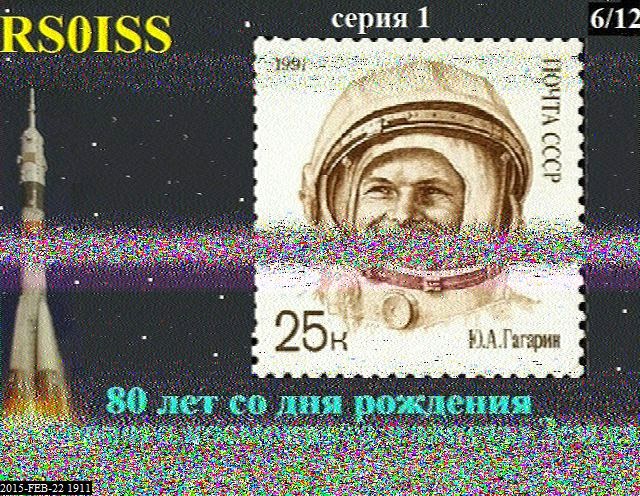 |
| FT857D - Yagi |
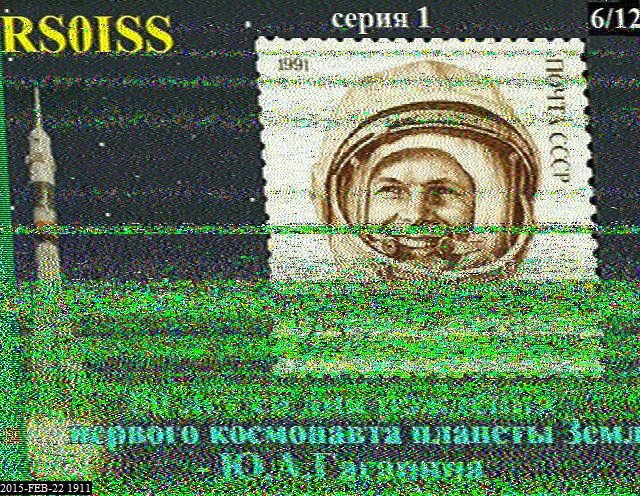 |
| TR9000 - Collinear |
I was especially pleased when one of my best images was featured on the Amsat-UK and the Southgate Amateur Radio News websites.
What was slightly worrying and it also happened during the last SSTV activities were some operators transmitting on the downlink frequency even during a pass, what sounded like someone keying up was responsible for the single noise line on another perfect image. I even received an unexpected SSTV image, complete with a call sign while the system was waiting for the next pass. I won't publish it here as everyone makes mistakes.
The experiments are continuing today but I am in work so will just leave an automated set up running on the collinear.
Judging by the messages on social media these SSTV activities seem to have captured the imagination of a lot of operators and several members of my local club South Kesteven Amateur Radio Society (SKARS) had their first go with some excellent results and are hooked! The images can seen on the SKARS Facebook page
Long may the activities continue, hopefully started to transmit some live images from space.
Cool map at N0HR.com
This is the world:
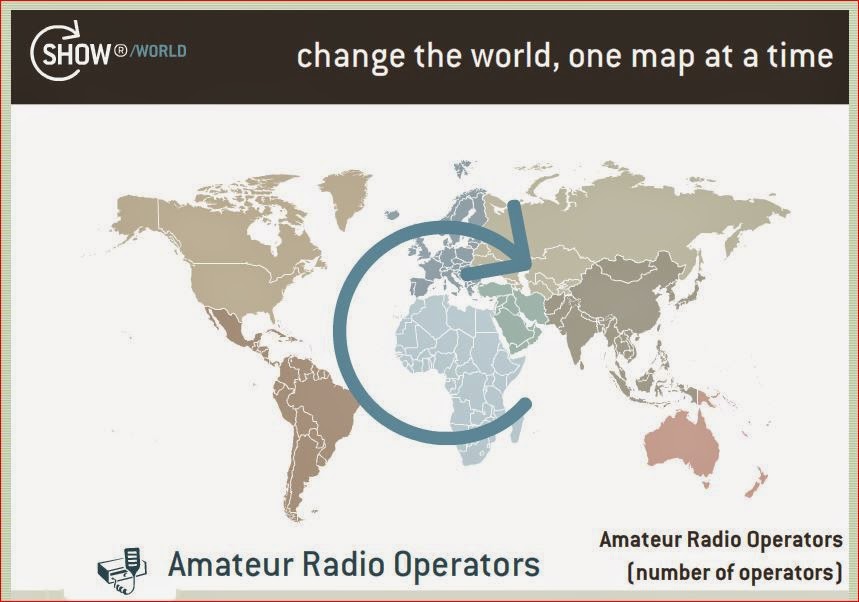
This is the world on Ham Radio:
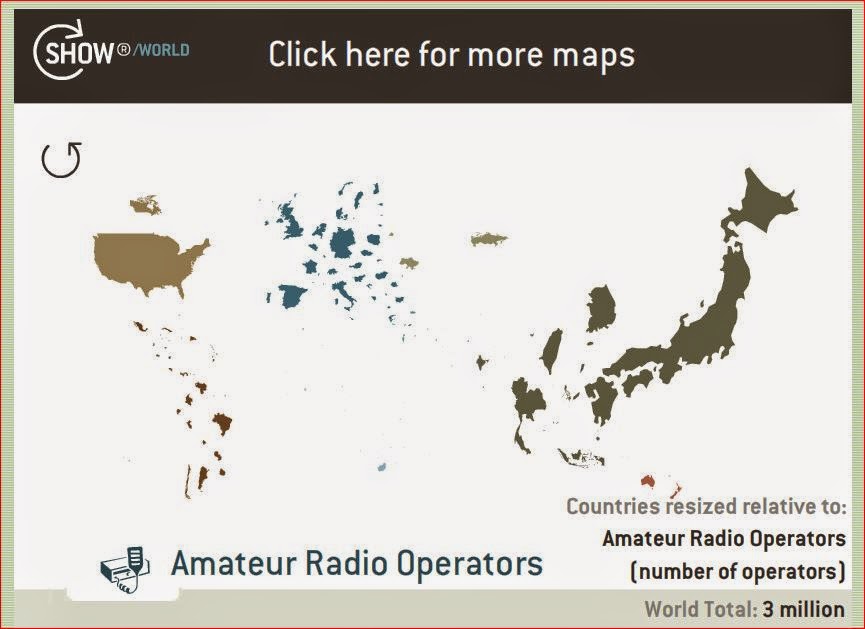
By clicking on each country, you can find out how many Amateur Radio Ops that country claims.
72 de Larry W2LJ
QRP - When you care to send the very least!













