Posts Tagged ‘amateurradio.com’
 It’s ALIVE !
 March 29th, 2016 |
  Author:
 The 1Watter 40m #551 -- Lives
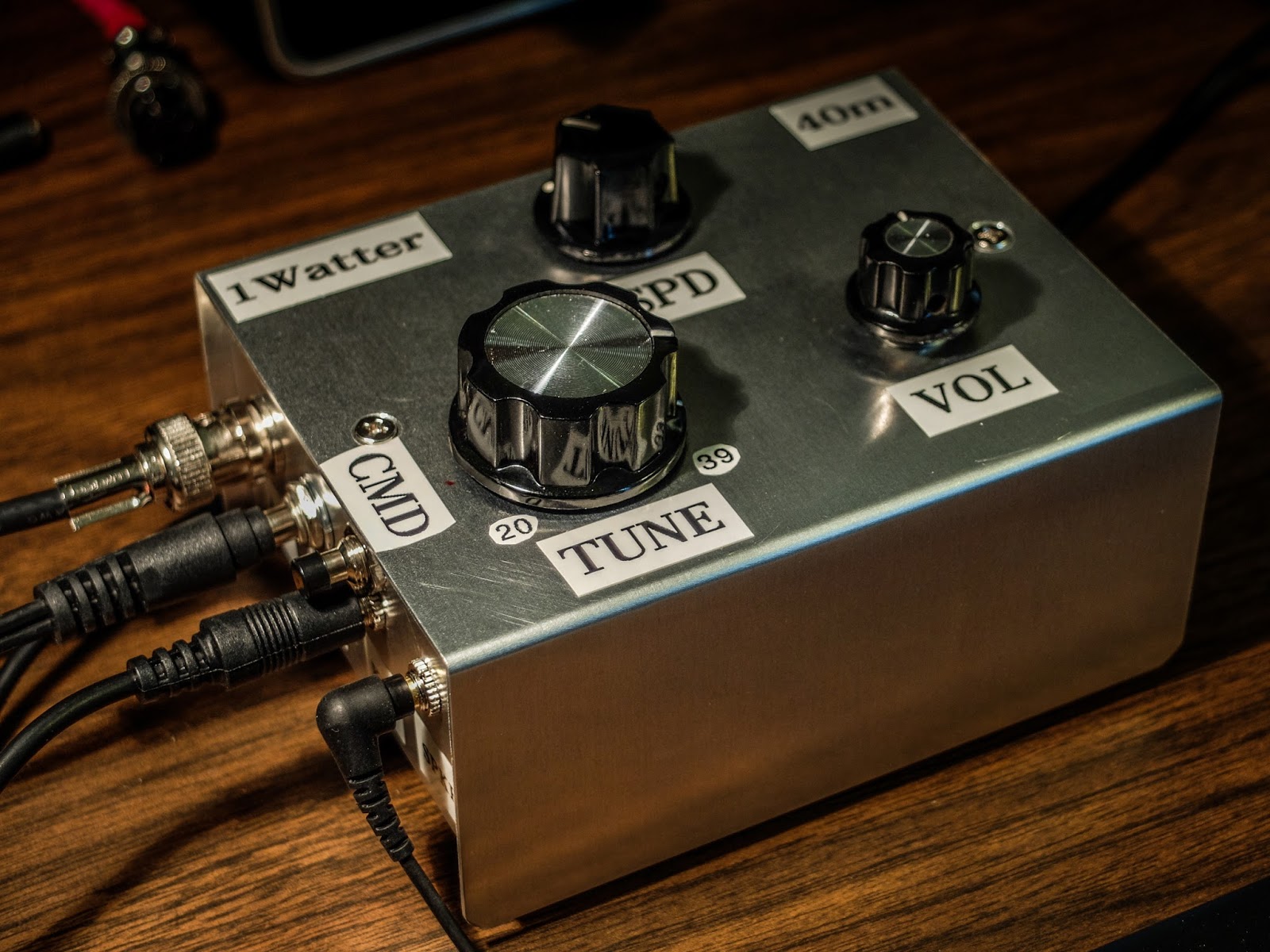
 |
| The 1Watter 40m on it's inaugural QSO |
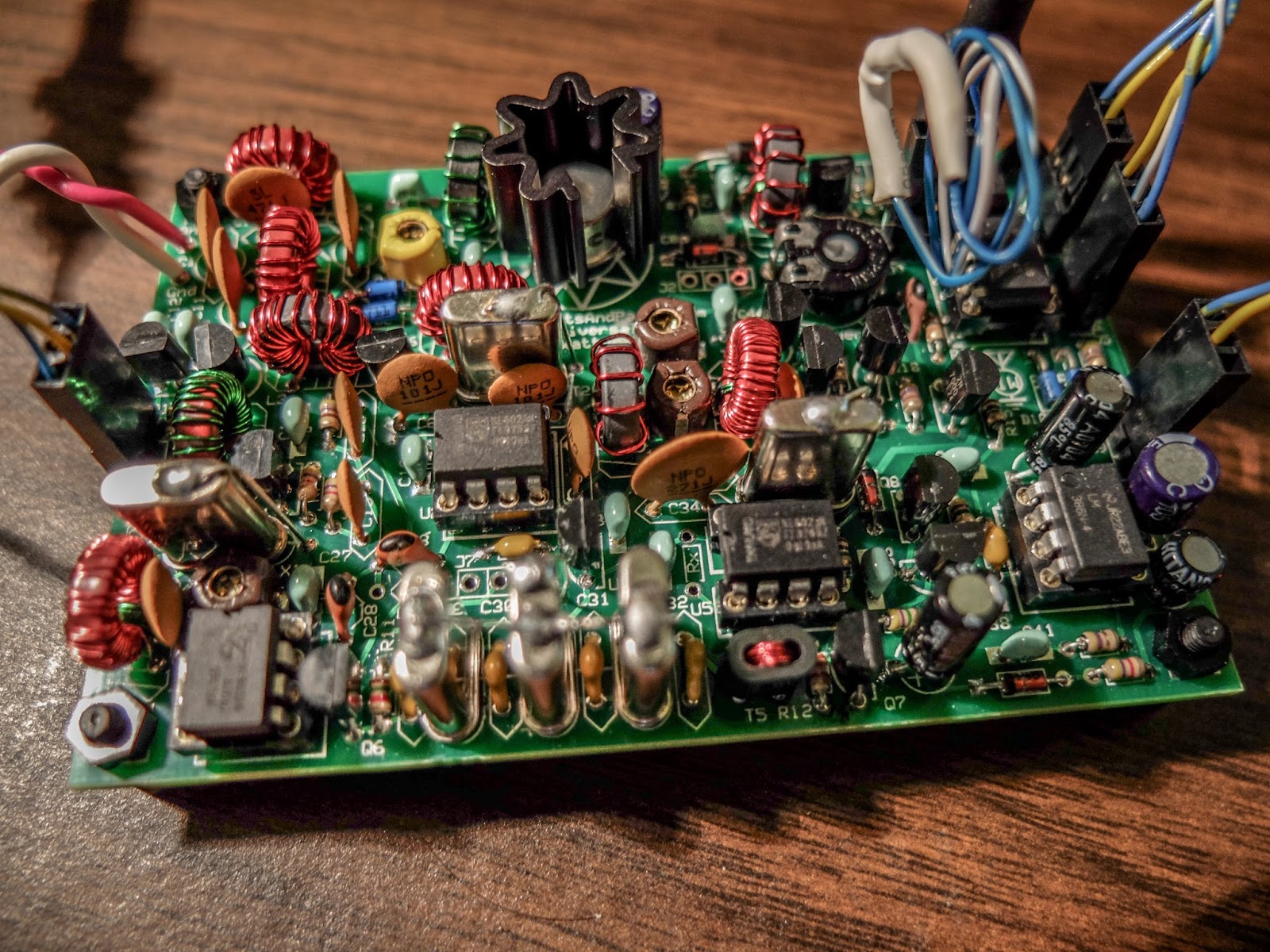
 |
| Inside the enclosure |
The 1Watter is a kit from kits and parts dot com
The Universal 1Watter (also called the 1H2O) is a full featured little superhet radio transceiver that you can build for about $50. It doesn't come with an enclosure, a tuning pot, speed pot or an on/off switch so that will cost extra unless you already have some in the junk bin.
Some of the features include;
- 1 mighty watt of output
- Good selectivity from the 3 crystal filters
- A VCXO tuned frequency range for the 40m band from approximately 7,020 kHz through 7,039 kHz
- A built-in full functioned keyer with provision for adding a speed pot and messages
- Included command button accesses the functions of the electronic keyer
- Natural sounding sidetone (nicer than my Ten-Tec Century/21)
The Build
The kit is delivered in a box and inside are a couple of brown paper bags stapled together. Inside one of the bags are a couple of plastic bags with the components. The other bag contained the header kit. The ferrite toroid mix types are separated in different unmarked plastic bags so don't mix them up (the instructions tell you which bag has each mix). If anything is missing the kit supplier (Diz, W8DIZ) is very responsive.
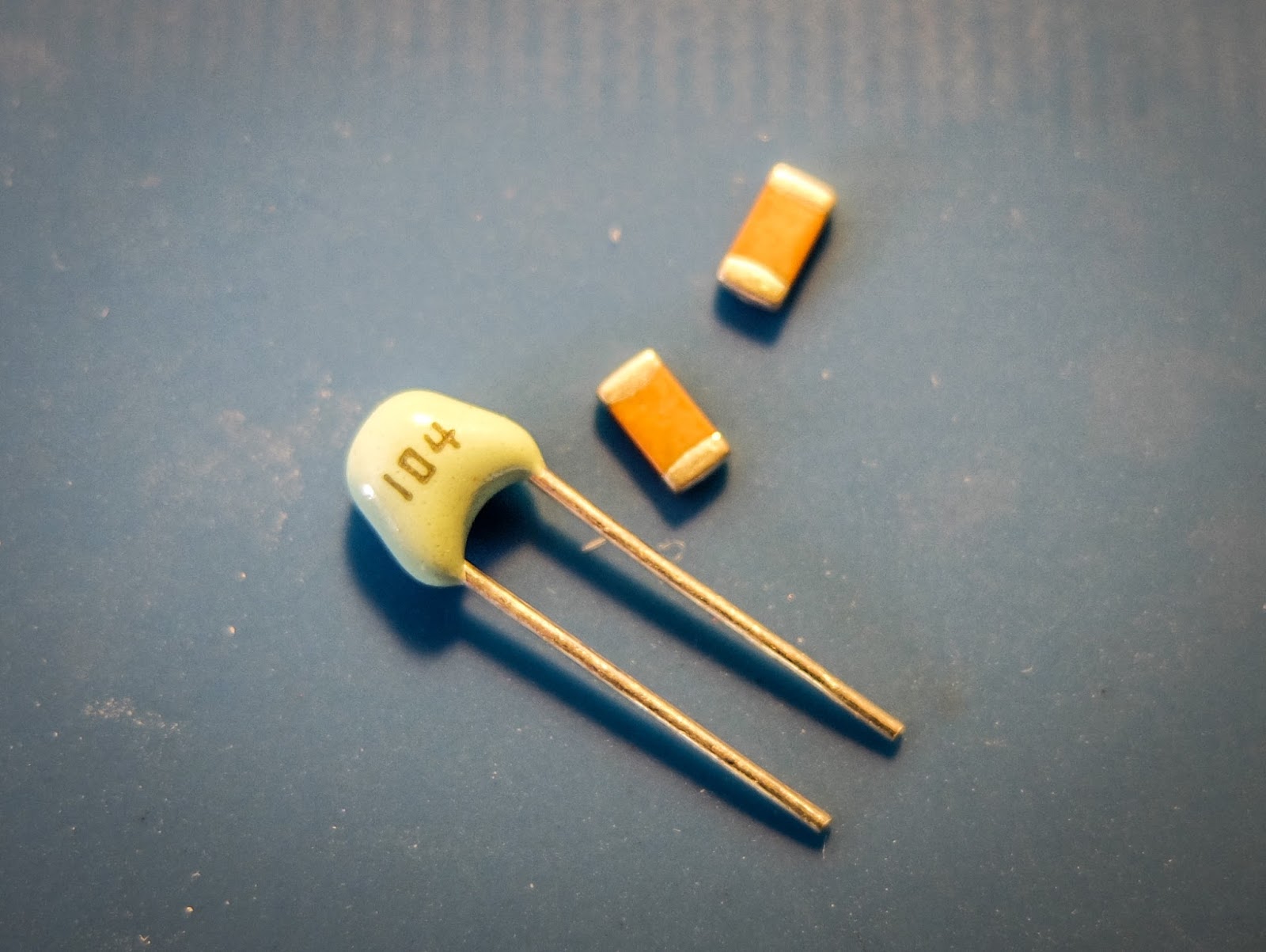
The kit includes both SMT caps and through hole caps. I tried to solder one of the SMTs but I didn't have the right kind of tweezers to hold it in position for soldering so I used the through hole caps.
 |
| SMT and through hole caps are supplied |
This is the 3rd revision of the Universal 1Watter board and I was the first to build the 40m version.
While the schematic was correct, some of the instructions weren't sorted out properly for the 40m kit. I related issues as I found them to the designer and he promptly updated the online documentation.
I soldered the components and wound toroids as I had time over a few evenings and the initial voltage tests went well.
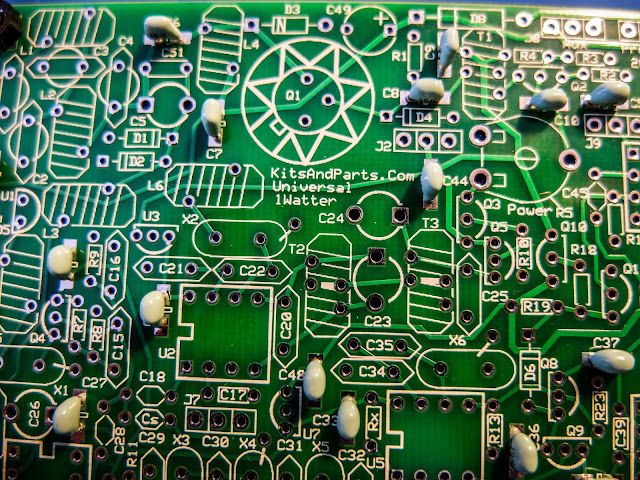 |
| using through hole capacitors rather than the SMTs |
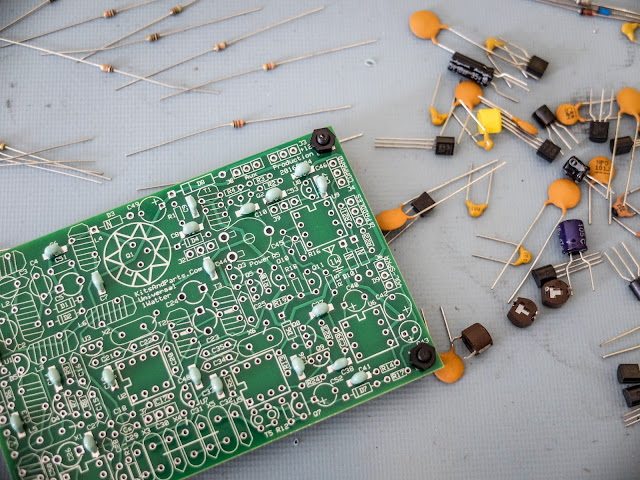 |
| some of the bits and bobs |
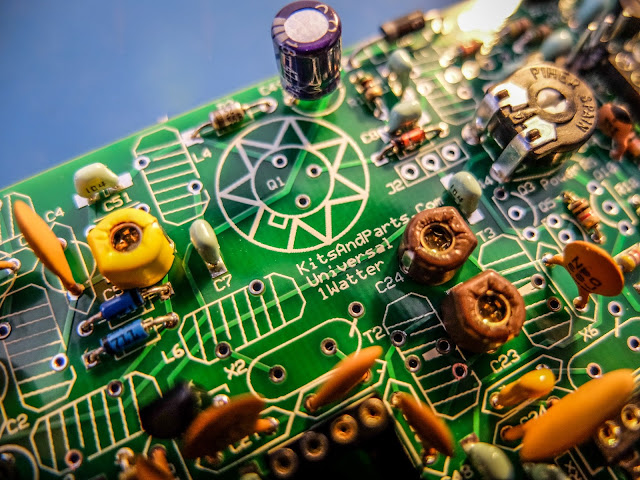 |
| build is progressing |
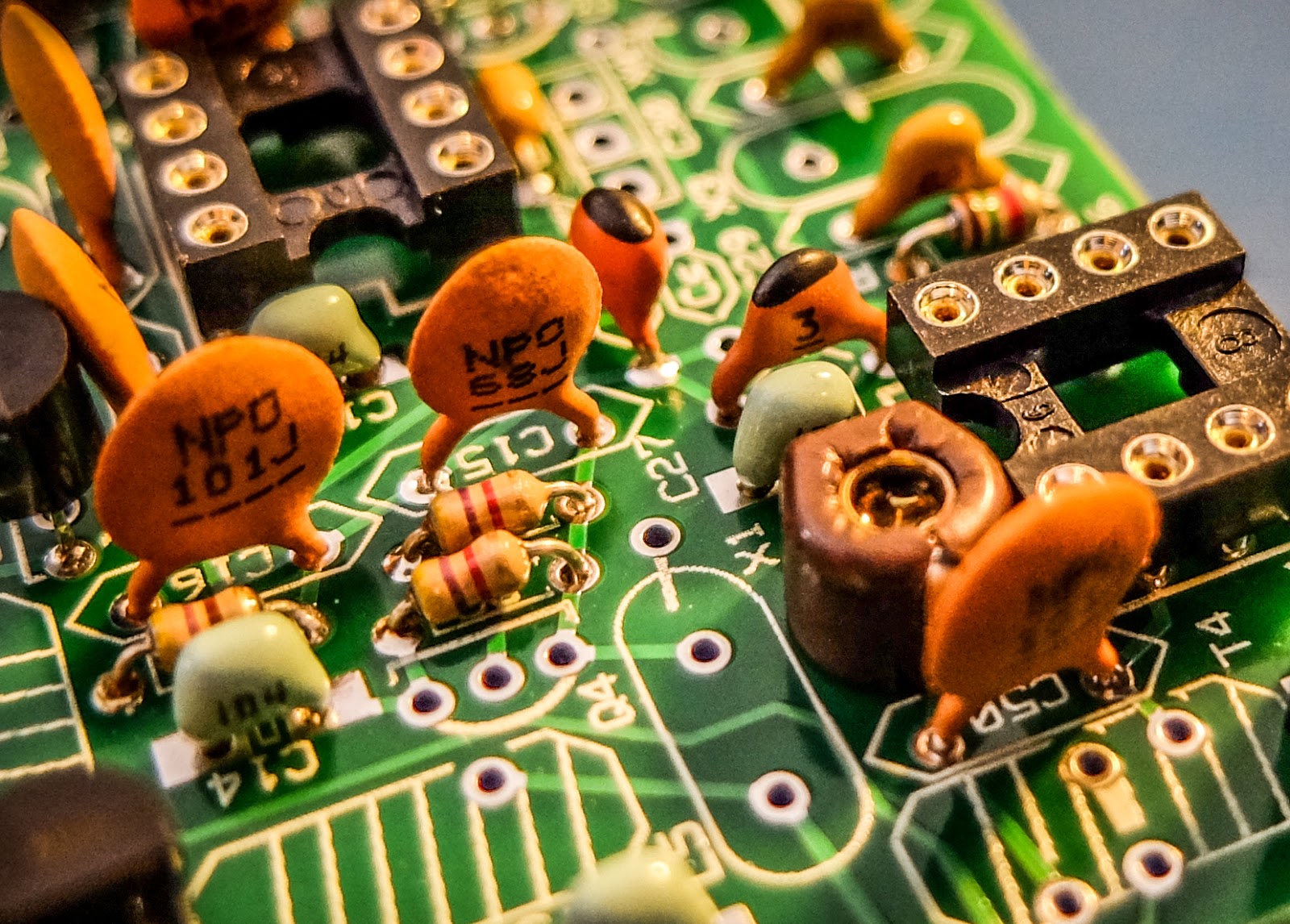 |
| close up |
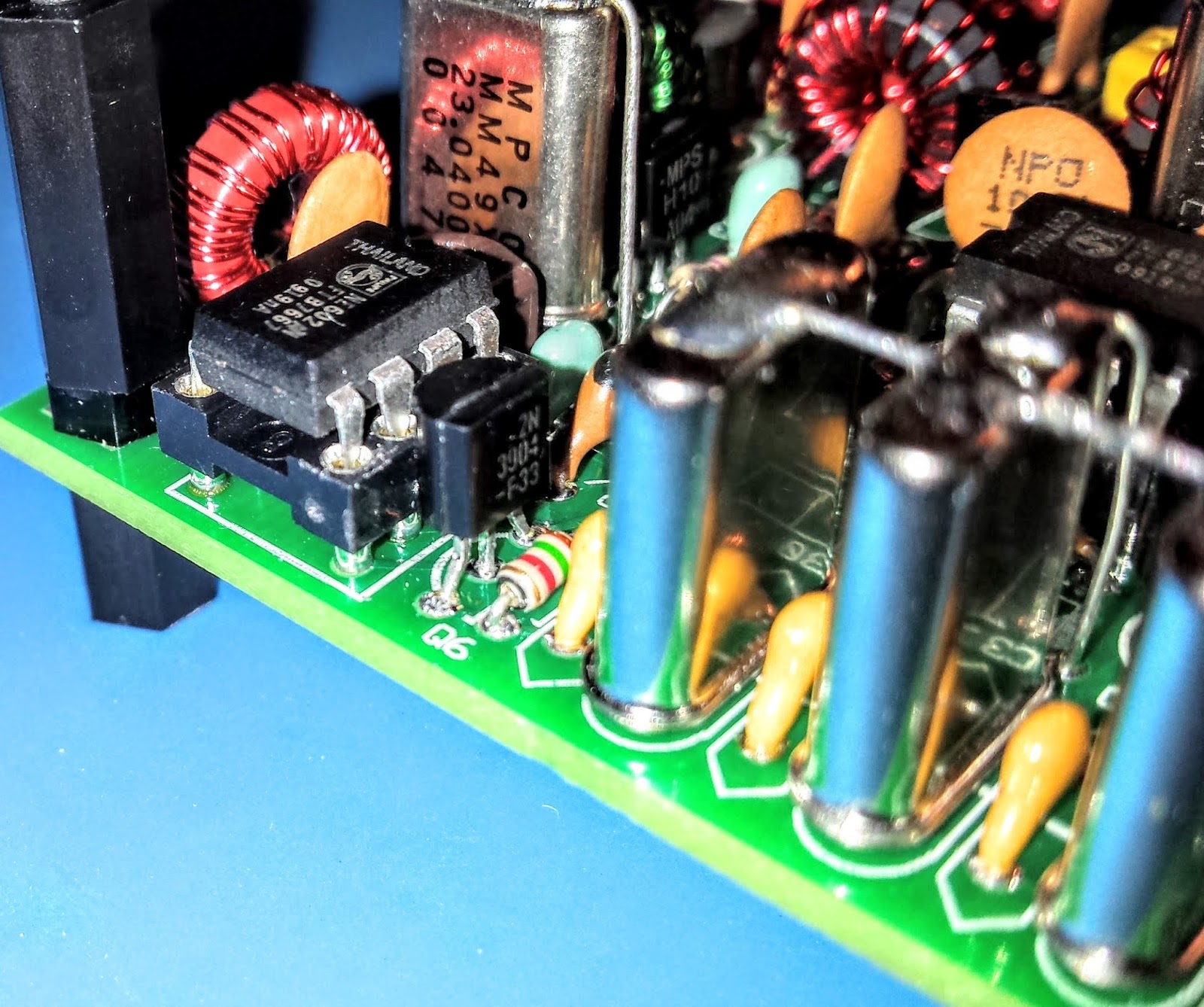 |
| XTAL filters give it good selectivity |
 |
| Everything except the final transistor |
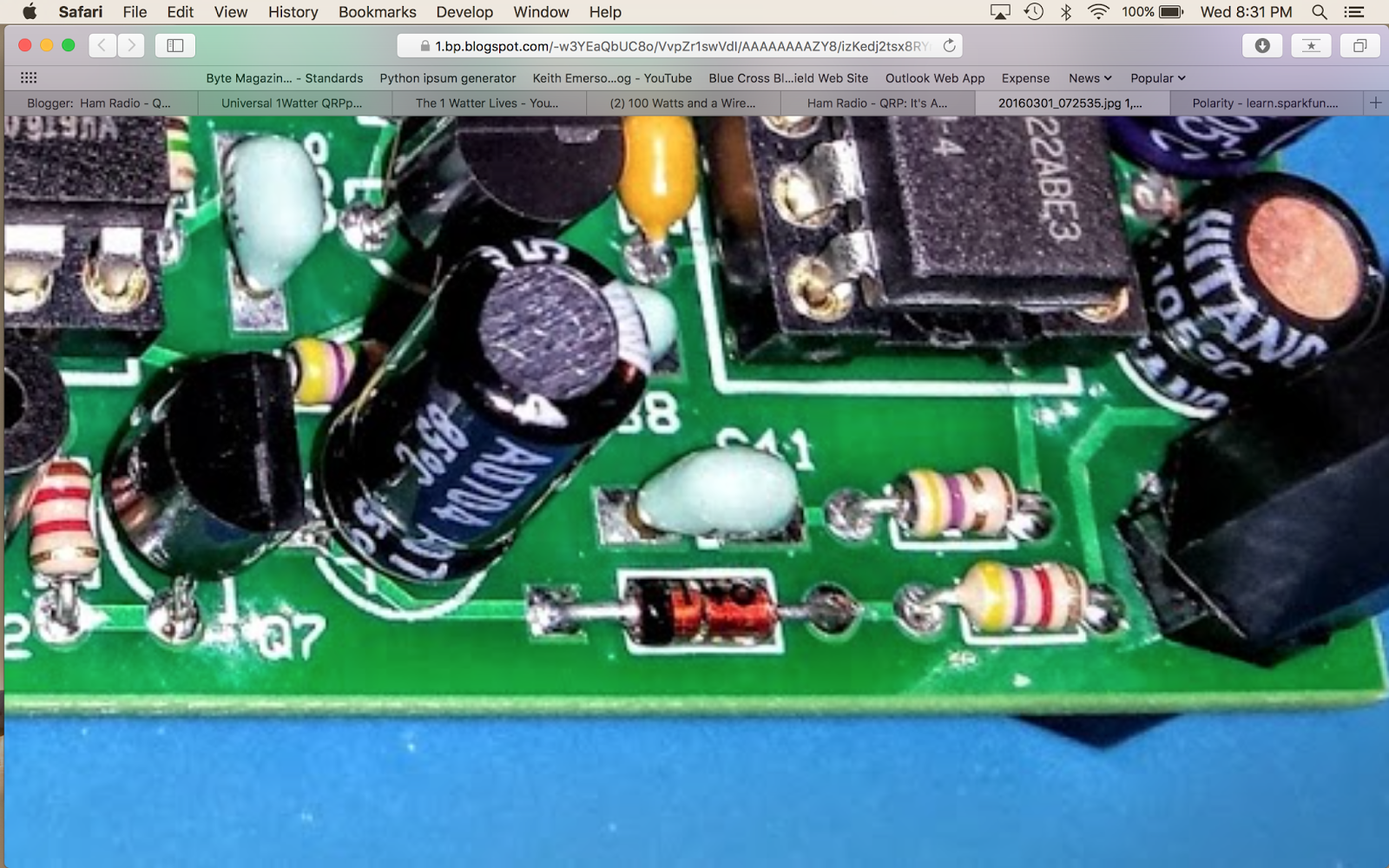 |
| AGC circuit |
Debugging
When the build was completed I connected the rig to an antenna and heard nothing.
The keying circuit and transmitter worked fine and I verified those functions but the receiver was deaf as a stump.
Thus began a number of days of investigation. Diz (the creator of the board) guided me through a number of debugging steps.
The first recommendation was to examine and rewind the binocular toroid balun that transformed the impedance from the xtal filters to the input of the U5 oscillator. He believed that I may had wound it incorrectly. I desoldered it and rewound it but that did not resolve the issue.
He then guided me through determining if one of the filter crystals or filter capacitors was bad. I desoldered a few components as a tests but that did not resolve the issue.
There are 3 identical mixer chips on the board. I swapped them around as there was a suggestion that there were some faulty chips in one of Diz's shipments.
I then took the board to my Elmer Paul Stroud AA4XX. He had a signal generator, Oscilloscope and RF detector. He traced the RF and all looked well but we still were unable to obtain any signal through the U5 mixer. Lastly we tried disconnecting the AGC transistor to see if it was clamping it and that didn't resolve it either.
Diz asked me to return the radio to him so he could take a look. After a couple weeks he emailed me saying he thought the BFO xtal might have a problem. But he later discovered that the oscillator in U5 was not starting up. Apparently the circuit design had a low Q and needed more current to get the oscillator working. He modified the design, adding a 16k resistor to the bottom of the board on U5 to get the oscillator going. After that all was well and he shipped the board back to me.
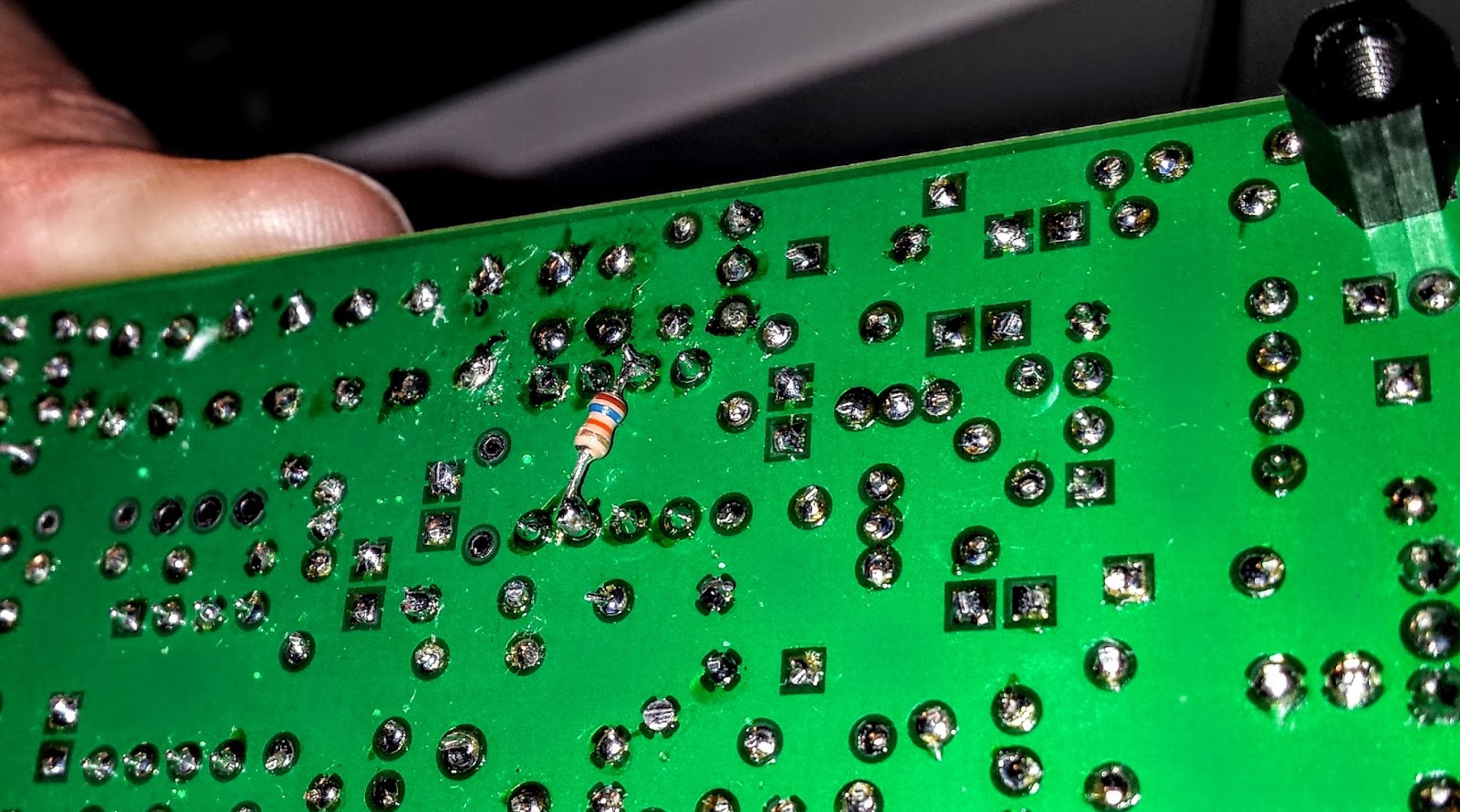 |
| The FIX for all those problems required an extra resistor connected across U5 |
Learning from problems
Being the first person to build a particular version of a kit brings its own set of challenges, especially when you're as new to kit building debugging RF problems as I am. However I'm actually glad the kit didn't work right at the initial build.The process of debugging the board, was a great learning process. I studied the schematics and learned, as best I could, the function of each circuit so that I could better understand how to test it. During the debugging process Diz instructed me that although RF signal generators and scopes are useful you can tell a lot by touching a RF component with an inductive metal object and listening for a buzz or hum from the BFO.
So all-in-all, even though the bug in the board was not due to a error on my part, I'm glad it occurred. I understand more about superhet radio design than I did before and more than if the kit had worked right off the bat.
On the air
After receiving the board back, I hooked up the frequency XCO potentiometer, paddle, command button, audio and output potentiometer and an external speaker. I then connected a 12v battery and heard the 1H2O keyer chip announce itself at power up in Morse "1 W".
 |
| Frequency control pot on the left |
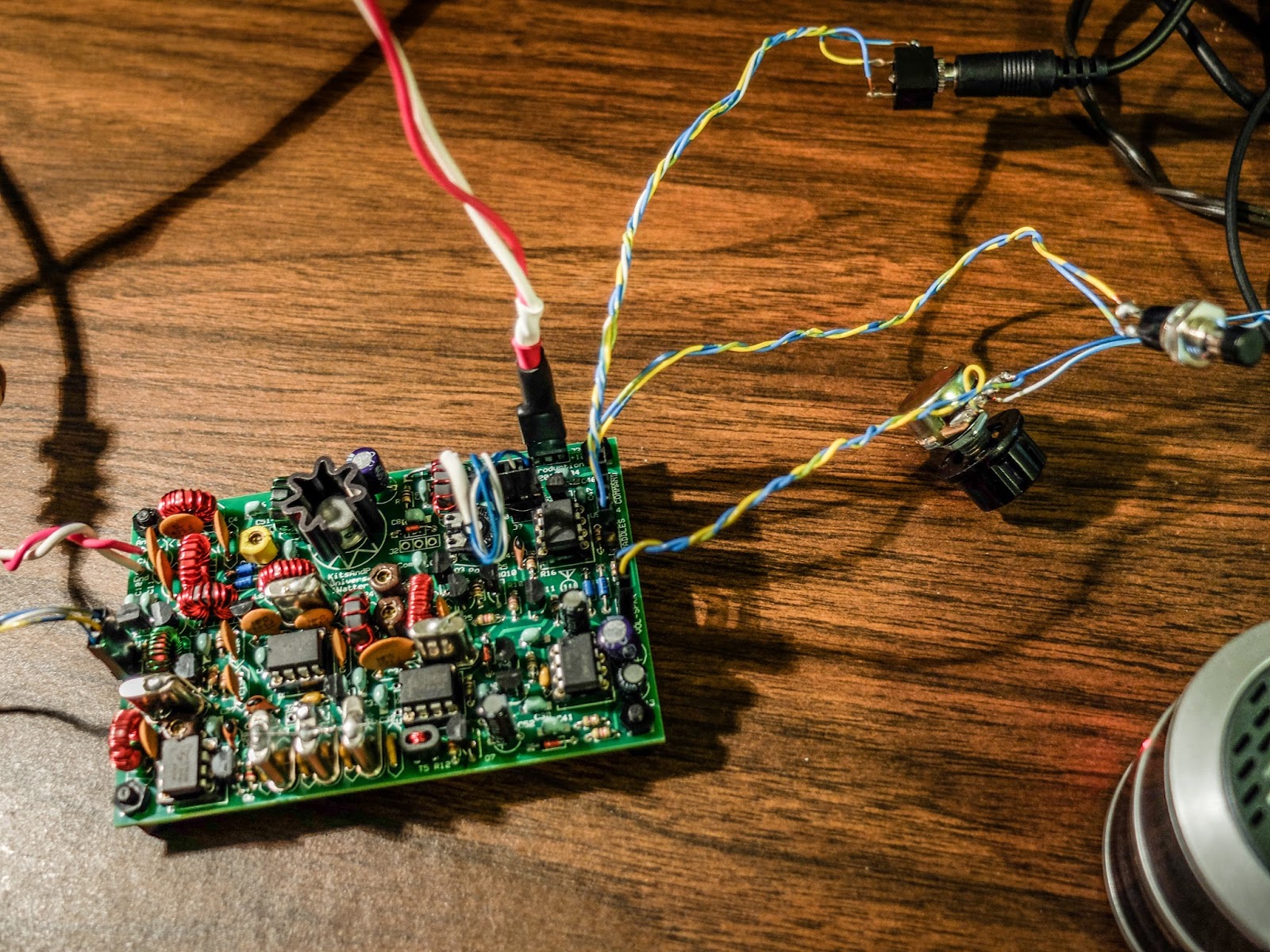 |
| Volume control, output jack, cmd pot and paddle input |
For this first on-air excursion I was using it at the default startup 15wpm keyer speed. You can default the speed higher with a different resistor value.
I have a resistor shrink wrapped and connected in-line to the blue-white wire coiling above the radio connecting to the speed pot terminal. In essence fixing the speed at 15wpm until I add the speed pot.
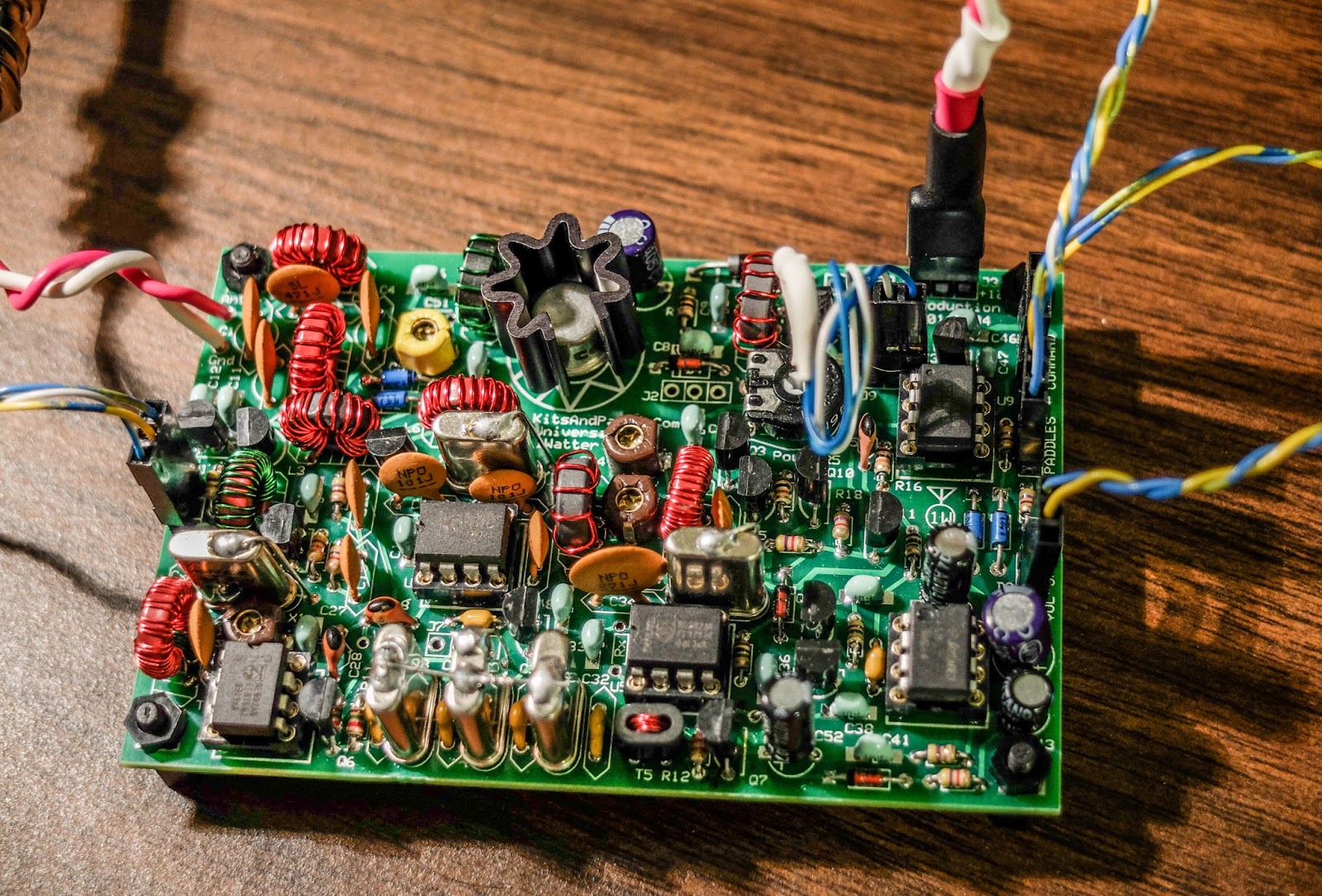 |
| Ready to transmit |
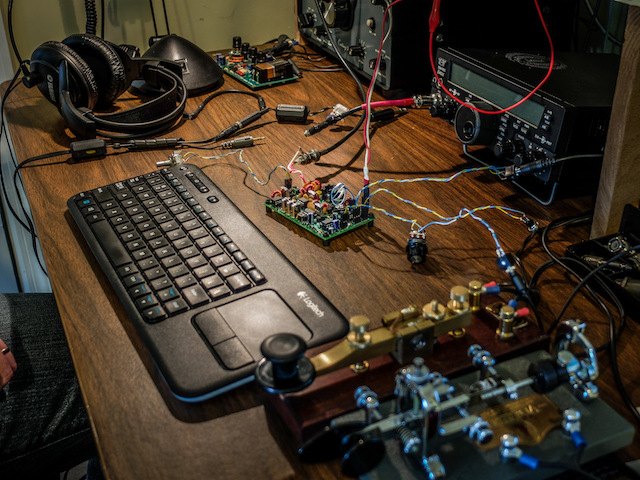 |
| On the air... I was using my paddle out of the photo to the right of the Bug |
First On Air QSO
I tuned around and found a strong station at the end of a QSO near 7030 kHz.
When he sent the final dit-dit I called and WD4AXJ answered my first call. He was in TN near Knoxville, and I received a 559. We chatted for about 10 minutes. Sorry about the blurry video. I thought I'd focused.
After I recorded this video I found an open frequency and sent out my call. Very shortly thereafter KD2FSH answered my call and reported me as 599!
Whoo - hoo. 599 for my little 1Watter 40m.
I was transmitting using my 40m attic antenna. So deed restricted HAMs take note. You can build a one-watt radio and make contacts using your attic antenna. Haha.
You'll hear in the video there is some weirdness going on with the audio derived AGC. It is clamping down sometimes and is worse when I don't have the volume turned up very loud. When I began calling it clamped after every semi-break-in but didn't do it much after that. I'll have to look into that.
The AGC clamping may be a side effect of the increased gain Diz added to the BFO oscillator. I'll ask the forum.
Other than the AGC issue I'm super pleased with the little board. I touched the heat sync a couple of times after transmitting my side of the qso and it was warm but not really hot. It seems as though as long as you have a reasonable match to the antenna the power transistor should be happy.
My next steps are to get it in an enclosure and get it out to the Excalibur antenna site to hook onto that nice 40m doublet we put up a couple weekends ago. I plan to use my efficient little BLT tuner for that purpose. I will do a further review of the feature set on the keyer and record some more qsos for a later review.
Summary
The band was fairly busy and the little 1Watter did a fine job with stations on nearby frequencies. You can hear some getting around the passband but it is not bad at all. I'll do some tests to further define it's selectivity but at first glance it is far better than my old Ten-Tec Century/21.
My calls were answered quickly and I received good signal reports. It didn't sound as though the transmitter was drifting at all during the QSO. That's one advantage of using VCXO in the design. The disadvantage of using a crystal controlled oscillator for the frequency control is limited tuning range. The transmitter only has about a 18 kHz tuning range around 7030 kHz and I don't find many of the SKCC folks around that frequency but it is the QRP watering hole for 40m.
It is possible to shift the frequency with some capacitance changes but I think I'll leave it as is for a time and see how many states I can work.
Just imagine. This little $50 single band kit has good selectivity, a nice built-in keyer with a natural sounding sidetone, and lest we forget... You get a MIGHTY 1 WATT of OUTPUT. What more could a QRP ham need.
That one-watt of output was sufficient for all the QSOs I attempted tonight.
So lower your power and raise your expectations
72/73
Richard, AA4OO
UPDATE: 04/01/2016
I am still having the AGC pumping issue and others on the list have reported similar issues but only on receive. It happens to me when I key unless I turn up the volume very high. I did get it installed in a case but I still need to wire up a real power connector rather than using alligator clips.
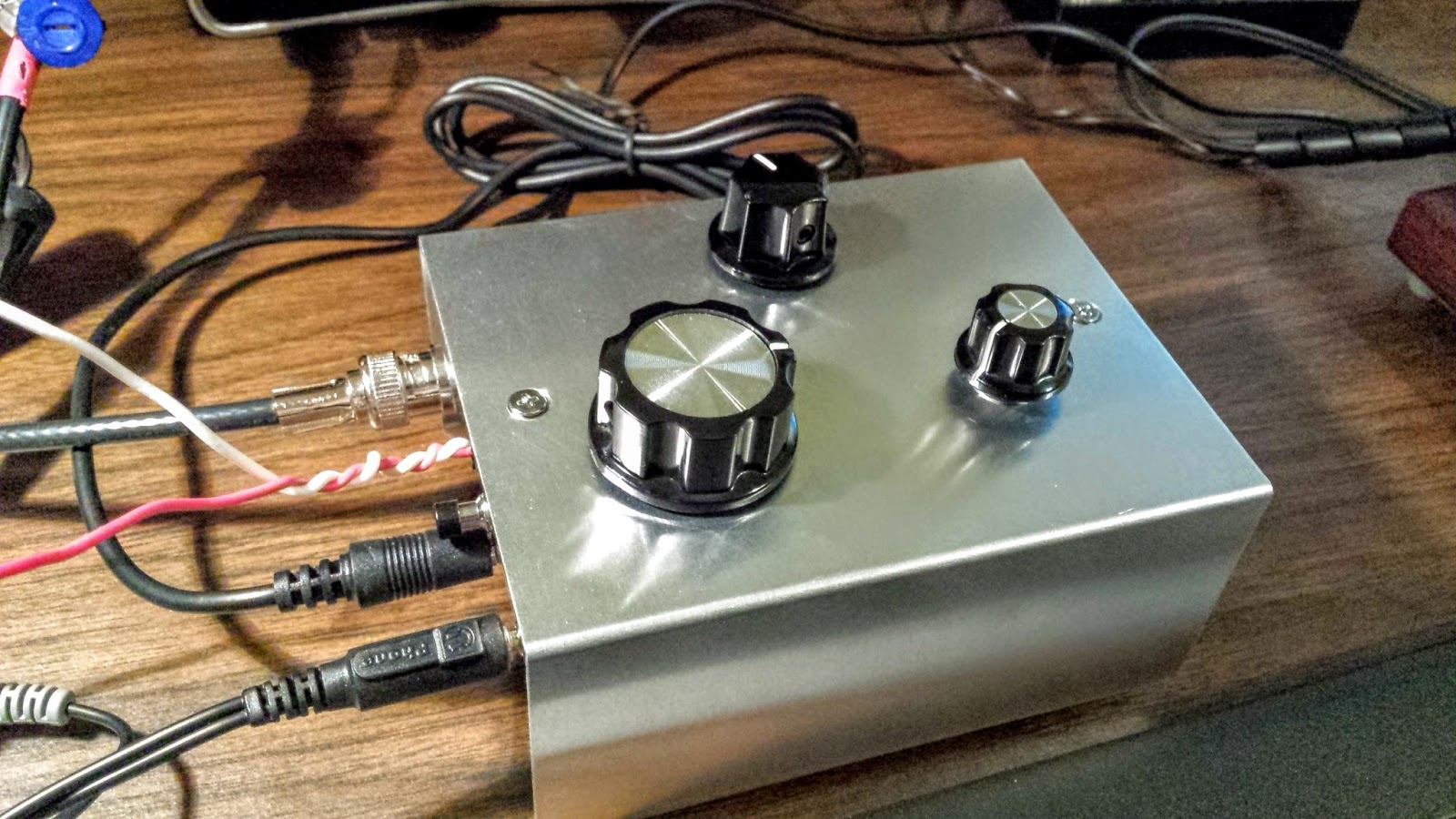 |
| !Watter installed in a case |
UPDATE: 04/05/2016
After doing quite a bit of reading I learned that the LM386 op-amp used in the 1watter is rather notorious for audio oscillations. There are a number of suggested fixes. I went with a 4.7uf cap connecting Pin 7 on U6 (the LM386) to ground. That hasn't totally resolved the issue but it's much less pronounced now.
I have it in the case with all the proper plugs now (see below) so I'm happy. I've been making QSOs every day with it and it continues to amaze me and the stations that work me. It is stable as a rock with regard to frequency and the large knob with the single turn 10k pot seems to work well for tuning. I have enough control to vary the frequency slightly without having to turn it too much. The tuning range is only about 20kHz so just 3 frequency markers are plenty to let me know what frequency I'm near. The selectivity is just fantastic for such a simple little radio. Diz has created an inexpensive winner.
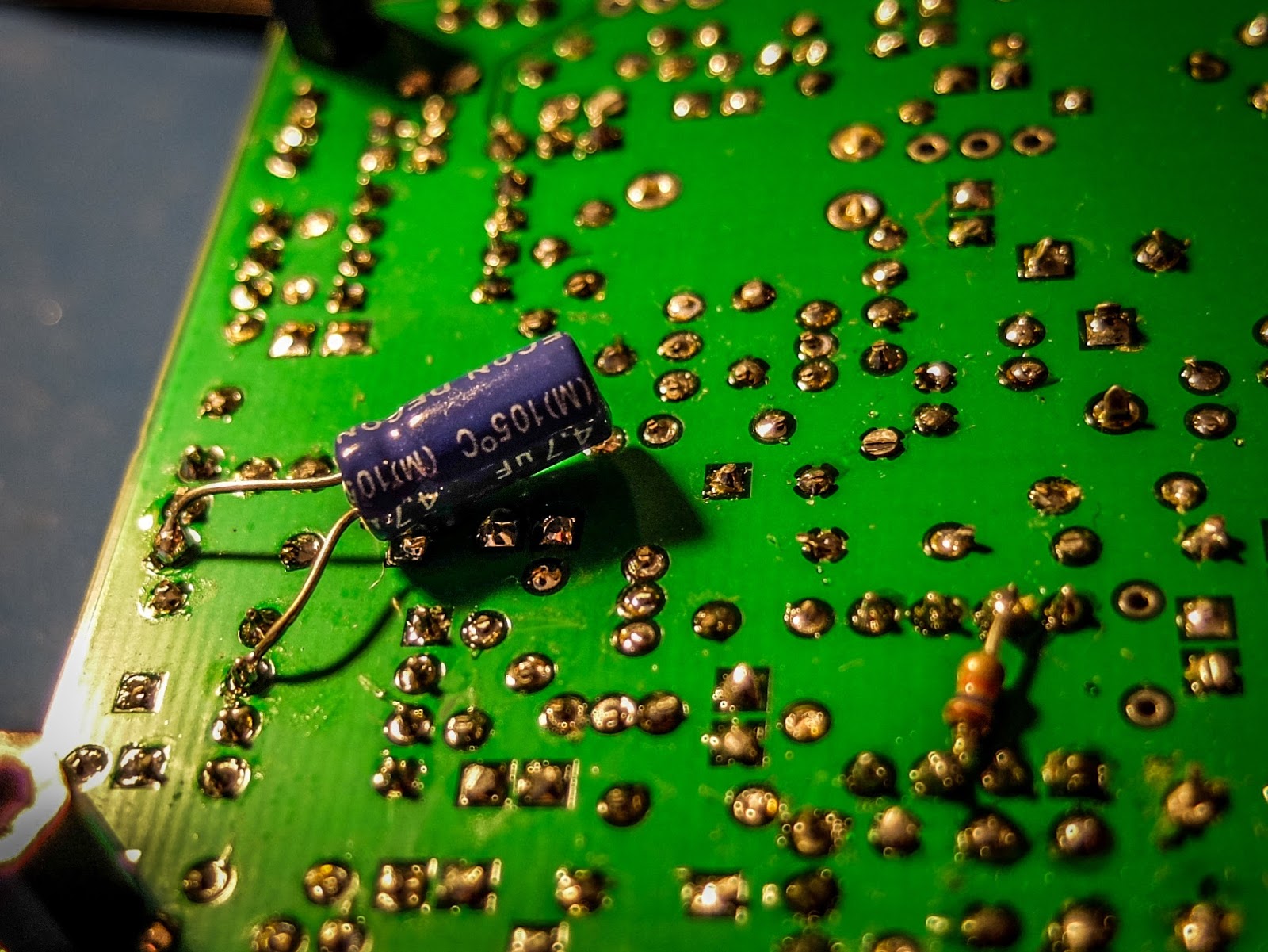 |
| cap fix for LM386 oscillations |
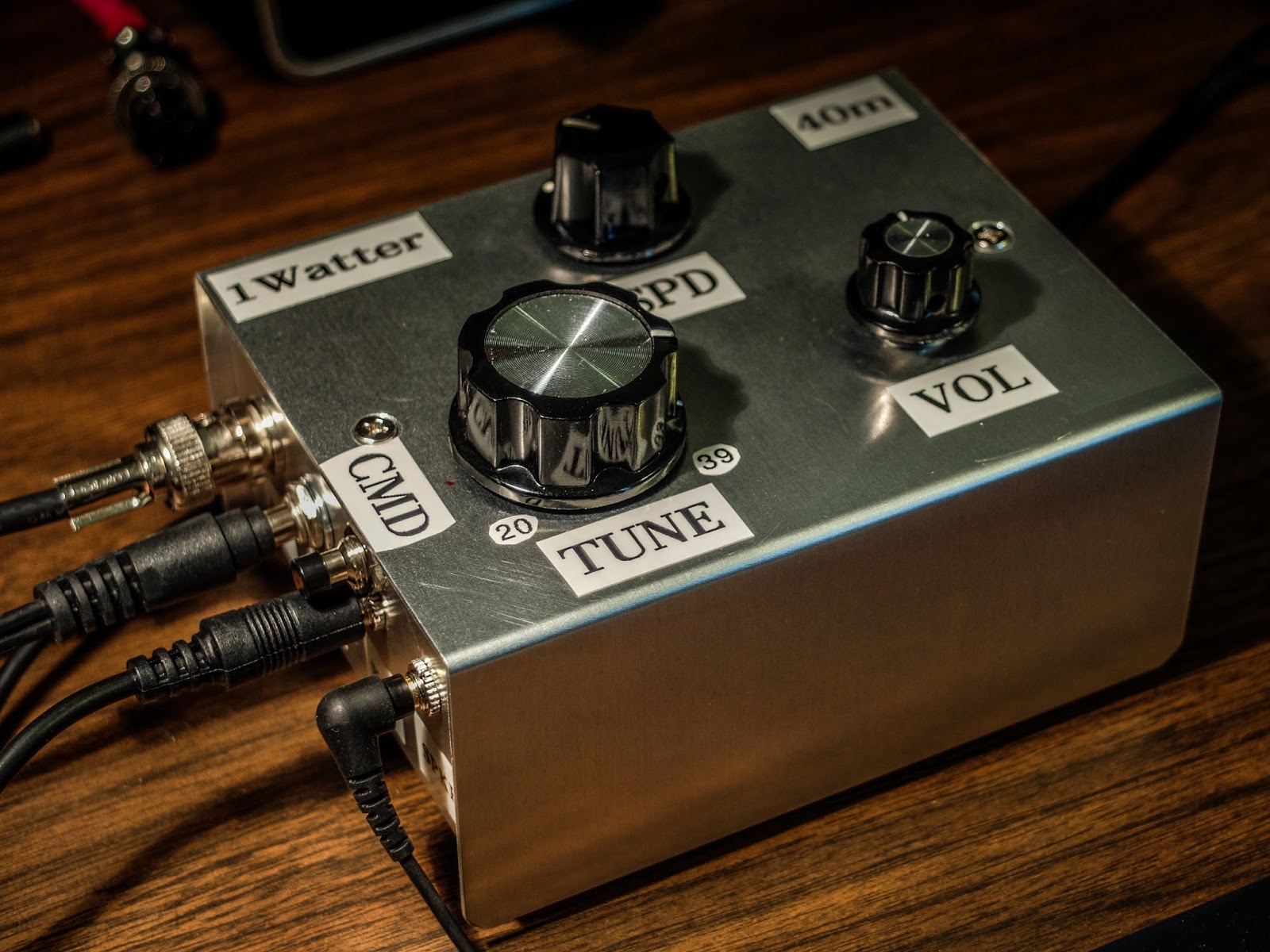 |
| 1Watter in enclosure with all the proper connectors for the case |
BLT+ Balanced line tuner at Excalibur
Another portable test of the BLT+ tuner
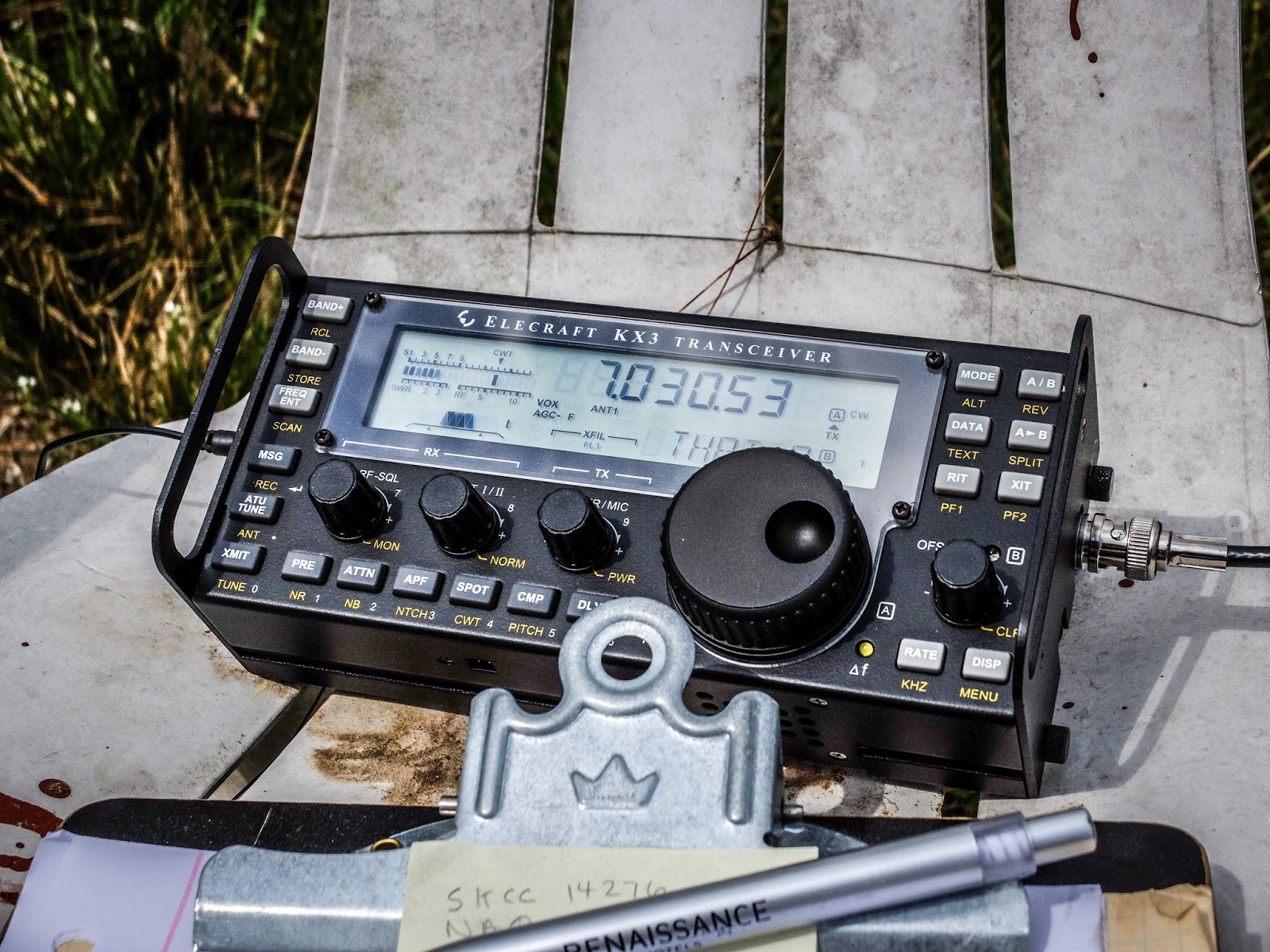 |
| KX3 operating on internal battery. What a fantastic portable rig. |
I took the BLT+ balanced line tuner out to the Excalibur antenna site to try it out on the doublet antenna that we put up last Saturday. This was the first test of that antenna (40m and 80m using a common feedpoint).
I didn't have much time today and after the first QSO it started to rain so I packed up and left before getting as much documented as I would have liked. I apologize for not recording the actual tuning process and the subsequent QSO.
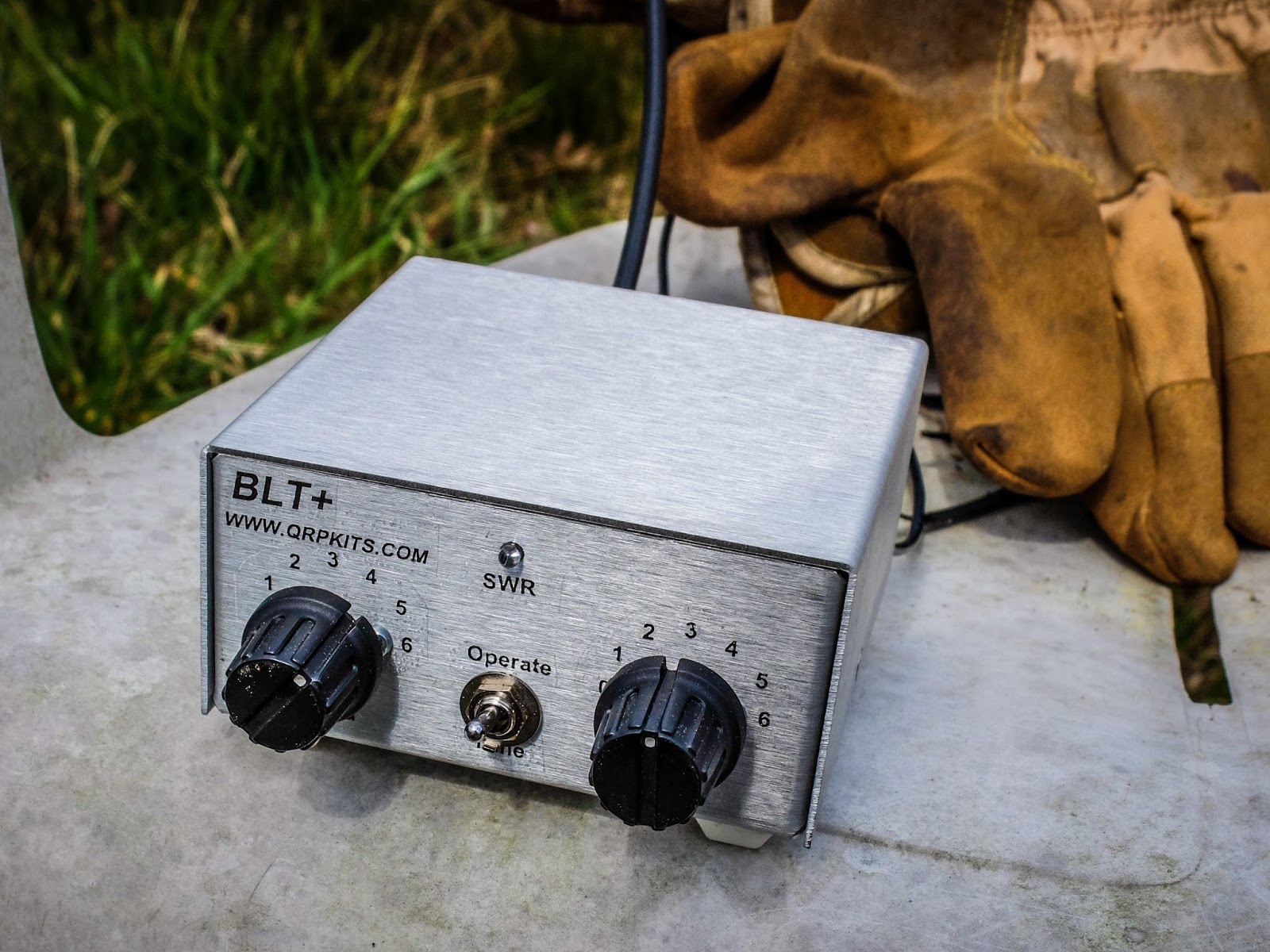 |
| BLT+ connected to open wire line (under the gloves) going to ta 40m Doublet at 65ft |
I had the KX3 operating using its internal batteries and outputting 2w. I was running 2 watts because that is the most efficient PA mode for the KX3.
I used the BLT+ to tune the 40m/80m doublet. Balanced line antennas perform better with a tuner designed for balanced line and this was a good test for both the tuner and the new antenna.
I used the BLT+ to tune the 40m/80m doublet. Balanced line antennas perform better with a tuner designed for balanced line and this was a good test for both the tuner and the new antenna.
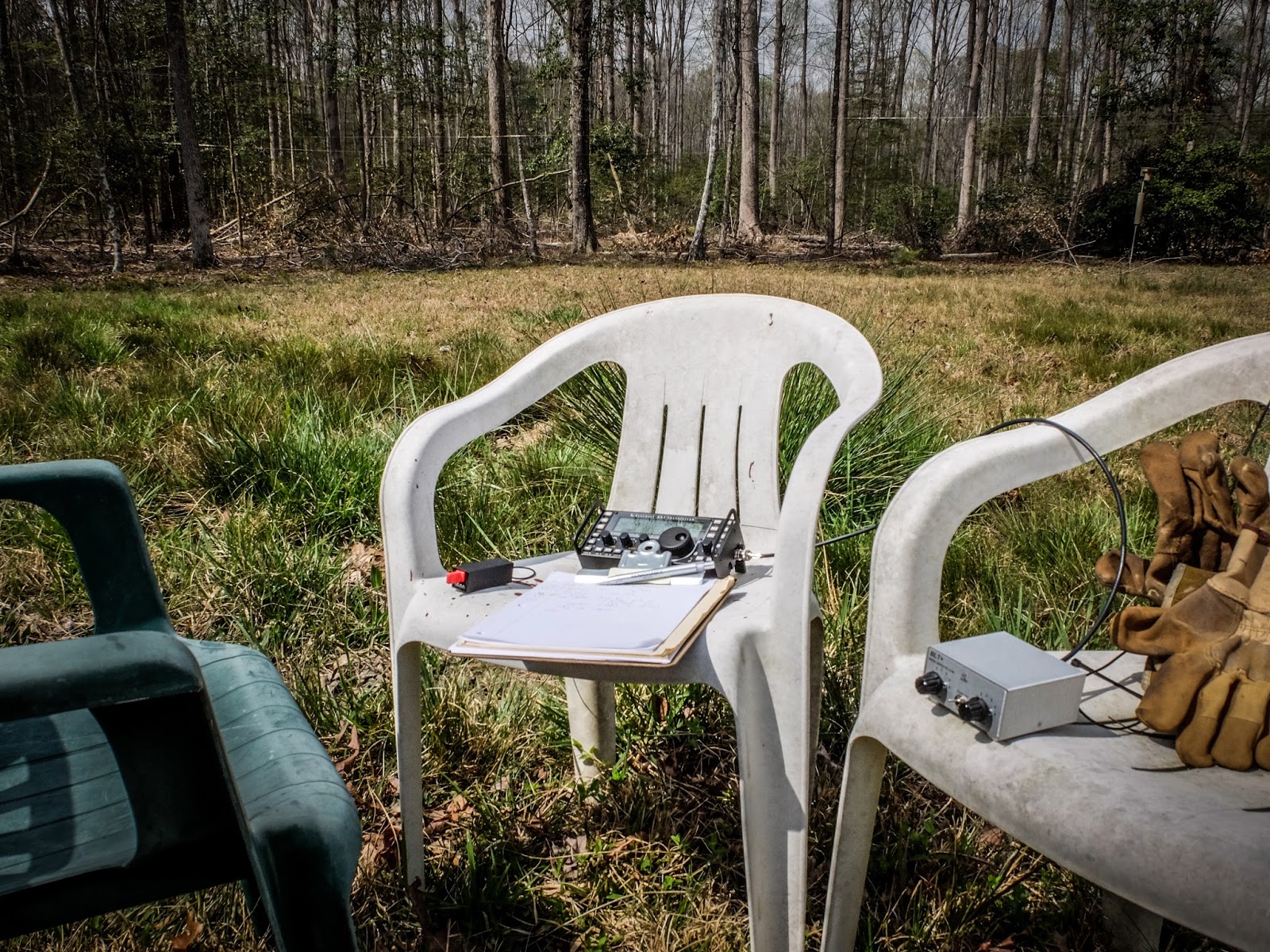 |
| Portable shack, courtesy of three plastic chairs |
I quickly matched the doublet using the BLT+ using the lowest impedance setting which is also the most efficient. I was glad to see that the BLT SWR LED indicator is bright enough to be seen in direct sunlight. I was wondering about that but you can definitely tell when it dims even in direct sunlight.
Performance
After quickly tuning up I sent my call two times and was promptly answered. The other station was running a Flex 6500 into a KPA500 and a OCF Windom at 50 feet.
He reported me as 559, while he was a 599. He was running a new KPA500 amp at 500w so we were a bit mismatched on power.
Interestingly the difference in 2w and 500w exactly matches the 4 S-Unit difference in our reports if you do the math (each increase in an S-unit requires quadruple the power).
AA4OO sitting back and listening to the QSO
Paul AA4XX kindly snapped some pictures while I was listening to the other operator. This is the Excalibur antenna site but the shack is outside the photo.
The Doublet's feed line has not been brought to the shack yet so I was just sitting under the antenna. The open feed line is running along the ground for a bit which certainly didn't help the signal but we haven't installed the posts to carry the feed line over to the shack and I was too lazy to move the chairs far enough away to keep the feed line in the air.
In the foreground is some saw-grass common on the NC coast. I'm not sure why it's growing this far inland.
The Doublet's feed line has not been brought to the shack yet so I was just sitting under the antenna. The open feed line is running along the ground for a bit which certainly didn't help the signal but we haven't installed the posts to carry the feed line over to the shack and I was too lazy to move the chairs far enough away to keep the feed line in the air.
In the foreground is some saw-grass common on the NC coast. I'm not sure why it's growing this far inland.
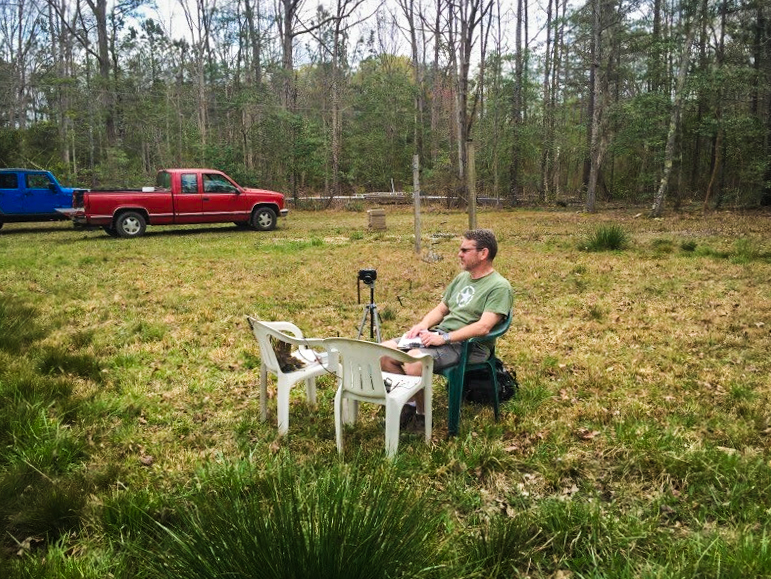 |
| Portable shack at the Excalibur antenna site... The Doublet is 65 feet above my head |
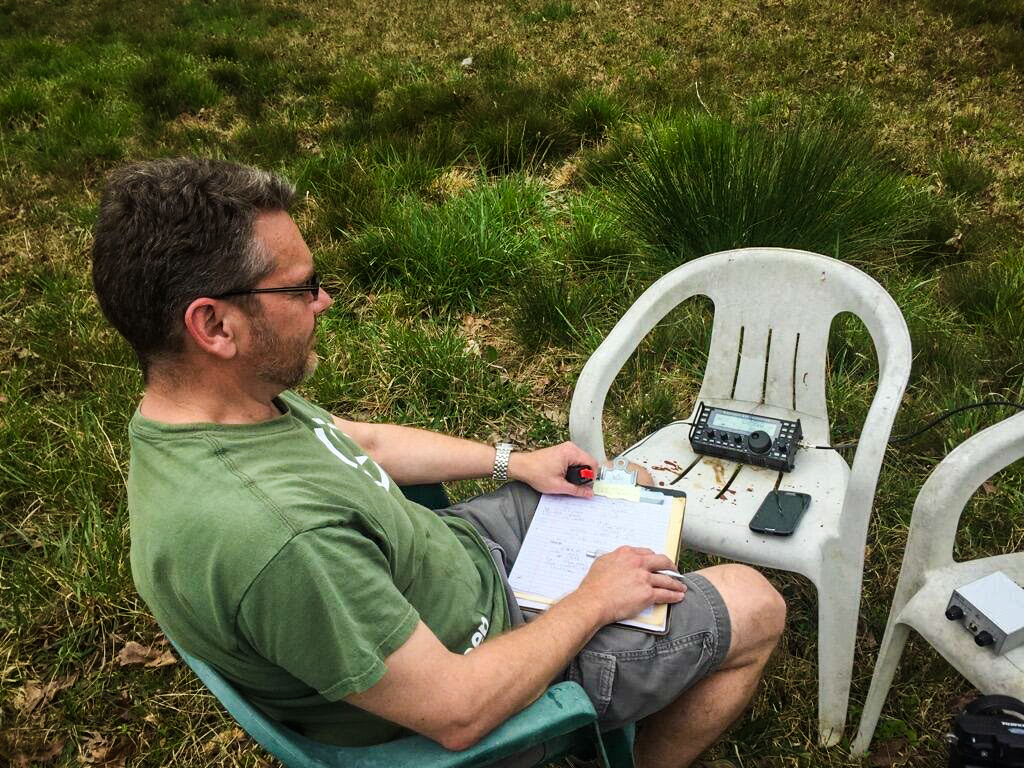 |
| Waiting my turn in the QSO... holding the Palm Single Paddle. BLT+ tuner in the chair to the right |
Video
Here is a brief video showing how the BLT+ is connected to the Doublet...
Summary
The little BLT+ performed great with both balanced line antennas I've tried. It is easy to use and allows me to use my KX3 with balanced feed line antennas now. I encourage you to build the kit from Pacific Antenna / QRPKits.com .
That's all for now
So lower your power and raise your expectations
72/73
Richard, AA4OO
The Radio Amateur’s Code
The Radio Amateur's Code
CONSIDERATE...He/[She] never knowingly operates in such a way as to lessen the pleasure of others.
LOYAL...He/[She] offers loyalty, encouragement and support to other amateurs, local clubs, the IARU Radio Society in his/[her] country, through which Amateur Radio in his/[her] country is represented nationally and internationally.
PROGRESSIVE...He/[She] keeps his/[her] station up to date. It is well-built and efficient. His/[Her] operating practice is above reproach.
FRIENDLY...He/[She] operates slowly and patiently when requested; offers friendly advice and counsel to beginners; kind assistance, cooperation and consideration for the interests of others. These are the marks of the amateur spirit.
BALANCED...Radio is a hobby, never interfering with duties owed to family, job, school or community.
PATRIOTIC...His/[Her] station and skills are always ready for service to country and community.
The original version of this was written in 1928, by Paul M Segal W9EEA, and it's been modified over the years as things change with the times. The core message remains the same though, as it's pretty much timeless.
The one trait that I want to touch upon today, is the "Balanced" one.
The Radio Amateur is:
BALANCED...Radio is a hobby, never interfering with duties owed to family, job, school or community.
Sometimes, I think we forget this one the most, and the evidence is not that hard to find. Take a wander on over to Facebook, or listen to a repeater and it's pretty obvious that some of us become seriously preoccupied or obsessed with such activities as NPOTA, contesting, DXing, county hunting, SOTA, etc.
Amateur Radio, on the whole, and these activities in particular are good and wholesome things. For instance, I'm certain that a lot of our wives, husbands and significant others would rather have us in the shack, yakking away on our radios than spending the month's mortgage money in bars,saloons, casinos or race tracks.
But it's easy to lose focus and become obsessed. Radio sport that involves chasing that elusive country, county, SOTA peak, NPOTA entity or whatever should never become the focus of our lives, or our reason for being. Just as purchasing that new rig, antenna, or piece of test equipment should never result in being unable to pay the mortgage, rent or put food on the table. It should also never result in the kid's college fund being raided.
Do you enter the shack on a Friday night for a contest, only to emerge late Sunday evening or early Monday morning? That's not good, my friends.
Even an essential thing can become bad, if you're not careful. Are you that someone who HAS to be at every civic function or training class? Even public service, as worthy and noble a cause as it is, should never become between you and your family. Before going out to respond to any disaster or emergency, the health and welfare of your loved ones should always be your top priority. If they're not taken care of, you don't go.
The bottom line is that there's more to life than Amateur Radio. In our quest to satisfy our passion, sometimes we forget that. Family, friends, loved ones and those relationships are way more important, and should always come before getting that high score, or working that 300th country or buying that newest, latest and greatest radio.
Always keep in the back of your mind that the greatest gift you can give your family is your time. If you're doing OK with that, then you're doing a good job with the "Balanced" part of The Radio Amateur's Code.
72 de Larry W2LJ
QRP - When you care to send the very least!
The Radio Amateur’s Code
The Radio Amateur's Code
CONSIDERATE...He/[She] never knowingly operates in such a way as to lessen the pleasure of others.
LOYAL...He/[She] offers loyalty, encouragement and support to other amateurs, local clubs, the IARU Radio Society in his/[her] country, through which Amateur Radio in his/[her] country is represented nationally and internationally.
PROGRESSIVE...He/[She] keeps his/[her] station up to date. It is well-built and efficient. His/[Her] operating practice is above reproach.
FRIENDLY...He/[She] operates slowly and patiently when requested; offers friendly advice and counsel to beginners; kind assistance, cooperation and consideration for the interests of others. These are the marks of the amateur spirit.
BALANCED...Radio is a hobby, never interfering with duties owed to family, job, school or community.
PATRIOTIC...His/[Her] station and skills are always ready for service to country and community.
The original version of this was written in 1928, by Paul M Segal W9EEA, and it's been modified over the years as things change with the times. The core message remains the same though, as it's pretty much timeless.
The one trait that I want to touch upon today, is the "Balanced" one.
The Radio Amateur is:
BALANCED...Radio is a hobby, never interfering with duties owed to family, job, school or community.
Sometimes, I think we forget this one the most, and the evidence is not that hard to find. Take a wander on over to Facebook, or listen to a repeater and it's pretty obvious that some of us become seriously preoccupied or obsessed with such activities as NPOTA, contesting, DXing, county hunting, SOTA, etc.
Amateur Radio, on the whole, and these activities in particular are good and wholesome things. For instance, I'm certain that a lot of our wives, husbands and significant others would rather have us in the shack, yakking away on our radios than spending the month's mortgage money in bars,saloons, casinos or race tracks.
But it's easy to lose focus and become obsessed. Radio sport that involves chasing that elusive country, county, SOTA peak, NPOTA entity or whatever should never become the focus of our lives, or our reason for being. Just as purchasing that new rig, antenna, or piece of test equipment should never result in being unable to pay the mortgage, rent or put food on the table. It should also never result in the kid's college fund being raided.
Do you enter the shack on a Friday night for a contest, only to emerge late Sunday evening or early Monday morning? That's not good, my friends.
Even an essential thing can become bad, if you're not careful. Are you that someone who HAS to be at every civic function or training class? Even public service, as worthy and noble a cause as it is, should never become between you and your family. Before going out to respond to any disaster or emergency, the health and welfare of your loved ones should always be your top priority. If they're not taken care of, you don't go.
The bottom line is that there's more to life than Amateur Radio. In our quest to satisfy our passion, sometimes we forget that. Family, friends, loved ones and those relationships are way more important, and should always come before getting that high score, or working that 300th country or buying that newest, latest and greatest radio.
Always keep in the back of your mind that the greatest gift you can give your family is your time. If you're doing OK with that, then you're doing a good job with the "Balanced" part of The Radio Amateur's Code.
72 de Larry W2LJ
QRP - When you care to send the very least!
I had hoped for better results
As planned, I went and activated Morristown National Historical Park (HP28) for NPOTA. Things didn't turn out as well as I had hoped; but it was still a good time nonetheless.
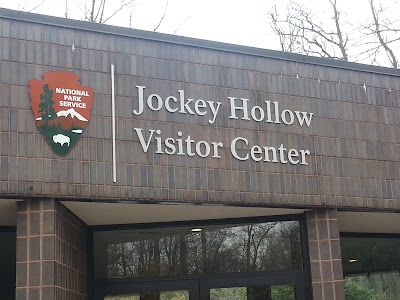
I got to the park on time, right before Noon (1600 UTC). I allowed my TomTom GPS unit to bring me up to Jockey Hollow via a new route which I had never taken before. This brought me up through the Great Dismal Swamp, which is designated as a National Wildlife Refuge. It is truly a beautiful area and as I was driving through, I could see herons and egrets and all sorts of birds in the marshes. Seeing that the Great Dismal Swamp is designated as a National Wildlife Refuge, I was wondering why it's not listed as one of the NPOTA WR entities. A little Googling revealed that the Swamp is administered by the United States Fish and Wildlife Service and not the National Parks Service. That's a shame because that would be a really beautiful area to set up a portable operation from.
Anyway, I got to the Park and got set up, which by now, only takes me a few minutes. After so many lunch time QRP sessions, I could do this in my sleep, or with my eyes shut.
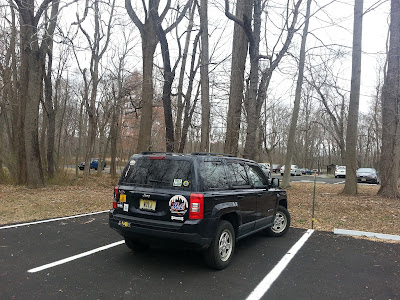
Since I was planning on operating some SSB in case there was a lack of activity, I brought along my big, heavy Werker deep cycle battery. I figured that this way, I could operate for an extended period of time at the 10 Watt SSB level if I needed to. And boy, did it turn out that I needed to!
The first thing I did after setting up was tune to around 14.061 MHz - the neighborhood of the QRP Watering Hole. I was shocked by what I heard - wall to wall CW signals! There was literally nowhere to sit where there wasn't a station calling "CQ TEST". I didn't realize that today was the RUDX, the Russian DX Contest - and boy, it filled the band!
I went on up to 17 Meters and heard some Europeans that were very loud. Knowing that meant the band was wide open, I easily found a clear spot at 18.082 MHz and proceeded to call "CQ NPOTA". The band was wide open, but as it turned out, there wasn't much if any activity. I worked K0IG right off the bat and then ...... nothing.
Not wanting to waste too much time, I got out of the Jeep and switched from the Buddistick to my 40 Meter Hamstick. I went down to 7.037 MHz, called CQ and was greeted by the normal NPOTA pileup. I was stoked and began to work station after station. The only bad thing was that the initial pileup lasted for only a few minutes, and then I began the monotonous routine of calling "CQ NPOTA" and waiting minutes in between answers.
Getting bored, I decided to give 20 Meters another try. Off came the Hamstick and up went the Buddistick. I called CQ for a bit and got a couple of QSO completed on 14.060 MHz, but it was tough. The stations calling me were loud, but their calls were being blanketed by even louder DX stations. Those guys had to be using mondo power. How much do they allow over in Europe, anyway?
Sitting there, disappointed as heck, I was ready to pack it in and head home a bit early. Then an inspiration occurred that maybe I should give 20 Meter SSB a whirl. Even though I'm not an avid fan of SSB, I decided to give it a shot. I was rewarded with a small run of about a dozen stations before that too, ended up petering out.
I had gone up to HP28 with a spiral notebook, thinking I would fill pages with call signs. After all, my outing to TR23 in January netted me over 80 QSOs. For some reason. I was thinking I would break that record easily. Just the opposite happened! I ended up with only 27 QSOs - but you know what? I discovered that a bad day of Amateur Radio is STILL better than a good day at work. So I'm a happy camper, anyway.
This only gives me more incentive to go back up to HP28 later this year, but this time throw a wire into a tree. I know that's kind of verboten, and on Facebook, someone actually related how they were asked to leave a park the other day for doing that. With that in mind, just before I left, I went to the visitor center and explained that I was an Amateur Radio operator and what NPOTA was (she knew what it was, by the way) and asked if there was any prohibition about wires in trees. She said as long as it was temporary, and would cause no damage and would not interfere with anyone else's visit, that they were OK with it.
So when I got back to the car, just for the heck of it, I attempted to launch a line over a limb just to see how it would go. 30 plus feet on the first try.
I'll be back, Jockey Hollow!
72 de Larry W2LJ
QRP - When you care to send the very least!

I got to the park on time, right before Noon (1600 UTC). I allowed my TomTom GPS unit to bring me up to Jockey Hollow via a new route which I had never taken before. This brought me up through the Great Dismal Swamp, which is designated as a National Wildlife Refuge. It is truly a beautiful area and as I was driving through, I could see herons and egrets and all sorts of birds in the marshes. Seeing that the Great Dismal Swamp is designated as a National Wildlife Refuge, I was wondering why it's not listed as one of the NPOTA WR entities. A little Googling revealed that the Swamp is administered by the United States Fish and Wildlife Service and not the National Parks Service. That's a shame because that would be a really beautiful area to set up a portable operation from.
Anyway, I got to the Park and got set up, which by now, only takes me a few minutes. After so many lunch time QRP sessions, I could do this in my sleep, or with my eyes shut.
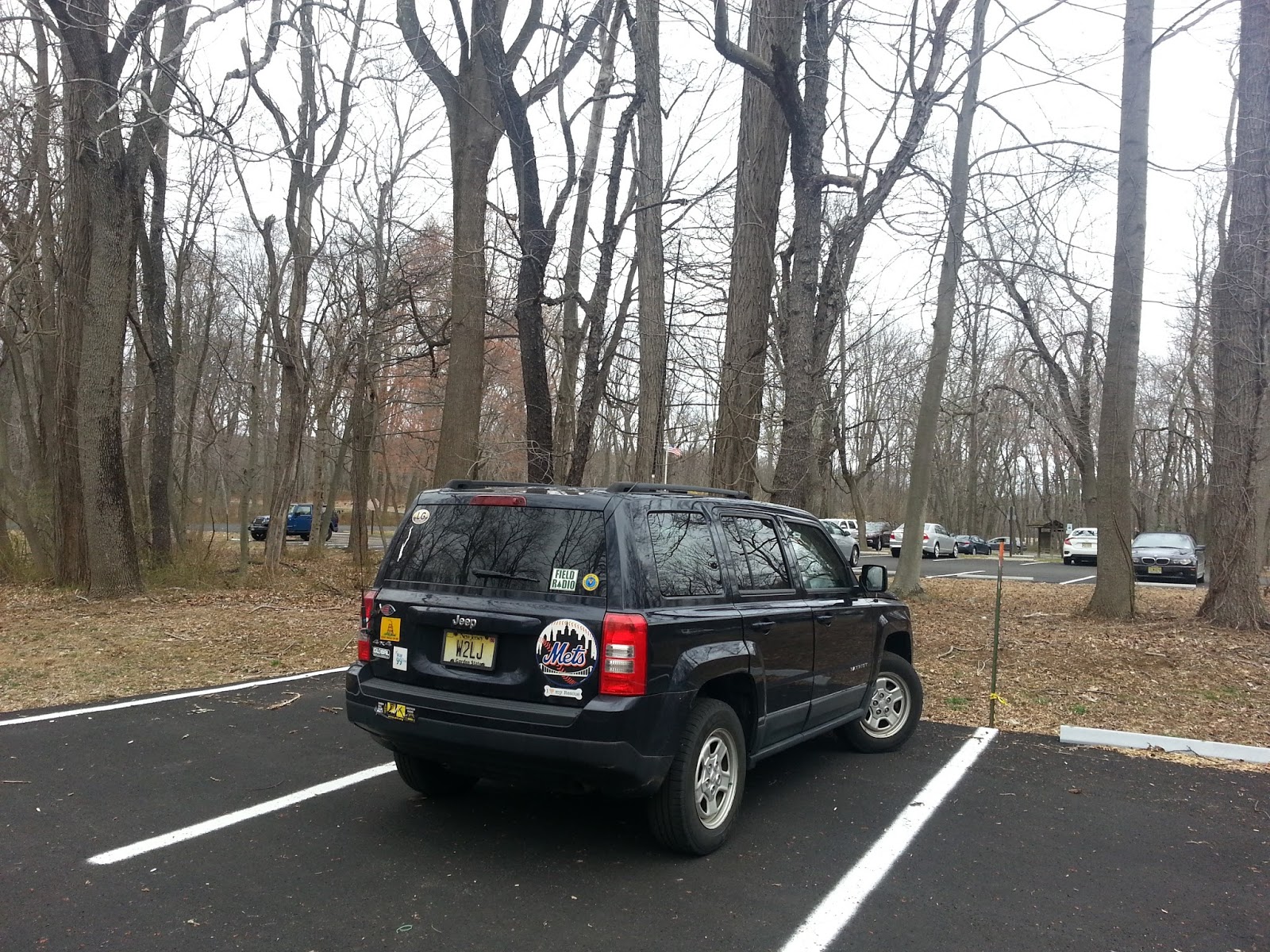
Since I was planning on operating some SSB in case there was a lack of activity, I brought along my big, heavy Werker deep cycle battery. I figured that this way, I could operate for an extended period of time at the 10 Watt SSB level if I needed to. And boy, did it turn out that I needed to!
The first thing I did after setting up was tune to around 14.061 MHz - the neighborhood of the QRP Watering Hole. I was shocked by what I heard - wall to wall CW signals! There was literally nowhere to sit where there wasn't a station calling "CQ TEST". I didn't realize that today was the RUDX, the Russian DX Contest - and boy, it filled the band!
I went on up to 17 Meters and heard some Europeans that were very loud. Knowing that meant the band was wide open, I easily found a clear spot at 18.082 MHz and proceeded to call "CQ NPOTA". The band was wide open, but as it turned out, there wasn't much if any activity. I worked K0IG right off the bat and then ...... nothing.
Not wanting to waste too much time, I got out of the Jeep and switched from the Buddistick to my 40 Meter Hamstick. I went down to 7.037 MHz, called CQ and was greeted by the normal NPOTA pileup. I was stoked and began to work station after station. The only bad thing was that the initial pileup lasted for only a few minutes, and then I began the monotonous routine of calling "CQ NPOTA" and waiting minutes in between answers.
Getting bored, I decided to give 20 Meters another try. Off came the Hamstick and up went the Buddistick. I called CQ for a bit and got a couple of QSO completed on 14.060 MHz, but it was tough. The stations calling me were loud, but their calls were being blanketed by even louder DX stations. Those guys had to be using mondo power. How much do they allow over in Europe, anyway?
Sitting there, disappointed as heck, I was ready to pack it in and head home a bit early. Then an inspiration occurred that maybe I should give 20 Meter SSB a whirl. Even though I'm not an avid fan of SSB, I decided to give it a shot. I was rewarded with a small run of about a dozen stations before that too, ended up petering out.
I had gone up to HP28 with a spiral notebook, thinking I would fill pages with call signs. After all, my outing to TR23 in January netted me over 80 QSOs. For some reason. I was thinking I would break that record easily. Just the opposite happened! I ended up with only 27 QSOs - but you know what? I discovered that a bad day of Amateur Radio is STILL better than a good day at work. So I'm a happy camper, anyway.
This only gives me more incentive to go back up to HP28 later this year, but this time throw a wire into a tree. I know that's kind of verboten, and on Facebook, someone actually related how they were asked to leave a park the other day for doing that. With that in mind, just before I left, I went to the visitor center and explained that I was an Amateur Radio operator and what NPOTA was (she knew what it was, by the way) and asked if there was any prohibition about wires in trees. She said as long as it was temporary, and would cause no damage and would not interfere with anyone else's visit, that they were OK with it.
So when I got back to the car, just for the heck of it, I attempted to launch a line over a limb just to see how it would go. 30 plus feet on the first try.
I'll be back, Jockey Hollow!
72 de Larry W2LJ
QRP - When you care to send the very least!
I had hoped for better results
As planned, I went and activated Morristown National Historical Park (HP28) for NPOTA. Things didn't turn out as well as I had hoped; but it was still a good time nonetheless.
I got to the park on time, right before Noon (1600 UTC). I allowed my TomTom GPS unit to bring me up to Jockey Hollow via a new route which I had never taken before. This brought me up through the Great Dismal Swamp, which is designated as a National Wildlife Refuge. It is truly a beautiful area and as I was driving through, I could see herons and egrets and all sorts of birds in the marshes. Seeing that the Great Dismal Swamp is designated as a National Wildlife Refuge, I was wondering why it's not listed as one of the NPOTA WR entities. A little Googling revealed that the Swamp is administered by the United States Fish and Wildlife Service and not the National Parks Service. That's a shame because that would be a really beautiful area to set up a portable operation from.
Anyway, I got to the Park and got set up, which by now, only takes me a few minutes. After so many lunch time QRP sessions, I could do this in my sleep, or with my eyes shut.
Since I was planning on operating some SSB in case there was a lack of activity, I brought along my big, heavy Werker deep cycle battery. I figured that this way, I could operate for an extended period of time at the 10 Watt SSB level if I needed to. And boy, did it turn out that I needed to!
The first thing I did after setting up was tune to around 14.061 MHz - the neighborhood of the QRP Watering Hole. I was shocked by what I heard - wall to wall CW signals! There was literally nowhere to sit where there wasn't a station calling "CQ TEST". I didn't realize that today was the RUDX, the Russian DX Contest - and boy, it filled the band!
I went on up to 17 Meters and heard some Europeans that were very loud. Knowing that meant the band was wide open, I easily found a clear spot at 18.082 MHz and proceeded to call "CQ NPOTA". The band was wide open, but as it turned out, there wasn't much if any activity. I worked K0IG right off the bat and then ...... nothing.
Not wanting to waste too much time, I got out of the Jeep and switched from the Buddistick to my 40 Meter Hamstick. I went down to 7.037 MHz, called CQ and was greeted by the normal NPOTA pileup. I was stoked and began to work station after station. The only bad thing was that the initial pileup lasted for only a few minutes, and then I began the monotonous routine of calling "CQ NPOTA" and waiting minutes in between answers.
Getting bored, I decided to give 20 Meters another try. Off came the Hamstick and up went the Buddistick. I called CQ for a bit and got a couple of QSO completed on 14.060 MHz, but it was tough. The stations calling me were loud, but their calls were being blanketed by even louder DX stations. Those guys had to be using mondo power. How much do they allow over in Europe, anyway?
Sitting there, disappointed as heck, I was ready to pack it in and head home a bit early. Then an inspiration occurred that maybe I should give 20 Meter SSB a whirl. Even though I'm not an avid fan of SSB, I decided to give it a shot. I was rewarded with a small run of about a dozen stations before that too, ended up petering out.
I had gone up to HP28 with a spiral notebook, thinking I would fill pages with call signs. After all, my outing to TR23 in January netted me over 80 QSOs. For some reason. I was thinking I would break that record easily. Just the opposite happened! I ended up with only 27 QSOs - but you know what? I discovered that a bad day of Amateur Radio is STILL better than a good day at work. So I'm a happy camper, anyway.
This only gives me more incentive to go back up to HP28 later this year, but this time throw a wire into a tree. I know that's kind of verboten, and on Facebook, someone actually related how they were asked to leave a park the other day for doing that. With that in mind, just before I left, I went to the visitor center and explained that I was an Amateur Radio operator and what NPOTA was (she knew what it was, by the way) and asked if there was any prohibition about wires in trees. She said as long as it was temporary, and would cause no damage and would not interfere with anyone else's visit, that they were OK with it.
So when I got back to the car, just for the heck of it, I attempted to launch a line over a limb just to see how it would go. 30 plus feet on the first try.
I'll be back, Jockey Hollow!
72 de Larry W2LJ
QRP - When you care to send the very least!
I got to the park on time, right before Noon (1600 UTC). I allowed my TomTom GPS unit to bring me up to Jockey Hollow via a new route which I had never taken before. This brought me up through the Great Dismal Swamp, which is designated as a National Wildlife Refuge. It is truly a beautiful area and as I was driving through, I could see herons and egrets and all sorts of birds in the marshes. Seeing that the Great Dismal Swamp is designated as a National Wildlife Refuge, I was wondering why it's not listed as one of the NPOTA WR entities. A little Googling revealed that the Swamp is administered by the United States Fish and Wildlife Service and not the National Parks Service. That's a shame because that would be a really beautiful area to set up a portable operation from.
Anyway, I got to the Park and got set up, which by now, only takes me a few minutes. After so many lunch time QRP sessions, I could do this in my sleep, or with my eyes shut.
Since I was planning on operating some SSB in case there was a lack of activity, I brought along my big, heavy Werker deep cycle battery. I figured that this way, I could operate for an extended period of time at the 10 Watt SSB level if I needed to. And boy, did it turn out that I needed to!
The first thing I did after setting up was tune to around 14.061 MHz - the neighborhood of the QRP Watering Hole. I was shocked by what I heard - wall to wall CW signals! There was literally nowhere to sit where there wasn't a station calling "CQ TEST". I didn't realize that today was the RUDX, the Russian DX Contest - and boy, it filled the band!
I went on up to 17 Meters and heard some Europeans that were very loud. Knowing that meant the band was wide open, I easily found a clear spot at 18.082 MHz and proceeded to call "CQ NPOTA". The band was wide open, but as it turned out, there wasn't much if any activity. I worked K0IG right off the bat and then ...... nothing.
Not wanting to waste too much time, I got out of the Jeep and switched from the Buddistick to my 40 Meter Hamstick. I went down to 7.037 MHz, called CQ and was greeted by the normal NPOTA pileup. I was stoked and began to work station after station. The only bad thing was that the initial pileup lasted for only a few minutes, and then I began the monotonous routine of calling "CQ NPOTA" and waiting minutes in between answers.
Getting bored, I decided to give 20 Meters another try. Off came the Hamstick and up went the Buddistick. I called CQ for a bit and got a couple of QSO completed on 14.060 MHz, but it was tough. The stations calling me were loud, but their calls were being blanketed by even louder DX stations. Those guys had to be using mondo power. How much do they allow over in Europe, anyway?
Sitting there, disappointed as heck, I was ready to pack it in and head home a bit early. Then an inspiration occurred that maybe I should give 20 Meter SSB a whirl. Even though I'm not an avid fan of SSB, I decided to give it a shot. I was rewarded with a small run of about a dozen stations before that too, ended up petering out.
I had gone up to HP28 with a spiral notebook, thinking I would fill pages with call signs. After all, my outing to TR23 in January netted me over 80 QSOs. For some reason. I was thinking I would break that record easily. Just the opposite happened! I ended up with only 27 QSOs - but you know what? I discovered that a bad day of Amateur Radio is STILL better than a good day at work. So I'm a happy camper, anyway.
This only gives me more incentive to go back up to HP28 later this year, but this time throw a wire into a tree. I know that's kind of verboten, and on Facebook, someone actually related how they were asked to leave a park the other day for doing that. With that in mind, just before I left, I went to the visitor center and explained that I was an Amateur Radio operator and what NPOTA was (she knew what it was, by the way) and asked if there was any prohibition about wires in trees. She said as long as it was temporary, and would cause no damage and would not interfere with anyone else's visit, that they were OK with it.
So when I got back to the car, just for the heck of it, I attempted to launch a line over a limb just to see how it would go. 30 plus feet on the first try.
I'll be back, Jockey Hollow!
72 de Larry W2LJ
QRP - When you care to send the very least!
Weather forecast is looking good
The weather is looking good for Saturday for my planned expedition to Morristown National Historical Park (NPOTA HP28) this coming Saturday. Sunny with high temperatures in the upper 40s (9C) Hopefully, there will be no curve balls out of Left field that will preclude me from going.
The plan is to leave the house somewhere around 11:00 AM (1500 UTC) and be up there and on the air by around 12:00 Noon (1600 UTC). I plan on working 40, 20 and 17 Meters - CW around the QRP watering holes. I'll be packing some water and snacks and hope to stay for three or four hours. I am going to see if I can get the PAR END FEDZ 40/20/10 up in a tree in the parking lot. If not, I'll just rely on the Buddistick for 20 and 17 Meters and a Hamstick for 40 Meters.
Last Saturday, I went to the Cherryville hamfest out in Flemington, NJ which is run by the W2CRA, Cherryville Repeater Association. This was the very first hamfest that I ever went to as a newbie Ham back in 1979, and it's always held a special place for me. Unfortunately, over the years (and especially since the dawn of eBay) the Cherryville hamfest seemed to be on the down slope. Like a lot of hamfests, it suffered from poor attendance, lack of vendors, etc was plaguing it - and seemed to be spiraling towards its death knell.
Happily, between last year and this year, that trend seems to be reversed. Attendance is still nowhere near where it used to be, but it's growing. The number of vendors is still down (but again, growing), and for the most part the really bad junk is gone - and by junk I mean non-ham related garbage. I mean really, who wants to buy a roto-tiller at a hamfest? Sure there's still lots of non-Ham stuff to be seen, but it also seems there are more and more treasures to be found.
I purchased some new SO-239 chassis connectors as well as two old butterfly type variable capacitors that I got for five bucks. The capacitors have long stems on them, so they should be useful in my magnetic loop antenna project. I need to clean them up with some contact cleaner, but some initial testing seems to indicate that they are in the 200 pF range. KJI Electronics was there, and I purchased a Diamond antenna for my VHF/UHF handheld. What a difference when you buy the real brand and not a cheap knock-off!
Before I forget ........ I have a friend who has a "hardly used, very good condition" SGC-2020 QRP radio that he wants to sell. I am not privy to the price. But if you're interested, send an e-mail to [email protected] and I will forward it on to him. He's not looking for eBay type money, but he's not interested in getting taken, either.
72 de Larry W2LJ
QRP - When you care to send the very least!
The plan is to leave the house somewhere around 11:00 AM (1500 UTC) and be up there and on the air by around 12:00 Noon (1600 UTC). I plan on working 40, 20 and 17 Meters - CW around the QRP watering holes. I'll be packing some water and snacks and hope to stay for three or four hours. I am going to see if I can get the PAR END FEDZ 40/20/10 up in a tree in the parking lot. If not, I'll just rely on the Buddistick for 20 and 17 Meters and a Hamstick for 40 Meters.
Last Saturday, I went to the Cherryville hamfest out in Flemington, NJ which is run by the W2CRA, Cherryville Repeater Association. This was the very first hamfest that I ever went to as a newbie Ham back in 1979, and it's always held a special place for me. Unfortunately, over the years (and especially since the dawn of eBay) the Cherryville hamfest seemed to be on the down slope. Like a lot of hamfests, it suffered from poor attendance, lack of vendors, etc was plaguing it - and seemed to be spiraling towards its death knell.
Happily, between last year and this year, that trend seems to be reversed. Attendance is still nowhere near where it used to be, but it's growing. The number of vendors is still down (but again, growing), and for the most part the really bad junk is gone - and by junk I mean non-ham related garbage. I mean really, who wants to buy a roto-tiller at a hamfest? Sure there's still lots of non-Ham stuff to be seen, but it also seems there are more and more treasures to be found.
I purchased some new SO-239 chassis connectors as well as two old butterfly type variable capacitors that I got for five bucks. The capacitors have long stems on them, so they should be useful in my magnetic loop antenna project. I need to clean them up with some contact cleaner, but some initial testing seems to indicate that they are in the 200 pF range. KJI Electronics was there, and I purchased a Diamond antenna for my VHF/UHF handheld. What a difference when you buy the real brand and not a cheap knock-off!
Before I forget ........ I have a friend who has a "hardly used, very good condition" SGC-2020 QRP radio that he wants to sell. I am not privy to the price. But if you're interested, send an e-mail to [email protected] and I will forward it on to him. He's not looking for eBay type money, but he's not interested in getting taken, either.
72 de Larry W2LJ
QRP - When you care to send the very least!













