 |
 ICQ Podcast S06 E13 – Radio Safety (30 June 2013)
 30 June 2013 | by
 Series Six Episode Thirteen of the ICQ Podcast has been released. News Stories include :-
- RSGB Centenary
- New GB3WGI 144MHz transatlantic beacon goes live with G2FKZ legacy funding
- Dot, dash, full stop: Telegram service ends
- Moon bounce from Antarctica
- Duhallow Repeater Group
- 70MHz DXpedition to EU-013 Jersey
- 3rd UK High Altitude Society Conference
- California Radio Hams claim 77 GHz world record
- Band allocation at 5 MHz for Samoa
- 5 GHz Vehicle-to-Vehicle Communications
- Google Project Loon using 2400 and 5800 MHz
Your feedback and Martin Butler (M1MRB & W9ICQ) discusses Radio Safety.
Colin Butler, M6BOY, is the host of the ICQ Podcast, a weekly radio show about Amateur Radio. Contact him at [email protected].
ICQ Podcast S06 E13 – Radio Safety (30 June 2013)
Series Six Episode Thirteen of the ICQ Podcast has been released. News Stories include :-
- RSGB Centenary
- New GB3WGI 144MHz transatlantic beacon goes live with G2FKZ legacy funding
- Dot, dash, full stop: Telegram service ends
- Moon bounce from Antarctica
- Duhallow Repeater Group
- 70MHz DXpedition to EU-013 Jersey
- 3rd UK High Altitude Society Conference
- California Radio Hams claim 77 GHz world record
- Band allocation at 5 MHz for Samoa
- 5 GHz Vehicle-to-Vehicle Communications
- Google Project Loon using 2400 and 5800 MHz
Your feedback and Martin Butler (M1MRB & W9ICQ) discusses Radio Safety.
Colin Butler, M6BOY, is the host of the ICQ Podcast, a weekly radio show about Amateur Radio. Contact him at [email protected].
Still going QRP
Even with SSB there is a possibility to make DX QSO's. This video is a nice example. Today I worked IW2NOH and SQ9JXB with 1 watt JT9-1 on 20 meter this morning. I was calling LA3LJA but he did not come back for me, so I walked away from the rig to get a cup of coffee, and then I saw he was returning for me. So I missed the QSO here. Sorry.
Paul Stam, PC4T, is a regular contributor to AmateurRadio.com and writes from the Netherlands. Contact him at [email protected].
Series Six Episode Thirteen – Radio Safety
Series Six Episode Thirteen of the ICQ Amateur / Ham Radio Podcast has
been
released. The latest news, your feedback and Martin Butler (M1MRB & W9ICQ) discusses Radio Safety.

- RSGB Centenary
- New GB3WGI 144MHz transatlantic beacon goes live with G2FKZ legacy funding
- Dot, dash, full stop: Telegram service ends
- Moon bounce from Antarctica
- Duhallow Repeater Group
- 70MHz DXpedition to EU-013 Jersey
- 3rd UK High Altitude Society Conference
- California Radio Hams claim 77 GHz world record
- Band allocation at 5 MHz for Samoa
- 5 GHz Vehicle-to-Vehicle Communications
- Google Project Loon using 2400 and 5800 MHz

Colin Butler, M6BOY, is the host of the ICQ Podcast, a weekly radio show about Amateur Radio. Contact him at [email protected].
Radials done!
For now at least! 😉
After mowing the lawn early this afternoon, I finished the job that I had started the other evening. I finished getting my new set of radial wires down for my Butternut vertical.
My first set, put down so many years ago, consisted of a set of 25 foot (8 Meter) long wires, fanned out from the base of the Butternut. If memory serves me correctly, I originally put 25 radials down. They have long since disappeared under the lawn, but I know for a fact that two were damaged over the course of the years. One by me, and one by our dog.
Today, I put another dozen wires down, but these were not 25 footers. Today, I laid down wires as long as I could to the opposite end of the back lawn. In all, I put down approximately 650 feet (198 Meters) worth of wire. I used up what I had leftover from last time and entirely used up a brand new 500 foot spool of 14 gauge wire.
I still need to buy another bag of landscaping pins, so that I can secure the wires to the ground s little more securely in several areas. There are a few spots where I believe the lawn mower wheels might push the wire around, unless it’s secured a little better.
So that makes a total of 37 radials down around my Butternut. Someday, I’d like to get that total closer to 60. I have read in several articles that 60 is the magic number, where adding more than that causes no significant increase in benefit.
73 de Larry W2LJ
QRP – When you care to send the very least!
Larry Makoski, W2LJ, is a regular contributor to AmateurRadio.com and writes from New Jersey, USA. Contact him at [email protected].
SOTA Sloth
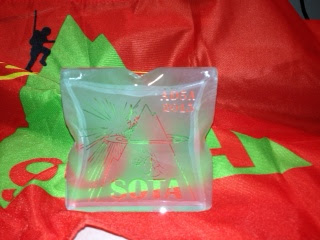
So, I was very pleased to come home yesterday and my SOTA Sloth award was in the mail box. As I have written, I am having a lot of fun with the Summits on the Air (SOTA) program both chasing summits and activating them as well. The SOTA Sloth award is for getting 1,000 chaser points. Summits are assigned a point value from 1 to 10,so for each summit contact made, the chaser gets credit for the points assigned to the summit..
The awards are very nice and each is a little unique. They are made of glass are called Ice Blocks. The certificate if authenticity that comes with the award reads:
Mike Crownover, AD5A, is a regular contributor to AmateurRadio.com and writes from Texas, USA. Contact him at [email protected].
1 watt WSPR
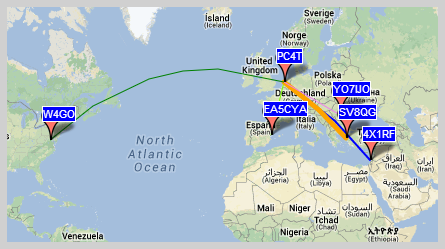

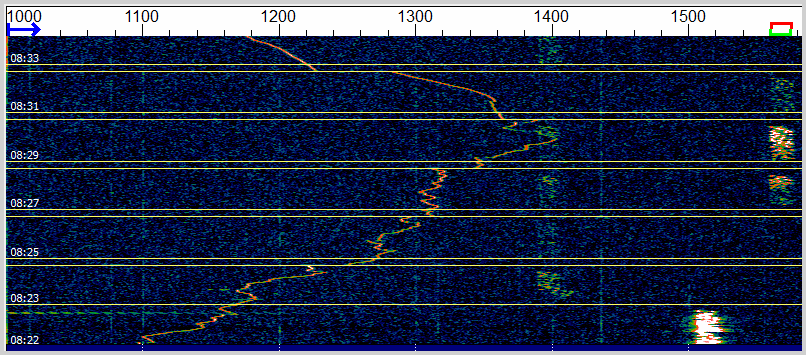
With JT9-1 I worked F8RZ and IZ0MIO also with 1 watt. I will do more transmissions with 1 watt and 0,5 W
Does anybody know what that bizarre tracks are on the screen?
Paul Stam, PC4T, is a regular contributor to AmateurRadio.com and writes from the Netherlands. Contact him at [email protected].
 Ham Radio Deluxe |
 W5SWL Electronics |
 Ham Radio Prep |
 KB3IFH QSL Cards  Hip Ham Shirts  HamRadioAuctions HamRadioAuctions Reliance Antennas Reliance Antennas Enigma Shop Enigma Shop |  morseDX  Ni4L Antennas  R&L Electronics R&L Electronics antennas.us antennas.us QRV QRV |
- Matt W1MST, Managing Editor
