 |
 Studies on Morse code recognition
 20 October 2013 | by
  |
| Nice drawing of Morse key by Dutch radio amateur Dick Kraayveld, PA3ALM (http://www.morsecode.nl/pa3alm.html) |
In the early 90’s there were some interesting studies performed on Morse code recognition and the effects of pitch frequency, signal to noise ratio and code speed. They were part of the PhD work of Peter Montnémery who is a medical doctor and also radio amateur SM7CMY. I reread these papers now since there was a discussion on the pitch frequency (CW pitch resolution) just recently on the Elecraft mailing list. This discussion comes up from time to time, as it did for instance in 2006 also (Sidetone questions — copy speed vs sidetone pitch).
The two first papers are probably the most interesting ones for radio amateurs, so therefore I have posted their abstracts and a key figure from each of them also.
 |
| Press figure for larger size |
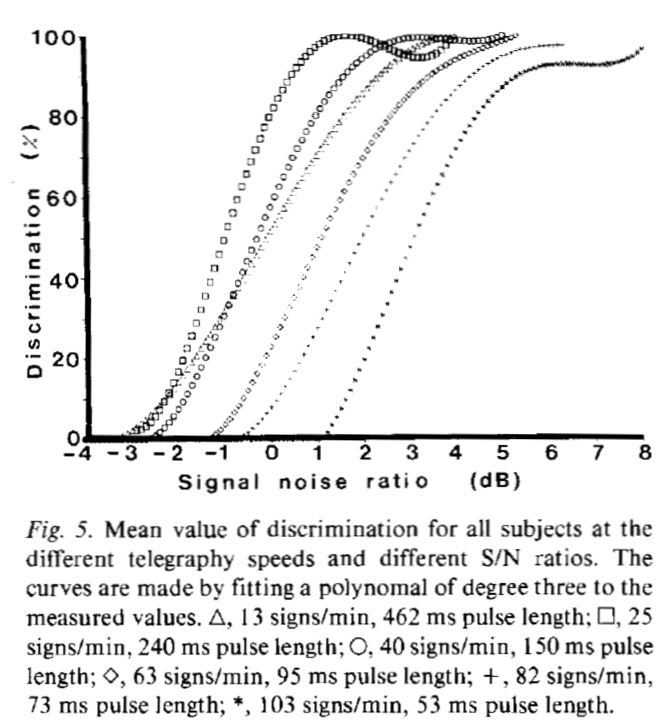
Paper 1: Montnemery, P., Almqvist, B., & Harris, S. (1991). Recognition of Telegraphy Disturbed by Noise at Different S/N-Ratios and Different Telegraphy Speeds A Comparison to Short-Tone Audiometry. Scandinavian Audiology, 20(1), 33-39.
Abstract: “The ability to recognize telegraphy at different S/N ratios and telegraphy speeds was compared for 10 normal-hearing men trained in detecting telegraphy. The ability to recognize telegraphy disturbed by noise decreased with increasing telegraphy speed and reduced S/N ratio. The recognition of telegraphy disturbed by noise seems to follow the relations known from experiments with short-tone audiometry.”
The figure above (Fig. 5) shows recognition in % vs signal to noise ratio (SNR) for speeds 13, 25, 40, 63, 82, and 103 characters per minute (CPM) which when divided by five correspond to 2.6, 5, 8, 12.6, 16.4, and 20.6 words per minute (WPM). Note how recognition at the 90 % rate is easiest (works under lowest SNR) at 5 WPM, then 8, then the exception for the slow speed 2.6 WPM, and then gets even harder at speeds 12.6, 16.4, and 20.6 WPM.
 |
| Press figure for larger size |
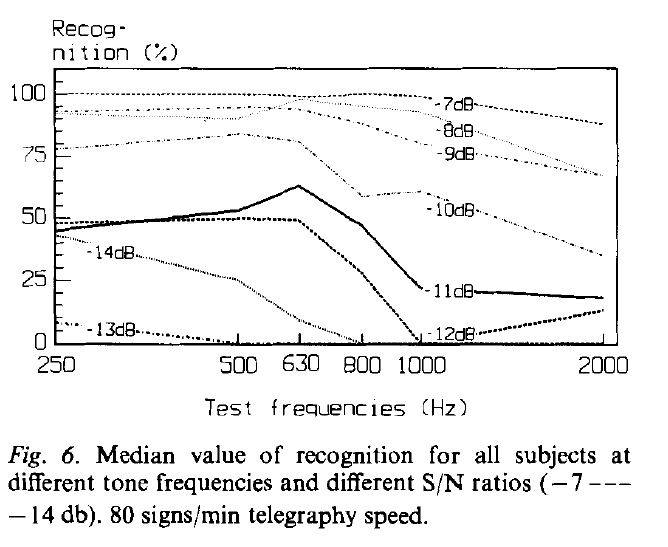
Paper 2: Montnemery, P., Almqvist, B., & Harris, S. (1992). Recognition of telegraphy signs at different listening levels and frequencies. Scandinavian Audiology, 21(4), 255-260.
Abstract: “The recognition of telegraphy masked by noise at 40 and 80 signs/min telegraphy speed was studied in 10 normal-hearing subjects at different sound pressure levels (25–85 dB SPL in steps of 5 dB) as well as at different test frequencies (2000, 1000, 800, 630, 500 and 250 Hz). The ability to recognize the signs varied with varying SPL. Recognition for most of the subjects was best at an SPL close to 70 dB. All subjects improved their recognition as the frequency was lowered to 500 Hz, some even at 250 Hz. These facts should be taken into consideration when training telegraphy operators as well as in the construction of radio receivers to permit listening at low frequencies. Furthermore, the critical ratio was calculated at the different test frequencies.”
The figure above (Fig. 6) shows recognition rate at different pitch frequencies at a speed of 80 CPM = 16 WPM. There is an improvement as the pitch is lowered and it more or less seems to level off at 500 Hz, except for the lowest SNRs (-13 and -14 dB) which improve at a pitch of 250 Hz. As a side note, the SNR scale must be different from that in the former figure since the values are considerably lower here.
The other papers in the thesis “Signal Detection in Noise, with special reference to telegraphy” are:
- Paper 3: This study is on the effect of stimulating each ear simultaneously with different sounds: Montnemery, P., & Harris, S. (1995). Effect of dichotic presentation on the recognition of telegraphy signs. Scandinavian Audiology, 24(1), 39-45.
- Paper 4: Montnemery, P., Almqvist, B., & Harris, S. (1995). Performance of electronic Morse decoders in decoding telegraphy masked by noise. Scandinavian Audiology, 24(1), 57-62.
- Paper 5: Montnemery, P., & Harris, S. (1995). Recognition of telegraphy in hearing-impaired telegraph operators. Scandinavian Audiology, 24(2), 107-115.
The first paper shows how lowering the speed enhances recognition when conditions are poor. Unfortunately only 250 and 500 Hz were tested in the second paper, but it should be clear that a low tone is preferable. If one were to do a follow up study, it would be interesting to zoom in on the frequencies between 250 and 500 Hz for further testing. Since 40 and 80 CPM is only 8 and 16 WPM, it would also be interesting to test at higher speeds.
Sverre Holm, LA3ZA, is a regular contributor to AmateurRadio.com and writes from Norway. Contact him at [email protected].
This weekend it was DX with the Alexloop!
 |
| SWR 1.1:1, power 5 watts and memory CQ message |
DK1NO
DK9PY
DR4A
LX/DF1LON
I did try dropping the power lower than 5 watts but is was just not doing the trick. I then was on 30m and WA3SCM Dave was calling CQ. I came back to him using 5
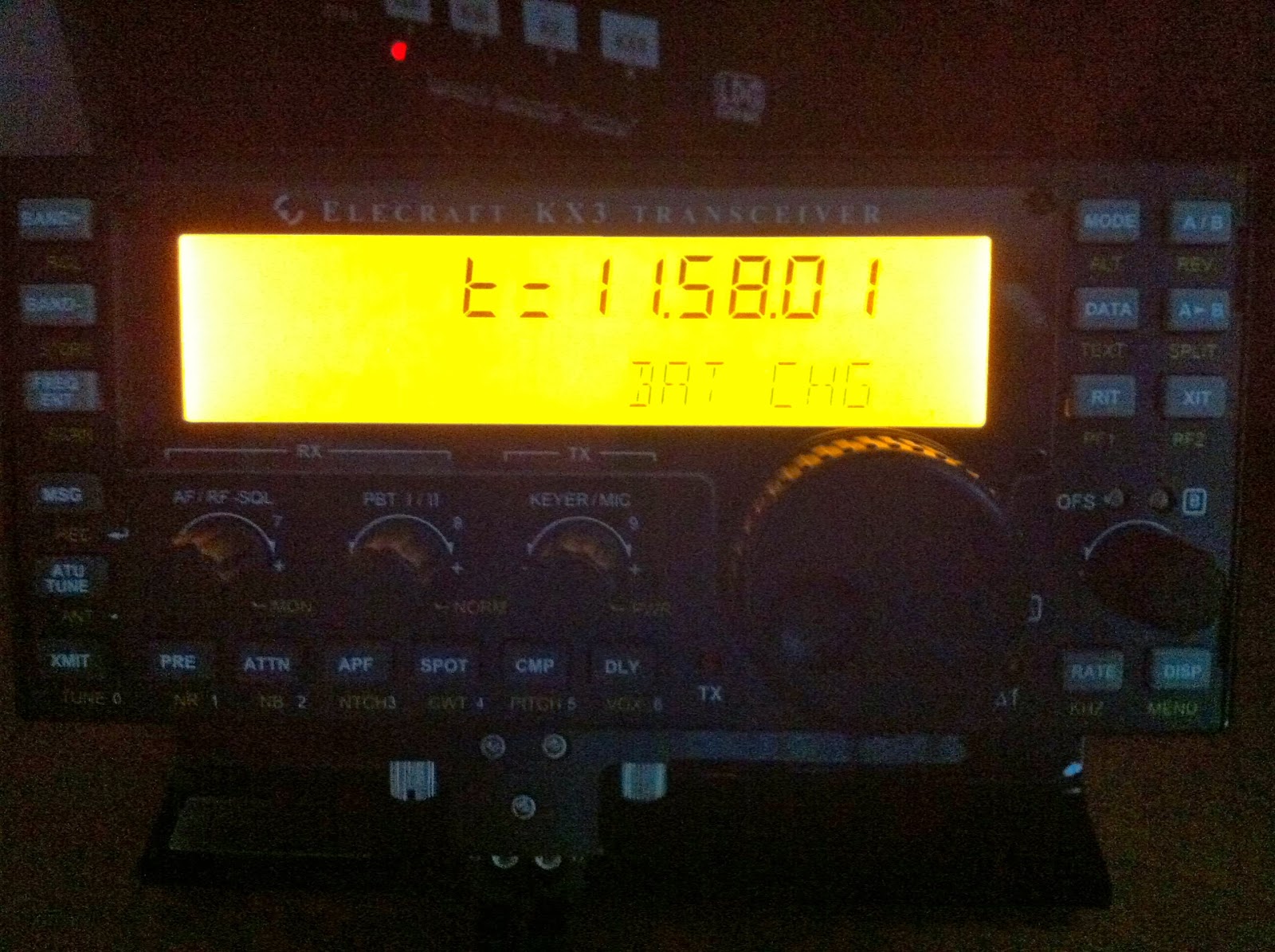 |
| Time to recharge the battery |
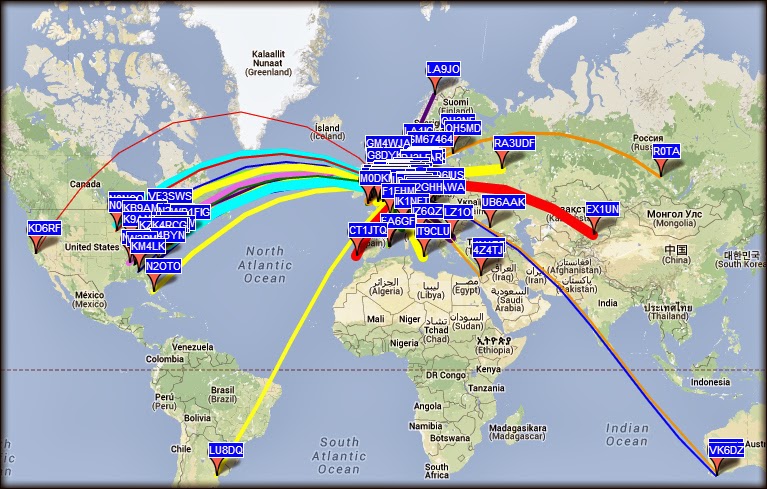
I was able to spend some time on the radio today (Sunday) and I again tried 10m to see what was happening.....it turned out that 10m was good to me today. I was only able to make 2 contacts but they were sweet ones!
IS0GQX from Sardinia
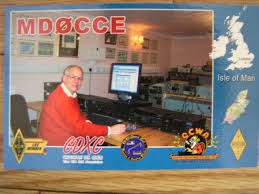
MD0CCE from Isle of Man
Mike Weir, VE9KK, is a regular contributor to AmateurRadio.com and writes from New Brunswick, Canada. Contact him at [email protected].
Another great day on 10m
Paul Stam, PC4T, is a regular contributor to AmateurRadio.com and writes from the Netherlands. Contact him at [email protected].
Series Six Episode Twenty-One – Distance Learning
Series Six Episode Twenty-One of the ICQ Amateur / Ham Radio Podcast has been released. The latest news, Chris Howard, 2E0CTH discusses distance learning courses to pass the UK Advanced Amateur / Ham Radio licence with Steve Hartley (G0FUW) and Frank Howell, K4FMH reports from North America.
- Radios in decline among young
- UK ham radio licenses hit new high
- Australian D-STAR on 40 metres
- Radio hams honored for community preparedness
- Tuning out: Analogue radio to disappear by 2018
- Ofcom propose legalising 27 MHz SSB
- GB0HE
- GB2SDD on air for JOTA
- W7OO Contribution Challenge
Colin Butler, M6BOY, is the host of the ICQ Podcast, a weekly radio show about Amateur Radio. Contact him at [email protected].
Fall Hike to Profile Brook
Hanz, W1JSB and I hiked near Profile Falls in Bristol today. We worked Germany, Canary Islands, the Netherlands, Ontario and North Carolina.
Here’s a photo of Hanz setting up his gear on the bridge abutment.

We set up our gear on the old rail right of way on the edge of Profile Brook. The rails are gone and the bridge is unused, but the stone abutment remains. It’s a pretty spot. We operated here in the early spring.
I heaved a line into a tall maple tree near the old bridge site. We pulled up a 33 foot wire and I connected a 9:1 unun and started operating the KX3 on 15 meters. The Worked All Germany contest was in full swing, so we worked quite a few German stations. Here’s my log:
19 Oct-13 1900 21.008 CK3AT CW 599 599 Ontario
19 Oct-13 1901 21.009 DK9OY CW 599 599 Germany
19 Oct-13 1903 21.016 DL0LK CW 599 599 Germany
19 Oct-13 1920 21.020 DK0SU CW 599 599 Germany
19 Oct-13 1924 18.085 KS4S CW 599 599 NC
19 Oct-13 1928 18.092 EA8BBJ CW 559 599 Canary Isl
After operating on 15 meters for a while, Hanz took over. He operated his souped up 20 meter SWL rig in the yellow Pelican box. He worked several Germans.

After a while we switched to 17 meters with my KX3. Hanz worked KS4S in North Carolina and PA3DZM in the Netherlands, and I worked EA8BBJ in the Canary Islands.
The afternoon sky had clouded over and most of the leaves were off the trees. But the air still had a rich fragrance of fall and the lingering warmth of Indian summer. We hadn’t operated together for nearly a month, and it was
great to get out with our QRP gear again.
Jim Cluett, W1PID, is a regular contributor to AmateurRadio.com and writes from New Hampshire, USA. Contact him at [email protected].
My first transatlantic AM QSO!
The old timers reading this are going to be laughing I think!
Ten metres was in good shape today and I’d just finished some programming work on the Anytone rig in the car. I tuned up around 29MHz to see if there was any AM coming through. Sure enough there was.
Barry N1EU was coming through nicely, running an Apache labs SDR which was sounding great. Barry was kind enough to pull my 10W/whip signal out and give me an S5.
Really thrilled to have made my second AM QSO! Hopefully there are more to come.
Tim Kirby, G4VXE, is a regular contributor to AmateurRadio.com and writes from Oxfordshire, England. Contact him at [email protected].
The radio bug was bitting…………..
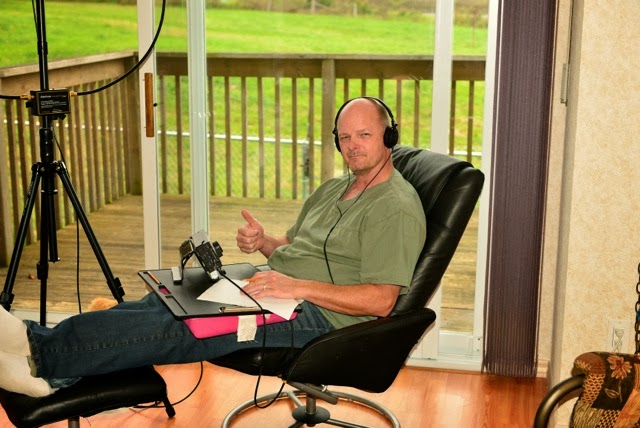
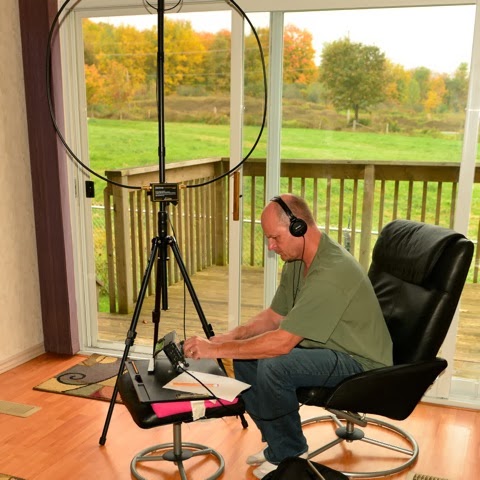
As for contacts I only made 2 short contacts as I did not have much time and was up and down checking on dinner. I was able to make it into Utah to WA7LNW and N3PDT in Missouri, not much but from the ground floor, indoor antenna and 3 watts I was happy with the contacts. I kept tabs on my signal using the Reverse Beacon Network and it showed only U.S stations were copying my signal. I was on again Monday evening and could hear PV8ADI from Brazil at S8 but I was not able to make contact with him.
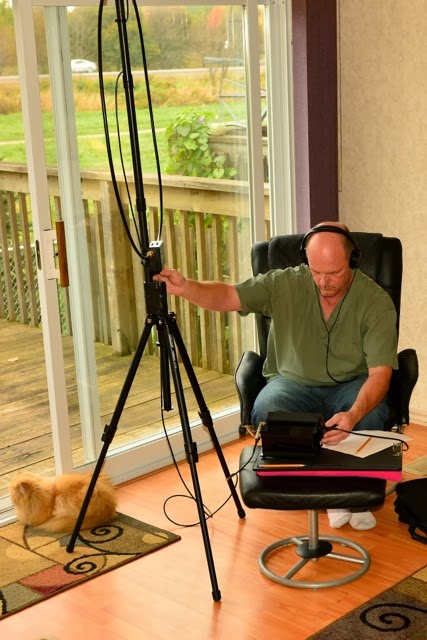 The KX3 now is resting on the radio desk and the Alexloop is away in it's carry case until next time. I was please to get this short radio time in and the results were pretty good as well.
Mike Weir, VE9KK, is a regular contributor to AmateurRadio.com and writes from New Brunswick, Canada. Contact him at [email protected].
 Ham Radio Deluxe |
 W5SWL Electronics |
 Ham Radio Prep |
 KB3IFH QSL Cards  Hip Ham Shirts  HamRadioAuctions HamRadioAuctions Reliance Antennas Reliance Antennas Enigma Shop Enigma Shop |  morseDX  Ni4L Antennas  R&L Electronics R&L Electronics antennas.us antennas.us QRV QRV |
- Matt W1MST, Managing Editor
