 |
 Some QRP work
 8 November 2013 | by
Paul Stam, PC4T, is a regular contributor to AmateurRadio.com and writes from the Netherlands. Contact him at [email protected].
Shock and Awe – The story of electricity.
Amateur radio has a long history, going all the way back to wireless experiments in the late 1800s. However the study of electricity has its roots in the observation of natural phenomena and stretches back much further.
I ran across this excellent three part documentary detailing the story of the discovery of electricity. The presenter is Jim Al-Khalili, currently Professor of Theoretical Physics and Chair in the Public Engagement in Science at the University of Surrey. He not only knows his stuff, he is also an interesting and engaging speaker.
The documentary runs for three hours but is worth your time if you are interested in the story of electricity and the people behind its discovery and history. I hope you find it as enjoyable as I did.
Owen Morgan, KF5CZO, is a regular contributor to AmateurRadio.com and writes from Texas, USA. Contact him at [email protected].
Amateur Radio Newsline Report 1891 November 8 2013
- AMSAT-NA celebrates 30 years of manned ham radio in space
- Hams in New Zealand will soon have access to 6 meters
- Oregon’s OEM says it needs more ham radio volunteers
- FCC acts to stop abuse of EAS alert tones
- Terrestrial comms jam ham satellite signals in Thailand
2013/2014 QRP Fox Hunt Season
The season started tonight on 80 Meters. I worked Tom KV2X in NY rather easily. Then I located Jay KT5E in CO, and called him pretty much non-stop for the next hour. Sadly, it was not to be. Conditions didn’t favor me, and out of the three regular NJ Hounds, only Al W2EEW, got a two-fer. Both Charles W2SH and I nabbed only one pelt each.
Today during lunch, I was disappointed to hear that activity on 10 Meters seems to be waning. I didn’t hear many CQers, so I shinnied up to the QRP Watering Hole at 28.060 and called CQ for a bit myself. I was answered by Gerry EI5HJ. It was a nice QSO, but copy was a bit tough, with lots of QSB. 10 Meters may still be open, but the band seems to be in a bit rougher shape than it was just a mere week ago.
After my QSO with Gerry, I slid on down to 17 Meters, where I worked Cedric, CT3FT on Madeira Island. Band conditions seemed a lot better there. There was also more activity there than there was all last week.
72 de Larry W2LJ
QRP – When you care to send the very least!
Larry Makoski, W2LJ, is a regular contributor to AmateurRadio.com and writes from New Jersey, USA. Contact him at [email protected].
Sometimes life just kinda sucks
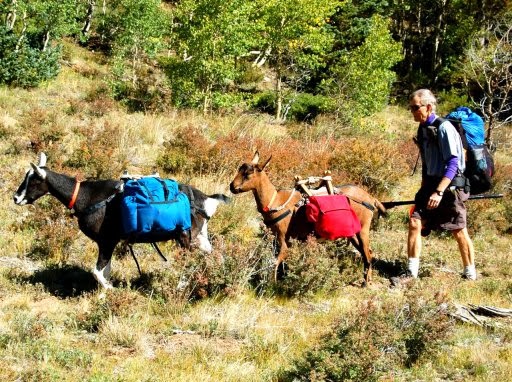
especially when you lose your dog, or your cat, or your goat. This was re-posted by Alex K5UNY to the QRP Polar Bears e-mail reflector today:
“On 11/6/2013 2:31 PM, qrp.wg0at@… wrote:
It’s with deep sorrow I have to make this announcement …”Rooster” goat died suddenly last night of unknown causes …his trail buddies will soon be scattering Rooster’s ashes on many SOTA peaks throughout western NA.
The Boys ——–Photo by Chuck/N6HUB
Farewell, Rooster! RIP …we will really miss you but are so so grateful to have had you in our lives. …Steve/Pam “
I couldn’t see the picture taken by Chuck N6HUB, but here’s one I found of “The Boys” on the Web:
Larry Makoski, W2LJ, is a regular contributor to AmateurRadio.com and writes from New Jersey, USA. Contact him at [email protected].
Learning more about the Alexloop
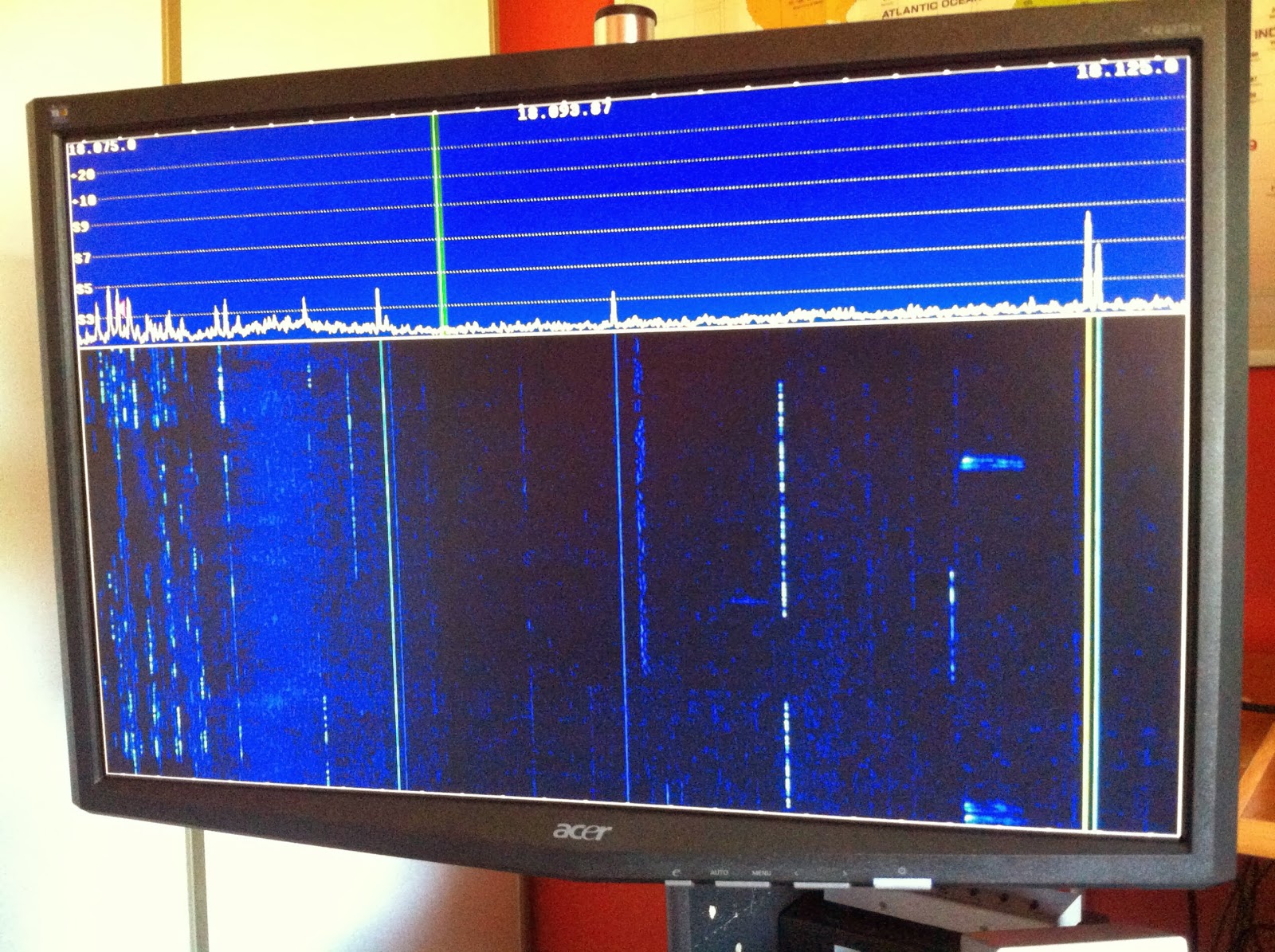 |
| What turning the loop can do |
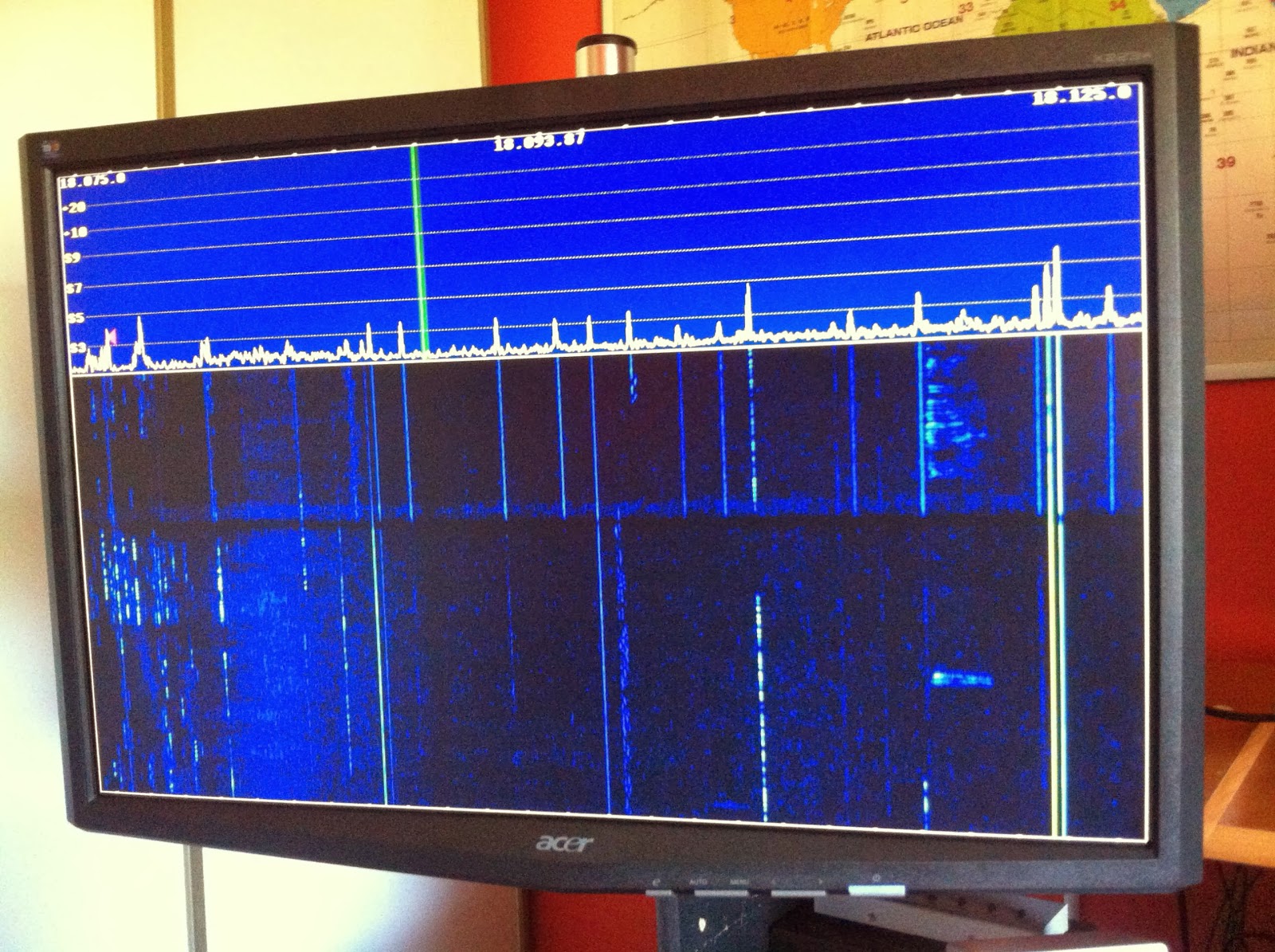 |
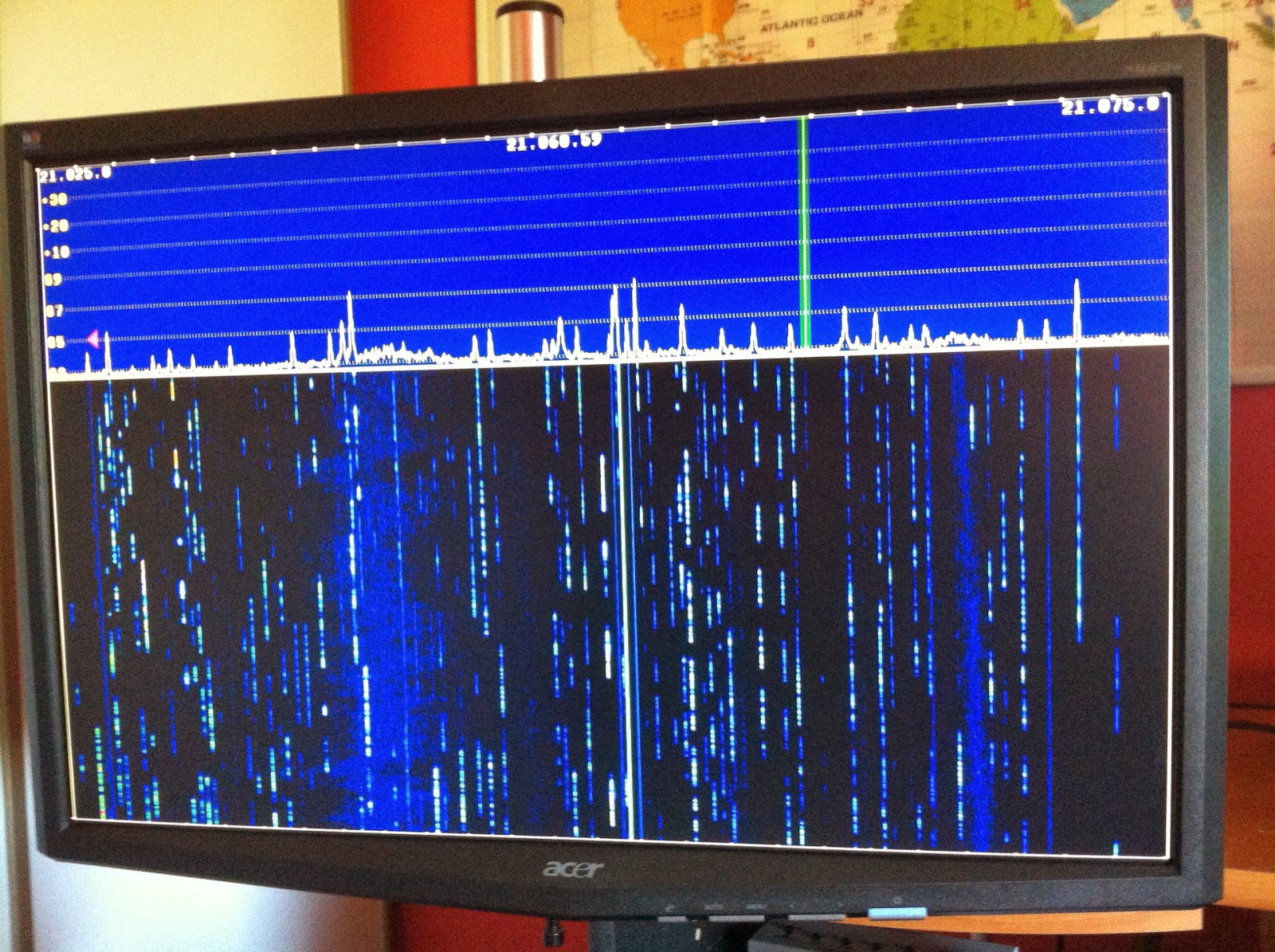
| Man made noise on the band |
 |
| A nice bandwidth with the loop |
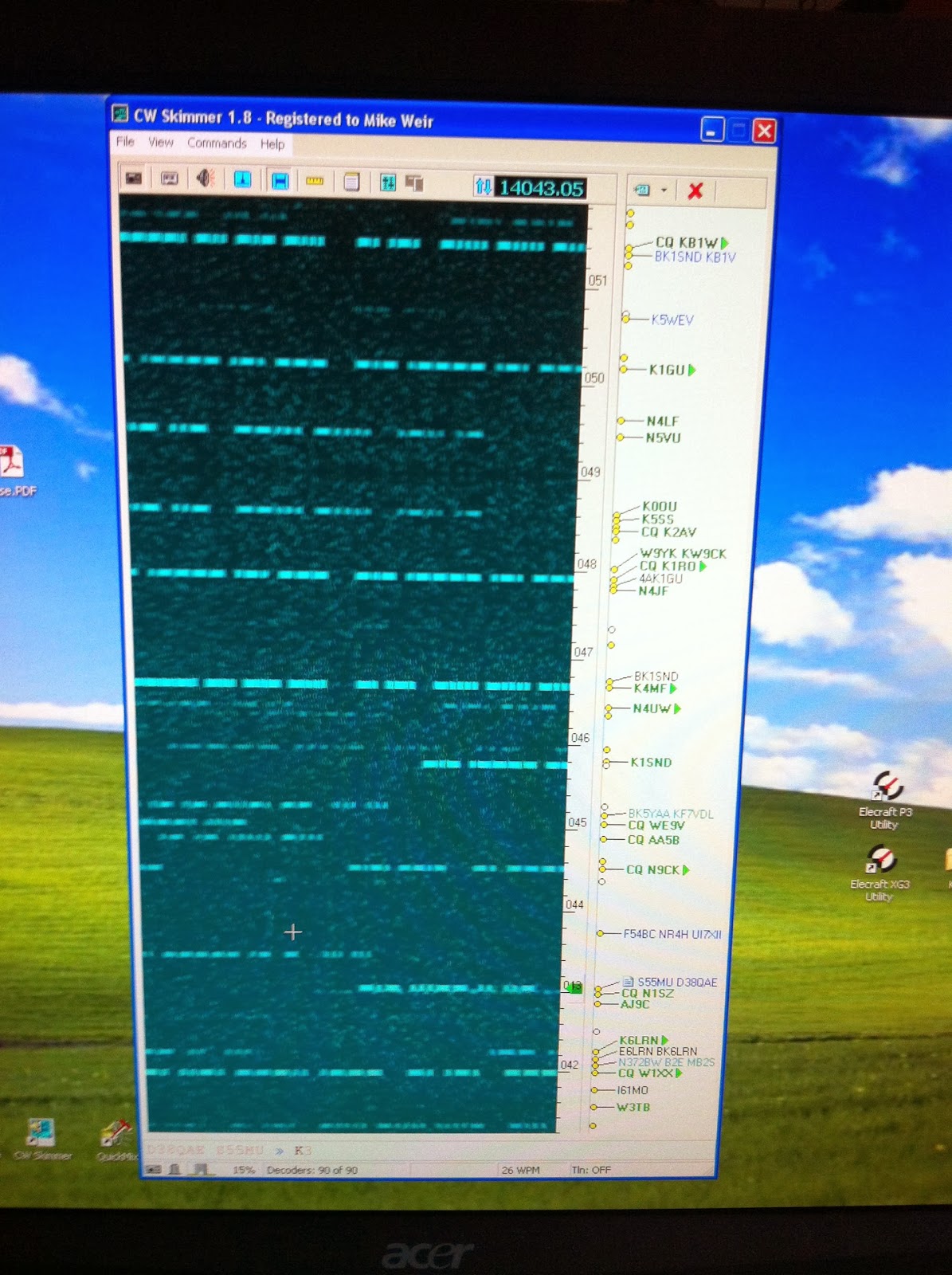 |
| Skimmer showing the picture |
Mike Weir, VE9KK, is a regular contributor to AmateurRadio.com and writes from New Brunswick, Canada. Contact him at [email protected].
Solar Plasma Filament Eruption – The Sun – November 6,7 2013
The Sun currently is active, with powerful, complex magnetic structures that have formed a healthy number of sunspots. We are seeing a fair number of x-ray flares, which push the 10.7-cm flux higher than we’ve seen in a while.
Sunspots and flares means better propagation in general, especially on the higher frequencies of the shortwave spectrum. While a flare can cause a short period of “blackout” conditions (especially on the lower frequencies) on the sunlit side of the Earth, such activity is part of the positive activity that ionizes the F-region, providing for DX.
Here’s a movie of one such flare and the release of solar plasma, a release known as a coronal mass ejection (CME): At about midnight, UTC, on 6 November 2013, a moderately-strong M-class flare erupted, with a “beautiful” CME: http://g.nw7us.us/18a0QvI
(Source: SOHO/SDO/NASA)
We will see continued flare activity over the weekend, so expect great conditions on the HF bands, with momentary blackouts. Keep up to the minute on space weather at http://SunSpotWatch.com
73 – de NW7US
Propagation Columnist, CQ Communications Magazine, Popular Communications Magazine
http://NW7US.us
Visit, subscribe: NW7US Radio Communications and Propagation YouTube Channel
 Ham Radio Deluxe |
 W5SWL Electronics |
 Ham Radio Prep |
 KB3IFH QSL Cards  Hip Ham Shirts  HamRadioAuctions HamRadioAuctions Reliance Antennas Reliance Antennas Enigma Shop Enigma Shop |  morseDX  Ni4L Antennas  R&L Electronics R&L Electronics antennas.us antennas.us QRV QRV |
- Matt W1MST, Managing Editor
