 |
 Distant learning
 6 July 2014 | by
  Here we go again. We have just started a new 6 month distant learning course for the advanced exam. Our recent in class success of 100% pass rate for the intermediate license was a fantastic achievement for the students and tutors alike. And this time we had quite a spread of student ages from 12 to 60+ all scored very highly in the exam and have signed up for the advanced course.
This term we have again used an online free resource called Edmodo. Edmodo describes itself as a social learning platform, and it really fits with our classroom platform.

Our classroom works like this. Each week we set a set of questions based on learning material we have covered in previous weeks. The material can be video, text, powerpoint or audio segments. We follow this up with 3 weekly homework sessions and score each student individually.
Being distant home based learning its quite easy for the student to feel isolated. So to ensure the student is supported and has a mentor we assign each student a tutor who passes feedback and support to the student. Along with this we also set some motivational targets that can be gained when a student hits a particular milestone. It’s a system that really works. Our student retention rate for last term was fantastic. We have made a few minor adjustments to the classroom template – but it is pretty much the same as last time.
This term we have 80+ students signed up and already submitting responses and saying hello to other students.
If you run any training course I highly recommend it. Ok it takes a little bit of understanding but it is a fantastic FREE tool. And we all like things that are free don’t we.
Dan Trudgian, MØTGN, is a regular contributor to AmateurRadio.com and writes from Wiltshire, England. He's a radio nut, IT guru, general good guy and an all round good egg. Contact him him here.
Distant learning
Here we go again. We have just started a new 6 month distant learning course for the advanced exam. Our recent in class success of 100% pass rate for the intermediate license was a fantastic achievement for the students and tutors alike. And this time we had quite a spread of student ages from 12 to 60+ all scored very highly in the exam and have signed up for the advanced course.
This term we have again used an online free resource called Edmodo. Edmodo describes itself as a social learning platform, and it really fits with our classroom platform.
Our classroom works like this. Each week we set a set of questions based on learning material we have covered in previous weeks. The material can be video, text, powerpoint or audio segments. We follow this up with 3 weekly homework sessions and score each student individually.
Being distant home based learning its quite easy for the student to feel isolated. So to ensure the student is supported and has a mentor we assign each student a tutor who passes feedback and support to the student. Along with this we also set some motivational targets that can be gained when a student hits a particular milestone. It’s a system that really works. Our student retention rate for last term was fantastic. We have made a few minor adjustments to the classroom template – but it is pretty much the same as last time.
This term we have 80+ students signed up and already submitting responses and saying hello to other students.
If you run any training course I highly recommend it. Ok it takes a little bit of understanding but it is a fantastic FREE tool. And we all like things that are free don’t we.
Dan Trudgian, MØTGN, is a regular contributor to AmateurRadio.com and writes from Wiltshire, England. He's a radio nut, IT guru, general good guy and an all round good egg. Contact him him here.
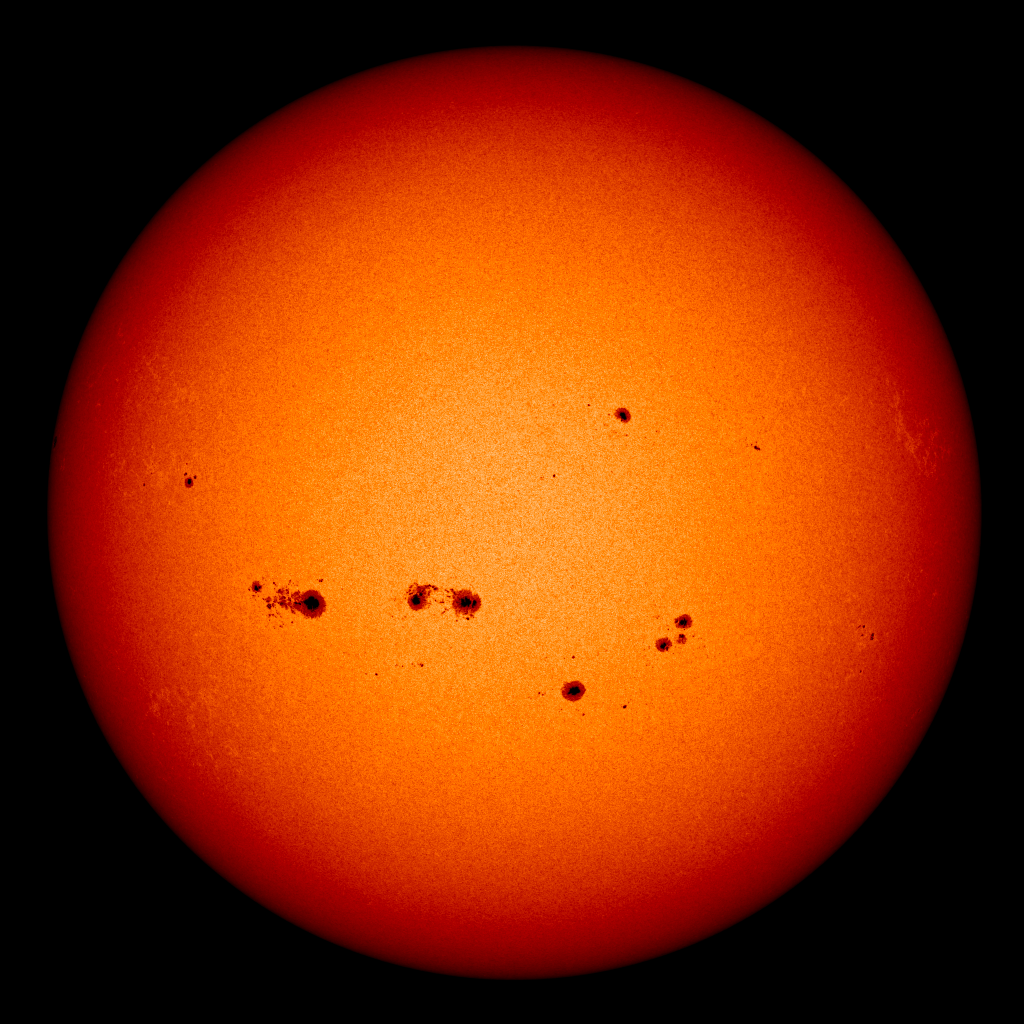
Third Peak For Cycle 24 ?
 |
| July 06, 2014 Courtesy: nasa.gov |
When looking at today's solar image, it's difficult to believe that Cycle 24 is the weakest cycle in the past 100 years. It's also hard to believe that it is on the way down. With the solar flux numbers hovering around the 200 mark, one wonders how great conditions might be had this been happening in mid-November rather than in mid-summer. In spite of the month, propagation over the pole from VE7 land continues to be excellent on the higher HF bands.
Steve McDonald, VE7SL, is a regular contributor to AmateurRadio.com and writes from British Columbia, Canada. Contact him at [email protected].
Check out the sunspots!
Just before the 4th of July, several sunspot regions rotated into view. Today, they are significant players in elevating the solar output of Extreme Ultraviolet energy — the energy helpful in ionizing the F-region of our Earth’s ionosphere. That, in turn, means better propagation conditions, even on higher shortwave frequencies.

As seen by the Solar Dynamics Observatory, the Sun is sporting quite a few sunspots, today. These are helping elevate the 10.7-cm flux, which is a proxy for solar output that strengthens the ionospheric propagation of higher frequencies in the shortwave spectrum. Expect good conditions on HF, this weekend.
73 and best DX!
Visit, subscribe: NW7US Radio Communications and Propagation YouTube Channel
David Sumner, K1ZZ, speaks to Norfolk ARC
David Sumner, K1ZZ, of the ARRL presented a presentation “Amateur Radio Across the Pond” to the Norfolk Amateur Radio Club in the UK. I thought the hour-long presentation was quite enjoyable.
Matt Thomas, W1MST, is the managing editor of AmateurRadio.com. Contact him at [email protected].
Vintage Radio Reading
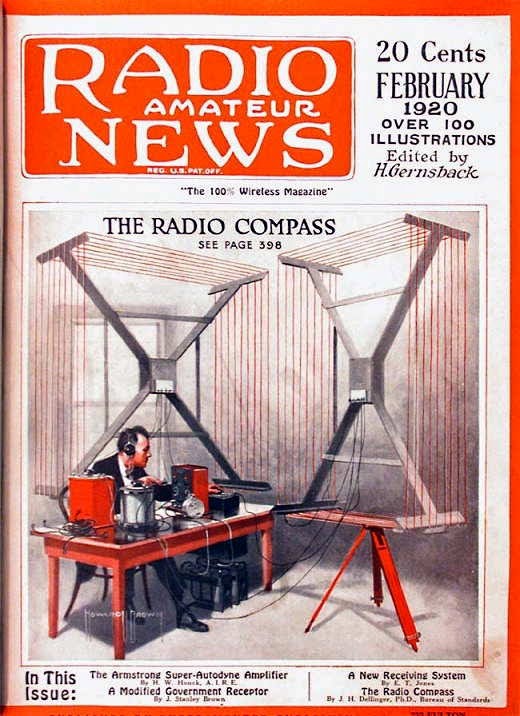 I really love old radio magazines, especially those from the 30's, but to purchase any original copies today is very costly. If you grew up in the 50's or earlier and became hooked by the magic of radio as I and thousands of other kids did, then you no doubt recall the plethora of great monthly magazines devoted to 'radio'.
 Now, thanks to AmericanRadioHistory.com, most of those great old hobby magazines of the past can be viewed online and enjoyed once again.
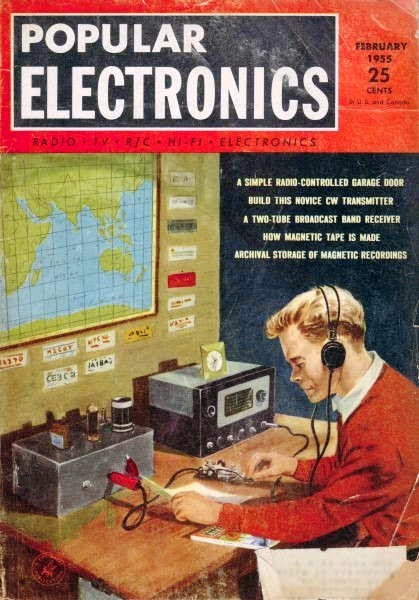 Just a few of the many magazines available are: Radio Craft, Short Wave Radio, Radio, Radio World, White's Radio Log, Popular Radio, Popular Electronics and Radio Amateur News, later to become Radio News.
As a pre-teen short-wave listener in the late 50's, I couldn't wait to get my hands on the latest edition of Popular Electronics, stuffed with its latest SW broadcast news, frequency lists and DX stories.
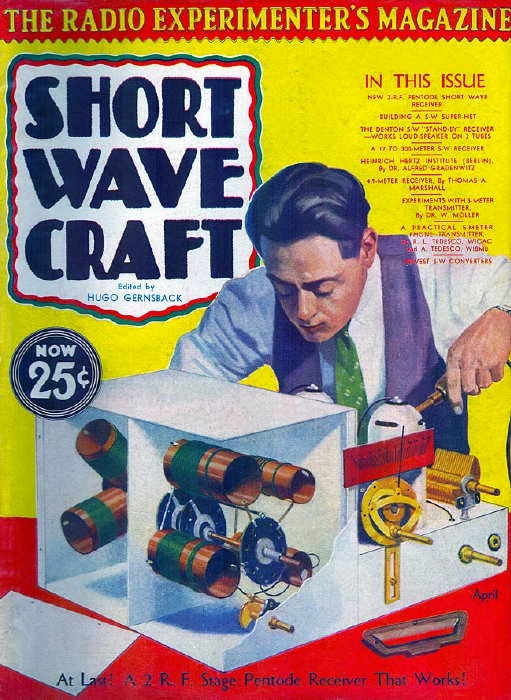
Thanks to David Gleason's work, I always have several of my favorite classics downloaded to my I-Pad's bookshelf for offline reading. With hundreds of recent updates this spring, there appears to be a lifetime of vintage reading now available!
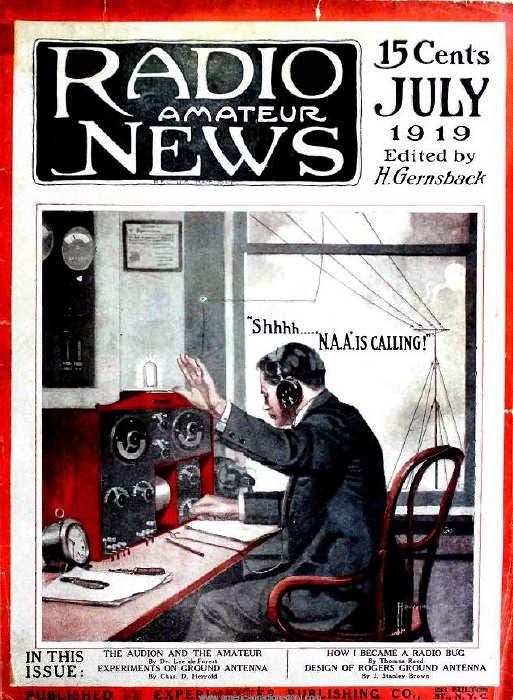
As a builder of vintage-style radios, particularly transmitters, I can often find new inspiration from the magazines particularly devoted to ham radio. If your workshop library is lacking in vintage reference material, you need look no further than this site for a vast source of building inspiration....transmitters of all description along with receivers from crystal tuners to complex multi-tube designs.
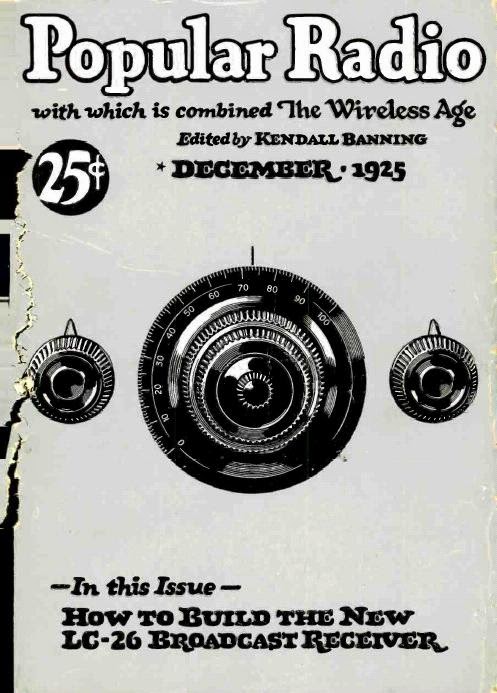 So many of these early publications were the brainchild of Hugo Gernsback, a prolific writer and editor of both technical and science fiction magazines but sometimes blurring the boundaries of each! I suspect that his wide variety of radio publications had some significant role in the way radio so quickly transformed the world.
 Even in the 50's, long after the 'golden years' of radio, it was not uncommon to still see radio antennas on most houses, at least in my neighbourhood!
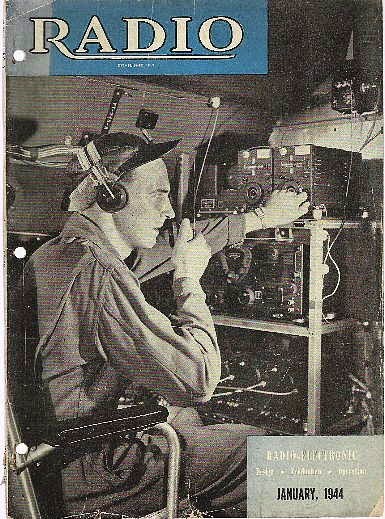
If you haven't visited this wonderful resource yet, I'm sure you will be amazed at what you find.
Steve McDonald, VE7SL, is a regular contributor to AmateurRadio.com and writes from British Columbia, Canada. Contact him at [email protected].
Giving PSK31 a go
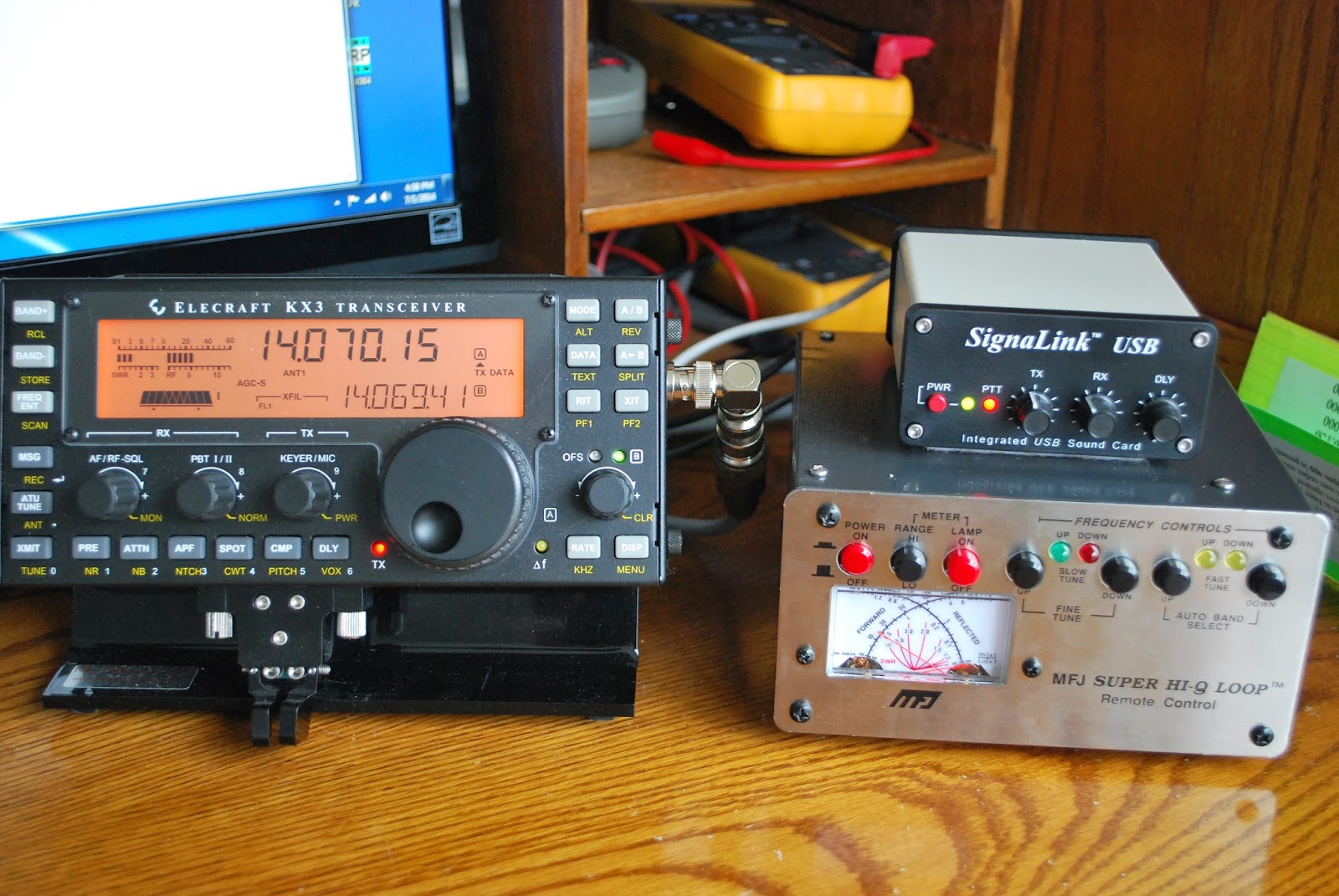
1. Getting the macros set up the way I want them.
2. Fine tuning the settings on the KX3 for digi operations.
3. For some reason the output on the rig is set to 5 watts but the Isoloop control box only shows 1 watt output but I also have my LP100 meter hook in (which for some reason started working fine again) as well and it shows about 4.87 watts. Im going with the LP100 meter.
4. Digipan does not have CAT control Im told you have to use another program for that. CAT control is nice for band changes compared to dialling band changes.
Mike Weir, VE9KK, is a regular contributor to AmateurRadio.com and writes from New Brunswick, Canada. Contact him at [email protected].
 Ham Radio Deluxe |
 W5SWL Electronics |
 Ham Radio Prep |
 KB3IFH QSL Cards  Hip Ham Shirts  HamRadioAuctions HamRadioAuctions Reliance Antennas Reliance Antennas Enigma Shop Enigma Shop |  morseDX  Ni4L Antennas  R&L Electronics R&L Electronics antennas.us antennas.us QRV QRV |
- Matt W1MST, Managing Editor
