 |
 New Ideas for Hollywood Blockbusters
 20 July 2014 | by
 Following up on my previous post about how amateur radio is typically portrayed in movies, I thought I’d float a couple suggestions for the silver screen that include ham radio, without the need for an apocalypse…
I’ll bet not even a single director in Hollywood is aware that radio amateurs have built and launched our very own communication satellites. And not just a few — we have an entire fleet — with more heading to low earth orbit almost every month. These are frequently designed, financed, and constructed by radio amateurs with a keen interest in space communication.
And many of those who harbor that specific interest are radio hams by night and NASA employees by day. And some of those who aren’t direct employees of NASA are employed in other areas of the space industry. This insider link provides amateur radio with an unparalleled, intimate knowledge of the “business” and is responsible for much of the success we’ve obtained in this highly technical and specialized endeavor.
Well right there’s a dozen waiting story lines. Hams at NASA collude to hijack high-value satellites for amateur radio communication by hacking the system from the ground. It doesn’t take a fertile imagination to see many possible angles here, none of which would strain credulity.
But let’s dig deeper and find higher adventure.
Let’s say that a group of radio amateurs in New Zealand (better scenery to work with) built an amateur radio payload for launch. One that included onboard propulsion. That would be somewhat rare these days as we’ve taken to hand tossing payloads out of the ISS or ejecting them using powerful springs from a disposable ring that may carry dozens of small satellites with one launch. But in the halcyon days of ham radio in space, we built much larger satellites, equipped them with fuel and engines, and launched them to much higher, transfer orbits.
Say this group does the same thing.
After launch they maneuver it very near the path of some super expensive, military spy satellite and then we discover that the payload includes explosives. This group then extorts millions of dollars from governments or large corporations in exchange for not blowing up those satellites.
(If the notion of sneaking explosives onto a launch vehicle seems too far-fetched, the “amateur radio” payload could simply be maneuvered directly into the orbital path of another vehicle and kinetic energy could do the dirty work).
I’d pay to see that movie, wouldn’t you?
But there’s one other premise that seems more interesting, and one that just might tickle the fancy of a filmmaker.
Say a group of radio hams work for a company like Space-X. Intent on building and launching resupply ships to the International Space Station. And let’s suppose that a couple of them decide to ride in that supply vessel. Upon arrival, they board the station where they proceed to whip out handguns and order the current crew to evacuate back to Earth. Once they are alone on the station, they weld the other hatches permanently closed. They just “stole” the International Space Station. The biggest heist in history. Mostly for kicks but maybe to use as the premier low-earth platform for ham radio communications.
Or maybe it’s about money. Hollywood loves a good extortion plot. They could offer to abandon the stolen station for a billion dollars. Or de-orbit it over a populated region if they don’t get the money. It’s fiction, anything could happen!
And it would be nice if the leading actors had names like Clooney, Reynolds, Bullock, and Cooper…
Filed under: Ham Radio Tagged: hollywood, hr, ideas, movies


Jeff Davis, KE9V, is a regular contributor to AmateurRadio.com and writes from Indiana, USA.
VO-52 satellite missing in action
It’s been a busy couple of weeks here, all good, but busy. Last weekend, a visit to the shack coincided with a pass of VO-52 according to GPREDICT. I listened and listened and didn’t hear a thing. Being somewhat new to satellites, I always assume that if I don’t hear anything, it’s my fault (it usually is!). I checked the TLEs I was using in GPREDICT and all was ok. I checked the 145Mhz receiver – all ok. Very odd.
I didn’t have a chance to think about it again until yesterday afternoon when I was in the shack working on a review of the Wouxun UV-8D for Practical Wireless and I noticed that VO-52 was due again. Once again, I heard nothing. Again I checked my receiver and the TLEs. I was now starting to think that perhaps it wasn’t me.
On Twitter, I asked my satellite friends if there was any news about VO-52 that I had missed. Ricardo EA4GMZ kindly replied saying that it had been out of order for some days and included two useful links, one satellite status page and secondly to the threads on the AMSAT message board, where if you page down, you will find some messages relating to VO-52.
VO-52 had very quickly become one of my favourite satellites once I got going with it earlier in the year. I hope we shall hear from it again.
Tim Kirby, G4VXE, is a regular contributor to AmateurRadio.com and writes from Oxfordshire, England. Contact him at [email protected].
What next for the autumn?
My thoughts are starting to turn towards amateur radio this autumn.
Unlike in previous years, I cannot imagine being fully fit by then. So, I shall be on the lookout for some new challenges that don’t involve driving, don’t involve building and probably don’t require much, if any, antenna work. Also, it would be helpful if actual talking is kept to a minimum as I find talking very tiring.
I suspect JT65 and JT9-1 will be on the list as I can use (some of) these modes on 630m, 40m, 20m, 10m, 6m, 2m and 70cm with existing antennas. I may ask for some help to improve my earth electrode antenna for 630m. With luck I may be able to drive again later this year. This means I might be able to restart some field work again.
If you have any suggestions let me know.
Maybe I should try for QRP DXCC on JT65/JT9-1? No talking, use existing antennas and rigs, and a new challenge.

Roger Lapthorn, G3XBM, is a regular contributor to AmateurRadio.com and writes from Cambridge, England.
Who Needs Sunspots
Just in case, let's hope a few show up:-)
Mike Crownover, AD5A, is a regular contributor to AmateurRadio.com and writes from Texas, USA. Contact him at [email protected].
HFI gates QRT
I have taken down my HFAPRS gates. The reason is they all use my MFJ magnetic loop antenna. At this time of the year it needs constant retuning due to temperature variations in the loft. So it is not practical to use it when I can not be in the shack to tweak the turning .
Julian Moss, G4ILO, is a regular contributor to AmateurRadio.com and writes from Cumbria, England. Contact him at [email protected].
SMD Kits

I've been intrigued for some months now by the proliferation of SMD parts kits widely available from Asian manufacturers being sold on E-Bay. Resistor, capacitor and inductor kits, containing significant numbers of standard-value parts and in various sizes are being offered at attractive prices. With many sellers throwing in free-shipping, I find myself being tempted more and more to press the "Buy Now" key and fear that I will not be able to hold out much longer.
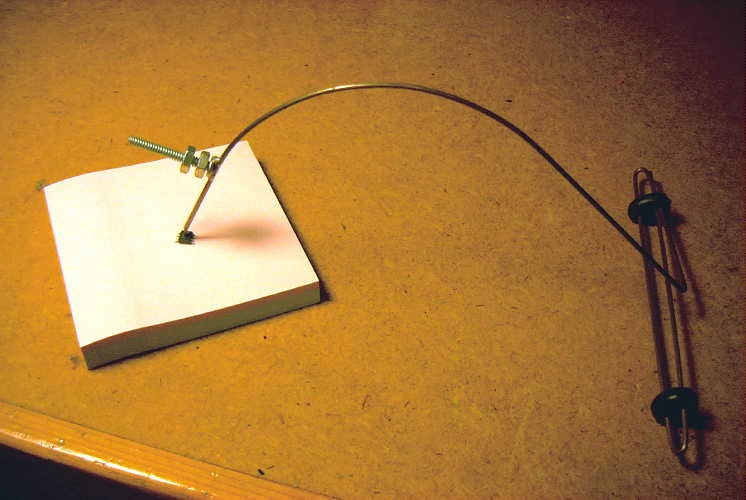
I have had limited experience with SMD parts, when building a small 40m QRP transceiver several years ago called the SMK-1. As I recall, it had 72 SMD parts....the bigger ones, 1206 size. I recall finding the assembly and soldering of these SMD parts to be somewhat tedious and less than enjoyable. I usually only soldered a half dozen parts at one sitting. After a few weeks of periodic assembly, I was delighted to see the circuit come to life once power was applied as I was definitely not looking forward to trouble shooting the board! Perhaps my technique of fluxing and the method of holding the component in place with a homebrew 'third-hand' device was not ideal or maybe my soldering iron was not properly sized for the job but I do have a desire to try it again.
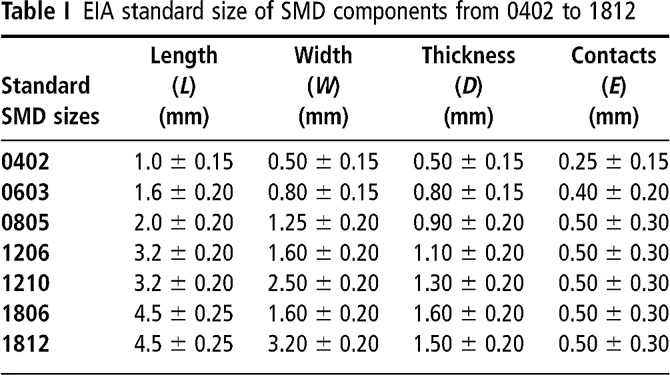
A 630m transverter, now planned out, would really lend itself nicely to SMD construction but realistically, the only size I would consider is 1206 at the smallest.
 |
| Courtesy: www.emeraldinsight.com |
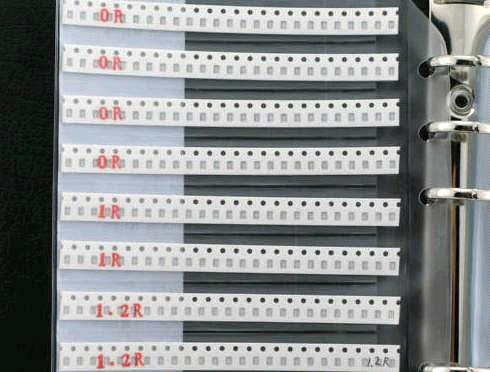 Why I am really contemplating the purchase of more SMD parts is somewhat vexing to me....perhaps it is simply my 'concrete-sequential' thinking style making me lust after all of these tiny parts, with all of them so neatly organized in their holders, begging to be brought to life by my own hands. Or maybe I just want to prove that my 66-year-old eyes and hands are still capable of working with these things.
Steve McDonald, VE7SL, is a regular contributor to AmateurRadio.com and writes from British Columbia, Canada. Contact him at [email protected].
Lightweight portable VHF antennas
One of my favourite sites is Martin DK7ZB’s collection of pages detailing the construction of practical antennas for VHF and UHF.
I first visited the site following a link to designs for lightweight portable yagis that would be suitable for SOTA VHF activations. Under the link ‘2m/70cm-Yagis ultralight’, Martin describes a number of yagis for 2m and 70cm that use thin metre long aluminium welding rods mounted on PVC booms.
“These Yagis are constructed with cheap lightweight materials for electric installations and you can mount and dismantle them without any tools. The boom is made of PVC-tubes with 16mm, 20mm or 25mm diameter, the element holders are the clamps for these tubes.” DK7ZB
What makes the designs particularly attractive is that they can be quickly assembled from a compact (admittedly metre long for 2m) pack you can carry on your ascent, even designs using a 2 metre long boom.

The welding rods – used for TIG welding – are available in Australia in 2.8mm and 3.2mm diameters from welding supplies shops. I’m still on the lookout for 4mm diameter rods. PVC conduit and the mounting clamps are readily available in VK from hardware stores.
I’ve managed to cut a suitable slot in the end of a 3.2mm aluminium welding rod using a Dremel with a thin cutting wheel. One suggested way of attaching the feedline to the driven element is to crimp the lines into thin slots like this.
Also of interest to the portable operator are the J Pole designs based on Wireman 450Ω window feedline. There are dimensions for bands from 2m down to 40m. The J pole is essentially a half wavelength dipole where the high feed impedance is transformed by a quarter-wave length matching section (the tail of the J) tapped at a suitable distance to yield a 50Ω match. Follow the ‘Wireman-J-Pole’ link in the left navigation. These pages remind you that the J-pole can be configured in any way so a 40m J pole in a Zepp arrangement starts to look quite practical if you have just under 10m of 450Ω feedline available. I want to start with the 6m design and see if I can make it robust enough with heat shrink etc for portable work.
Kits for the DK7ZB yagi designs are also available from nuxcom.de, Attila Kocis DL1NUX’s website. Both sites are in German and English.
 Ham Radio Deluxe |
 W5SWL Electronics |
 Ham Radio Prep |
 KB3IFH QSL Cards  Hip Ham Shirts  HamRadioAuctions HamRadioAuctions Reliance Antennas Reliance Antennas Enigma Shop Enigma Shop |  morseDX  Ni4L Antennas  R&L Electronics R&L Electronics antennas.us antennas.us QRV QRV |
- Matt W1MST, Managing Editor
