 |
 Special Event Alert
 12 August 2014 | by
 This coming weekend is International Lighthouse/Lightship Weekend. Here’s an article I caught online:
http://www.thedailynewsonline.com/news/article_4b4d8e82-21ea-11e4-9326-001a4bcf887a.html
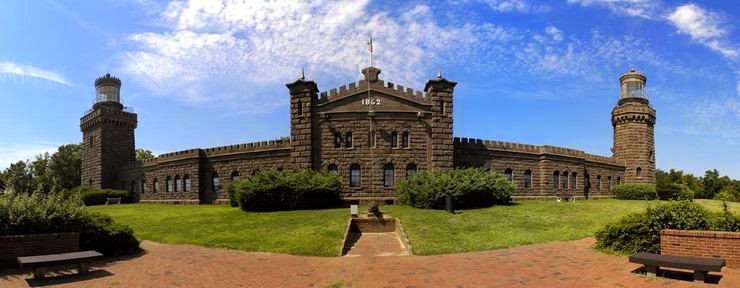
I’ve had the opportunity to work various lighthouses and lightships the world over throughout the years and it’s always been fun. Back when the Piscataway Amateur Radio Club was in its hey-day, we activated the Twin Lights Lighthouse in Atlantic Highlands, NJ.
- Cape May Lighthouse
- Barnegat Lighthouse
- Twin Lights
- Sandy Hook Lighthouse
- Sea Girt Lighthouse
- Tucker’s Island Light
- Absecon Lighthouse
- Hereford Inlet Lighthouse
- East Point Lighthouse
- Finn’s Point Rear Range Light
- Tinicum Rear Range Lighthouse
I’m not sure how many, if any, will be activated for ILLW Weekend. Even though the Skeeter Hunt falls the weekend before ILLW Weekend, maybe next year we can make lighthouses part of the theme and do some “pre-activations”. What say?
Here’s a little video “advertising” a Spanish lighthouse that will be activated this coming weekend. The link was provided by fellow ETS clubmember, Don K2DSV. This definitely gets the juices flowing, thinking about all the exotic lighthouses that will be on the air this coming weekend.
72 de Larry W2LJ
QRP – When you care to send the very least!
Larry Makoski, W2LJ, is a regular contributor to AmateurRadio.com and writes from New Jersey, USA. Contact him at [email protected].
AmateurLogic 69: DV Mega Load

AmateurLogic.TV Episode 69 is now available for download.
In this episode Peter demonstrates a new microcontrolled component test. George talks all about Dummy Loads. Tommy shows us the new DV Mega Raspberry Pi D-Star Hotspot. And a visit to the K7LWH D-Star Repeater site in Bellevue Washington.
We also announce our 9th Anniversary Sweepstakes where some ham is going to win the Ultimate Mobile Station.
1:20:46 of premium Ham Radio content.
George Thomas, W5JDX, is co-host of AmateurLogic.TV, an original amateur radio video program hosted by George Thomas (W5JDX), Tommy Martin (N5ZNO), Peter Berrett (VK3PB), and Emile Diodene (KE5QKR). Contact him at [email protected].
On Making Nanowaves – Part I
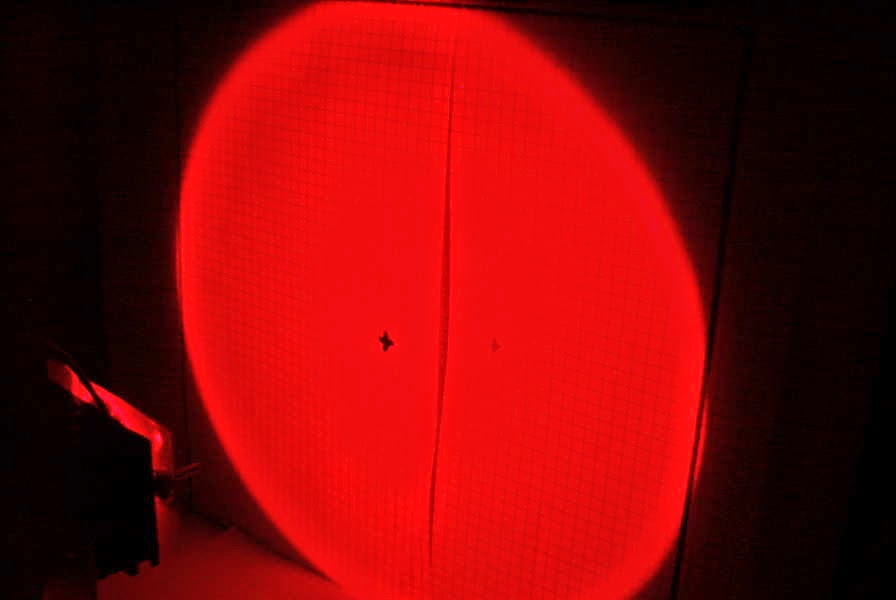 During last year's fall season, VE7CA (Markus), VE7BDQ (John) and myself were getting prepared to venture into the nanowave world....that part of the electromagnetic spectrum that lightwaves of various wavelengths call home.
Over the course of many months, I had become intrigued by the lightwave experimentation being done by amateurs in the UK and particularly those being done by Roger, G3XBM. Like many of the UK builders, Roger had been building and testing simple low-power LED lightwave transmitters along with simple receiving systems. It was fascinating to follow his progress thanks to his daily blog (read his '481tHz' optical postings here) which documented every detail...both failures and successes. Even though not amateur radio per-se, to me it represented the best of what is so wonderful about our hobby and experimental homebrewing in particular. Unknowingly, Roger had me hooked and eventually I started to seriously contemplate building a lightwave system.
What finally pushed me over the building-brink was an amazing series of articles by Stuart Wisher (G8CYW) published in Radcom magazine and now available for download on Yahoo's "UK Nanowave Group". This four-part series was full of ideas, schematics and inspiration. I would challenge any homebrewer to read them without wanting to start building almost immediately! The group itself is an excellent source of circuits and up-to-date information regarding the latest activity amongst the UK amateur 'nanowavers'.
Now.... just having a lightwave system would not be much fun without having someone else to talk to. My first challenge was to find someone, preferably another ham, with whom I might be able to communicate once I had a system built and....they would need to be a homebrewer as well since none of this stuff was available 'off the shelf '. I contacted Markus (VE7CA), a very skilled homebrewer and sent him the series of Radcom lightwave articles. I did the same with John (VE7BDQ), another ardent builder and the main motivator (although he never knew it at the time) in me becoming hooked on ham radio as an early teenager. Both immediately called 'all-in'....our nanowave project was off and running!
Steve McDonald, VE7SL, is a regular contributor to AmateurRadio.com and writes from British Columbia, Canada. Contact him at [email protected].
Adventure Tuner Kit
The Adventure Tuner Kit from SOTABEAMS is an affordable small project suitable for beginners and pros who will end up with a useful wire antenna tuner. According to SB:
It’s an L network tuner – but with a difference: the L network is bi-directional to increase the matching flexibility of the tuner. Both sides of the L network can be used for the antenna or the radio. It’s got co-ax socket on both sides of the network too so it can be used to extend the useful tuning range of narrow-band co-ax fed antennas – such as making an 80 m dipole usable across the whole band.
The inductance is provided with switched inductors giving a range of 0 – 5.6 uH in 0.1 uH steps. Hyper-bright LEDs indicate antenna current to aid tuning. They are in circuit all the time to give you reassurance that your system is working at peak efficiency. The typical matching range of the Adventure Tuner is 3.5 – 30 MHz.
It looks like another swell Saturday morning project melting solder followed by radio adventures from the field and shack.
What’s not to like?
Filed under: Ham Radio Tagged: kits, news 


Jeff Davis, KE9V, is a regular contributor to AmateurRadio.com and writes from Indiana, USA.
What a difference a day makes!
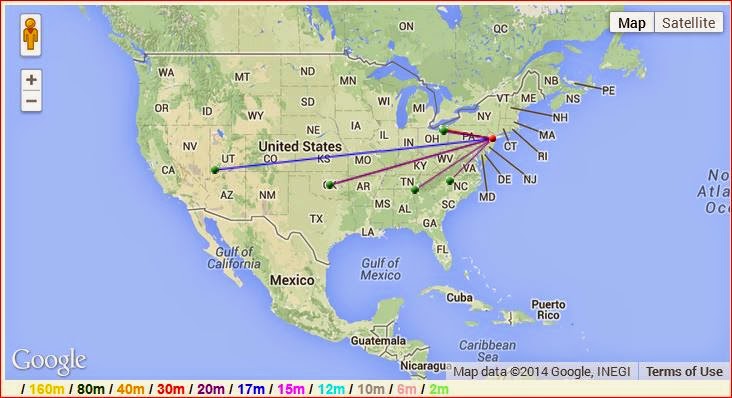
Yesterday, at this time, the bands were humming (relatively) with Skeeters, WES’ers, and WAE’ers, just to name a few. 24 hours later, during a later lunch break ……. not much of anything. This is where I was picked up by RBN:
Larry Makoski, W2LJ, is a regular contributor to AmateurRadio.com and writes from New Jersey, USA. Contact him at [email protected].
DX from the Blueberry Patch
Judy went blueberry picking this afternoon in Ashland, New Hampshire. I went along. She picked blueberries; I worked Russia, Germany, Greece, Denmark and Arizona!

I tossed a 30 foot wire over a maple branch and sat down on the grass with the KX3. What a perfect way to spend an hour. Here’s my log:
11 Aug-14 1954 14.020 RA/UY6IM CW 599 599 Russia
11 Aug-14 1957 14.032 DM200TSV CW 579 599 Germany
11 Aug-14 2002 18.071 SV2CQB CW 569 599 Greece
11 Aug-14 2008 18.075 OZ2TF CW 559 599 Denmark
11 Aug-14 2012 14.009 NN6T CW 569 599 AZ

All the DX contacts were quick exchanges, but the last QSO with Glen NN6T in Kingman, Arizona was the most fun. Glen and I actually had a QSO, and I promised to send him a photo of my operating position. He sent, “UR QRP is doing very good.” That was a relief because the bands seemed a bit shaky today.
Judy picked nine quarts of the most luscious blueberries I ever tasted. I had a great time making a few QSOs. Nice combination.
Jim Cluett, W1PID, is a regular contributor to AmateurRadio.com and writes from New Hampshire, USA. Contact him at [email protected].
Fire rekindled
When I first heard about the ARRL’s centennial operation, I was mildly curious but hardly enthused. As most know, the League is sponsoring a year-long operating event in which ops in all 50 states will be on the air a week at a time, signing W1AW/X, where “X” is the call district.
Well, it has been 52 years since I earned WAS, I thought. So I decided to see if I could work each W1AW/X state for a new certificate.
Then I decided to work each state several times each just to be sure I was “in the log.”
And as the first round neared the end (each state will be on the air for a full week at least twice during 2014, usually two states each week), I thought to myself, “Self, why don’t you see if you can work them on all modes?” I need practice in pile-up and contest operating on the digital modes and especially RTTY.

Suddenly, this little centennial thing has become a lot of fun and a thrilling challenge! I’ve heard other guys say the same thing. I’m way down the list on total QSOs (3000-ish somewhere) and just cracked the top 15 in my state, mostly due to my late and lackadaisical start. But now I spend far more time than I should chasing W1AW.
I have a new book due at the publisher’s, have just started a new ham radio book, have a 10-month grandson I want to teach the Morse code, I need to be getting ready for the Huntsville, Alabama, Hamfest this weekend, college football season is about to start, and…Wait!…W1AW/1 in Vermont was just spotted on 12-meter PSK31.
Excuse me. I gotta run…
73,
Don N4KC
www.n4kc.com
www.donkeith.com
(Author of the new book RIDING THE SHORTWAVES:
EXPLORING THE MAGIC OF AMATEUR RADIO)
Don Keith, N4KC, is a regular contributor to AmateurRadio.com and writes from Alabama, USA. Contact him at [email protected].
 Ham Radio Deluxe |
 W5SWL Electronics |
 Ham Radio Prep |
 KB3IFH QSL Cards  Hip Ham Shirts  HamRadioAuctions HamRadioAuctions Reliance Antennas Reliance Antennas Enigma Shop Enigma Shop |  morseDX  Ni4L Antennas  R&L Electronics R&L Electronics antennas.us antennas.us QRV QRV |
- Matt W1MST, Managing Editor
