 |
 433MHz AM modules – G6ALB progress
 29 January 2015 | by
 G6ALB has reported some progress in his tests using 433MHz AM modules, although it looks like an external linear audio transistor stage may be necessary to get best AM (voice) sensitivity from the super-regen detector. On TX he is getting 10dBm from the TX module at 5V (more with higher supply voltages) although the mod seems to be a mix of AM and FM. Our first “DX” test will probably be from G6ALB to me using the voice modulated TX module. I’ll receive Andrew on my FT817ND initially. When the super-regen RX is sensitive with speech I’ll try to receive him with that. Super-regens should be sensitive on AM, but are usually poor NBFM detectors. We are about 3km apart and both have V2000 verticals externally mounted. At 70cms these have gain.
Andrew has ordered 5 pairs of 433MHz AM modules (TX as well as RX) for not much more than £2 total from China. This makes each TX/RX pair very inexpensive. It amazes me that they can make these so inexpensively. I hope G6ALB succeeds in this venture. It would be good to be able to communicate with him using a really low cost 70cm transceiver. I expect Andrew will write up his results in an article for a UK magazine later.
It seems entirely possible that a complete 70cm AM transceiver can be made for just a few pounds based on these low cost 433MHz AM modules.

Roger Lapthorn, G3XBM, is a regular contributor to AmateurRadio.com and writes from Cambridge, England.
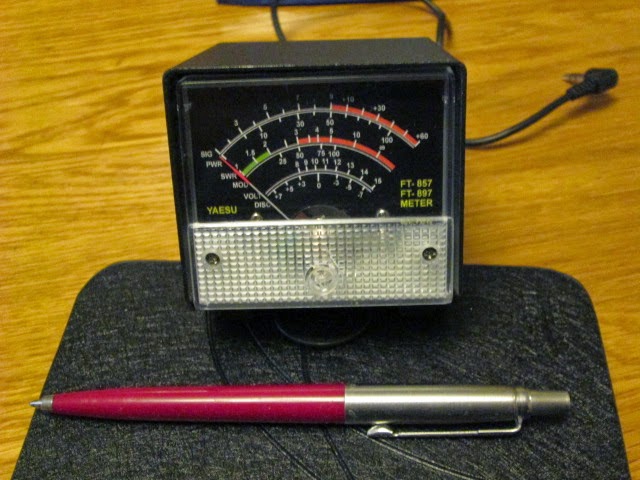
The £10 external meter for the Yaesu FT-857/897
The analogue meter replicates everything you see on the digital bargraph meter on the front of the FT-857/897 (S, PWR, SWR & ALC)
First thoughts not bad, quite weighty, excellent black anodised metal case, with a 3.5mm jack to plug into the external meter socket under the VFO knob on the front of the FT-897, or the left handside bottom front ext meter skt of the FT-857. It was time to take the roof off and have a look inside, well I did want to make sure it was ok for him?
There is plenty documented on the Web about making an external meter for these radios and really there is not much to it. But the Chinese have really made a very good job of this for the money, its not just a meter stuck in a box, they have taken their time to produce a little PCB with the calibration pot which can be easily accessed from the rear of the case through a small hole. The PCB has then been bolted across the two rear meter terminals and it is a real solid job.
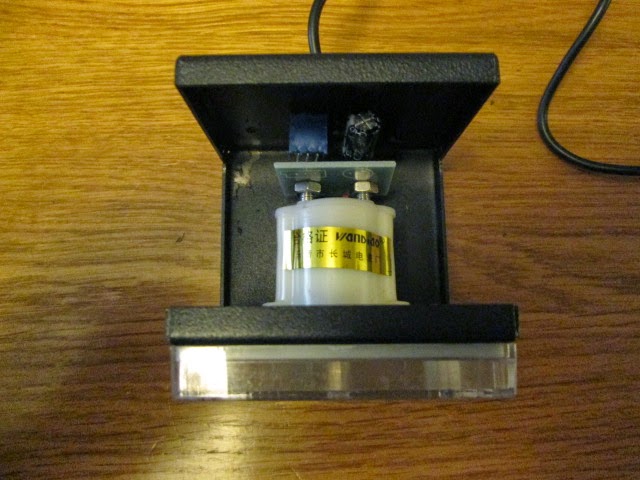
There were no instructions in the box that it came in, but these are well documented at the bottom of the ebay sales literature, and reference to all of this is set out within the Yaesu manual.
Conclusion: Well made and produced for the cost, you would find it very difficult to get all the bits together including the case and build it for the price. I wasn't able to test it out as I don't own either radio, time to wrap it up and put some kisses on the birthday card.
Reference:
http://www.ebay.com/itm/New-External-S-meter-SWR-Power-meter-for-Yaesu-FT-857-FT-897-Black-/121480229454?
Steve, G1KQH, is a regular contributor to AmateurRadio.com and writes from England. Contact him at [email protected].
’29 MOPA Progress
 |
| '29 MOPA Plan |
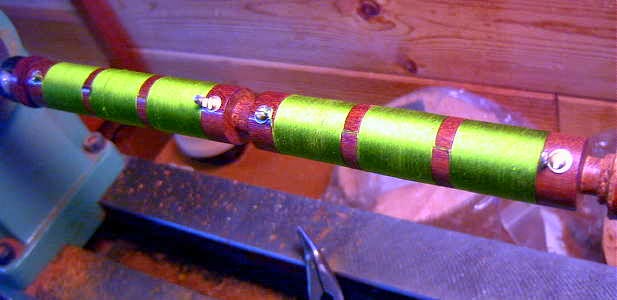
The choke forms were first turned on the wood lathe, using Mahogany hardwood scrap, to a diameter of 3/4", and then stepped down slightly, for the space occupied by the windings. The windings, using single silk enamel #31, were then done, still on the lathe, while rotating the spindle manually.
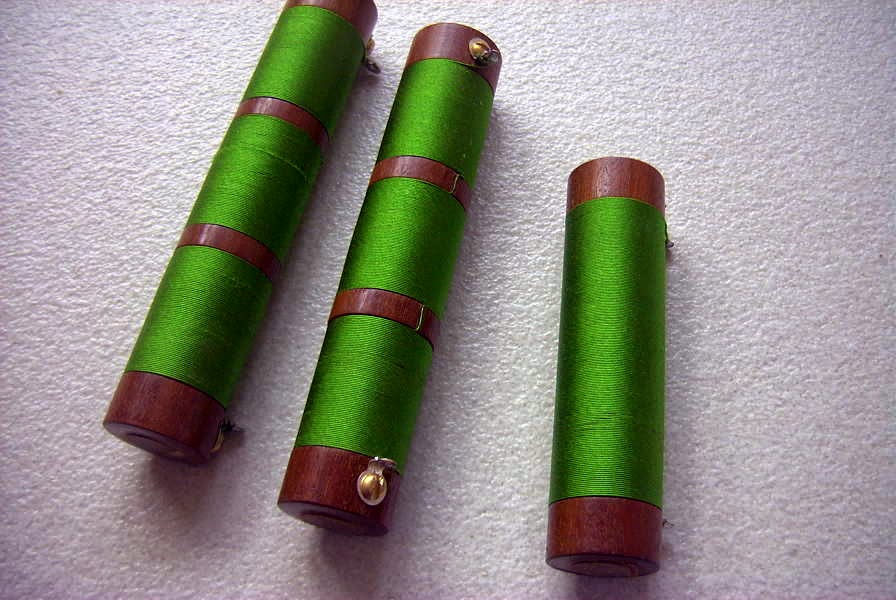
I've always been surprised at how little inductance is really needed for effective choking on HF and it would seem that the 'standard' 2.5mH is much more than is actually required. The single-ended version is just 190uH, while the three-section chokes measure just 240uH, about 10% of what normally might be specified today.
Steve McDonald, VE7SL, is a regular contributor to AmateurRadio.com and writes from British Columbia, Canada. Contact him at [email protected].
29MHz AM
The 29-29.1MHz sub-band continues to be the best place to find HF AM. This is the HF band with most space, although there are AM enthusiasts on 160m and other bands. When these bands are not busy AM has its place.
When 10m goes “off the boil” 29MHz AM will be ideal for local nets with very simple gear. Ranges are fine for local nets. Also there is a ready supply of ex-CB kit around, although making a wholly homebrew QRP rig for 29MHz AM is a nice group project. There are some ideas for starters on my main website.
As an example of how effective 10m AM can be see http://www.macnaughtonart.com/10metlog-ss24.htm .

Roger Lapthorn, G3XBM, is a regular contributor to AmateurRadio.com and writes from Cambridge, England.
6m QRP rigs
In many ways, 6m (50MHz) is an ideal band for experiments. Short RF leads are always good, but 6m is a forgiving band and you can get away with HF constructional techniques. It is 2MHz wide here in the UK and this means all speech modes can be fitted and used. The page below shows a number of links to 50MHz projects.
See http://www.pg1n.nl/articles.php?lng=en&pg=145 .
See also my Sixbox 6m AM transceiver .

Roger Lapthorn, G3XBM, is a regular contributor to AmateurRadio.com and writes from Cambridge, England.
The storm that wasn’t
I am one of the ones who is not disappointed. I would much rather have the weatherman tell me I am going to get 24 inches of snow, and only get 4, as opposed to the other way around. Meteorology is an art, even to this day. To anyone who is forcing the weather people to eat crow today, I say, "Let's see YOU try it for a while!". I am hearing so many people say, "Oh yeah, I knew from the beginning it wasn't going to be that bad." Yeah ..... right.
Listening to New England stations coming through Echolink on the local repeater, I understand they are getting hammered, as predicted. Stay safe, warm and dry, my friends.
Even though we didn't get the snow, we did get the cold and the winds. Not gale force winds, but when I was out there shoveling snow, I was chilled to the bone. And the whole time I was removing snow, I was dreaming of something like this:
Thanks to Sean KX9X for posting this. Some portable outdoor QRP in a nice, warm sunny location is EXACTLY what the doctor ordered, right about now.
On a side note, the office was declared closed for the day last night, when the ominous forecast was still hovering over us. So when the snow stopped this afternoon, having some time available, I went out and switched the coax from the EDZ over to the W3EDP. Much to my relief, the W3EDP hears fine again! It loads up easily on every band and the KX3's auto tuner handles it with nary a whimper.
As it turns out, the coax problem on the W3EDP was entirely may fault. When I went to disconnect the coax from the balun at the end of the W3EDP, I noticed to my horror, that I had never sealed the connection. It's no wonder that water got in there. This time, I double coated the connection with tape, added some plumber's putty over that, and added a final layer of tape. If the W3EDP plays as well as I think it will, I may just end up taking down the EDZ this Spring and keeping the W3EDP as my primary wire antenna.
72 de Larry W2LJ
QRP - When you care to send the very least!
Larry Makoski, W2LJ, is a regular contributor to AmateurRadio.com and writes from New Jersey, USA. Contact him at [email protected].
0.2 Watts to South Africa
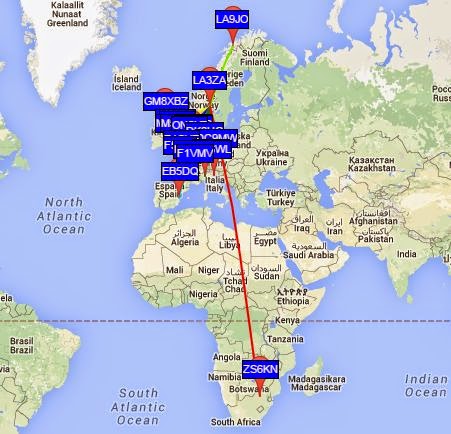

Sverre Holm, LA3ZA, is a regular contributor to AmateurRadio.com and writes from Norway. Contact him at [email protected].
 Ham Radio Deluxe |
 W5SWL Electronics |
 Ham Radio Prep |
 KB3IFH QSL Cards  Hip Ham Shirts  HamRadioAuctions HamRadioAuctions Reliance Antennas Reliance Antennas Enigma Shop Enigma Shop |  morseDX  Ni4L Antennas  R&L Electronics R&L Electronics antennas.us antennas.us QRV QRV |
- Matt W1MST, Managing Editor
