 |
 China v. Japan
 23 March 2015 | by
 Up to now, the Japanese “big boys” such as Icom, Kenwood and Yaesu have pretty well dominated the amateur radio market, but the Chinese are on the march. Only last month I bought a 30W pep all mode rig for 10m: this was made in China. See also yesterday’s post about 40m Pixie kits at ridiculously low prices.
Be in no doubt: within a few years we will see the amateur radio market flooded with quality products made in China with low prices. At this point, the traditional Japanese brands will die out or be made in China. By the next solar minimum in around 4-5 years time the dynamics of the commercial amateur radio market will be very different. The writing is already on the wall.
Up to now most Chinese amateur products have lacked the finesse of Japanese products but this is rapidly changing. We are fast approaching the time when Chinese made amateur products will be every bit as good as Japanese products, but at very much lower prices.
In the end competition is healthy but this is likely to result in the death nell for all manufacturers not in China. We could well see the death of Ten Tec and Elecraft unless they design in the USA and make in China. The volumes of loyal customers who would be willing to pay USA manufacturing prices would be far too low, sadly.
Of course, we have already seen this with most consumer products and white goods. In the end, China will become too expensive and we will look for slave labour rates elsewhere. Sadly we live in a very odd world. This cannot go on for ever, but we are all complicit. At the moment we are exporting most of our manufacture to China.

Roger Lapthorn, G3XBM, is a regular contributor to AmateurRadio.com and writes from Cambridge, England.
Low Noise Vertical Follow Up
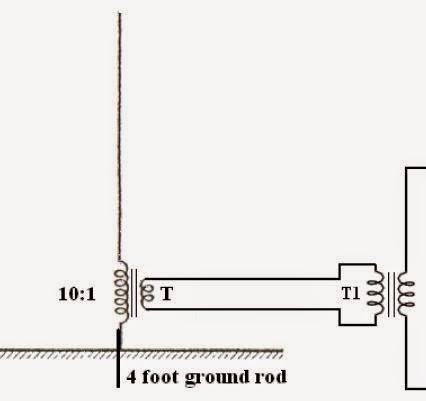 The recent posting by BCB / NDB DXer, Steve Ratzlaff (AA7U in OR), describing the poor performance of his initial LNV, prompted another round of valuable discourse on the Yahoo NDBlist Group. Steve indicated that his new 40' LNV was virtually deaf compared to his loop and active whip. ... until he rewound the transformers.
"I've fixed the very low sensitivity of my 40 foot LNV. The transformer
needed more turns for my particular setup--that made all the difference
in the world. I'm also using coax cable, not twin lead--that apparently
makes a big difference in the proper transformer turns ratio too. But
the LNV with preamp is now about the same sensitivity as the active whip.
My transformer primary uses 110 turns, to give good reactance at
the low end of the NDB band. I started with 21 turns on the secondary,
tuned to my local beacon LGD on 296 and looked at the signal level,
removing two turns each time until I got to 8 turns. A broad peak was
with 16 turns which is what I used for the final secondary turns. That's
a turns ratio of 110/16 = 6.875.
Total coax run from the mast to the middle of the home is about
135 feet where it enters the home.
I did some ground rod checks for signal level too. I have 3 ground rods
installed at the LNV--6 foot, 4 foot and a short 2 foot. I started out
with all three connected and took a reference signal reading, then just
the 6 foot; then just the 4 foot and then just the 2 foot. Signal level
dropped several tenths of a decibel for the 2 foot rod and was the same
for the 4 and 6 foot rods by themselves and for all 3 rods connected. So
my particular setup likes something a little longer than 2 feet for the
ground rod. I'll leave all three rods connected for now since they're
already in place.
The LNV being in a different location is now quieter on some lower end
signals where the active whip is noisy due to the whip being closer to
AC power--a nice thing. The low end 195-205 kHz especially are often
unusable due to noise; the LNV is much quieter for those, apparently due
to it being 100 feet farther from the AC power at the home.
So, the bottom line is my LNV is now working like it should, I believe.
I'll continue to use it and do more comparison checks since I can switch
my antennas instantly."
From Roelof, PAØRDT:
" ... I believe the term low noise vertical is a bit misleading. These verticals are only suffering less from local noise compared to loop antennas when
located close to the house.
The reason is that the vertical is receiving the electric field and
the electric field of local noise sources located in the house fall
off very quickly outside the house, especially at LF and MW.
A loop antenna does receive the magnetic field of local noise
sources and this field does not fall off close to the house.
I can demonstrate this effect here any time with my modified ALA1530
and mini-whip antenna.
"Matching" this type of vertical to the 50 ohm input of a receiver
is interesting. Connecting it directly to the receiver input, will
load the antenna too much and the voltage across the antenna
terminals will collapse.
This problem can be solved by using a high input buffer amplifier as
used in active whips or by a voltage step down transformer.
Due to imperfections in the step down transformer, e.g.
inter-winding capacitance and insufficient inductance of the
receiver tap / secondary winding, signal output will be way down
compared to an active whip of the same length, using a high input
impedance buffer amplifier.
You can use a tuned vertical to overcome this, however doing so the
broad band nature of the antenna is lost.
Living close to strong broadcast stations, which prevent the use of
active antennas, this particular type of E-probe is an excellent
alternative."
And from Anthony Casorso in CO:
"Motivated by your posts, I build a new transformer using an FT140J with 100 turns on the antenna side and a 10 tap secondary with a rotary switch to select the tap. The taps were from 8 turns to 26 turns in 2 turn increments.
And finally Don, in California:
"Well, with 50% more turns (12T) on the secondary winding there is alot
more output. Around 520 kHz I was running the Perseus volume almost all
the way up - now it is about half.
I'm using ~33m 75 oHm coax from the LNV to the Perseus - no RF amp -
plenty of signal. My LNV output is about 15 - 20 dbm less according to
the Perseus than the PA0RDT and Wellbrook ALA-100 but I don't seem to be
missing any signals because of the lower "S" reading. I'm amazed that it
seems to work well so I'm trying not get tangled up in numbers. I don't
think it is possible to have a perfect match with hard wired components
and changing frequencies.
The secondary seems to need at least 8T with a 80T primary in my little
LNV experiment and 12T is better. When I get the 28ga wire I will wind a
primary of 110T to match Steve R's LNV coil with a secondary of 12T to
start with."
Of interest to note is the use by both Steve and Roelof of the RPA-1 preamp.
 |
| courtesy: www.dxengineering.com/ |
has about +18 dB gain. The stock preamp rolls off gain below about 300
kHz; mine is flat down to VLF. (The input transformer needs more turns,
that's all that's needed.) "
Steve McDonald, VE7SL, is a regular contributor to AmateurRadio.com and writes from British Columbia, Canada. Contact him at [email protected].
Chameleon Antennas F Loop Field Test 03-21-2105
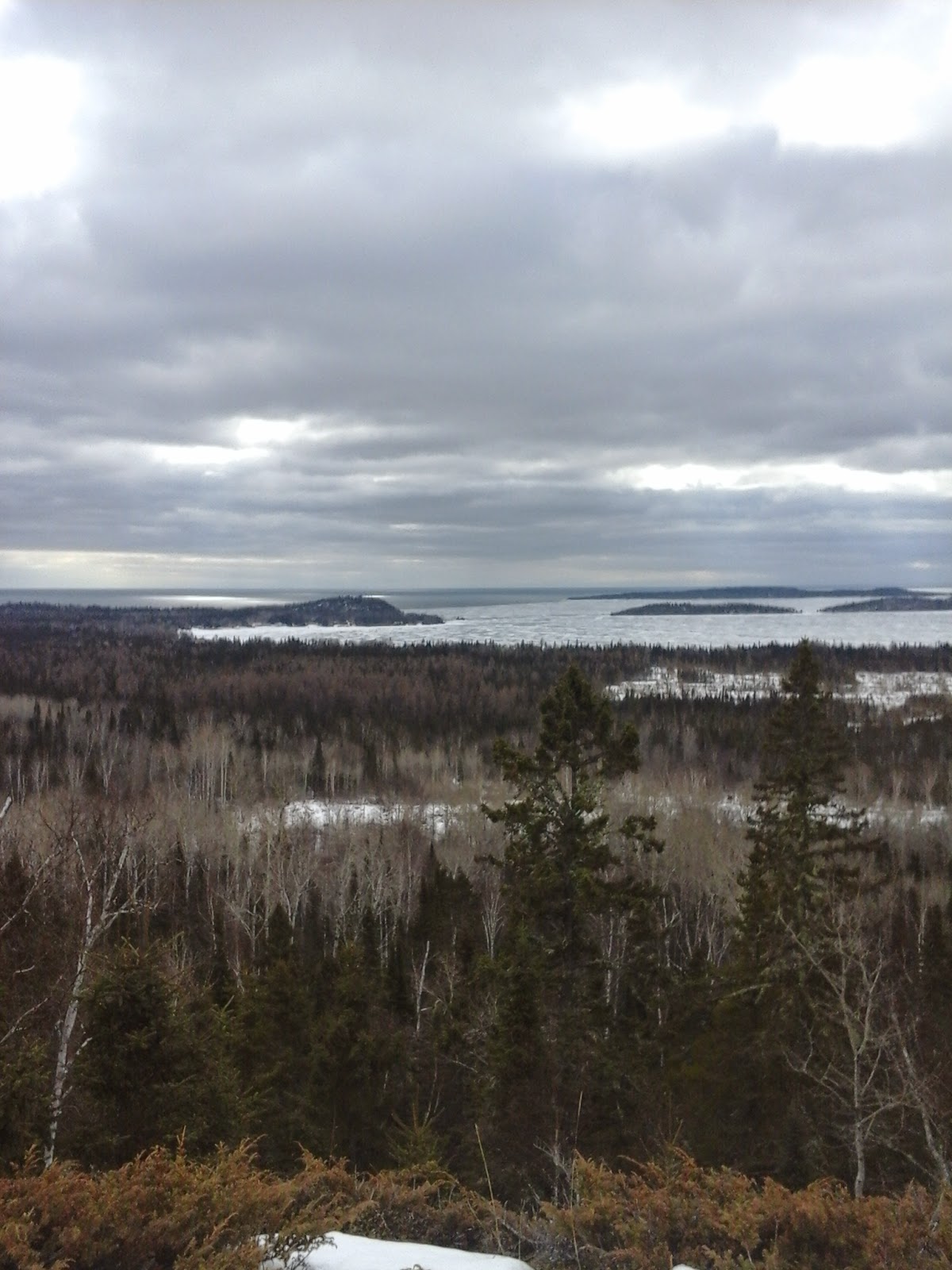
The nice thing about the area we are operating from is not only the view of Pine Bay and Lake Superior but there is no line noise or man-made noises that affect us, only things we hear are the wind, birds and small wind chime that is hanging in a tree.
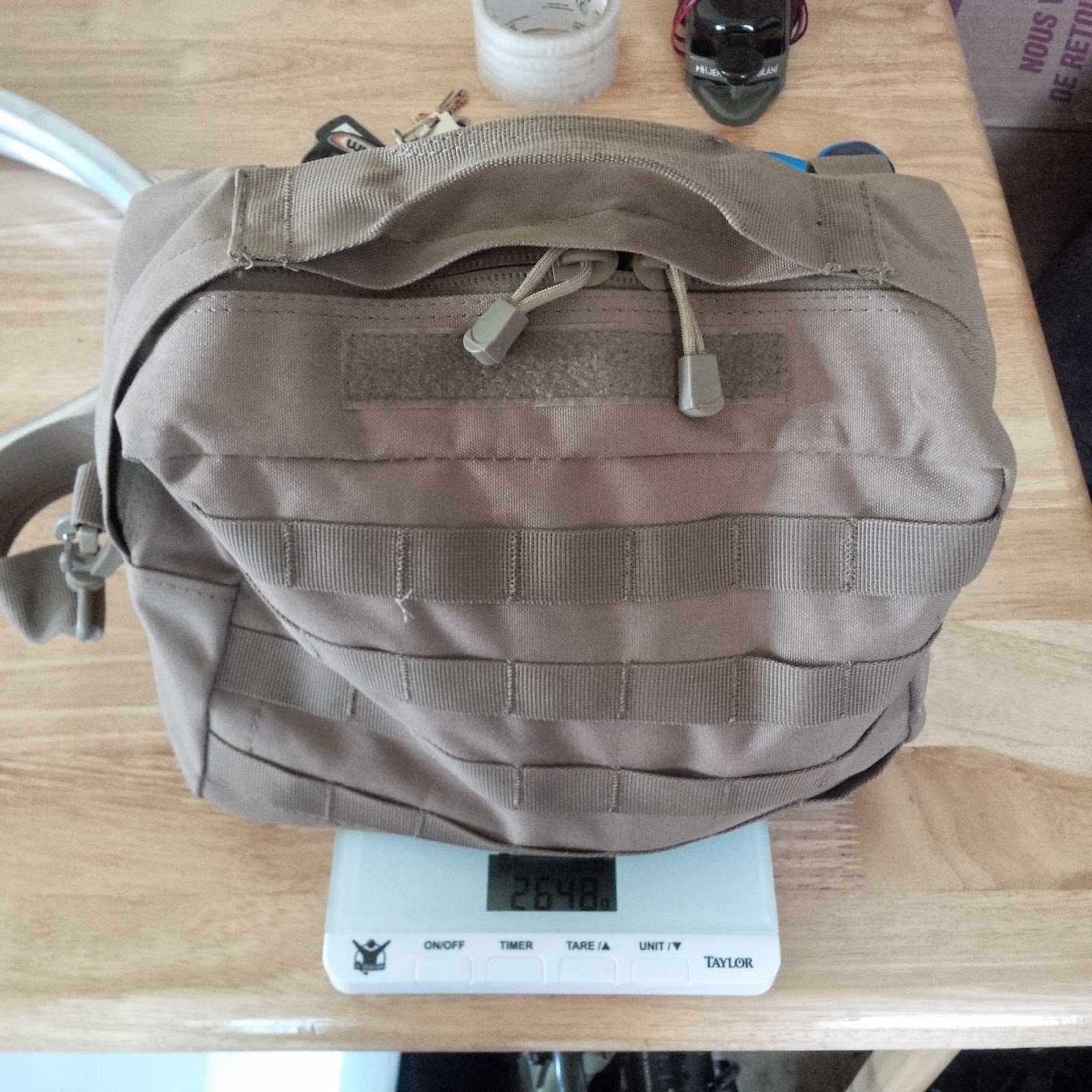


So I then switched to the KX3, I think the cold was affecting the radio though as I had to crank the volume to 50 in able to hear the signals, combine that with weak signals on the band and was a bit of a chore to hear with the small speaker, but the best thing was I made a contact into Florida with KD4ZU running 5 watts on SSB from this rig. He said I had a great signal at his end was very much copyable with no problems. So 3 contacts on initial setup of the new Chameleon F Loop was indeed a great success for us, assembly was easy with no issues at all, and packing and unpacking into the Condo bag was easy as well. The tuner can also be mounted on a tripod if needed as it has a hole pre-drilled for that purpose, as you seen we had it sitting on the rock and had no issue running it.
A quick test of WWV on 10 megs also showed the directivity qualities of the side of the loop and the signal peaked quite well. It was now 1900z and we decided to pack up and head back down from the lookout and head home knowing we had another successful RaDAR and HFNow operating day after bands being so bad all week.
My latest video can be found here on my YouTube Channel:
Thanks goes out to:
Carl at Chameleon Antennas
HFNow group
RaDAR Group
Gary VE3ODE (Camera man and friend)
Teresa (VE3TLL) my YL who encourages me to get out and play radio
Elecraft for making a great radio like the KX3
ICOM for the hardy IC-703 of which Gary and I both own
Propagation Godz for opening up the bands
George and Mary-Anne who have allowed this beautiful spot to be viewed by others
Take care gang and be back shortly with more reviews, test and just plain fun.
Fred VE3FAL
The Ice Man
Fred Lesnick, VE3FAL, is a regular contributor to AmateurRadio.com and writes from Thunder Bay Ontario, Canada. Contact him at [email protected].
40m Pixie kit at INCREDIBLE price
I bought my 40m Pixie kit for $10 and thought this was a bargain. Then Andy Cutland sent me this link.
Hi Roger, this is the cheapest i’ve seen yet. What fantastic value !Check out this item I found on eBay:End time: 15 Apr 2015 10:33:10(Sent from eBay Mobile for Android)

At £3.19 with free shipping there is no way you could make this cheaper in my view. Remember this price includes a crystal, PCB and all the board mounted parts. This looks identical to mine which works very well. This is a refined Pixie and performance has exceeded expectations. Netting is excellent TX to RX and AM breakthrough very modest. My power out is about 400mW and a 1uV signal level very good on RX. A totally usable 40m CW rig for not much more than a cup of coffee.
Even with the after-effects of my cerebellum brain bleed I was able to build the kit without any issues.

Roger Lapthorn, G3XBM, is a regular contributor to AmateurRadio.com and writes from Cambridge, England.
Series Eight Episode Six – Making PCB’s (22 March 2015)
Series Eight Episode Six of the ICQ Amateur / Ham Radio Podcast has been released. In this episode, Martin M1MRB / W9ICQ is joined by Ed Durrant DD5LP and Martin Rothwell M0SGL to discuss the latest Amateur / Ham Radio news. Colin M6BOY rounds up the news in brief, and this episodes feature is - Making PCB’s by Matthew Nassau 2E0MTT
- Amateur / Ham Radio Statistics - March 2015
- Winner of UK CanSat 2015 Announced
- Scientist Radio Ham Named for Prestigious Award
- World Amateur Radio Day 2015
- 80th ARRL Anniversary of North Dakota Radio Amateur
- PyQSO v0.2 Released
- Amateur Radio Parity Act of 2015 Introduced in Congress
- SARL Assist Zambians with the Licensing of Amateurs
Colin Butler, M6BOY, is the host of the ICQ Podcast, a weekly radio show about Amateur Radio. Contact him at [email protected].
Series Eight Episode Six – Making PCB’s (22 March 2015)
Series Eight Episode Six of the ICQ Amateur / Ham Radio Podcast has been released. In this episode, Martin M1MRB / W9ICQ is joined by Ed Durrant DD5LP and Martin Rothwell M0SGL to discuss the latest Amateur / Ham Radio news. Colin M6BOY rounds up the news in brief, and this episodes feature is - Making PCB’s by Matthew Nassau 2E0MTT
- Amateur / Ham Radio Statistics - March 2015
- Winner of UK CanSat 2015 Announced
- Scientist Radio Ham Named for Prestigious Award
- World Amateur Radio Day 2015
- 80th ARRL Anniversary of North Dakota Radio Amateur
- PyQSO v0.2 Released
- Amateur Radio Parity Act of 2015 Introduced in Congress
- SARL Assist Zambians with the Licensing of Amateurs
Colin Butler, M6BOY, is the host of the ICQ Podcast, a weekly radio show about Amateur Radio. Contact him at [email protected].
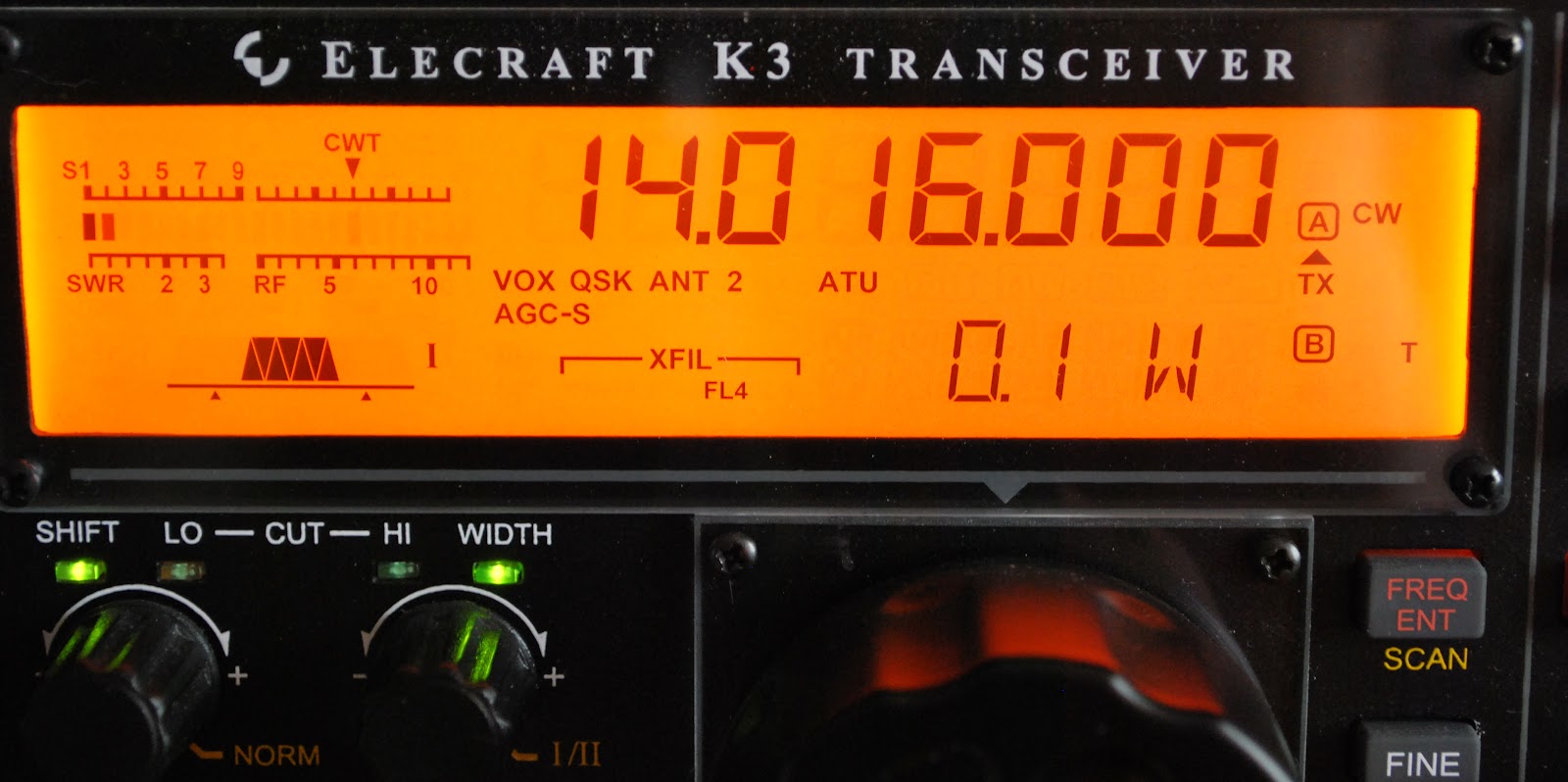
VE3WDM is back into QRPp very low power contacts!
Mike Weir, VE9KK, is a regular contributor to AmateurRadio.com and writes from New Brunswick, Canada. Contact him at [email protected].
 Ham Radio Deluxe |
 W5SWL Electronics |
 Ham Radio Prep |
 KB3IFH QSL Cards  Hip Ham Shirts  HamRadioAuctions HamRadioAuctions Reliance Antennas Reliance Antennas Enigma Shop Enigma Shop |  morseDX  Ni4L Antennas  R&L Electronics R&L Electronics antennas.us antennas.us QRV QRV |
- Matt W1MST, Managing Editor
