 |
 Series Eight Episode Nine – International Marconi Day (02 May 2015)
 2 May 2015 | by
 In this episode, Martin M1MRB / W9ICQ is joined by Leslie Butterfield (G0CIB) and Matthew Nassau (2E0MTT) to discuss the latest Amateur / Ham Radio news. Colin M6BOY rounds up the news in brief, and this episodes feature is International Marconi Day.
- New Entry Level Licence for Germany?
- Ofcom Considers 10.475 and 47 GHz Bands for 5G
- Digital Activity Days RDRC
- Ham Radio Operator Flies Model Tricopter
- FUNcube-1 Transmitting Again
- Australian Balloon Circumnavigates the Globe
- New Award Scheme for Portable Operators
- Surprise Decrease in Australian Ham Licence Renewal Fees
Colin Butler, M6BOY, is the host of the ICQ Podcast, a weekly radio show about Amateur Radio. Contact him at [email protected].
Series Eight Episode Nine – International Marconi Day (02 May 2015)
In this episode, Martin M1MRB / W9ICQ is joined by Leslie Butterfield (G0CIB) and Matthew Nassau (2E0MTT) to discuss the latest Amateur / Ham Radio news. Colin M6BOY rounds up the news in brief, and this episodes feature is International Marconi Day.
- New Entry Level Licence for Germany?
- Ofcom Considers 10.475 and 47 GHz Bands for 5G
- Digital Activity Days RDRC
- Ham Radio Operator Flies Model Tricopter
- FUNcube-1 Transmitting Again
- Australian Balloon Circumnavigates the Globe
- New Award Scheme for Portable Operators
- Surprise Decrease in Australian Ham Licence Renewal Fees
Colin Butler, M6BOY, is the host of the ICQ Podcast, a weekly radio show about Amateur Radio. Contact him at [email protected].
HF or VHF?
Depending on the solar cycle, and how good it is, both 10m and 6m can behave quite differently. Sometimes 10m is a true HF band with good worldwide DX possibilities. In better years, even 6m can support F2 worldwide propagation. However, for a lot of the solar cycle both 10m and 6m behave like VHF bands. This means Es can be an effective mode on both bands especially in the spring and summer months. Other modes like tropo can also be used on 10m and 6m. Both bands can be used for local natters on any mode.
At the moment we are in a transition period. On better days 10m is still good for worldwide DX but as time progresses, it will behave more and more like a VHF band with long periods of quiet. Especially as we move to more VHF conditions modes like WSPR become even more useful: short DX openings can be detected with WSPR. Leaving a simple WSPR rig running can be so useful and take very little power.
As I have mentioned before, I have worked real 10m N-S DX (11000+ km) on QRP SSB even in the quietest of sunspot years. WSPR is considerably better than SSB, requiring far less power and can be used unattended running in the background. I tend to run 10m and 6m WSPR most days and monitor WSPRnet on a different PC in the lounge. It takes just seconds to go into the shack and make any adjustments needed. It means, whilst running WSPR, you can do other things.

Roger Lapthorn, G3XBM, is a regular contributor to AmateurRadio.com and writes from Cambridge, England.
Amateur Radio Newsline Report 1963 – MAY 1 2015
- Hams worldwide respond after an earthquake devastates Nepal
- FCC makes ready to introduce a pair of new ham radio bands
- AMSAT gets opportunity for a rideshare to geostationary orbit
- House committee asks why FCC wants to close field offices
THIS WEEK'S NEWSCAST
Script
Audio
Kanga Products
See http://www.kanga-products.co.uk/. Although I have to admit that I have not used this supplier or its sister site in the USA, they seem to have a useful range of kits and products in stock. If you are after QRP or QRSS frequency crystals, then these are at a decent price. I have no idea how well priced their other items like solder are compared with other suppliers.
As I have said before, these suppliers could soon disappear if they do not get enough trade. The competition from China is fierce indeed and many very good bargains may be had on eBay. I wish Kanga well.

Roger Lapthorn, G3XBM, is a regular contributor to AmateurRadio.com and writes from Cambridge, England.
April Radio Antics
During the Easter holiday I was away in the caravan at a dog agility show in North Yorkshire, camping in the grounds of Duncombe Park just outside Helmsley. When not competing I was able to find some time to operate.
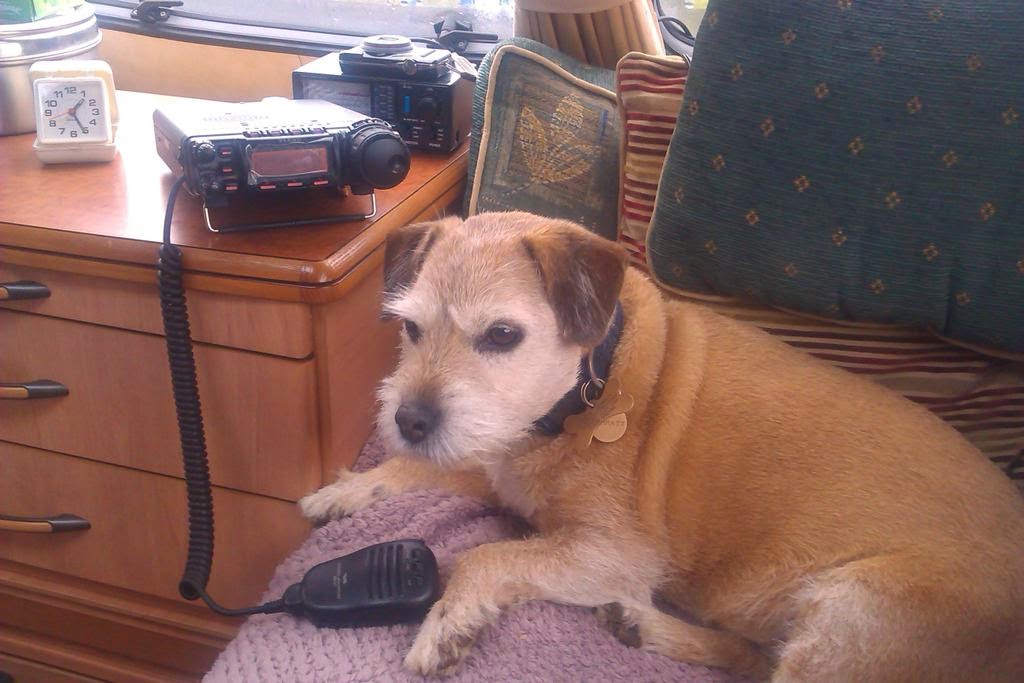 |
| Boris combining both hobbies! |
Using just an M0CVO Magitenna I had some reasonable low power SSB operation on a number of bands and activated a square for the Worked All Britain Award (WAB) (SE58) and gave some points away during the Polish SP DX Contest.
The WAB scheme was something I signed up for last year when I went to Skye but haven't participated till now. The WAB net on 7.160MHz is a little daunting to listen too but once I jumped in it was relatively painless to activate the square and I plan to do some more when I go back to the Isle of Skye and Islay later this year, but I must improve my portable HF antenna.
Over the weekend of the 11/12th April there was another SSTV activation from the ISS in celebration of Yuri Gargarin's life. I had some good results decoding images and decided that I'd use it as a way to promote South Kesteven ARS locally and contacted the local newspaper.
The Newark Advertiser did indeed feature the story both in print and on their website and they were very good in mentioning the radio society. It was also printed in the sister free paper.
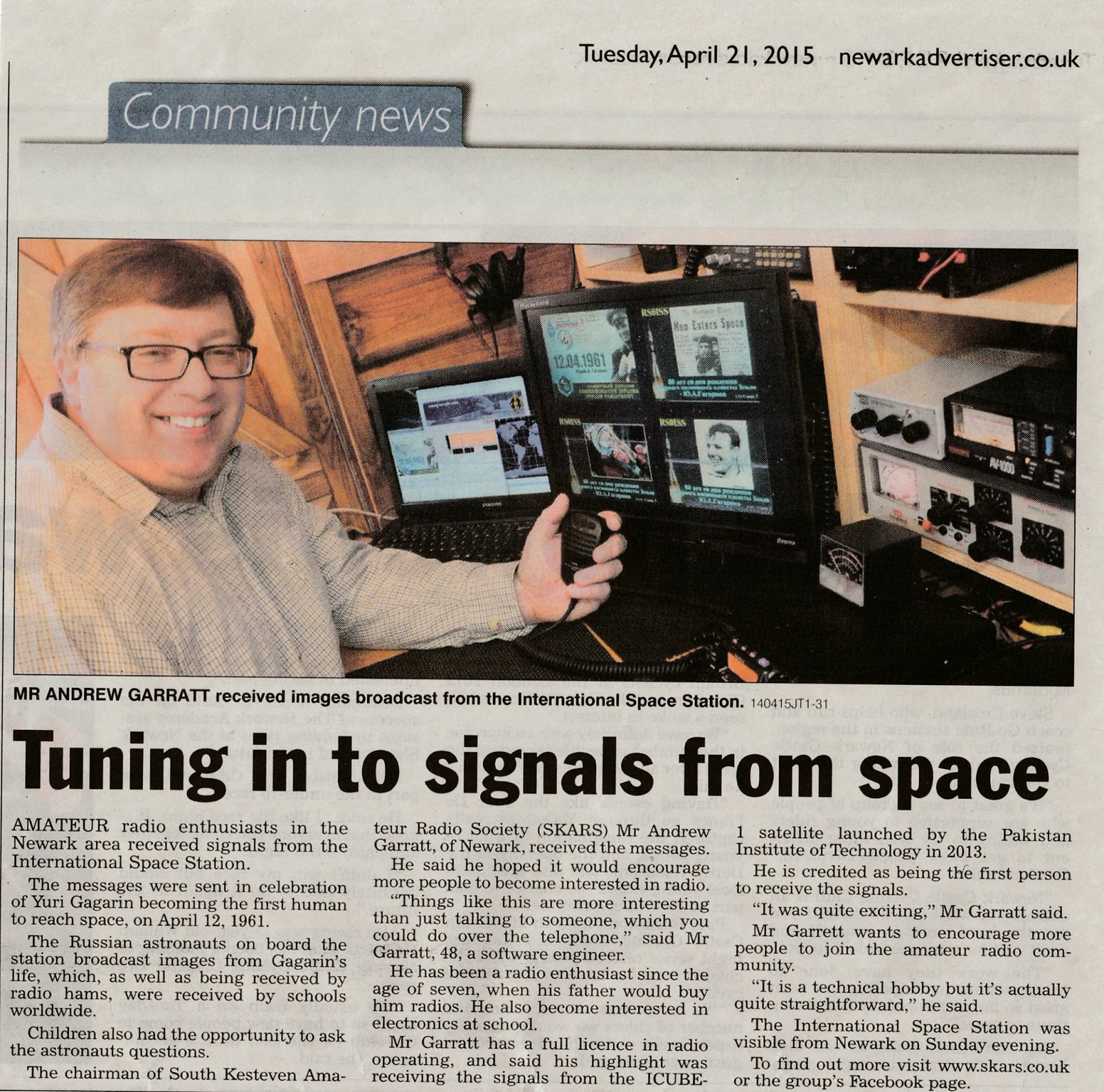 |
| Copyright Newark Advertiser |
It was nice to get some very complimentary reaction to my publicity drive in social media and other websites including an article on the Amsat-UK page http://amsat-uk.org/2015/04/15/iss-sstv-in-the-press/
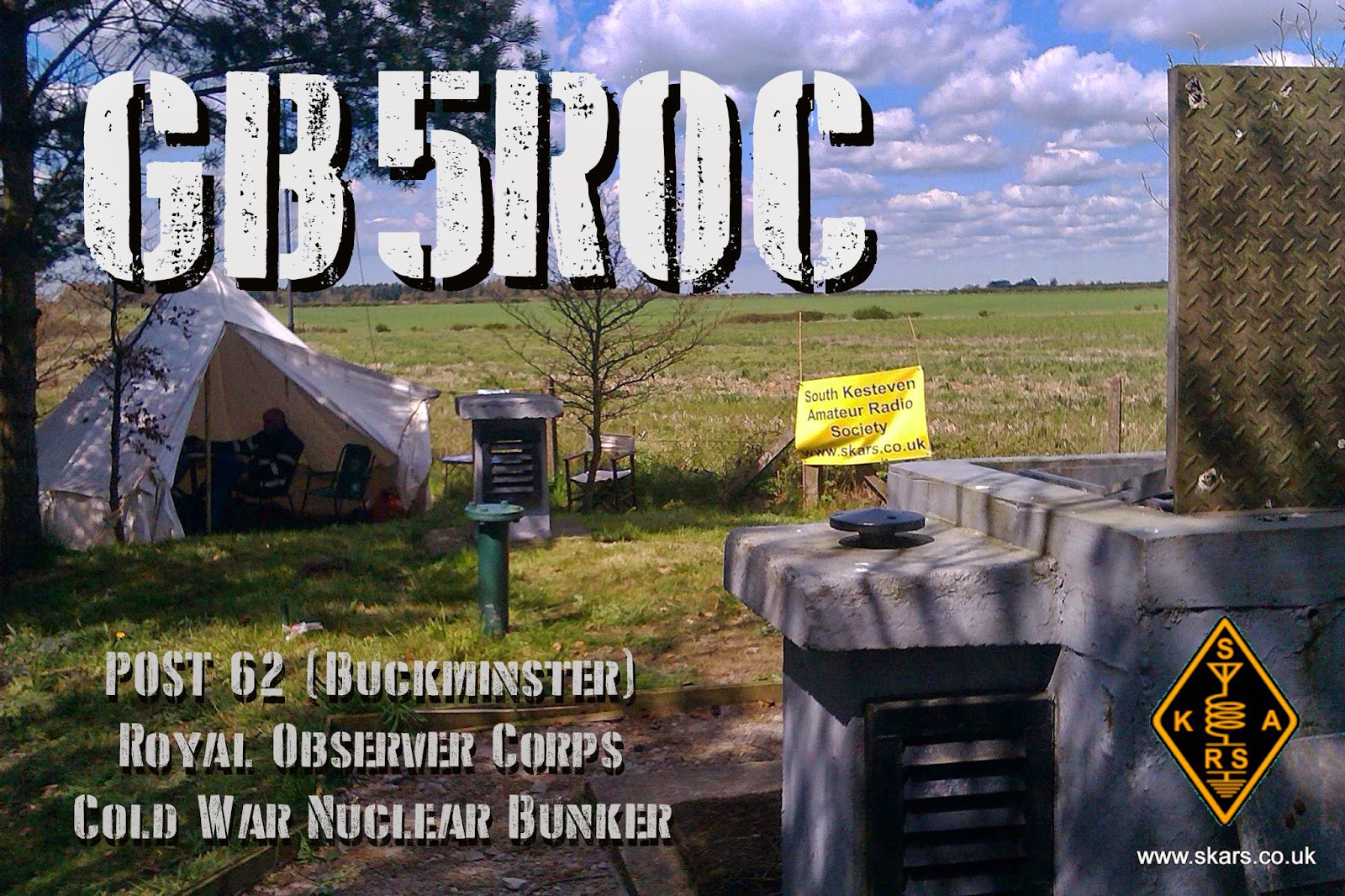
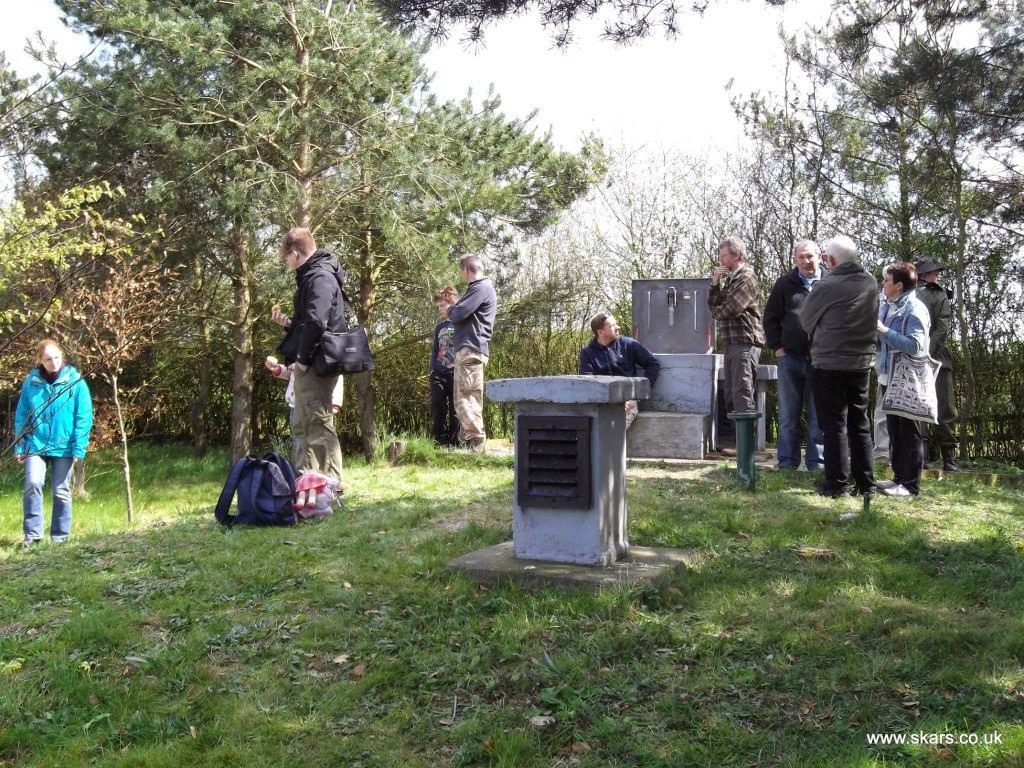
Situated on the Lincolnshire/Leicestershire border ROC Post Number 62 is leased to the UP AN’ AT EM! History project and has been restored as a museum and is managed by Jed Jaggard. The free open day was a rare chance to visit and experience an important part of British post-war history.
These bunkers are underground structures found all over the United Kingdom, constructed as a result of the Corps’ civil defence nuclear reporting role and were operated by volunteers during the Cold War between 1955 and 1991. There was a network of over 1500 such monitoring posts around the UK designed to detect nuclear detonations and monitor blast and subsequent fallout and radiation levels should an attack take place.
Thankfully they were never used and the last of the posts were closed in 1991 when the majority of the ROC was stood down following the break-up of the Communist Bloc. Many have been demolished, fill in or adapted to other uses but the majority still exist, although in a derelict condition.
During the open day visitors had the chance to climb down into the bunker so for reasons of practicality SKARS operated GB5ROC from a tent close to the bunker hatch.
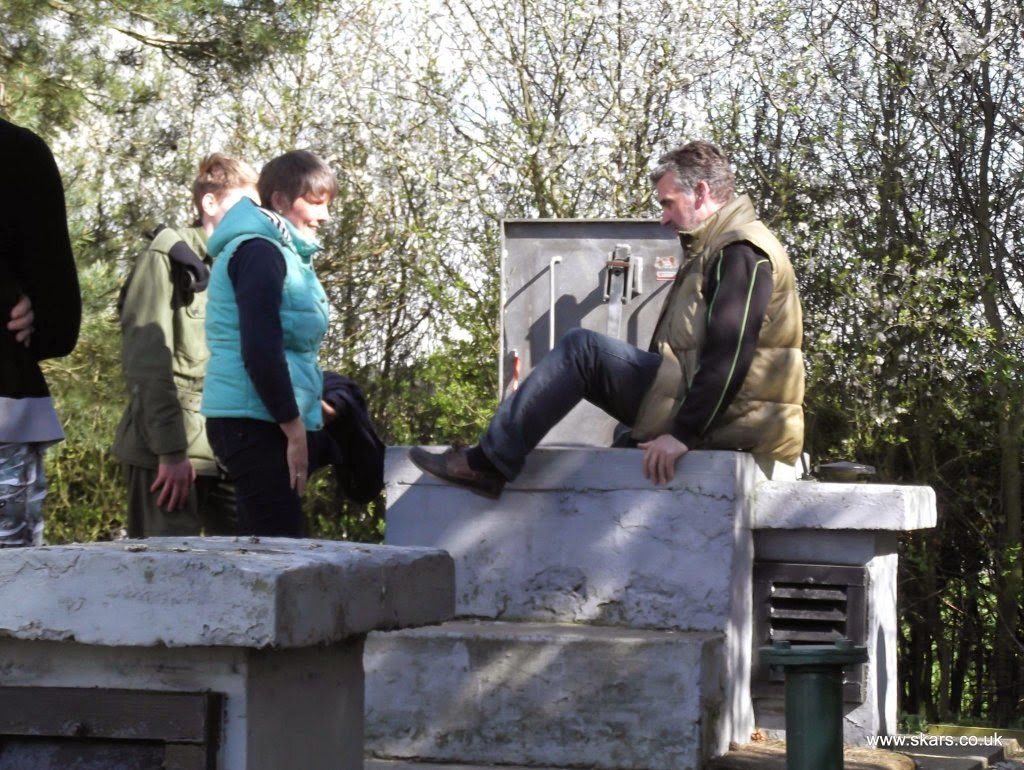
Along with Stewart Mason (M0SDM) and Sean Burton (2E0ENN) we operated on 40m from 10:00 till 16:30 BST and made a total of 151 contacts mostly UK operators with a number of European stations.
Equipment was supplied by Stewart who did the majority of the operating and consisted of a Yaesu FT-897D at 100W feeding an off centre fed dipole at around 30ft on top of a Racal push up mast. Stewart also provided a new club banner.
The open day was very well attended and a number of local and not so local amateurs (one visitor from Australia VK4UA ) came along thanks to the publicity the event had received on Facebook, Twitter, GB2RS and the Southgate ARC newsfeed. It was great to meet up and chat.
Encouragingly members of the general public were keen to learn what amateur radio was all about and they were able to take away a number of leaflets with information about the hobby and contact details for SKARS.
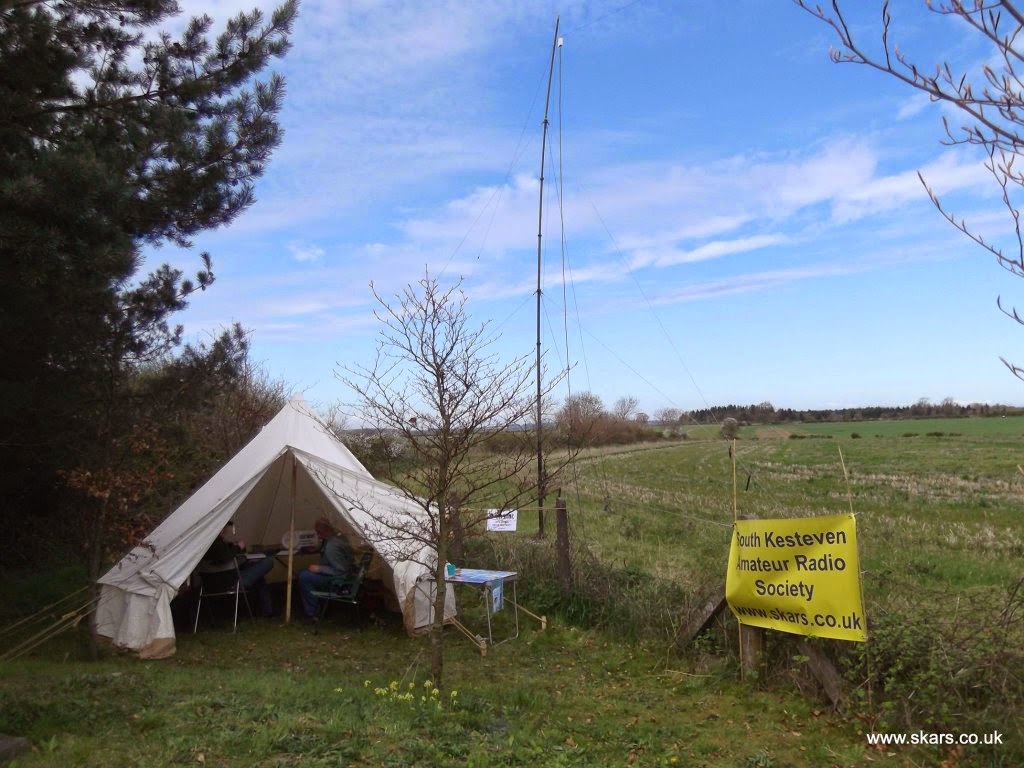
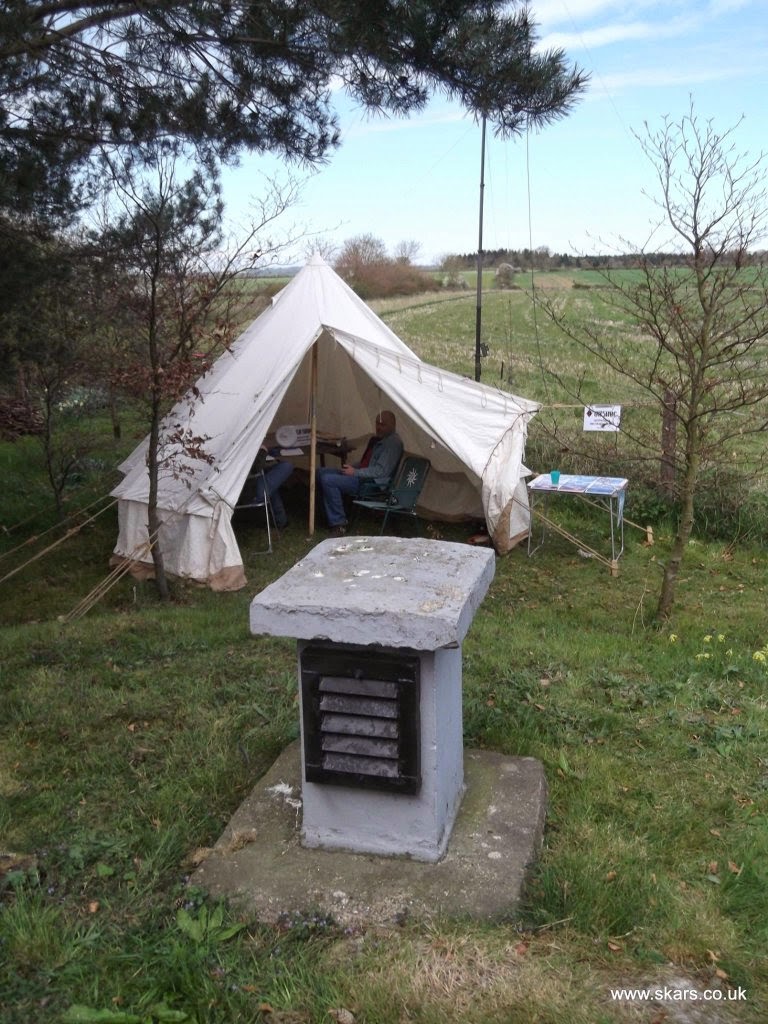
It was an excellent day all round with the operators have a fun time and gaining useful experience of operating a pile-up. The weather was kind with blue skies and sunshine. Hopefully it will become a regular activation at future bunker activations.
The video below Stewart operating Richard M6GPT who had tried most of the day to make contact and was successful just before the station was closed down.
SKARS member Mark (M0OBL) had monitored GB5ROC and made a video of his Elecraft K2 receiving us load and clear.
Next month is going to be very busy as I have GB2EGG and the Eggsplorer-1 HAB flight to organise and that too has made the press. http://www.sleafordtarget.co.uk/Egg-sent-space-World-Egg-Throwing-Championships/story-26372439-detail/story.html
Oh and lastly remember this is the original "Radio Antics" blog, often imitated but never bettered.. 73
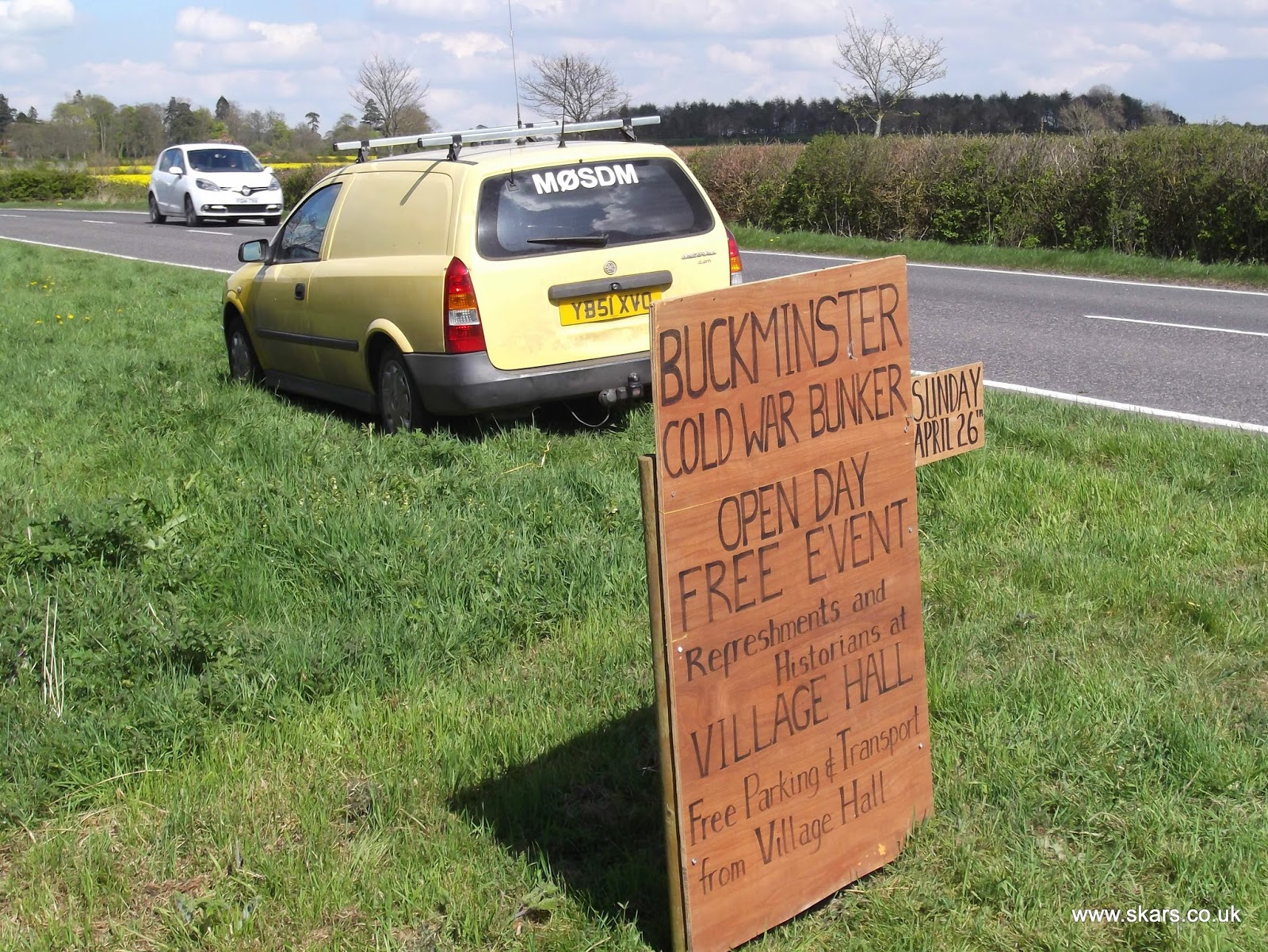
Update, the visit of VK4UA to GB5ROC wasn't due to any publicity or advertising - it was simply because Stewart had his van parked on the verge with his callsign clearly visible and he was visiting the area - the simplest ideas are the best it seems!
Andrew Garratt, MØNRD, is a regular contributor to AmateurRadio.com and writes from East Midlands, England. Contact him at [email protected].
LF / MF – Next Step For U.S. Amateurs (Part 1)
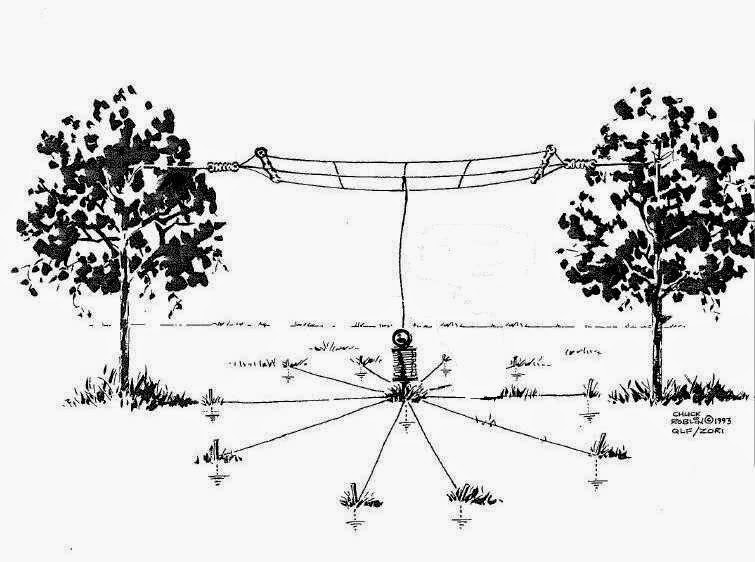 The ARRL's 600 Meter Experiment Coordinator, Fritz Raab (W1FR) recently released a statement urging that the program be renewed. According to Raab, all of the WD2XSH licences will expire in August. Citing a quarterly report prepared by John Langbridge (KB5NJD) and Warren Ziegler (K2ORS), two very active participants in the program, Raab says that the program has demonstrated that the Amateur Radio community is interested in MF operation.
 “Amateurs with ordinary facilities can use the band; exotic antennas are not required,” the report said, adding “QSOs from 500 to 1000 miles are routinely achieved, and longer distances are possible.”
As described in the ARRL News, "The FCC has yet to act on the ARRL’s 2012 Petition for Rulemaking asking it to create a domestic Amateur Radio allocation at 472-479 kHz, known variously as 600 meters and 630 meters. Delegates to the 2012 World Radiocommunication Conference (WRC-12), approved a 7-kilohertz-wide secondary Amateur Radio allocation at 472-479 kHz, with a power limit of 5 W EIRP (or 1 W EIRP, depending on location). Radio amateurs in Canada and in several other countries already have allocations there. Canadian 630 meter operators held a cross-band event on February 14, listening on 160 and 80 meters for US stations."
“Following the WRC-12 decision to create an amateur 630-meter band, most of us expected the FCC to approve access for US amateurs,” Raab’s report said. “Had this happened, there would not be further need for the WD2XSH license. Over 2 years have passed since the ARRL petitioned the FCC to consider this band, and the FCC does not appear to be in any hurry to do so.”
As amateurs here in Canada have discovered, the U.S. experimenters have demonstrated reliable regional ground-wave communications is readily achievable in this part of the spectrum, making reliance on ionospheric conditions a none-issue. The report also addressed the question of interference, a possible long-standing reason cited in reasons for not giving LF bands to amateurs.
" ... in 179,000 hours of operation, “there has not been one complaint of harmful interference from either other radio services or utility power-line communications.” The FCC cited concerns about possible interference to utility power-line carrier (PLC) systems in deciding not to adopt its own 2002 proposal for an LF allocation in the vicinity of 137 kHz. The WD2XSH status report noted that the radiated power from some WD2XSH stations and of other experimental stations working at 630 meters, “is well above the 5 W EIRP of the WRC-12 authorisation.”
Raab goes on to suggest that the ARRL "should have a continued presence in our quest for a 630 meter amateur band” and recommended renewing the license.
MF operators in Canada are also anxiously awaiting the appearance of their southern-neighbours, which would likely result in a large spike in new Canadian activity.
The experimental program has done the heavy lifting and demonstrated that amateurs can operate in this part of the spectrum, at moderate to high power levels, without causing interference. Remember that even though the 5W EIRP limit seems low, due to antenna inefficiencies at this frequencies, transmitters typical are required to generate several hundreds of watts to reach the 5W EIRP limitations.
With all of the above in mind, it seems that indeed the next steps to making these two bands available to U.S. amateurs has drawn one-step closer to reality.
On April 26th, two weeks after Raab's somewhat downcast report, the FCC announced the NPRM (Notice of Proposed Rulememaking) which included the proposals for both 2200m and 630m. NPRM's provided stakeholders the opportunity to file comments as well as provide the filer (FCC in this case) a final opportunity to gather information which will help them form future policy ... in this case, what the rules for the new bands might look like, should they proceed with implementation.
A closer look at the NPRM will be of interest to amateurs who have been waiting for some action ...
(... cont'd)
Steve McDonald, VE7SL, is a regular contributor to AmateurRadio.com and writes from British Columbia, Canada. Contact him at [email protected].
 Ham Radio Deluxe |
 W5SWL Electronics |
 Ham Radio Prep |
 KB3IFH QSL Cards  Hip Ham Shirts  HamRadioAuctions HamRadioAuctions Reliance Antennas Reliance Antennas Enigma Shop Enigma Shop |  morseDX  Ni4L Antennas  R&L Electronics R&L Electronics antennas.us antennas.us QRV QRV |
- Matt W1MST, Managing Editor
