 |
 Amateur Radio Weekly – Issue 74
 22 August 2015 | by
$8,000 fine proposed for Ham causing interference, failing to identify
Ham volunteered to track down the interference he was causing.
ARRL
Are Amateur Radio-based emergency communications still relevant?
From “we are the be all and end all of disaster communications planning” down to “hams who show up to emergency scenes should be arrested.” So what’s the answer?
VA3QR
Slim Jim vs. Traditional J-pole Antenna
Real measurements of a Slim Jim antenna and traditional j-pole antenna reveal the truth about their respective gain and pattern.
hamradio.me
New, fast JT9 Meteor Scatter modes
Joe Taylor K1JT has published some information about the new ‘Fast JT9’ submodes for Meteor Scatter communication on 28 and 50 MHz.
Southgate
Rufus Turner: Ham Radio’s first African American Operator
Rufus was an engineer who developed the 1N34A germanium diode in the 1946.
KC4LMD
First Tracksoar test flight
The Tracksoar APRS tracker is designed to be flown under anything capable of lifting 60 grams, including balloons, RC planes, quad copters, or anything else that flies.
Tracksoar
Danish CubeSats head for ISS
The IARU have coordinated 437.250 MHz for the 1k2-9k6 bps beacon and 437.425 MHz for the GMSK beacon.
AMSAT UK
SkookumLogger contest logger for OS X
Supporting CW and SSB events on the six HF contest bands plus 6m, 4m, 2m, and 70cm.
K1GQ
CJU satellite antenna for HTs
A minimalist satellite system.
VE6AB
How to
Setting up Ubuntu for Decoding NOAA and Meteor M2 Sats
In this guide, I will attempt to make it easy to set up Ubuntu with GQRX, GNU Radio Companion, WxtoIMG, and Tools for decoding Meteor M2 Sats.
voiceoverman
And finally…
One acorn too many
Woodpecker fills Antenna with Acorns.
YouTube
Amateur Radio Weekly is curated by Cale Mooth K4HCK. Sign up free to receive ham radio's most relevant news, projects, technology and events by e-mail each week at http://www.hamweekly.com.
I’m back…
Mike Weir, VE9KK, is a regular contributor to AmateurRadio.com and writes from New Brunswick, Canada. Contact him at [email protected].
Amateur Radio Newsline Report 1973 August 21, 2015
- BREAKING NEWS
- FILTERD OUT FOREVER
- A HEALTHY DOSE OF HAM RADIO
- WAITING ROOM
- FIELD DAY WITH A TWIST
- SCHOOL'S OUT - SCHOOL'S BACK IN
- HUNTSVILLE HAMFEST YHOTY
- A SHINING BEACON
- THE POLITICS OF RADIO
- DX UP FRONT
- THE WORLD OF DX
- A NATON UNTO ITSELF
AmateurLogic 81: Huntsville with Peter
AmateurLogic.TV Episode 81 is now available for download.
George and Tommy finally meet Peter in person at Huntsville Hamfest!
1:12:40
George Thomas, W5JDX, is co-host of AmateurLogic.TV, an original amateur radio video program hosted by George Thomas (W5JDX), Tommy Martin (N5ZNO), Peter Berrett (VK3PB), and Emile Diodene (KE5QKR). Contact him at [email protected].
Still M.I.A.
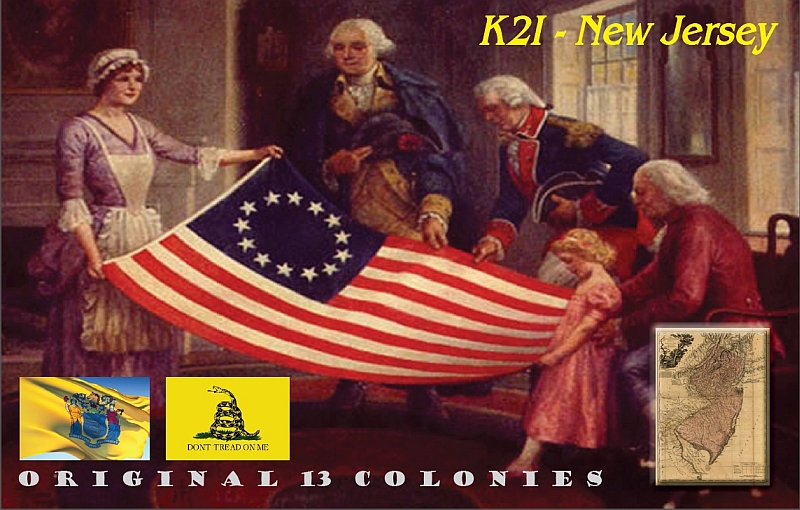
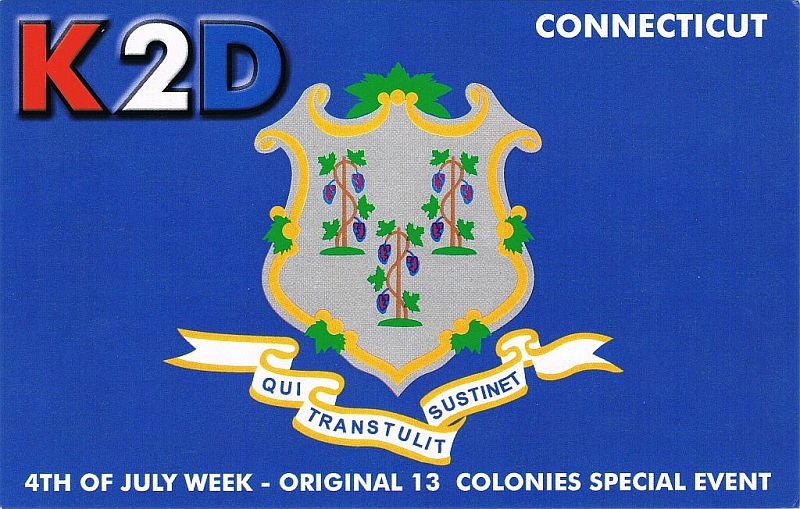
Of course, it's kind of ironic that one of the two QSL cards that I need would be from the state that I live in - and that my original QSL request was sent to a town just two over from home. I guess I will have to re-send QSL requests to both New Jersey and Delaware. However, instead of mailing the NJ one, I might just drop it off at the manager's mail box. He lives not far off the route I take to get back and forth from work every day. That way I'd be 1000% sure that he received it.
I've been e-mailing back and forth with my good friend Bob W3BBO. At a recent hamfest, he picked up these:
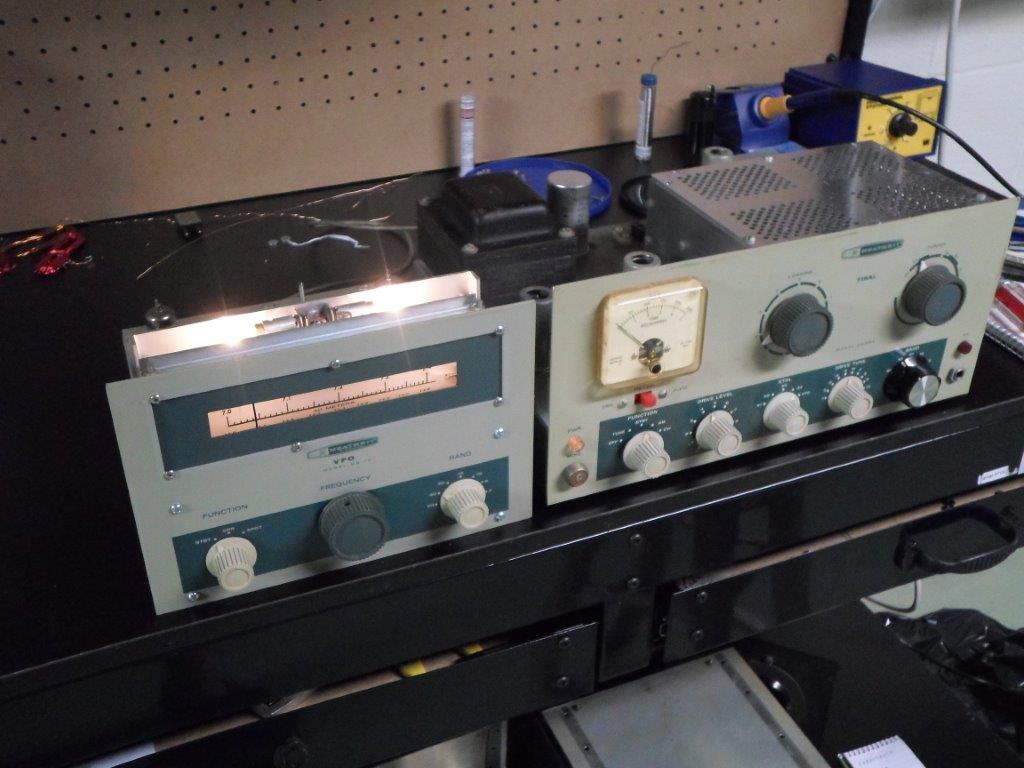
Yes, this is a Heathkit DX-60 and the accompanying HG-10 VFO. Well actually, he picked up the DX-60 at the hamfest. A friend supplied the HG-10 and advised Bob that it needed some TLC, and that if he could get it working, that he could purchase it at a super reasonable price. Bob has succeeded in getting it to work and he e-mailed me this morning that he is in the process of homebrewing a cable to get the output of the VFO into the DX-60.
That reminded me of a much earlier time, when I had these in my Novice station.
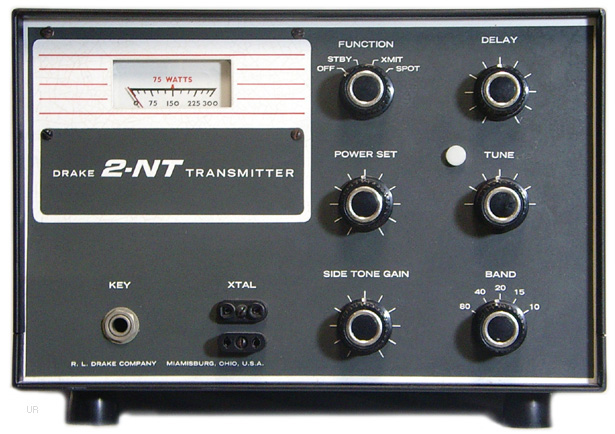
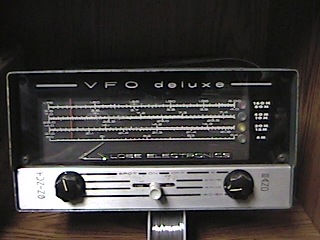
My Novice transmitter was a Drake 2-NT that I had purchased through Burghardt Electronics. I had purchased the Globe V-10 VFO from John Kakstys W2FNT who lived in Linden, NJ which was not too terribly far from East Brunswick, where I was living at the time. My receiver was the Heathkit HR-1680, which was my very first Heathkit build. That it worked without a hitch the very first time, upon firing it up, still amazes me to this day.

Anyway, I had the transmitter and I had the VFO. What do I do with them? That was the quandary for me at the time. This was 1979, after all. There was no Internet, no Google. I had no Elmer with whom I could speak, other than the instructor who taught the license class I had attended (and I never got his home telephone number). So it was either get the information I needed from a book, QST or go with my gut and improvise.
I improvised. There was a two conductor cable coming from the output of the VFO. The 2-NT's crystal socket had two holes for where you would plug in a crystal. I figured that the output from the VFO had to go there - it just seemed reasonable to me. So I took a junk crystal, pried the bottom part off, which left me with a base and pins. Then I soldered the two wires coming from the VFO output to the crystal base pins. I plugged it in, hoping the 2-NT wouldn't know the difference between a crystal and a VFO. I took a deep breath, muttered a prayer and turned everything on. I half expected it to blow up, taking me along with it, or to somehow electrocute me.
It didn't.
I connected the 2-NT to a dummy load and adjusted it for the lowest output power I could (see, QRP even way back then, I just didn't know it yet!). Then I turned on the HR-1680 and keyed the 2-NT to see if I could hear anything.
It worked!
I had successfully hooked up my VFO to my transmitter and did not harm myself or anyone else in the process. Much to my parent's delight, I didn't burn down the house, either! I used that setup for a lot of QSOs and enjoyed the heck out of it. After I upgraded to General and bought some equipment capable of doing SSB (silly boy), instead of selling off my Novice station, I donated it to the Handi-Hams, who were pretty much a new organization back then. I guess they must have been desperate for equipment donations at the time, as they gratefully accepted it - homebrewed VFO cable patch job and all.
72 de Larry W2LJ
QRP - When you care to send the very least!
Larry Makoski, W2LJ, is a regular contributor to AmateurRadio.com and writes from New Jersey, USA. Contact him at [email protected].
FSQCALL for quick messages
In the September 2015 QST magazine, there is an article about FSQCALL. This is an interesting digital mode with some free software to send quick, short messages between other hams. It’s meant to be more conversational than PSK – you type a sentence, hit enter, and away it goes. It has some selective calling features that let you address stations individually.
I loaded the software on my Windows 10 desktop, turned on my KX3, and was up and running on 30M with 5 watts in about 5 minutes. The software is pretty simple, especially after watching a couple of videos on YouTube first. I ran into Jim, W1PID, and also talked with Maine, and Texas.
For me, this is a great place to just hang out and see who’s around. No expectation of making endless CQs on 14.070, or sharing signal reports on JT65.
I’m going to play with the message store/forward functionality next. If you didn’t see the QST article, you can read more from ZL1BPU. Or, take a look at this video:
Michael Brown, KG9DW, is a regular contributor to AmateurRadio.com and writes from Illinois, USA. Contact him at [email protected].
FSQCALL for quick messages
In the September 2015 QST magazine, there is an article about FSQCALL. This is an interesting digital mode with some free software to send quick, short messages between other hams. It’s meant to be more conversational than PSK – you type a sentence, hit enter, and away it goes. It has some selective calling features that let you address stations individually.
I loaded the software on my Windows 10 desktop, turned on my KX3, and was up and running on 30M with 5 watts in about 5 minutes. The software is pretty simple, especially after watching a couple of videos on YouTube first. I ran into Jim, W1PID, and also talked with Maine, and Texas.
For me, this is a great place to just hang out and see who’s around. No expectation of making endless CQs on 14.070, or sharing signal reports on JT65.
I’m going to play with the message store/forward functionality next. If you didn’t see the QST article, you can read more from ZL1BPU. Or, take a look at this video:
Michael Brown, KG9DW, is a regular contributor to AmateurRadio.com and writes from Illinois, USA. Contact him at [email protected].
 Ham Radio Deluxe |
 W5SWL Electronics |
 Ham Radio Prep |
 KB3IFH QSL Cards  Hip Ham Shirts  HamRadioAuctions HamRadioAuctions Reliance Antennas Reliance Antennas Enigma Shop Enigma Shop |  morseDX  Ni4L Antennas  R&L Electronics R&L Electronics antennas.us antennas.us QRV QRV |
- Matt W1MST, Managing Editor
