 |
 A Christmas Rescue – Part Two
 24 December 2015 | by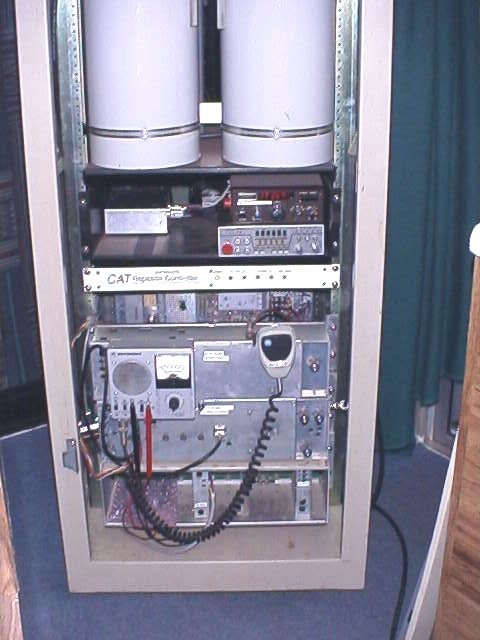
It had been snowing everyday since Dave had arrived home from school. Some days more, some days less, but it was still beginning to pile up, even by Springdale standards. This winter was shaping up to be one of the snowiest in Dave's young memory. It made for hazardous driving, but if you took your time and were careful, it wasn't a problem.
Dave was finishing up work on the repeater when he looked at his watch. It was 1:00 PM on Christmas Eve.
“Holy Smokes, Bob, I lost track of the time! I have to get out of here!”
Dave had been working with Bob, KB2VMG. “You're right, Dave, it's getting late. Time files when you're having fun, don't it?” Bob jokingly answered with a wry smile on his face. He was glad they were nearly done, too. Troubleshooting these kind of problems was always a challenge, and sometimes a headache.
“You're headed over to George N2EBA's QTH for dinner tonight, right?”
“That's right Bob. My family and AA2AJ's will all be there.”
“Well, you have a great time. Get going. You and Jimmy are all George ever talks about. He's so proud of the both of you and all. Tell him I said “Hello and Merry Christmas.”
Dave blushed a little and said, “Thanks, Bob. You're all right finishing things up here by yourself? Dinner's not for a while, but I still have a few presents to buy.”
“Don't trouble yourself, Dave. I just need to put the tools away and wash up. Everything is done here. Between you and me, I think we got the problem licked. Thanks for all your help – I don't think I would have noticed that iffy filter capacitor on the power supply if it weren't for your second set of eyes.”
“Merry Christmas, Bob – to you and your family. I'll see you next week at the regular club meeting.”
Dave set off for his Mother's car and went into town. He needed to buy gifts for his mom and sister, and it was still a new experience for him. Being alone with just his Dad for so many years, he still drew a blank at times when it came to buying gifts for females. But in this case, he was lucky as he knew exactly what he wanted. A down vest for Maria to wear when she went skiing and some scented candles and soaps for Donna. They were both pretty easy to buy for. Within an hour or two, he had made his purchases.
As he was driving home, the HT in his pocket came to life.
“AA2AM this is KD2JMJ. You on the air Davey?”
He pulled over to the side of the road. “Don't need to get a ticket for distracted driving on Christmas Eve.” he thought to himself. “KD2JMJ, this is AA2AM – what's up Dad?”
“His Dad answered, “Davey, I just wanted to give you a heads up. I'm going to have to pick up the beagle late this afternoon. The lady from the shelter in Pleasanton is closing the place early, but she gave me her home address. She's bringing Barney home with her and I'll pick him up from her house. I'll have to leave dinner from the Mason's early though.”
“Isn't that going to be kind of obvious, Dad? Mom's going to know something's up.”
“Got that all worked out, Davey. Fred from work is going to call me on my cell phone at 6:00 PM. By then we should have finished dinner. A “work emergency” that needs my presence will be the pretense. I'll just head out, pick up Barney and head back home. I should be home by 9:00 PM at the latest.”
“OK, Dad. I'll cover for you, later when the “work emergency” rears its ugly head. I'm just on my way home now. I'll see you in a bit. I think we worked out that problem with the repeater. I think it was either a bad ground or a bad jumper cable. Possibly even a bad filter capacitor in the power supply. The repeater hasn't hashed while we've been on.”
“Very good, Davey! Hey, I guess this EE education I'm paying for is working out!” His Dad loved teasing his son, even though he was practically a full grown adult now. “See you in a bit, son. AA2AM, this KD2JMJ, clear. 73, Dave.”
“73, Dad, see you in a few. KD2JMJ, this is AA2AM, clear.”
Dinner at the Mason's was as spectacular as everyone thought it would be. There was enough food to feed the 8th Infantry Division with leftovers to spare. And it was all exceedingly delicious. The Boltons, the Masons and the Stapletons thoroughly enjoyed each others company and the evening.
Everyone agreed to meet at the Bolton's house the next morning for Christmas brunch after Mass. As everyone was sitting down to dessert and coffee in the living room, Jason Bolton's cell phone rang, as on cue.
“Jason Bolton, speaking. May I help you?” Of course, Fred was on the other end, allowing Jason the opportunity to play the charade out.
“The router and switch are totally down? I'm not sure what I can do at this hour on Christmas Eve. All the techs have probably left the data center for the holiday. Looks like I'll have to come in and reset them.”
“What's the matter honey?” Donna asked, “Something wrong at work?”
“Yes, dear” Jason answered in feigned exasperation. “One of our client's routers and switches went down at the data center. None of their office door card readers are working and their Security department wants them reset right away. Looks like I'll have to go in.”
“Oh, no – not on Christmas Eve! And the roads – how long do you think it will be?”
Jason looked at his watch. “Well, it's 6 O'clock now. By the time I get there, reset the equipment and then babysit them out for a bit – I should be home by 9 O'clock at the latest, I would think.”
“Well, just be careful, Honey”, Donna said. “I don't like the idea of you out on these roads so late on Christmas Eve.”
“Everything will be fine, Donna. I'll see you in a while. Davey, you monitor the repeater, OK? If I run into any trouble, I'll give you a call. Merry Christmas, everyone! See you at our house tomorrow morning.”
With that, Jason Bolton took off for Pleasanton. The drive went quietly and uneventful. The roads were not all that busy, as everyone was already home for Christmas already. He found the address easily enough and knocked on the door.
“Mrs. Buckley? Hi! I'm Jason Bolton. I'm here for Barney.”
“Mr. Bolton! I'm so happy to see you and so is Barney.” Barney came bounding up and jumped up onto Jason when he saw him come in the door. His tail was wagging ferociously and he was practically doing somersaults.
“He looks happy to see me.” Jason said.

“Oh yes, Mr. Bolton. Barney is such a good boy. I think he's going to love his new forever home. Let me get you his papers and the carrier.”
Mrs. Buckley was gone for a few minutes and Jason bent down to play with Barney. Barney was alternately licking his face, and then laying down on his back so Jason could give him a tummy rub.
He was laughing softly to himself, thinking “You, my little friend, are going to melt Donna's heart!”
“Here you go, Mr. Bolton! Here are Barney's vaccination and neutering records, as well as the paper about the microchip under his skin. You'll have to call or e-mail the company to let them know your family is now Barney's forever family.”
Jason handed Mrs. Buckley the adoption donation, signed a few papers and then the two of them put Barney into his carrier. That was no chore at all, as Barney was used to being toted around to local pet stores on adoption days.
“Mr. Bolton, you may want to invest in a new carrier for Barney. The latch on that door is kind of cranky. Sometimes, if Barney pushes hard enough, he can open the door.”
“Thanks for the warning. Mrs. Buckley, I'll look into that after Christmas. Thanks so much for everything. My wife is going to love Barney! She always had dogs as a child and Barney is going to be a perfect fit in our home.”
“It's not trouble at all, Mr. Bolton. I'm always glad when a lab beagle finds a forever home. Barney is such a joy, I'm sure he'll fit right in your family. A lot of our adoptive parents re-name their dogs. Do you think you'll give Barney a new name?”
“No, Mrs. Buckley, somehow Barney seems a perfect fit for him. Thanks so much, again. A very Merry Christmas to you and your family”
With that, Jason put Barney's carrier in the back of the Jeep and headed off for home. As he was headed towards the state highway, he had heard on the AM news station that he was listening to of some major construction delays. “Who does road work on Christmas Eve?” he thought to himself. At that he decided to take one of the parallel running back roads. He thought it would probably save him a half hour or so in delays.
He turned on the VHF radio and put it on scan. Maybe he'd hear an interesting conversation or two to pass the time on the way home. The drive home was going smoothly when all of a sudden, he noticed a car, off in the distance, coming in his direction, and driving erratically. The driver was weaving in and out of the lane. “The guy's probably drunk from some office Christmas party.”, Jason disgustedly thought to himself. Jason flicked on his high beams and sounded the horn to warn the oncoming driver that he was now in Jason's lane. Coming straight at him, and dangerously fast, it was all Jason could do to jerk the wheel to get out of the way. He had avoided a head-on collision, but in doing so, had hit an icy patch and skidded off the road into a culvert. He banged his head pretty badly against the side window in the process. All he could see was the world somehow weirdly upside down, and the air bags deploying, as he blacked out.

To be continued ...........
72 de Larry W2LJ
QRP - When you care to send the very least!
Larry Makoski, W2LJ, is a regular contributor to AmateurRadio.com and writes from New Jersey, USA. Contact him at [email protected].
Merry Christmas & Happy 2016
Thanks for popping in and reading throughout the year,
I will be back with some more soon!
Hope Santa brings you all some nice Amateur Radio goodies and some good DX!
A Merry Christmas to you all & Happy New Year 2016.
73's Steve
Steve, G1KQH, is a regular contributor to AmateurRadio.com and writes from England. Contact him at [email protected].
A Christmas Rescue – Part One
“AA2AJ this is AA2AM. I'm here Jimmy. You're 5 by 9 tonight, what's new?”
And as on so many other nights, this is how the HF conversation on 40 Meters began between Dave Bolton and Jimmy Stapleton. The two young men had been fast and best friends for as long as they were able to remember. But time had moved quickly since then. No longer in elementary school or even high school, they managed to maintain their friendship via Amateur Radio. After both had upgraded their licenses to Amateur Extra, Dave had left for college in another state studying to become an Electrical Engineer. Jimmy had gone to State College near their home of Springdale, in hopes of earning a degree and career in journalism. Even though distance separated them, they bridged that gap via Ham Radio. Dave used the University club station, Jimmy used his station at home.

“I was wondering when you're leaving for home. I will see you over Christmas break, won't I?” Jimmy asked.
“I'm leaving tomorrow morning, Jim. Wild horses couldn't keep me away. I'm looking forward to seeing you. Mom and Dad and the Masons. Besides, I heard that the TCARC repeater needs some work. It will be a busy break.”
As soon as he had said, “Mom and Dad”, Dave himself still couldn't believe how much had changed in the last decade. His mom had passed, he had graduated from both elementary school and then high school, with high honors. Dave was the valedictorian of his class at St. Thomas Aquinas High School. He was accepted to the University that he was attending on a partial scholarship due to his academic achievements.
His Dad had also remarried. Throughout his Mom's illness and death, Jason Bolton had kept in touch with Donna Pescarelli, Abby Bolton's best friend. Donna was a widow herself with a daughter, Maria, who was the same age as Dave. Jason and Donna's friendship had grown into something more, as time passed, and the two realized they had fallen in love with each other. Not quite the same as the love each had shared with their first spouse, but deep enough to realize they wanted to spend the rest of their lives together.
To Dave it had made perfect sense. His Dad was still a young man and needed that kind of relationship in his life. He was perfectly happy with their marriage and the addition of a step-sister. Dave and Maria had gone to the same school and had always maintained a friendship. Being brother and sister was great. But the house had become crowded! For a long time it was just Dave and his Dad. Now two women had moved into the house and at times, even though it felt a bit crowded, it definitely felt like “home”.
Dave was knocked loose from his revelry when Jimmy's voice came through the speaker again.
“Dave, you're not driving home, are you? The weather for the next few weeks is looking very iffy. We already have six inches of snow on the ground and the Weather Service is predicting more.” Jimmy advised.
“No, Bud. I'll be taking the train. In fact, I was wondering if you could pick me up at the train station tomorrow afternoon? My train should be at Springdale stallion somewhere around 2:00 PM”.
“Not a prob, dude. I'll be there waiting for you. I'll have my HT with me, so call me on the TCARC repeater when you pull in and I'll meet you and help you with your bags.”
“Thanks, Jim. You're a lifesaver! I owe you big time.”
“Yes, yes you do.” Jimmy laughed. “I'll expect payment in full one night at The Landmark”.
The Landmark was a comfortable little Mom and Pop grill/restaurant in Springdale that attracted a lot of families and friendly neighbors. It wasn't huge, by any means, but it was friendly and the food was excellent. It was a favorite of Dave and Jimmy's.
“Sure, Jimmy. Dinner will be on me. See you tomorrow. AA2AJ this is AA2AM. 73 for now and Good night. AA2AM clear.”
“See you tomorrow, Dave. Don't forget – call me on the repeater when you're in the station. AA2AM this AA2AJ, 73 and clear.”
After finishing up with Jimmy, Dave packed everything he would need over break, including the new VHF/UHF mobile radio he had bought for his Dad. He was proud that his father had finally “bit the bullet” and had studied for, and earned his own Amateur Radio license this past year. Jason Bolton was the proud owner for the call sign KD2JMJ, and made friends with a lot of the local Hams that has mentored both Dave and Jimmy early on in their Amateur Radio careers. Dave wanted to give Jason something new for his Jeep. The old Icom VHF only radio that was in there was growing long in the tooth, and with this newer model, both would be able to keep in touch easier via IRLP links on their respective local repeaters.
The night passed quickly and the day dawned gray and murky. The snow that was forecast had already begun falling. Dave was glad that he wasn't driving the long four hour trip home. The train would bring him back to Springdale easily enough, and he had a pre-arranged ride home from the station. What more could he ask for?
The trip went uneventfully and when he was miles still out of Springdale, Dave brought up the Twin Counties Amateur Radio Club repeater on one of the memories on his hand held radio.
“AA2AJ, AA2AJ, this is AA2AM. Are you there, Jimmy?”
“AA2AM, AA2AJ here, you're full quieting. Are you at the station already?”
“Not yet, Jimmy. Just wanted to see if I could hit the repeater from a bit farther out. I don't think we'll be at the station for another 15 or 20 minutes.”
Jimmy was about to answer when he heard the call sign “N2EBA” announced on the frequency.
“Go ahead Mr. Mason”, Jimmy said, “Dave’s almost home. I figured you'd be listening on frequency.”
George Mason, N2EBA was Dave and Jimmy's “Elmer”. He guided the boys from their pre-Amateur Radio days all the way through to their Extra Class licenses. Even though he and his wife, Jeannie didn't have children of their own, they both came to regard the two young men as their own grandchildren.
Before George could utter a word, Dave broke in, “Merry Christmas, Mr. Mason! Boy, it sure is good to hear your voice again!”
“Boys, boys, boys …... how many times do I have to tell you? It's George, OK? “Mr. Mason” was my father. How are you two doing. It feels like ages since the three of us have talked. Don't forget that you and your families coming over to our house for Christmas Eve. I can't wait to see the both of you!”
The boys were uncomfortable with calling their friend by his first name. It was ingrained in both of them to treat their elders with the utmost respect. But since they knew George really wanted them to, they acquiesced.
“Err …. OK, George, will do.” Dave responded. “And sure thing, we wouldn't miss Christmas Eve dinner at your house for anything! Mrs. Mason is one fantastic cook!”
“Fine business” N2EBA said. “I'll pass on the compliment to Jeannie; but you know guys, both your mothers are no slouches when it comes to cooking, you know”.
The three passed the time away catching up and filling each other in with tidbits of news. Before Dave knew it, the train was pulling into the station.
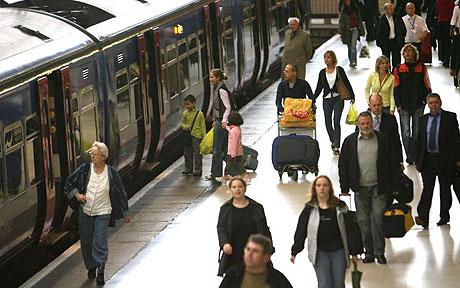
“OK, guys, I'm going to have to pull the plug for now. The train is pulling into the station. Jimmy, I'll be waiting outside the main entrance on South Avenue. Just pull up in front, this way you won't have to find a parking spot. I'll keep the HT on and will call you if anything changes.”
The trio bid each other 73 and within a half hour, Dave was sitting next to Jimmy who was driving him home. It felt good to be back in Springdale. He had been so busy with his studies at work that he hadn't realized how much he had missed home.
When Jimmy's car pulled into the driveway at the Bolton residence, Dave noticed that Donna's car was in the driveway, but his Dad's wasn't. The two young men went in the backdoor.
“Dave!” Donna practically shouted and ran over to him and gave him a big hug when he walked into the kitchen.
“Hi Mom!” Dave answered. It still took a bit of getting used to – calling Donna Bolton “Mom” but it grew easier each time. She truly was like a second mother to Dave, she treated him in every way as if he were her natural born son. Deep down inside, Dave knew his “real Mom” would have had no problems with their relationship.
“Look at you! Is it possible that you've grown a bit taller since the summer? It's so good to have you home. Jimmy come in! Would you two like a cup of coffee or some hot chocolate? It's positively freezing outside. Let me get something to warm you both up'”
“Thanks, Mom” “Thanks, Mrs. Bolton” came their replies. “That would hit the spot. Hey Mom, where's Maria and where's Dad?”
“Well, Maria is at the library. She's doing some research on a paper for school and she needs to look through some periodicals that aren't available on the Web”. Maria Pescarelli was a student at the local community college. She wanted to become a physical therapist and their county's school had the reputation as having the best program in the state – better than any of the in-state colleges or universities. She was doing a paper on repetitive motion injuries in the workplace and needed to look up some of the latest statistics in the professional journals.
“As far as your Dad – I'm not sure where he is. He said something about “shopping”. I hope he gets home soon, though. I know your Dad is an excellent driver, but I worry when he has to drive in bad weather.”
“I'm sure he's fine Mom. I tell you what, let me give him a call on the repeater. Maybe he's listening”.
“KD2JMJ, KD2JMJ this is AA2AM. Are you listening?”
Almost immediately, his father came back to him, “AA2AM this is KD2JMJ. Dave are you home already?”
“Yeah, Dad. Jimmy and I pulled into the driveway about 10 minutes ago. Are you going to be home soon? Mom's worried about you driving in the bad weather.”
“You're Mom always worries!”
“I heard that!”, Donna shouted from the background.
Both Jason and Dave laughed, “I know she worries about me. I'm almost home – should be there in another 10 or 20 minutes. Let me concentrate on my driving and I'll see you both in a bit. AA2AM, this is KD2JMJ, clear for now.”
“AA2AM clear. See you in as few, Dad. Be careful.”
Donna smiled at the good news and turned to Jimmy. “Jimmy would you like to stay for dinner? I have a fresh home made lasagna in the oven along with a big pot of sausage, onions and peppers simmering on the stove. You know you’re always welcome here. Just give your Mom a call and let her know that you'll be eating here.”
Jimmy lit up like a Christmas tree. “Thanks, Mrs. Bolton! I was hoping you would ask! You make the best lasagna in Springdale!”
As the two young men settled down for a warm drink, Maria arrived home from the library, followed by Jason Bolton a few minutes later. With the family all at home, Donna Bolton was able to relax and treated them all to a sumptuous and memorable meal.
Later, after everything had quieted down, and Jason and Dave were alone together, Dave asked, “So where were you this afternoon, Dad? Mom thinks you were out Christmas shopping.”
Jason Bolton laughed, “In a way, she was right Dave. I was at the animal shelter in Pleasanton. You're mom has mentioned several times how she had a dog when she was younger. The shelter there has some beagles that came from a pharmaceutical lab. The dogs were going to be used for testing a new shampoo that the company was going to be making, but they scrapped their plans and had no use further use for the beagles, so they brought five of them over to the shelter for adoption. I heard about this from Doris, our Office Manager at work. I went over to look at the beagles and am going to get one for your Mom as a Christmas present. I think she'll be thrilled. You should have seen them, Dave! They were practically jumping out of their skin when they saw me, they were so excited. Except for one, who was just a bit smaller than the others. He was quietly snoozing on the lap of one of the volunteers there. When I went to pet him, he woke up, took one look at me and started licking my face like there was no tomorrow. I think he's going to be the one – his name is Barney.
The only catch is that I have to pick him up on Christmas Eve. I'm not sure how I'm going to manage that and keep it all a secret, but I'll worry about that when the time comes. Remember, not a word to your Mom.”
“She'll hear not a word from me, Dad. Promise.”
“That's my boy! Now, tell me about how school has been going.”
To be continued ........
72 de Larry W2LJ
QRP - When you care to send the very least!
Larry Makoski, W2LJ, is a regular contributor to AmateurRadio.com and writes from New Jersey, USA. Contact him at [email protected].
Merry Christmas and Happy New Year!!
 |
| A picture Julie took of the CN Tower in Toronto from our condo |
Mike Weir, VE9KK, is a regular contributor to AmateurRadio.com and writes from New Brunswick, Canada. Contact him at [email protected].
Baofeng vs. Wouxun
 Trying to decide between a Baofeng and a Wouxun HT? Here are some thoughts…
The good:
- They are super-cheap
- They are usually dead-on frequency and stable through temperature change (better than most Japanese radios)
- The Receiver sensitivity is usually better than the .2 uV specification at 12db SINAD
- They always produce at least as much power as advertised
- The Wouxun is excellent at harmonic suppression and adjacent channel selectivity
The bad:
- The Baofeng usually is pretty bad on harmonic suppression sometimes as bad as 20db
- The Baofeng has terrible adjacent channel selectivity and is easily interfered with in busy RF environments
Overall, all the Chinese radios are decent, but in my experience, the Wouxun is excellent compared to the Baofeng.
The Wouxuns I have personally tested gave the Japanese models a run for their money, at about a quarter of the price.
Chris Hite, AJ1Q, is a special contributor to AmateurRadio.com and writes from Florida, USA. Contact him at [email protected].
Ten Year Trends in US Ham Licenses
In November 2005, I took a look at some statistics on FCC amateur radio licenses. At that time, I compared the number of ham licenses to such things as the US population, number of cell phones in use and the number of birdwatchers in the US. Interesting stuff.
Ten years later, we can take a look at the how the composition of FCC licenses has changed. The total number of licenses has grown to over 733k, increasing 11% over 10 years. This is a small growth rate, only 1% Compound Annual Growth Rate (CAGR).
| Extra | Advanced | General | Technician | Novice | Total | |
| Nov 2005 | 107,177 | 74,351 | 135,023 | 317,839 | 26,882 | 661,272 |
| 16% | 11% | 20% | 48% | 4% | 100% | |
| Nov 2015 | 139,515 | 48,272 | 172,239 | 362,580 | 10,988 | 733,594 |
| 19% | 7% | 23% | 49% | 1% | 100% | |
| % Change | 30% | -35% | 28% | 14% | -59% | 11% |
Source: www.ah0a.org
No surprise that the number of Advanced and Novice licenses has decreased because the FCC stopped issuing those licenses. Technicians represent about half of the licenses, a proportion that has remained steady over the decade, increasing 1 point. The percent of Generals increased by 3 points, to 23%. Similarly, Extra Class licenses increased by 3 points to 19%.
I reported the ARRL membership as approximately 152k in 2005. The 2014 ARRL Annual Report shows 165,663 members resulting in a growth rate of about 9% over 9 years (not ten). I’ll go ahead and “spot them” another point of growth in the tenth year and call it 10% over ten years. So it seems that ARRL membership is roughly keeping pace with the growth in amateur radio licenses, put probably not gaining on it.
Another question is how are amateur radio licenses keeping pace with US population growth? During the period of 2005 to 2015, the US population grew about 9%, which means that the number of FCC licenses is actually growing slightly faster than the overall population. Source: http://www.worldometers.info/world-population/us-population/
At this point, many of us will ask how many of those FCC license holders are actually active in ham radio. Hard to say…perhaps a topic for another post.
73, Bob K0NR
The post Ten Year Trends in US Ham Licenses appeared first on The KØNR Radio Site.
Bob Witte, KØNR, is a regular contributor to AmateurRadio.com and writes from Colorado, USA. Contact him at [email protected].
DMR – Joining the Dark Side!
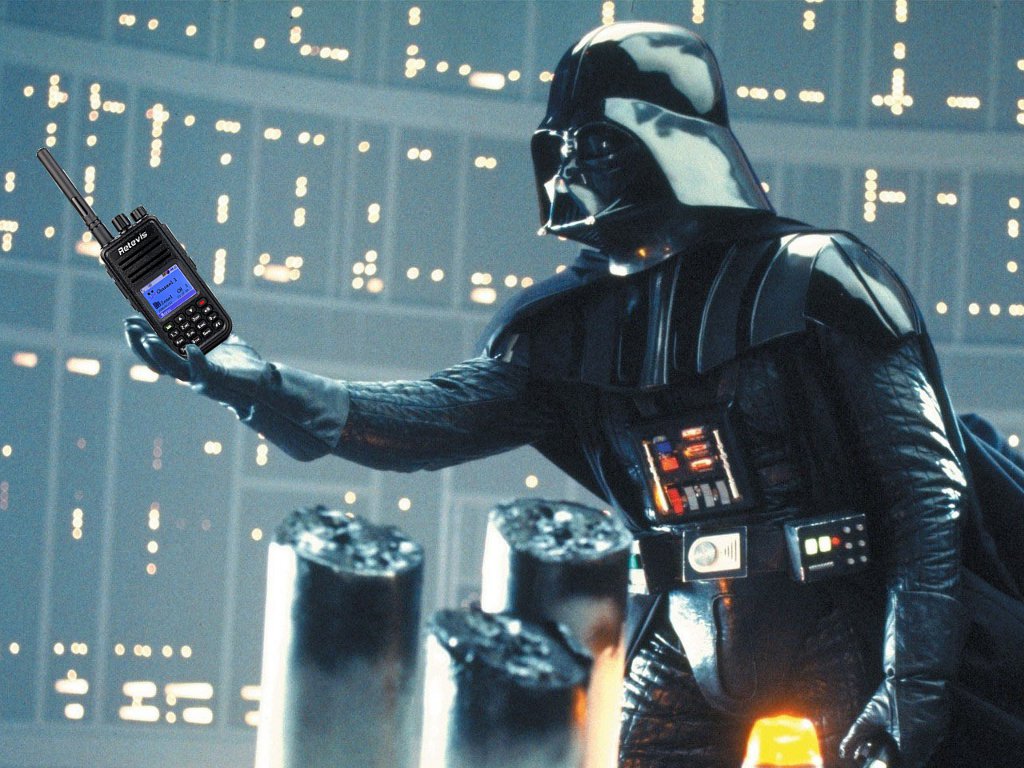
As a birthday present to myself I have just ordered a Retevis RT3 DMR hand-held off eBay which should be delivered just after Christmas.
South Kesteven ARS had a talk in October by Sean Burton 2E0ENN about amateur DMR where he demonstrated some handsets and the new DV4Mini which allows gateway and internet linking for the various networks, DSTAR, DMR and System Fusion. This piqued my interest in the DMR scene.
As I posted last time I dabbled a few years ago with decoding PMR DMR using software and a sound card but they were very hit and miss at the time. I reacquainted myself with the various projects and using the FUNCube Dongle Pro+ and the latest version of DSDPlus (support forum at RadioReference.com) monitored the nearby GB7RR DMRPlus repeater managing to get some reasonably clear decodes of some amateur transmissions.
I decided to dig out my Realistic PRO-2022 scanner and using a discriminator tap fed into the sound card got slightly better quality decodes.
Doing some research and reading a couple of reviews had decided I was going to get a Tytera TYT MD-380 when funds allowed but spotted the Retevis RT3 which appears to be identical and slightly cheaper.
I know some people wince at the thought of DMR and issues with proprietary technology used in some of the systems but I think the genie is out the bottle and it isn't going away soon. Adoption of DMR appears to be growing with talk of restructuring of talk groups needed to deal with the growth (whatever that means!) so I should at least get my feet wet and understand the technology.
I registered for an ID, now off to decode the jingo and understand all this talk of codeplugs, talk groups and time slots.
Andrew Garratt, MØNRD, is a regular contributor to AmateurRadio.com and writes from East Midlands, England. Contact him at [email protected].
 Ham Radio Deluxe |
 W5SWL Electronics |
 Ham Radio Prep |
 KB3IFH QSL Cards  Hip Ham Shirts  HamRadioAuctions HamRadioAuctions Reliance Antennas Reliance Antennas Enigma Shop Enigma Shop |  morseDX  Ni4L Antennas  R&L Electronics R&L Electronics antennas.us antennas.us QRV QRV |
- Matt W1MST, Managing Editor
