 |
 Stew Perry Topband Challenge
 27 December 2015 | by
Last night saw another running of the winter Stew Perry Topband Challenge.
This contest is unique in that the usual density of activity on the eastern side of the continent does not necessarily provide an advantage ... contest scores are determined by the distances worked and each QSO will have a different point score, depending on its distance. The exchange is a simple one ... grid locators only ... and from these, the point score for each contact is calculated. From my way of thinking, and many others that I have discussed this with, the 'SP' is one of the fairest contests there is, putting everyone, no matter where they are located, on an even footing.
 |
| Today's Sun (courtesy: http://sdo.gsfc.nasa.gov/) |
From here, operating in the 100-watt category, it was a struggle to work the normally easy single-hop stations, with no signs of the central states for several hours after sunset. Several east coast stations were worked towards midnight for the nice 12-point per QSO scores, but truth be told, almost all contacts were a struggle with many stations needing several repeats just to get the call or grid.
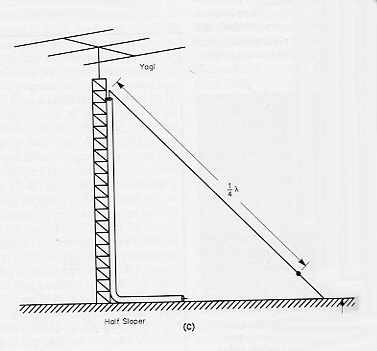
My half-sloper antenna and radial system is located right on the edge of the ocean, looking to the east, and its already low takeoff angle is enhanced with ~ 6db of sea (horizon) gain, making it a poor antenna for anything within the first-hop region ... after that it really seems to comes to life.
At 12:15 a.m., I pulled the plug, ending up with just 97 QSO's and 555 claimed points, way down from normal. Other claimed scores can be viewed on the 3830Scores.com website.
My best DX is usually JA but this time was KH6. The SP is always fun, but better conditions would have really made it a blast ... hopefully next year!
Steve McDonald, VE7SL, is a regular contributor to AmateurRadio.com and writes from British Columbia, Canada. Contact him at [email protected].
Episode 201 – 2016 Amateur / Ham Radio Elmer Kit
In this episode, Martin M1MRB / W9ICQ is joined by Colin M6BOY to discuss the latest Amateur / Ham Radio news and this episodes feature is 2016 Amateur / Ham Radio Elmer Kit.
- German Request More 5 MHz power
- Amateur Radio Kids Day 2016
- Irish Spectrum Strategy Consultation
- German Medium Wave AM Switch-off
Colin Butler, M6BOY, is the host of the ICQ Podcast, a weekly radio show about Amateur Radio. Contact him at [email protected].
Episode 201 – 2016 Amateur / Ham Radio Elmer Kit
In this episode, Martin M1MRB / W9ICQ is joined by Colin M6BOY to discuss the latest Amateur / Ham Radio news and this episodes feature is 2016 Amateur / Ham Radio Elmer Kit.
- German Request More 5 MHz power
- Amateur Radio Kids Day 2016
- Irish Spectrum Strategy Consultation
- German Medium Wave AM Switch-off
Colin Butler, M6BOY, is the host of the ICQ Podcast, a weekly radio show about Amateur Radio. Contact him at [email protected].
Win4K3suite added to shack.
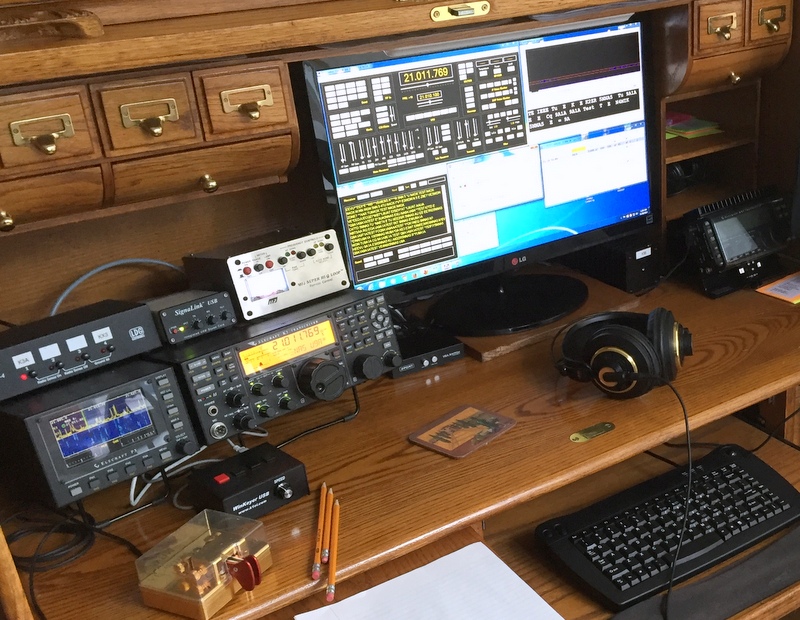 |
| Win4kSuite up and running |
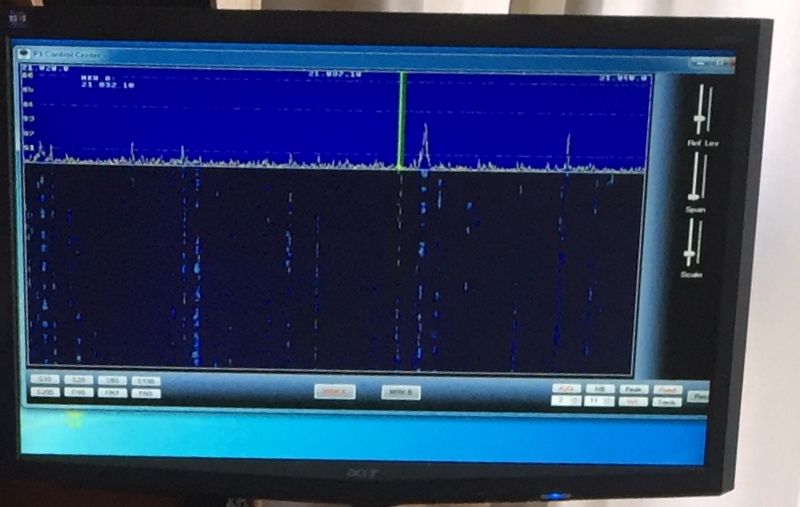 |
| P3 on the monitor |
Mike Weir, VE9KK, is a regular contributor to AmateurRadio.com and writes from New Brunswick, Canada. Contact him at [email protected].
Amateur Radio Weekly – Issue 91

2015 Year in Review
For this last issue of the year, I thought I’d do something fun and pull the most popular links from each issue and complie the top 10 as a ‘look back’ on the world of Amateur Radio in 2015. I hope you enjoy! –Cale K4HCK
#10
Verizon issues furious response to FCC, in Morse code
Verizon wrote a press release in Morse code and set the date as 1934 to make the point that the FCC is taking us backward in time.
Ars Technica (Issue 50)
#9
Steal this Ham Radio (technology)
If you think hams just use Morse code and voice communications, you are thinking of your grandfather’s ham radio.
Hack A Day (Issue 79)
#8
A look inside the NR5M super-station
The sun was just setting and I’m sure I had a stupid look on my face as I saw the towers rise over the horizon. What a sight to behold.
W0EA (Issue 65)
#7
EP6T team pleads for “more respect” from operators
“Jammers calling with fake calls and disrespecting the operators, sending disgraceful e-mails, and calling us names is sometimes too much for us.”
ARRL (Issue 45)
#6
Portable radio operations
Using Morse Code to keep in touch with friends.
Wiltshire Man (Issue 73)
#5
K1N logs 125,000 QSOs, offers “All-Time New One” days
“…do not call them if you already worked them.”
ARRL (Issue 48)
#4
Request an azimuthal map
Use this form to create an azimuthal map for any location on the globe.
NS6T (Issue 48)
#3
Icom IC-7300 available in January, official price announced
Icom’s IC-7300 is probably the most expected transceiver of 2016, given the fact that it’s the first direct-sampling SDR from one of the “big three” manufacturers.
YO9IRF (Issue 89)
#2
Dayton Hamvention – R.I.P.
The “laws of the market place” are taking care of the “Dayton as a hell-hole” problem.
K9ZW (Issue 64)
#1
New Baofeng radios on Monday?
“Including: Crossband Repeater Capabilities, Dual Simultaneous Receivers, 6 Band Reception, NOAA Weather Channels and Alerts, 7 Encoding and Decoding Methods, and Upgradable Firmware.”
Brick O’Lore (Issue 49)
Amateur Radio Weekly is curated by Cale Mooth K4HCK. Sign up free to receive ham radio's most relevant news, projects, technology and events by e-mail each week at http://www.hamweekly.com.
Repaired my ATU
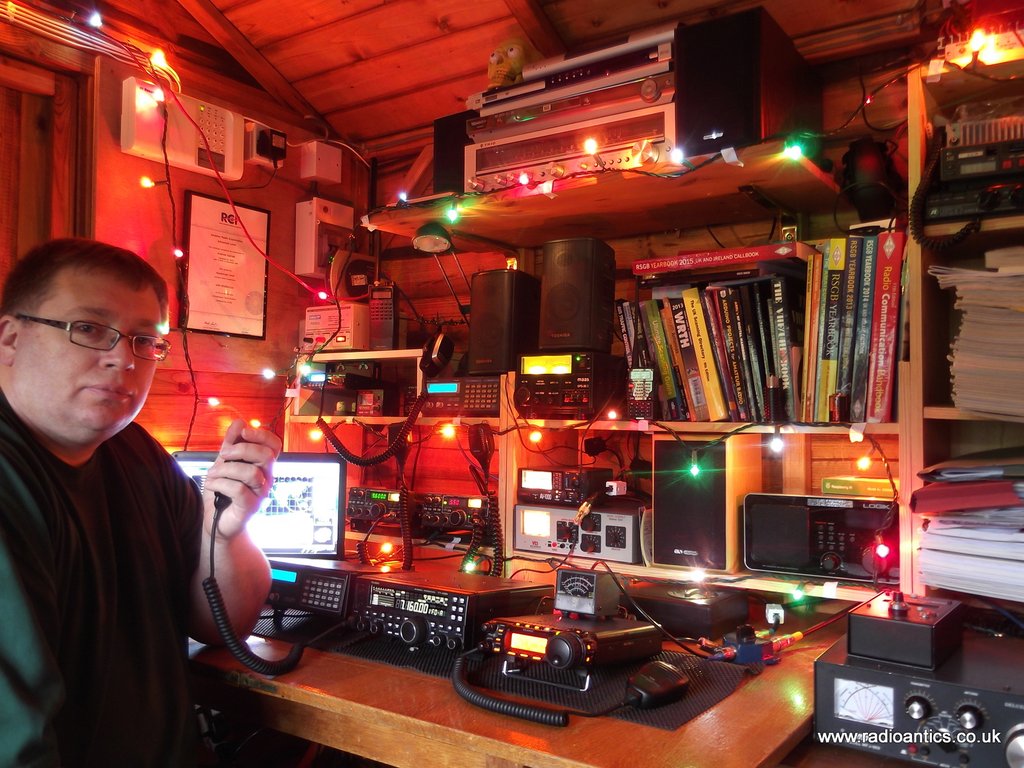
Not wishing to contend with an evening of dire XYL style Christmas TV (Strictly Come Dancing, Call the Midwife and Downton Abbey) I escaped into the shack and decided to repair my Vectronics VC300DLP Antenna Tuner. I got this ATU second hand last year and while it has been serviceable it had become temperamental of late. The units rotary inductor switch had become stiff and suddenly I was unable to match the OCFD on some bands so it had clearly broken.
I had a 12-position switch (rated at 5A) and knob, originally sourced for an abandoned project and hoped it would be suitable. The existing switch knob on the ATU wasn't an original, I'd assumed it had replaced one lost or broken. When I removed the cover it was clear that the whole switch had already been changed at sometime.
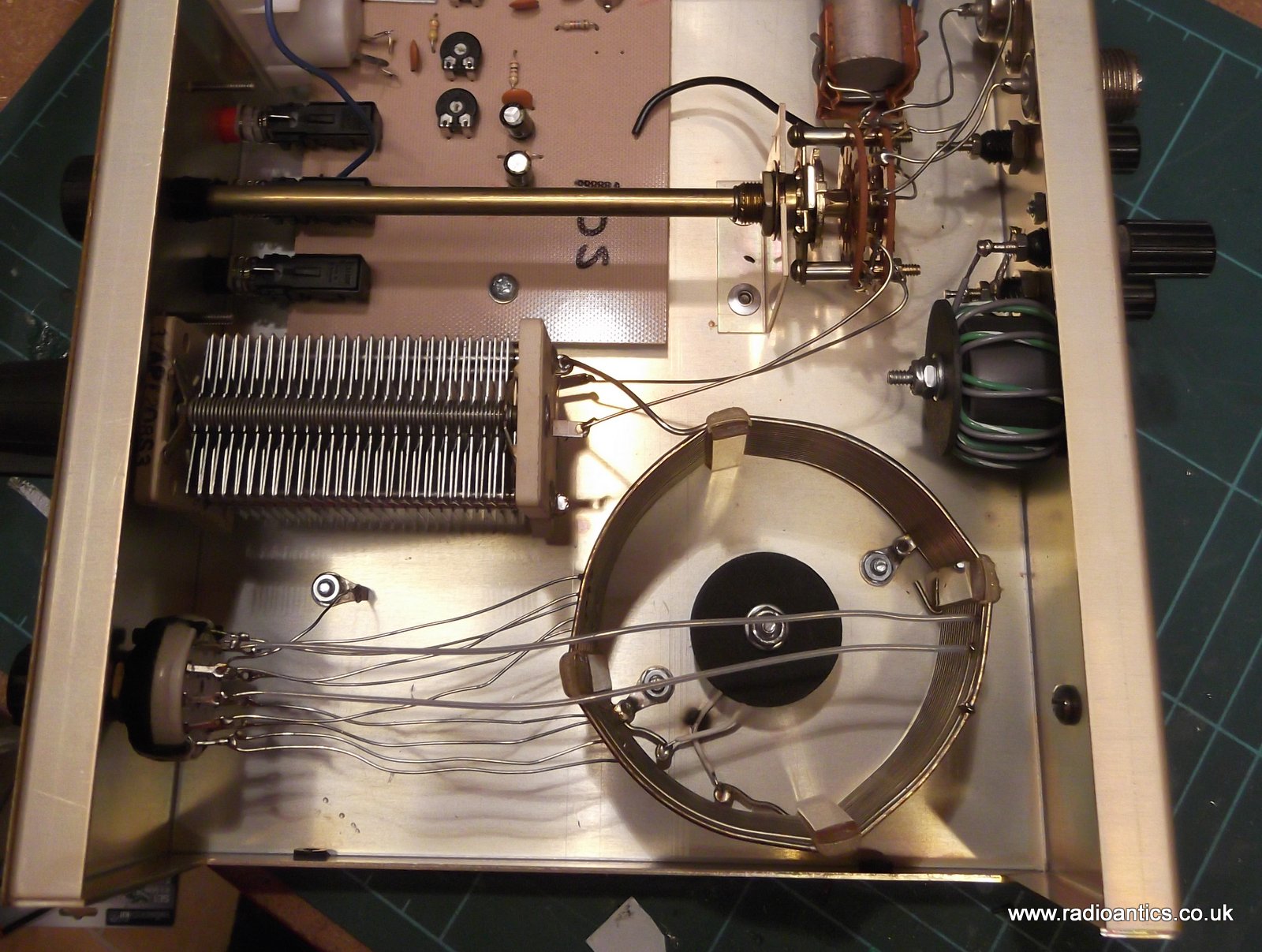
I also noticed a prominent burn mark inside the inductor coil, caused by a clear break in the insulation of the wire which was resting on the grounded bottom plate.
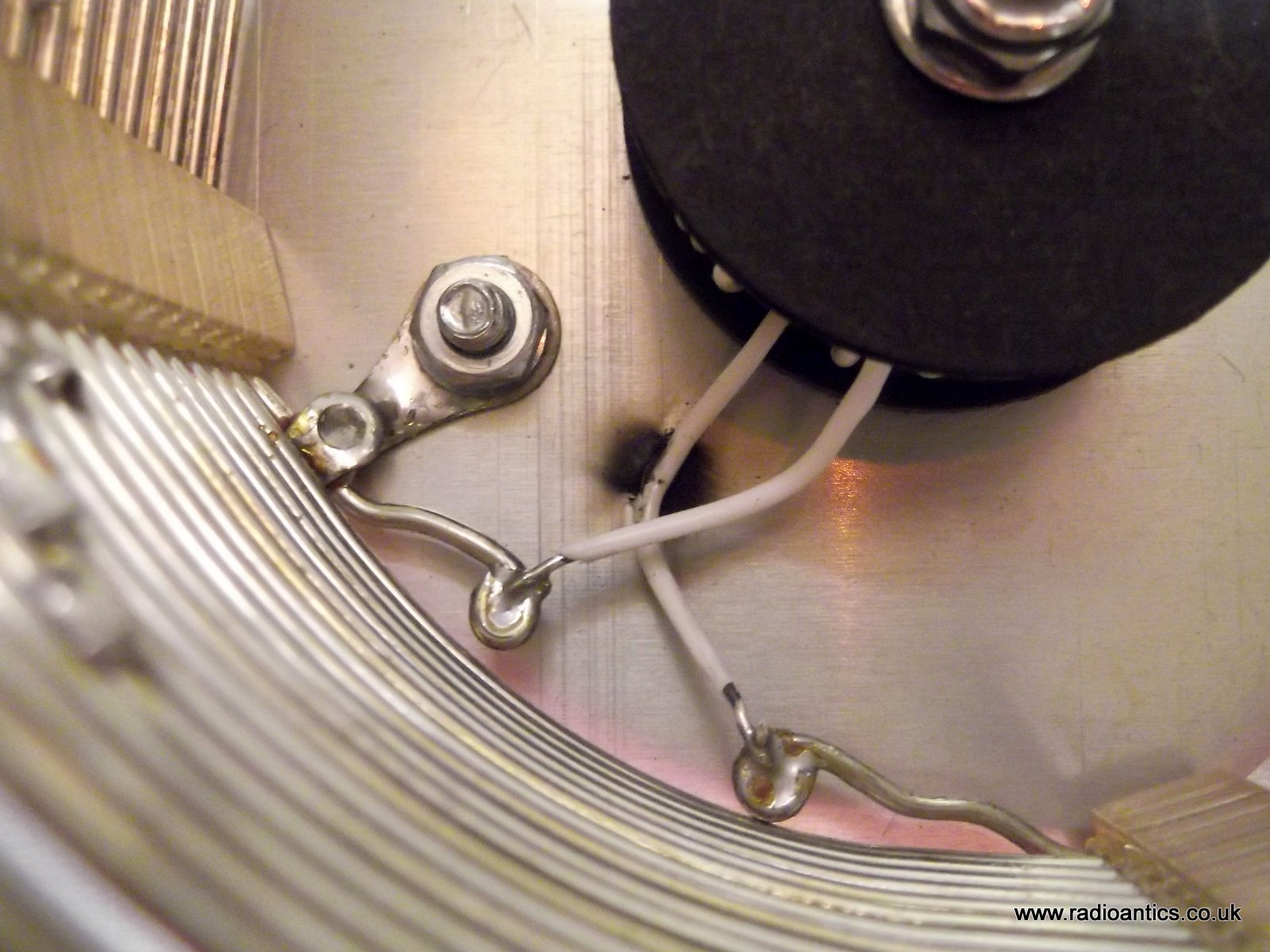
I know the previous owner of the ATU has a 300W RM BLA-350 linear amplifier, whereas I only normally operate around 30W maximum at my QTH, so not sure how much of this arcing I had caused but it needed sorting! A little over half an hour with the soldering iron and I had replaced the switch and slipped some heat shrink over the broken insulation and re-soldered the wire, lifting it off the ground plate.
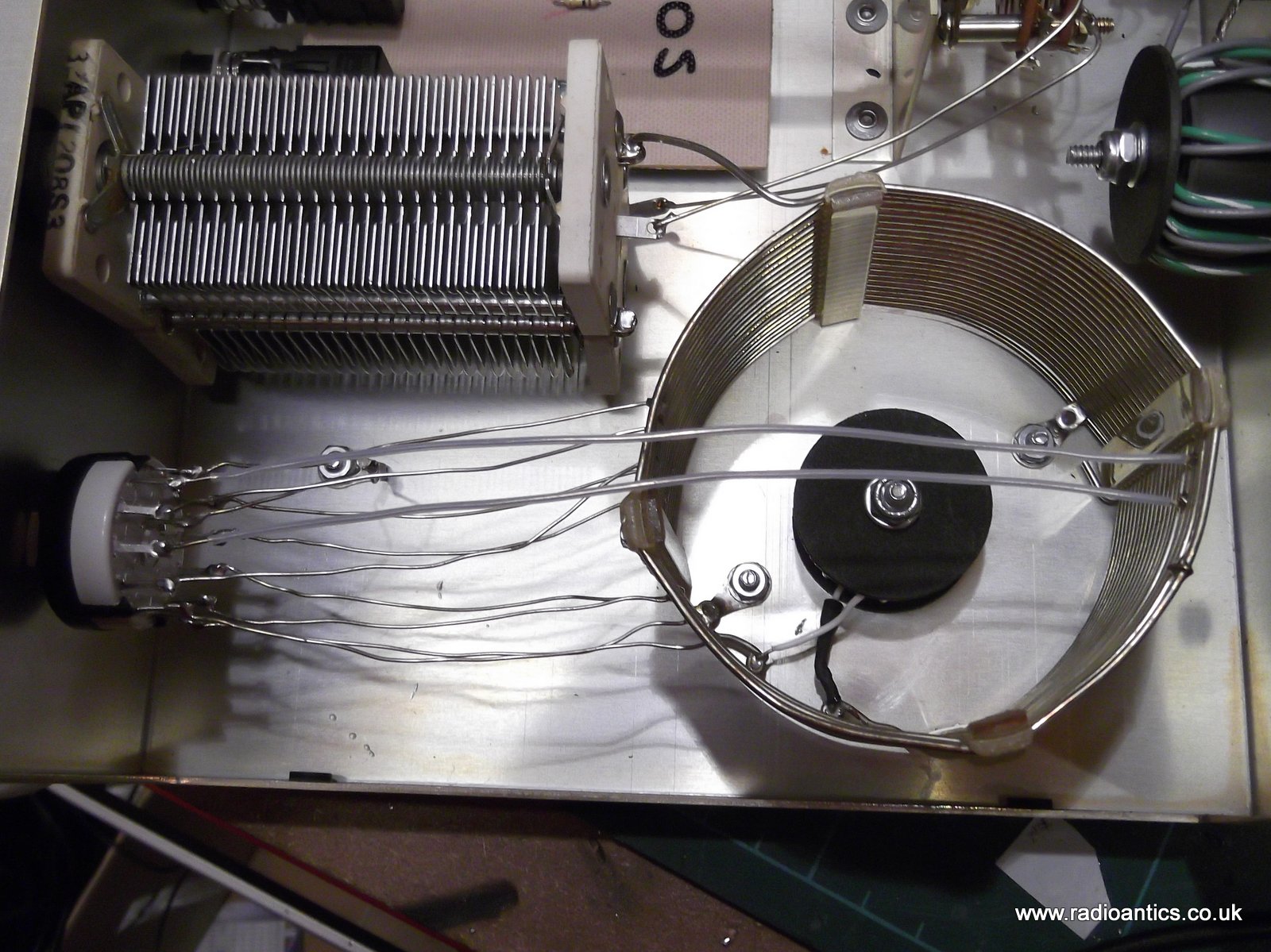
The ATU seems to work well, now fitted with a new knob (just missing a cap at the moment) the switch turns nicely. I also cleaned up the SO-239 connectors on the back as they were tarnished and oxidised. I used a small bit of contact cleaner on some cotton buds to clean up the threads and the centre pins, removing a surprising amount of crud. The patch and antenna leads now screws on much better.
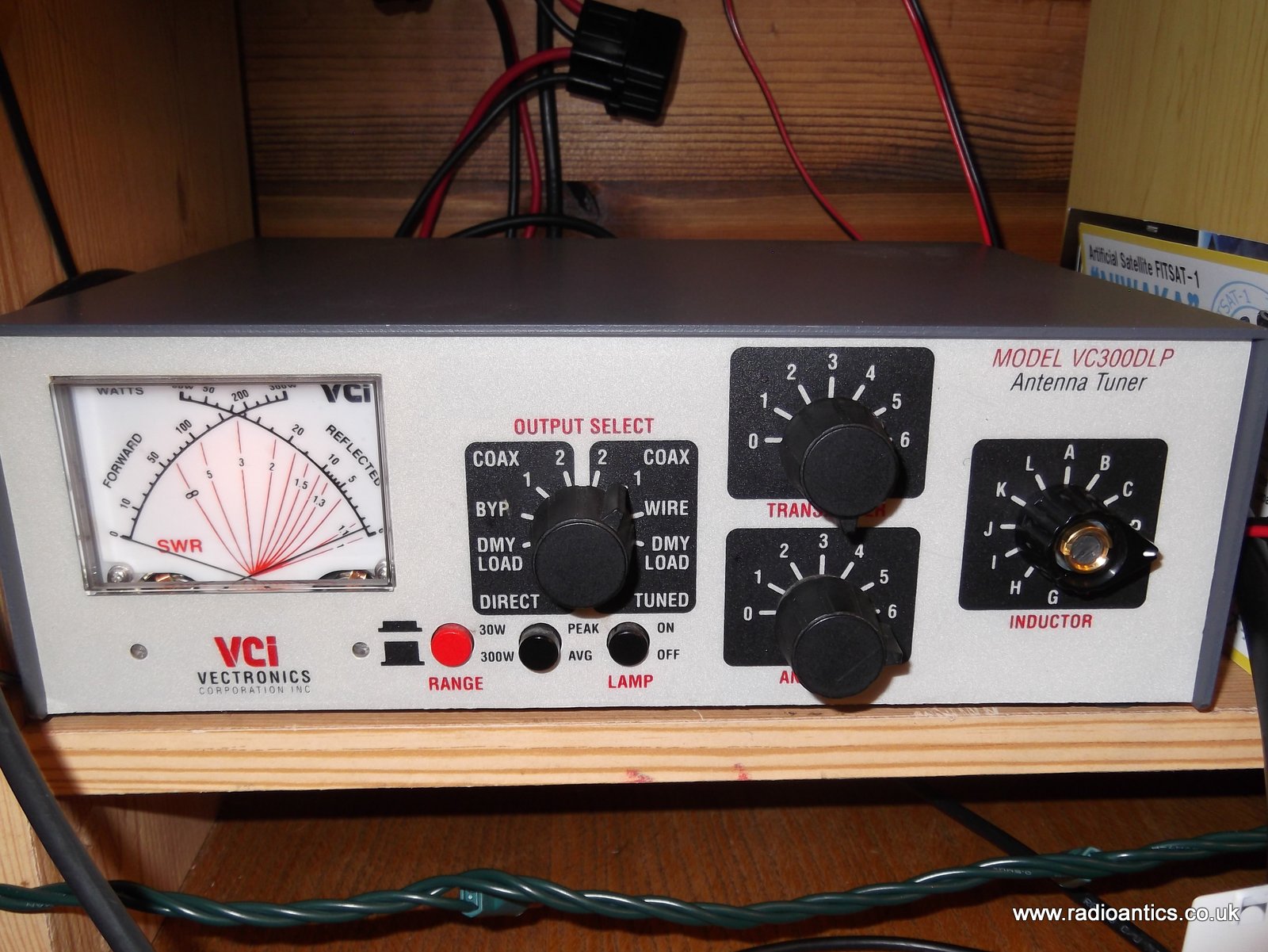
With the Mother--in-law staying with us over the festive period I suspect I may be in the shack quite a bit, I have plenty of jobs and half finished projects to keep me busy!
Andrew Garratt, MØNRD, is a regular contributor to AmateurRadio.com and writes from East Midlands, England. Contact him at [email protected].
Repaired my ATU
Not wishing to contend with an evening of dire XYL style Christmas TV (Strictly Come Dancing, Call the Midwife and Downton Abbey) I escaped into the shack and decided to repair my Vectronics VC300DLP Antenna Tuner. I got this ATU second hand last year and while it has been serviceable it had become temperamental of late. The units rotary inductor switch had become stiff and suddenly I was unable to match the OCFD on some bands so it had clearly broken.
I had a 12-position switch (rated at 5A) and knob, originally sourced for an abandoned project and hoped it would be suitable. The existing switch knob on the ATU wasn't an original, I'd assumed it had replaced one lost or broken. When I removed the cover it was clear that the whole switch had already been changed at sometime.
I also noticed a prominent burn mark inside the inductor coil, caused by a clear break in the insulation of the wire which was resting on the grounded bottom plate.
I know the previous owner of the ATU has a 300W RM BLA-350 linear amplifier, whereas I only normally operate around 30W maximum at my QTH, so not sure how much of this arcing I had caused but it needed sorting! A little over half an hour with the soldering iron and I had replaced the switch and slipped some heat shrink over the broken insulation and re-soldered the wire, lifting it off the ground plate.
The ATU seems to work well, now fitted with a new knob (just missing a cap at the moment) the switch turns nicely. I also cleaned up the SO-239 connectors on the back as they were tarnished and oxidised. I used a small bit of contact cleaner on some cotton buds to clean up the threads and the centre pins, removing a surprising amount of crud. The patch and antenna leads now screws on much better.
With the Mother--in-law staying with us over the festive period I suspect I may be in the shack quite a bit, I have plenty of jobs and half finished projects to keep me busy!
Andrew Garratt, MØNRD, is a regular contributor to AmateurRadio.com and writes from East Midlands, England. Contact him at [email protected].
 Ham Radio Deluxe |
 W5SWL Electronics |
 Ham Radio Prep |
 KB3IFH QSL Cards  Hip Ham Shirts  HamRadioAuctions HamRadioAuctions Reliance Antennas Reliance Antennas Enigma Shop Enigma Shop |  morseDX  Ni4L Antennas  R&L Electronics R&L Electronics antennas.us antennas.us QRV QRV |
- Matt W1MST, Managing Editor
