 |
 Portable Ops 6/45: “Are you a weather reporter?”
 18 March 2016 | by
 I got out a bit today to the local park for some more QRP fun chasing SKCC contacts. I have been using the paddles on the KX3 set to hand mode – but this needs to change. These seem to work great when using the keyer, but for hand keying it seems like they cut out from time to time while forming the dits and dahs. A decent hand key is next on the agenda for me!
While I was taking down the antenna and loading up at the end of my session an older gentleman that had been fishing and was parked near me asked if I was some type of weather reporter. I told him that I was an amateur radio operator and I was using morse code to talk to other stations across the country. We had a nice chat – I always wonder what people think of me sitting in my car with a 31′ pole and wire strapped to the bollard!
Today I had 4 nice contacts on 20 meters, 3 of them with SKCC members….
NV4U (9744T) – I answered Rons CQ, band was up and down a bit, but he was a nice easy copy from Georgia.
AH6AX (11165S) – Larry was from Maryland and was an easy 599 on my end and he gave me a 539 on his. Larry answered my CQ.
K2PAY (4304S) – Jerry answered my CQ and gave me a 559. I had to engage the narrow filter on the KX3 because someone else came on right next to us calling CQ – worked like a champ! Jerry was in New York and during our first exchange had to take a quick break to help his wife with something – I completely understand this!
KK6GLP – I heard Mike calling CQ around 14.060, and I had time to squeeze in one more before my time was up. He gave me a 599 and he was also 599 here in Kansas. Mike was in Roseville, CA and was running 50 watts. He said he had some bad QRM on his end, so we said 73 and ended our nice contact. Reading on Mikes QRZ page he can’t have a permanent antenna so he has a “rig in a box” and sets up in his backyard when he wants to operate.
It still amazes me that from a park, with a little antenna and just 5 watts I worked coast to coast today using CW and keying by hand. I would love to hear a recording of my sending, it sounds good on my end, but I often wonder how the spacing and timing sounds to someone else. I might have to find a WebSDR and see if I can hear myself sometime.
The strangest thing about today was that I called CQ many times, but I never saw a spot on RBN – this is pretty unusual.
Burke Jones, NØHYD, is a regular contributor to AmateurRadio.com and writes from Kansas, USA. Contact him at [email protected].
Portable Ops 5/45: Four Nice Contacts
I went over the local park once again today – it was nicer today because the wind was not blowing 40 MPH like the last excursion!
20 meters seemed to be a bit better, and I heard a number of signals around 14.050 (the SKCC hangout), as well as the rest of the band.
I started calling CQ thinking I would have a contact really quick, but not to be the case, but it got more interesting after a bit.
First up was…
NS3C (8284T) – Richard answered my CQ from Los Angeles, CA and gave me a 599 – I was a new number for him.
NQ7K (13913T) – I heard Mike nice and solid replying to my CQ. What started out as a 579 exchange turned into a 599 booming signal from Arizona. Mike was running a 1 Watter Rig which is a kit available from Kits and Parts – and seems to be gaining a foothold in the QRP community. It was fun to work someone running 1 watt on a rig that I have thought about picking up! Nice 2xQRP contact!
KF7YRL (10421T) – I heard a very very faint signal when Steve was calling me. I was able to make out the necessary info and heard that he was QRP. His QRZ page says he is in Montana, but I shot him an email for the specifics. We kept it short because I could just not pull up his signal well enough to copy easily. Another 2xQRP QSO!
KO1U (7648S) – I heard Mark calliing CQ with a nice 599 signal. I answered and he got me with a 559 report from Massachusetts.
Another fun day working some of the nicest guys and great operators that are involved with the SKCC. Thanks for putting up with my new fist, and slower speed!
This puts me 11/100 SKCC contacts as I work towards my Centurion award.
Burke Jones, NØHYD, is a regular contributor to AmateurRadio.com and writes from Kansas, USA. Contact him at [email protected].
Portable Ops 5/45: Four Nice Contacts
I went over the local park once again today – it was nicer today because the wind was not blowing 40 MPH like the last excursion!
20 meters seemed to be a bit better, and I heard a number of signals around 14.050 (the SKCC hangout), as well as the rest of the band.
I started calling CQ thinking I would have a contact really quick, but not to be the case, but it got more interesting after a bit.
First up was…
NS3C (8284T) – Richard answered my CQ from Los Angeles, CA and gave me a 599 – I was a new number for him.
NQ7K (13913T) – I heard Mike nice and solid replying to my CQ. What started out as a 579 exchange turned into a 599 booming signal from Arizona. Mike was running a 1 Watter Rig which is a kit available from Kits and Parts – and seems to be gaining a foothold in the QRP community. It was fun to work someone running 1 watt on a rig that I have thought about picking up! Nice 2xQRP contact!
KF7YRL (10421T) – I heard a very very faint signal when Steve was calling me. I was able to make out the necessary info and heard that he was QRP. His QRZ page says he is in Montana, but I shot him an email for the specifics. We kept it short because I could just not pull up his signal well enough to copy easily. Another 2xQRP QSO!
KO1U (7648S) – I heard Mark calliing CQ with a nice 599 signal. I answered and he got me with a 559 report from Massachusetts.
Another fun day working some of the nicest guys and great operators that are involved with the SKCC. Thanks for putting up with my new fist, and slower speed!
This puts me 11/100 SKCC contacts as I work towards my Centurion award.
Burke Jones, NØHYD, is a regular contributor to AmateurRadio.com and writes from Kansas, USA. Contact him at [email protected].
Our hobby in 30 years?
Although I cannot speak for other countries, here in the UK ours is a hobby mainly of older people and mainly men. When I was fitter, I gave several talks to local radio clubs in East Anglia and without exception, it was mainly OAPs who came along. OK, there were a few youngsters and women, but the vast majority were older men.
Amateurs and SWLs are a dying breed unless we can attract young people into the hobby. I am 67 and will be dead within 30 years, probably a lot sooner. An aging population will not buy so many rigs, will not support magazines etc. Numbers will fall, activity will fall, interest will drain away.
In 20-30 years we will be very much in uncharted territory. What will our hobby be like in years to come?

Roger Lapthorn, G3XBM, is a regular contributor to AmateurRadio.com and writes from Cambridge, England.
Bahamas – sailing and ham radio
My wife and I have an upcoming trip the Bahamas. We’ll be meeting our friends Keith and Terri on their live-aboard sailboat. I got a wild thought…I should take the KX3 and end-fed half wave antenna along, and I’ll be maritime mobile from the Exumas! I submitted the paperwork via email, and anxiously awaited my callsign. I got a response back really quick from Ms. Linda with the Bahamian government, asking for an additional form to be completed. My credit card was quickly charged the $35 fee. Today I checked with Ms. Linda on the status. I found out that I won’t receive my license until AFTER I return from my trip. This is all on me, as I should have planned this out sooner.
There’s still a chance that my license will arrive in time, but it’s a pretty slim chance. Fingers crossed.
Michael Brown, KG9DW, is a regular contributor to AmateurRadio.com and writes from Illinois, USA. Contact him at [email protected].
Bahamas – sailing and ham radio
My wife and I have an upcoming trip the Bahamas. We’ll be meeting our friends Keith and Terri on their live-aboard sailboat. I got a wild thought…I should take the KX3 and end-fed half wave antenna along, and I’ll be maritime mobile from the Exumas! I submitted the paperwork via email, and anxiously awaited my callsign. I got a response back really quick from Ms. Linda with the Bahamian government, asking for an additional form to be completed. My credit card was quickly charged the $35 fee. Today I checked with Ms. Linda on the status. I found out that I won’t receive my license until AFTER I return from my trip. This is all on me, as I should have planned this out sooner.
There’s still a chance that my license will arrive in time, but it’s a pretty slim chance. Fingers crossed.
Michael Brown, KG9DW, is a regular contributor to AmateurRadio.com and writes from Illinois, USA. Contact him at [email protected].
Carrington Probabilities
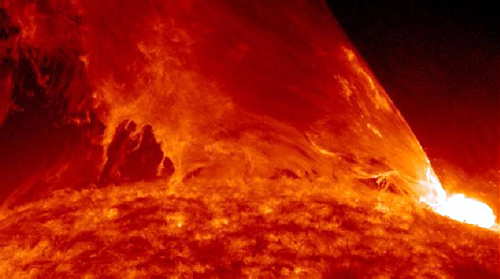
K7RA's 'Solar Update' in this week's ARRL News, mentions Jeff Foust's recent article in 'The Space Review', reminding us again of the dangers posed by a modern-day 'Carrington Event', also known as the 'Solar Storm of 1859'. A large solar flare in late August, hurled a monster-sized CME towards earth, making the 93 million mile journey in just 17.6 hours compared with the more normal rate of several days.
Huge auroras soon lit up the sky as far as central Mexico, Hawaii and the Caribbean. The aurora was so bright, it was reported that Rocky Mountain goldminers awoke in the middle of the night, and thinking morning had arrived, started to prepare breakfast. Telegraph lines and equipment burst into flame while some circuits continued to be usable with power supplies completely disconnected. The 1859 event still remains the most geoeffective solar storm since records have been kept.
Such an event today, of course, would wreak much more havoc ... probably having devastating consequences for decades and causing trillions of dollars of damage.
From Foust's article:
Was that, though, just a fluke event? .... Pete Riley, senior research scientist at Predictive Science Inc., offered a probabilistic forecast for the likelihood of another Carrington-like event, based on that storm’s estimated strength and measurements of the actual strength of solar storms over the last few decades. “If you the (sic) time between events, you can calculate the probability of the next event occurring within some unit of time,” he explained.
His estimate of the probability of another Carrington event is surprisingly high: about a 10 percent chance of such an event occurring over the next decade. “Ten percent is very, very high,” said William Murtaugh, assistant director for space weather at the White House’s Office of Science and Technology Policy (OSTP) ... “A one-percent probability over the course of the next one hundred years of a storm with an impact of that magnitude is considered very, very high and will motivate action.”
Interestingly, for this prediction, the actual strength of the solar storm of 1859 can only be estimated. If it was actually twice as strong as thought, then the probabilities drop from a (decade) 10% probability to just a 1% chance.
The U.S. government has recently set up a NASA multi-million budget funding proposal to study the likely effects of future large scale impacts and possible “response and resiliency capabilities” but it's not known if these will carry over to any new administration.
“Fortunately in space weather there’s no real politics,” Murtaugh said. “Both sides of House, both sides of the Senate, Republicans and Democrats, are both keen to work together to do something about this issue.”
The article has brought some interesting 'food for thought' comments, among them:
It's a little funny about how much energy is being spent advocating human spaceflight for colonization and settlement as a means to save the species, but so little is being devoted to specific threats to the species, and to individuals in particular. I could get killed in an asteroidal impact or a severe geomagnetic storm, but sending a shipload of people to Mars sure isn't going to protect me.
I am a member of Infragard, which is dedicated to supporting efforts to protect us from risks to our electrical grid and other critical infrastructure. A novel "One Second After" by William R. Forstchen accurately illustrates the effects of a similar intentional attack on our grid and how it creates a cascading collapse of our society. Gas stations cannot pump gas, food rots in the stores, more food cannot be delivered to all the needed locations, and the people who know how to fix things cannot reach where they are needed and also starve to death. The result of a severe Carrington event with no effective preparation or protection for the giant transformers could thus cause most of our population to starve in a few months. This risk is about 1% to 0.5 % per year and is like having everyone playing Russian roulette once a year with 200 pistols where just one is loaded.
A modern day 'Carrington repeat' does indeed give pause for thought but perhaps the generally predicted upcoming 'grand solar minimum' will buy scientists some extra time to come up with solutions for what will eventually occur ... and, one more thing's for certain ... it'll be a heck of an aurora!
Steve McDonald, VE7SL, is a regular contributor to AmateurRadio.com and writes from British Columbia, Canada. Contact him at [email protected].
 Ham Radio Deluxe |
 W5SWL Electronics |
 Ham Radio Prep |
 KB3IFH QSL Cards  Hip Ham Shirts  HamRadioAuctions HamRadioAuctions Reliance Antennas Reliance Antennas Enigma Shop Enigma Shop |  morseDX  Ni4L Antennas  R&L Electronics R&L Electronics antennas.us antennas.us QRV QRV |
- Matt W1MST, Managing Editor
