 |
 It’s ALIVE !
 29 March 2016 | by
 The 1Watter 40m #551 -- Lives
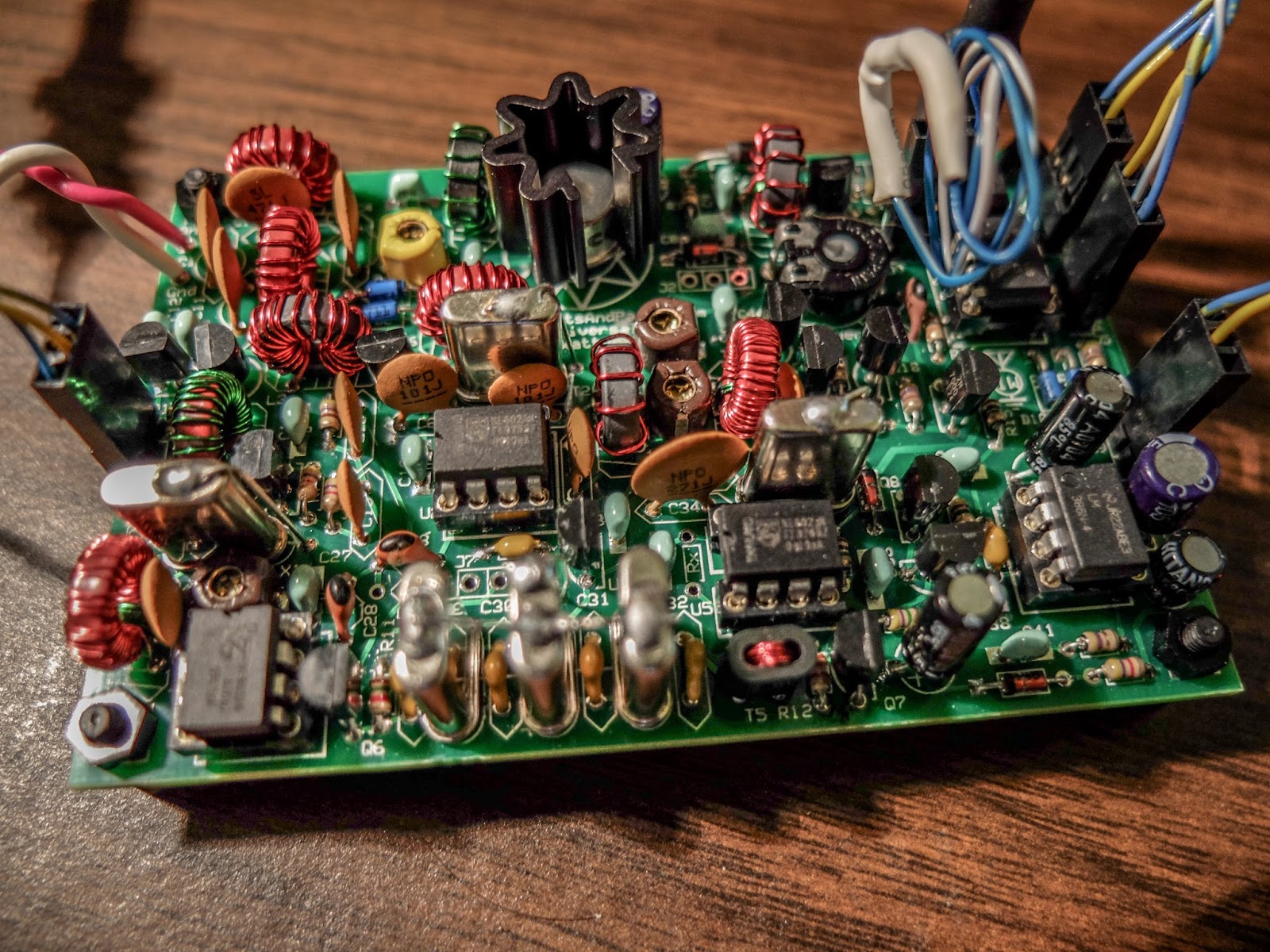 |
| The 1Watter 40m on it's inaugural QSO |
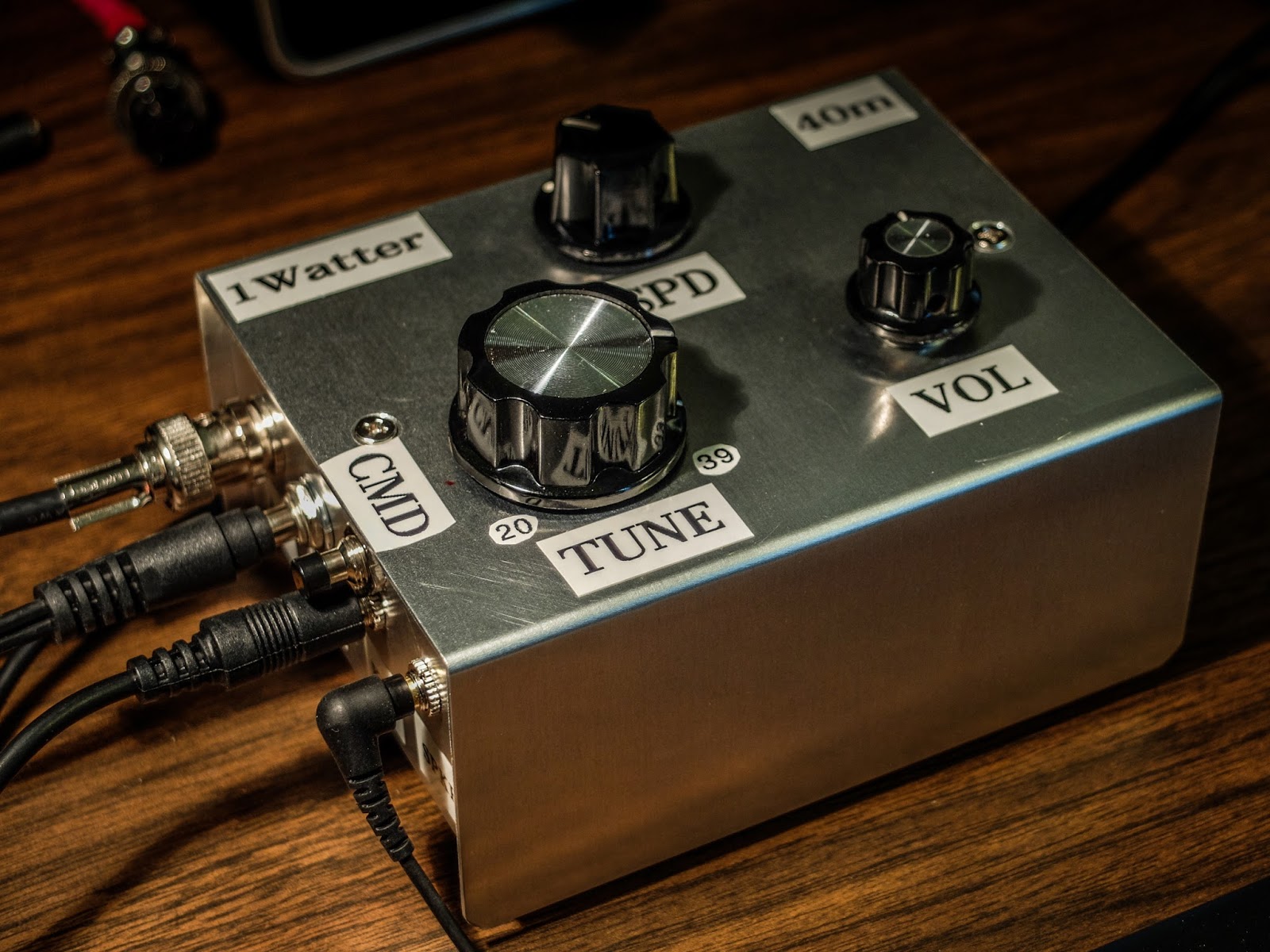 |
| Inside the enclosure |
The 1Watter is a kit from kits and parts dot com
- 1 mighty watt of output
- Good selectivity from the 3 crystal filters
- A VCXO tuned frequency range for the 40m band from approximately 7,020 kHz through 7,039 kHz
- A built-in full functioned keyer with provision for adding a speed pot and messages
- Included command button accesses the functions of the electronic keyer
- Natural sounding sidetone (nicer than my Ten-Tec Century/21)
The Build
 |
| SMT and through hole caps are supplied |
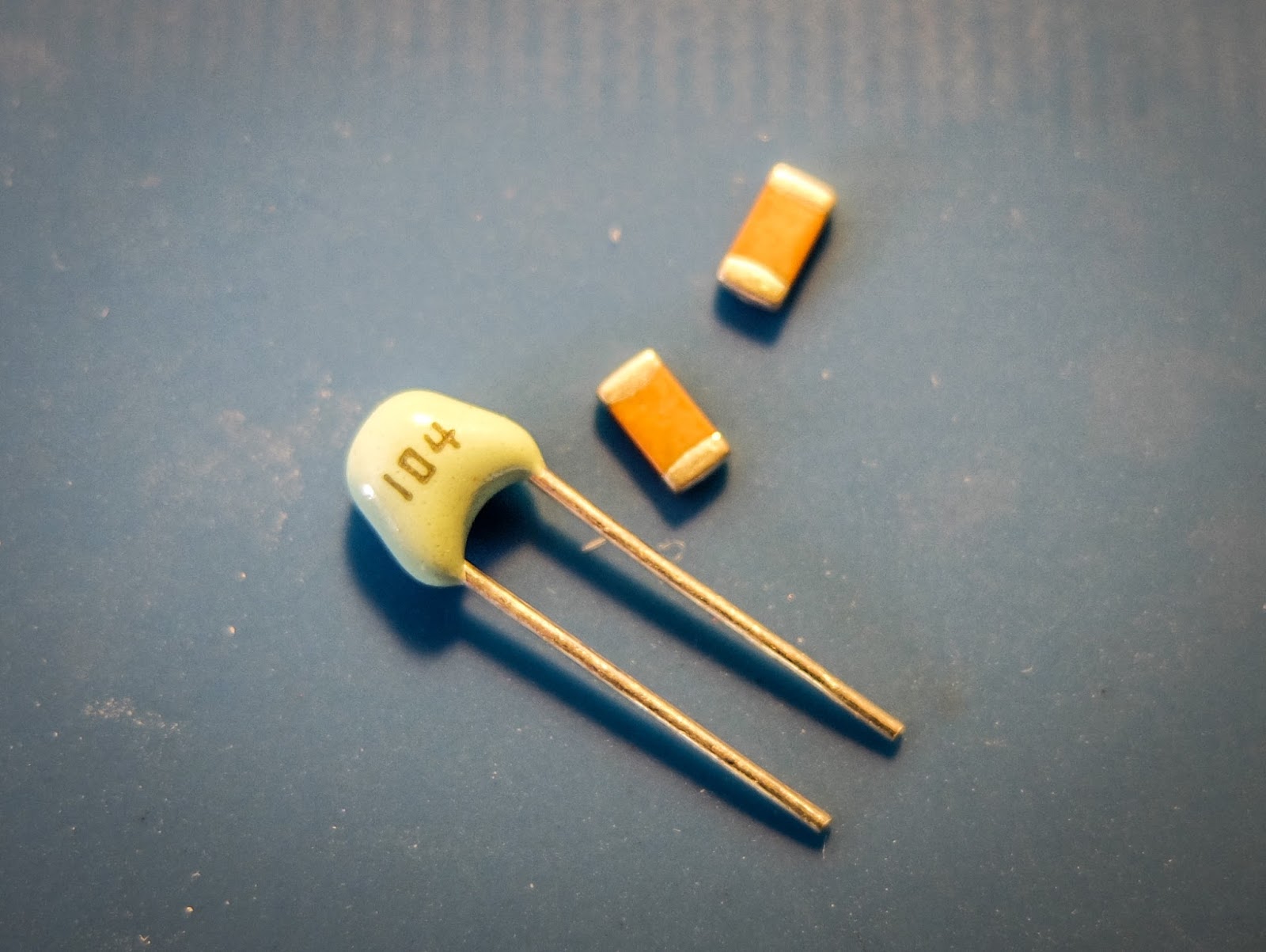
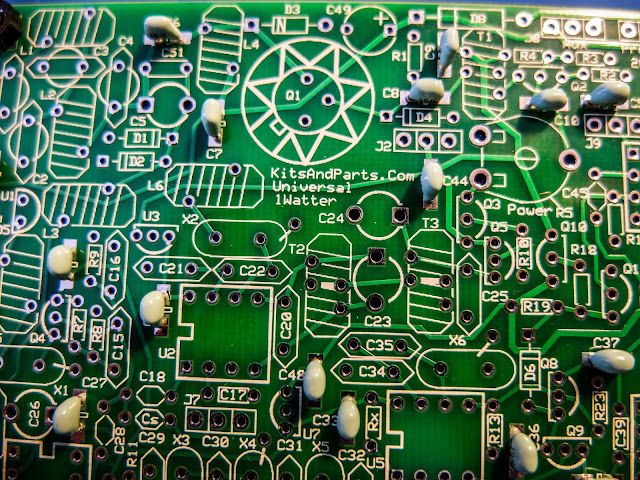 |
| using through hole capacitors rather than the SMTs |
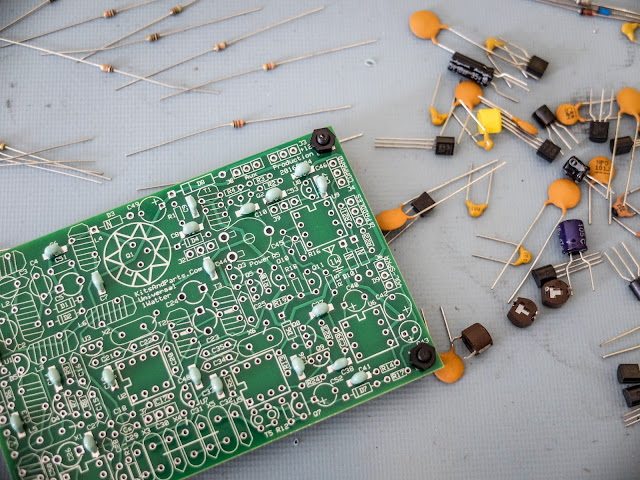 |
| some of the bits and bobs |
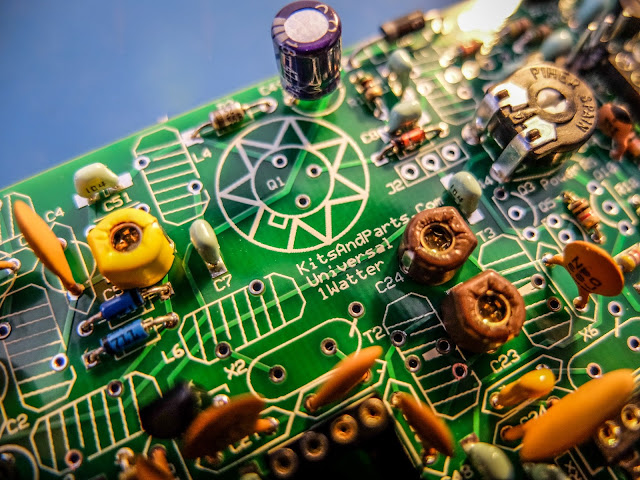 |
| build is progressing |
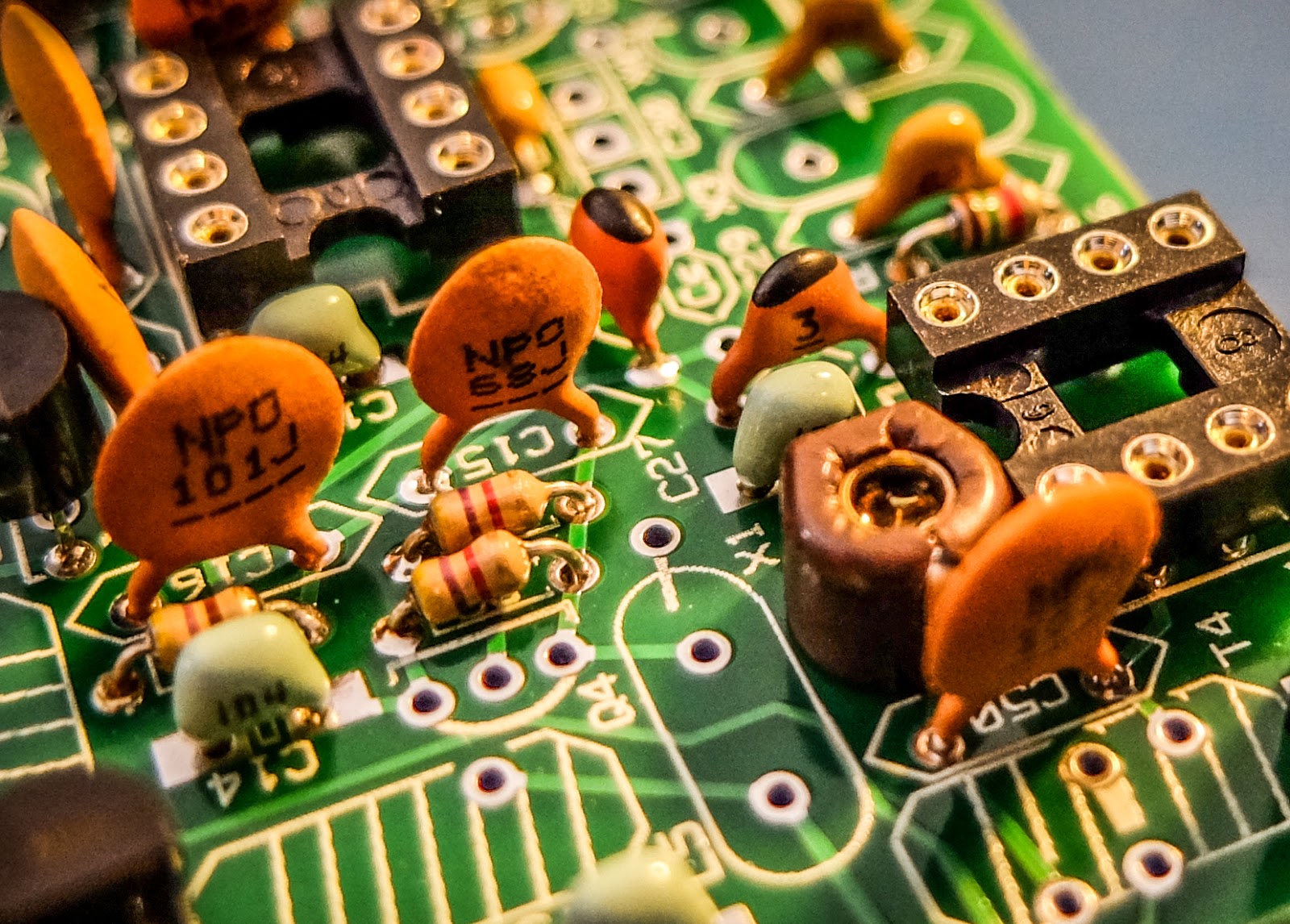 |
| close up |
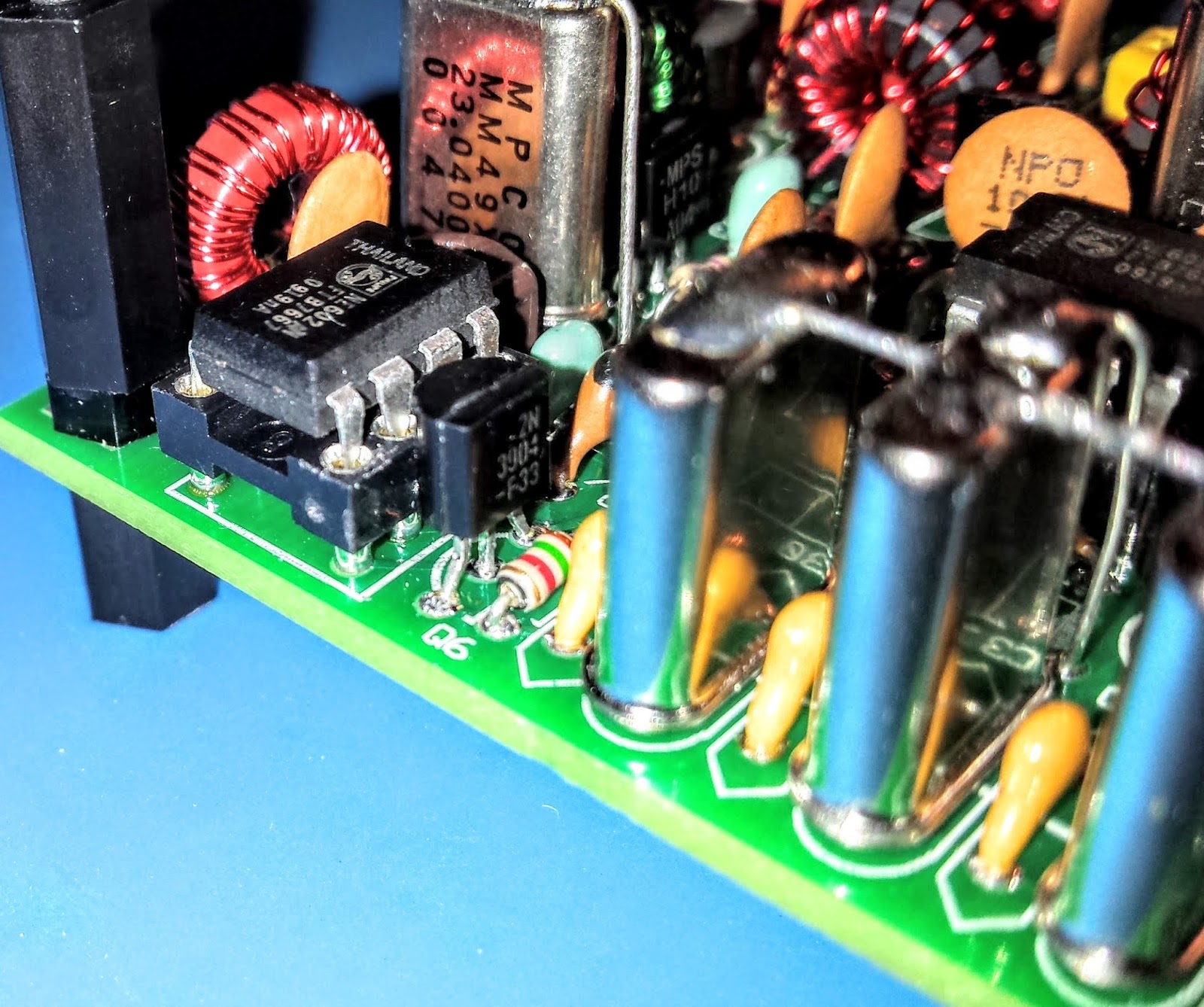 |
| XTAL filters give it good selectivity |
 |
| Everything except the final transistor |
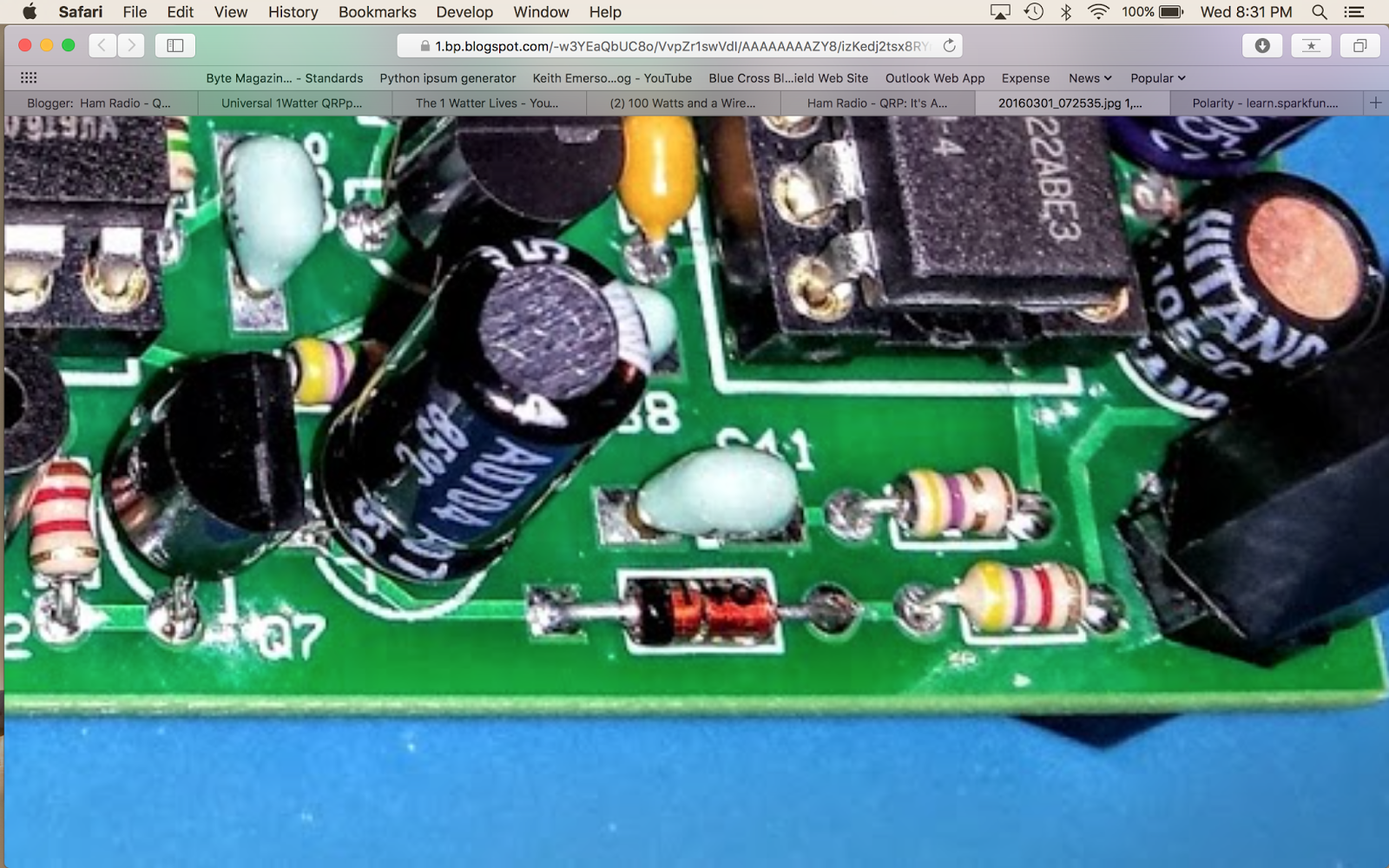 |
| AGC circuit |
Debugging
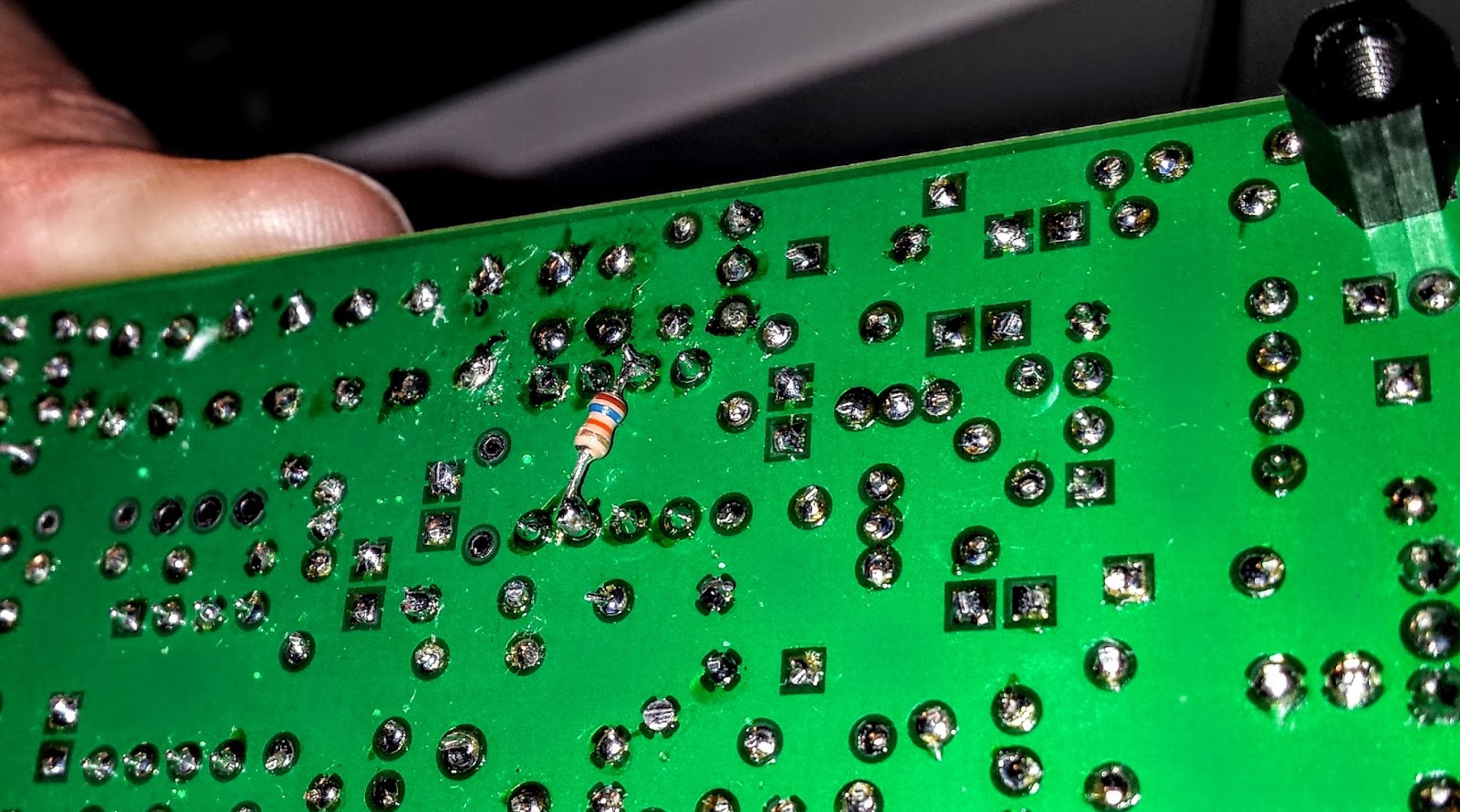 |
| The FIX for all those problems required an extra resistor connected across U5 |
Learning from problems
Being the first person to build a particular version of a kit brings its own set of challenges, especially when you're as new to kit building debugging RF problems as I am. However I'm actually glad the kit didn't work right at the initial build.The process of debugging the board, was a great learning process. I studied the schematics and learned, as best I could, the function of each circuit so that I could better understand how to test it. During the debugging process Diz instructed me that although RF signal generators and scopes are useful you can tell a lot by touching a RF component with an inductive metal object and listening for a buzz or hum from the BFO.
So all-in-all, even though the bug in the board was not due to a error on my part, I'm glad it occurred. I understand more about superhet radio design than I did before and more than if the kit had worked right off the bat.
On the air
 |
| Frequency control pot on the left |
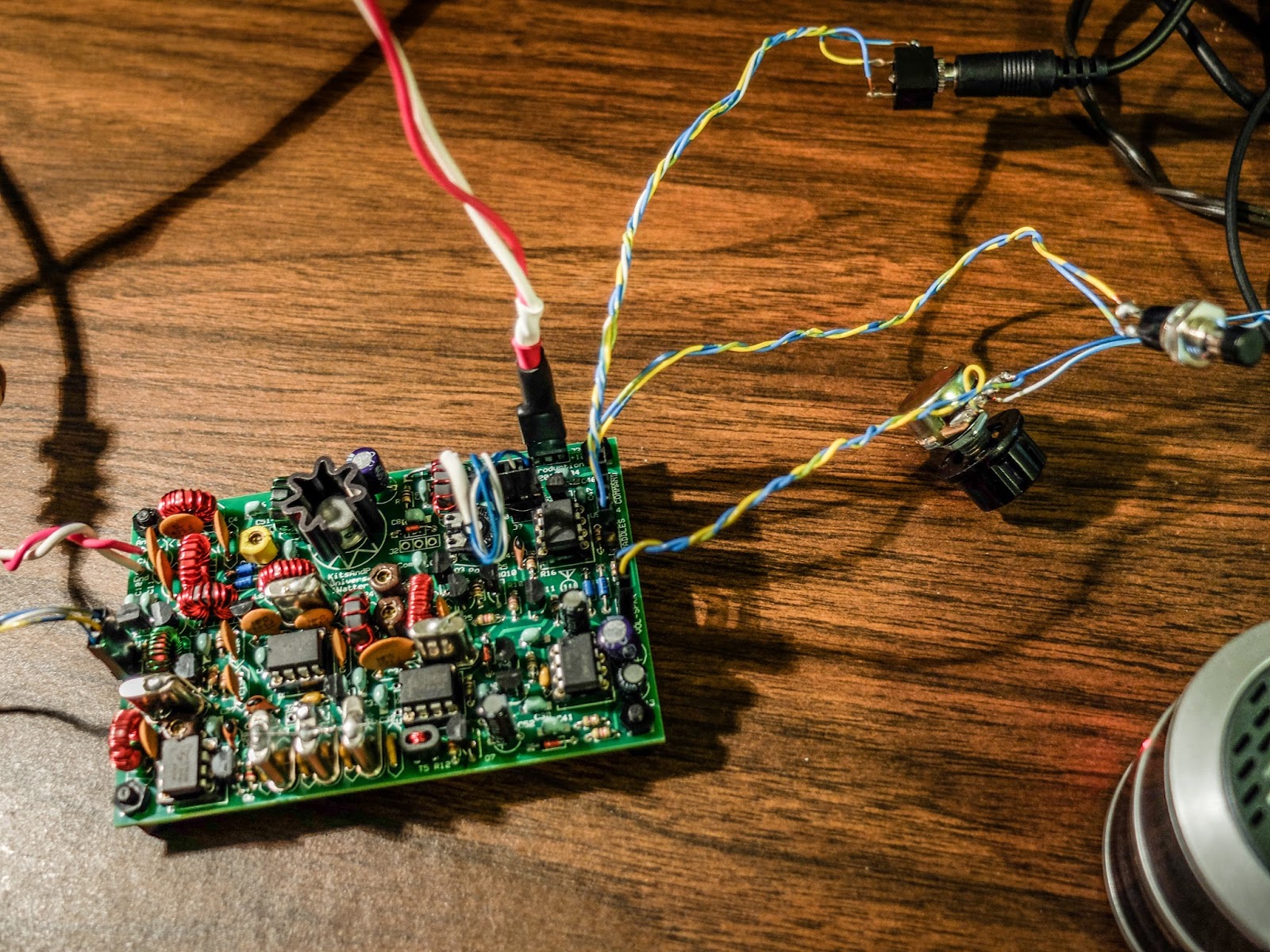 |
| Volume control, output jack, cmd pot and paddle input |
For this first on-air excursion I was using it at the default startup 15wpm keyer speed. You can default the speed higher with a different resistor value.
I have a resistor shrink wrapped and connected in-line to the blue-white wire coiling above the radio connecting to the speed pot terminal. In essence fixing the speed at 15wpm until I add the speed pot.
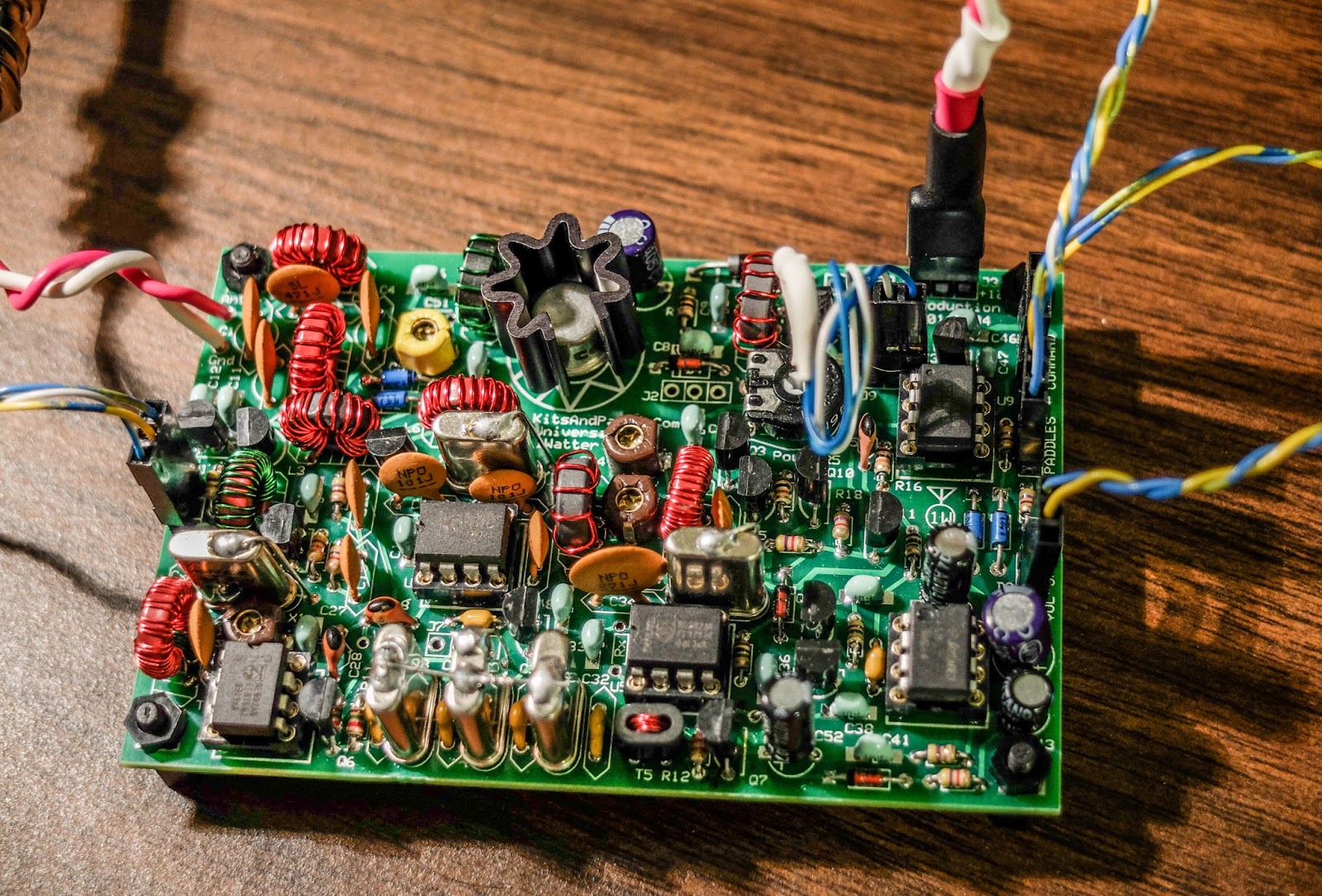 |
| Ready to transmit |
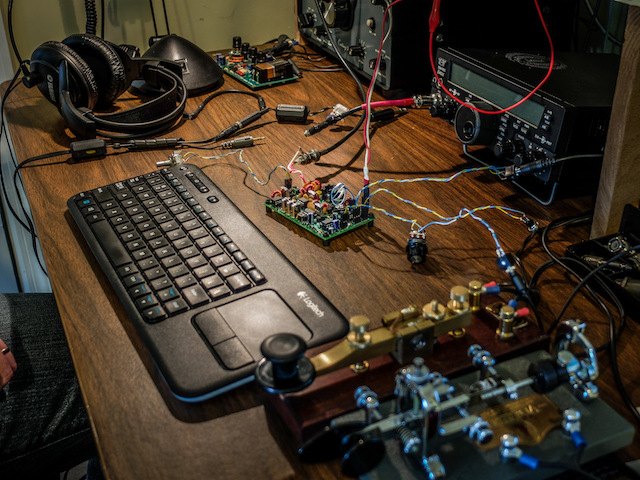 |
| On the air... I was using my paddle out of the photo to the right of the Bug |
First On Air QSO
Summary
Just imagine. This little $50 single band kit has good selectivity, a nice built-in keyer with a natural sounding sidetone, and lest we forget... You get a MIGHTY 1 WATT of OUTPUT. What more could a QRP ham need.
UPDATE: 04/01/2016
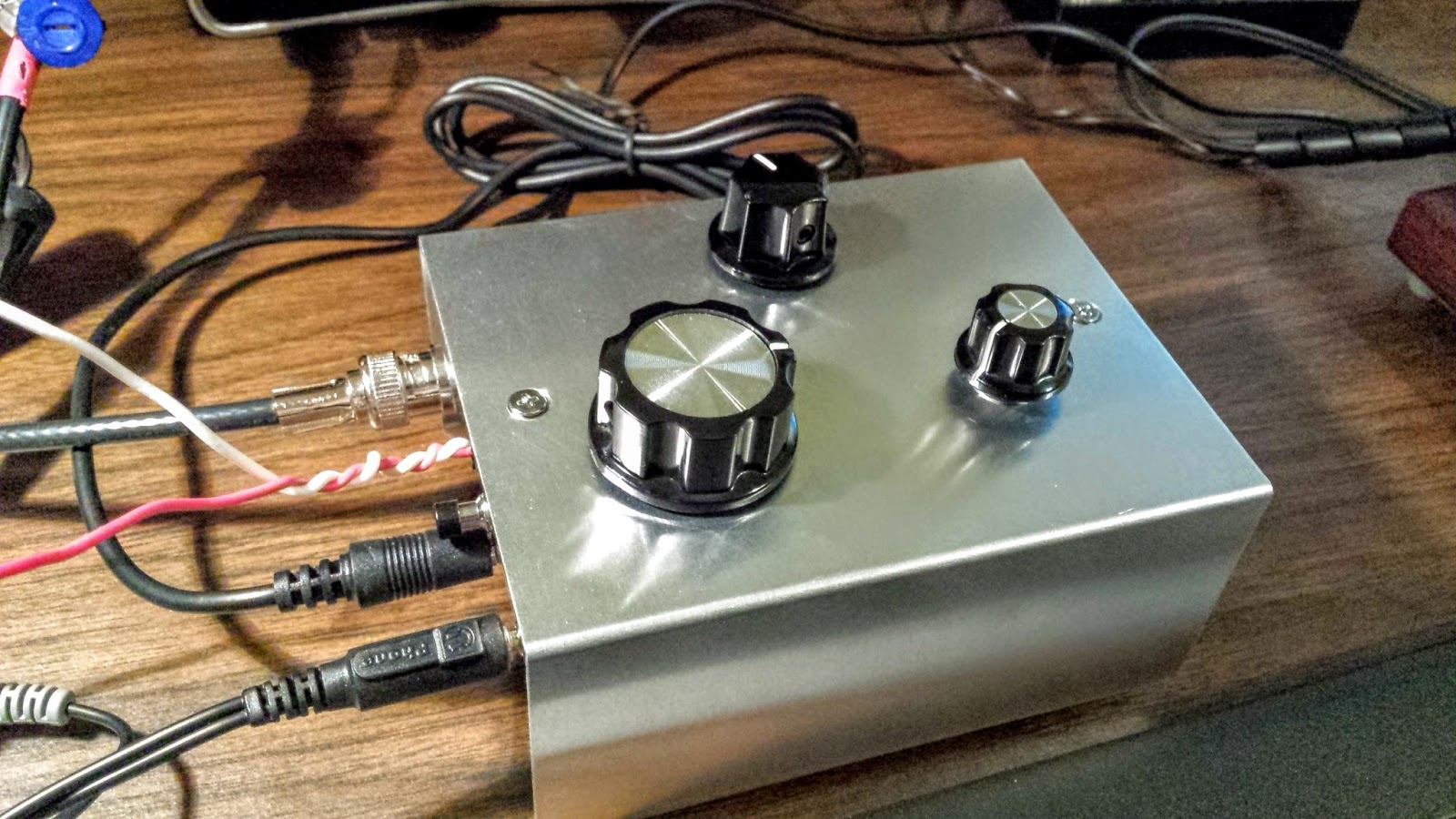 |
| !Watter installed in a case |
UPDATE: 04/05/2016
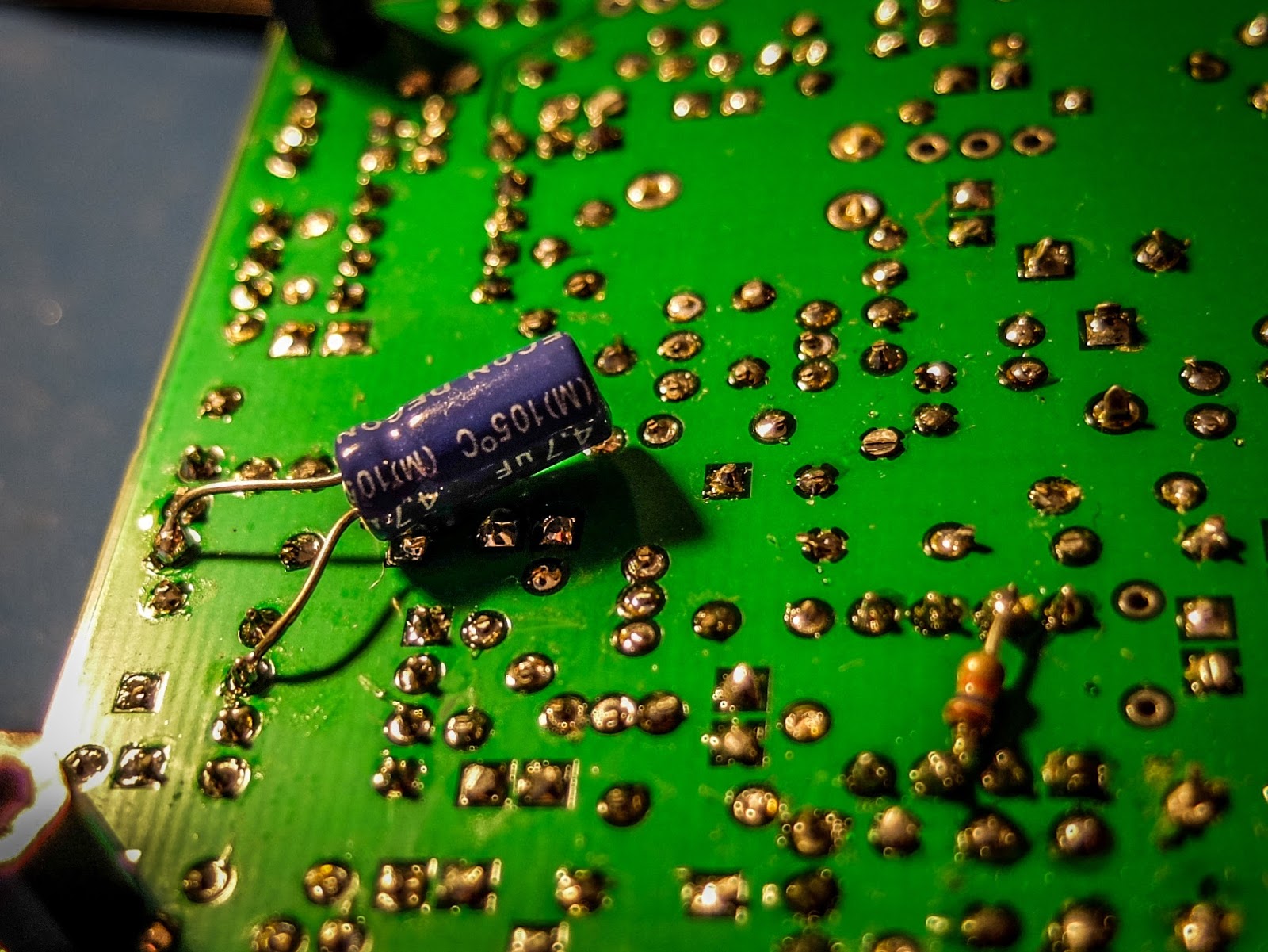 |
| cap fix for LM386 oscillations |
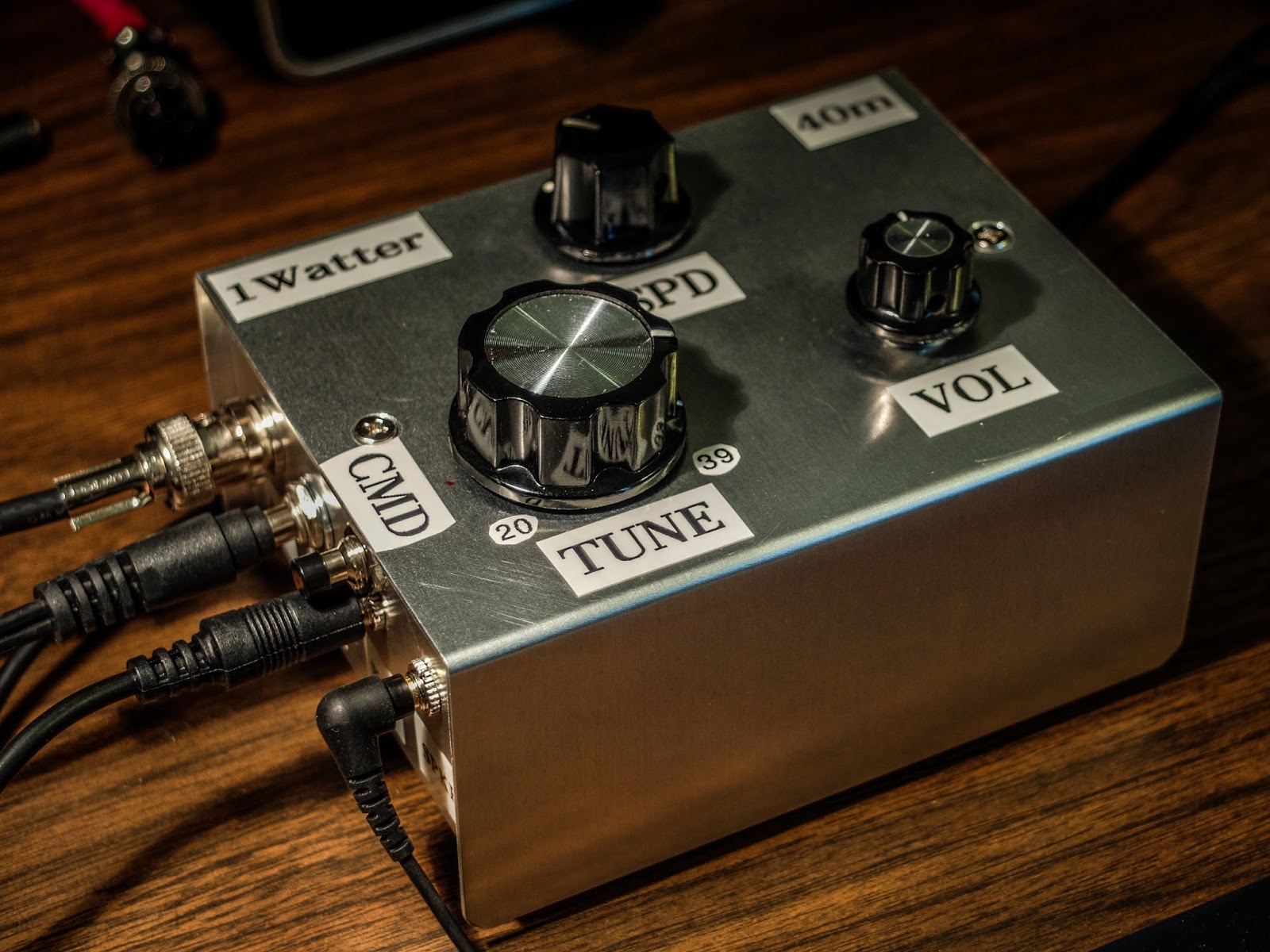 |
| 1Watter in enclosure with all the proper connectors for the case |
Richard Carpenter, AA4OO, is a regular contributor to AmateurRadio.com and writes from North Carolina, USA. Contact him at [email protected].
Local Lightwave Activity / A New 630m Resource Site
 |
Toby, VE7CNF, has sent me some mail indicating that his new lightwave system is ready for a two-way test!
His system is very similar to the ones built and deployed by myself and Markus, VE7CA, in late 2013. The culmination of that activity is described here, in 'On Making Nanowaves - Part 6'. Our lightwave QSO and homebrew gear were later described in a 'how to' article in the 'The Canadian Amateur' as well as in the newest edition of 'The Radio Amateur's Handbook' (2016).
Toby describes his most recent pre-QSO backyard testing:
The lightwave gear appears to be working well. Focus looks good and the
finder scopes are doing their job. There's a reflective sign high up on a
hydro tower 170 meters away that's handy for testing. It lights up bright
when the transmitter's on it.
Back scatter off the clouds above my house worked too. I heard my CW beacon, audible 339, off a patch on the clouds about 1 degree wide. I don't really know if it was clear air scatter from closer by, or scatter off the clouds, but the spot was small. That's with the tx on the front deck, and rx in the back.
I used Spectran to check the noise from city lights in my area. At QRSS10
speed there are spectral lines at 540, 600, and 660 Hz. They aren't too
strong, but those are some frequencies we should avoid.
 |
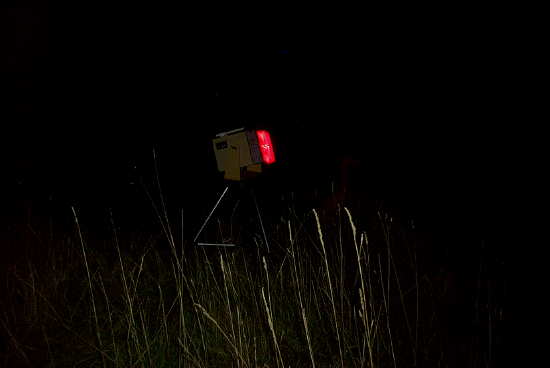
| VE7CNF's lightwave system - TX (L) & RX (R) |
Hopefully the weather will co-operate enough to allow us to make a two-way QSO later this week. Plans call for Toby to set up near the same location in West Vancouver used by VE7CA as it offers a clear LOS path to Mayne Island, 54km to the southwest.
 |
| 54km Georgia Strait crossing (courtesy: https://www.google.ca/maps) |
*****************************************************
Rik, ON7YD, has set up a new website devoted to information specific to 630m. His 472kHz.org site looks as if it will be a valuable resource for those looking to get information and a start on our new band. At present, there is some really great information regarding transmitters, antenna systems and calculating E(I)RP levels. Have a look!
Steve McDonald, VE7SL, is a regular contributor to AmateurRadio.com and writes from British Columbia, Canada. Contact him at [email protected].
Portable Ops 10/45: Nice Lunch on the Radio!
Wow, today was the most fun I have had in a while on the radio – the bands seemed decent today. So with my freshly charged KX3, and beautiful spring weather I set about to make some contacts from the local park.
N8XI (15024T) – Rick was calling CQ on 20 meters looking for SKCC members. I gave him a call and we had a quick exchange from KS to MI.
Then I started calling CQ….
KF8DA – Roger gave me a call from Ohio and QSB was really bad on his end, but we got the contact done.
NX3Z/QRP – Jim answered my CQ and was right down there in the noise most of the time. He was QRP from Arizona using a KX1 – it took many repeats but we finally were able to finish the QSO. Jim emailed me and said that even though he is an SKCC member he was using the keyer on the KX1 so this won’t count for an SKCC contact – but I always love 2xQRP contacts! Thanks Jim!
K7EP (1683T) – Art answered my call from Washington state with a nice signal and a nice fist.
WH6LE (13533S) – Last up for the day was Pete from North Carolina for a nice quick contact.
It was a fun day today – much better band conditions than last week. Thanks to everyone the found me! I did go up to 15 meters right at the end and called CQ a couple times with no takers.
I also made some SKCC contacts over the weekend, so right now I am sitting at 27 SKCC contacts as I work towards 100 for the Centurion award.
Burke Jones, NØHYD, is a regular contributor to AmateurRadio.com and writes from Kansas, USA. Contact him at [email protected].
Portable Ops 10/45: Nice Lunch on the Radio!
Wow, today was the most fun I have had in a while on the radio – the bands seemed decent today. So with my freshly charged KX3, and beautiful spring weather I set about to make some contacts from the local park.
N8XI (15024T) – Rick was calling CQ on 20 meters looking for SKCC members. I gave him a call and we had a quick exchange from KS to MI.
Then I started calling CQ….
KF8DA – Roger gave me a call from Ohio and QSB was really bad on his end, but we got the contact done.
NX3Z/QRP – Jim answered my CQ and was right down there in the noise most of the time. He was QRP from Arizona using a KX1 – it took many repeats but we finally were able to finish the QSO. Jim emailed me and said that even though he is an SKCC member he was using the keyer on the KX1 so this won’t count for an SKCC contact – but I always love 2xQRP contacts! Thanks Jim!
K7EP (1683T) – Art answered my call from Washington state with a nice signal and a nice fist.
WH6LE (13533S) – Last up for the day was Pete from North Carolina for a nice quick contact.
It was a fun day today – much better band conditions than last week. Thanks to everyone the found me! I did go up to 15 meters right at the end and called CQ a couple times with no takers.
I also made some SKCC contacts over the weekend, so right now I am sitting at 27 SKCC contacts as I work towards 100 for the Centurion award.
Burke Jones, NØHYD, is a regular contributor to AmateurRadio.com and writes from Kansas, USA. Contact him at [email protected].
Weekly Propagation Summary – 2016 Mar 28 16:10 UTC
Here is this week’s space weather and geophysical report, issued 2016 Mar 28 0122 UTC.
Highlights of Solar and Geomagnetic Activity 21 – 27 March 2016
Solar activity was at predominately very low levels with an isolated C1 x-ray event observed on 23/0354 UTC from Region 2524 (N15, L=277, class/area Eho/340 on 19 Mar). No Earth-directed coronal mass ejections were observed in coronagraph imagery.
No proton events were observed at geosynchronous orbit.
The greater than 2 MeV electron flux at geosynchronous orbit was at normal levels on 23 March, high levels on 22 March and moderate levels on 21 and 24-27 March.
Geomagnetic field activity ranged from quiet to unsettled levels with an isolated active interval observed early on 23 March. The period began with quiet conditions, but increased to quiet to unsettled levels late on 21 March due to the onset of a weak, positive polarity coronal hole high speed stream (CH HSS). Predominately quiet to unsettled conditions persisted through early on 24 March under the influence of the positive poarity CH HSS. Wind speeds averaged about 425 km/s through midday on 23 March. A gradual increase was then observed to a peak of near 565 km/s early on 25 March before decreasing to about 350 km/s late on 26 March. From 21-25 March, total field (Bt) ranged between 1-10 nT while the Bz component varied between +9 nT to -5 nT.
Quiet conditions persisted from late on the 25th through 26 March. Predominately unsettled levels were observed on 27 March due to the onset of a co-rotating interaction region in advance of another positive polarity CH HSS. On 27 March, wind speeds increased to near 440 km/s, Bt reached a maximum value of 12 nT while the Bz component rotated between +8 nT to -9 nT.
Forecast of Solar and Geomagnetic Activity 28 March – 23 April 2016
Solar activity is expected to be at very low levels with a slight chance for C-class flares through the outlook period.
No proton events are expected at geosynchronous orbit.
The greater than 2 MeV electron flux at geosynchronous orbit is expected to be at moderate levels on 28 March and on 01-03, 07-11 and 17-23 April. High levels are expected on 29-31 March, 04-06 and 12-16 April.
Geomagnetic field activity is expected to be reach G1 (Minor) storm levels on 02-03 and 11-13 April with G2 (Moderate) storm levels expected on 02 and 11 April due to the influence of recurrent, negative polarity CH HSSs. Quiet to unsettled levels are expected on 28-29 March, 04, 08, 14 and 23 April, with isolated active levels expected on 28 March and 23 April, all due to various CH HSSs. Mostly quiet condtions are expected for the remainder of the outlook period.
Don’t forget to visit our live space weather and radio propagation web site, at: http://SunSpotWatch.com/
Live Aurora mapping is at http://aurora.sunspotwatch.com/
If you are on Twitter, please follow these two users: + https://Twitter.com/NW7US + https://Twitter.com/hfradiospacewx
Get the space weather and radio propagation self-study course, today. Visit http://nw7us.us/swc for the latest sale and for more information!
Check out the stunning view of our Sun in action, as seen during the last five years with the Solar Dynamics Observatory (SDO): https://www.youtube.com/watch?v=zXN-MdoGM9g
We’re on Facebook: http://NW7US.us/swhfr
Visit, subscribe: NW7US Radio Communications and Propagation YouTube Channel
LHS Episode #165: Knifey Spoony
 We're back at it again, producing podcasts, drinking, laughing, having way too much fun. We hope you do at least a couple of those things when you listen to the show. This time around the topics include the UK selling spectrum, a California university ham factory, cartoons, a Debian Summer of Code project, tax reimbursement for FOSS developers, Firefox Servo, upcoming hamfests and a whole lot more. Thanks for tuning in--and please don't forget our LHS Hamvention 2016 Generosity Campaign campaign. Hamvention 2016 is less than two months away.
73 de The LHS Crew
Russ Woodman, K5TUX, co-hosts the Linux in the Ham Shack podcast which is available for download in both MP3 and OGG audio format. Contact him at [email protected].
Stunning Ultra-HD View; Sun Timelapse 2015 NASA/SDO
This video is ten minutes of coolness.
This cool time-lapse video shows the Sun (in ultra-high definition 3840×2160 – 4k on YouTube) during the entire year, 2015. The video captures the Sun in the 171-angstrom wavelength of extreme ultraviolet light. Our naked, unaided eyes cannot see this, but this movie uses false-colorization (yellow/gold) so that we can watch in high definition.
The movie covers a time period of January 2, 2015 to January 28, 2016 at a cadence of one frame every hour, or 24 frames per day. This timelapse is repeated with narration by solar scientist Nicholeen Viall and contains close-ups and annotations. The 171-angstrom light highlights material around 600,000 Kelvin and shows features in the upper transition region and quiet corona of the sun.
The first half tells you a bit about the video and the Sun, and you can see the entire year 2015 rotate by. The second half is narrated by a NASA scientist. It is worth watching all ten minutes. And, then, sharing!
The sun is always changing and NASA’s Solar Dynamics Observatory is always watching.
Launched on Feb. 11, 2010, SDO keeps a 24-hour eye on the entire disk of the sun, with a prime view of the graceful dance of solar material coursing through the sun’s atmosphere, the corona. SDO’s sixth year in orbit was no exception. This video shows that entire sixth year–from Jan. 1, 2015 to Jan. 28, 2016 as one time-lapse sequence. Each frame represents 1 hour.
SDO’s Atmospheric Imaging Assembly (AIA) captures a shot of the sun every 12 seconds in 10 different wavelengths. The images shown here are based on a wavelength of 171 angstroms, which is in the extreme ultraviolet range and shows solar material at around 600,000 Kelvin (about 1 million degrees F.) In this wavelength it is easy to see the sun’s 25-day rotation.
During the course of the video, the sun subtly increases and decreases in apparent size. This is because the distance between the SDO spacecraft and the sun varies over time. The image is, however, remarkably consistent and stable despite the fact that SDO orbits Earth at 6,876 mph and the Earth orbits the sun at 67,062 miles per hour.

A blending of an entire year, 2015, of the Sun as seen by NASA SDO at EUV 171 Angstroms
Why This is Important
Scientists study these images to better understand the complex electromagnetic system causing the constant movement on the sun, which can ultimately have an effect closer to Earth, too: Flares and another type of solar explosion called coronal mass ejections can sometimes disrupt technology in space. Moreover, studying our closest star is one way of learning about other stars in the galaxy. NASA’s Goddard Space Flight Center in Greenbelt, Maryland. built, operates, and manages the SDO spacecraft for NASA’s Science Mission Directorate in Washington, D.C.
For us radio enthusiasts, the study of the Sun helps us understand the dynamics of radio signal propagation. And, that aids us in communicating more effectively and skill.
Thanks for sharing, voting, and watching. More information and live Sun content can be accessed 24/7 at http://SunSpotWatch.com
You can also get the Space Weather and Radio Propagation Self-study Course at http://SunSpotWatch.com/swc
Visit, subscribe: NW7US Radio Communications and Propagation YouTube Channel
 Ham Radio Deluxe |
 W5SWL Electronics |
 Ham Radio Prep |
 KB3IFH QSL Cards  Hip Ham Shirts  HamRadioAuctions HamRadioAuctions Reliance Antennas Reliance Antennas Enigma Shop Enigma Shop |  morseDX  Ni4L Antennas  R&L Electronics R&L Electronics antennas.us antennas.us QRV QRV |
- Matt W1MST, Managing Editor
