 |
 The Best CW training app for Android
 20 April 2016 | by
 I'm always on the lookout for useful tools to help increase my copy speed and enjoyment of CW/Morse Code. Training applications for beginners that teach letters and letter groups are great to get started but after you're making QSOs and copying at useful speeds those apps get a little stale.
I recently wrote about using the "Morse News" RSS reader application for PCs. What I liked about Morse News was that it would send the text of news articles as CW. I found it useful as a natural language trainer but I didn't like being tied to my PC during training.
I wanted a similar application for my smart phone.
Just the mobile ticket to CW training
I'm not sure how I missed the "Morse Trainer for Ham Radio" app up to now but I've been using it for a couple of weeks now and really find it useful.
 |
| Morse Trainer in QSO Text Mode |
Training Modes
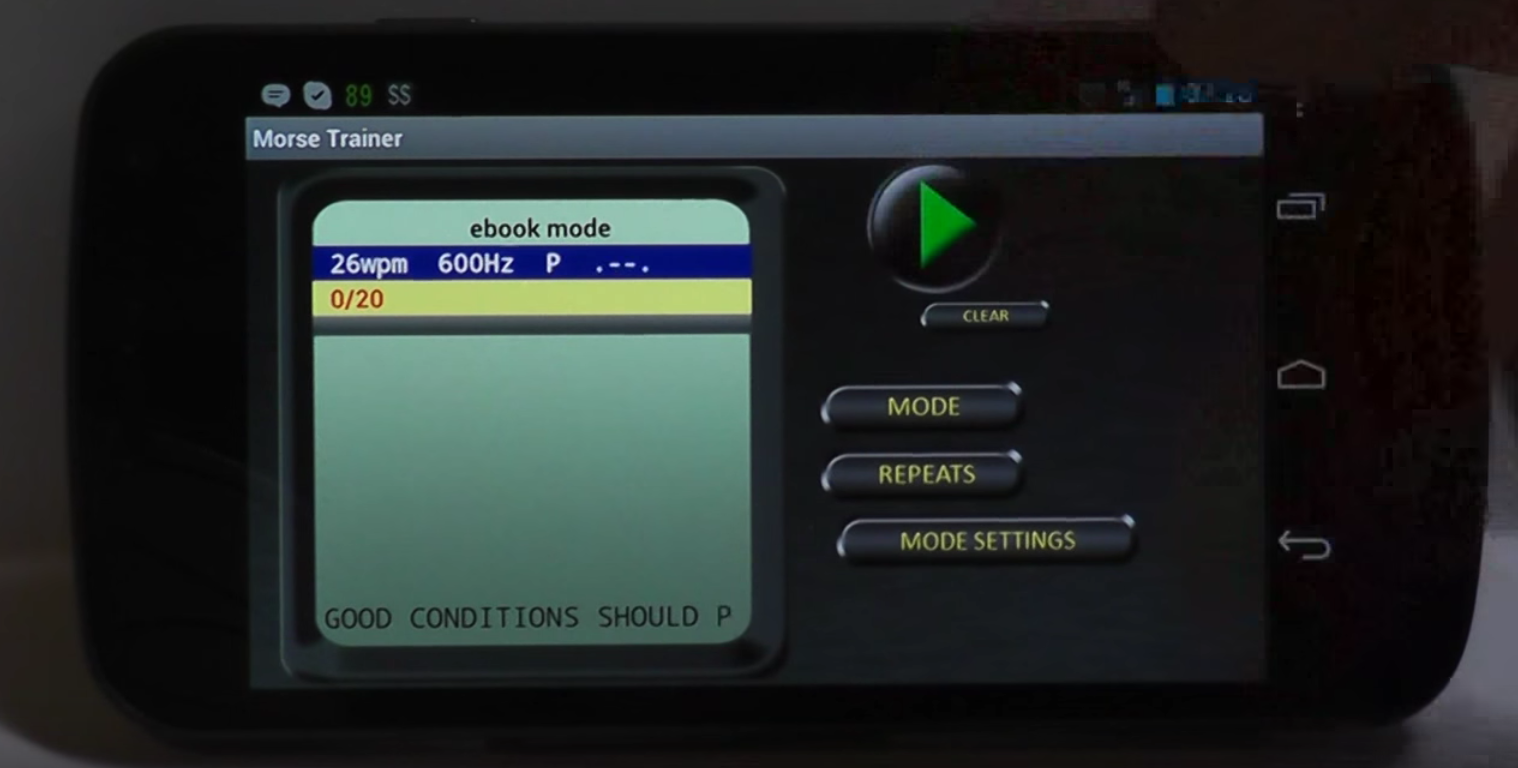 |
| ebook mode |
I keep the speed higher than I can comfortably copy so I'm missing some of what is sent. There's nothing like reading an action novel where you're missing half of what's going on. Did Tex get shot or not? I missed that word, hehe.
https://play.google.com/store/apps/details?id=com.wolphi.morsetrainer
I have no affiliation with the maker of this application. I just wanted to share.
That's all for now
So lower your power and raise your expectations
73/72
Richard, AA4OO
Richard Carpenter, AA4OO, is a regular contributor to AmateurRadio.com and writes from North Carolina, USA. Contact him at [email protected].
Hunting For NDB’s In CLE 206
This coming weekend will see another CLE challenge, this time in the LF band from 190 - 239.9 kHz.
'CLE's' are 'Co-ordinated Listening Events', and NDB DXers around the world focus their listening time on one small slice of the NDB spectrum.
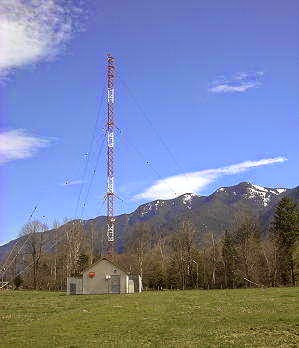
One nice catch to try for is 'LU' on 214 kHz shown on the left. The 'LU' NDB is in a breathtaking location, high on a mountain meadow at the foot of the North Cascade mountain range. In spite of the towering mountain peaks to the east and to the south, 'LU' is well heard, being reported as far east as Massachusetts and as far west as Hawaii.
The antenna is a 100' top-loaded vertical with, presumably, an extensive ground system as this is a very large site. The transmitter is a 500 watt Nautel. 'LU' is about 20 miles north-east of the Abbotsford Int'l Airport, Vancouver's alternate.
From CLE coordinator Brian Keyte (G3SIA), comes the following reminder:
Our 206th Co-ordinated Listening Event is next weekend.
Do join in if you can. First-time CLE logs will also be very welcome.
Days: Fri. 22 - Mon. 25 April, Midday-Midday, your local time
Frequencies: NDBs from 190 - 239.9 kHz
PLUS: Normal NDBs on 'half-way' frequencies nnn.5 kHz
(from 190.5 - 999.5 kHz)
Both halves are for everyone to try.
Away from Europe many of the frequencies below 240 kHz are busy with
NDBs. In Europe there are very few there, but some DX ones might be heard from North America and maybe from a few other places.
The normal NDBs (not DGPS) which have carriers on the 'half-way'
frequencies (e.g. 284.5 DY, 333.5 VOG, 370.5 LB, 390.5 ITR, 433.5 HEN)
are scattered across Europe but there are very few of them elsewhere.
'Hot spots' are ENG and ITA.
These half-frequencies give comfortable QRM-free listening and probably
some good catches as a result.
America has only one or two (e.g. 381.5 SJX) but East and West coasters
might hear some DX ones.
We last used these 'rules' for CLE190 in January 2015.
Please send your CLE log to the List in a plain text email if possible
(not in an attachment) with 'CLE206' at the start of its title.
Show on each log line:
# The date (e.g. 2016-04-22, etc., or just 22) and UTC.
(the date changes at 00:00 UTC)
# kHz (the nominal published frequency, if known)
# The Call Ident.
Show those main items FIRST - other optional details such as Location
and Distance go LATER in the same line.
If you send interim logs, please also send a 'Final' (complete) log.
As always, tell us your own location and brief details of the equipment
that you were using during the weekend.
Good listening - enjoy the CLE
----------------------------------------------------------
From: Brian Keyte G3SIA ndbcle'at'gmail.com
Location: Surrey, SE England (CLE co-ordinator)
----------------------------------------------------------
(If you wish you could use any one remote receiver for your loggings,
stating the location and owner - with their permission if required.
A remote listener may NOT also use another receiver, local or remote,
to make further loggings for the same CLE).
73
Brian
These listening events serve several purposes. They:
- determine, worldwide, which beacons are actually in service and on-the-air so the online database can be kept up-to-date
- determine, worldwide, which beacons are out-of-service or have gone silent since the last CLE covering this range
- will indicate the state of propagation conditions at the various participant locations
- will give you an indication of how well your LF/MF receiving system is working
- give participants a fun yet challenging activity to keep their listening skills honed
Final details can be found at the NDB List website, and worldwide results, for every participant, will be posted there a few days after the event. If you are a member of the ndblist Group, results will also be e-mailed and posted there.
The very active Yahoo ndblist Group is a great place to learn more about the 'Art of NDB DXing' or to meet other listeners in your region. There is a lot of good information available there and new members are always very welcome.
If you are contemplating getting started on 630m, listening for NDBs is an excellent way to test out your receive capabilities as there are several NDBs located near this part of the spectrum.
You need not be an ndblist member to participate in the CLEs and all reports, no matter how small, are of much value to the organizers. 'First-time' logs are always VERY welcome!
Reports may be sent to the ndblist or e-mailed to either myself or CLE co- ordinator, Brian Keyte (G3SIA), whose address appears above.
Please ... give the CLE a try ... then let us know what NDB's can be heard from your location! Your report can then be added to the worldwide database to help keep it up-to-date.
Steve McDonald, VE7SL, is a regular contributor to AmateurRadio.com and writes from British Columbia, Canada. Contact him at [email protected].
Portable Ops 18/45: 20 Meters was good today!
I finally got a chance today to play on the radio – my first time on the air since the SKCC WES! Much to my enjoyment 20 meters was actually playing nice for me!
I went over the local park near my office and got set up – it is a absolutely beautiful spring day here in Kansas.
 |
| Setup in my Honda Pilot – J-37 key to KX3 coax out to 31′ Jackite pole with vertical wire from a 9:1 UNUN – works great! |
After tuning around a bit and not hearing anything, I decided everyone must be listening and nobody seemed to be calling CQ – so today I decided to only call CQ!
And the contacts began almost immediately….
AI4UL (6327) – Bob gave me a call from North Carolina with a nice 559 signal – he gave me a 569 report.
VA5CW (4326S) – Bill gave me a call from Saskatchewan Canada – and he was very loud – 599! He was running 100 watts into a yagi, so I am sure that helped. He dropped his power to 5 watts and I could still copy him very well. We had a nice chat, and a nice two way QRP QSO!
KF7WJY (14522T) – Tim returned my call from Nevada, but we both had very weak signals 339 both ways. It was a slug, but we managed to finish up the QSO. Thanks Tim!
K2PAY (4304S) – Jerry was very weak when he first returned my call from Long Island, NY – 339 here in Kansas. He gave me a 459. QSB got the best of his signal when he was telling me his power, so I don’t know if he was QRP or not – I think he said 50 watts, but not sure. (update: a PM on the SKCC sked page Jerry said he was at 50 watts)
KG7VTO (14714) – Bob called me with a 559 from Pendleton, OR. After reading his QRZ page, and looking at his SKCC number, I figured out he is a pretty new ham. He just got his ticket fall of 2015 and joined SKCC in December 2015. Bob had a nice fist and it was a pleasure to work a newer ham – glad you were bit by the CW bug Bob!
W4RMM (2471T) – last QSO of the day goes to Bill from Alabama! He was pretty weak here in Kansas with a 339, and he gave me a 449. We kept it short because I had to get back to work.
Thanks to all that answered me – you provided me a truly enjoyable lunch time portable operation!
What a fun day on the radio! I picked up several new SKCC numbers towards my Centurion Quest, and just had a fun time with the J-37 key.
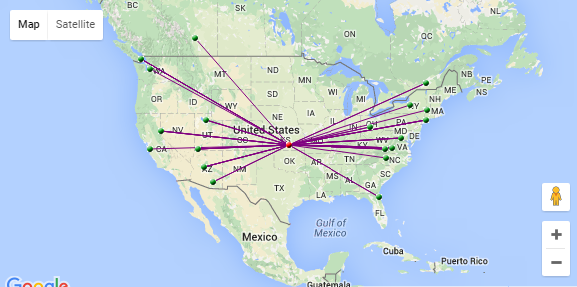 |
| The map of the Reverse Beacon Network from my calling CQ today – pretty impressive! |
Burke Jones, NØHYD, is a regular contributor to AmateurRadio.com and writes from Kansas, USA. Contact him at [email protected].
Portable Ops 18/45: 20 Meters was good today!
I finally got a chance today to play on the radio – my first time on the air since the SKCC WES! Much to my enjoyment 20 meters was actually playing nice for me!
I went over the local park near my office and got set up – it is a absolutely beautiful spring day here in Kansas.
|
| Setup in my Honda Pilot – J-37 key to KX3 coax out to 31′ Jackite pole with vertical wire from a 9:1 UNUN – works great! |
After tuning around a bit and not hearing anything, I decided everyone must be listening and nobody seemed to be calling CQ – so today I decided to only call CQ!
And the contacts began almost immediately….
AI4UL (6327) – Bob gave me a call from North Carolina with a nice 559 signal – he gave me a 569 report.
VA5CW (4326S) – Bill gave me a call from Saskatchewan Canada – and he was very loud – 599! He was running 100 watts into a yagi, so I am sure that helped. He dropped his power to 5 watts and I could still copy him very well. We had a nice chat, and a nice two way QRP QSO!
KF7WJY (14522T) – Tim returned my call from Nevada, but we both had very weak signals 339 both ways. It was a slug, but we managed to finish up the QSO. Thanks Tim!
K2PAY (4304S) – Jerry was very weak when he first returned my call from Long Island, NY – 339 here in Kansas. He gave me a 459. QSB got the best of his signal when he was telling me his power, so I don’t know if he was QRP or not – I think he said 50 watts, but not sure. (update: a PM on the SKCC sked page Jerry said he was at 50 watts)
KG7VTO (14714) – Bob called me with a 559 from Pendleton, OR. After reading his QRZ page, and looking at his SKCC number, I figured out he is a pretty new ham. He just got his ticket fall of 2015 and joined SKCC in December 2015. Bob had a nice fist and it was a pleasure to work a newer ham – glad you were bit by the CW bug Bob!
W4RMM (2471T) – last QSO of the day goes to Bill from Alabama! He was pretty weak here in Kansas with a 339, and he gave me a 449. We kept it short because I had to get back to work.
Thanks to all that answered me – you provided me a truly enjoyable lunch time portable operation!
What a fun day on the radio! I picked up several new SKCC numbers towards my Centurion Quest, and just had a fun time with the J-37 key.
|
| The map of the Reverse Beacon Network from my calling CQ today – pretty impressive! |
Burke Jones, NØHYD, is a regular contributor to AmateurRadio.com and writes from Kansas, USA. Contact him at [email protected].
DX Sense and Nonsense
Some notes about DX chasing from both sides – written by an operator who has over 19,000 contacts in 8 years from a choice DX location, and many more thousands from the U.S.
There is no doubt that chasing, and better yet catching, DX is a fun and rewarding part of the hobby of Amateur Radio. The game is to put as many different country entries into you log as possible. However, a few inconsiderate operators can make it difficult to impossible for everyone else. In fact, a few bad operators in a country can cause a DX station to avoid working a band when it is primarily open to that country or region as has happened to Italy and Spain, to name a couple of the worst in my experience.
Of course there are many well mannered and considerate operators in both Italy and Spain, but there are a seemingly growing number of rude and overbearing operators there who poison the DXing for everyone else. For example, as a DX station I have established that I will say “QRZ” when I am finished with the previous contact. I will guarantee that if the band is open to Italy or Spain there will be from 2 to 6 or more stations calling while I am still in QSO with the previous station. Their vocal minority is just as bad about ignoring directed calls from DX stations to other parts of the world. To be fair, other parts of the world, including the United States can be just as bad.
As a DX station, I want to make as many contacts as possible so that everyone gets a chance. I have enough problems with interference of all types that I may not copy you very well. IMPORTANT: If I want anything beyond my signal report, I’ll ask. If I didn’t ask, but told you my name then an appropriate response from you is ONLY 1) signal report and 2) name. Again, if I have time to ragchew, then I’ll give more information; and more importantly I’ll ask for more info from you. Otherwise, PLEASE NOTE, you are just taking up time that I could be spending giving one or two or three more stations a DX contact.
This ragchew rule applies double or triple to the small SSB “DX Window” on 75 meter SSB. If you are stateside (or elsewhere) and operating from 3790 to 3800 (*ARRL recognized); or from 3775-3800 (recognized by the rest of IARU Region 2 and all of IARU Regions 1 & 3) then you are in the SSB DX Window. If I want the weather in New England or New York then I’ll ask. If not, please give someone else a chance at DX. And please, do not hang around to ragchew with your East Coast or Southern buddies on 75 or 40 meters just because you have sunrise. We can still hear you farther west, and you prevent us from hearing the Pacific region.
DXpeditions are some of the worst violators of common sense and courtesy in my experience. Apparently the pure difficulty of the adventure is sufficient reason to believe in your own importance. The band plans seem to have been pulled out of a hat (being nice here)! NO DX station, no matter how rare as the right to the entire band. A number of recent Dxpeditions have been on 12 meters at 24.935 and other frequencies “listening up” or “listening up 5 to 20”. Put 2 or 3 DX stations on 12 or 17 meters and there was no place for anyone else ! Don’t break your arm patting yourself on the back….give me the whole band and I can make many thousand contacts as well!
Some other DXpeditions in the past have been almost as thoughtless. It is not uncommon for a DXpedition to call CQ on 3790 say, and listen up 5 to 10! Hold on there! That’s the entire *ARRL SSB DX window for 75 meters that one station is using. A suggestion for the future: Call outside of the window and listen to a SINGLE frequency inside; or call inside the window and listen above or below the window. Or better, tx and rx outside of the window. If your are rare DX, then we’ll find you!
I have personally had to “go split” when operating in the 75 meter window from a DX location when the number of callers on my frequency prevented calling stations from hearing me. It is not unusual for me to listen outside of the ‘window’, or even down at 3745 if that happens to be an open frequency. I do not find it useful to listen “5 to 10 up/down”. If I cannot make out some calls on 1 rx frequency, then I can seldom make them out when they are spread all across the band. To each his or her own, but it does say a lot to me about operator skill.
Ten General Rules for Maximizing Your Number of DX Contacts
- Listen first. If you do not copy the DX station, then you will NOT work them. By calling or tuning up on frequency you may very well make my LID list though.
- Listen for instructions from the DX station. Are they listening “up 3” or “down 5” or “up 5 to 20 — UGH!”? Or are they ONLY listening for Europe, Asia, S. America, or another area. Don’t call if you are not in the area of the “directed call”. (see #4 below)
- Do NOT call when they are working another station. Even a moron can understand that this actually slows down the contact rate for everyone! And, personally I do not take or recognize “tail-enders” who call before I have finished a QSO. I always say “QRZ” when I am ready. It’s just my way of trying to bring order to chaos. ***If you ignore instructions and I copy your callsign then I will NEVER put you in the log, except maybe IW0zzz RS 00 “Lid”
- This is a hobby. It is NOT life and death! *Truth be known, YOU are NOT that important to get into my log, no matter where you are and no matter where I am!
- As a DX station I have a listed QSL Manager for a number of good reasons. If you choose to ignore that, good luck on getting a card…ever.
- If you are a serious DXer you probably have Internet access and access to the DX Summit spots. Please do NOT call CQ on my spotted calling or listening frequencies. What are you thinking
- If you are on a DXpedition and have real-time access to spots, please pick a frequency that is NOT already in use. I really don’t care what you announced LAST WEEK as “your” frequencies. **This goes double or triple for your listening frequencies — DO NOT listen on frequencies already in use. You can also ask if the frequency/frequencies are in use. See number 4 above.
- Keep your calls short! Timing is more important than the number of calls. I hear many stations continuing to call AFTER I have given a report to a different station and am trying to get my report.
- Make sure that your transmitted audio is very clean; not too low pitched and not distorted! Turning up the mic gain to drive the ALC over scale will NOT make you louder!
- If you can’t or won’t play by the rules, prepare to be ignored!
In the famous words of late LA resident, Rodney King, “Can’t we all just get along?”
Good DX and good luck in ham radio!
Jay Mills, HP3AK (and K1YJ), is a special contributor to AmateurRadio.com.
It’s time cooler heads prevail!
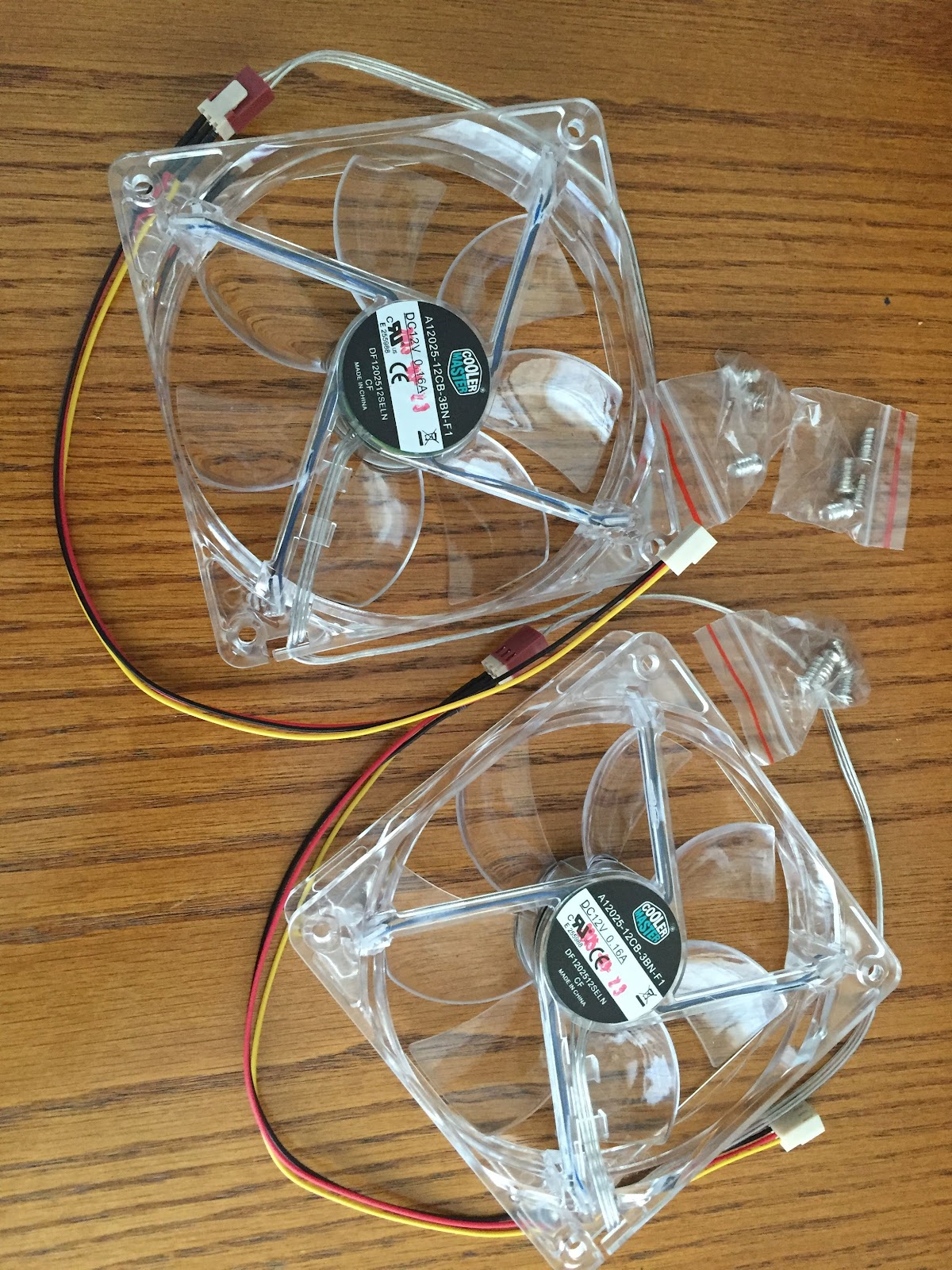 |
| The fans |
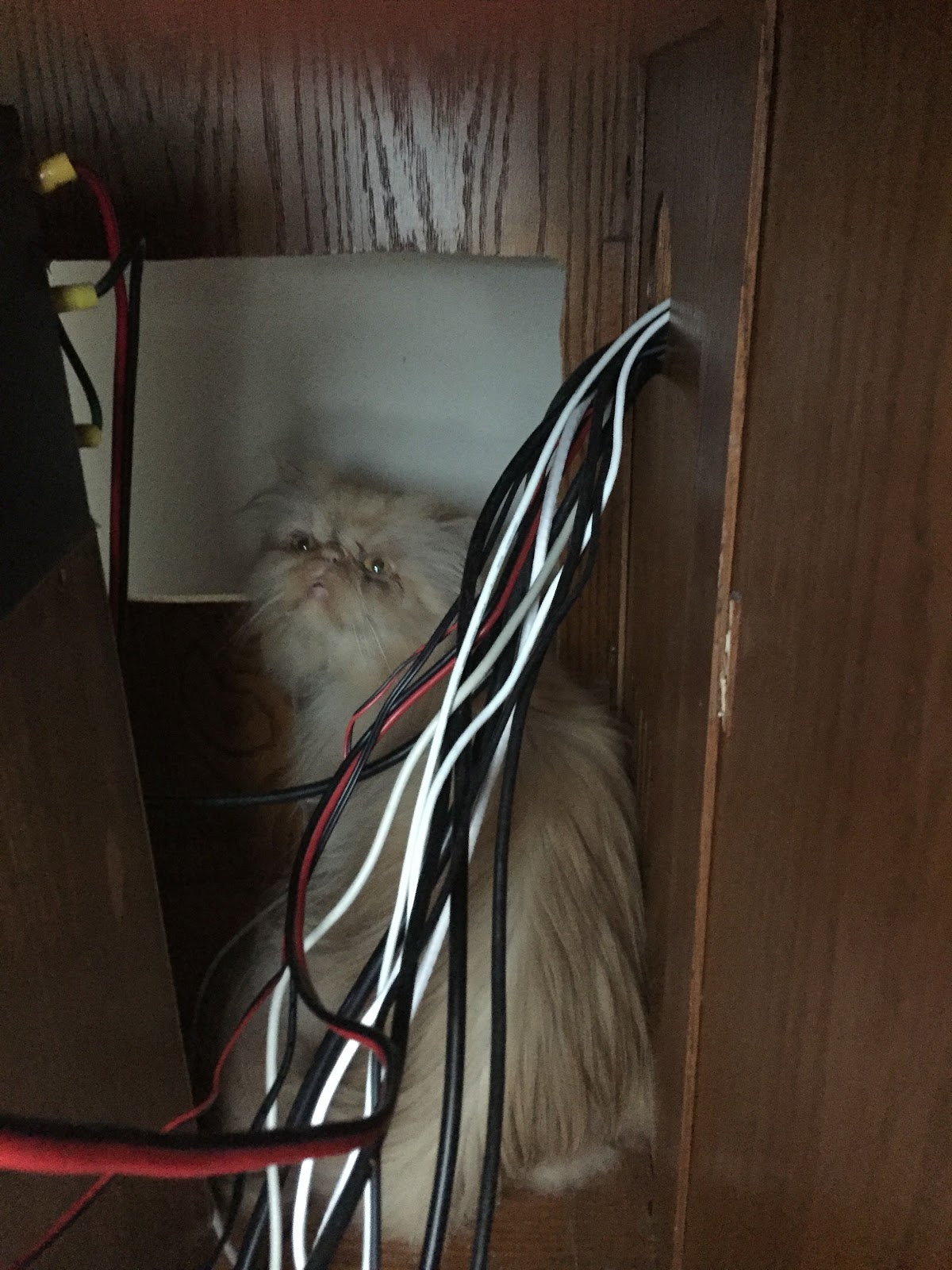 |
| Snoopy checking on progress |
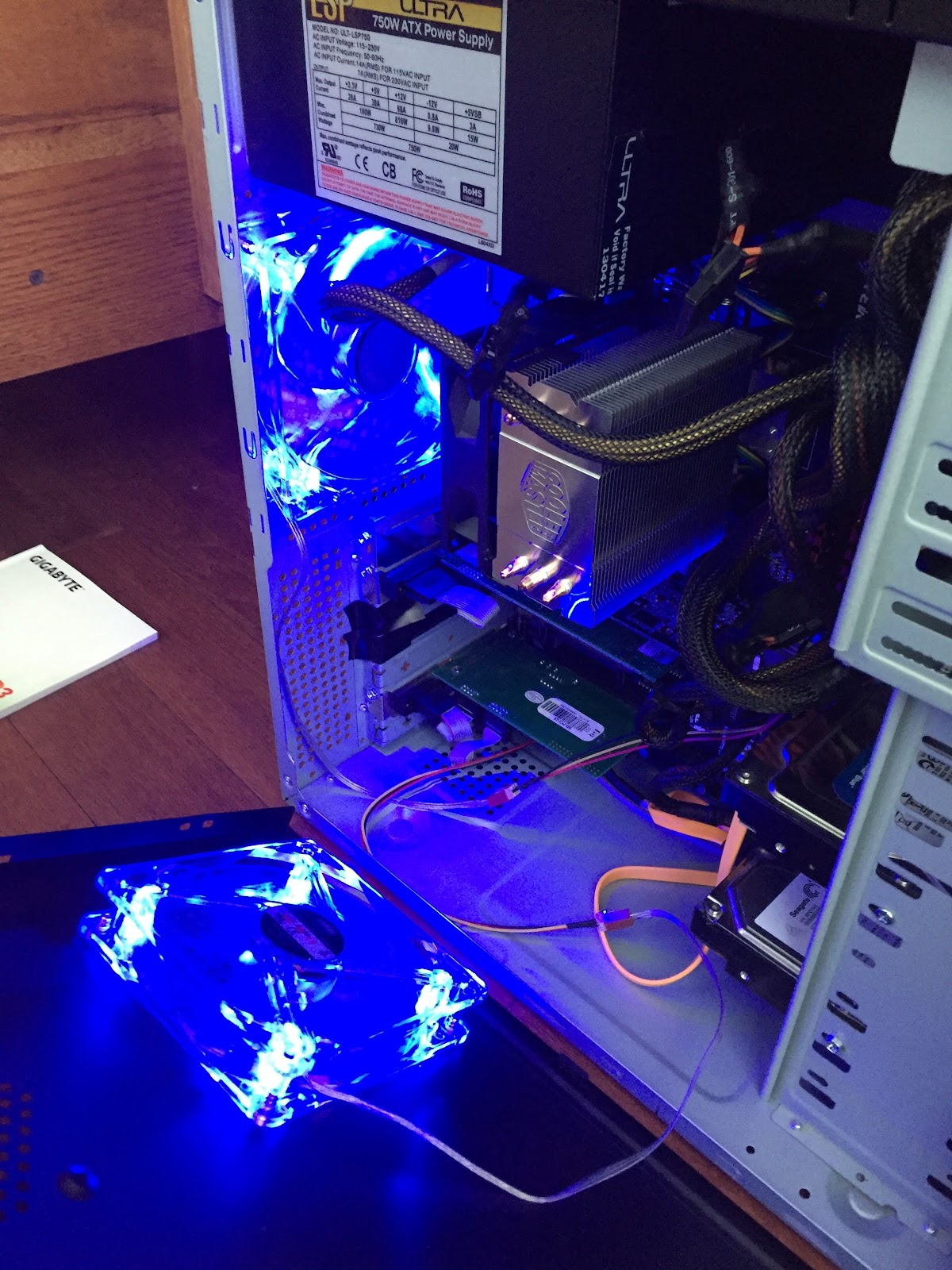 |
| Mood fans....:)) |
Mike Weir, VE9KK, is a regular contributor to AmateurRadio.com and writes from New Brunswick, Canada. Contact him at [email protected].
Hearing The Hum?
 An interesting item in Global News today caught my attention. In 2012, Glenn MacPherson, a teacher living in Gibsons, BC (a coastal community about 50 miles north of me and line-of-sight) began to hear a low level 'hum'. At first he thought it might be coming from local float plane activity but soon ruled that out. After Googling for any information about possible causes, he quickly learned that he was not the only one hearing ' the Hum' ... so he set up a website where people could report what they were hearing and found that it was a worldwide phenomenon.
 Possible theories for what has been described as 'hum' and 'rumbling' range from VLF transmissions to submarines to “ 'nothing more than the grand accumulation of human activity' that could include noise from highways, marine traffic, mining, windmill farms, hydroelectric dams and other forms of industry."
MacPherson speculates that some people may indeed be sensitive to VLF frequencies.
“When I say VLF, I’m not referring to sound,” MacPherson said. “That leads to another striking and startling conclusion, the fact that the Hum may not be a sound in the traditional sense. It may be the body’s reaction to a particular band of radio frequencies. That’s not an outrageous idea. The concept that the body can interpret certain electromagnetic frequencies as sound is reasonably well-established in research literature.”

MacPherson has now built a large Faraday cage to follow up with his VLF theory.
So far, over 9000 reports of the mysterious Hum have been filed on MacPherson's website's database and plans to translate the site into Chinese will likely see that number soon rising.
Here on Mayne Island, it is very quiet and stepping outside on a winter night when there is no wind or no waves hitting the beach there is truly not a single thing to be heard, including the Hum. I do however, on warm summer evenings, often hear the rumblings coming from the Roberts Bank coal loading facility and container port, on the other side of Georgia Strait about 12 miles away.
 |
| Roberts Bank courtesy: http://www.vancouversun.com |
Perhaps you can hear the Hum as well and might like to report it or discuss possible sources with others.
Steve McDonald, VE7SL, is a regular contributor to AmateurRadio.com and writes from British Columbia, Canada. Contact him at [email protected].
 Ham Radio Deluxe |
 W5SWL Electronics |
 Ham Radio Prep |
 KB3IFH QSL Cards  Hip Ham Shirts  HamRadioAuctions HamRadioAuctions Reliance Antennas Reliance Antennas Enigma Shop Enigma Shop |  morseDX  Ni4L Antennas  R&L Electronics R&L Electronics antennas.us antennas.us QRV QRV |
- Matt W1MST, Managing Editor
