 |
 QSL Bounty
 5 May 2016 | by
 Four of the cards were for recent 2m EME contacts ...

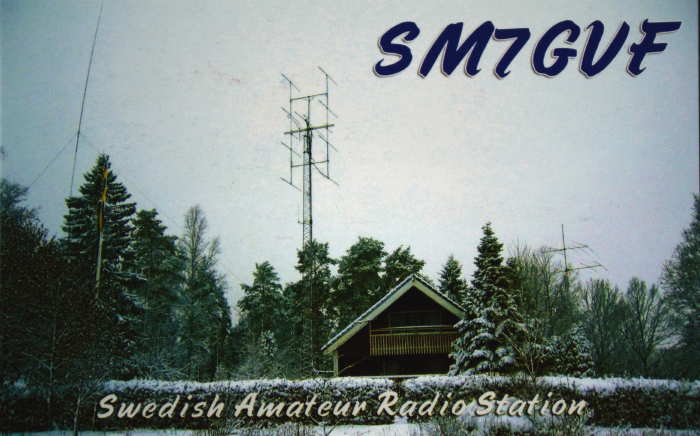
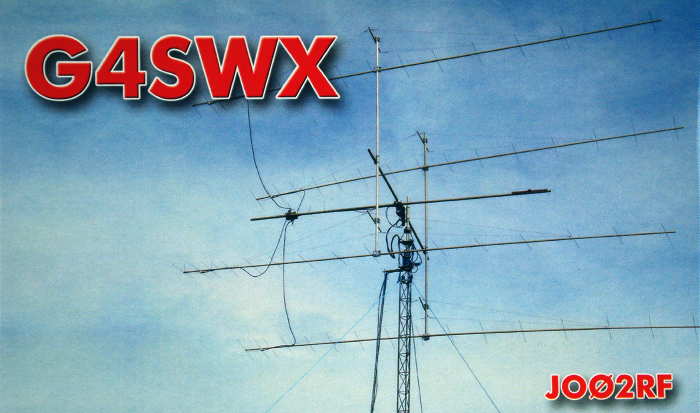
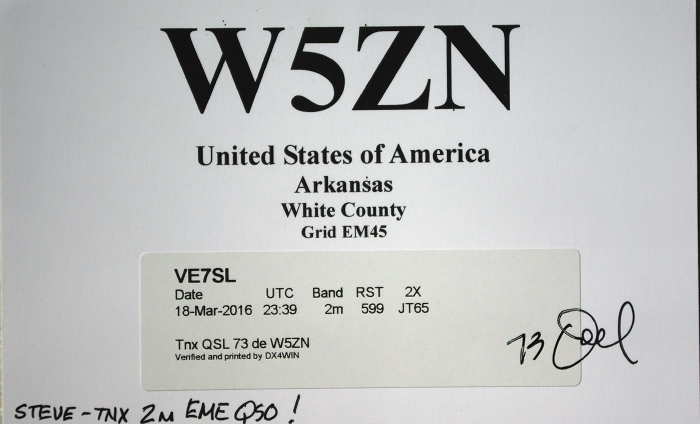
... and one was for 160m, confirming a winter CW QSO with Haiti, bringing my 160m DXCC total to 158 confirmed.
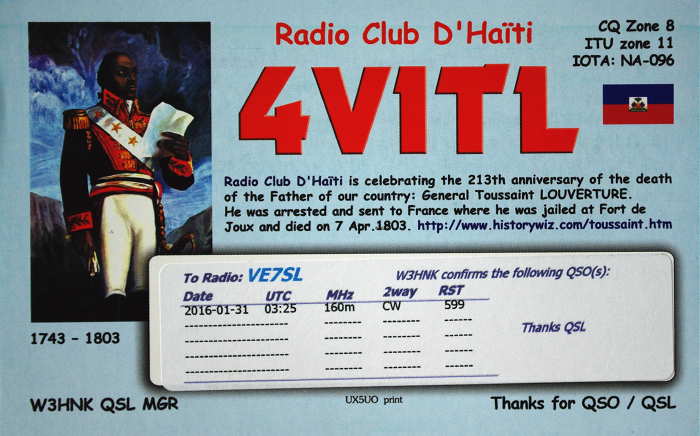
I have always loved QSL's, and looking back, the whole concept of collecting these small treasures was one of the things that initially attracted me to the radio world, when reading a magazine article about shortwave listening and collecting QSL's. I'm not so sure I love the QSL bureau though, but that's a whole other topic ...
Steve McDonald, VE7SL, is a regular contributor to AmateurRadio.com and writes from British Columbia, Canada. Contact him at [email protected].
The Spectrum Monitor — May, 2016
 Stories you’ll find in our May, 2016 issue:
Wi-Fi Radio Primer Part 2: Review of Stand Alone Wi-Fi Radios
By Thomas Witherspoon K4SWL
Wi-Fi radios, by and large, look like traditional radios; they typically have backlit digital displays, front panel buttons to recall memories, and an internal speaker. They function like them, too, in that they play radio stations––but there’s where the resemblance stops. Streaming lnternet audio, and their dependence upon an aggregator to do this, sets them entirely apart. This month Thomas looks closely at some popular Wi-Fi radio choices to find the good, the better and the expensive.
Piggy Bank Ham Radio Part 2
By Cory GB Sickles WA3UVV
Last month, Cory introduced you to the possibilities of getting involved and having fun with ham radio on the HF bands—using (among other things) CW (Morse code), some ingenuity and networking with fellow hams to get started—all within a target budget of less than $100. This month, he explores some of the details of putting together your first station, including a simple antenna you can build, complete with an inexpensive QRP tuner for just $25 as well as tips on making that first CW contact.
Saving AM Broadcasting in North America
By Mike Kohl
For decades the AM broadcast industry has slipped further and further behind what it thought was its main competition: FM broadcast radio. Now, with satellite radio and Internet streaming taking more market share with each passing year, AM radio is frantically looking for a way to bail out a sinking ship. Mike outlines some of the options available to the oldest sector of the broadcast industry through regulation and market incentives. But, will any or all options be enough?
Becoming Radio Active when the Rubber Hits the Road
By Richard Fisher KI6SN
Many hams spend more time in their cars than in their shacks, leading to the notion of going mobile and not just for 2-meters. But it’s not nearly as easy as you might think. Trying to get an HF signal out of a moving, noisy, metal shack using impossibly short antennas are only a few of the difficulties to be overcome. Richard examines the mobile operations of a few of the most successful road operators to find out how to do it right.
TSM Reviews:
Comet CA-500 MKII Antenna Analyzer and A Pair of Cans for your Radio Pleasure
By Mark Haverstock K8MSH
There’s an old saying in ham radio: if you can’t hear ‘em, you can’t work ‘em! A good pair of headphones (sometimes referred to as “cans”) can make the difference in working DX or just being enjoying a QSO in a noisy home environment. Mark takes a look at two popular headphone sets: Audio Technica’s BPH1S broadcast headset and Heil Sound’s Proset Elite amateur radio headset. Both have their advantages and both are under $200.
Scanning America
By Dan Veenaman
Calvert, St. Mary’s (MD) and Lewis (NY) Counties
Federal Wavelengths
By Chris Parris
Summer Vacation Scanning
Utility Planet
By Hugh Stegman NV6H
HF in Death Valley
Digital HF: Intercept and Analyze
By Mike Chace-Ortiz AB1TZ/G6DHU
International ALE Networks
HF Utility Logs
By Mike Chace-Ortiz and Hugh Stegman
Digitally Speaking
By Cory Sickles WA3UVV
New DV Gear from the LMR World
VHF and Above
By Joe Lynch N6CL
Summits on the Air
Amateur Radio Insights
By Kirk Kleinschmidt NT0Z
Forgotten Antenna Fundamentals and Other Curious Tidbits—Part 4
Radio 101
By Ken Reitz KS4ZR
Channel Master’s FlatWave TV Antenna; Help for 3M’s WorkTunes Radio
The World of Shortwave Listening
By Jeff White
Spanning Two Continents and the Mediterranean: Turkey and Cyprus on Shortwave
The Shortwave Listener
By Fred Waterer
“Isle of Music,” BBC, RHC and More
Amateur Radio Astronomy
By Stan Nelson KB5VL
Revisiting Radio Jove with a Low Cost Computer
The Longwave Zone
By Kevin O’Hern Carey WB2QMY
Longwave Beacons: the Ideal DX Target
Adventures in Radio Restoration
By Rich Post KB8TAD
Not Another Heavy Hammarlund HQ-129X!?
Antenna Connections
By Dan Farber AC0LW
Antenna Height Above Ground
The Spectrum Monitor is available in PDF format which can be read on any desktop, laptop, iPad®, Kindle® Fire, or other device capable of opening a PDF file. Annual subscription is $24. Individual monthly issues are available for $3 each.
Ken Reitz, KS4ZR, is publisher and managing editor of The Spectrum Monitor. Contact him at [email protected].
April 2016 QRP Operating Wrap-Up
It was another pretty active month on the radio for me and my KX3. I have now operated portable 22 times – with my goal being 45 for the year – I think I will make it no problem!
I continued this month really having fun with the SKCC QSO’s and chasing members for my first 100 SKCC contacts so I could claim the Centurion Award. I ended the month with 83 total contacts toward my ‘C’ – just 17 more and I will be there.
With WES coming up this weekend I should be able to get there in short order!
So here is the recap on the MONTHLY numbers:
Total QSO’s all modes: 81
Total CW QSO’s: 75
Total PSK31 QSO’s: 6
Total SKCC QSO’s: 65
I apologize to those I have worked but have not documented here on the blog during my portable operations – but sometimes lack of time gets the best of me!
A couple DX highlights from this month – I worked ZL2BLQ in New Zealand on 15 meters and LW3EX on 10 meters with just 5 watts and my portable QRP antenna from a local park!
Even with these poor propagation conditions, I am still having a blast with just 5 watts and a wire!
Burke Jones, NØHYD, is a regular contributor to AmateurRadio.com and writes from Kansas, USA. Contact him at [email protected].
April 2016 QRP Operating Wrap-Up
It was another pretty active month on the radio for me and my KX3. I have now operated portable 22 times – with my goal being 45 for the year – I think I will make it no problem!
I continued this month really having fun with the SKCC QSO’s and chasing members for my first 100 SKCC contacts so I could claim the Centurion Award. I ended the month with 83 total contacts toward my ‘C’ – just 17 more and I will be there.
With WES coming up this weekend I should be able to get there in short order!
So here is the recap on the MONTHLY numbers:
Total QSO’s all modes: 81
Total CW QSO’s: 75
Total PSK31 QSO’s: 6
Total SKCC QSO’s: 65
I apologize to those I have worked but have not documented here on the blog during my portable operations – but sometimes lack of time gets the best of me!
A couple DX highlights from this month – I worked ZL2BLQ in New Zealand on 15 meters and LW3EX on 10 meters with just 5 watts and my portable QRP antenna from a local park!
Even with these poor propagation conditions, I am still having a blast with just 5 watts and a wire!
Burke Jones, NØHYD, is a regular contributor to AmateurRadio.com and writes from Kansas, USA. Contact him at [email protected].
Weekly Propagation Summary – 2016 May 02 16:10 UTC
Here is this week’s space weather and geophysical report, issued 2016 May 02 0421 UTC.
Highlights of Solar and Geomagnetic Activity 25 April – 01 May 2016
Solar activity was reached low levels this period. A total of seven low-level C-class flares were observed through the week, four of which were from Region 2535 (N05, L=124, class/area=Hax/60 on 24 Apr) and the remaining three were from Region 2539 (N16, L=084, class/area=Eai/100 on 01 May). A pair of coronal mass ejections (CMEs) associated with flare activity from Region 2535 were observed in LASCO C2 coronagraph imagery at 28/0216 UTC and 28/0636 UTC, but did not impact Earth as anticipated.
No proton events were observed at geosynchronous orbit.
The greater than 2 MeV electron flux at geosynchronous orbit reached moderate levels on 25-30 Apr and was at normal levels on 01 May.
Geomagnetic field activity was quiet on 25, 28-29 Apr, quiet to unsettled on 26-27, 30 Apr, and quiet to active on 01 May.
Forecast of Solar and Geomagnetic Activity 02 May – 28 May 2016
Solar activity is likely to be low with a slight change for M-class flares (R1-R2 (Minor-Moderate) Radio Blackouts) on 03-16 May due to return of old Region 2529 (N09, L=342) which produced an isolated M6 flare (R2-Moderate Radio Blackout) last rotation. Very low to low levels of solar activity are likely through the remainder of the period.
No proton events are expected at geosynchronous orbit.
The greater than 2 MeV electron flux at geosynchronous orbit is likely to reach high levels on 11-13 May with normal to moderate levels expected for the remainder of the outlook period.
Geomagnetic field activity is expected to reach G1-G2 (Minor-Moderate) geomagnetic storm levels on 02 May due to an enhanced solar wind environment and prolonged southward magnetic field orientation. G1 (Minor) geomagnetic storms are likely on 11 and 20 May with active levels likely on 10, 12, 14, 19 and 21 May due to the influence of recurrent coronal hole high speed streams (CH HSSs). Quiet to unsettled field activity is expected throughout the remainder of the period.
Don’t forget to visit our live space weather and radio propagation web site, at: http://SunSpotWatch.com/
Live Aurora mapping is at http://aurora.sunspotwatch.com/
If you are on Twitter, please follow these two users: + https://Twitter.com/NW7US + https://Twitter.com/hfradiospacewx
Get the space weather and radio propagation self-study course, today. Visit http://nw7us.us/swc for the latest sale and for more information!
Check out the stunning view of our Sun in action, as seen during the last five years with the Solar Dynamics Observatory (SDO): https://www.youtube.com/watch?v=zXN-MdoGM9g
We’re on Facebook: http://NW7US.us/swhfr
Visit, subscribe: NW7US Radio Communications and Propagation YouTube Channel
The Joys Of ERP
 Amateurs and and U.S. experimental licence holders operating on the LF and MF bands, are limited in the amount of power they are legally able to run. Unlike the HF bands, where maximum power limits are expressed in either DC power input or PEP output, LF and MF operators are required to observe ERP or EIRP limitations. Canadians operating on 2200m are limited to 1W EIRP and to 5W EIRP on 630m.
 Although this doesn't sound like much, mustering this amount of effective power can be quite a task on either band, especially on 2200m. This is due to the very poor efficiencies encountered when using antennas that are so small in size compared with what would be considered 'normal'. For example, a typical 1/4 wave vertical used on 40m is about 33' high and with a good radial system can achieve efficiencies in the 80% range, while the equivalent antenna for 2200m would be 550m or about 1800' high ... a little large for most suburban backyards!
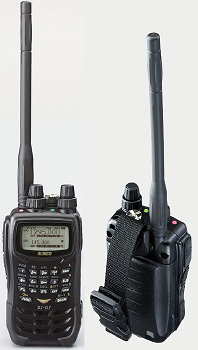
The equivalent of a normal 2m 'rubber-ducky' antenna when built for 2200m would be over 600' tall, while one designed for 630m would be around 170' high! A 2" stub used on your 2m hand-held would be the same as a 56' vertical on 630m. Consequently, most LF / MF backyard antennas will realize efficiencies of less than 1% and likely, quite a bit less.
In order to reach the maximum radiated power levels allowed usually requires several hundreds of watts, especially on 2200m, where near kilowatt levels are needed. These small radiated power levels might seem discouraging but they don't account for radio's great equalizer ... propagation. More than anything else, RF loves to radiate, and at times, what can be achieved on these bands with such low effective radiated powers is stunning
It would seem that Industry Canada did us no favors when they stipulated LF / MF power levels to be measured in EIRP and not the, much easier to calculate, DC power input level ... or perhaps they did. I think that, unlike on HF, imposing EIRP rather than DC input power limits puts everyone on an even playing field. Amateurs with lots of real estate and room for a larger, more efficient LF antenna, will be required to run much less power to reach the allowable EIRP and 'stay legal', compared to someone with a small backyard in the suburbs ... the latter can legally generate the higher level of DC input power required to reach the EIRP limits since their smaller antenna is operating at less efficiency. However, determining EIRP is not as cut and dried as measuring input power.
With some fairly sophisticated (ie. expensive) field strength measuring equipment, not typically found in amateur radio operations, ERP / EIRP can be readily determined. This means that for most amateurs, alternate methods must be used.
Neil, WØYSE in northern Oregon, who runs an experimental 630m station under the call of WG2XSV, has produced an excellent treatise on calculating your station's EIRP level, providing a step-by-step procedure to follow.
In order to determine your ERP / EIRP, you must first determine your antenna's radiation resistance. Two methods of calculating the antenna's radiation resistance for both verticals and top-loaded verticals (inverted L's or T's) are demonstrated, using the physical size of the antenna in relation to the frequency of operation. Once this value is known, the antenna current is measured while transmitting. These two values allow the Total Radiated Power (TRP) to be calculated. The TRP is then multiplied by 3 to yield the EIRP or by 1.82 for ERP. Roughly speaking, 5W EIRP is the equivalent of 3W ERP. Thanks to Neil for this helpful resource.
An alternate method of roughly determining ERP / EIRP values is an interesting new online 'antenna simulator' at the 472kHz.org site. Using known physical sizes along with your ground quality description, the calculator will indicate what total power output is required to produce various levels of ERP and EIRP as well as expected antenna currents, at 472kHz. It's a good starting point if you are either planning a new antenna system or perhaps, repurposing an HF antenna such as an 80m inverted-L or an HF center-fed dipole for use on 630m.
There are also a number of online calculators, such as found here, that will indicate your ERP / EIRP value when you plug in your antenna's 'gain' figure along with your TPO value. Some of the better antenna modelling programs can produce estimates of your antenna 'gain' at 630m and from there it is a simple matter of calculating what power is needed to reach the legal level.
I'm sure there will be a lot more information and discussion about this topic once the LF and MF bands are released in the U.S.A. but in the meantime, calculating your ERP / EIRP levels is not as hard as it might initially seem ... and is likely accurate enough for most agencies overseeing amateur radio activities.
Steve McDonald, VE7SL, is a regular contributor to AmateurRadio.com and writes from British Columbia, Canada. Contact him at [email protected].
Ham College 16
Part one of our look at the Digital Modes.
1:05:29
George Thomas, W5JDX, is co-host of AmateurLogic.TV, an original amateur radio video program hosted by George Thomas (W5JDX), Tommy Martin (N5ZNO), Peter Berrett (VK3PB), and Emile Diodene (KE5QKR). Contact him at [email protected].
 Ham Radio Deluxe |
 W5SWL Electronics |
 Ham Radio Prep |
 KB3IFH QSL Cards  Hip Ham Shirts  HamRadioAuctions HamRadioAuctions Reliance Antennas Reliance Antennas Enigma Shop Enigma Shop |  morseDX  Ni4L Antennas  R&L Electronics R&L Electronics antennas.us antennas.us QRV QRV |
- Matt W1MST, Managing Editor
