 |
 Really cheap cheap BM-800’s!
 21 May 2016 | by
 The price proved so irresistable, I decided to purchase another pair and they arrived boxed with all the accessories within a couple of days of clicking the mouse:
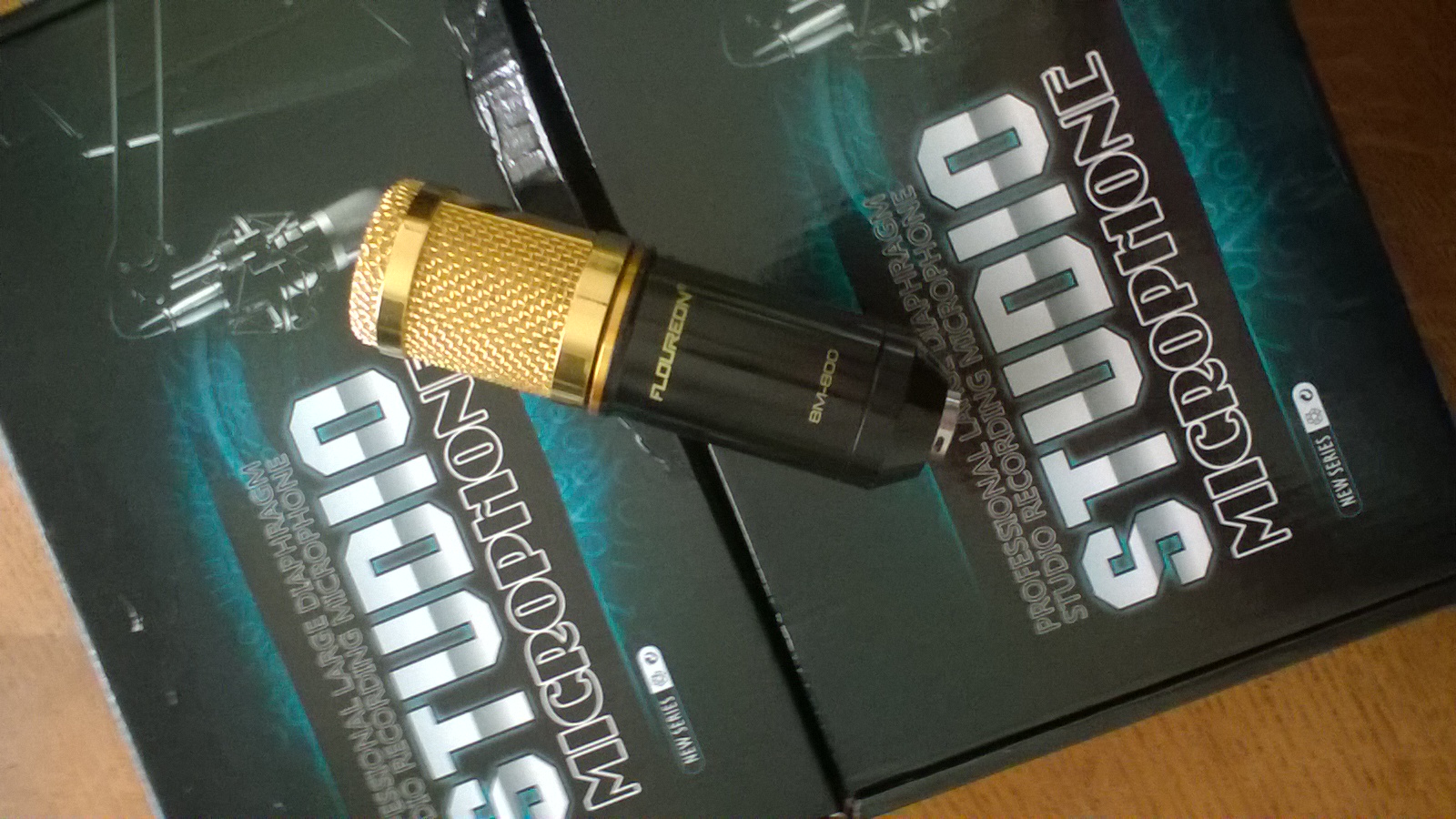
Really the price is so stupid, you could fill the cupboard with a load. If you make a mistake with the mods or a slip with the soldering iron you are not going to end up red faced or feel it on your pocket. The G4IZH project is now really viable for a club, to get your heads together, purchase a load and have a modification night.
Link to seller here.
* Please note this is a UK seller and I don't know if they ship internationally? I have no connection with this company only to spread you Amateurs with the news.
Steve, G1KQH, is a regular contributor to AmateurRadio.com and writes from England. Contact him at [email protected].
Out on the trail with the KX3
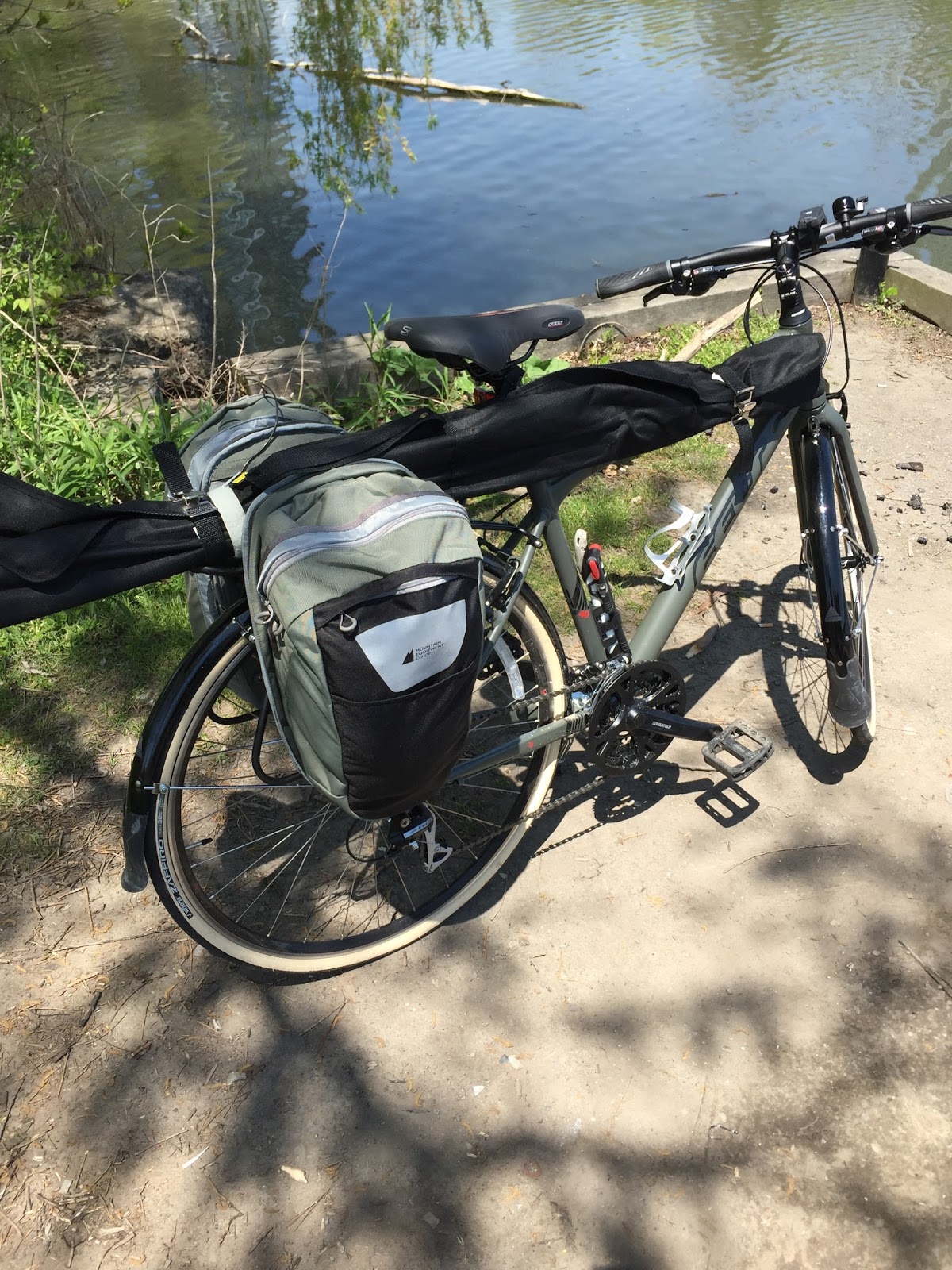 |
| The bike all loaded up |
After loading up the bike the first thing I found out was the kick stand on the bike would not support the bike and the loaded side bags. It turned out to be a fine balancing act when it
 |
| Diamond K400 mount |
Here is a list of the items I am packing:
KX3-on it's own with no Pelican case
Extra battery just in case- The Tracer battery pack
18 gauge counter poise- only for 20m at this time
Pens, paper and 3x5 cards with programming Kx3 instructions
Headphones- I don't use ear buds as my hearing is not that great and any noise around me tunes out CW.
Trunk lip mount base for antenna- Diamond K400
Miscellaneous items- antenna connectors, adjustable wrench, tire repair kit for bike, hat, sunglasses and so on.
Lets get to the trail adventure..........I was able to bike to one of my pre picked spots down at the Lake where a nice size picnic table was available. The antenna mount setup worked great on the bikes rear rack which I mounted back at the condo in case there was issues. I attached the counter poise via a male female 14 gauge connectors. The rig setup was straight forward as I have done this many times in the past. I fired up the rig and I wanted to see at this point if the counter poise was sufficient for a decent SWR and it was. BUT after
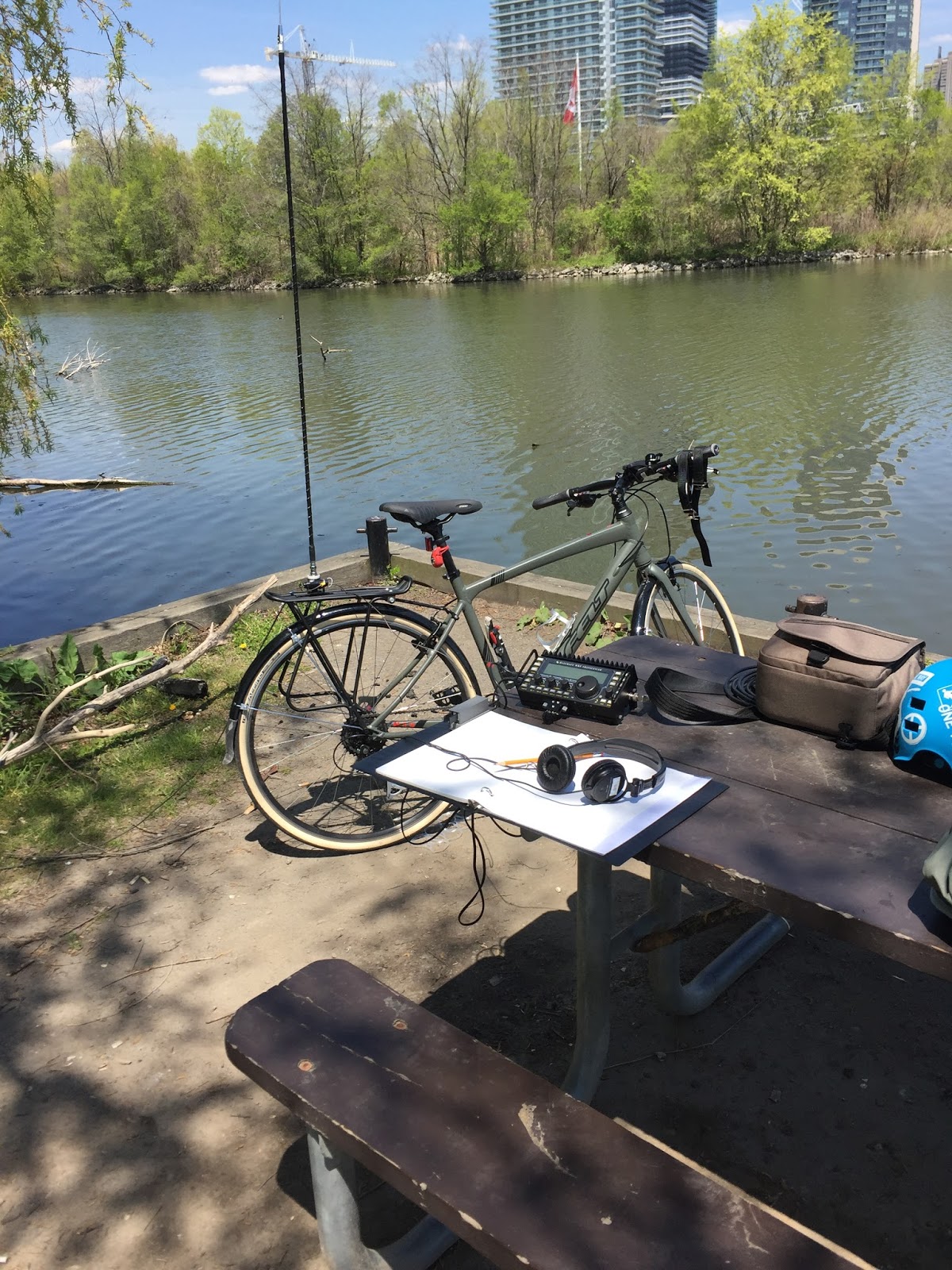 |
| The setup |
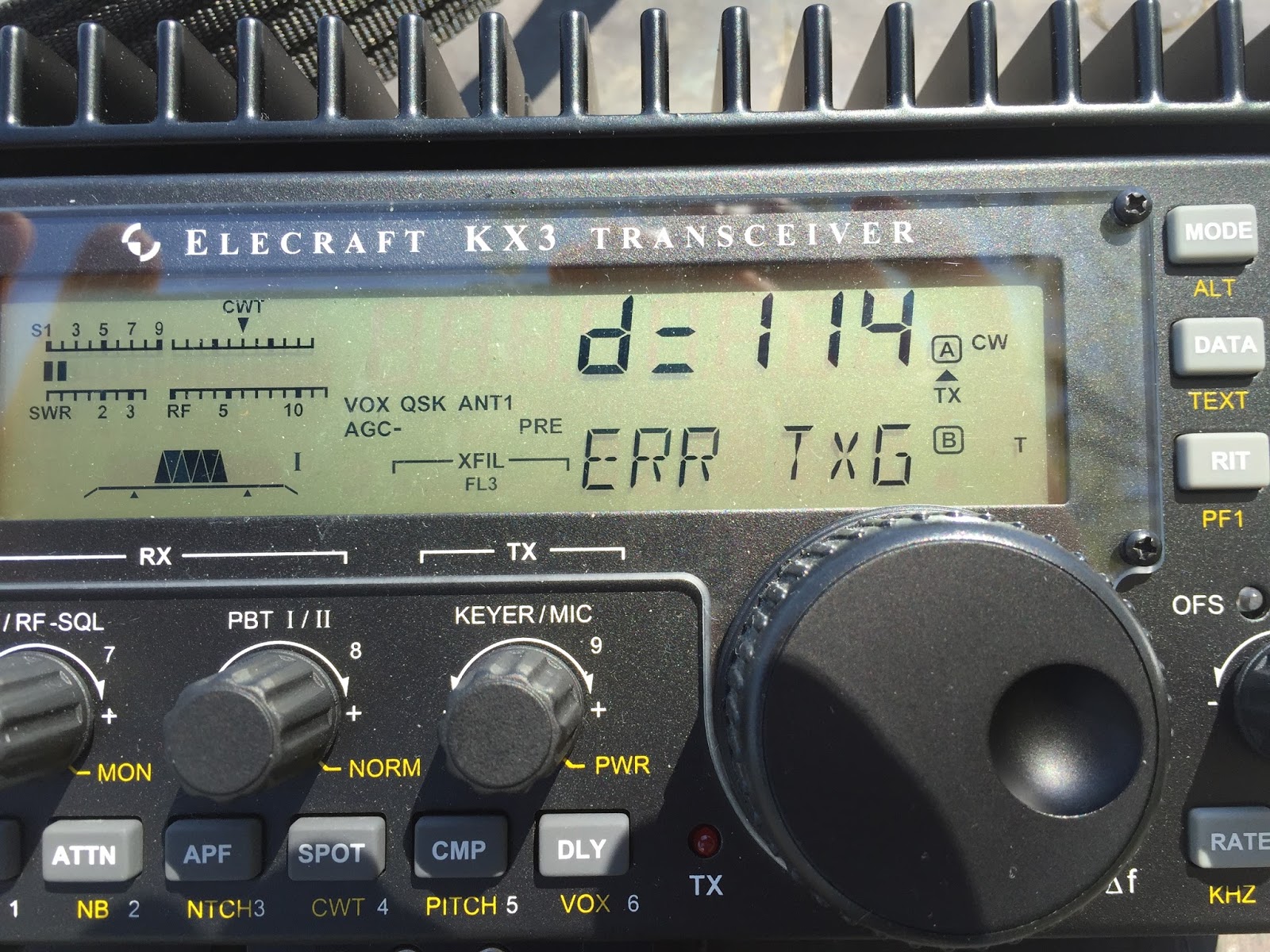 |
| The surprise error code |
Mike Weir, VE9KK, is a regular contributor to AmateurRadio.com and writes from New Brunswick, Canada. Contact him at [email protected].
Amateur Radio Weekly – Issue 112

New D-STAR HT from Kenwood
Tri-band, D-STAR, APRS included. Rumors of August availability at $600.
AmateurRadio.com
New Yaesu FT-891 mobile HF rig
It covers 30kHz to 56MHz on receive and transmits in the amateur bands from 160m to 6m with 100W output.
QRP Blog
HamRadio360 interviews Elecraft co-founder, discusses new KX2
Elecraft gives first peek into the new KX2 transceiver.
HamRadio360
[PDF] Elecraft KX2 brochure
Elecraft
[PDF] Elecraft KX2 data sheet
Elecraft
[PDF] Elecraft KX2 FAQ
Elecraft
Video: KX2 in action for SOTA activation
Elecraft KX2 and KX3 Transceivers in action, side-by-side
WG0AT
DV4home announced, supports D-STAR, DMR, dPMR & P25
The DV4home features direct Internet transceive mode using the microphone and the external speaker.
Wireless Holdings
Uniden announces DMR support for its flagship scanners
Uniden has announced that its flagship BCD436HP and BCD536HP HomePatrol series scanners will soon support DMR monitoring.
VA3XPR
Dayton Hamvention AMSAT demonstration plans
A special demonstration on SO-50 will take place during the 12:19pm (16:19 UTC) pass on Saturday May 21st.
AMSAT
Hackaday at Hamvention
The main purpose of my visit is to document the immense swap meet. There will be over a thousand vendors hocking their wares, from antique radios to gauges and other electronic paraphernalia.
Hackaday
ARRL CEO want to hear from you at Dayton
ARRL CEO Tom Gallagher, NY2RF, said he’s looking forward to hearing in person from ARRL members when he makes his inaugural appearance at Hamvention.
ARRL
DX Engineering announces new acquisitions
DX Engineering has acquired exclusive rights to Clifton Laboratories’ ham radio product line, and it has purchased TW Antennas.
ARRL
Experience Hamvention remotely
Check out some of the webcasts that will emanate from Hara Arena during the big show.
ARRL
NPOTA activations while bound for Dayton
En route to the 2016 Dayton Hamvention, I’m doing a few National Parks On The Air (NPOTA) activations with my my buddy, Eric (WD8RIF).
The SWLing Post
CubeSats with Amateur Radio payloads deploy from ISS
The Slow Scan Television (SSTV) satellite STMSat-1, built by Elementary students at Saint Thomas More Cathedral School (STM), was deployed along with the pair of NODES CubeSats built by students at Santa Clara University.
AMSAT UK
Television signal DXing
Would pristine digital signals make it harder to find unusual stations? And with so many TVs offering digital channel-scanning functionality, would the heavy tweaking so often needed to bring a channel to life eventually make TV DXing impossible?
Motherboard
habhub: Complete high altitude ballooning software tool set
Tracking system, predictor, car chase apps, SSDV, more…
habub
Ham Radio Mesh Networks – fun and fulfilling
The concept is to take commercial off-the-shelf technology and re-purpose it into a mesh data network.
AmateurRadio.com
Amateur Radio Weekly is curated by Cale Mooth K4HCK. Sign up free to receive ham radio's most relevant news, projects, technology and events by e-mail each week at http://www.hamweekly.com.
Kenwood D-STAR tri-band handheld
Reports from Dayton are that Kenwood has a D-STAR tri-band handheld under glass in the booth, along with colorful brochures. None of my sources are reporting on price or availability, and the documents all show “Tentative”. Never the less, this news along with the development going on within the dv4 group are pretty exciting!
— KF7IJZ (@KF7IJZ) May 20, 2016
UPDATE: Tom KJ9P on the ground in Dayton reports that the model name and number haven’t been published yet, but it should be available by year end with an MSRP between $500 and $700.
I also had a D-STAR conversation with Tony N8NNX as he was walking the floor at Hamvention regarding the dv4mobile product. His inquires came back also with a 2016 availability date and prices between $800 and $1000.
Michael Brown, KG9DW, is a regular contributor to AmateurRadio.com and writes from Illinois, USA. Contact him at [email protected].
Kenwood D-STAR tri-band handheld
Reports from Dayton are that Kenwood has a D-STAR tri-band handheld under glass in the booth, along with colorful brochures. None of my sources are reporting on price or availability, and the documents all show “Tentative”. Never the less, this news along with the development going on within the dv4 group are pretty exciting!
— KF7IJZ (@KF7IJZ) May 20, 2016
UPDATE: Tom KJ9P on the ground in Dayton reports that the model name and number haven’t been published yet, but it should be available by year end with an MSRP between $500 and $700.
I also had a D-STAR conversation with Tony N8NNX as he was walking the floor at Hamvention regarding the dv4mobile product. His inquires came back also with a 2016 availability date and prices between $800 and $1000.
Michael Brown, KG9DW, is a regular contributor to AmateurRadio.com and writes from Illinois, USA. Contact him at [email protected].
Lightwave Madness
 |
| The 288 km path courtesy: REAST |
One of the local lightwave builders, Mark (VA7MM), brought my attention to some outstanding lightwave work conducted several years ago, by a group of very dedicated amateurs in Tasmania.
A pair of articles describes their successful attempts to send signals, via cloudbounce, over the astounding distance of 288km (180mi), crossing Bass Strait between the north Tasmanian coast and southern Australia.
What did it take to transmit lightwave signals over such a distance? Basically a system similar to the ones recently employed in our own local lightwave experiments but on a grander scale ... much grander!
The receiver is based on one of the KA7OEI designs, with modifications to increase its sensitivity. The receiver, and several other designs, can be found on Clint's website here, probably the best source of information on amateur lightwave available anywhere.
 |
| The lightwave receiver courtesy: REAST |
 |
| The 10mm x 10mm rx APD courtesy: Hamamatsu |
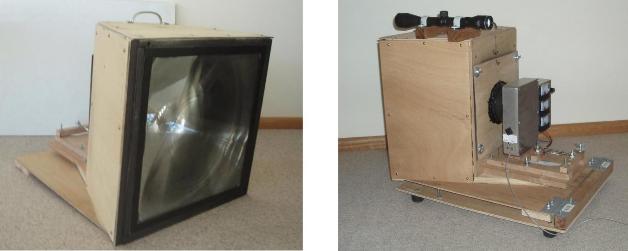
The transmitter was also big, consisting of an array of 60 red Luxeon III LED's, similar to the Red Rebel Luxeons used in our own local tests. Each LED had its own 12cm square fresnel lens, heatsink and method of focusing. Certainly this was a mammoth project, by amateur lightwave standards.
 |
| The 60 LED TX array courtesy: REAST |
Earlier long-haul tests out to 209 km used the digital JT65 mode for signal decodes but the 288 km test used a fairly esoteric weak signal mode called WSC built on the Spectrum Lab software. This mode is capable of digging almost 20 db deeper into the noise than JT65, down to almost -50db.
An in depth description of the two long-haul events, including equipment schematics, can be found in "288 km Cloudbounce from Tasmania to the Australian Mainland" and in "209 km with Narrow Beamwidth Transmitter".
The 288 km crossing project evolved over several years and is all very well documented, from the first early steps, at the Radio and Electronics Association of Southern Tasmania's (REAST) website here.
This adventuresome project was largely the work of VK7MO, VK7JG, VK3HZ and VK7TW. Their work is most inspiring and much can be learned from seeing what they discovered when transmitting into the cloudy nighttime skies.
Such an endeavour as this makes the local, much shorter Georgia Strait crossing, seem like a cake-walk, but I can't imagine using anything that big and bright here without causing trouble ... it would probably appear much too 'laser-like' to talk one's way out of a jam. Pointing anything resembling a laser light into the air these days is simply begging for trouble.
I can however, envision a scaled-down version, perhaps consisting of an array of four Luxeons ... at least on my end of the path, but even pointing one of those from the city could be problematic. Perhaps any NLOS lightwave attempts across Georgia Strait will need to be well away from Vancouver and its two-million sets of eyes.
Steve McDonald, VE7SL, is a regular contributor to AmateurRadio.com and writes from British Columbia, Canada. Contact him at [email protected].
Project collaboration
During my working life I collaborate with a large groups on multiple sites and we do stuff together. When I am attempting a radio projects I take on a different tack. I attempt to be either an expert in many things or I follow sets of instructions slavishly. Most of the time it takes a long time and there are numerous failures or dead ends along the way. I’m not sure why I do this.
There are many websites that will offer support to the frustrated builder or keen expert. But few that offer hobby collaboration (or at least I haven’t looked too hard but a quick trawl didn’t really yield much). I wonder why that is? A probably misquoted quote goes along the lines of ‘Travel alone, travel fast. Travel together, travel further’. You could argue that sites such as forums offer support and collaboration by using a project management analogy, I can not agree with that. Tasks are not identified, resources are not defined and task durations are not agreed. Expertise is sought, sometimes this results in no responses.
A local ham was at the centre of a project that has now become a major SDR rig. He worked from home, in the evenings with a group spread around the world. They have developed a really astounding product that is now sold as part of the Apache Labs brand. Why is this approach not prevalent?
I’m not offering a solution, just a question. Does a place exist or am I right in assuming that there are some international superstars that produce lots of ‘things’ from 3D designs through to circuit boards and kits that hobbyists use? I think there ought to be a place where we can go to collaborate. I just don’t know where it is or how to engage with it….yet.
Alex Hill, G7KSE, is a regular contributor to AmateurRadio.com and writes from Cumbria, UK. Contact him at [email protected].
 Ham Radio Deluxe |
 W5SWL Electronics |
 Ham Radio Prep |
 KB3IFH QSL Cards  Hip Ham Shirts  HamRadioAuctions HamRadioAuctions Reliance Antennas Reliance Antennas Enigma Shop Enigma Shop |  morseDX  Ni4L Antennas  R&L Electronics R&L Electronics antennas.us antennas.us QRV QRV |
- Matt W1MST, Managing Editor
