 |
 The Baofeng Experience
 6 August 2016 | by
 Last week I cleared the dust out of my blog and podcast websites and briefly discussed ordering the Baofeng UV5RA HT from Amazon. While this model was released several years ago, Amazon has them available brand new for $26.06. This includes the HT, charging stand and hands-free kit. Here’s the link to the Amazon product page for the Baofeng UV5RA HT.
I guess it’s been several years now since these cheaper (I guess less expensive might be the more PC way of describing these) Chinese made hand-held radios came onto the market here in the US. Fellow hams began showing these off at local club meetings and I began reading reviews of these radios on various amateur radio blog sites from around the world.
For the most part, the opinions expressed all seemed to have a common theme around pricing, ease of use and durability/reliability. Many viewed the low cost of ownership to be favorable over any durability issues. I guess the idea of use it, abuse it and toss it comes to mind. I also seem to remember a strong sentiment of “steer clear” when discussing these units.
I could see all sides of the argument. But I also fully understand some folks just getting into the hobby may be on a limited budget and may not have the resources to afford the latest and greatest from ICOM, Kenwood or Yaesu. As time went by, I really didn’t hear complaints regarding the durability/reliability of the radios. But certainly most everyone I spoke to all said that the programming of the radio was often a challenge and the provided user manual was of little to no help.
As for me and my reasons for not entertaining the idea of these cheaper Chinese made radios all boiled down to the fact that I really didn’t need another HT. I already own more HT’s than I have hands, so I just didn’t see the need.
So what changed?
Last week I was thinking about future topics to discuss on the Practical Amateur Radio Podcast and was researching just how many different HT models were available and the price range. This research led me to all the usual amateur radio dealers as well as a quick check of Amazon. I simply searched for Baofeng and that’s when the UV5RA popped up. With my Amazon Prime membership and a $3.00 credit, I could actually get this HT home for less than $25.00. Deal!
I decided I would gain some first hand experience with at least one of these cheaper Chinese made HT’s and share my knowledge with all of you reading this blog and later on the podcast.
Reverse Bait and Switch???
So my package shipped from Amazon as expected and was delivered on Saturday. I opened the package and inspected the contents. Immediately I noticed something was different.
If you look at the Amazon product page for the Baofeng UV5RA you’ll see the photo below. This is the Baofeng UV5RA. However, the HT shipped to me looked nothing like this.

Instead of receiving the UV5RA (as shown above), I received the UV-82 (shown below).

Initially I was slightly upset. We’ve ordered a lot of items from Amazon. While this was my first amateur radio purchase, it was also the first time I didn’t receive exactly what I believed I ordered. However, after doing a little more research I discovered the following:
First, while the Amazon store page for the Baofeng UV5RA doesn’t match what I actually received. If you carefully read the product description, under the section “What’s in the Box?” you’ll see the Baofeng UV-82 listed.
Second, from what I understand…the UV-82 is an upgraded (newer) Baofeng hand-held. If I read this Baofeng product comparison chart correctly, the UV-82 includes an updated PCB, commercial grade case and other enhancements as compared to the UV-5R models.
Third, the UV-5RA is a 4 watt model with the UV-82 offering 5 watts output.
Did I get what I paid for? Well…not really….but advantage appears to be all mine. I can’t guarantee what will happen if you order the same model I ordered…but from all appearances you’ll also receive the UV-82. Just no guarantees. Alternatively, you can purchase the UV-82 via Amazon (listed as UV-82) for $28.80. It’s a few dollars more than what is listed on the UV5RA product page, but you’ll be guaranteed to receive the UV-82 if that is the model you desire.
How I plan to use the new radio
Before I go into my initial thoughts/review/feedback (what ever you want to call it), I think I should clarify exactly how I plan to use this new Baofeng UV-82 transceiver.
This radio is not replacing anything I currently own. My main go-to HT is the Yaesu VX-8 which I have the GPS module installed. I also own an older Yaesu VX-6 (which I should probably sell) and also the ICOM IC-92 D-STAR HT which I also rarely use.
I actually plan to program a few local repeaters, simplex and NOAA weather frequencies into the Baofeng and leave it at my office. For less than $25.00 I am really just considering this a weather radio that will do a little bit more.
Initial Thoughts
I’ve had the UV-82 now a few days and feel comfortable in sharing some of my initial thoughts on just what I think of this radio. I’ll break my thoughts down under a few different categories.
Over all Design
The overall design of the radio (my opinion) is fine. The radio fits nicely in my hand (not too small, not too big). It sort of reminds me of an older Nokia cell phone from the time when cell phones weren’t smart.
Channel Mode/Frequency Mode
If I’m honest, I really dislike having to power the radio off to switch from channel mode back to frequency mode. While it’s simple enough, just hold down the Menu button while you switch on the radio. All my other HT’s have a button which toggles between the two modes. However, as previously stated…this radio will be programmed with a few local repeaters, simplex and NOAA weather frequencies. For the most part, the radio will be used to listen to weather information from the national weather service.
Case Quality
While I’ve not taken a hammer to the case (nor do I plan to) and I’ve not performed a drop comparison from the top of my building (I don’t plan to do that either). The overall case quality appears to match that of my Yaesu rigs. As I’ve previously stated, the radio fits nicely in my hand. It’s easy to grip and the included belt clip has a nice firm spring. While I don’t plan to use this HT as I use my Yaesu, I also wouldn’t have an issue clipping this onto my belt or pack and heading down the trail.
Stock Rubber Duck Antenna
What’s In Your Rubber Duck? Well this was answered by Bob, KØNR and I would highly recommend reading his excellent review where he reveals the “inner workings” of several popular stock rubber duck antennas (including the Baofeng UV-5R).
But what can really be said about ANY stock rubber duck antenna? Regardless if the radio brand is Yaesu, ICOM or Baofeng, you will greatly improve the radio by installing an aftermarket antenna. I use the Diamond SRH77CA on my Yaesu VX-8 and it works great. But at the moment, I have no plans to replace or upgrade the Baofeng rubber duck.
Screen
The LCD screen on the UV-82 is slightly smaller than what I’m used to on the Yaesu VX-8. But to be honest, if I don’t have my reading glasses with me 24×7 these days…and the screen size doesn’t rival the Dallas Cowboys Jumbotron, I’m not able to see anything.
Dual PTT functionality
The UV-82 features dual PTT switch functionality. This is a bit odd (compared to my other HT’s). I suppose in time I will get used to it.
FM Broadcast Band
If this is something you care about, the UV-82 features a button on the side which switches the radio to the FM Broadcast band.
Built in Flashlight
If you are in the need of a hand-held amateur radio transceiver WITH a built-in flashlight, then the UV-82 is the rig for you. A conveniently placed button on the side will turn on/off the flashlight.
User manual
This is the radios weakest link and is perhaps not worth the paper they used to print it. It could be written in Chinese and even non-Chinese speakers would obtain as much knowledge by reading it.
But seriously, the entire user manual is 29 pages long. Not one page actually covers how to program the radio. Thankfully YouTube exists and many others before me figured it all out and shared their knowledge.
Ease of Programming
The UV-82 offers 182 different channels which can be programmed (once you figure out how to program them). Unfortunately, Baofeng (in their infinite wisdom) pre-programmed 20 channels (1-21). As you can’t edit a pre-programmed channel, you’ll need to delete these which can be done one-by-one in the menu.
While I believe it might be a daunting task for any brand new ham (or soon-to-be brand new ham) to sit down with an HT, User Manual and Repeater Directory and successfully program the radio. The Baofeng (unfortunately) really makes it impossible. This is part of what I was talking about during the Practical Amateur Radio Podcast (episode 70). As I’ve always recommended the Nifty Ham Radio Guides for ALL radios, I think it is a must have for the Baofeng.
Alternatively, if the UV-82 is going to be your primary hand-held and you’ll want/need to reprogram often. I would highly recommend purchasing the programming software and cable from RT Systems. While I don’t plan to purchase the the cable/software for the Baofeng, I do own the software and cables for all my other rigs.
In Summary
While I’ve not discussed each and every feature/benefit of the Baofeng UV-82 in this blog article. I’ve identified a few key areas which I’ve discovered and most importantly have feedback/opinions on regarding. More importantly, as I’ve previously mentioned…I don’t plan to heavily use this radio. But having said that, I also wouldn’t have an issue with clipping it to my belt and heading down the trail either.
The opinions within our hobby of what makes a great first radio for a beginning ham are strong. Some are pro the HT and some are against the HT. If you are just starting out in our wonderful hobby, on a tight budget and looking to pickup a radio which won’t break the budget and allow you to enjoy the hobby…then I certainly recommend the Baofeng UV-82. After all, the package contains everything (transceiver, antenna and power source) you’ll need to get on the air. Get your ham radio license and join the fun of the worlds best hobby.
Until next time…
73 de KDØBIK (Jerry)
Jerry Taylor, KD0BIK, is a regular contributor to AmateurRadio.com and writes from Colorado, USA. He is the host of the Practical Amateur Radio Podcast. Contact him at [email protected].
Amateur Radio Weekly – Issue 123

For those 4 weeks we’ll run a best-of series of articles. ARW will return in full on September 10th.
Please follow along my sabbatical journey and get a few more NPOTA entities in the log!
Hamvention announces venue for 2017
The Greene County Fair & Exposition Center will be the new home of the Dayton Hamvention.
Hamvention
Hamvention: The Fairgrounds
First and foremost, if you had worries about parking space, relax.
KE9V
NPOTA activation of The White House today
Members of the Great South Bay ARC have obtained a permit from the National Park Service to operate from President’s Park
AMSAT
Public Communications Network: What you need to know
There has been a lot of online chatter about how the public communications network (i.e., “the phone company”) fits into off grid ham radio and survival/prepping plans.
Off Grid Ham
DXpedition ethics
My first ethical quandary came in 2009 when I was fund-raising for our 2010 YI9PSE DXpedition.
N6PSE
Weak signal volume levels
One of the best and most simple noise reductions is to lower the volume.
VE7SL
Elecraft KX3 cardboard desk stand
It’s easy to make, cheap, useful and environment friendly.
SP7Q
History of the capacitor, the pioneering years
I liken it to the pioneering days of aviation when you made your own planes out of wood and canvas and struggled to leap into the air.
Hack A Day
FCC levies $25,000 fine for deliberate interference
The FCC has imposed a $25,000 fine on William F. Crowell, W6WBJ (ex-N6AYJ), of Diamond Spring, California, for intentionally interfering with the transmissions of other radio amateurs.
ARRL
Video
RTL-SDR stock antenna teardown and vna measurements
The antennas are as expected and pretuned to the DVB-T TV band at around 500 – 600 MHz.
RTL-SDR.com
Russian Woodpecker becomes drone playground
Duga was a Soviet over-the-horizon radar system that operated from July 1976 to December 1989.
YouTube
Amateur Radio Weekly is curated by Cale Mooth K4HCK. Sign up free to receive ham radio's most relevant news, projects, technology and events by e-mail each week at http://www.hamweekly.com.
The New VK4YB 630m Transverter
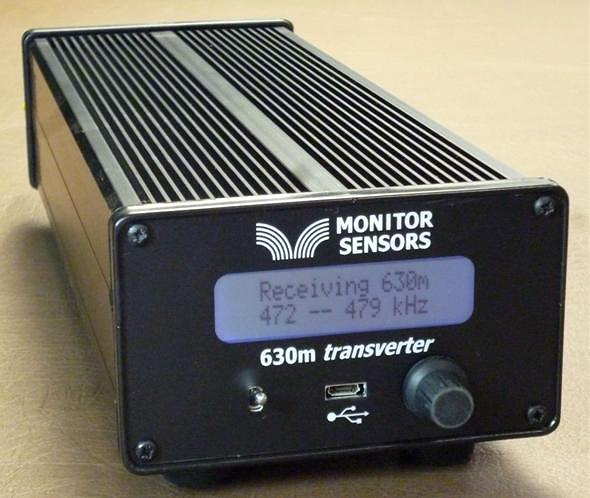
Now that beta testing is complete, production units are now ready for distribution from Monitor Sensors, a family environmental-sensor manufacturing company of which Roger is Governing Director.
The introduction of the VK4YB 630m Transverter presents another new option for those wishing to get on the band, or in the case of American amateurs, to get prepared for the band ... soon expected to be implemented in the U.S.
When I first started using the test unit provided, I was immediately impressed with how simple it was to set up and to get operational. It sits inconspicuously beside the main station's transceiver, taking up less space than the typical station speaker unit.
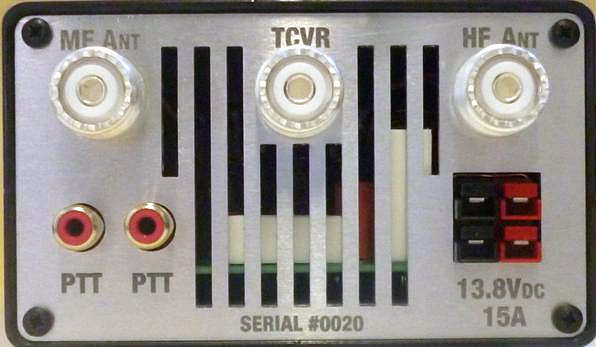
One usually associates 'transverter' operation with a rat's-nest of cabling or re-cabling to accommodate the new addition. The transverter arrived with all necessary cabling, even a nice Anderson power pole connector to connect the user-supplied 12V power source. A second pair of 12V contacts is also available for sharing with other station needs. One feature that I quickly appreciated was the dual RCA jack on the rear panel for controlling the transverter's PTT keying line. With my transceiver's PTT line already being used for another purpose, it was simply a matter of plugging-in (cable supplied) and sharing the line with the second jack ... no need for unplugging or using an external adapter to split the PTT line. Switching from 630m to normal HF operation is simply a matter of turning the transverter 'off' ... all HF operations are back to normal with antenna routing taken care of. There appears to be a lot of thoughtful engineering packed into this little box.
A look under the hood shows a well-planned and efficient use of space as seen in this pre-production prototype shown below. If Collins Radio were to manufacture a 630m transverter for the military, I can't imagine it being any better than this!
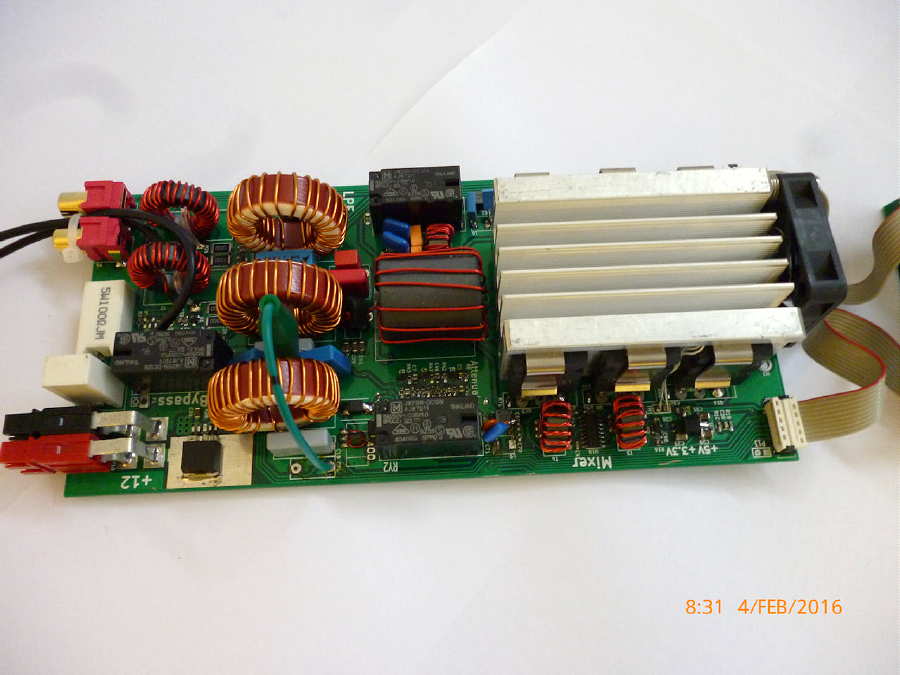 |
| prototype board under test |
"... we carefully match the FETs into three pairs. Each pair is matched to its opposite number but the pairs are chosen so 2 have low gain, 2 have mid gain and 2 have high gain. This improves the IPs and also the harmonics. With matched FETs we are getting the 2nd harmonic at typically -60dB. That's 10dB better than the stringent FCC requirement."
Roger's unit is running at 16 volts and produces 90W output, with his 630m WSPR signal being the one most often heard in North America from down under.
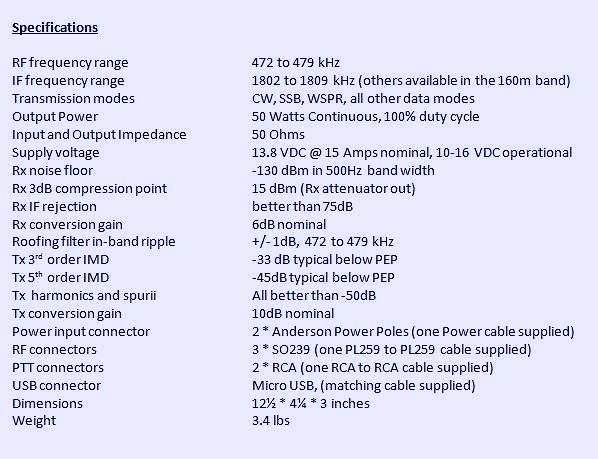
The transverter's multi-colored screen combines with a multi-function menu, allowing a visual on-screen display of numerous parameters such as RF output power, DC supply voltage and current draw, SWR, exciter drive power, heatsink temperature, graphic SWR display and various warning screens.
The transverter requires 3-5 watts of 160m drive from the station transceiver for full output power. Built-in safety circuits prevent overdrive from causing any damage. Similarly, transmitting into a high SWR or with no antenna connected is no cause for concern. Temperature sensors will trigger shutdown should the heatsink rise above 100 degrees C. Software also prevents out-of-band transmission.
This is a microprocessor controlled linear-transverter. This means that operating system software can be readily updated (via the supplied micro USB cable) as new features are implemented. It also means that any mode your transceiver is capable of operating on can be produced on 630m. At present, the most popular modes on the band are WSPR, CW and JT9 but I suspect this order may change once the band is opened up in the U.S.
A shortened eight-page Operator's Manual can be downloaded from the Monitor Sensors web site but units will ship with a more comprehensive 22-page manual. For more information regarding pricing and shipping, please contact Monitor Sensors here. For technical questions, please contact Roger here.
Steve McDonald, VE7SL, is a regular contributor to AmateurRadio.com and writes from British Columbia, Canada. Contact him at [email protected].
Review – BTech UV-50X3 (Tri-Band)
by John ‘Miklor’
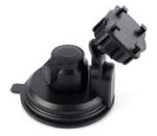
Included with the radio are: 50X3 Weight: Main Chassis 2.1kg (4.6 lbs) Specifications The 50X3 is FCC Part 90 certified for commercial use in the US. Control Head The suction mount is about the best I’ve ever used. It requires a smooth metal or glass surface, but the silicon rubber cup will not let loose. My control head has been mounted atop my computer for over a month, and it is going nowhere. The button functions are displayed on the LCD screen for easy function identification. The PTT button on the upper right is for Momentary or Toggle PTT. One press turns the TX on, next press turns it off. Setting to Toggle is convenient if running a net or using a mobile headset. 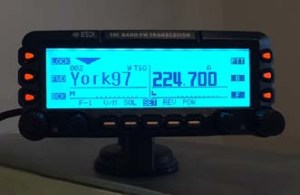 Cooling The 220 ham band transmit range is limited to 222-225MHz. The receiver is capable of being programmed above and below those frequencies, but may be outside of the performance range due to the ham band specific filtering.
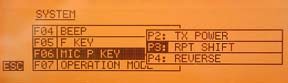
Microphone The radio comes with a full function keypad style microphone. On the right side are two slide switches that control the Lock and Lamp feature, and on top of the microphone are two frequency Up and Down buttons. Along with a 16 button DTMF style keypad are 4 programmable function keys. Choices are Squelch Off, TX Power, Rptr Shift, Reverse, and Tone Call. There are two microphone input jacks. One on the control head, the other on the main unit. There is also a built in microphone element inside the control head. Although the audio quality is excellent, the sensitivity is that of a standard microphone. The OTA reports were excellent with plenty of audio, so there’s no reason to shout. A nice feature in the audio section is an adjustable microphone gain control. There are 5 settings available. Min, Low, Normal, High, and Max. Normal is great for speaking in a normal volume an inch from the microphone. Running a net with VOX and a headset, you can bring it up a bit. Driving in an off road vehicle, you just might need to set it back.
Receiver Along with the standard VHF / 220 / UHF frequencies, the receiver covers: 0.5-1.7 MHz (AM Radio) The control head has built in speakers, as well as one in the main module. An external speaker jack in the rear also allows for a larger speaker if desired. The jack provides for either mono or stereo output. (each receiver can have it’s own speaker). I found a menu setting to adjust the tone of the speaker as well. Although there is more than ample audio output, when the volume control is all the way down, the radio is silent, as it should be. Cross Band Repeat The radio takes full advantage of the independent receiver by including a Cross Band Repeat function. I entered the VHF and UHF frequencies, power level and tones, selected the Cross Band mode, and was ready to go. The audio levels are preset and the audio quality reports were excellent. Cross band repeating using a 220MHz frequency was not possible. This is more than likely a precaution due to the minimal frequency separation. Display The control head has a large 5″ LCD with your choice of background colors. Options include White-Blue, Sky-Blue, Marine-Blue, Green, Yellow-Green, Orange, Amber, and White. The brightness and contrast are also menu selectable.
Unless you are only entering a few channels, I would recommend the optional PC05 programming cable. The UV-50X3 uses the CHIRP programming software. Scanning in the VFO mode allowed me to scan either the VHF, 220MHz, or UHF band. In the Channel mode, the scan would select any channel in the list regardless of band. Power Cable There are radios that draw less power whose power cables use thinner wire, lower value fuses, and can be plugged into accessory plugs. Do NOT use these cables, even though they may be plug compatible. The 50X3 draws twice the current, and will blow the fuses and possibly overheat the wire. The cable on the 50X3 appears to match that of the hi-power Yaesu, Icom, Kenwood series. ONLY use the proper cable for the radio. Base Station Operation For mobile drive testing, I teamed this radio with a Nagoya Tri-Band TB320A and SB-35 NMO mag mount and the results were excellent. Conclusion Some of the added advantages to the US market are the FCC Part 90 certification, local US support, and exclusive program support using CHIRP software. The radio can also be shipped worldwide by contacting BTech directly. This is definitely one of the nicest mobile transceivers I’ve used; and yes, I’ve owned the “big 3”.
More Information: Miklor.com |
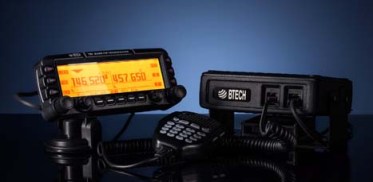
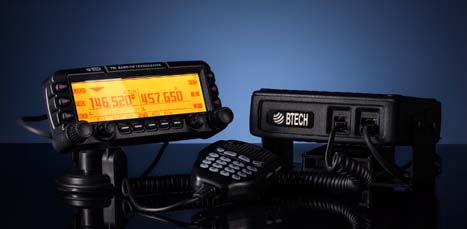 Four years after its initial design, the VGC 6600PRO has evolved into the BTech UV-50X3, a full featured Tri-Band mobile that delivers a full 50W on VHF and UHF, with addition of a 220 MHz module that delivers 5W output. The 220 MHz module was specifically designed and filtered for 222-225MHz US ham band operation. I mention this as there are currently radios being advertised as Tri-Band operating in the range of 240-260MHz that are not adaptable to frequencies below 240MHz due to their internal filtering.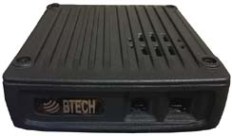




Hans, PD0AC, is a regular contributor to AmateurRadio.com and writes from Almere, The Netherlands. Contact him at [email protected].
USB Ports: Gray, Blue, Yellow, or Red?
Did you know that the different colored USB ports on your computer aren’t just for decoration? That the colors actually mean something?
What? You’ve just been plugging USB cables into whichever port is most convenient? What a rookie mistake! 🙂
Well, some ports are a whole lot better than others, and some even do cool things that you probably didn’t know about.
Gray/Black USB Ports
 These are your run-of-the-mill USB 1.0/2.0 ports. They have throughput ranging from 1.5 Mbit/s to 480 Mbit/s in later versions.
Blue USB Ports
 These are newer USB 3.0 ports. They range from 5 Gbit/s (USB 3.0) to 10 Gbit/s (USB 3.1). These are the better choice for devices that require faster speeds.
Yellow (or Red) USB Ports
 These are called “sleep-and-charge” ports, meaning that they continue to supply power even when the computer is sleeping. This makes it convenient to charge a phone or tablet from your laptop battery.
Just as a side note, I’ve had computers that required me to enable this feature in settings before it would work.
Note: Most of the time white USB ports are USB 1.0, but some manufacturers use them for USB 3.0 ports.
So, next time you go to plug in a USB device that requires fast throughput, double check that you’re using the fastest port available on your computer!
Matt Thomas, W1MST, is the managing editor of AmateurRadio.com. Contact him at [email protected].
Activation Alert: WØC/FR-030 (Chief Mountain)–3569m / 11709ft
Date: 7 August 2016
Time: Approx. 1500 UTC – 1800 UTC
Region: CO-Front Range
Elevation: 3569 m / 11,709 ft – 6 Points
Call Sign: KDØBIK
Frequencies: 14.342.5-ssb, 18.157.5-ssb, 28.327.5-ssb, +/- 147.42-fm
Equipment: Elecraft KX3 / Buddipole versatee vertical & Yaesu VX-8 / Elk Log-Periodic Antenna
APRS Track: On Road / On Trail
Can you believe it? It’s been almost four years since my last Summits on the Air activation. I’ve really missed it. The last SOTA activation was a multi-activation of both Chief Mountain (yes, I’m repeating) and the nearby Squaw Mountain (WØC/PR-082).
Of course the really big news is not the fact that I’m doing my first SOTA activation in almost four years, it truly is the fact that this year is the 25th Annual Colorado 14er Radio Event. A few years ago the event was slightly modified to also include all the SOTA summits which of course are not always 14,000 foot summits.
While band conditions in recent days have been really poor, the fact my operating position will be almost 12,000 feet in altitude is of course encouraging me to go ahead and pack all my gear. So I do plan to setup for HF operations, but I will also spend more time (more time than usual) working hams on neighboring peaks on 2m and 70cm FM frequencies.
At the present time, 23 hams have posted their plans for operating over the two day weekend. I’m sure over the next 24-36 hours even more will post their intentions.
I’m really looking forward to combining my love of hiking, radio and even geocaching (there is a geocache on the summit of Chief). Please point your antennas towards Colorado this weekend. I hope to work you from the summit of Chief Mountain WØC/FR-030.
Until next time…
73 de KDØBIK (Jerry)
Jerry Taylor, KD0BIK, is a regular contributor to AmateurRadio.com and writes from Colorado, USA. He is the host of the Practical Amateur Radio Podcast. Contact him at [email protected].
Activation Alert: WØC/FR-030 (Chief Mountain)–3569m / 11709ft
Date: 7 August 2016
Time: Approx. 1500 UTC – 1800 UTC
Region: CO-Front Range
Elevation: 3569 m / 11,709 ft – 6 Points
Call Sign: KDØBIK
Frequencies: 14.342.5-ssb, 18.157.5-ssb, 28.327.5-ssb, +/- 147.42-fm
Equipment: Elecraft KX3 / Buddipole versatee vertical & Yaesu VX-8 / Elk Log-Periodic Antenna
APRS Track: On Road / On Trail
Can you believe it? It’s been almost four years since my last Summits on the Air activation. I’ve really missed it. The last SOTA activation was a multi-activation of both Chief Mountain (yes, I’m repeating) and the nearby Squaw Mountain (WØC/PR-082).
Of course the really big news is not the fact that I’m doing my first SOTA activation in almost four years, it truly is the fact that this year is the 25th Annual Colorado 14er Radio Event. A few years ago the event was slightly modified to also include all the SOTA summits which of course are not always 14,000 foot summits.
While band conditions in recent days have been really poor, the fact my operating position will be almost 12,000 feet in altitude is of course encouraging me to go ahead and pack all my gear. So I do plan to setup for HF operations, but I will also spend more time (more time than usual) working hams on neighboring peaks on 2m and 70cm FM frequencies.
At the present time, 23 hams have posted their plans for operating over the two day weekend. I’m sure over the next 24-36 hours even more will post their intentions.
I’m really looking forward to combining my love of hiking, radio and even geocaching (there is a geocache on the summit of Chief). Please point your antennas towards Colorado this weekend. I hope to work you from the summit of Chief Mountain WØC/FR-030.
Until next time…
73 de KDØBIK (Jerry)
Jerry Taylor, KD0BIK, is a regular contributor to AmateurRadio.com and writes from Colorado, USA. He is the host of the Practical Amateur Radio Podcast. Contact him at [email protected].
 Ham Radio Deluxe |
 W5SWL Electronics |
 Ham Radio Prep |
 KB3IFH QSL Cards  Hip Ham Shirts  HamRadioAuctions HamRadioAuctions Reliance Antennas Reliance Antennas Enigma Shop Enigma Shop |  morseDX  Ni4L Antennas  R&L Electronics R&L Electronics antennas.us antennas.us QRV QRV |
- Matt W1MST, Managing Editor
