
RFinder Lifetime Membership

Some very welcome news popped into my inbox this morning from my friend Bob Greenberg, W2CYK.  Bob is the owner and founder of RFinder the Worldwide Repeater Directory.  

I had the opportunity to meet Bob via social media many years ago when RFinder first launched and have been a fan and supporter of RFinder ever since.  I even discussed RFinder in episode 55 of the Practical Amateur Radio Podcast back in May of 2012.  

For several years I used the ARRL repeater directory along with their TravelPlus digital version to search for and program my transceivers.  While this solution worked very well, it was limited to just the ARRL database.   For the traveling ham, this meant being at the mercy of the internet to find information on repeaters in the region and countries visited and this information was not always accurate.

In the time I’ve known Bob and been a user of RFinder, it’s grown to become a truly worldwide solution with partnerships with many national radio societies including the Radio Society of Great Britain, Amateur Radio Society Italia, Deutscher Amateur Radio Club, Radio Amateurs of Canada and the American Radio Relay League (just to name a few).  Finally, the current database contains current and validated repeater information from over 175 countries. 

RFinder the Worldwide Repeater Directory is available in app form for both the iOS and Android platforms and is also supported by both RTSystems and CHIRP radio programming software.  Normally the cost for an annual subscription is $9.95 USD, but for a VERY limited time an RFinder Lifetime Membership is available for $99.99 USD.   When I say VERY limited time, I truly mean this offer will not last long.  It’s a very good deal.

Until next time…

73 de KD0BIK (Jerry)


Jerry Taylor, KD0BIK, is a regular contributor to AmateurRadio.com and writes from Colorado, USA. He is the host of the Practical Amateur Radio Podcast. Contact him at [email protected].

RFinder Lifetime Membership

Some very welcome news popped into my inbox this morning from my friend Bob Greenberg, W2CYK.  Bob is the owner and founder of RFinder the Worldwide Repeater Directory.  

I had the opportunity to meet Bob via social media many years ago when RFinder first launched and have been a fan and supporter of RFinder ever since.  I even discussed RFinder in episode 55 of the Practical Amateur Radio Podcast back in May of 2012.  

For several years I used the ARRL repeater directory along with their TravelPlus digital version to search for and program my transceivers.  While this solution worked very well, it was limited to just the ARRL database.   For the traveling ham, this meant being at the mercy of the internet to find information on repeaters in the region and countries visited and this information was not always accurate.

In the time I’ve known Bob and been a user of RFinder, it’s grown to become a truly worldwide solution with partnerships with many national radio societies including the Radio Society of Great Britain, Amateur Radio Society Italia, Deutscher Amateur Radio Club, Radio Amateurs of Canada and the American Radio Relay League (just to name a few).  Finally, the current database contains current and validated repeater information from over 175 countries. 

RFinder the Worldwide Repeater Directory is available in app form for both the iOS and Android platforms and is also supported by both RTSystems and CHIRP radio programming software.  Normally the cost for an annual subscription is $9.95 USD, but for a VERY limited time an RFinder Lifetime Membership is available for $99.99 USD.   When I say VERY limited time, I truly mean this offer will not last long.  It’s a very good deal.

Until next time…

73 de KD0BIK (Jerry)


Jerry Taylor, KD0BIK, is a regular contributor to AmateurRadio.com and writes from Colorado, USA. He is the host of the Practical Amateur Radio Podcast. Contact him at [email protected].

Hand-carried QRP antennas VK3YE
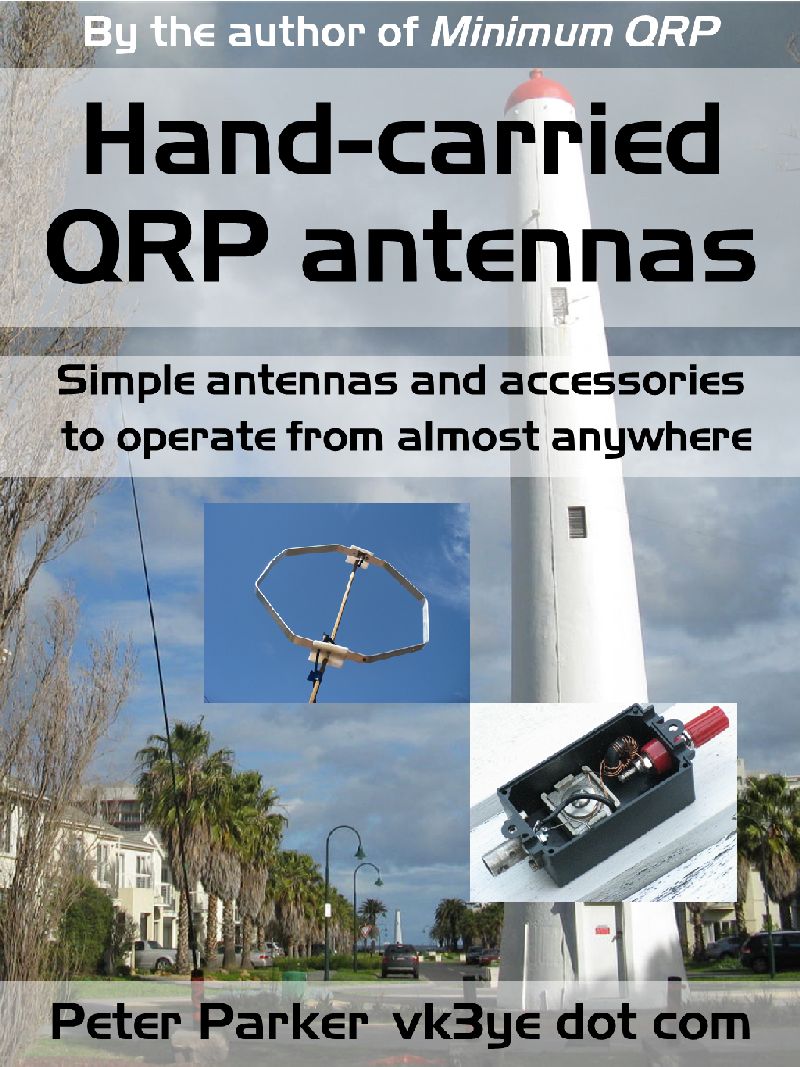
The maestro of the Ham video VK3YE has written his 2nd ebook for the kindle. Peter kindly sent me the details as below:


Summary of Hand-carried QRP antennas


Whether through choice or circumstance, more radio amateurs than ever before are enjoying portable operating. 

Suitable equipment is widely available but what about antennas?  Manufactured antennas exist but only some suit lightweight portable activity.  And, it’s easy to overpay for something that’s too heavy and too lossy for successful QRP.  

Hand-carried QRP antennas takes the mystery out of portable antennas.  After inviting you to assess your needs, it discusses the pros and cons of popular types.  Its style is brisk and practical with almost no maths.

Many ideas for cheap but good materials suitable for portable antennas are given.   Beginners and those returning to radio after a break should especially find this section handy. 

Finally there’s construction details on a variety of simple but practical antennas and accessories suitable for portable operating.  All have been built and tested by the author over almost 30 years of successful QRP activity.  

Hand-carried QRP antennas is an ebook readable on most devices.  It’s the author’s second book, following on from the top-selling Minimum QRP, released in 2015. 


ABOUT THE AUTHOR

Peter (mis?)spent his youth at rubbish tips, taking apart given radios and TVs and building electronic projects that mostly did not work.  He avoided soldering until figuring out that new solder works better than reusing solder from terminal strips in valve radios.  

Milestones included the construction of a crystal set in 1980, discovering shortwave broadcasting on a valve receiver in 1981 and a simple ‘electronic organ’ in 1982 from a Dick Smith Fun Way book.  Hours were spent putting wires into springs on a Tandy 150-in-1 electronics set.  Amazingly some wires could be pulled out and the project would still sort of work with only half the parts in circuit. 

Two back to back AM/shortwave radios led to the discovery of amateur SSB activity and a novice licence in 1985.  The following year was spent building transmitters no one heard.  A one valve crystal controlled CW transmitter from the 1973 ARRL Handbook provided the first contacts – mostly CW/SSB crossmode on the 3.579 MHz TV colour burst crystal frequency.   The value of frequency agility was an early lesson and various VFOs were built, most of them drifty.  

The 1990s brought more bands, more modes and smaller gear.  Projects included a 7 MHz VXO CW direct conversion transceiver, 2m FM portable transceiver, and a 14 MHz CW transmitter for Cycle 22, then near its peak.  Later favourites included HF DSB and SSB transceivers (often using ceramic resonators, ladder crystal filters, NE602s and BD139 transistors) and phasing SSB equipment.  

Limited space led to experiments with magnetic loops and HF pedestrian mobile.  The joys of the latter (along with the perils of a trailing counterpoise) were first discovered with a converted Johnson Viking CB on 28 MHz.  This was mounted in a carpeted chipboard box with battery and 1.5 metre whip.  A move to a bayside suburb brought further HF portable and pedestrian mobile activity which remains an interest to this day. 


 More details from the VK3YE website http://home.alphalink.com.au/~parkerp/handqrp.htm


Steve, G1KQH, is a regular contributor to AmateurRadio.com and writes from England. Contact him at [email protected].

Hand-carrried QRP antennas VK3YE

The maestro of the Ham video VK3YE has written his 2nd ebook for the kindle. Peter kindly sent me the details as below:


Summary of Hand-carried QRP antennas


Whether through choice or circumstance, more radio amateurs than ever before are enjoying portable operating. 

Suitable equipment is widely available but what about antennas?  Manufactured antennas exist but only some suit lightweight portable activity.  And, it’s easy to overpay for something that’s too heavy and too lossy for successful QRP.  

Hand-carried QRP antennas takes the mystery out of portable antennas.  After inviting you to assess your needs, it discusses the pros and cons of popular types.  Its style is brisk and practical with almost no maths.

Many ideas for cheap but good materials suitable for portable antennas are given.   Beginners and those returning to radio after a break should especially find this section handy. 

Finally there’s construction details on a variety of simple but practical antennas and accessories suitable for portable operating.  All have been built and tested by the author over almost 30 years of successful QRP activity.  

Hand-carried QRP antennas is an ebook readable on most devices.  It’s the author’s second book, following on from the top-selling Minimum QRP, released in 2015. 


ABOUT THE AUTHOR

Peter (mis?)spent his youth at rubbish tips, taking apart given radios and TVs and building electronic projects that mostly did not work.  He avoided soldering until figuring out that new solder works better than reusing solder from terminal strips in valve radios.  

Milestones included the construction of a crystal set in 1980, discovering shortwave broadcasting on a valve receiver in 1981 and a simple ‘electronic organ’ in 1982 from a Dick Smith Fun Way book.  Hours were spent putting wires into springs on a Tandy 150-in-1 electronics set.  Amazingly some wires could be pulled out and the project would still sort of work with only half the parts in circuit. 

Two back to back AM/shortwave radios led to the discovery of amateur SSB activity and a novice licence in 1985.  The following year was spent building transmitters no one heard.  A one valve crystal controlled CW transmitter from the 1973 ARRL Handbook provided the first contacts – mostly CW/SSB crossmode on the 3.579 MHz TV colour burst crystal frequency.   The value of frequency agility was an early lesson and various VFOs were built, most of them drifty.  

The 1990s brought more bands, more modes and smaller gear.  Projects included a 7 MHz VXO CW direct conversion transceiver, 2m FM portable transceiver, and a 14 MHz CW transmitter for Cycle 22, then near its peak.  Later favourites included HF DSB and SSB transceivers (often using ceramic resonators, ladder crystal filters, NE602s and BD139 transistors) and phasing SSB equipment.  

Limited space led to experiments with magnetic loops and HF pedestrian mobile.  The joys of the latter (along with the perils of a trailing counterpoise) were first discovered with a converted Johnson Viking CB on 28 MHz.  This was mounted in a carpeted chipboard box with battery and 1.5 metre whip.  A move to a bayside suburb brought further HF portable and pedestrian mobile activity which remains an interest to this day. 


 More details from the VK3YE website http://home.alphalink.com.au/~parkerp/handqrp.htm


Steve, G1KQH, is a regular contributor to AmateurRadio.com and writes from England. Contact him at [email protected].

ICQ Podcast Episode 218 – Having Fun with Morse Code

In this episode, Martin M1MRB / W9ICQ is joined by Leslie Butterfield G0CIB, Edmund Spicer M0MNG and Matthew Nassau M0NJX to discuss the latest Amateur / Ham Radio news. Colin M6BOY rounds up the news in brief, and this episodes feature is Having Fun with Morse Code.

  • Radio Amateurs Facing Unnecessary Restrictions
  • Wireless World Magazine Archive
  • Switched-Mode PSU Jams Communications
  • US Air Force to Improve HF Communications
  • Symbol Rate Discussion Open Until October
  • IRTS Free New Member Offer
  • 4m Ham Radio Band for Australia?

Colin Butler, M6BOY, is the host of the ICQ Podcast, a weekly radio show about Amateur Radio. Contact him at [email protected].

ICQ Podcast Episode 218 – Having Fun with Morse Code

In this episode, Martin M1MRB / W9ICQ is joined by Leslie Butterfield G0CIB, Edmund Spicer M0MNG and Matthew Nassau M0NJX to discuss the latest Amateur / Ham Radio news. Colin M6BOY rounds up the news in brief, and this episodes feature is Having Fun with Morse Code.

  • Radio Amateurs Facing Unnecessary Restrictions
  • Wireless World Magazine Archive
  • Switched-Mode PSU Jams Communications
  • US Air Force to Improve HF Communications
  • Symbol Rate Discussion Open Until October
  • IRTS Free New Member Offer
  • 4m Ham Radio Band for Australia?

Colin Butler, M6BOY, is the host of the ICQ Podcast, a weekly radio show about Amateur Radio. Contact him at [email protected].

100mW’s of raw power!!
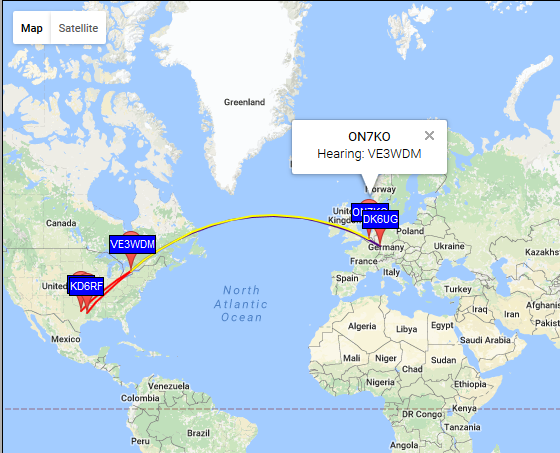
The other evening I was having a cup of tea and checking out my new QST that just arrived and found myself very interested in a piece written by Steve Ford in his column Eclectic Technology. The title caught my eye "When a signal is barely a WSPR" Steve looked at how the Raspberry Pi could be used for WSPR transmissions. Seeing I have the Raspberry Pi3 this sparked my interest. It was pointed out that all you need to turn your Pi into a WSPR transmitter is a board from TAPR called QRPi.  The board is offered at a very reasonable price of 29.00 U.S and it's set for 20m at 100mW. Before I got to excited about this little project  I wanted to see if using 100mW's would net me any results. I have seen other hams in the past net great results with far less than 100mW's and WSPR is known for it's great decode at very low power........BUT.......I do have a challenging setup here. On Friday late afternoon I gave WSPR a go on 20m at 100mW and was I impressed with the results. I was received by DK6UG for a distance of 39383 miles per watt and also ON7KO for a distance of 37285 miles per watt. I was amazed that my setup was able to produce those results! Now another question I wanted to consider is at 100mW how much of that actual power makes it to my antenna? To do this I referred to a coax calculator I punched in the type of coax (RG8X) the SWR (1.4:1) the length (30 feet)  the frequency (14) and finally the power (100mW) The calculated amount I was informed was 92mW of raw power! So this bumped my miles per watt to 42810 for DK6UG and 4053 for ON7KO! It's not timo look more into the TAPR project!!

Mike Weir, VE9KK, is a regular contributor to AmateurRadio.com and writes from New Brunswick, Canada. Contact him at [email protected].

Subscribe FREE to AmateurRadio.com's
Amateur Radio Newsletter

 
We never share your e-mail address.


Do you like to write?
Interesting project to share?
Helpful tips and ideas for other hams?

Submit an article and we will review it for publication on AmateurRadio.com!

Have a ham radio product or service?
Consider advertising on our site.

Are you a reporter covering ham radio?
Find ham radio experts for your story.

How to Set Up a Ham Radio Blog
Get started in less than 15 minutes!


  • Matt W1MST, Managing Editor












