 |
 This Spewed Out of the Internet #33
 6 December 2016 | by
  Here’s some more good stuff flowing forth from the interwebz.
HamRadioNow has a video of Laura Smith’s (FCC) talk at Pacificon. There’s lots of good info here on FCC enforcement activity. Gary KN4AQ produces some of the most valuable amateur radio video content on the web. How else are you going to see someone from the FCC speak about ham radio?
Sterling/NØSSC and Marty/KC1CWF have started the Phasing Line ham radio podcast, talking ham radio with a younger person’s perspective. They are on episode two…give them a listen. Look for them on the usual podcast feeds, or go here: n0ssc.com
I was interviewed by Eric/4Z1UG on QSO Today. Yeah, probably boring as heck but you’re reading this blog so your standards must not be very high.
The ARRL is cranking up an initiative to encourage collegiate ham radio clubs. Good idea.
DX Engineering visited the new venue (Greene County Fairgrounds) for the Dayton Hamvention. See DX Engineering visits the NEW 2017 Hamvention® venue and the drone video by Greg/W8WW that provides an aerial tour of the fairgrounds. I am looking forward to attending Hamvention next spring, the first time in many years.
Use Phonetics: HamRadioSchool.com republished their classic article on the use of phonetic alphabets. Also, take a look at my Shack Talk article on the same subject.
While reviewing the Technician license exam questions, I noticed that SWR is referred to as “2 to 1” or “1 to 1”. I see this as old school terminology…a ratio can be expressed as a single number: “my SWR is 2.” This triggered some discussion and a KB6NU blog posting.
That’s it for now. Happy interwebzing.
73, Bob K0NR
The post This Spewed Out of the Internet #33 appeared first on The KØNR Radio Site.
Bob Witte, KØNR, is a regular contributor to AmateurRadio.com and writes from Colorado, USA. Contact him at [email protected].
ARRL 160 / 630m DX
 |
| courtesy: http://www.arrl.org/ |
This weekend's ARRL 160m CW was a ton of fun.
Conditions were unusually good, which always makes things more interesting.
I ended up with 412 contacts in 78 out of 83 ARRL sections. If I was attempting a WAS on Topband, I would have made it to 48, missing just Nebraska and Rhode Island. Oddly enough, RI was my 50th state when I completed my original 160m WAS, back in 1984, which was certificate #225.
That was done from my tiny 33' wide suburban lot, using the same antenna that I have now, a half-sloper. My radials were strung around all four edges of the property line and just lay on the ground or were stapled to the fenceposts. The power came from a pair of 6146's and was just a little less than I used in the contest this weekend as I entered in the Low Power (150W) category ... however, back then it took me several winters to finish my Topband WAS as there was a lot less activity than there is nowadays it seems. The only other sections missed during the contest were Puerto Rico, Newfoundland and North New York.
With a fairly dormant Sun and the 'almost-quiet' geomagnetic conditions of late, good propagation continued into the week ... in fact, Sunday night was the best I have ever observed on 630m!
Such stable conditions here on the west coast always favor the east-west and polar paths and Sunday proved that in spades. Overall, 53 different stations reported reception of my 630m signal, more than any previous overnight period.
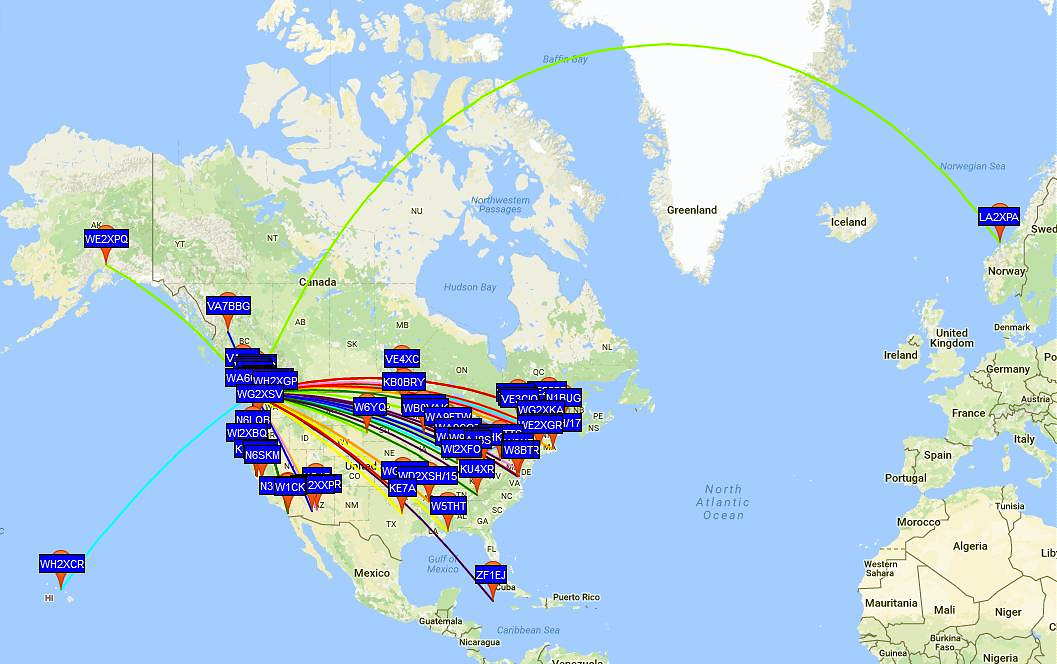
The highlight however, was the reception of my signal in Europe, with five decodes from LA2XPA on Kalvoya Island off the southwest coast of Norway. Rolf has an exceptional location and nice beverage antennas so most of the heavy-lifting was being done on his end. However, without the co-operation of the propagation gods, none of this would be possible. To make things even better, John, VE7BDQ, also made it across to Norway as his small station continues to perform amazingly well. As I mentioned in an e-mail earlier today, his is the textbook example of what can be done on 630m with a small suburban backyard, some homebrewing skills and a small antenna system.
 |
| courtesy: http://wsprnet.org/drupal/wsprnet/map |
The WSPRnet map shown here illustrates just how many folks are tuning in every night to this part of the spectrum ... with many getting instantly hooked. Hopefully this great propagation is just a small taste of what lies ahead for us over the next several years of low solar activity.
Steve McDonald, VE7SL, is a regular contributor to AmateurRadio.com and writes from British Columbia, Canada. Contact him at [email protected].
ARRL 160 / 630m DX
|
| courtesy: http://www.arrl.org/ |
This weekend's ARRL 160m CW was a ton of fun.
Conditions were unusually good, which always makes things more interesting.
I ended up with 412 contacts in 78 out of 83 ARRL sections. If I was attempting a WAS on Topband, I would have made it to 48, missing just Nebraska and Rhode Island. Oddly enough, RI was my 50th state when I completed my original 160m WAS, back in 1984, which was certificate #225.
That was done from my tiny 33' wide suburban lot, using the same antenna that I have now, a half-sloper. My radials were strung around all four edges of the property line and just lay on the ground or were stapled to the fenceposts. The power came from a pair of 6146's and was just a little less than I used in the contest this weekend as I entered in the Low Power (150W) category ... however, back then it took me several winters to finish my Topband WAS as there was a lot less activity than there is nowadays it seems. The only other sections missed during the contest were Puerto Rico, Newfoundland and North New York.
With a fairly dormant Sun and the 'almost-quiet' geomagnetic conditions of late, good propagation continued into the week ... in fact, Sunday night was the best I have ever observed on 630m!
Such stable conditions here on the west coast always favor the east-west and polar paths and Sunday proved that in spades. Overall, 53 different stations reported reception of my 630m signal, more than any previous overnight period.
The highlight however, was the reception of my signal in Europe, with five decodes from LA2XPA on Kalvoya Island off the southwest coast of Norway. Rolf has an exceptional location and nice beverage antennas so most of the heavy-lifting was being done on his end. However, without the co-operation of the propagation gods, none of this would be possible. To make things even better, John, VE7BDQ, also made it across to Norway as his small station continues to perform amazingly well. As I mentioned in an e-mail earlier today, his is the textbook example of what can be done on 630m with a small suburban backyard, some homebrewing skills and a small antenna system.
|
| courtesy: http://wsprnet.org/drupal/wsprnet/map |
The WSPRnet map shown here illustrates just how many folks are tuning in every night to this part of the spectrum ... with many getting instantly hooked. Hopefully this great propagation is just a small taste of what lies ahead for us over the next several years of low solar activity.
Steve McDonald, VE7SL, is a regular contributor to AmateurRadio.com and writes from British Columbia, Canada. Contact him at [email protected].
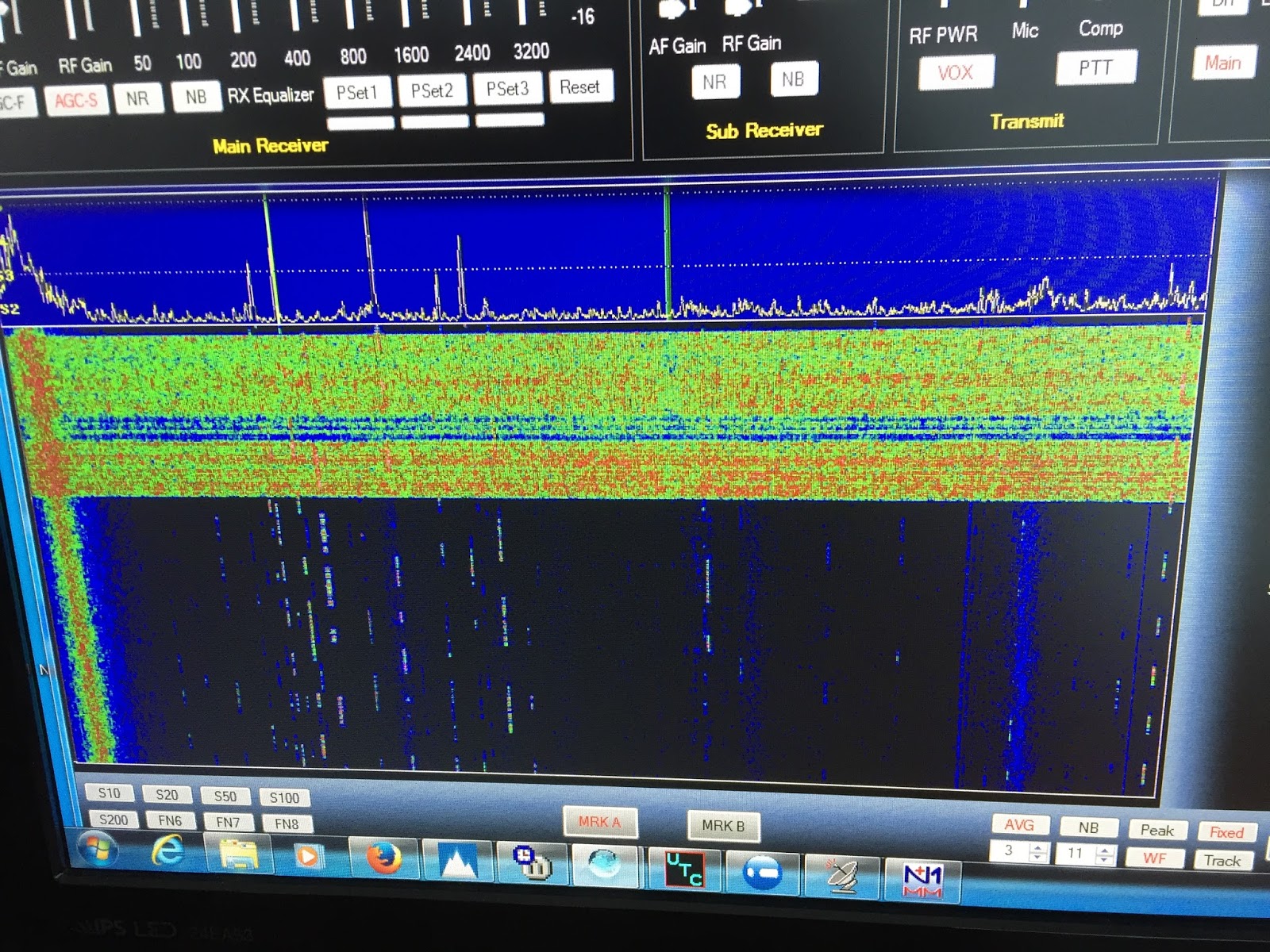
Is is wise to buy your wife an appliance for Christmas…..maybe!!
Mike Weir, VE9KK, is a regular contributor to AmateurRadio.com and writes from New Brunswick, Canada. Contact him at [email protected].
Is is wise to buy your wife an appliance for Christmas…..maybe!!
Mike Weir, VE9KK, is a regular contributor to AmateurRadio.com and writes from New Brunswick, Canada. Contact him at [email protected].
LHS Episode #179: Spinning the Cube
 In this episode, Linux in the Ham Shack discusses diverse topics including 915MHz operation, a new cube satellite, "smart" ham radio, a new Ubuntu distro with Budgie as the default desktop, games, ssh honeypots, a PHP-based logger and much more. Thanks for listening and all the best. Happy holiday season to all.
73 de The LHS Crew
Russ Woodman, K5TUX, co-hosts the Linux in the Ham Shack podcast which is available for download in both MP3 and OGG audio format. Contact him at [email protected].
Amateur Radio Weekly – Issue 136

SSTV active from ISS December 8-9
The SSTV images will be transmitted as part of the MAI-75 Experiment on 145.800 MHz FM using the Kenwood TM-D710 transceiver located in the Russian ISS Service module.
AMSAT UK
Last call to press for Senate passage of Amateur Radio Parity Act
The House of Representatives approved the bill in September, and the Senate must follow suit if the bill is to succeed.
ARRL
Hurricane Center on air for SKYWARN Recognition Day
WX4NHC at the National Hurricane Center in Miami will participate in SKYWARN Recognition Day (SRD) on Saturday, December 3.
ARRL
Santa Net 2016
Every year on 3916, we give good little boys and girls a chance to talk to Santa Claus at the North Pole!
The 3916 Nets
2 element dual-rectangle beam for 70cm
The antenna described here is a direct-connect dual-rectangle beam for use on 70 cm between 440 and 450 MHz.
jedsoft.org
Easy homemade Outernet antenna
An antenna for less than $1 total cost, doable without power tools and soldering, in less than 30 minutes.
Radio for Everyone
Emergency preparedness on the road
If it is required that I spend the night away from home for whatever the situation, I am prepared, as I carry all the required gear that will keep me safe if I become stranded.
VE6AB
A review of the Elecraft KX2 general coverage QRP transceiver
The KX2 is a feature-rich pocket QRP transceiver. For those who are familiar with the Elecraft product line, it’s like a KX3 (feature rich portable rig) in a KX1-sized (much smaller, handheld/pocket) package.
The SWLing Post
Looking back at Cycle 23
Cycle 23 was a much bigger cycle with higher sunspot numbers than Cycle 24.
NY4G
Disturbing the peace: Can America’s quietest town be saved?
There’s a town in West Virginia where there are tight restrictions on mobile signal, wifi and other parts of what most of us know as simply: modern life.
BBC
Special event
Members of the ‘Battleship Iowa Amateur Radio Association’ (BIARA) will be active as NI6BB between 1600-2359z on Wednesday, December 7th, in memory of the 75th anniversary of the attack on Pearl Harbor in 1941.
Southgate
Video
How to set up an Outernet receiver
Outernet continuously sends out useful data like weather reports, news, APRS data as well as files like Wikipeda pages, images, videos and books.
RTL-SDR.com
Amateur Radio Weekly is curated by Cale Mooth K4HCK. Sign up free to receive ham radio's most relevant news, projects, technology and events by e-mail each week at http://www.hamweekly.com.
 Ham Radio Deluxe |
 W5SWL Electronics |
 Ham Radio Prep |
 KB3IFH QSL Cards  Hip Ham Shirts  HamRadioAuctions HamRadioAuctions Reliance Antennas Reliance Antennas Enigma Shop Enigma Shop |  morseDX  Ni4L Antennas  R&L Electronics R&L Electronics antennas.us antennas.us QRV QRV |
- Matt W1MST, Managing Editor
