 |
 Amateur Radio Weekly – Issue 130
 22 October 2016 | by
A geosynchronous Ham Radio satellite
The satellite’s potential footprint could extend over the US from the Mid-Pacific to Africa.
AMSAT-UK
Is wind energy a good fit for you?
For the off grid Ham who wants to expand beyond solar, is wind energy the next likely step?
Off Grid Ham
Calling CQ: An email letter for amateur radio enthusiasts
The best editorial content promoting the hobby.
KE9V
Terminated inverted U antenna
I built the antenna using two 10m fishing poles spaced 5m apart.
Cross Country Wireless
Polite society on DMR
The wide area TG is kind of like meeting someone in the hallway or a noisy lobby. The “on-demand” TG’s are out the way places to go have a discussion without upsetting the hall monitors.
Digital Mobile Radio for Hams
ISS Columbus Ham Radio inoperative
The Ericsson VHF handheld transceiver in the ISS Columbus module which is used for amateur radio voice contacts on 144.800 MHz and the packet radio digipeater on 145.825 MHz is unusable.
AMSAT-UK
CW Decoder Logic
CW decoder app for Windows.
LY3H
/P fun in the sun
In total, I made 8 QSOs (all CW, at 10-watts) 6 on 40m and 2 on 20m in what were reasonable conditions.
M0PZT
A simple approach to VHF contesting
The tow bar mount is made from a few off cuts of 47mm x 100mm (or 2″ by 4″ if you prefer) and a piece of rough sawn timber.
G7KSE
Hams in India monitoring “Highly Suspicious” VHF communications
The signals were being heard in the dead of night, with participants reported to be in motion and speaking in some sort of code.
ARRL
Video
1 foot mini magnetic loop transmitting antenna
I decided to make a mini magnetic loop and see if I could be heard down on HF with a tiny antenna.
YouTube
SOTA Signals from Signal Butte
Steve/K7PX and Steve/wGOAT activate Signal Butte for Summits on the Air.
WG0AT
Amateur Radio Weekly is curated by Cale Mooth K4HCK. Sign up free to receive ham radio's most relevant news, projects, technology and events by e-mail each week at http://www.hamweekly.com.
Wishing Upon A Star
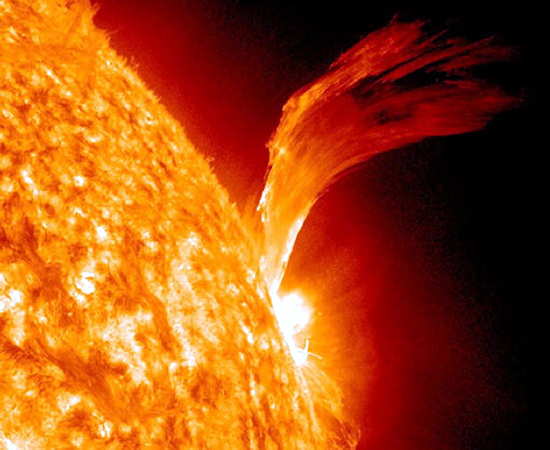
My love for radio began at an early age when I first started to tune the shortwave bands at age eleven. Little did I know then, that I was listening near the peak of the strongest solar cycle in recorded history, monster Cycle 19.
I thought that what I was hearing was normal for shortwave and that it would always be this way ... and it was, for a number of years.
As the solar cycle slowly declined, I began to take a deeper interest in propagation and its relationship with the Sun. After obtaining my licence and getting on the air, the reality set in with the arrival of a rather dismal Cycle 20. Following the vagaries of propagation became almost a hobby in itself, trying to correlate what I was observing with what the Sun was doing and even getting comfortable with predicting what might happen next.
It was particularly exciting during the stronger Cycles (21-23), to watch the dramatic effect of solar radiation on the F layer during the peak winter years of these cycles. With a major interest in 50MHz, watching the solar flux became a daily ritual, along with the fascinating daily rise of the F2 MUF as the Sun peaked over the horizon.
On normal mornings, around sunrise, the MUF would typically start close to 28MHz and slowly begin to rise over the next few hours. Often it would slow and settle-in between 38 and 42MHz, stay there for most of the day and then slowly recede as darkness approached.
I found myself looking forward to and wishing for more solar flares, along with the solar flux boost that inevitably followed.
On these mornings, the MUF would often be at 35MHz or higher, right at sunrise ... and begin climbing. Some days it would shoot-up like a rocket and in a matter of minutes would be at 50MHz or above, bringing thundering signals from the east coast not long after dawn. On other mornings it would climb much more slowly, receding and then advancing again, surging higher and then lower, as it teased its way towards the magicband. It was as if the ionosphere was a living breathing entity, as the solar radiation danced a slow tango with the critical frequency of the moment. Often it would stop at around 48 or 49MHz, stay there for several hours and then collapse ... no 6m excitement that day.
A nice bonus of watching this live interaction between the Sun and our ionosphere, was listening to the communications in the range between 28MHz and 50MHz as I followed the rising MUF. This was, and still is to a lesser extent, utilized on FM by paramedics, fire and police services throughout the U.S. It was not uncommon to hear mobile units enroute to an emergency, with sirens blazing in the background. Southern drawls usually meant that any 6m openings would begin in the southern states or the Caribbean, while Boston or New York accents, would herald an opening to New England or the possibility of trans-Atlantic openings to Africa or Europe. I became even more familiar with the daily interaction of the solar wind and how it affected radio ... and found it fascinating.
But just as the Sun affects propagation so positively, I was recently soberly reminded of how 'unfriendly' it can be ... as it has been in the past and will be again in the future. An article in this month's 'Astronomy', by Bob Berman, discussed threats to global welfare and in particular, a modern day repeat of the Carrington Event of 1859.
This was a double mega-flare and CME, taking only 19 hours to reach earth, compared to the normal 3-day trip. It was the strongest impact on earth ever recorded and one that will be repeated ... and is almost, statistically 'overdue', unless we dodged it in 2012 when a storm of similar magnitude missed the earth.
In Berman's words:
"What would a Carrington-level event do today, with our ubiquitous power lines, transformers, and more than a thousand operational satellites? In 2008, the U.S. government convened a panel of experts, who concluded that such a storm would completely destroy our electric grid. It would require two to 10 years to repair and cost about $2 trillion. We'd be knocked back to the stone age.
That panel panel called Carrington a "low frequency/high consequence" event - the kind humans typically ignore until it happens."
We quickly release how dependent on the hydro system we have become, when our power goes out for a few hours or even a day or two, following a severe weather event. Such an event is certainly 'inconvenient' but soon forgotten when the power returns. Going without power, and its trickle-down effects on our depended-upon infrastructures for several months or longer, would not be just 'inconvenient'. It would be a life-altering.
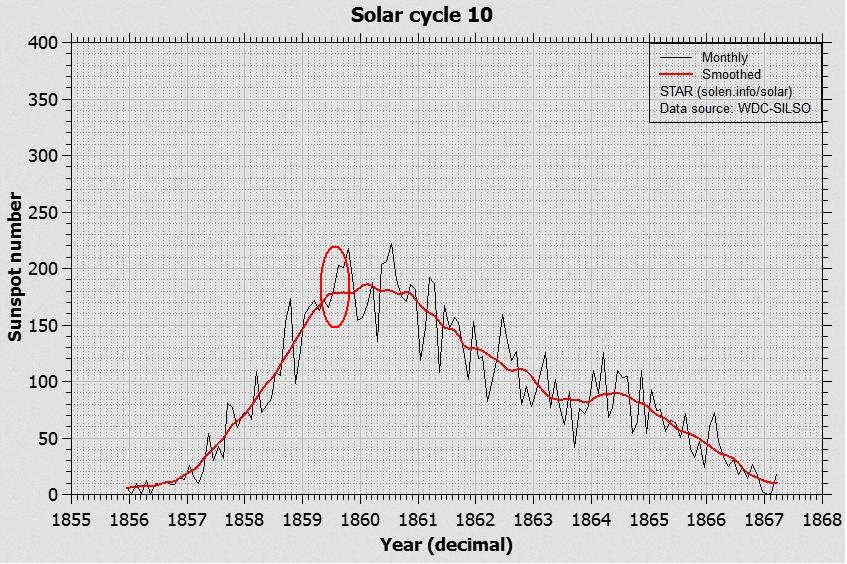 |
| courtesy: http://www.solen.info/solar/ |
Maybe I'd better stop wishing for flares.
Steve McDonald, VE7SL, is a regular contributor to AmateurRadio.com and writes from British Columbia, Canada. Contact him at [email protected].
Opportunity
A Maker Faire is a gathering of makers, essentially anyone who builds stuff such robots, electronics, clothes, tools, and equipment. It’s a very heterogeneous culture of people young and old, and includes do-it-youselfers (DIYs), teachers, engineers, scientists, hackers, and geeks. Think of Maker Faires as hamfests for makers. I attended Maker Faire New York City this year, my first Maker Faire. Think of Maker Faire NYC as the Dayton Hamvention of hamfests.

Any drive into The City, as we call it around here, is adventurous. This Faire was located at the New York Hall of Science (NYSCI) in Queens. You couldn’t park anywhere near the event, but there were numerous public mass transit options and two offsite parking areas with shuttle buses. We chose to park at Queens College and take the shuttle in.

The Faire consisted of mostly outdoor and some indoor exhibits, including ones that are part of NYSCI. I can’t do this event justice with the pictures I took, but there’s a pretty good slideshow on the Maker Faire site.

The most popular area, at least judging by the line of people awaiting to enter, was the Radio Shack booth, believe it or not. They had a build your own drone activity that people seemed to be falling all over themselves to get in. If only Radio Shack could get lines like this in their stores.
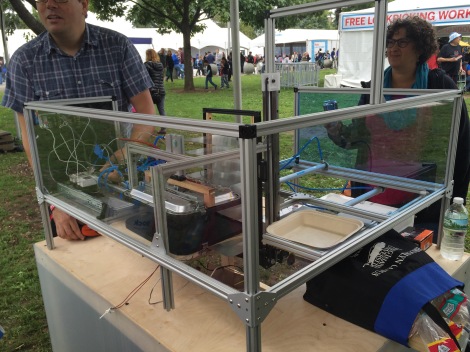
The coolest contraption in my humble opinion was a toasted cheese sandwich machine.
On the Faire map I was pleased to see an area labeled Amateur Radio. I donned my baseball cap embroidered with my callsign, normally reserved for the annual Dayton pilgrimage. The way the map was labeled, I expected to find a whole row of amateur radio stuff. There was one booth with two pop up canopies, manned by perhaps four hams. One side of the booth had a portable rig mounted in a plywood enclosure with some accessory boxes, perhaps a digital station. The other side of the booth had two tables with components and some kids soldering.
I want to be careful not to diminish or criticize the efforts of these amateurs and the organization they represented. After all, these guys made the effort and had an amateur radio booth (which is more than I can say for other organizations). But admittedly I was disappointed. I was really dismayed there weren’t more booths, especially considering the number of amateur radio operators there are in NYC, probably more in a five mile radius than I have in my entire rural county in PA. This is undoubtedly the largest gathering of people on the east coast who are interested in how things work, how to build things, and they’re smart people. Wireless for many makers is just a shield that you buy and plop on an Arduino or a USB dongle you plug into a Raspberry Pi. Amateur radio has so much to offer.
ARRL needs to have an exhibit at this event, in a big way, and not in the fashion they do at Dayton. There needs to be interactive hands-on displays by enthusiastic high energy amateurs. Not hardcore contesters or DXers, but amateurs who build stuff and can talk about practical applications that these makers can relate to and integrate into their existing projects and pursuits. Even CW displays would be interesting for this audience, it just needs to not be presented as a code proficiency course or a rite of passage, but something that is fun. Retro tech intrigues these people. Vacuum tubes would be considered cool by many makers, especially if you had some homebrew rigs built on plywood with filaments lit up and some RF meters dancing around or big old speakers crackling with the sounds of code or sideband coming from a direct conversion receiver. Fox hunts. This crowd would eat that up. Make a crystal radio with six components. There are plenty of high power AM stations in NYC that you can receive on a simple crystal radio. Kids holding Arrow antennas and listening to a satellite passing over. There’s just so much that could be done to showcase amateur radio at this and other Maker Faires, and draw people into the hobby. We’re missing a huge opportunity. Huge.
This article was originally posted on Radio Artisan.

Anthony, K3NG, is a regular contributor to AmateurRadio.com.
Weekly Propagation Summary – 2016 Oct 17 16:10 UTC
Here is this week’s space weather and geophysical report, issued 2016 Oct 10 0105 UTC.
Highlights of Solar and Geomagnetic Activity 03 – 09 October 2016
Solar activity was at very low levels with a few background flares observed from Regions 2598 (N14, L=174, class/area Dai/140 on 07 Oct), 2599 (S14, L=144, class/area Cko/460 on 05 Oct) and 2600 (N13, L=105, class/area Cso/110 on 09 Oct). On 08 Oct, between 08/1500-1700 UTC, a 10 degree long filament erupted in the NE quadrant centered near N38E40. A slow-moving, asymmetric, partial-halo CME was observed in LASCO C2 imagery, first visible at 09/0048 UTC.
No proton events were observed at geosynchronous orbit.
The greater than 2 MeV electron flux at geosynchronous orbit was at high levels during the entire summary period. A maximum of 32,138 pfu was observed at 03/1640 UTC.
Geomagnetic field activity was highlighted by mostly unsettled to active levels on 03-05 Oct. An isolated minor storm (G1-Minor) period was observed early on 04 Oct. Mostly quiet levels were observed from 04-09 Oct with isolated unsettled and active periods were observed early on 07 and 08 Oct, respectively. The enhanced geomagnetic activity was due to high speed winds from a recurrent positive polarity coronal hole. Some further enhancement occurred early on 04 Oct due to CME effects from an eruptive filament observed early on 01 Oct.
The solar wind environment began the period at about 500 km/s, increased to near 600 km/s midday on 04 Oct and slowly decreased to end the period at about 370 km/s. Total field generally ranged from 2-6 nT with a peak of 10 nt observed midday on 04 Oct. The Bz component was mostly variable between +/- 6 nT. Phi angle was in a general positive orientation throughout the period.
Forecast of Solar and Geomagnetic Activity 10 October – 05 November 2016
Solar activity is expected to be at very low levels with a chance for C-class flare activity throughout the outlook period.
No proton events are expected at geosynchronous orbit.
The greater than 2 MeV electron flux at geosynchronous orbit is expected to be at high levels on 10-11, 16-18, 24-26, 30-31 Oct and 01-06 Nov increasing to very high levels on 27-29 Oct. This is due to the anticipated influence of multiple, recurrent CH HSSs. Normal to moderate levels are expected for the remainder of the outlook period.
Geomagnetic field activity is expected to be at unsettled to active levels on 11-18, 23-31 Oct and 01 Nov. G1 (Minor) field activity is possible on 13-15, 17 and 23-31 Oct with G2 (Moderate) levels possible on 24-26 Oct. This activity is due to the anticipated influence of multiple, recurrent CH HSSs. Additional enhancement to the field is expected on 13-14 Oct due to CME effects from the 08 Oct filament eruption. Generally quiet to unsettled conditions are expected for the remainder of the outlook period.
Don’t forget to visit our live space weather and radio propagation web site, at: http://SunSpotWatch.com/
Live Aurora mapping is at http://aurora.sunspotwatch.com/
If you are on Twitter, please follow these two users: + https://Twitter.com/NW7US + https://Twitter.com/hfradiospacewx
Get the space weather and radio propagation self-study course, today. Visit http://nw7us.us/swc for the latest sale and for more information!
Check out the stunning view of our Sun in action, as seen during the last five years with the Solar Dynamics Observatory (SDO): https://www.youtube.com/watch?v=zXN-MdoGM9g
We’re on Facebook: http://NW7US.us/swhfr
Visit, subscribe: NW7US Radio Communications and Propagation YouTube Channel
AmateurLogic 96: Our 11th Anniversary
AmateurLogic.TV Episode 96 is now available for download.
It’s our 11th Anniversary and we give away the Icom IC-7300 with accessories from MFJ to one lucky ham.
Peters got tips before you buy an Antique Radio. Emile continues his cheap network experiments. Tommy joins the DStar QSO Party. George builds the Arduino Pushbutton Radio.
1:25:35
George Thomas, W5JDX, is co-host of AmateurLogic.TV, an original amateur radio video program hosted by George Thomas (W5JDX), Tommy Martin (N5ZNO), Peter Berrett (VK3PB), and Emile Diodene (KE5QKR). Contact him at [email protected].
11th Anniversary Contest Winner Announced
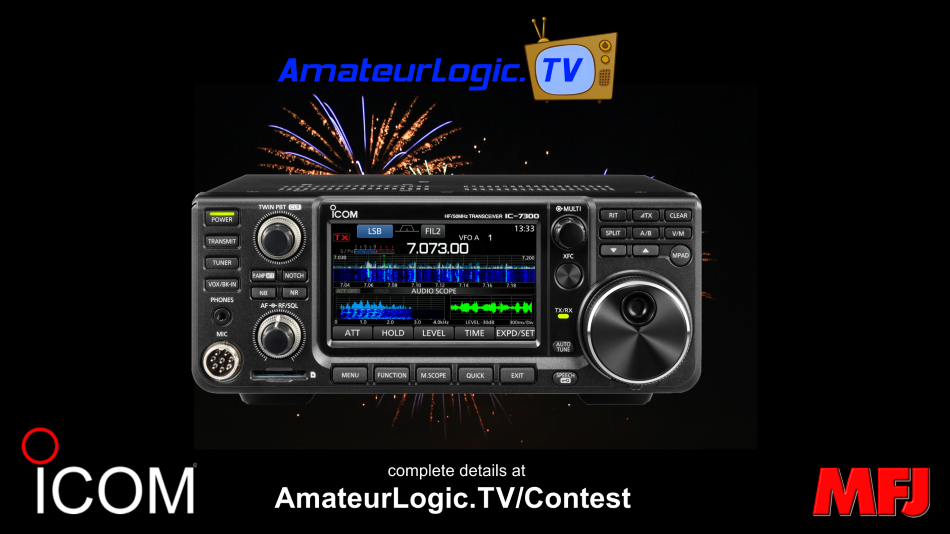
And the winner is Joseph Ryan, Jr, N3NAI of Cape Coral, Fl. Joseph’s name was selected in the random drawing during the October 15th episode.
George Thomas, W5JDX, is co-host of AmateurLogic.TV, an original amateur radio video program hosted by George Thomas (W5JDX), Tommy Martin (N5ZNO), Peter Berrett (VK3PB), and Emile Diodene (KE5QKR). Contact him at [email protected].
SOTA Activation: Bald Mountain (W0C/SP-115)
On Saturday, I activated Bald Mountain (W0C/SP-115) for Summits On The Air. It was an awesome fall day here in the Rockies, so Joyce KØJJW and I were ready for some outdoor fun. When you say you are going to the summit of Bald Mountain, the usual response is “which Bald Mountain?” Fortunately, for SOTA purposes we can use the designator (W0C/SP-115) to drive out the ambiguity. Else, you have to deal with the fact there are 32 summits in Colorado known as Bald Mountain. And I am sure there are many more in other states.
SP-115 is a drive-up summit if you have a reasonable 4WD vehicle. For us, this meant taking the Jeep Wrangler to the top. (I am still recovering from a fractured ankle and just starting to hike a bit, so a drive-up opportunity sounded good to me.) Many maps do not show the road up Bald Mountain, so I included a portion of the latitude40smap.com map for the area (below). These recreational maps are excellent quality so I recommend you get one for exploring the area.
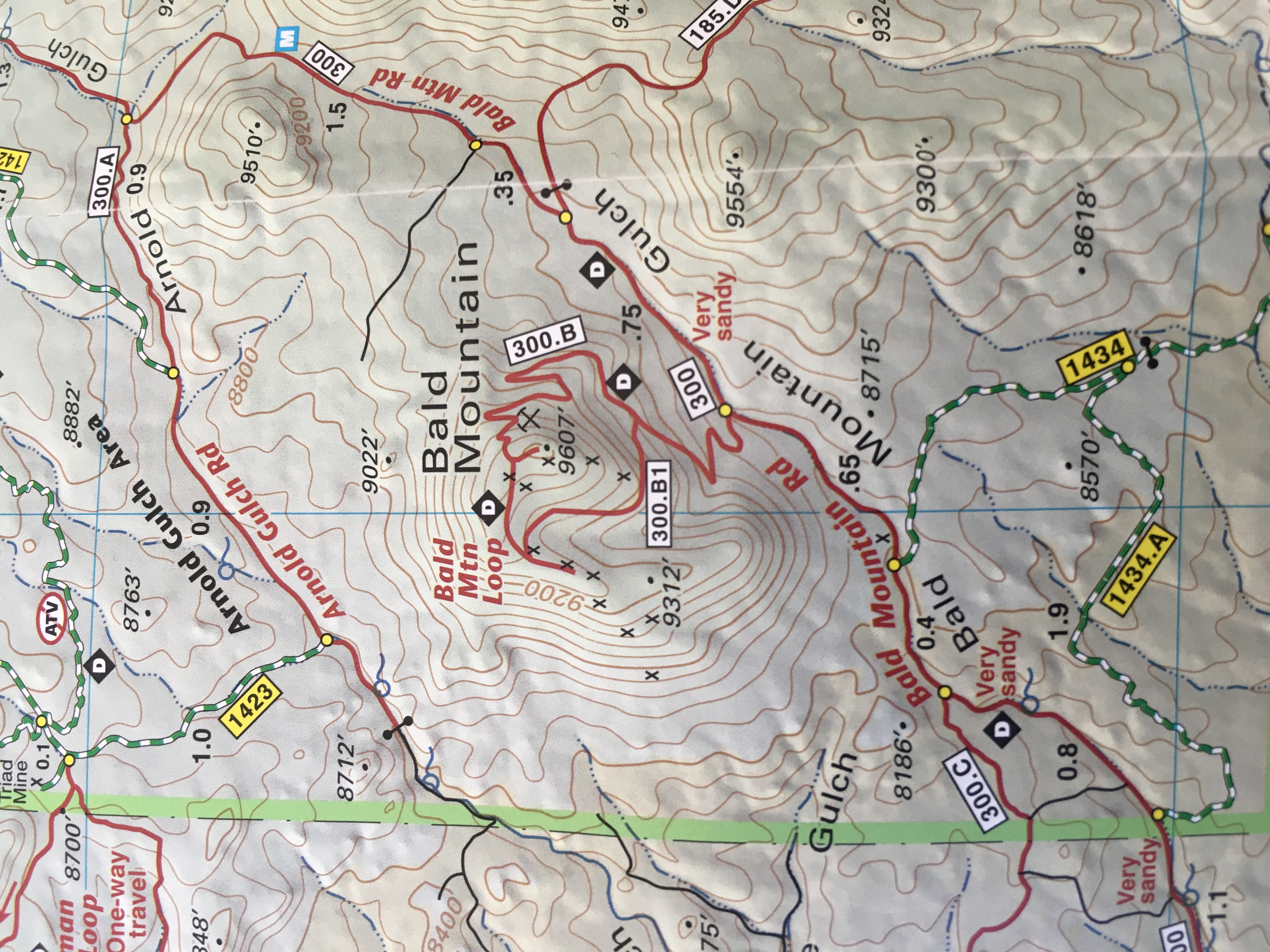
This summit is south of Buena Vista on Highway 285, which we exited at Fisherman’s Bridge, heading towards FS road 300. (Refer to the San Isabel National Forest or Latitude 40 map for details.) We followed FS 300 east which is easy 4WD. About 2 miles in, we took FS 300B (marked) to the north which winds its way up Bald Mountain.
At 0.6 miles from the intersection of 300 and 300B, an unmarked 4WD road leads off to the left and proceeds around the west side of the mountain. Taking this route provides a much easier path than the main route leading to the east side of the mountain. (We had taken the main route on our previous activation.) The preferred road does one big switchback out to the west and then returns east to the summit. This road is easy 4WD but is a bit narrow so a full size SUV or truck may have trouble. Of course, you can always hike to the summit…most likely just following the road.
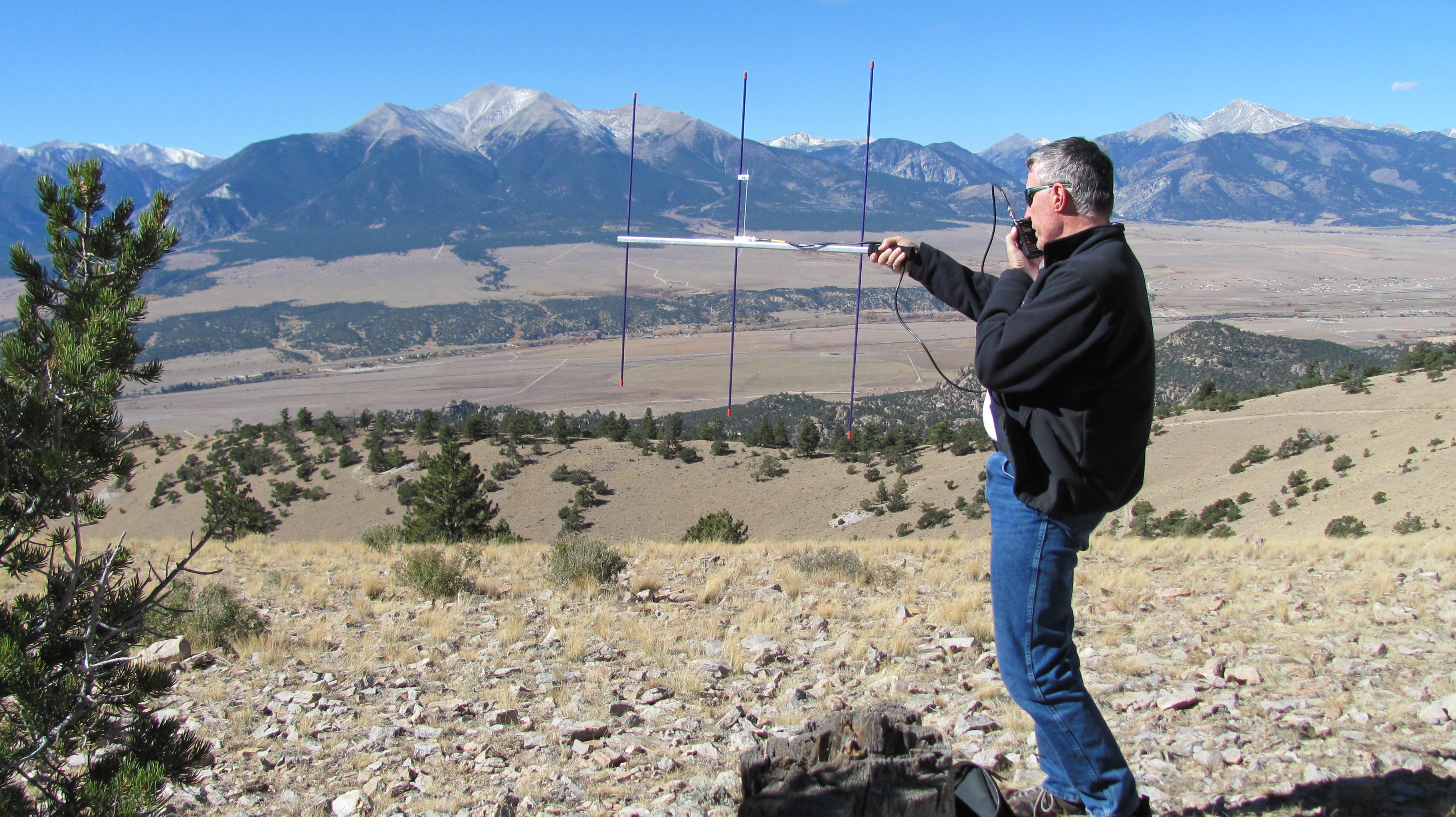 I got out my trusty Arrow 2m yagi antenna, connected it to the Yaesu FT-1D and started calling on 146.52 MHz. It took a while to get my four contacts but I kept at it. Actually, I worked five stations on 2m fm: KEØDMT, KDØMRC, K5UK, KAØABV and NØVXE. I was hoping to work WGØAT who was on the summit of Mount Herman, but I was unable to copy him. Thanks for the contacts! The summit has awesome views of the Collegiate Peaks to the west and it’s worth the trip just for the view.
73, Bob KØNR
The post SOTA Activation: Bald Mountain (W0C/SP-115) appeared first on The KØNR Radio Site.
Bob Witte, KØNR, is a regular contributor to AmateurRadio.com and writes from Colorado, USA. Contact him at [email protected].
 Ham Radio Deluxe |
 W5SWL Electronics |
 Ham Radio Prep |
 KB3IFH QSL Cards  Hip Ham Shirts  HamRadioAuctions HamRadioAuctions Reliance Antennas Reliance Antennas Enigma Shop Enigma Shop |  morseDX  Ni4L Antennas  R&L Electronics R&L Electronics antennas.us antennas.us QRV QRV |
- Matt W1MST, Managing Editor
