 |
 ICQ Podcast Episode 258 – Getting Ready for the Six Metre Season
 21 January 2018 | by
 In this episode, Martin M1MRB is joined by, Edmund Spicer M0MNG, Matthew Nassau M0NJX and Bill Barnes N3JIX to discuss the latest Amateur / Ham Radio news. Colin M6BOY rounds up the news in brief, and this episode’s feature is Getting ready for the six-metre season.
We would like to thank Barrie Hull (GD0SFI) and our monthly and annual subscription donors for keeping the podcast advert free. To donate, please visit - http://www.icqpodcast.com/donate
- Battery Powered 'Smart Bags' Raise Safety Concern
- New Technician License Question Pool Released
- Indonesian Pirates on 7 MHz
- WSPR Beacon En Route to Antarctic
- 3D Printed Radio
- FT8 Operating Guide
- D-Star One v1.1 Phoenix
- AX Prefix on Australia's National Day
- Test Equipment at SOTABEAMS
Colin Butler, M6BOY, is the host of the ICQ Podcast, a weekly radio show about Amateur Radio. Contact him at [email protected].
A Better Antenna for Dualband Handhelds
I’m a fan of using a half-wave antenna on a 2m handheld transceiver (HT). These come in a variety of forms but I’ve tended to use the telescoping half-waves that mount on the HT. These include the Halfwave 2 Meter Flex antenna from Smiley and the MFJ-1714 from MJF. One of the disadvantages of these two antennas is that they are designed for 2m operation only. Put it on a dualband HT and you can only use one of the bands.
Now there is a dualband alternative.

During a discussion of various VHF radios and antennas on the SOTA reflector, Phil/G4OBK recommended this antenna: TWAYRDIO RH 770 SMA-Male Dual Band Telescopic Handheld Antenna. I was mildly skeptical in that the antenna looks like cheap lowcost economy stuff from China. However, for $16.55 (free shipping), it seemed like something I should try out.
I’ve since used this antenna on several SOTA activations and have found it to work quite well. Not having to worry about whether I’m operating on 2m or 70 cm is a big plus. I liked the antenna so much, I now have three.
Recently, I wondered how well the antenna is really performing so I did a side-by-side comparison with the Smiley 2m halfwave. Now this kind of comparison is always a bit dicey unless you have a calibrated antenna range. I got on 2m fm with another ham running a home station some distance away such that I was not pegging his S-meter. We did several A/B comparisons between the Smiley and the RH 770. Much to my surprise, the RH 770 performed significantly better than the Smiley. The other ham saw his meter deflect higher with the RH 770. I can’t give that to you in dB but I can say its a little better. I actually thought that the single-band design might be slightly better due to less complexity in the antenna. The opposite was true. Your mileage may vary. No warranty expressed or implied.
The only thing I don’t like about the RH 770 is that the telescoping sections slide up and down really easy. Too easy for my taste. I’d rather have some stickiness to it so that I am sure it will remain fully extended. But I admit this is more of a personal impression than actual problem.
The antenna is available with a male SMA connector, a female SMA connector or a BNC. That should pretty much cover it.
So thanks Phil/G4OBK for pointing out this antenna. I also highly recommend it.
73, Bob K0NR
The post A Better Antenna for Dualband Handhelds appeared first on The KØNR Radio Site.
Bob Witte, KØNR, is a regular contributor to AmateurRadio.com and writes from Colorado, USA. Contact him at [email protected].
A fantastic FT8 guide!
Mike Weir, VE9KK, is a regular contributor to AmateurRadio.com and writes from New Brunswick, Canada. Contact him at [email protected].
BITX & UBITX resources added.
I have now added a Pages link to my blog titled
BITX & UBITX resources
Access it from the top right handside side of my Blog.This contains known links to groups and support for the BITX and UBITX kits.
I will update this as and when I see new links appear and when I have the time etc..
If you know of any others please drop me a line.
You can also access it via this link below too:
http://g1kqh.blogspot.co.uk/p/blog-page.html
73 Steve
Steve, G1KQH, is a regular contributor to AmateurRadio.com and writes from England. Contact him at [email protected].
Amateur Radio Weekly – Issue 190

A note to members from ARRL President Rick Roderick
To those who try to suggest that the Board has abandoned its obligation to the members in favor of the organization — you draw a distinction that doesn’t exist.
ARRL
ARRL CEO to retire
Gallagher, 69, cited recent changes included in the new federal tax law that made it unattractive for him to continue working.
ARRL
ARRL: It’s not just the bylaws that need changin’
To this day, neither Mr. Gallagher nor anyone from the BOD has been willing to answer “Why?”
KL7SB
AO-92 transponder and camera tested, further camera tests planned
The first thirty-six hours of AO-92’s life in orbit have seen a flurry of activity as the AMSAT Engineering and Operations teams walk through an extensive checklist of tests.
AMSAT
DPØGVN WSPR beacon in Antarctica is operational
The multiband receiver of the new permanent WSPR beacon DPØGVN in Antarctica has been put into operation.
Southgate
Anticipating Winter Field Day Jan 27/28
The antenna will be a 100-foot loop 30 feet across 20 feet vertical fed at the bottom with an Icom AH4 tuner. This antenna takes up only 30 linear feet, needs no trees. and was designed to fit the campsite.
N4KGL
[PDF] FT8 Operating Guide
Work the world on HF using the new digital mode.
G4IFB
SSTV with a Baofeng
The Baofeng speaker mic would make the perfect donor for a cable between the radio and audio connection of a computer / smartphone.
Essex Ham
3D-printed radio works, despite having no battery
Called a crystal radio receiver, or sometimes a “cat’s whisker receiver,” this is an incredibly simple type of radio receiver that was popular in the earliest days of radio.
Digital Trends
Video
My first uBitX contact
First contact made with my ubitx transceiver after the initial wiring.
VO1UO
Smith Chart: Z, VSWR, reflection coef and transmission line effects
This video gets into several practical aspects of using a Smith Chart to take care of doing complex calculations involving VSWR, reflection coefficient (gamma and rho), return loss, and the impedance transformations that occur when using transmission line between a source (generator, transmitter, etc.) and the load (antenna, amplifier input, etc.).
W2AEW
Amateur Radio Weekly is curated by Cale Mooth K4HCK. Sign up free to receive ham radio's most relevant news, projects, technology and events by e-mail each week at http://www.hamweekly.com.
Giant Blizzard! Not really, but my antenna is down
We aren't supposed to get this much snow in central NC
How, pray tell did I get the rope attached to the peak of roof 33 feet up in the air you ask, having no tall ladders or Spiderman abilities? I'm glad you asked... Well, the rope is tied inexpertly, using granny knots, to one side of an S-hook. I use a cane-pole fishing rod as an extension with a piece of masking tape on the end lightly holding the S-hook. Then I precariously lean out my 3rd story window eight feet under the eave (don't try this at home) and "fish" the S-hook through a loop at the peak of the eave, that was installed there by my nice painter, many years ago. Once the S-hook is in the loop, I tug on the fishing pole and the masking tape lets loose of the S-hook and the S-hook remains in the loop, holding a few feet of old dacron rope. QRP-indeed !
This incarnation of the antenna was first installed November 2015. In that time an ice storm drug it to the ground, and a tropical storm broke the mooring as well.
Amazing stuff, doorbell wire and old dacron rope.
That gleaming line of ice from right to left in the picture below used to be elevated a bit more
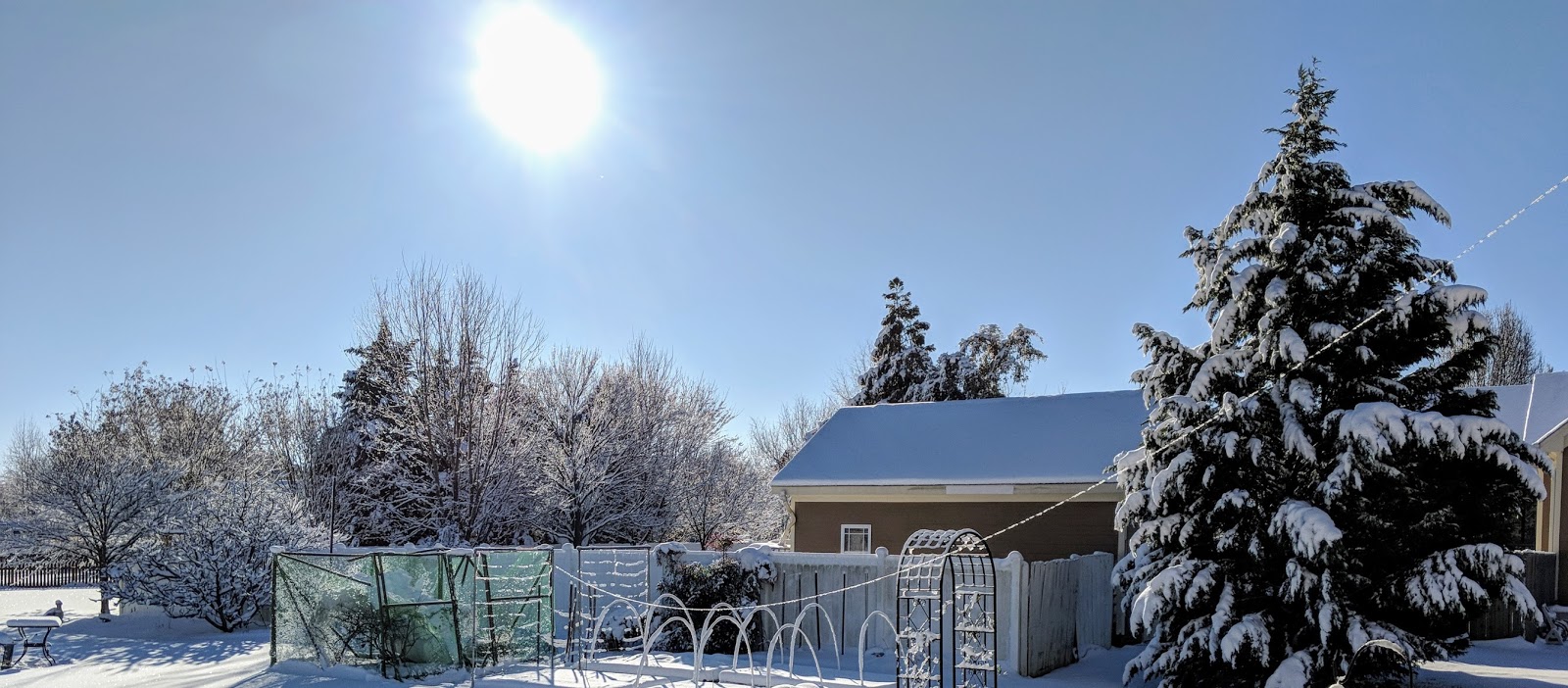 |
This antenna is designed to fail gracefully
I wanted to be sure that when the antenna was under stress it would relieve itself at the easiest place to repair. The rope on the long end of offset dipole runs through a pulley attached, with a zip tie, at the top of a set of sturdy, stacked fiberglass tent poles. The rope runs through the zip-tie attached pulley to a long, lightweight, spring (the kind used for a small fence gate) along with the pulley provides the strain relief when it's windy. The zip tie holding the pulley at the top of the pole is intentionally the weak link. When the forces become too much the zip tie breaks and the long, heavy side of the antenna falls across the garden. It's a simple matter to pull a section of the fiberglass pole loose, attach a new zip tie, and Bob's your uncle.So when you design your next wire antenna, plan ahead for easy repair.
Richard Carpenter, AA4OO, is a regular contributor to AmateurRadio.com and writes from North Carolina, USA. Contact him at [email protected].
At The Dials
 |
| Courtesy |
A recent never-ending series of equipment breakdowns, repairs, computer software problems, along with everyday household duties, has kept me away from blogging longer than usual.
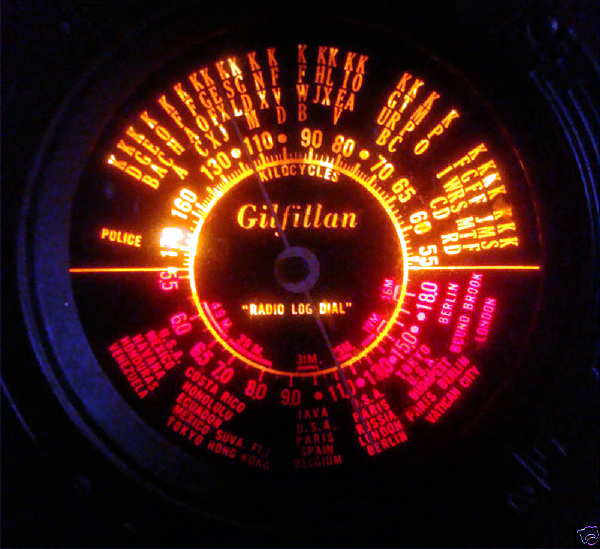
However, the recent arrival of a fresh 'off the press' 2018 World Radio Television Handbook (WRTH) has really augmented my rekindled interest in what initially hooked me on the magic of radio ... tuning around the international shortwave bands.
The last time I purchased a WRTH was more than 40 years ago, but other than the information between its covers, the book still looks much the same as it did back in the good old days. There is a lot to digest in this book and although it's likely that a lot of it could be found on the Internet, it would probably take weeks of sleuthing to find it ... there is just a ton of valuable information here to accommodate the varied interests of radio fanatics.
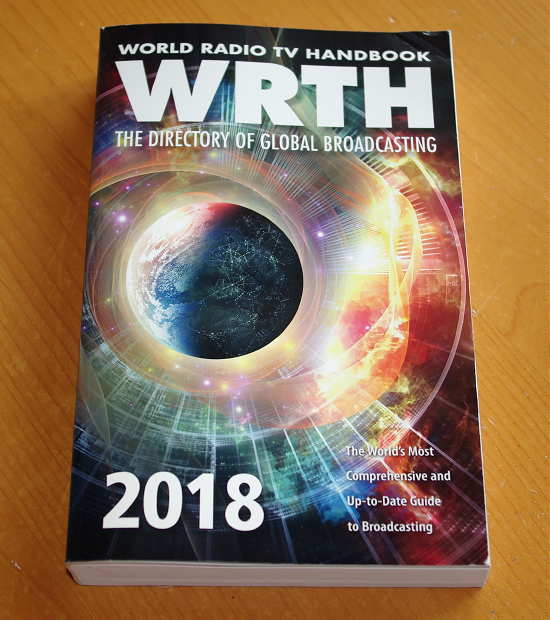 As always, the first section of the book is devoted to technical articles or equipment reviews with the remainder being a quick-find reference guide of maps, frequency lists, broadcast schedules and mailing / e-mail contact info for those that like to gather QSLs. At 672 pages, the WRTH is a valuable tool in your listening arsenal and well worth the cost.
I often read comments on various reflectors of just how few international shortwave stations there are and that tuning through the bands often reveals little to be heard. There is no question that the number of SW stations on the air today is much less than it was a few decades ago, but there are still a huge number of stations to target throughout the various SW bands and a lot of DX challenges yet to be found on the international bands.
For example, one such challenge comes to mind for west coast DXers ... and that is India. Signals on any band, from India to western Canada, have always been difficult. All India Radio (AIR) has 22 shortwave transmitters, operating from a half-dozen different sites ... hearing all sites from here on the various bands would keep one pretty busy for some time. To make it even more interesting, AIR still responds to listener reception reports with a QSL ... and who doesn't like a real 'paper' QSL!
Here is a quick tune through the 31m SW band this morning, at around 10:20 a.m. local time, on my FT-1000mp Mark V and 40m half-sloper. Although approaching the lowest part of a very poor solar cycle (Cycle 24, the weakest in the past 100 years), witness the activity on a day of very poor HF propagation ... there are still a good number of signals to seek out.
With the present low solar flux, it's usually the lower SW bands that really come to life, with the bands bursting with signals from shortly before sunset into the dawn.
In addition to the WRTH, there are several great reference sites on the internet as well as some wonderfully helpful blogs devoted to SW radio listening.
Here are the sites I find myself returning to quite often:
Yahoo Group's Primetimeshortwave
Worldwide DX Club News
Eibi Shortwave Time / Frequency Schedules
Shortwave Info
Hard-Core-DX Daily News
Blogs:
Mount Eveyln DX Report
The SWLing Post
Bulgarian DX Blog
South East Asia DXing
There are probably more but these ones are good. In addition, there are a lot of great Facebook sites that deal with SW radio and much interesting discussion is available there via a quick search.
Now it's back to the repair bench to hopefully finish everything off for some time, but maybe you can find a few spare hours to have a closer listen to the international SW bands and see what you can dig up.
SHORTWAVE BROADCAST BANDS
2300 - 2495 120m
3200 - 3400 90m
3900 - 4000 75m
4750 - 5060 60m
5850 - 6200 49m
7100 - 7350 41m
9400 - 9900 31m
11600 - 12050 25m
13570 - 13800 22m
15100 - 15800 19m
17480 - 17900 16m
18900 - 19020 15m
21450 - 21850 13m
25600 - 26100 11m
Steve McDonald, VE7SL, is a regular contributor to AmateurRadio.com and writes from British Columbia, Canada. Contact him at [email protected].
 Ham Radio Deluxe |
 W5SWL Electronics |
 Ham Radio Prep |
 KB3IFH QSL Cards  Hip Ham Shirts  HamRadioAuctions HamRadioAuctions Reliance Antennas Reliance Antennas Enigma Shop Enigma Shop |  morseDX  Ni4L Antennas  R&L Electronics R&L Electronics antennas.us antennas.us QRV QRV |
- Matt W1MST, Managing Editor
