 |
 Let’s Call CQ – QSO Today Episode 184 with NW7US
 13 February 2018 | by
 I got a Skype call a few weeks ago from Eric, 4Z1UG–the creator and host of the QSO Today Podcast–during which he asked me about how and why I got into amateur radio. Here’s the result.
Eric writes,
We talk a lot about the band conditions due to the Sunspot cycle. Most of it on Facebook and other places is about how “dead” the bands are at this point. We all can’t wait until the cycle starts to rise and we will be making contacts with little effort. I remember in my conversation with Chuck Adams, K7QO in Episode 58, that he really enjoys operating is “Pigrig”, one watt, CW transceiver on 20 meters. When I asked him, (I liberally paraphrase) “but Chuck, the bands are dead. How does that work for you?”. His reply was that while most hams are listening to the bands, he calls CQ until he gets a reply. Works every time.
My QSO this week is with Tomas Hood, NW7US, who has years of expertise in propagation and Solar activity. He is the propagation editor of more than a few radio magazines and websites. In our post-recording conversation we discussed this phenomenon of listening and not calling CQ. I even had this idea that maybe one of the reasons that the digital modes are so successful is because they “beacon”, as part of the whole digital experience, the same as calling CQ. This is why they make contacts. From what I see, looking at PSK Reporter, hams are making lots of contacts worldwide using the digital modes. While SSB may not be working so well, CW and the digital modes seem to work fine.
I like to work on my bench or make the podcast while listening to the bands. Jeff Damm, WA7MLH, in Episode 177, says that he will put his keyer in CQ mode while he is working on a new radio. Invariably, sometimes after many minutes, he gets a reply. Great idea Jeff!
73,
Eric, 4Z1UG
Episode 184 can be found here: https://www.qsotoday.com/podcasts/nw7us
Highlights of Episode 184:
Tomas Hood, NW7US is the propagation editor of a number of shortwave and amateur radio magazines, and has a wide variety of websites, that grew out of his love for all things radio, and for listening on the bands to far off DX and commercial broadcast stations. Tomas shares his understanding of propagation and the lessons we can learn from listening, really listening to the QSOs and exchanges during contest operation.
All of the QSO Today episodes are great. I enjoy hearing about many different hams. Do check out all of the episodes that Eric has published.
73 de NW7US dit dit
Visit, subscribe: NW7US Radio Communications and Propagation YouTube Channel
LHS Episode #208: Ham Radio Logging Deep Dive
 In this episode of Linux in the Ham Shack, the hosts take an in-depth look at ham radio logging. Topics include: should you log? What are the most popular logging applications? What formats are available? Should you log to the cloud? Logging best practices. And a whole lot more. We also address announcements and listener feedback. Thank you for tuning in!
73 de The LHS Crew
Russ Woodman, K5TUX, co-hosts the Linux in the Ham Shack podcast which is available for download in both MP3 and OGG audio format. Contact him at [email protected].
NBC Report Features Hawaii Hams Preparing for Nuclear Attack

“In the case of an electromagnetic pulse from a blast, 90% of people may be without communication and ham radio is actually one of the ways that you’ll be able to hear what’s happening.” That’s the report that NBC News correspondent Jacob Soboroff gave just moments after the nuclear all-clear was given during the recent scare in Hawaii.
Check out the great 8-minute video below featuring Hawaiian hams and how they’re preparing for the unthinkable in one of the most beautiful places on earth.
Matt Thomas, W1MST, is the managing editor of AmateurRadio.com. Contact him at [email protected].
Weekly Propagation Summary – 2018 Feb 12 16:10 UTC
Here is this week’s space weather and geophysical report, issued 2018 Feb 12 0146 UTC.
Highlights of Solar and Geomagnetic Activity 05 – 11 February 2018
Solar activity was at very low levels on 05, 08-09 and 11 Feb while low levels were observed on 06-07 and 10 Feb. All of the period's activity originated from Region 2699 (S07, L=165, class/area Dai/240 on 10 Feb). The largest observed event was a C8 flare observed at 07/1347 UTC. No Earth-directed CME activity was detected during the period.
No proton events were observed at geosynchronous orbit.
The greater than 2 MeV electron flux at geosynchronous orbit was at normal levels the entire period.
Geomagnetic field activity was at predominately quiet levels under a nominal solar wind regime. Isolated unsettled intervals were observed on 05, 09 and 10 Feb.
Forecast of Solar and Geomagnetic Activity 12 February – 10 March 2018
Solar activity is expected to be at very low to low levels, with a chance for M-class activity, through 16 Feb due to the flare potential of Region 2699. Very low levels are expected from 17-28 Feb. A return to very low to low levels, with a chance for M-class activity, is possible from 01-10 Mar after the return of old Region 2699.
No proton events are expected at geosynchronous orbit.
The greater than 2 MeV electron flux at geosynchronous orbit is expected to be at normal to moderate levels on 12-25 Feb, with a chance for high levels on 19 Feb, due to influence from recurrent CH HSSs. Mostly normal levels are anticipated on 26 Feb – 10 Mar.
Geomagnetic field activity is expected to be at quiet to unsettled levels on 15-18 Feb, 20-22 Feb and 04 Mar, with isolated active periods likely on 16 Feb. This activity is due to influence from recurrent CH HSSs. Mostly quiet conditions are expected for the remainder of the outlook period.
Don’t forget to visit our live space weather and radio propagation web site, at: http://SunSpotWatch.com/
Live Aurora mapping is at http://aurora.sunspotwatch.com/
If you are on Twitter, please follow these two users: 1. https://Twitter.com/NW7US 2. https://Twitter.com/hfradiospacewx
Check out the stunning view of our Sun in action, as seen during the last five years with the Solar Dynamics Observatory (SDO): https://www.youtube.com/watch?v=zXN-MdoGM9g
= = = = =
BOOK SALE: Space Weather and Sun Science – get these from Amazon, and help us stay online!
NOTICE: When you buy this (or any item after starting with this link), you are helping us keep our SunSpotWatch.com and other resources “on the air” (up and running!). In other words, you are helping the entire community. So, check out this book:
Here is the link to Amazon: http://g.nw7us.us/fbssw-aSWSC
We’re on Facebook: http://NW7US.us/swhfr
Visit, subscribe: NW7US Radio Communications and Propagation YouTube Channel
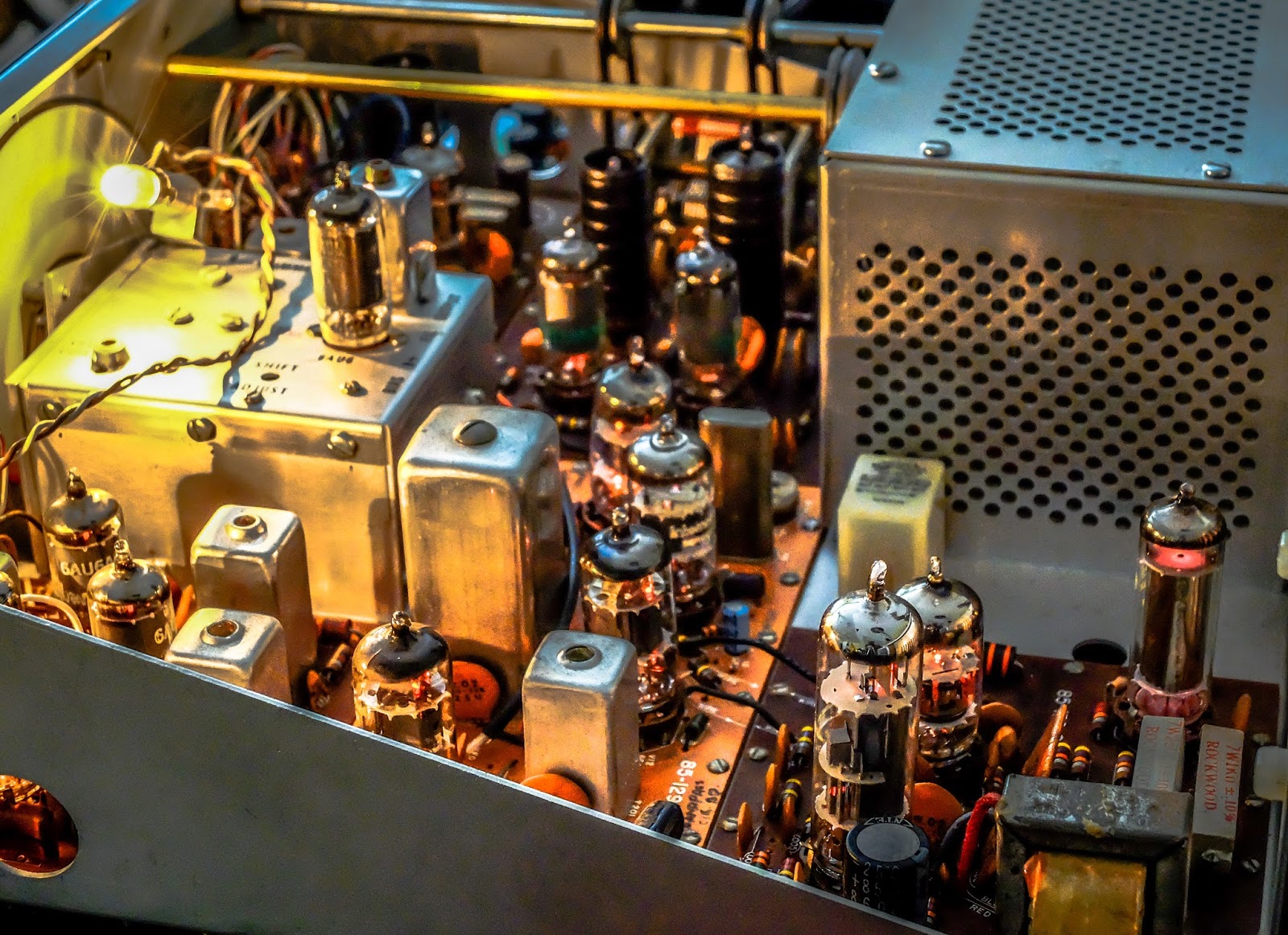
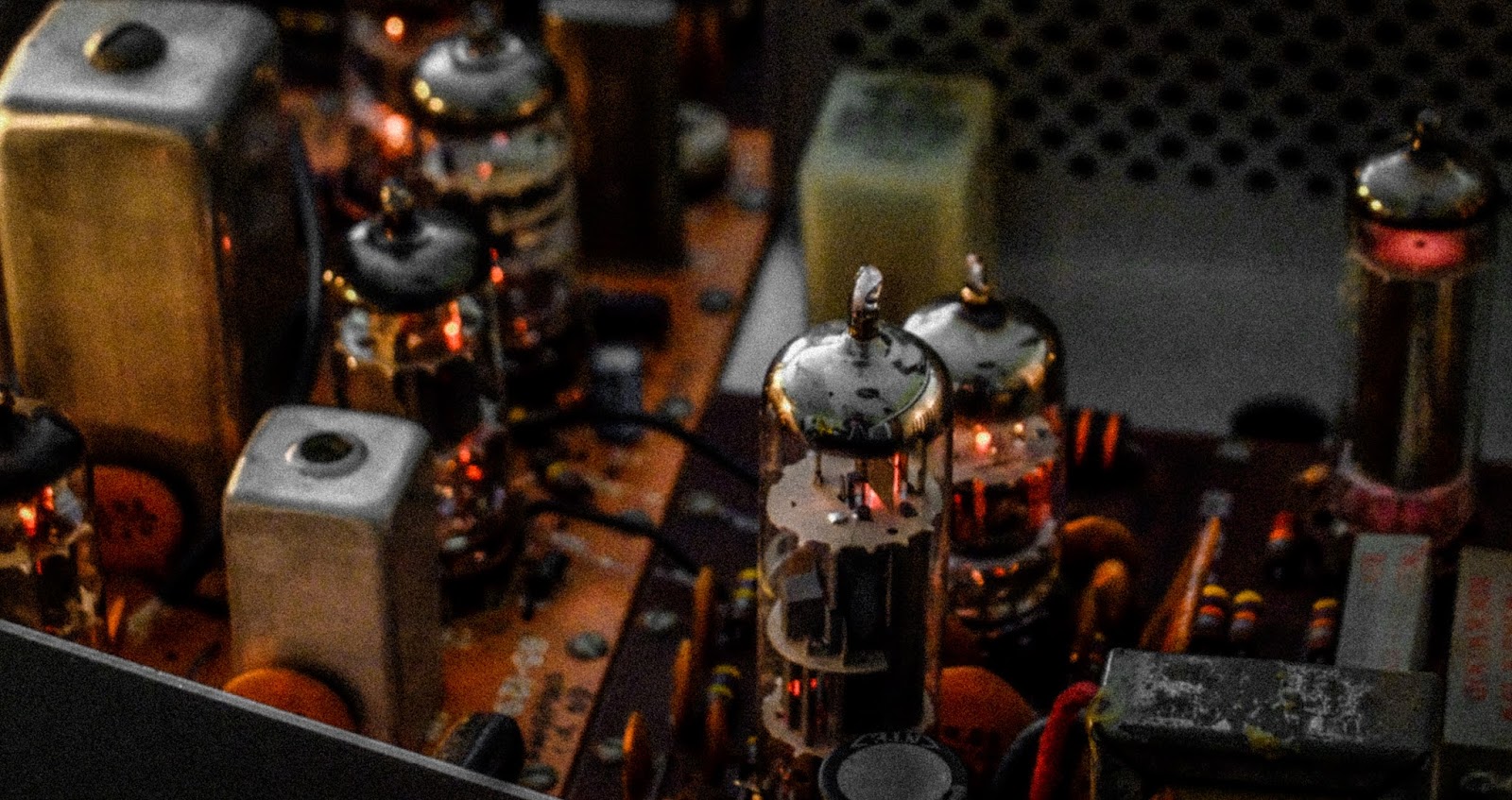
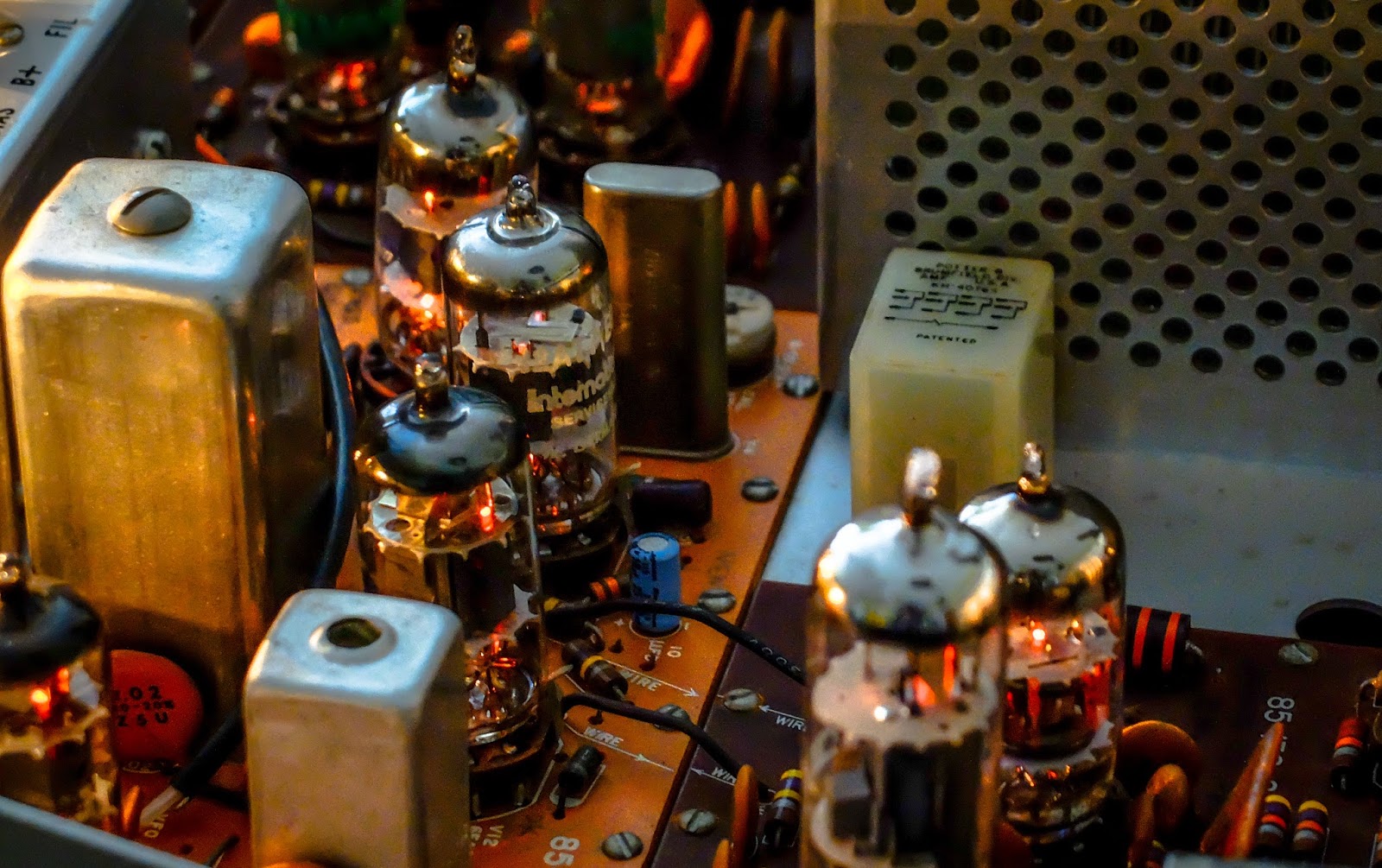
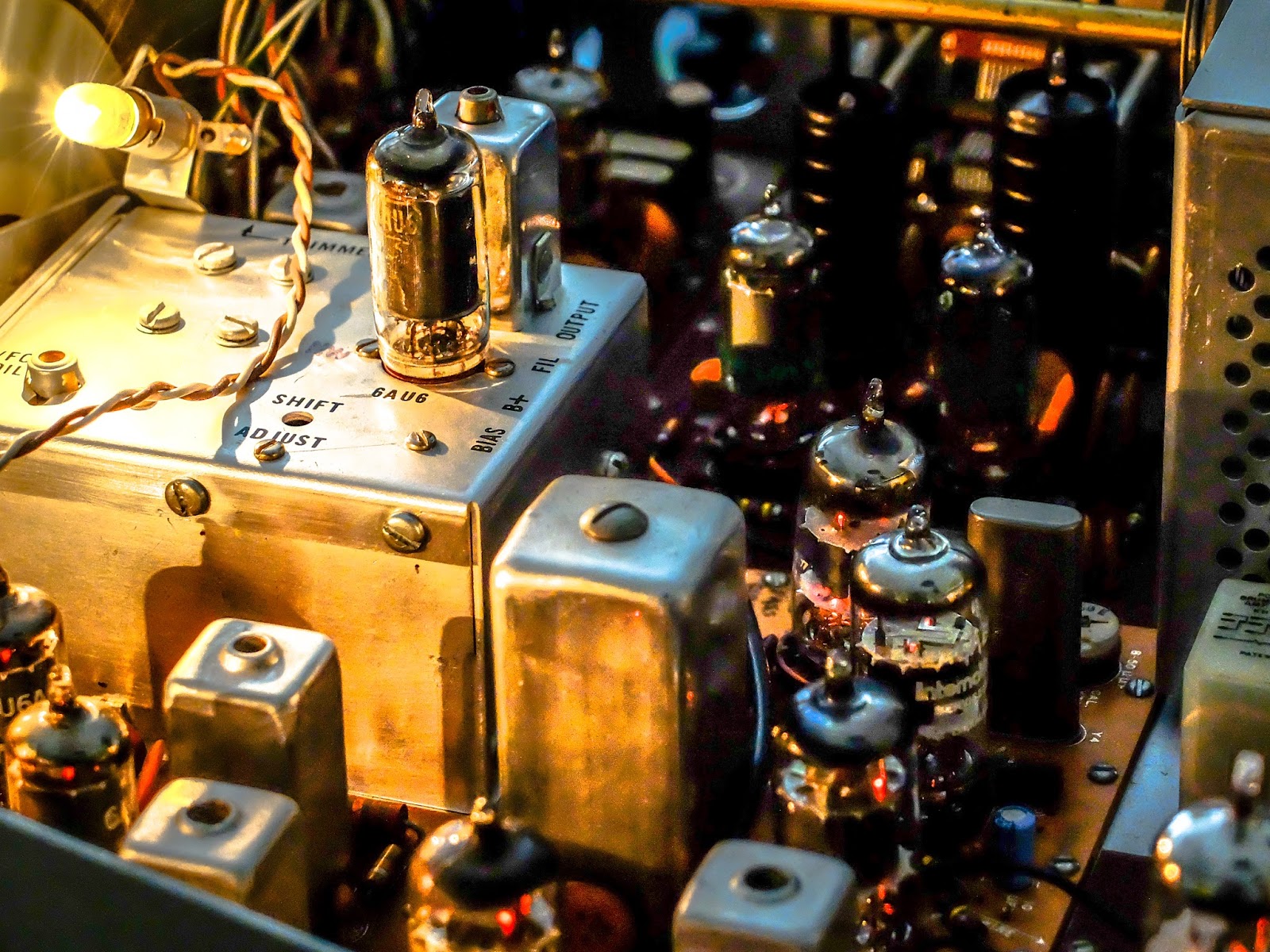
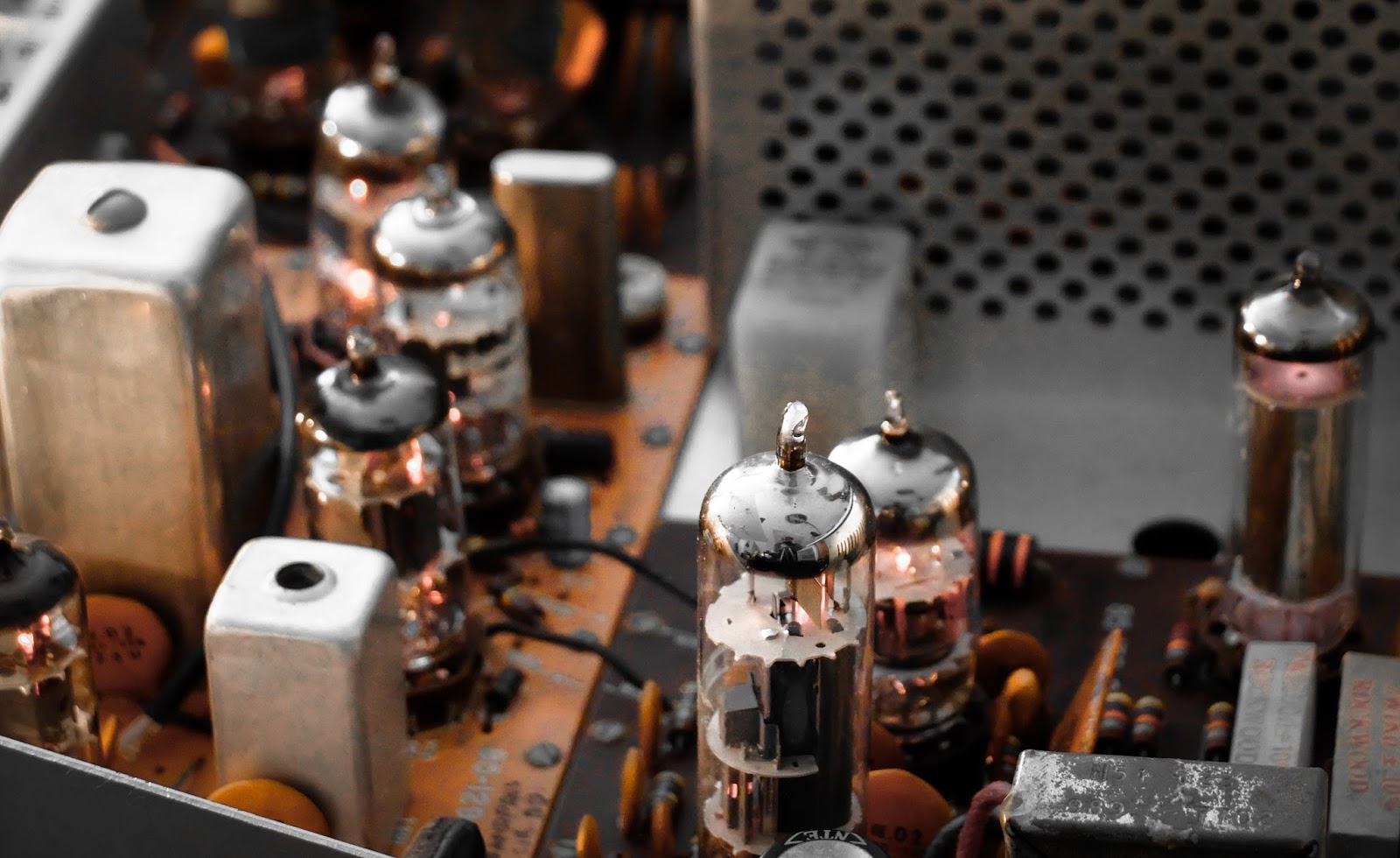
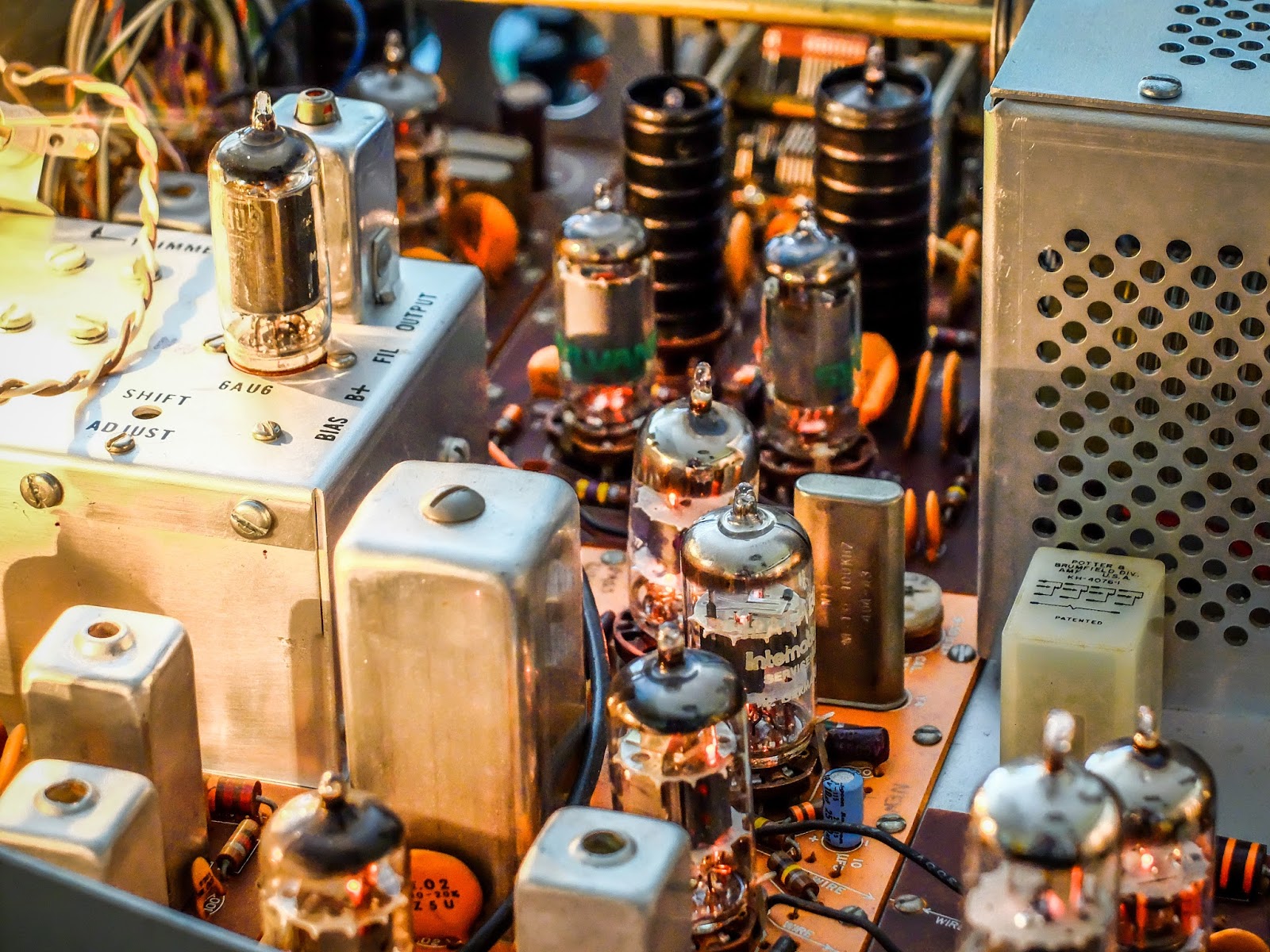
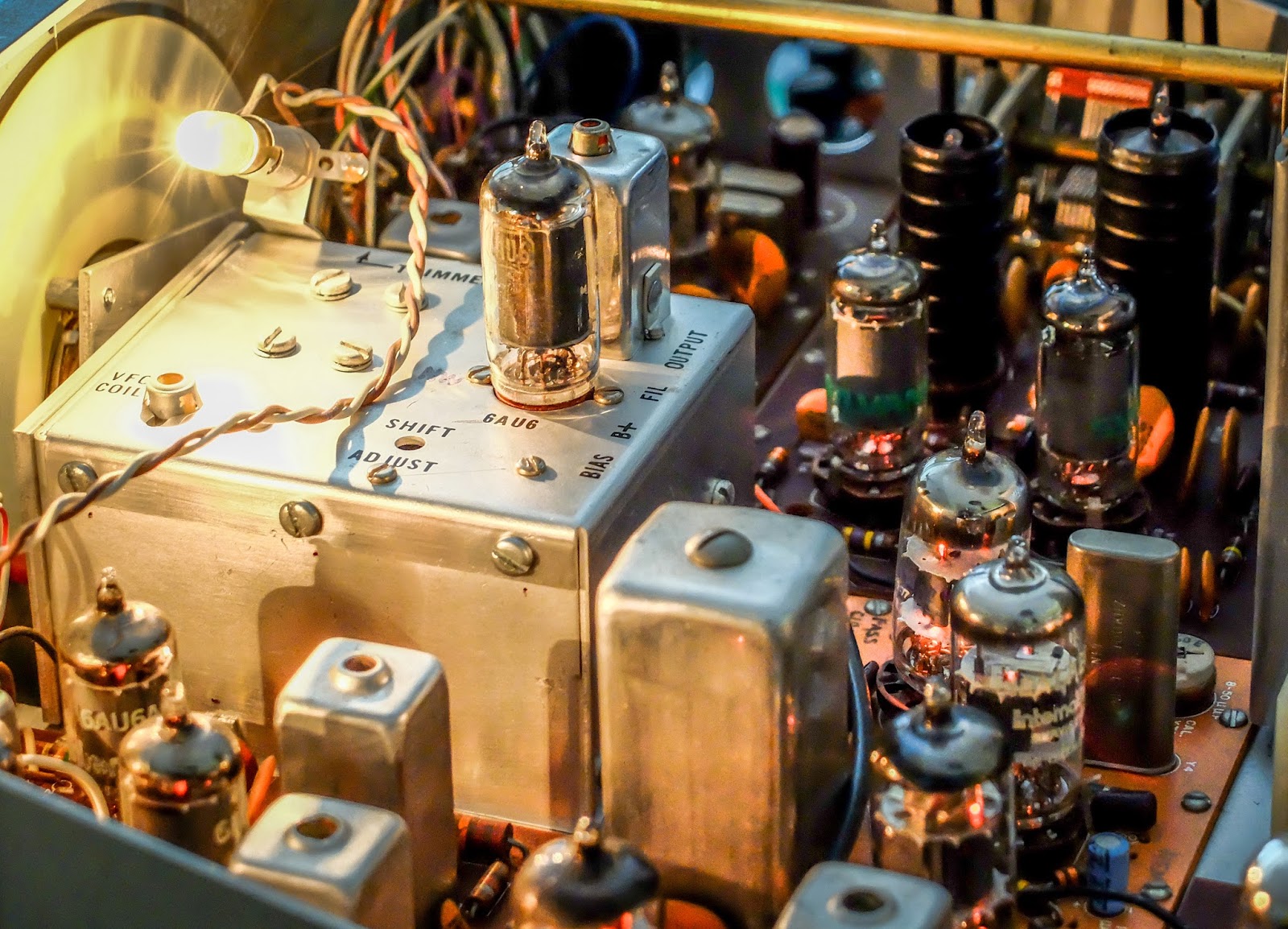
Totally Tubular – images
The inside of a Heathkit HW-101 is too interesting not to photograph
List of tubes and their function used in the HW-101

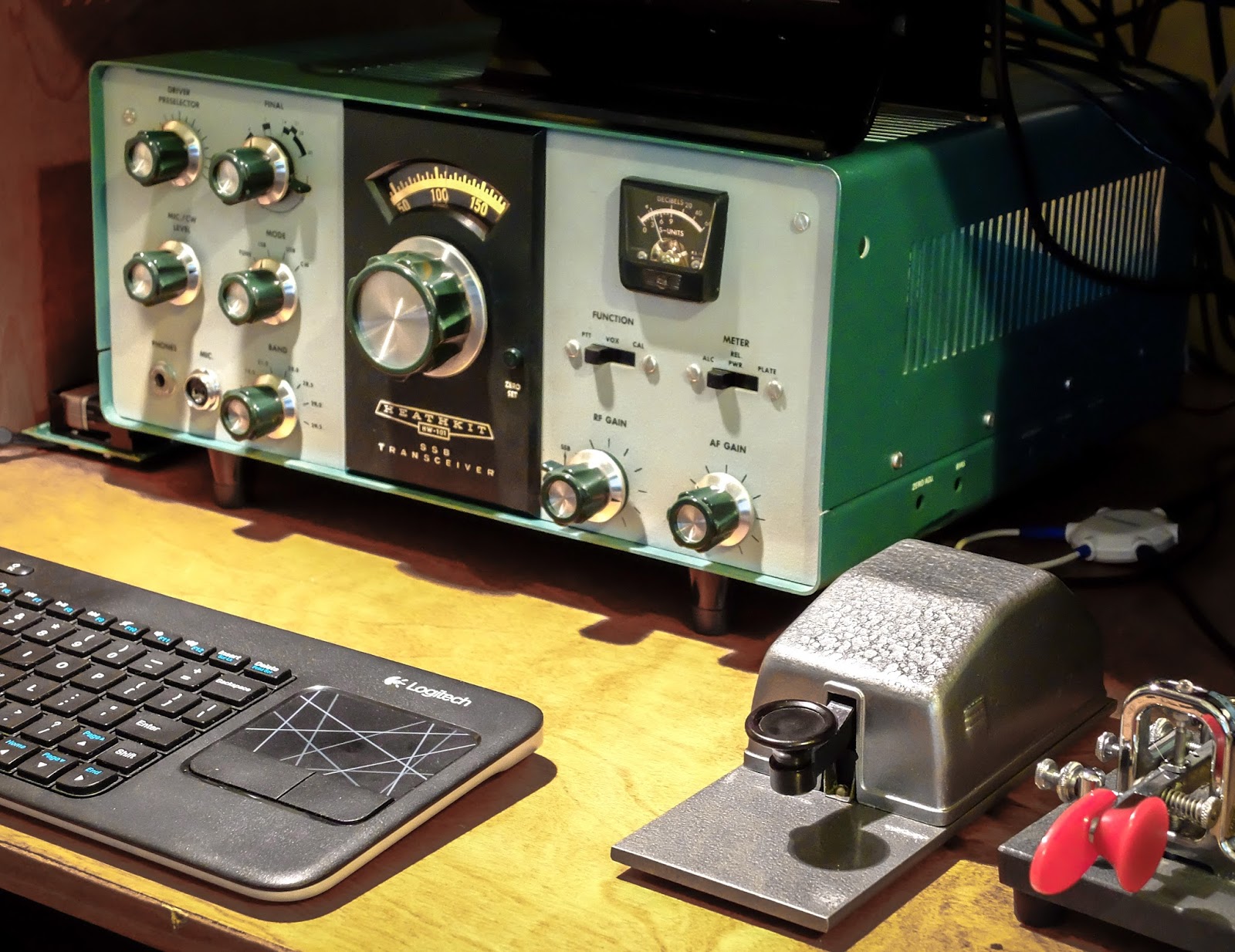
Video with CW QSO
Update:
That's all for now
Richard Carpenter, AA4OO, is a regular contributor to AmateurRadio.com and writes from North Carolina, USA. Contact him at [email protected].
AmateurLogic 114: What’s New with Martin Jue, K5FLU
AmateurLogic.TV Episode 114 is now available for download.
Peter’s infrared experiments part 2. Tommy’s Active Antenna. Emile’s HF Loop part 1. George at the Capital City Hamfest with Martin Jue(MFJ) and Will Jourdain(Icom).
1:23:13
George Thomas, W5JDX, is co-host of AmateurLogic.TV, an original amateur radio video program hosted by George Thomas (W5JDX), Tommy Martin (N5ZNO), Peter Berrett (VK3PB), and Emile Diodene (KE5QKR). Contact him at [email protected].
The Heathkit HW-101 lives again
Ah, the sweet smell of hot tubes and resistors
 |
| Heathkit HW-101 after it's first QSO under new ownership |
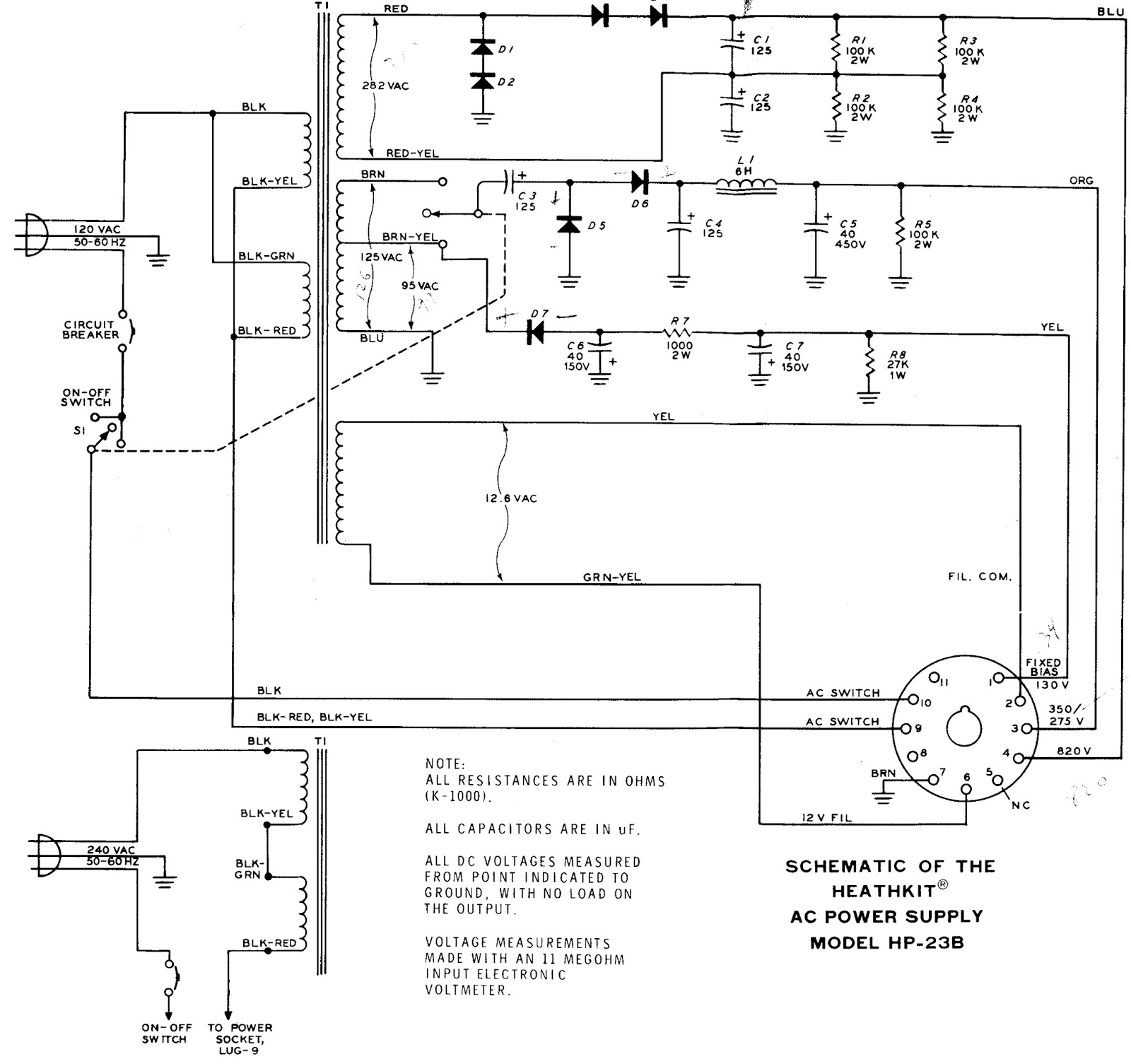 |
| Heathkit HP-23B Schematic |
I really need to learn more about electronics
Out with the old, in with the new
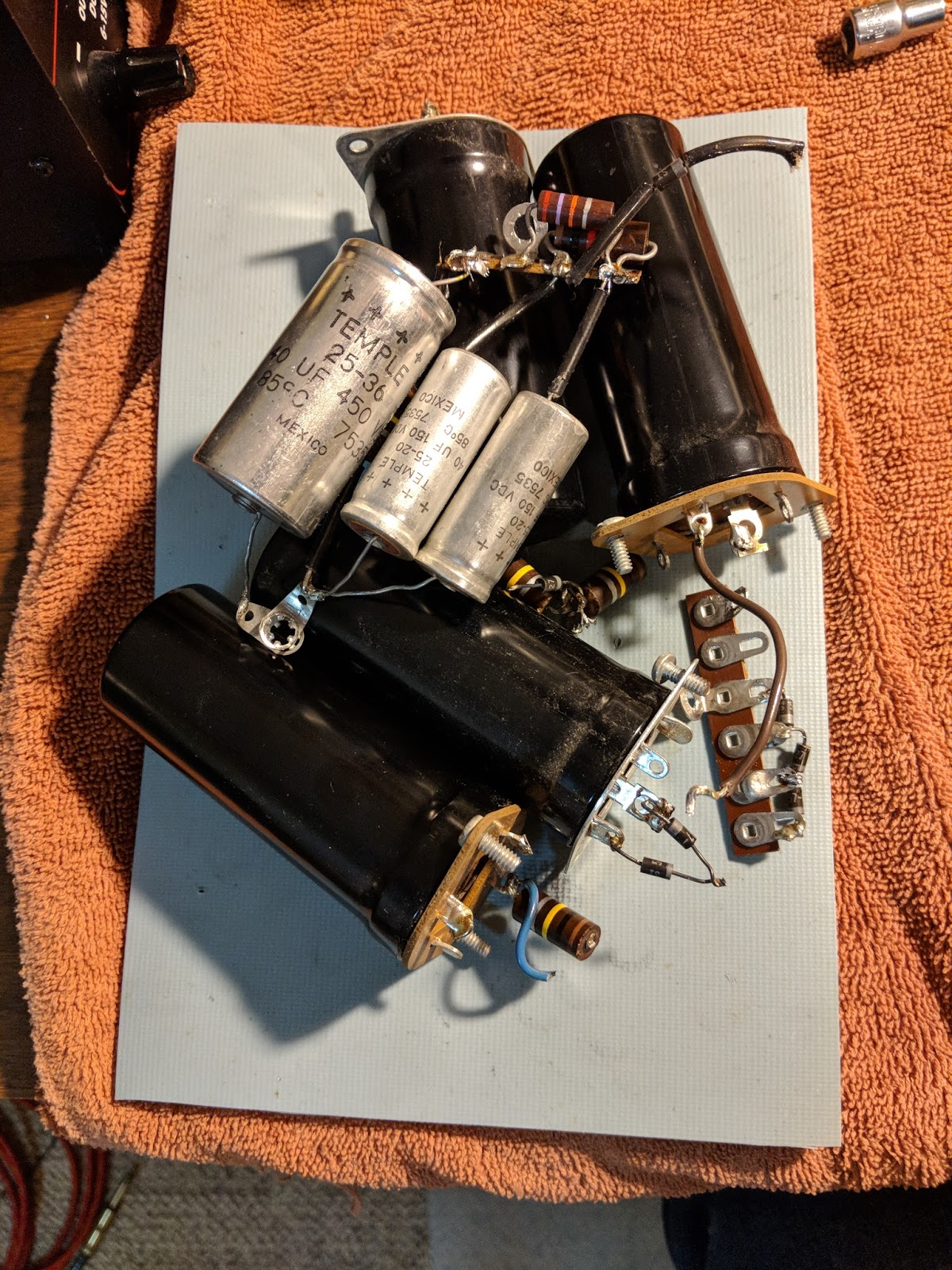 |
| Old components |
Testing High Voltage
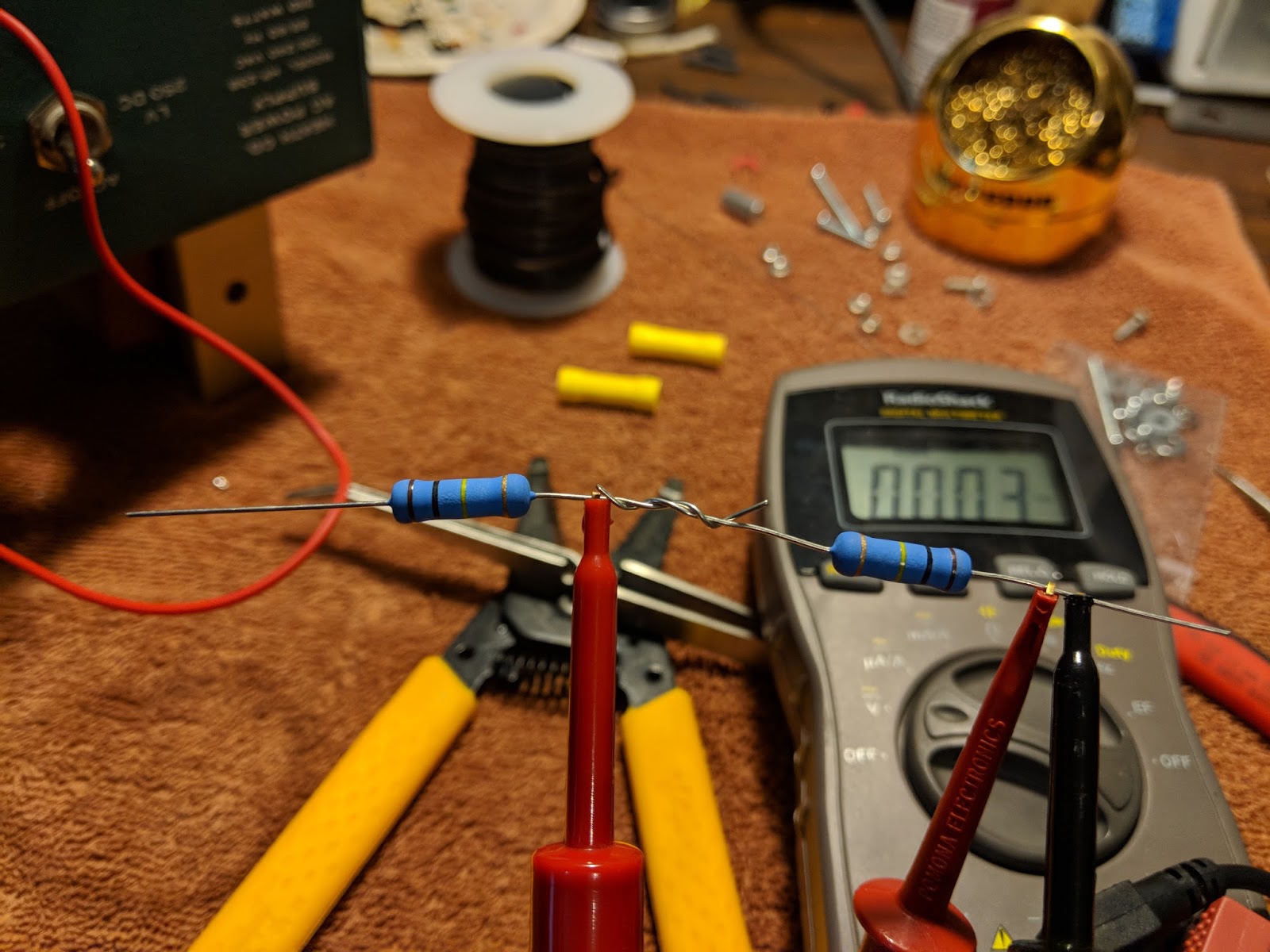 |
| Voltage divider for measuring the high-voltage output |
 |
| With the voltage divider the HV power measured 401v which works out to 802v undivided |
Completed upgrade
 |
| With the PCB board, all the components are out of sight in the base except the big resistors |
Replaced the HW-101 antenna connector with a BNC
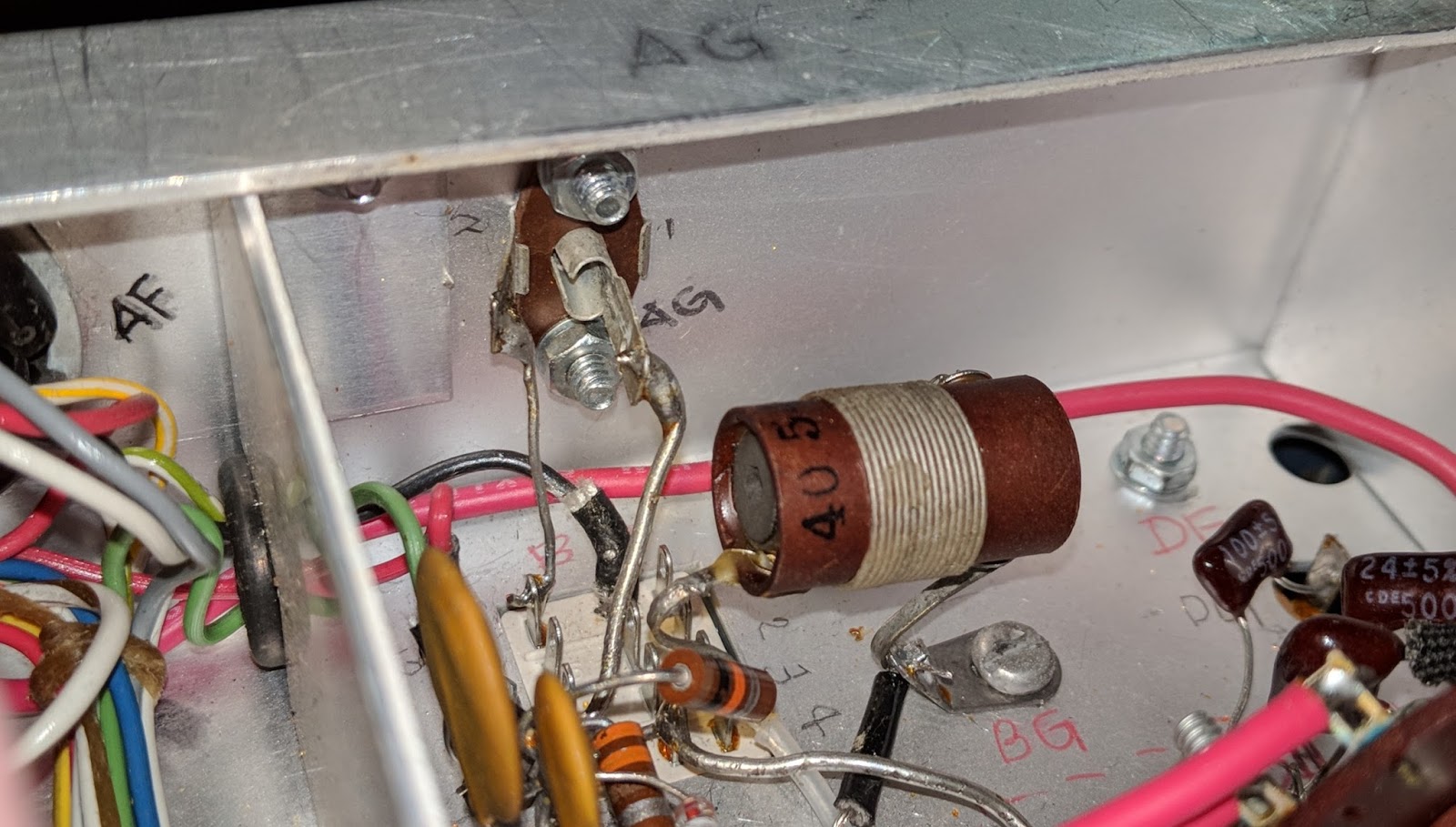 |
| Original RCA antenna jack (viewed from inside chassis) |
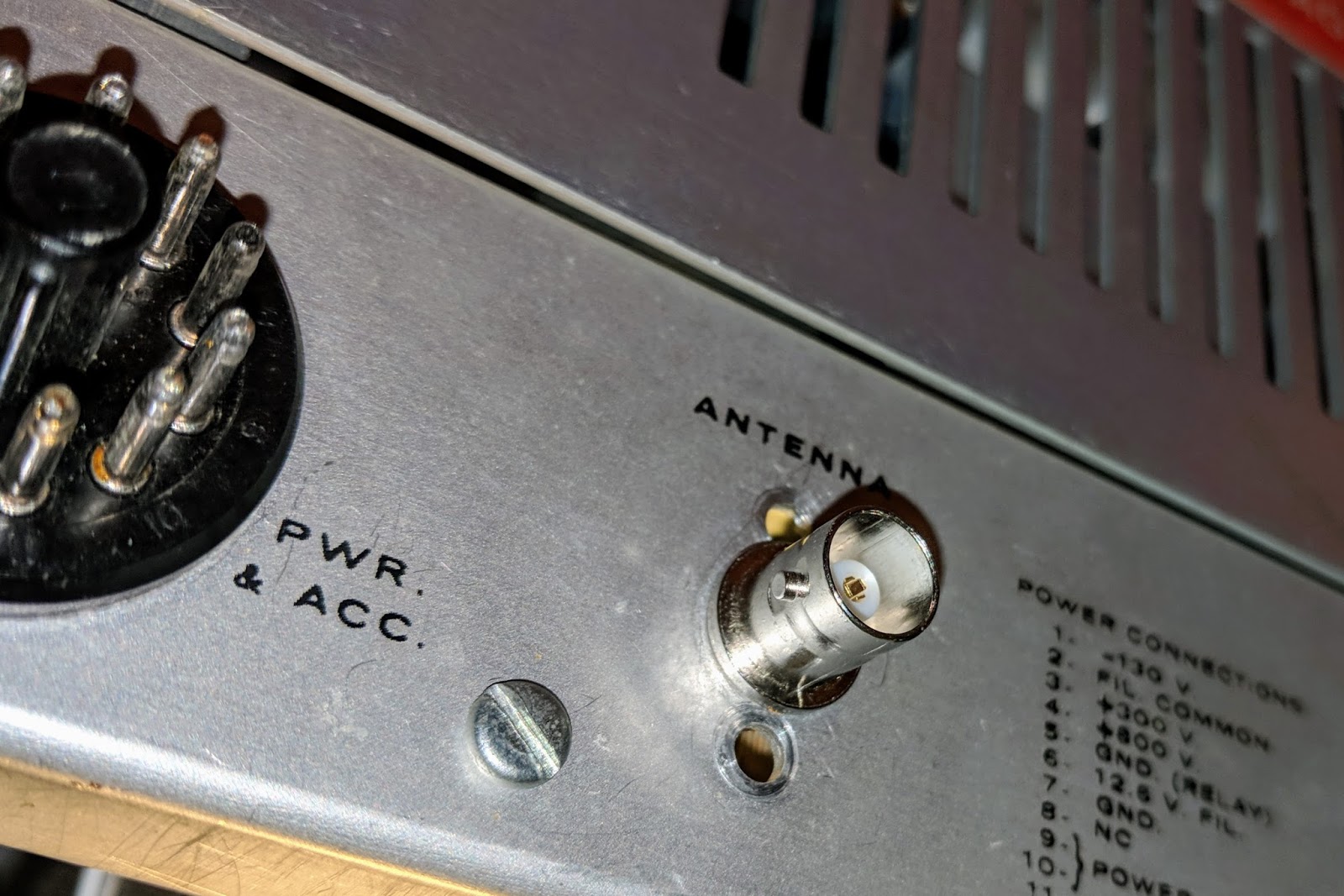 |
| New antenna jack |
The old radio now has power
UPDATE
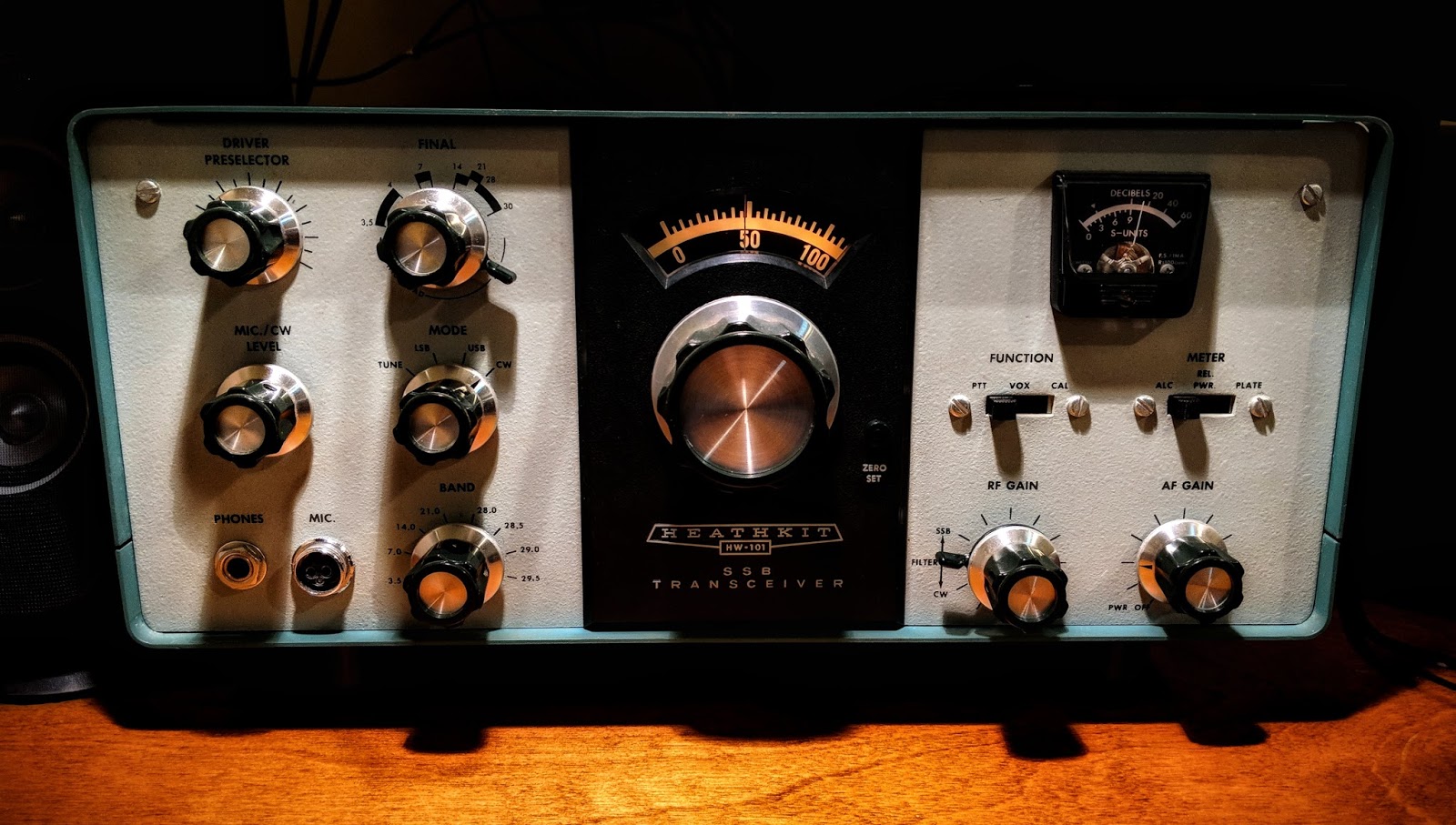 |
| Oldie but goodie |
Richard Carpenter, AA4OO, is a regular contributor to AmateurRadio.com and writes from North Carolina, USA. Contact him at [email protected].
 Ham Radio Deluxe |
 W5SWL Electronics |
 Ham Radio Prep |
 KB3IFH QSL Cards  Hip Ham Shirts  HamRadioAuctions HamRadioAuctions Reliance Antennas Reliance Antennas Enigma Shop Enigma Shop |  morseDX  Ni4L Antennas  R&L Electronics R&L Electronics antennas.us antennas.us QRV QRV |
- Matt W1MST, Managing Editor
