 |
 LHS Episode #224: The Weekender IX
 4 May 2018 | by
  Welcome to the newest edition of Linux in the Ham Shack, Weekender Edition. In this episode, we have a special interview with our friend Carter Hutchinson, K9KJN, who has a varied and very interesting back story and current story. We also discuss upcoming ham radio contests, special events, Open Source conferences, obscure Linux distributions, listener challenges, wine, food and song. Everything to keep you going for the next two weeks. Thanks for listening and see you in Xenia!
73 de The LHS Crew
Russ Woodman, K5TUX, co-hosts the Linux in the Ham Shack podcast which is available for download in both MP3 and OGG audio format. Contact him at [email protected].
On Learning Humility; a POTA Evening with Bugs in Florida
Monday April 30 I set up at Hobe Sound Nature Preserve, KFF-02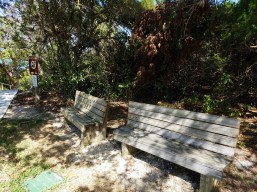 41, to activate on 40 and 20 meters. I waited till late in the day, arriving on site about 5:30pm EDT to set up and get ready for 40m to wake up as the sun goes down. Took my time walking the entire area to scout a good spot. Was previously here two weeks ago in a
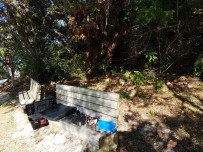
time-pressured situation and hurriedly set up at the first thing I found, a simple park bench. Not that much from which to choose here as this is principally a minimally-developed natural resource area, appealing to fishermen, hikers and nature-lovers, and not as well furnished with picnic areas like a State Park.
Got a eleven or twelve qso’s that day with the Link Dipole arranged up only a dozen feet in the beloved inverted vee style. Not the best operating position, but sufficient.
Here I am on the original activation, looking optimistic despite the ominous smoke on the horizon (just a controlled burn, actually).
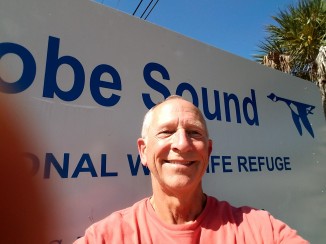

After an outrageously successful activation of Jonathan Dickinson State Park, only a few miles from here, this past weekend, I just knew I could return to Hobe Sound Preserve and catch many more Q’s to make my 44 needed to earn the coveted WWFF recognition. At JD I got 23 qso’s Saturday but needed more to make the grand total of 44 so went back Sunday and got on the air a little
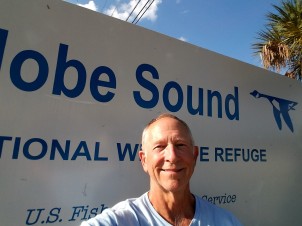 past seven on 40m, receiving a total of 49 more in under an hour! Wow, I said; Gosh, I even had a little pileup going a few minutes at a time. “Oh Baby, That’s a What I Like,” (with a Hatlo Hat Tip to the Big Bopper). Couldn’t wait to do that again at Hobe Sound today.
Confidently, I left the house 5pm to head to the site. Sorry I don’t have a picture of me confidently driving my car but just look how confident I’m still looking upon arrival; who wouldn’t want to work a ham like this one?
Took my time to walk most of the trails to scout the best location to set up and found this tranquil spot: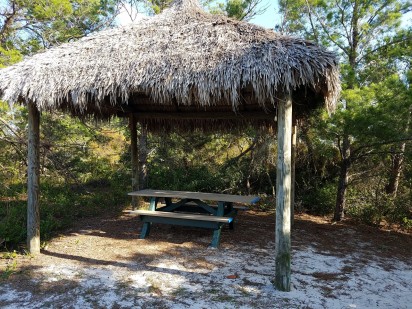
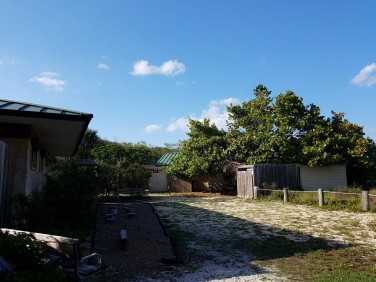
No cooperating trees in vicinity, so let’s set up a tower.s Below’s the view from the idyllic picnic table and thatched roof. The open area is to the North-NorthWest, ideal aiming direction for Southeast coast of Florida. Same orientation as yesterday – good omens.
I’ve learned how to erect a tower alone; step one is to lay out the antenna (EndFedz in this case) to judge where to place the tower and its guy lines. Lay the tower down, tie on the guy lines and provisionally place your tent stakes. Remember to attach the antenna and attach your coax to said antenna (this is the voice of experience speaking) before pushing up the tower. This is the dicey part, when having an assistant would be helpful, but in the spirit of self reliance, you can do this if you’ve guessed well where to place the tent stakes. Something I’ve started to say to the Curious, especially when the Curious is a Park Ranger, when they ask what you’re doing, say “I’m setting up a radio station in a simulated emergency situation.” They will eat this up.
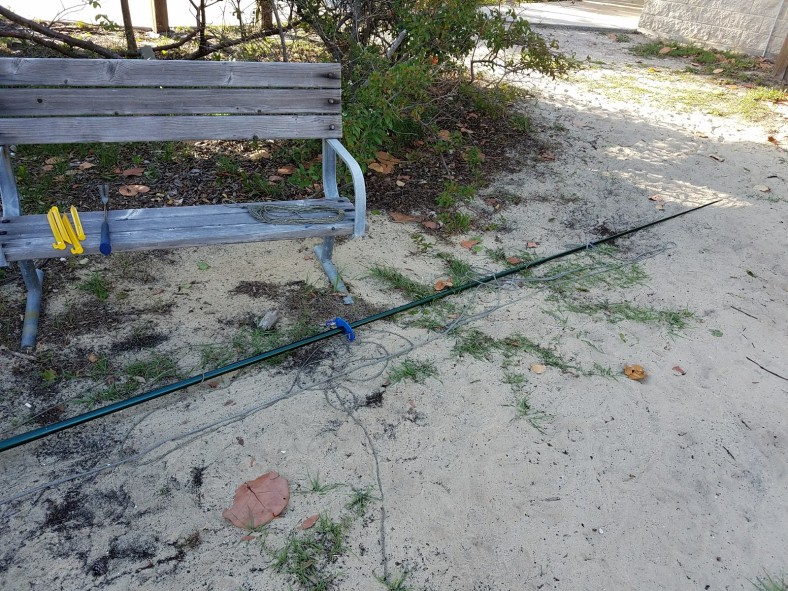
After some fumbling, your tower will finally look like this:

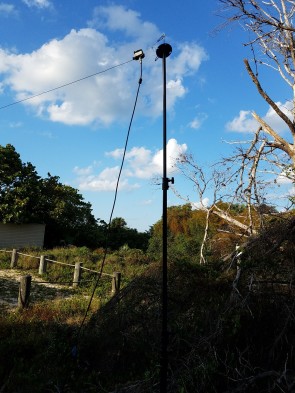
This tower tip is at 22-23 feet; yesterday, same time, same antenna, and same band, I was up 35′ thanks to a handy tree. But still, this looked really good so I expected similar if not better results, qso-wise. Here’s the low end of the EndFedz on a photographer’s lighting tripod, up ten feet and guyed.
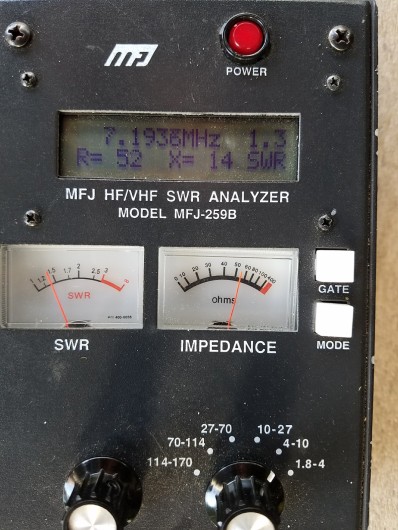
Bodacious good SWR as you can see in image below. All’s well, it seems.
Eager and self-assured, about 6:30 I begin calling CQ, ready for the inevitable pileups. Quickly I stumbled into a net and was invited to check in, so I did. Not POTA, but
a start. A next contact happened 2-3 minutes later. These always start slow, right? Twenty-seven minutes pass, my confidence dwindling, before getting another contact, AA5UZ, whom I worked yesterday. I’m going, “what’s wrong?” This same setup yesterday was causing pileups; I could hardly write down the call signs fast enough. I fiddled with the antenna, getting it higher, but no improvement in qso rate.
So what is it? Is it Monday versus Sunday, are the bands that different one day to the next, is it that I the antenna location is that much different to limit results? I kept at it, watching the sun go down and aware I failed to pack a table lamp or a decent flashlight but wanting the darkness to come and boost results. Had a few small stretch when I got 4-5 contacts in quick succession, and heard others trying me that I just could make out, but nothing like yesterday.
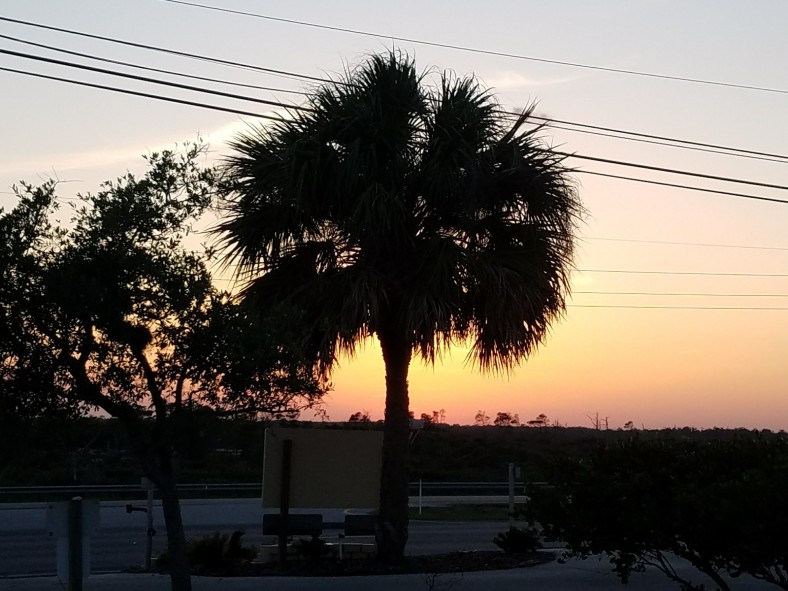
I dunno; packed up at 8:17 (end of civil twilight), and it was pretty dark when I finally departed, rather deflated. This was a lot of work for eleven qso’s, and I’m still only half way to the magic forty four. From the time I left the house to when I returned, it was over four hours invested. As an experiment, I will return to the happy spot at JD State Park where I got the 49 in an hour, and try again there to see if similar results occur at the same time, same band, same antenna setup. Stay tuned!
But for now, it’s time for ice cream; that usually makes me feel better. Thanks for listening; you’re in the log. De k4wk, Wayne, http://www.hamdom.com
Wayne Robertson, K4WK, is a regular contributor to AmateurRadio.com and writes from Georgia, USA.
Weekly Propagation Summary – 2018 Apr 30 16:10 UTC
Here is this week’s space weather and geophysical report, issued 2018 Apr 30 0140 UTC.
Highlights of Solar and Geomagnetic Activity 23 – 29 April 2018
Solar activity was very low. The strongest event of the period was a B2/Sf from Region 2706 (N03, L=281, class/area Dao/130 on 22 Apr) on 24/2145 UTC. The region slowly decayed to plage by 28 Apr. No Earth-directed CMEs were observed in available coronagraph imagery.
No proton events were observed at geosynchronous orbit.
The greater than 2 MeV electron flux at geosynchronous orbit were at high levels on 23-24 Apr, normal to high levels on 25 and 28 Apr, and moderate to high levels on 26, 27 and 29 Apr. The slowly decaying elevated levels were enhanced from CH HSS activity prior to 23 Apr.
Geomagnetic field activity was mostly quiet with isolated periods of unsettled observed on 23 and 27 Apr. No notable disturbances in the solar wind were observed.
Forecast of Solar and Geomagnetic Activity 30 April – 26 May 2018
Solar activity is expected to continue at very low levels over the outlook period.
No proton events are expected at geosynchronous orbit.
The greater than 2 MeV electron flux at geosynchronous orbit is expected to reach high levels on 30 Apr and 07-26 May. Normal to moderate levels are expected from 01-06 May. Enhancements in electron flux are expected due to the anticipation of multiple, recurrent CH HSSs.
Geomagnetic field activity is expected to range from quiet to G2 (moderate) geomagnetic storm levels. Quiet conditions are likely to persist until the arrival of the first of two negative polarity CH HSSs. Unsettled conditions on 06 May are likely to increase to G1 (Minor) storm levels on 07 May before decreasing to active on 08 May and finally unsettled over 09-10 May as the CH HSS wanes. Quiet conditions are then likely to persist over 11-16 May until the arrival of the second CH HSS. G2 (Moderate) storm levels likely on 17 May during the onset of the CIR ahead of the HSS. Unsettled to active conditions are likely on 18 May as total field strength decreases to around 5 nT with the HSS proper. Quiet to unsettled conditions are expected over 19 May as solar wind speeds slowly taper off. The remainder of the outlook period is expected to be mostly quiet under a nominal solar wind environment.
Don’t forget to visit our live space weather and radio propagation web site, at: http://SunSpotWatch.com/
Live Aurora mapping is at http://aurora.sunspotwatch.com/
If you are on Twitter, please follow these two users: 1. https://Twitter.com/NW7US 2. https://Twitter.com/hfradiospacewx
Check out the stunning view of our Sun in action, as seen during the last five years with the Solar Dynamics Observatory (SDO): https://www.youtube.com/watch?v=zXN-MdoGM9g
= = = = =
BOOK SALE: Space Weather and Sun Science – get these from Amazon, and help us stay online!
NOTICE: When you buy this (or any item after starting with this link), you are helping us keep our SunSpotWatch.com and other resources “on the air” (up and running!). In other words, you are helping the entire community. So, check out this book:
Here is the link to Amazon: http://g.nw7us.us/fbssw-aSWSC
We’re on Facebook: http://NW7US.us/swhfr
Visit, subscribe: NW7US Radio Communications and Propagation YouTube Channel
ICQ Podcast Episode 265 – Online Purchasing Killing Hamfests?
In this episode, Martin M1MRB is joined by Matthew Nassau M0NJX, Bill Barnes N3JIX and Chris Howard M0TCH to discuss the latest Amateur / Ham Radio news. Colin M6BOY rounds up the news in brief, and this episode’s feature is - Is the online purchasing killing Hamfests?
- Canada Get New 100W 5MHz Allocation
- Beijing Authorises 60m
- 2018 State of Ham Radio Survey
- Radio Ham Operator Achieves Contacts Across All 29 Bands
- Sunday Times Publishes RSGB Response
- Contest Events at Dayton Hamvention 2018
- Kenwood Trophy Award 2018
- First Class CW Operators Club 80th Anniversary
Colin Butler, M6BOY, is the host of the ICQ Podcast, a weekly radio show about Amateur Radio. Contact him at [email protected].
Ham College 40
Ham College episode 40 is now available for download.
General Amateur Radio Exam questions part 11. Digital Modes part 3, HF Antennas part 1.
01:05:41
George Thomas, W5JDX, is co-host of AmateurLogic.TV, an original amateur radio video program hosted by George Thomas (W5JDX), Tommy Martin (N5ZNO), Peter Berrett (VK3PB), and Emile Diodene (KE5QKR). Contact him at [email protected].
Amateur Radio Weekly – Issue 201

Walmart Parking Lots on the Air
WMPLOTA is a special event and award scheme for amateur radio satellite operators that encourages the practice of portable operation in the ubiquitous and easily accessible location of Walmart parking lots.
wmplota.org
Using the WiFi chip on a Raspberry Pi 3B+ as a TX capable SDR
Combined with RPiTX which is a Raspberry Pi tool for transmitting arbitrary RF signals using a GPIO pin between 5 kHz to 1500 MHz, the Raspberry Pi 3B+ may end up becoming a versatile low cost TX SDR just on it’s own.
RTL-SDR
Special call signs to be on the air for 2018 FIFA World Cup
Special Canadian call sign VB18FIFA will be among those active around the world from June 1 to July 15 for a World Cup 2018 football Amateur Radio “marathon.”
ARRL
Phone contesting tips for DX contests
This article is prompted by the recent WPX SSB contest, in which I worked thousands of guys from Aruba as P49Y, which engendered much reflection (and teeth-gnashing, to be sure) about how U.S. hams can be best understood from the DX end.
AE6Y
Why does electricity have a sound?
When we’re using electricity in our day to day lives we don’t hear a peep. But at grid scale our electricity system makes a variety of noises.
drax
Dual Band 4/6m Moxon Antenna
My first step was to calculate the dimensions for the driven and reflector elements for my centre frequency of 70.200 (centre of SSB activity on 4m).
M0JCQ’s Ham Blog
The K7TMG HF Morse Code Temperature Beacon
QRPp beacons have been a “thing” of mine for a while now, ever since I put the Sproutie SPT HiFER Beacon on the air, sending it’s 12 wpm SPT ID out continuously on 13558KHz, with a mighty 4.6mW to a much shortened loaded dipole.
AA7EE
After Hurricane Maria, AM radio makes a comeback in Puerto Rico
Desperate for news about the disaster befalling her island, Plaza turned on a battery-powered radio and found that a local radio station, WKJB 710 AM, was maintaining its broadcast.
Columbia Journalism Review
GDPR and Amateur Radio Clubs
Does GDPR apply to amateur radio clubs? From my understanding, yes. Amateur Radio clubs that hold personal data need to be compliant by the 25th of May.
Essex Ham
Video
Loop antennas for AM broadcast band
N1SPY looks at the inner workings of an AM broadcast band receiving loop antenna.
YouTube
Amateur Radio Weekly is curated by Cale Mooth K4HCK. Sign up free to receive ham radio's most relevant news, projects, technology and events by e-mail each week at http://www.hamweekly.com.
The Pedernal – My SOTA Activation
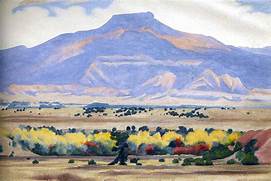 |
| Pedernal Painted by Georgia O'Keefe 1942 |
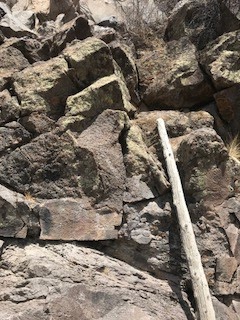 |
| The Near Vertical Climb The actual route is up the left side |
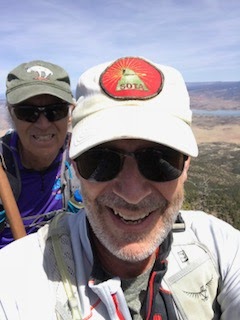 |
| AD5A and KT5X on the summit of the Pedernal |
 |
| AD5A on top of the Pedernal |
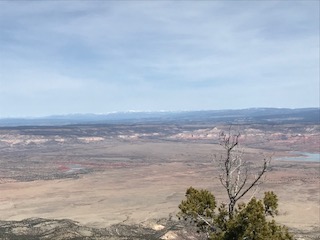 |
| View from the top |
Mike Crownover, AD5A, is a regular contributor to AmateurRadio.com and writes from Texas, USA. Contact him at [email protected].
 Ham Radio Deluxe |
 W5SWL Electronics |
 Ham Radio Prep |
 KB3IFH QSL Cards  Hip Ham Shirts  HamRadioAuctions HamRadioAuctions Reliance Antennas Reliance Antennas Enigma Shop Enigma Shop |  morseDX  Ni4L Antennas  R&L Electronics R&L Electronics antennas.us antennas.us QRV QRV |
- Matt W1MST, Managing Editor
