 |
 ICQ Podcast Episode 271 – Network Radio
 8 July 2018 | by
 In this episode, Martin M1MRB is joined by Martin Rothwell M0SGL, Matthew Nassau M0NJX and Ed Durrant DD5LP to discuss the latest Amateur / Ham Radio news. Colin M6BOY rounds up the news in brief and this episode’s feature Network Radio.
Building an RF Direction Finding Robot
HF Managers Handbook V9.0
Crickets, Frogs and Ham Radio
Understanding Need to Reduce Electronic Waste
Free UK Online Training Course
British Inland Waterways on the Air 2018
EURAO Frequency Guide
Upcoming World Radiosport Team Championship
Colin Butler, M6BOY, is the host of the ICQ Podcast, a weekly radio show about Amateur Radio. Contact him at [email protected].
Amateur Radio Weekly – Issue 210

K4R Dry Tortugas EL84 roving trip on schedule
Robert KE4AL, Rich N4ESS, and Matthew, NJ4Y will be arriving on Garden Key, EL84np in the Dry Tortugas mid-day on Friday July 6, staying all day Saturday, and then leaving Sunday morning July 8.
Southgate
Postmortem decoding of SSTV/APRS
SSTV decoding went quite fine using the Android app Robot36.
Notizbl0g.
Exposing hospital pager privacy breaches
It has been a known open secret that for years many hospitals have been transmitting sensitive patient data over the air completely unencrypted via their pager network.
RTL-SDR.com
The legacy of Iraq’s amateur operators lives on
People from all over the world reached out to Baghdad’s team of “hams” in hope that they could lend a helping hand.
The National
Radio Amateur to pay $7,000 to settle FCC interference case
Ham intentionally interfered with the communications of other Amateur Radio operators and failed to properly identify.
ARRL
Home Beaches On The Air
Beaches On The Air (BOTA) is an award scheme for radio amateurs and shortwave listeners that encourages portable operation from beaches.
BOTA
No more bullying
This form records reports of bullying within Amateur Radio in Australia.
VK6
Pentagon Amateur Radio Club
The Pentagon Amateur Radio Club (PARC) is open to all active duty military, government civilians, or contractors assigned to the Pentagon.
K4AF
15 kilometre LoRa SSH link with RNode
I decided I’d try to see if I could create a useable SSH link over a distance of 15 kilometres, with just two RNodes, and no intermediaries.
unsigned.io
Video
How to hack your 433 MHz Devices
Hacking an outdoor awning to auto retract based on windspeed gathered from a home weather station.
YouTube
Get Amateur Radio Weekly in your inbox.
Sign-up here
Amateur Radio Weekly is curated by Cale Mooth K4HCK. Sign up free to receive ham radio's most relevant news, projects, technology and events by e-mail each week at http://www.hamweekly.com.
LHS Episode #234: The Weekender XII
 Welcome to the weekend! In this episode of Linux in the Ham Shack, your hosts discuss good food, good fun, good friends and some wonderful things to do and try on the next couple of weekends. Thank you so much for tuning in and we hope you're enjoying our show. Please leave us feedback and tell us how we're doing.
Cheers and 73 de The LHS Crew
Russ Woodman, K5TUX, co-hosts the Linux in the Ham Shack podcast which is available for download in both MP3 and OGG audio format. Contact him at [email protected].
LHS Episode #233: Thunderbirds
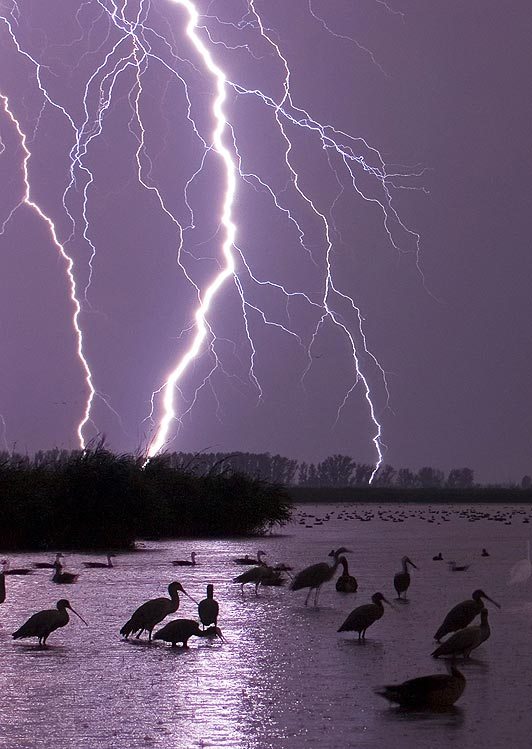 Hello! Welcome to the latest installment of Linux in the Ham Shack, Episode 233. In this episode, the hosts discuss the World Radio Sport Team Challenge, making a difference through the ARRL, the Reverse Beacon Network, FT-8, two new Linux Mint releases, SUSE and OpenSUSE. There's also a return to the good ol' days of GitHub diving. Thanks as always for listening.
73 de The LHS Crew
Russ Woodman, K5TUX, co-hosts the Linux in the Ham Shack podcast which is available for download in both MP3 and OGG audio format. Contact him at [email protected].
FT8
It’s like slot machines for amateur radio.
Anthony, K3NG, is a regular contributor to AmateurRadio.com.
Weekly Propagation Summary – 2018 Jul 02 16:10 UTC
Here is this week’s space weather and geophysical report, issued 2018 Jul 02 0504 UTC.
Highlights of Solar and Geomagnetic Activity 25 June – 01 July 2018
Solar activity was at very low levels. Region 2715 (N08, L=231, class/area Dao/070 on 23 Jun) was the only spotted region on the disk and was quiet throughout the summary period. No Earth-directed CMEs were observed.
No proton events were observed at geosynchronous orbit.
The greater than 2 MeV electron flux at geosynchronous orbit was at high levels throughout the period. A maximum flux of 5,570 pfu was observed at 28/1935 UTC.
Geomagnetic field activity was at quiet to isolated G1 (Minor) storm periods from late on 25 Jun through 26 Jun in response to an SSBC from a positive to a negative sector observed midday on 25 Jun. A CIR signature was evident early on 26 Jun in advance of an equatorial, negative polarity CH HSS. Total field (Bt) peaked at 14 nT, the Bz component reached a maximum negative extent of -9 nT and wind speeds increased from about 400 km/s to about 670 km/s; all during 26 Jun. For the remainder of the summary period, field conditions were at quiet levels with an isolated unsettled interval late on 27 Jun. By the end of the summary period, Bt and Bz were at nominal levels while wind speeds decreased to near 350 km/s.
Forecast of Solar and Geomagnetic Activity 02 July – 28 July 2018
Solar activity is expected to be at very low levels through 10 Jul. With the return of old Region 2715 (N08, L=231) from 11-24 Jul, activity levels are expected to remain at very low levels, with a slight chance for C-class activity. A return to very low levels is expected from 25-28 Jul.
No proton events are expected at geosynchronous orbit.
The greater than 2 MeV electron flux at geosynchronous orbit is expected to be at high levels on 02-10 Jul and again on 21-28 Jul due to CH HSS influence. Normal to moderate levels are expected from 11-20 Jul.
Geomagnetic field activity is expected to be at unsettled to active levels on 15 Jul and 20-24 Jul with isolated G1 (Minor) geomagnetic storms likely on 23 Jul, all due to recurrent CH HSS activity. Mostly quiet levels are expected for the remainder of the outlook period.
Don’t forget to visit our live space weather and radio propagation web site, at: http://SunSpotWatch.com/
Live Aurora mapping is at http://aurora.sunspotwatch.com/
If you are on Twitter, please follow these two users: 1. https://Twitter.com/NW7US 2. https://Twitter.com/hfradiospacewx
– – – – – – – – – – – – –
Be sure to subscribe to our space weather and propagation email group, on Groups.io
https://groups.io/g/propagation-and-space-weather
Spread the word!
– – – – – – – – – – – – –
Links of interest:
+ Amazon space weather books: http://g.nw7us.us/fbssw-aSWSC
+ https://Twitter.com/NW7US
+ https://Twitter.com/hfradiospacewx
Space Weather and Ham Radio YouTube Channel News:
I am working on launching a YouTube channel overhaul, that includes series of videos about space weather, radio signal propagation, and more.
Additionally, I am working on improving the educational efforts via the email, Facebook, YouTube, Tumblr, and other activities.
You can help!
Please consider becoming a Patron of these space weather and radio communications services, beginning with the YouTube channel:
https://www.patreon.com/NW7US
The YouTube channel:
https://YouTube.com/NW7US
..
Visit, subscribe: NW7US Radio Communications and Propagation YouTube Channel
The Spectrum Monitor — July, 2018
 Stories you’ll find in our July, 2018 issue:
The Development of Police Radio Communications in the United States
By John F. Schneider W9FGH
Policing in America before the 1920s was done by the beat policeman, who wandered his assigned neighborhood on foot. If he needed to communicate with his precinct officer, he used a street corner police call-box. The Detroit Police Department, led by a visionary police commissioner, was the first to seriously experiment with installing radio receivers in patrol cars, beginning in 1922 with the licensing of its own radio station, KOP. But, although the emerging technology of radio held obvious promise as a means of communication, there were still many shortcomings in its fledgling years that prevented its reliable use in vehicles. John notes the historical issues involved with police broadcasting and the general public tuning in—a nearly one-hundred year-old tradition.
Listening in on the WWI Western Front: The SCR-54A (BC-14A) Receiver
By Rich Post KB8TAD
One hundred years ago, the United States was at war. At the start of the World War I, the US Navy, as authorized by the President, ordered that all private radio transmitters and receivers, whether licensed or unlicensed, be dismantled. The order was not just for the spark transmitters of the day, but even simple hobbyist crystal receiving sets. Rich explores the SCR-54A BC14A , a state-of-the-art WWI radio receiver system, which along with a BC-15A spark transmitter wedged aboard an airplane would allow the pilot to provide reconnaissance from the battlefield. Rich takes a look at this combo, which took serious skills to operate in testing—let alone in battle.
Cheerio: Amateur Radio’s Checkered History at the BBC
By Richard Fisher KI6SN
Last fall, with the pomp and ceremony for which Great Britain is so well known, Lord Tony Hall, Baron Hall of Berkenhead, and head of the BBC, cut the ribbon to officially open amateur radio station G8BBC, turning the page to the newest chapter in the British Broadcasting Corporation’s on-again-off-again romance with amateur radio. Richard explains how hams at the BBC have fared over the decades, occupying a thin sliver of real estate, courtesy of the world’s most well known shortwave voice.
TSM Reviews: Palstar LA-1K Solid-State HF Amplifier
By Mark Haverstock K8MSH
Since the beginning of ham radio, vacuum tube amplifiers have dominated the market. They’re relatively economical to manufacture, tolerant of abuse, and have some leeway to match antennas that aren’t exactly resonant. More recently, solid-state amplifiers have gained traction among amateur radio operators. They’re instant-on and more convenient—getting you on the air with less operator intervention. Mark examines the Palstar LA-1K solid-state HF amplifier and finds some very positive attributes that come at a stiff price.
Scanning America
By Dan Veenaman
Portsmouth (VA), Grant County (WI) and the ISS
Federal Wavelenghts
By Chris Parris
More Federal Digital Modes
Milcom
By Larry Van Horn N5FPW
Update: Monitoring Military Hurricane Communications
Utility Planet
By Hugh Stegman
U.S. Radio Strangeness Continues
Shortwave Utility Logs
By Hugh Stegman and Mike Chace-Ortiz
VHF and Above
By Joe Lynch N6CL
Contests and Field Day for VHF and Above
Digitally Speaking
By Cory GB Sickles WA3UVV
When Elephants Fight, it is the Ground that Suffers
Amateur Radio Insights
By Kirk Kleinschmidt NT0Z
Static and Frustration from DC to Daylight—Welcome to Summer Propagation
Radio 101
By Ken Reitz KS4ZR
$664 Solution to Solar Cycle Doldrums
Radio Propagation
By Tomas Hood NW7US
The Sun in Sonic and Visual Art: an Aid to Scientists
The World of Shortwave Listening
By Thomas Witherspoon K4SWL
SDR Primer Part 2: Exploring the World of SDRs for $200 or Less
The Shortwave Listener
By Fred Waterer
40 Years of Shortwave Listening
Maritime Monitoring
By Ron Walsh VE3GO
Sailing On
The Longwave Zone
By Kevin O’Hern Carey WB2QMY
Looking Back, Looking Ahead
Adventures in Radio Restoration
By Rich Post KB8TAD
Ballantine 300 and the Boonton Connection
Antenna Connections
By Dan Farber AC0LW
Understanding Ground: A Review
The Spectrum Monitor is available in PDF format which can be read on any desktop, laptop, iPad®, Kindle® Fire, or other device capable of opening a PDF file. Annual subscription is $24. Individual monthly issues are available for $3 each.
Ken Reitz, KS4ZR, is publisher and managing editor of The Spectrum Monitor. Contact him at [email protected].
 Ham Radio Deluxe |
 W5SWL Electronics |
 Ham Radio Prep |
 KB3IFH QSL Cards  Hip Ham Shirts  HamRadioAuctions HamRadioAuctions Reliance Antennas Reliance Antennas Enigma Shop Enigma Shop |  morseDX  Ni4L Antennas  R&L Electronics R&L Electronics antennas.us antennas.us QRV QRV |
- Matt W1MST, Managing Editor
