 |
 What was your magnet to Amateur radio?
 3 November 2019 | by
 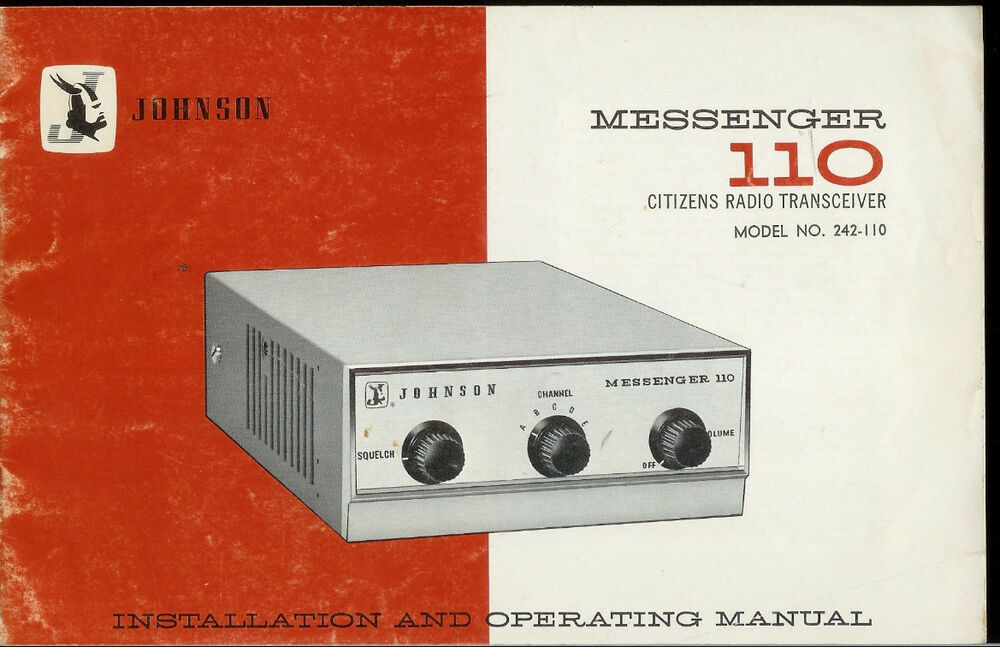 |
| My first CB radio |
 |
| My first SSB CB radio |
I now had a full time job and was working on a family but my Amateur radio thrill was still very much alive. I was able to get a part-time job at an Amateur radio store that just opened up in my town. This was great exposure and allowed me time to study for my exams which I took and passed. My wife and I were renting a house in the country at the time and I was able to put up an R6 vertical antenna and through part time amateur radio job I got a great deal on an Icom 735 radio. I was fascinated with CW after learning it for my basic licence, I wanted to keep my learning curve alive
 |
| My pre-amp mic |
 |
| The Icom 735 |
Mike Weir, VE9KK, is a regular contributor to AmateurRadio.com and writes from New Brunswick, Canada. Contact him at [email protected].
TX Factor Episode 24 Goes Live
Episode 24 of TX Factor is a Hamfest 2019 special, reporting on some of the eye-catching products and services on display at this year’s event in Newark, UK.
We investigate the current state of HF propagation, celebrate 50 years of UK’s Nevada Radio, Mike tries out a few solder stations, and Bob goes all soft over the VMARS vintage AM radios. And to cap it all, we take a look at the latest rig from Yaesu.
As always, there’s a chance to win a great bundle of prizes from our UK sponsors, ML&S and the RSGB.
We hope you enjoy the show!
Nick Bennett 2EØFGQ co-hosts TX Factor with Bob McCreadie GØFGX and Mike Marsh G1IAR. Contact the team at [email protected]
Here Comes The ’29 QSO Party!

Saturday, November 9th, as well as the following Saturday (16th), will see the annual running of the Bruce Kelley 1929 QSO Party, otherwise known as the '1929 BK'.
Only transmitters that are 'era-appropriate' are allowed to be used. More specifically, transmitters must employ tubes that were available in 1929 or earlier, and transmitters must be self-excited. No crystals allowed! Crystals were new and largely unaffordable for most hams back in the depression days.
The year of 1929 marked a real turning point in amateur radio as governments finally cracked-down on things such as frequency stability, out of band operations and re-alignment of call districts. In short, hams were henceforth required to behave themselves and to clean up their signals and methods of operation.
 |
| courtesy: http://www.arrl.org/ |
If you tune across the CW bands during these two upcoming Saturday nights, you will have the rare opportunity to hear exactly what the bands would have sounded like back in the very early '30s'.
For the most part you will hear single-tube Hartley, Colpitts or TNT oscillators along with a few two-tube MOPAs thrown in. Many of them will suffer the same problems encountered by the boys of '29 ... chirp, drift, buzzy notes and frequency instability from antennas swaying in the wind.
The MOPAs will sound much better but some surprisingly nice-sounding signals can be heard coming from properly tuned and optimised single-tube oscillators. I recall being blown away by the lovely sounding signal I heard from such a rig when first tuning into the BK activity several years ago, only to learn that it was a self-excited Hartley using 1/4" copper tubing for the oscillator tank circuit!
The '29 watering-hole on 80m will be around 3550-3580 kilocycles (be careful not to confuse this with kilohertz!) while the early afternoon to post-sunset 40m activity will be found from 7100-7125 kc. There may even be a few on the very low end of 160m. Although many of these transmitter styles were used on 20m and higher, the BK rule-makers have wisely decided not to inflict these sounds on the present ham populace as it would likely keep the 'Official Observers' busy for several days writing pink-slips.
Like last year, I will set up my Hull Hartley (160, 80, 40m), as I haven't used it much since building the MOPA a few years ago. If it's very windy (almost assured), the Hartley will really sound like 1929!
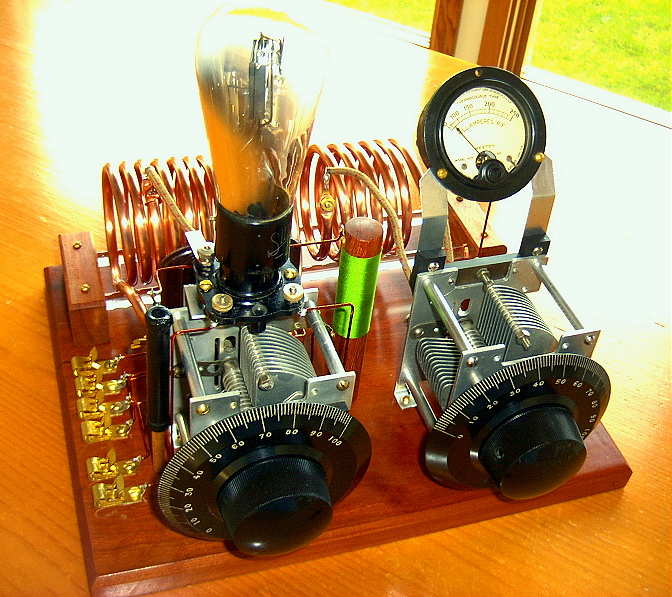 |
| My Hull Hartley |
You can learn more about amateur radio happenings leading up to and following the 1929 crackdown in my earlier series of 'Why '29' blogs here:
Part 2
Part 3
Part 4
Those wishing to put something together for next year's event can find everything needed here:
Building '29-Style - Part 1
Building '29-Style - Part 2
Let's hope for good conditions for this event as the last few years have been adversely affected by geomagnetic storming. Poor propagation or not, I guarantee there will be plenty of '29ers busy calling 'CQ AWA' on the low bands.
Complete BK details are available here.
Steve McDonald, VE7SL, is a regular contributor to AmateurRadio.com and writes from British Columbia, Canada. Contact him at [email protected].
Weekly Propagation Summary – 2019 Oct 28 16:10 UTC
Here is this week’s space weather and geophysical report, issued 2019 Oct 28 0109 UTC.
Highlights of Solar and Geomagnetic Activity 21 – 27 October 2019
Solar activity was very low. The solar disk was spotless throughout the period. A faint, slow-moving, possibly Earth-directed CME was observed in satellite imagery at 25/0654 UTC, with a potential arrival late on 29 Oct or early on 30 Oct.
No proton events were observed at geosynchronous orbit.
The greater than 2 MeV electron flux at geosynchronous orbit reached high levels on 25-27 Oct with a peak flux of 36,223 pfu observed at 27/1900 UTC. Electron flux was at normal levels throughout the remainder of the reporting period.
Geomagnetic field activity reached G2 (Moderate) storm levels on 25 Oct, G1 (Minor) storm levels on 26 Oct, and active levels on 24 Oct in response to a recurrent, positive-polarity CH HSS. Quiet to unsettled conditions were observed throughout the remainder of the period.
Forecast of Solar and Geomagnetic Activity 28 October – 23 November 2019
Solar activity is expected to be at very low levels throughout the outlook period.
No proton events are expected at geosynchronous orbit.
The greater than 2 MeV electron flux at geosynchronous orbit is expected to reach high levels on 28-31 Oct, and 21-23 Nov, with moderate levels on 01-15, and 20 Nov, in response to coronal hole high speed stream (CH HSS) influence.
Geomagnetic field activity is expected to reach G1 (Minor) storm levels on 21-22 Nov, with active levels on 28-30 Oct, and 20, 23 Nov, due to recurrent CH HSS activity. Quiet to unsettled conditions are anticipated throughout the remainder of the outlook period.
Don’t forget to visit our live space weather and radio propagation web site, at: http://SunSpotWatch.com/
Live Aurora mapping is at http://aurora.sunspotwatch.com/
If you are on Twitter, please follow these two users: 1. https://Twitter.com/NW7US 2. https://Twitter.com/hfradiospacewx
– – – – – – – – – – – – –
Be sure to subscribe to our space weather and propagation email group, on Groups.io
https://groups.io/g/propagation-and-space-weather
Spread the word!
– – – – – – – – – – – – –
Links of interest:
+ Amazon space weather books: http://g.nw7us.us/fbssw-aSWSC
+ https://Twitter.com/NW7US
+ https://Twitter.com/hfradiospacewx
Space Weather and Ham Radio YouTube Channel News:
I am working on launching a YouTube channel overhaul, that includes series of videos about space weather, radio signal propagation, and more.
Additionally, I am working on improving the educational efforts via the email, Facebook, YouTube, Tumblr, and other activities.
You can help!
Please consider becoming a Patron of these space weather and radio communications services, beginning with the YouTube channel:
https://www.patreon.com/NW7US
The YouTube channel:
https://YouTube.com/NW7US
..
Visit, subscribe: NW7US Radio Communications and Propagation YouTube Channel
When you think you have covered all the bases
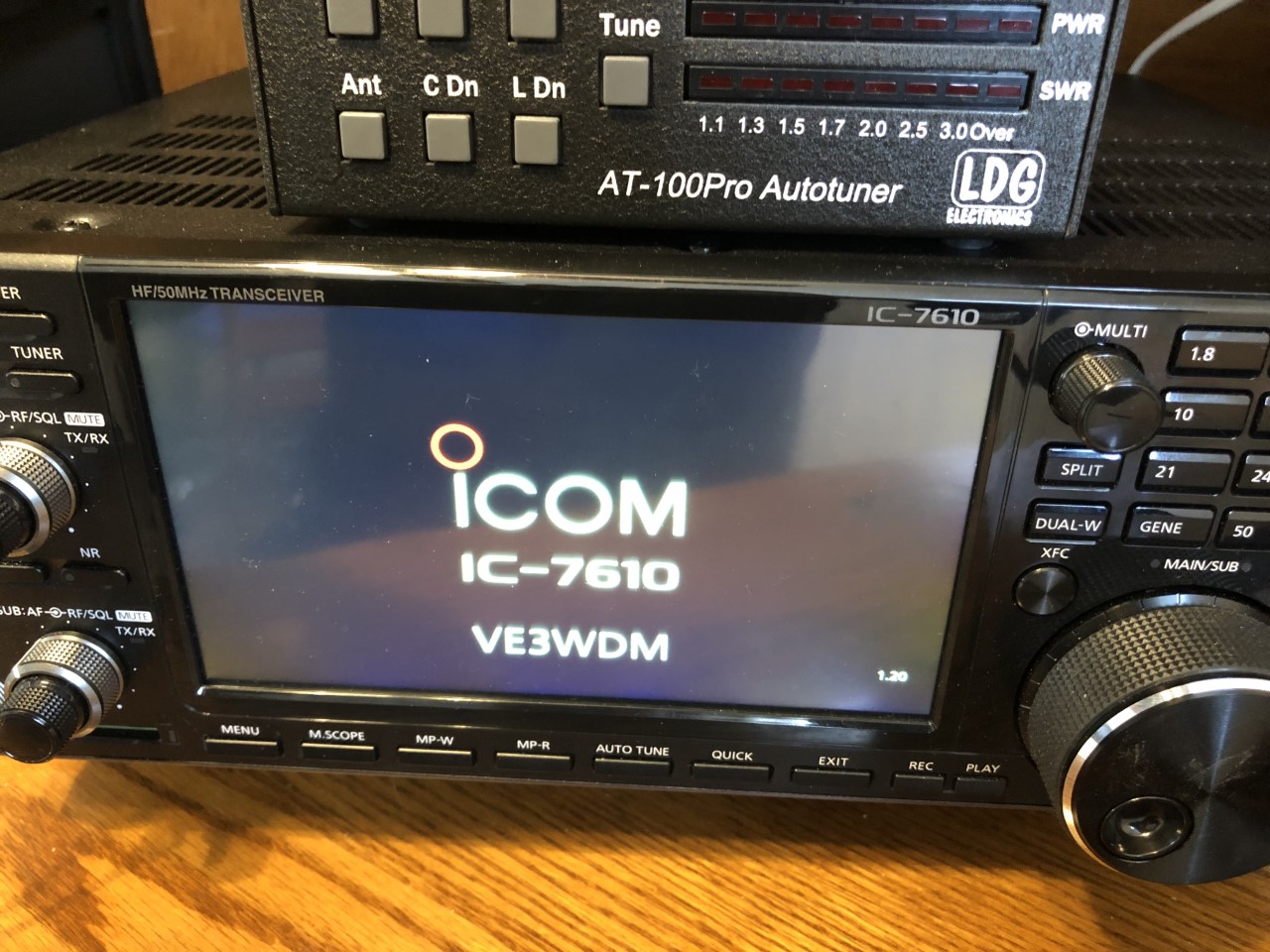 | |
| My splash screen on the Icom 7610 for the past 2 months! |
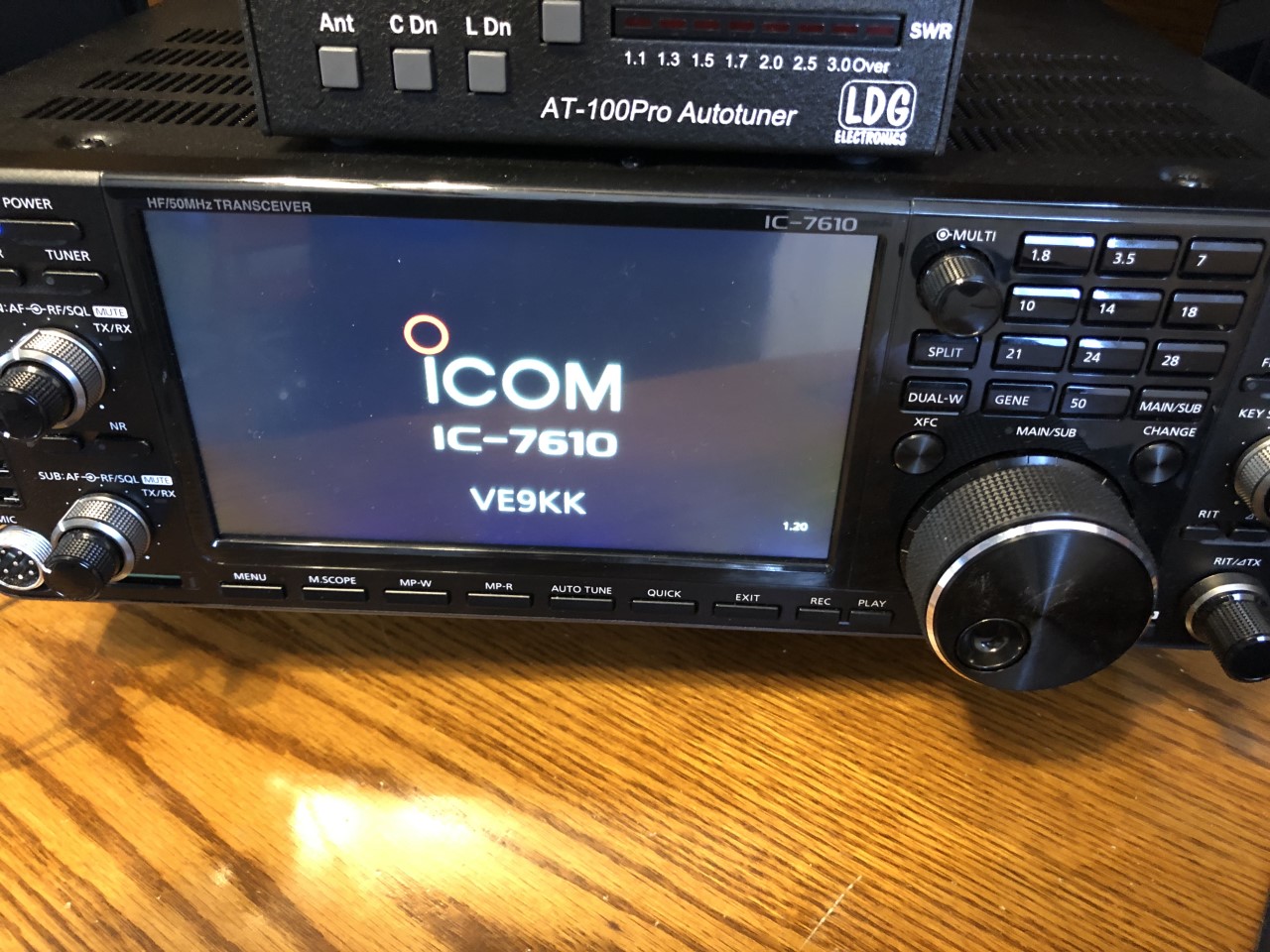 |
| Ahhhh that's better. |
Mike Weir, VE9KK, is a regular contributor to AmateurRadio.com and writes from New Brunswick, Canada. Contact him at [email protected].
ICQ Podcast Episode 310 – Grow, Merge or Disband your Amateur Radio Club!
In this episode, Martin M1MRB is joined by Chris Howard M0TCH, Martin Rothwell M0SGL, Frank Howell K4FMH, Ed Durrant DD5LP and Bill Barnes N3JIX to discuss the latest Amateur / Ham Radio news. Colin M6BOY rounds up the news in brief and this episode’s feature is Grow, Merge or Disband your Amateur Radio Club!
ICQ AMATEUR/HAM RADIO PODCAST DONORS
We would like to thank our monthly and annual subscription donors for keeping the podcast advert free. To donate, please visit - http://www.icqpodcast.com/donate
- PACTOR Developer SCS Announces Monitoring Software - Can Online Ham Radio Exams Improve Accessibility? - Inspiring Youth with Science in Space - Michigan State University Amateur Radio Club Celebrates Centennial with Second-Century Special Event - New ARRL Online Groups for More Direct Communications - Amateur Radio Operator Faces Fine for Blocking Other Amateurs - RSGB Youth Team Recruiting - December is YOTA Month
Colin Butler, M6BOY, is the host of the ICQ Podcast, a weekly radio show about Amateur Radio. Contact him at [email protected].
Ham College 58
Ham College episode 58 is now available for download.
General Amateur Radio Exam part 29. General questions pool updates 1 of 3.
01:06:31
George Thomas, W5JDX, is co-host of AmateurLogic.TV, an original amateur radio video program hosted by George Thomas (W5JDX), Tommy Martin (N5ZNO), Peter Berrett (VK3PB), and Emile Diodene (KE5QKR). Contact him at [email protected].
 Ham Radio Deluxe |
 W5SWL Electronics |
 Ham Radio Prep |
 KB3IFH QSL Cards  Hip Ham Shirts  HamRadioAuctions HamRadioAuctions Reliance Antennas Reliance Antennas Enigma Shop Enigma Shop |  morseDX  Ni4L Antennas  R&L Electronics R&L Electronics antennas.us antennas.us QRV QRV |
- Matt W1MST, Managing Editor
