 |
 Software error messages…..gotta love them!!!
 10 November 2019 | by
 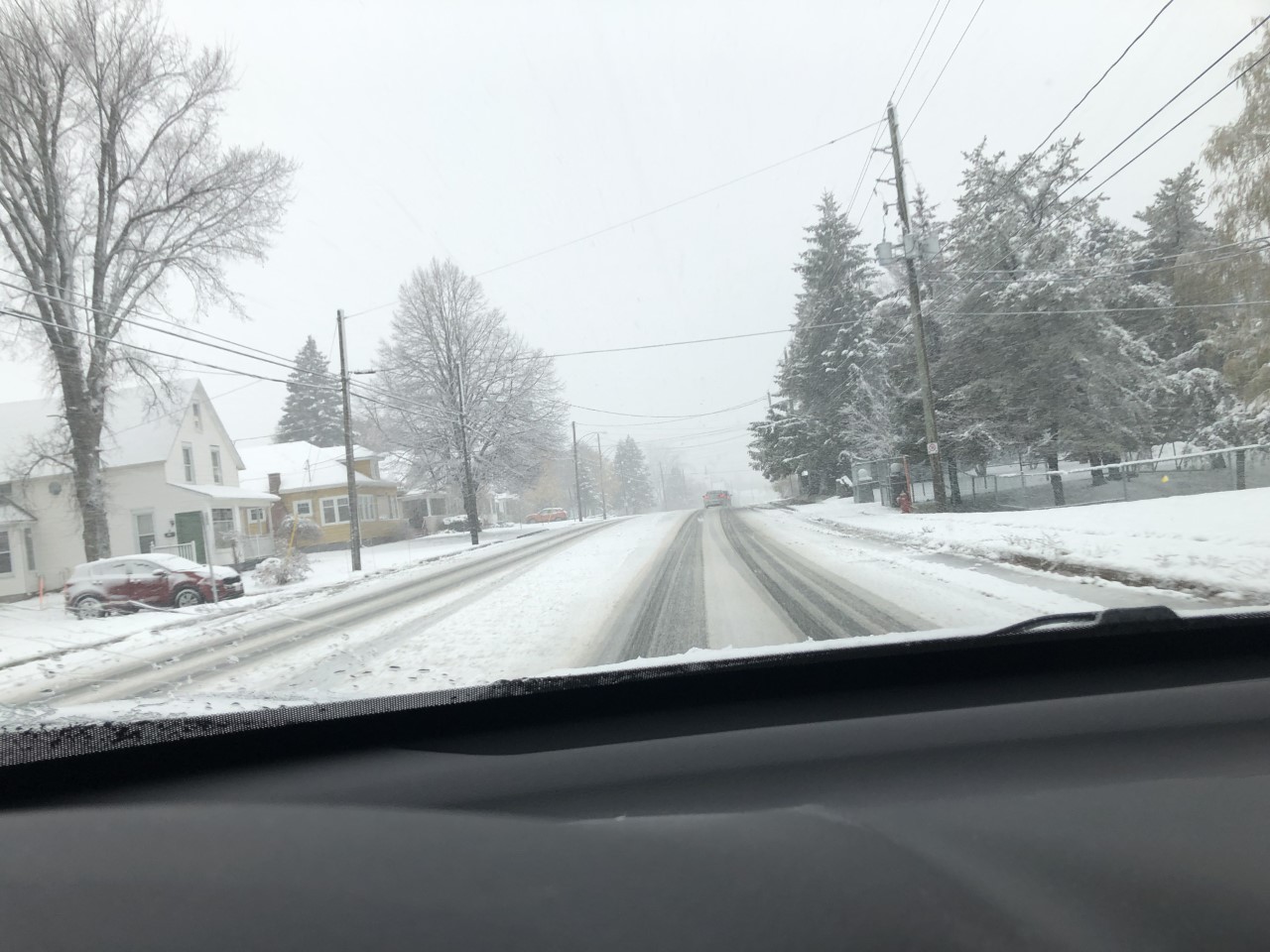 |
| A drive though town |
While on FT8 Saturday morning on 30m which is my normal watering hole these days with a cup of Java as I greet the morning I noticed a message appear on my PC screen. It was a message from my Win4icom software suite. Usually these messages are not a good sign and rarely contain info you really want to see while having fun on the radio. This message was not good news...and my FT8 stopped working, my rig was stuck in transmit and CAT communication was lost.
 |
| Just love seeing these messages |
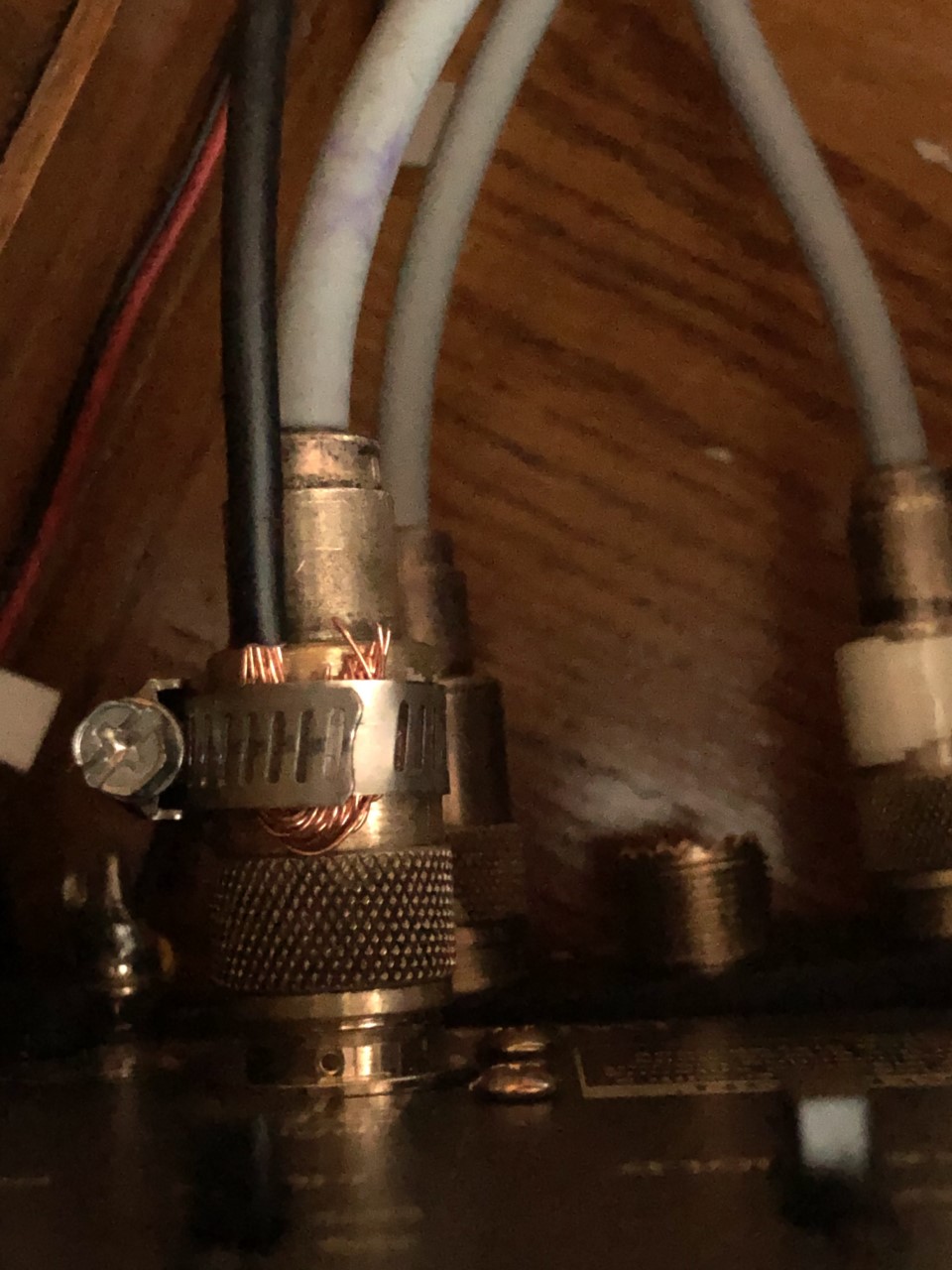 |
| Make shift connection |
Mike Weir, VE9KK, is a regular contributor to AmateurRadio.com and writes from New Brunswick, Canada. Contact him at [email protected].
ICQ Podcast Episode 311 – Pocket Electronic Workshop
In this episode, Martin M1MRB is joined by Leslie Butterfield G0CIB, Edmund Spicer M0MNG, Dan Romanchik KB6NU and Ruth Willet KM4LAO to discuss the latest Amateur / Ham Radio news. Colin M6BOY rounds up the news in brief and this episode’s feature is Pocket Electronic Workshop.
ICQ AMATEUR/HAM RADIO PODCAST DONORS
We would like to thank Joey Ferguson (W4JF) and our monthly and annual subscription donors for keeping the podcast advert free. To donate, please visit - http://www.icqpodcast.com/donate
- AM Amateur Radio Europe announce the AM QSO Party 2020 - HackSpace magazine Antenna Article - West Point Cadets use Amateur Radio to Contact ISS - Build a Long-Distance Data Network using Ham Radio - FCC Asked to Clarify Amateur Rules Governing Encrypted or Encoded Messages - New Arkansas Beacon on Air - Saudi Arabia and Seychelles join IARU - Irish Digital Radio Stations to Close
Colin Butler, M6BOY, is the host of the ICQ Podcast, a weekly radio show about Amateur Radio. Contact him at [email protected].
Oh, They Should’ve … Here’s Why and Why Not on the QSX
How often have you seen into the thinking process of the development engineering team for an amateur radio manufacturer? Or an industrial test and measurements manufacturer of devices used frequently by amateur operators? In the latter case, the HP Journal was (and still is for vintage equipment) a key source for their line of equipment and often had an in-depth article from the engineers who designed one of their popular test devices. Less so but often with the Tek Journal, too. I always see if there’s a “design article” for any HP or Tek vintage equipment before I make a purchase. While MFJ Enterprises frequently gives factory tours, even for a single visitor, Martin Jue rarely gives public disclosures of the thought process of a device. At least, not until it’s well into production and sales.

But Hans Summers G0UPL, recent winner of the Homebrew Heroes Award for 2019, has done just that! In the October issue of QRP Quarterly (Vol 60, Number 4: 24-38), Hans weaves his thinking and design choices for the SSB QSX multiband, multimode 10-watt QRP transceiver. He’s been publicly discussing the concept since 2017 but rarely do we get this level of detail and insight for a major transceiver release. Oh wait. It’s not a product of one of the major manufacturers so what makes it a major product?
Review the QRP-Labs website on the QSX for the interim specifications and feature set. And pay attention to the projected price. Now, let’s revisit the reticence at calling it a major product release. Block diagrams, schematics, mock-up designs, and the pricing-performance choices going into Hans’ decision matrix for each element of the forthcoming rig are there. Even the case and the choice of no hardware volume control! And the choice of a soft switch for power on and off. The inclusion of several test equipment circuits built directly into the transceiver package ramps up what other manufacturers have included. And did I mention that the target price is $150 USD?
Ashar Farhan made a real splash in the QRP homebrew space when he released the Bitx40 ($59USD) and uBitx ($130USD). There is a small army of builders, modders, and third-party add-ons and case makers surrounding Farhan’s products. But reading the target specifications for “just a little bit more” at $150USD on the QSX QRP transceiver (including a nice case), it will set a new bar for the value proposition in the QRP market place!
And who knew how much the inclusion of a “simple” potentiometer for power on/off and volume control could impact the overall design and cost for a multiband transceiver? If you read this article, you’ll be somewhat shocked and amazed at how the designer’s careful analysis of his product target goals factored into the decision to just not include one. But that’s only one of the interesting twists and turns in this intriguing article on the design of the QSX transceiver.
Read the article and see if you agree with my assessment. QRP Quarterly is edited by Mike Malone KD5KXF. It is the publication of the QRP Amateur Radio Club International with an annual subscription price at $25 USD for domestic subscribers and $28 USD for international subscribers. The QRP-ARCI sponsors the Four Days in May Symposium held in conjunction with Hamvention in Xenia, OH. Hans G0UPL is also a member of the QRP Hall of Fame.

Source: HomebrewHeroes.org
The market shall see what the final version, performance, and exact price will be. Reviewers will leave no stone unturned in putting the QSX through it’s paces when it’s available for retail purchase. But very rarely will buyers know as much about a transceiver’s design and why it was so as with the QSX. The snarky reviews that we almost always see of why didn’t “they” do this or that in a rig will almost all have been answered well in advance of the official release of the QSX. While “they” usually represent an engineering design team, QRP-Labs is staffed by one, Hans G0UPL, Hero 2019.
Frank Howell, K4FMH, is a regular contributor to AmateurRadio.com and writes from Mississippi, USA. Contact him at [email protected].
30m FT8 is treating me well.

Mike Weir, VE9KK, is a regular contributor to AmateurRadio.com and writes from New Brunswick, Canada. Contact him at [email protected].
Weekly Propagation Summary – 2019 Nov 04 16:10 UTC
Here is this week’s space weather and geophysical report, issued 2019 Nov 04 0117 UTC.
Highlights of Solar and Geomagnetic Activity 28 October – 03 November 2019
Solar activity was very low. Regions 2750 (S28, L=116, class/area = Axx/010 on 01 Nov) and 2751 (N05, L=154, class/area = Bxo/010 on 02 Nov) emerged on the solar disk, where inactive of significant flare activity, and quickly decayed to plage before the end of the reporting period. No Earth-directed CMEs were observed.
No proton events were observed at geosynchronous orbit.
The greater than 2 MeV electron flux at geosynchronous orbit reached very high levels on 28 Oct, high levels on 29-30 Oct, 01-03 Nov, and moderate levels on 31 Oct, in response to recurrent, coronal hole high-speed stream (CH HSS) activity. A peak flux of 58,500 pfu was observed at 28/1755 UTC.
Geomagnetic field activity reached active levels on 31 Oct, unsettled levels on 28-30 Oct, and quiet levels on 01-03 Nov, due to CH HSS effects.
Forecast of Solar and Geomagnetic Activity 04 November – 30 November 2019
Solar activity is expected to be at very low levels throughout the outlook period.
No proton events are expected at geosynchronous orbit.
The greater than 2 MeV electron flux at geosynchronous orbit is expected to reach high levels on 04, 21-30 Nov, with moderate levels on 05-11, 20 Nov, and normal levels on 12-19 Nov, in response to CH HSS influence.
Geomagnetic field activity is expected to reach G1 (Minor) storm levels on 21 Nov, with active levels on 06, 20, 22-24 Nov, due to recurrent CH HSS activity. Quiet to unsettled conditions are anticipated throughout the remainder of the outlook period.
Don’t forget to visit our live space weather and radio propagation web site, at: http://SunSpotWatch.com/
Live Aurora mapping is at http://aurora.sunspotwatch.com/
If you are on Twitter, please follow these two users: 1. https://Twitter.com/NW7US 2. https://Twitter.com/hfradiospacewx
– – – – – – – – – – – – –
Be sure to subscribe to our space weather and propagation email group, on Groups.io
https://groups.io/g/propagation-and-space-weather
Spread the word!
– – – – – – – – – – – – –
Links of interest:
+ Amazon space weather books: http://g.nw7us.us/fbssw-aSWSC
+ https://Twitter.com/NW7US
+ https://Twitter.com/hfradiospacewx
Space Weather and Ham Radio YouTube Channel News:
I am working on launching a YouTube channel overhaul, that includes series of videos about space weather, radio signal propagation, and more.
Additionally, I am working on improving the educational efforts via the email, Facebook, YouTube, Tumblr, and other activities.
You can help!
Please consider becoming a Patron of these space weather and radio communications services, beginning with the YouTube channel:
https://www.patreon.com/NW7US
The YouTube channel:
https://YouTube.com/NW7US
..
Visit, subscribe: NW7US Radio Communications and Propagation YouTube Channel
Elecraft KP-1500 Review, Restoring a Halli-Kit HT-40, and Hand-Held Spectrum Analyzers
 Stories you’l find in our November, 2019 edition:
TSM’s 2019 Scanner Radio Buyer’s Guide
By Larry Van Horn N5FPW
For scanner enthusiasts, the digital revolution has changed the VHF/UHF radio spectrum that we monitor. Many public safety agencies worldwide, especially in metropolitan areas, have transitioned from analog to digital communications protocols and are utilizing trunk radio technology. There are also many statewide trunk radio systems that are either operational, being built or planned that use trunking and/or digital modes. In this year’s guide, Larry breaks down the lineup of digital vs analog receivers and asks a few personal questions: What do you want to hear in your area and how much do you want to spend?
TSM Reviews: Elecraft KPA-1500 Linear Amplifier
By Mark Haverstock K8MSH
Solar Cycle expectations may lead you to conclude that, to be heard, you should try raising your voice. That’s exactly what the Elecraft KPA-1500 linear amplifier does—and it does so in style. Mark takes a look at this top-of-the-line amplifier and says, “If your budget allows, the KPA 1500 is an excellent choice–especially if you own an Elecraft K3 or anticipate getting a K4. The seamless integration is well worth the price, and even if you have another brand of radio, you’ll find the KPA-150 to be a winner, as it plays well with all rigs.”
RF Explorer ISM Combo+ Slim, Hand-Held Spectrum Analyzer
By Bob Grove W8JHD
Miniaturization of solid-state receivers and panoramic displays has evolved into more compact, even handheld, spectrum analyzers. Bob takes a look at this latest entry into the signals surveillance market and notes, “This handy handful has the ability to display signal presence over a wide range of frequencies as well as digitally analyze and display a variety of data. Added to this flexibility, the unit can also be used as an RF signal generator for the 2.35-2.55 GHz Wi-Fi band, and it includes an analyzer for this band as well.” Best of all—it’s available for under $300.
The Latent Contester
By Cory GB Sickles WA3UVV
Since the time he first became licensed as a Novice in the early 1970s, Cory has tried to experience many of the various aspects of amateur radio. Some have held his interest, some have come and gone and some really never took hold. Contesting was a sub-interest that fell into the latter category. He would periodically dabble with it in various forms then move on to something else. While he admits to possessing a competitive nature, it had never really emerged in the on-air world of amateur radio. Recently, that changed. He had been invited to sit in on a contest at one of this country’s premier contest stations. Now, he’s hooked.
Scanning America
By Dan Veeneman
Iredell County (NC) and Cape May (NJ)
Federal Wavelengths
By Chris Parris
Monitoring Road Trip: Arizona and California
Milcom
By Larry Van Horn N5FPW
DoD Aerial Refueling Frequencies
Utility Planet
By Hugh Stegman
US Coast Guard May Discontinue NAVTEX
Shortwave Utility Logs
By Mike Chace-Ortiz and Hugh Stegman
VHF and Above
By Joe Lynch N6CL
USMA Cadets Contact Alum Aboard ISS
Digitally Speaking
By Cory GB Sickles WA3UVV
Digital Voice Radio Buyer’s Guide
Radio 101
By Ken Reitz KS4ZR
Propagation: Hearing is Believing
The World of Shortwave Listening
By Ken Reitz KS4ZR
A Better Antenna for Better Shortwave Listening
The Shortwave Listener
By Fred Waterer
Radio Tirana; BBC Monthly Programming
Amateur Radio Astronomy
By Stan Nelson KB5VL
Meteor Monitoring Digital TV Carriers on Channel 2
Adventures in Radio Restoration
By Rich Post KB8TAD
The Hallikit HT-40 Transmitter
Antenna Connections
By Dan Farber AC0LW
Do the Math: Numbers Crunching for Radio Enthusiasts
The Spectrum Monitor is available in PDF format which can be read on any desktop, laptop, iPad®, Kindle® Fire, or other device capable of opening a PDF file. Annual subscription is $24. Individual monthly issues are available for $3 each.
Ken Reitz, KS4ZR, is publisher and managing editor of The Spectrum Monitor. Contact him at [email protected].
New Book: VHF, Summits and More
 I am excited to announce the release of my new book: VHF, Summits and More.
This book is about having fun with ham radio, primarily on the VHF/UHF bands. It covers the basics of VHF, with practical tips for getting on the air and “messing around with radios.” Topics include FM, SSB, repeaters, equipment, band plans, phonetics, portable operating, Summits On The Air (SOTA) activations and more. This book is a compilation of the best articles from the k0nr.com website plus some brand-new material.
The first section explains VHF/UHF concepts via tutorial articles such as “VHF FM Operating Guide,” “Getting Started on 2m SSB” and “How to Work a VHF Contest.” The second section includes blog posts from the k0nr.com website, such as “Choose Your 2m Frequency Wisely,” “VHF Grid Locators,” “Phonetic Alphabets” and “VHF FM: The Utility Mode.” The final section helps the reader understand mountaintop operating, especially Summits On The Air (SOTA) activations, including operating tips and trip reports.
The book is available from Amazon, in paperback and Kindle formats. The normal price for the print version is $22.95, but there is an introductory price of $15.95 through November 18th. The Kindle version is $9.95.


VHF, Summits and More
by Bob Witte, KØNR
Paperback Version
Kindle Version
The post New Book: VHF, Summits and More appeared first on The KØNR Radio Site.
Bob Witte, KØNR, is a regular contributor to AmateurRadio.com and writes from Colorado, USA. Contact him at [email protected].
 Ham Radio Deluxe |
 W5SWL Electronics |
 Ham Radio Prep |
 KB3IFH QSL Cards  Hip Ham Shirts  HamRadioAuctions HamRadioAuctions Reliance Antennas Reliance Antennas Enigma Shop Enigma Shop |  morseDX  Ni4L Antennas  R&L Electronics R&L Electronics antennas.us antennas.us Ears to Our World Ears to Our World |
- Matt W1MST, Managing Editor
