AmateurLogic 136: Turkey Fever


AmateurLogic.TV Episode 136 is now available for download.

It’s just about Thanksgiving time here in the US and we’ll soon be suffering from Turkey Fever.
Tommy’s shows how to make an Arduino Frequency Counter. Mike, VE3MIC joins us with a look at the York Region ARC Hamfest. Emile discusses GPS Ham Radio Applications. And as a sheer coincidence, George reviews GPS History and advancements in accuracy, plus decoding US Coast Guard DGPS.
We also announce the lucky winner of our MFJ-1234 RigPi Station Server contest.

1:30 of fun designed for your cold weather viewing pleasure.

Download
YouTube


George Thomas, W5JDX, is co-host of AmateurLogic.TV, an original amateur radio video program hosted by George Thomas (W5JDX), Tommy Martin (N5ZNO), Peter Berrett (VK3PB), and Emile Diodene (KE5QKR). Contact him at [email protected].

A 100MHz Handheld Oscilloscope for £54

We have never got enough toys in our cupboard. Dave Jones down at EEVblog always turns up with a few exciting bits of test equipment at times, that could be useful to our hobby. The FNIRSI-5012H that might be another good catch from one of his recent tech videos?

Sold as a Single channel 100MHz Scope for less than $80 with what does come with a few flaws, feebles and bugs, which makes it really a 20MHz workable unit. But it does go to show the Chinese are hot, and going places, where manufactures in the West would never enter a market for such a bargain price.


I did a bit of research afterwards and Banggood sell what appears to be the same model as the Dainu ADS5012H for less than £54 UK!! link here.


Steve, G1KQH, is a regular contributor to AmateurRadio.com and writes from England. Contact him at [email protected].

Good old Murphy!!!

Just like every other morning, the alarm clock went off at 7:30 and I made myself a coffee and then sat down at the radio to see how 30m FT8 conditions were. As always I turned on the Icom 7610, the PC and then started JTDX software. Everything seemed to be as it should be until I tried to transmit my FT8 signal into the pool. My radio went into transmit but no power output, now in the past I had the power on the Icom turned down to zero and it was a matter of just adjusting the power. I checked and the power was set properly but something was wrong. I then oped the settings tab in JTDX and looked at the audio sub-tab to my surprise the audio input and output selections had changed. I could not see in the drop-down list my Icom audio selection in either the playback or recording tabs? When all else fails with a PC shut down and restart! I checked the playback and recording tabs and now there was an Icom Codec selection but why was it gone, why did it change in the first place and finally what happen to the custom names I gave these selections? I have no idea why JTDX changed the audio selection and why windows removed the Icom recording and playback selections and then they returned but the custom names were gone. All is back to normal and JTDX is functioning just fine but it is very frustrating when these anomalies happen.

Mike Weir, VE9KK, is a regular contributor to AmateurRadio.com and writes from New Brunswick, Canada. Contact him at [email protected].

Windfall for Winterfest 2020!

Sometimes things just drop in over the transom. But it’s usually when the transom-owner is effective, organized and the opportunity coming along is looking for such a place to land. In short, those who are effective tend to get unsolicited opportunities. And a true windfall does come along some time. What the recipient does with it depends on their vision. That is what’s happening at the hamfest hosted by the The St Louis and Suburban Radio Club (SLSRC) in Collinsville, IL. Called Winterfest, this annual hamfest appears to be blowing-and-going and, not surprisingly, growing. The unexpected opportunity that represents a Windfall for Winterfest 2020 is the Wes Shum W9DYV Radio Symposium is moving from it’s temporary home this past year in the outskirts of New Orleans to Winterfest in the St. Louis metropolitan area.
Here’s how it happened. This past year at the Huntsville (AL) Hamfest, Bob Heil engaged me in a conversation about the recent Slidell (LA) Symposium to help figure out a great permanent location. Some hamfests want to shoehorn “new” program activities into Sunday, to keep traffic on the sales floor so that vendors will want to remain open before breakdown and departure. But attending hams generally have to depart for home on Sunday since most work, too. This would kill such a whole day program. Along with Nick Tusa K5EF, Bob Heil K9EID was able to find an ideal situation with the SLSRC as Winterfest added the Symposium on Friday January 24th starting at 8 a.m.
The opportunity for the St. Louis & Suburban Radio Club Winterfest event to work with the W9DVY Radio Symposium is a fantastic chance for us to help promote vintage radio and the history of the Amateur Radio hobby. We are looking forward to this relationship between the two groups to bring Amateur Radio operators together. We hope to have a strong attendance and we are looking forward to hosting the great Symposium forums. Rebecca Carroll, KC9CIJ – Winterfest 2020 Chair
The Winterfest is located in The Gateway Center, in the shadow of the St. Louis Arch on January 24-25, 2020. No winter weather worries inside the Center! Lots of hotels at various price points nearby. And there are many other activities, such as Contest College with 10+ hours of forums, presentations, Q&A and contesting discussion, as well as the DX & ARRL Banquet and…the ARRL Midwest Conference with CEO Howard Michel and other staffers from Newington. Ward Silver NØAX is the Banquet speaker along with Craig Thompson K9CT on the Pitcairn VP6R DXpedition. Flex Radio Systems will be there as a vendor with their newest SDR technology, among other popular vendors. See the Winterfest website for more details. There is a lot going on, competing with most any regional ham fest in the U.S.
So there’s an additional day-long set of forums at a hamfest. What’s big about that? OK, fair question. Do you use phone when you transmit? If so, you likely use Single Side Band (SSB) most of the time, especially on HF. The Symposium is named for Wes Schum W9DYV (in Chicago, as Bob Heil says he always signed). Wes W9DYV was instrumental in getting SSB adopted in the amateur radio community. Some say he’s the Father of Single Sideband (see Ham Nation, Episode 86). Now that’s a big deal, no? A little bit of history, provided by Nick Tusa K5EF. “The Symposium was formed to honor one of amateur radio’s key advocates of the then-new technology, Single Sideband, and his company’s ground-breaking ideas that culminated in the Central Electronics 100V Transmitter. Wes Schum (W9DYV) introduced single sideband to amateur radio in a very big way, beginning in 1951 with is Model 10A sideband exciter and continuing though his company’s eventual ownership by Zenith Radio, Inc.
Wes Schum W9DYV and early SSB transmitter
This picture shows Wes with one of his very early SSB transmitters. I vividly recall hearing the 75 meter AMers calling them “mush mouth” operators. I immediately understood since the old RCA “winking eye” floor model shortwave receiver I heard them on did not have a BFO so as to tune to one side of the bandwidth. Those cat-calls soon faded into obscurity. Today, AM aficionados and SSB mode operators generally habitat HF bands without quarrel, appreciating what Wes Schum’s “appliances” did for the ham radio market and ham radio itself. Nick K5EF continued, “Initially, a group of Central Electronics enthusiasts decided the time had come to try a true boatanchor field day, with Wes Schum as the guest of honor/celebrity roastee. Thus, the first Boatanchor Field Day was born in Jonesborough, Tennessee – June, 2013. Later, and with two vintage field days under our belts, the group next sought to include technical SSB workshops into a Field Day setting and with it the encouragement of homebrewing and documenting the history of the many wonderful and colorful amateur radio manufacturers of the 1950s and 60s. Wes always encouraged learning and creativity in the amateur’s workshop, thus the W9DYV Radio Symposium was born.” Think about that legacy for a moment. Starting a “field day” to honor a member of your club or employer where hams are prevalent just doesn’t happen that much. When it does, it’s because the legacy being continued is a big deal. Like the development of Single Side Band.
Bob Sullivan W0YVA operating Wes Schum’s Central Electronics 200V/600L combo
Marge Schum K9EMP, Wes Schum W9DYV, and Nick Tusa K5EF at a former Radio Symposium
Today, the Symposium is taking an exciting step forward by holding its event last year in the New Orleans area and now more permanently at Winterfest 2020, to facilitate access to the forums without having attendees travel more than a day’s driving distance. It is important for the Symposium to be affiliated with a hamfest and flea market as its target audience is for those who are: (a) interested in the history of amateur radio and its innovative technology; (b) would like to get more involved in the restoration/collection of vintage equipment and to preserve our heritage; (c) are looking for encouragement to homebrew and experiment; (d) are interested in hearing ideas that can improve every ham’s HF operating experience. Besides … what ham can resist a good radio boneyard? See www.ce-multiphase.com for more photos and information on previous Symposia and the history of this important company, Central Electronics, later part of Zenith Inc. I learned a lot when I spent some time on that website. Like this picture from 1956, when a little dab’ll do you (Brylcreem slogan).
Predecessor to the W9DYV Radio Forum, the SSB Dinner, 1956
The lineup for the W9DYV Symposium at Winterfest 2020 contains a host of well known speakers. Hollow state technology is the theme but—surprise, surprise—high performance SDR kicks off the Symposium. This latest innovation in amateur radio reflects the legacy of how W9DYV launched SSB back in the day! So innovation continues:
  • A High Performance SDR Receiver for the Ham-Bob Nichols W9RAN
  • HF Receiver Performance-Rob Sherwood NC0B
  • Understanding of Human Speech Articulation-Dr. Bob Heil K9EID
  • The Collins S-2 Line History and Evolution-Dave Beckler N0SAP
  • Wes Schum (W9DYV) and Central Electronics-Nick Tusa K5EF
  • Drake T4XC: Low Power Output and Why-David Assaf W5XU
  • ARRL, AM and the story of the Gates BC-1T-Bob Allison WB1GCM
  • Another “major homebrewer” presentation is pending
The BC-1T story should be most interesting. Bob Allison WB1GCM works in the ARRL Test Lab at HQ. He’s visible in every issue of QST in one or more places. What’s the ARRL’s connection to the Gates BC-1T? Bob will tell us. How the Collins S-2 line developed by Dave N0SAP will surely be a favorite. The Collins S line has such a proud place in the history of amateur radio manufacturing. And, the history of Central Electronics by one of W9DYV’s close friends, Nick Tusa, will undoubtedly be informative and reveal the nuances of just how SSB came to be prevalent. Videos of many previous W9DYV Symposium presentations can be viewed on the Youtube Channel maintained by W5Video Productions. This set of videos are well worth watching. I learned so much about my own Drake TR-7 through Dave W5XU’s video from the Slidell (LA) Symposium last year. You should take a few minutes to see what you’ll learn there, too.
Planning a successful, and growing, hamfest takes vision and the willingness to engage “over the transom” opportunities. You might be surprised at the reticence of some well-known hamfest Chairs and Committees to see beyond last year’s program. Frank Howell K4FMH
Planning a successful, and growing, hamfest takes vision and the willingness to engage “over the transom” opportunities. You might be surprised at the reticence of some well-known hamfest Chairs to see beyond last year’s program. Online sales are eroding the ROI that major manufacturers, their resellers, and the small ham radio business companies get by committing thousands of dollars just to get to a hamfest. Individual sales through boneyards can yield surprise inexpensive purchases but, on the average, hamfests face a similar battle with eBay sales, too. It is programs—the continuing education of hams who spend money to attend a hamfest—that bring’em in, repeatedly over the years. And the Winterfest 2020 team is doing that in spades.
Rebecca Carroll KC9CIJ, Winterfest Committee Chair
I asked Rebecca Carroll, Winterfest 2020 Committee Chair, about this year’s events. Here’s what she said, “The St. Louis & Suburban Radio Club Winterfest has added some great events from previous years. We have added floor space to include Education Alley, doubled our forums and increased our operating hours to 4pm. In addition to these changes, Winterfest has been selected as the ARRL Midwest Conference for 2020. The weekend starts on Friday January 24th with the W9DYV Radio Symposium during the day and a DX/ARRL banquet that evening. Saturday January 25th Winterfest kicks off at 8 a.m. with the opening of the sales floor, VE testing, all day topical Forums, and Contest College starting at 1 p.m. with 10 plus hours of contesting forums and discussion hosted by top area contesters. We invite all hams to come to Winterfest for a weekend of Amateur Radio fun.” If you can’t make Tim Duffy’s big shindig at Xenia, the famous Contest University, the St. Louis Contest College is a great option on Saturday at Winterfest. That leaves room for the free Schum W9YDV Symposium on Friday and the (pay) DX/ARRL Banquet that evening. Plus, the next day (Saturday) when the sales floor opens, there’s another set of Forums for the price of entry to Winterfest. Most impressive. As I stated earlier, you’d be surprised at how many hamfest Chairs just follow last year’s program like a mule with blinders, plowing a long row until their successor takes over the reins. Not the SLSRC’s Committee. When I quizzed Rebecca about her vision for Winterfest, I got an impressive response. “We would like to develop Winterfest into another ‘destination hamfest’. Future goals include expanding to a longer hamfest, scheduling more forums, extracurricular activities and growing Education Alley while supporting new and innovative ideas. We would like to build on our previous successes but also adapt to the changing hobby. With the changes in 2020, we hope to continue the momentum and build upon that for years to come. Adding the Symposium, the DX/ARRL banquet and Contest College was a big step for Winterfest 2020 and so far it’s been a well received addition. The key players in getting Winterfest 2020 to this stage include: Kyle Krieg AA0Z, Dale Holloway K4EQ and Pam Caldwell KE0OWG. It takes a team effort.
Geographic Proximity of Winterfest to Major Cities within a Day’s Drive
To examine Rebecca’s point of making Winterfest a destination hamfest, the map above illustrates how many major cities easily within a day’s drive are in the proximity of Collinsville, IL, a suburb of St. Louis. The ham population from the perimeter cities, and their constituent less populated areas, include Chicago, Cincinnati, Louisville, Nashville, Huntsville, Memphis, Little Rock, Tulsa, Omaha, and Des Moines. Add early bird discount airfares from Dallas, Atlanta, Denver, and the like, and they will come. Because of attractive programs. And, because there’s one major hamfest for the St. Louis area, not a dozen. This is a key strategic point regarding the SLSRC.
Dale Holloway K4EG
Take Atlanta as a case in point. There are a dozen or so amateur radio clubs in the 20 county Atlanta metropolitan region. And a bunch of smaller hamfests. Vendors do not attend more than one hamfest per market due to the travel and setup investment. (Ask them. I have.) Smaller hamfests tend to have poorer quality venues due to the rental fee structure. (OK, Dayton and now Xenia with Hamvention are exceptions but they have a grandfather clause an arm’s length in size due to history.) The Atlanta area once held a hamfest at the wonderful Georgia World Congress Center downtown adjacent to CNN Center, the World of Coca Cola, the Omni Hotel, the Aquarium, and a myriad of other attractions. But the clubs in Atlanta’s region will not band together to put on a single, knock-your-socks-off hamfest in a great venue, with discounted Delta airfares, and coupons for the other attractions, and major vendors. Oh, the various clubs have great talks at HamJam, Techfest, and in other gatherings but imagine what it would be if they were all at one, single, large hamfest gathering. Cooperation and what social scientists call “social capital,” the ability to make strategic decisions for the betterment of the collective, has largely escaped the various clubs in the Atlanta area. If they’d put all of this together as SCLRC has done in the St. Louis area, Atlanta could become a destination hamfest with a major calendar commitment much as Orlando’s Hamcation has over a decade or so. Of course, those clubs prefer to go their own separate ways and that’s their individual right to do so. Sometimes, though, it leads to canceling the annual hamfest, as the Atlanta Radio Club did last year. So clubs tend to be dying if they’re not growing. See the RSGB Panel discussion a month or so ago led by Martin Butler M1MRB, called Grow, Merge or Disband Your Club. Vision. Collaboration. And a willingness to see a windfall coming your way when it does.
Pam Caldwell KE0OWG
The vision of Winterfest, located at The Gateway Center and in the shadow of the major St. Louis attractions, of reaching the goal of a destination hamfest is quite reasonable. Look at how Hamcation in Orlando—say Mickey and the kids are in and say warm weather in February and spouses are in—has grown in the past decade. A quick tour of St. Louis attractions and food venues at, for instance, TripAdvisor.com, makes a clear point of the diversity of non-ham radio things for the family to do. But it takes the vision of leadership by hamfest Committees to understand how to leverage these assets for the benefit of the sponsoring club. Other clubs would do well to study what this one is doing. They may be doing it better but most aren’t. Compete in Field Day but cooperate on hamfests. Like the St. Louis and Suburban Radio Club does.
Kyle Krieg AA0Z
Rebecca and her team, including SLSRC President Kyle Krieg AA0Z, have clearly been organized, progressive, and communicative. I’ll wager a guess that with the addition of the “windfall” of the Wes Schum W9DYV Symposium, Winterfest will indeed move into the destination category of regional hamfests very soon. The radius of a typical regional hamfest’s market area, especially when buttressed by a significant ARRL presence, major vendors like Flex Radio Systems and others, and significant continuing education activities like Forums, Contest College, and the W9YDV Radio Symposium, makes the St. Louis metro area a natural draw from the region. There’s more work to be done by Rebecca and her team, but this “Windfall for Winterfest 2020” is a great launching point!

Frank Howell, K4FMH, is a regular contributor to AmateurRadio.com and writes from Mississippi, USA. Contact him at [email protected].

LHS Episode #310: DMR Deep Dive
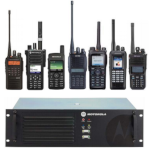
Welcome to Episode 310 of Linux in the Ham Shack. In this episode, the hosts take an in-depth look at the world of Digital Mobile Radio, otherwise known as DMR. It's a topic that could take volumes or multiple episodes but the idea here is to give you enough information to understand the basics of the technology, acquire appropriate hardware and get on the air using digital FM. We hope that has been accomplished. Thank you for listening.

73 de The LHS Crew


Russ Woodman, K5TUX, co-hosts the Linux in the Ham Shack podcast which is available for download in both MP3 and OGG audio format. Contact him at [email protected].

Weekly Propagation Summary – 2019 Nov 11 16:10 UTC

Weekly Propagation Summary (2019 Nov 11 16:10 UTC)

Here is this week’s space weather and geophysical report, issued 2019 Nov 11 0043 UTC.

Highlights of Solar and Geomagnetic Activity 04 – 10 November 2019

Solar activity was very low. The solar disk was spotless throughout the period. No Earth-directed CMEs were observed.

No proton events were observed at geosynchronous orbit.

The greater than 2 MeV electron flux at geosynchronous orbit reached high levels on 04-06, 08 Nov and moderate levels on 07, 09-10 Nov.

Geomagnetic field activity reached unsettled levels on 06 Nov and quiet levels throughout the remainder of the period, under a nominal solar wind regime.

Forecast of Solar and Geomagnetic Activity 11 November – 07 December 2019

Solar activity is expected to be at very low levels throughout the outlook period.

No proton events are expected at geosynchronous orbit.

The greater than 2 MeV electron flux at geosynchronous orbit is expected to reach high levels on 12-17, 21-30 Nov and 01-03 Dec, with moderate levels on 11, 18-20 Nov and 04-07 Dec, in response to CH HSS influence.

Geomagnetic field activity is expected to reach G1 (Minor) storm levels on 21-22 Nov, with active levels on 11, 20, 23-24 Nov, due to recurrent CH HSS activity. Quiet to unsettled conditions are anticipated throughout the remainder of the outlook period.

Don’t forget to visit our live space weather and radio propagation web site, at: http://SunSpotWatch.com/

Live Aurora mapping is at http://aurora.sunspotwatch.com/

If you are on Twitter, please follow these two users: 1. https://Twitter.com/NW7US 2. https://Twitter.com/hfradiospacewx

– – – – – – – – – – – – –

Be sure to subscribe to our space weather and propagation email group, on Groups.io

https://groups.io/g/propagation-and-space-weather

Spread the word!

– – – – – – – – – – – – –

Links of interest:

+ Amazon space weather books: http://g.nw7us.us/fbssw-aSWSC
+ https://Twitter.com/NW7US
+ https://Twitter.com/hfradiospacewx

Space Weather and Ham Radio YouTube Channel News:

I am working on launching a YouTube channel overhaul, that includes series of videos about space weather, radio signal propagation, and more.

Additionally, I am working on improving the educational efforts via the email, Facebook, YouTube, Tumblr, and other activities.

You can help!

Please consider becoming a Patron of these space weather and radio communications services, beginning with the YouTube channel:

https://www.patreon.com/NW7US

The YouTube channel:
https://YouTube.com/NW7US

..


Visit, subscribe: NW7US Radio Communications and Propagation YouTube Channel

Publishing a Book: Print and eBook

Over time, I have written several electrical engineering books (see electronic-measurement.com). These books were written in the dead-trees print model, focused on creating a book that you can hold in your hand. I recently published VHF, Summits and More in both print and ebook editions. This was a learning process for me and I’ve come to understand a bit more about the differences between these formats.

Print

I definitely have a soft spot in my heard for a good-quality printed book. It is just plain satisfying to hold a printed book in your hand and flip through the pages. Moving quickly between pages and chapters is easy; very tactile with immediate feedback. I often look at our bookshelf at home filled with various engineering, ham radio, hiking and travel books. It just feels good knowing I can reach out to any one of them and access useful information.

Monochrome Kindle

Last year, we went on a long cruise and I wanted to have plenty of reading material while still traveling light. I did not want to drag along a big pile of books, so I purchased a monochrome (“paperwhite”) Kindle with the promise of long battery life and the ability to read it in bright sunlight. It delivered on both items. And it holds a ton of books (most of them I didn’t have time to read).

It didn’t take long to realize that the monochrome e-readers are optimized for plain text. They do pretty well with text-heavy books such as novels but aren’t very good for technical books that have photos or graphics. I mean, the display is only monochrome (and many of the readers are small.)

While creating my new book, I wasn’t really happy with how my book looked on the monochrome Kindles. It seems that there are some legacy formatting behaviors that cause them to present the text in some interesting ways. Also, the photos and other graphics really didn’t look that great. I was not encouraged and almost tossed the idea of publishing an ebook version.

Kindle Fire

Then I decided to purchase a Kindle with a color display, the Kindle Fire HD 8 tablet. This device has an 8-inch display and 16 GB of storage, costing $79. I downloaded the mobi file of my book to the Kindle and was immediately impressed with the presentation of the material. The photos and graphics show up in color and look great. Another added feature compared to print, is that the embedded hyperlinks allow easy to access to web-based information.

One thing I had to adjust to was losing some control over how the Kindle displays the book. With a print book, you have absolute control…put each comma, period, character right where you want them and they stay there. On the Kindle, the reader gets to make a lot of decisions: font type, font size, color, line spacing. While the author gets to choose the words and graphics, the final presentation is in the hands of the reader.

Read Kindle on non-Kindle Devices

Amazon has done a fantasic job of supporting the reading of Kindle books on a variety of hardware platforms. You can get a free Kindle reader for both Windows and Mac. Mobile devices are supported, too, with their own readers (iOS and Android). The mobi (Kindle) file format is dominating the ebook market so I don’t have any plans to add other ebook versions.


The post Publishing a Book: Print and eBook appeared first on The KØNR Radio Site.


Bob Witte, KØNR, is a regular contributor to AmateurRadio.com and writes from Colorado, USA. Contact him at [email protected].

Subscribe FREE to AmateurRadio.com's
Amateur Radio Newsletter

 
We never share your e-mail address.


Do you like to write?
Interesting project to share?
Helpful tips and ideas for other hams?

Submit an article and we will review it for publication on AmateurRadio.com!

Have a ham radio product or service?
Consider advertising on our site.

Are you a reporter covering ham radio?
Find ham radio experts for your story.

How to Set Up a Ham Radio Blog
Get started in less than 15 minutes!


  • Matt W1MST, Managing Editor