 |
 Hunting For NDBs in CLE250
 20 November 2019 | by
  |
| YMW - 366 courtesy: ve3gop.com |
There is no doubt that as one ages, the passage of time seems to accelerate. Didn't we just have a CLE a couple of days ago?? In any event, this weekend finds CLE 250 focusing on 350.0 - 369.9 kHz, in search of NDBs.
For those unfamiliar with this monthly activity, a 'CLE' is a 'Co-ordinated Listening Event', as NDB DXers around the world focus their listening time on one small slice of the NDB spectrum.
If you've been meaning to participate in CLE, then maybe this weekend is a fine time to try! We continue to have a lot of first time submissions so you won't be alone!
As well, if you're trying to learn CW, copying NDBs is perfect practice as the identifier speed is generally slow and the letters are repeated again every few seconds!
A nice challenge in this one is to hear YMW - 366 kHz. 'YMW' is located in southwest Quebec, near Maniwaki.
'YMW' runs 500W into a massive vertical and is well-heard throughout North America as well as in Europe. Listen for its upper-sideband CW identifier repeated every 10 seconds (with your receiver in the CW mode) on 366.398 kHz.
This past week has seen the best propagation of the season so far. Hopefully it will extend into the CLE weekend ... but, it will be interesting to see if our CLE once again gets whacked by the Sun, just as it gets started. This has been the case for the past several CLEs as our monthly schedule seems synced with some nasty coronal hole on the Sun, also on a ~ 27 day cycle!
When tuning for NDBs, put your receiver in the CW mode and listen for the NDB's CW identifier, repeated every few seconds. Listen for U.S. NDB identifiers approximately 1 kHz higher or lower than the published transmitted frequency since these beacons are modulated with a 1020 Hz tone approximately.
For example, 'AA' near Fargo, ND, transmits on 365 kHz and its upper sideband CW identifier is tuned at 366.025 kHz while its lower sideband CW ident can be tuned at 363.946 kHz. Its USB tone is actually 1025 Hz while its LSB tone is 1054 Hz.
Often, one sideband will be much stronger than the other so if you don't hear the first one, try listening on the other sideband.
Canadian NDBs normally have an USB tone only, usually very close to 400 Hz. They also have a long dash (keydown) following the CW identifier.
All NDBs heard in North America will be listed in the RNA database (updated daily) while those heard in Europe may be found in the REU database. Beacons heard outside of these regions will be found in the RWW database.
From CLE organizer Brian Keyte, G3SIA, comes the details:
Our 250th Co-ordinated Listening Event is almost here.
Can new 'listening eventers' join in too? YES, PLEASE! Joachim and I are
always pleased to help first-time CLE logs through the harvester program.
Days: Friday 22 November - Monday 25 November
Times: Start and End at midday, your LOCAL time
Range: 350.0 - 369.9 kHz
Please log all the NDBs you can identify that are listed in this range (it
includes 350 kHz but not 370) plus any UNIDs that you come across there.
You can find full information to help you, including seeklists made from
RNA/REU/RWW, by going to the CLE page http://www.ndblist.info/cle.htm
and clicking on SEEKLIST.
Please send your 'Final' CLE log to the List, if possible as a plain text
email and not in an attachment, with 'CLE250' and 'FINAL' at the start of
its title.
Please show the following main items FIRST on EVERY line of your log:
# The full Date (e.g. 2019-11-22) or just the day number (e.g. 22)
and UTC (the day changes at 00:00 UTC).
# kHz - the beacon's nominal published frequency, if you know it.
# The Call Ident.
Optional details such as Location and Distance go LATER in the same line.
If you measure LSB/USB offsets and cycle times they are useful too.
Please always include details of your own location and brief details of the
receiver, aerial(s) and any recording equipment you were using, etc.
Joachim or I will send the usual 'Any More Logs?' email at about 20:00 UTC
on Tuesday so you can check that your log has been found OK.
Do make sure that your log has arrived at the very latest by 09:00 UTC on
Wednesday 27 November. We hope to make all the combined results
within a day or so.
Good listening
Brian
------------------------------------------------------------------
From: Brian Keyte G3SIA ndbcle'at'gmail.com
Location: Surrey, SE England (CLE coordinator)
------------------------------------------------------------------
(Reminder: If you wish you can use a remote receiver for your loggings,
stating its location and owner - with their permission if required.
A remote listener may NOT also use another receiver, whether local or
remote, to obtain further loggings for the same CLE)
These monthly listening events serve several purposes. They:
- determine, worldwide, which beacons are actually in service and on-the-air so the online database can be kept up-to-date
- determine, worldwide, which beacons are out-of-service or have gone silent since the last CLE covering this range
- will indicate the state of propagation conditions at the various participant locations
- will give you an indication of how well your LF/MF receiving system is working
- give participants a fun yet challenging activity to keep their listening skills honed
The NDB List Group is a great place to learn more about the 'Art of NDB DXing' or to meet other listeners in your region. There is a lot of good information available there and new members are always very welcome. As well, you can follow the results of other CLE participants from night to night as propagation is always an active topic of discussion.
You need not be an NDB List member to participate in the CLEs and all reports, no matter how small, are of much value to the organizers.
Remember - 'First-time' logs are always VERY welcome!
Reports may be sent to the NDB List Group or e-mailed to CLE co-ordinator, Brian Keyte (G3SIA), whose address appears above. If you are a member of the group, all final results will also be e-mailed and posted there.
Please ... give the CLE a try ... then let us know what NDB's can be heard from your location! Your report can then be added to the worldwide database to help keep it up-to-date.
Have fun and good hunting!
Steve McDonald, VE7SL, is a regular contributor to AmateurRadio.com and writes from British Columbia, Canada. Contact him at [email protected].
LHS Episode #311: Three Going on Fifty
Welcome to Episode 311 of Linux in the Ham Shack. In this short topics episode, the hosts cover YOTA, AO-7, WRC 2019, CWOps, NWS and a bunch of other acronyms and their associated relevant topics. Thank you for listening and we hope you have a phenomenal week.
73 de The LHS Crew
Russ Woodman, K5TUX, co-hosts the Linux in the Ham Shack podcast which is available for download in both MP3 and OGG audio format. Contact him at [email protected].
The power supply testing is done
 |
| Defective part |
1. I am recently retired and I was told you would slowly forget what day of the week it was, well that has not happened as of yet. I can say that with regards to ham radio contesting this retiree has mixed up what contest was on what weekend! In my last post, I had the idea of the CQWW CW contest was on this past weekend and in fact, thanks to my fellow bloggers I was informed it is next weekend. When I went back to the ham radio contest calendar site it sure was plain as day that in fact, it is next weekend. This is a good thing because my new Astron power supply will be here and I will be good to go
2. In my last post, I indicated the
 |
| Pass transistor testing |
Now the power supply troubleshooting is done and I have to thankfully replace only one component and again the failure of the power supply is my own fault. The power supply is an Astron RS 20M and it is rated at 16 amps continuous, this has been just fine when I was operating QRP at my previous QTH. As my readers know I am now retired and have moved to New Brunswick and my new antenna is an
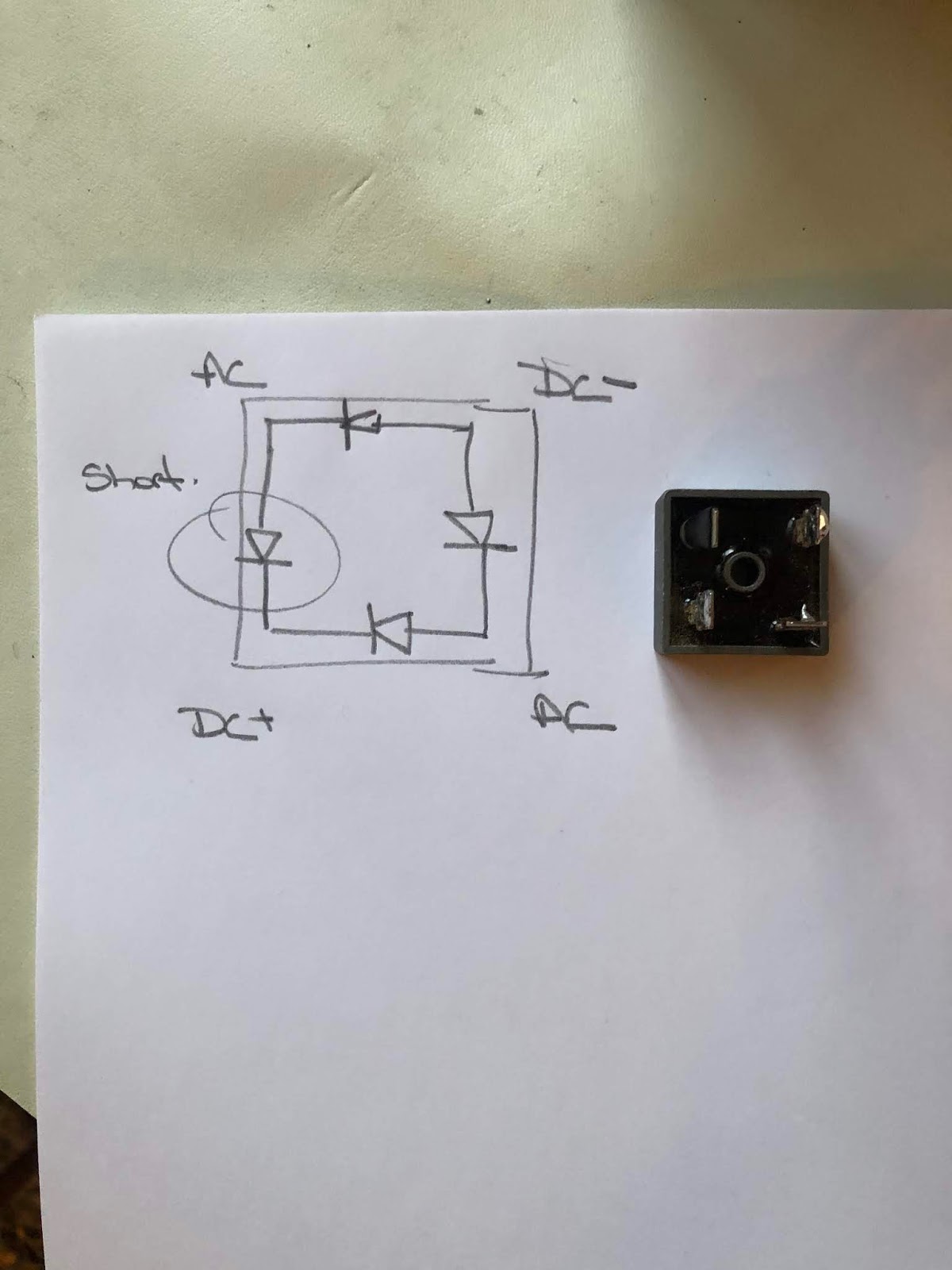
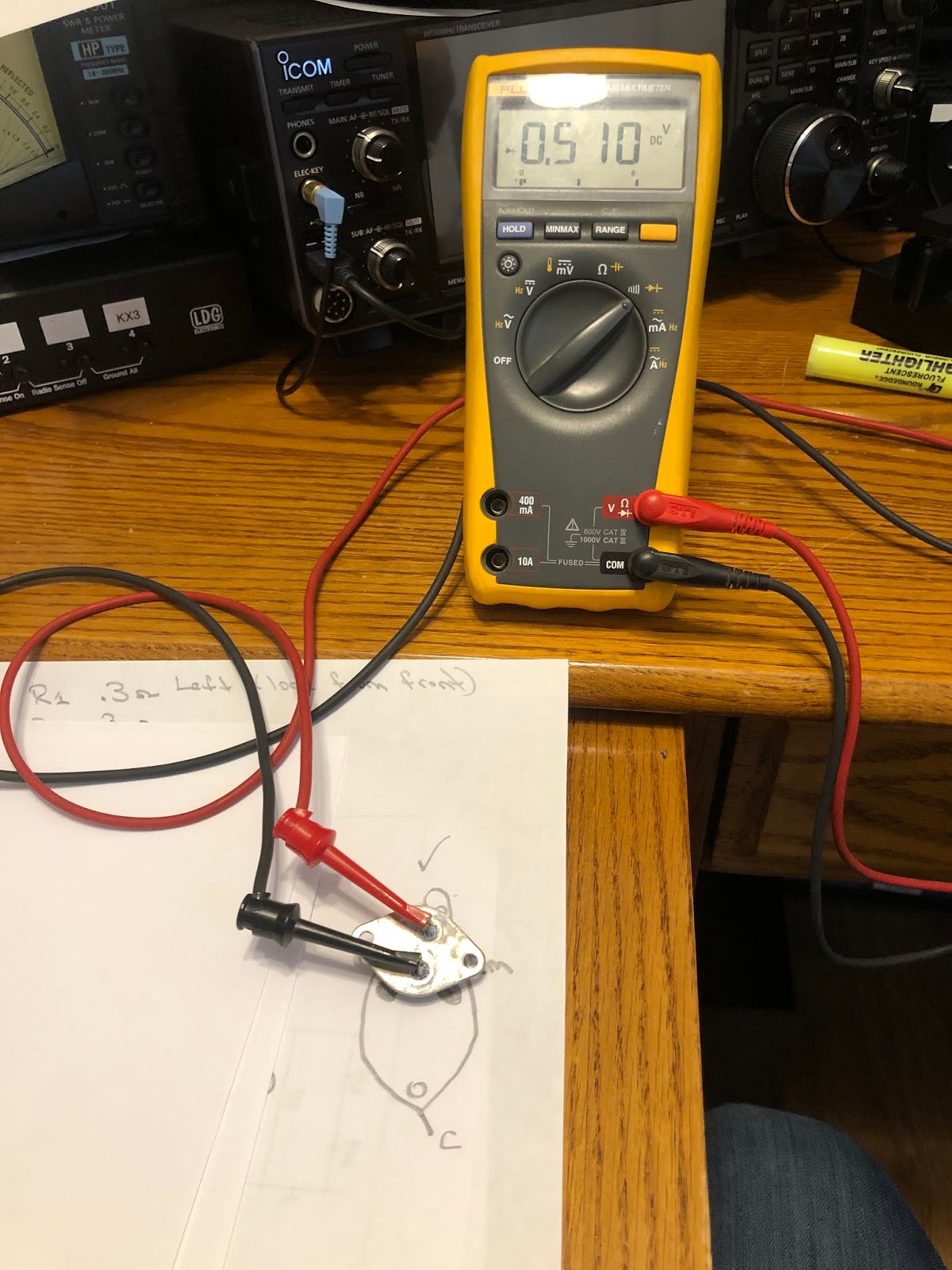
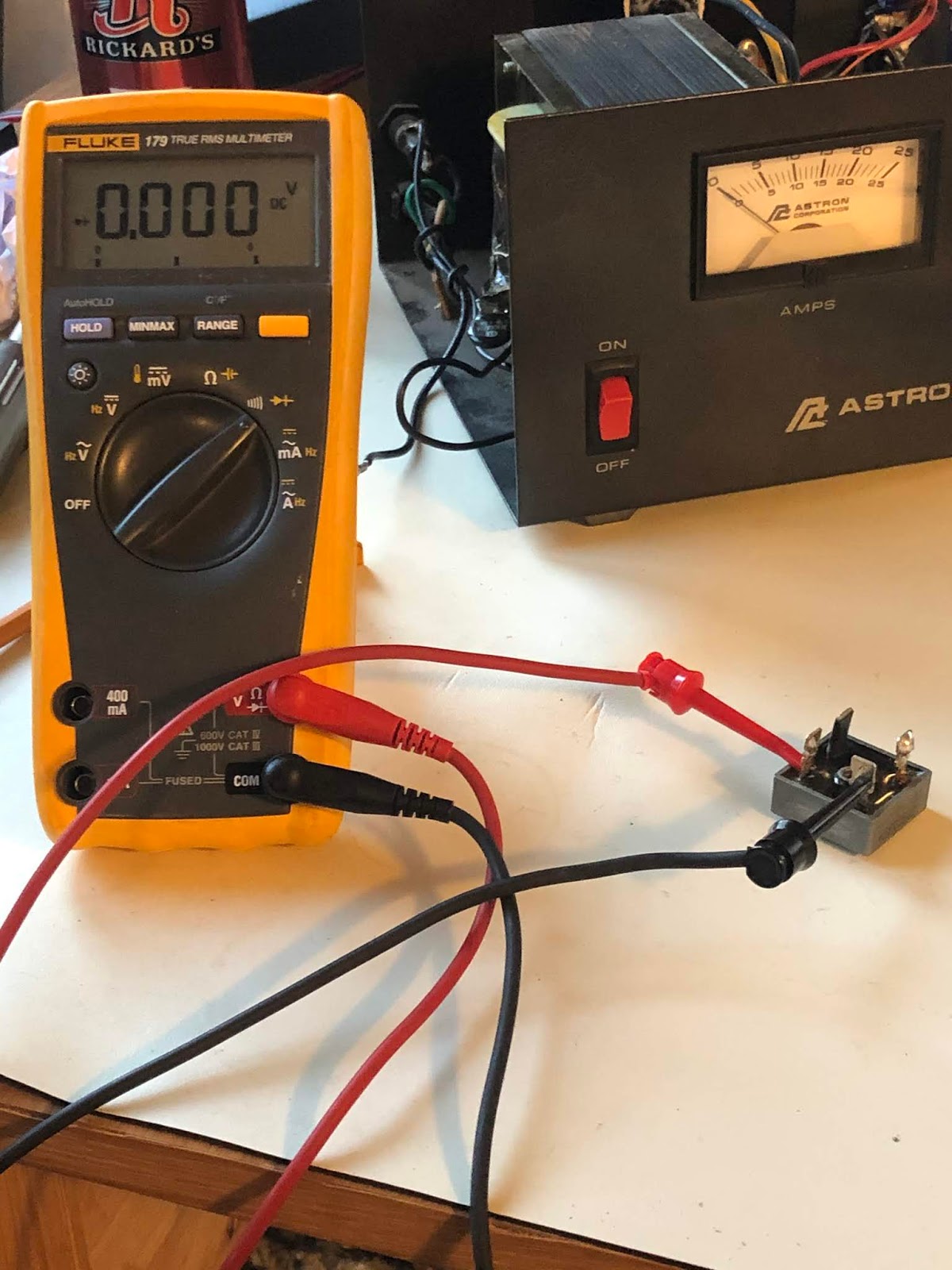
Back to the final power supply troubleshooting, I checked the 2 pass transistors and they both passed. I then checked the balancing resistors connected to the emitter of each pass transistor and they were both good. There were some capacitors that I also checked and they too passed. It seems that the only component I need is a bridge rectifier along with a tube of dielectric paste for the pass transistors and a new bridge rectifier. I am very happy the repairs are minor to the power supply.
 |
| Positive test results |
Mike Weir, VE9KK, is a regular contributor to AmateurRadio.com and writes from New Brunswick, Canada. Contact him at [email protected].
Weekly Propagation Summary – 2019 Nov 18 16:10 UTC
Here is this week’s space weather and geophysical report, issued 2019 Nov 18 0115 UTC.
Highlights of Solar and Geomagnetic Activity 11 – 17 November 2019
Solar activity was very low. Region 2752 (S23, L=286) was numbered on 13 Nov as a unipolar group, but quickly decayed to plage. The region remained an area of plage throughout the balance of the summary period. No Earth-directed CMEs were observed.
No proton events were observed at geosynchronous orbit.
The greater than 2 MeV electron flux at geosynchronous orbit was at moderate levels on 11 and 13-17 Nov with normal levels observed on 12 Nov.
Geomagnetic field activity was predominately at quiet levels throughout the period under a mostly nominal wind regime. An isolated unsettled period was observed midday on 11 Nov and again late on 17 Nov. The unsettled period late on 17 Nov was due to weak, negative polarity CH HSS influence.
Forecast of Solar and Geomagnetic Activity 18 November – 14 December 2019
Solar activity is expected to be a very low levels throughout the outlook period.
No proton events are expected at geosynchronous orbit.
The greater than 2 MeV electron flux at geosynchronous orbit is expected to reach high levels on 22 Nov through 03 Dec in response to CH HSS influence. Normal to moderate levels are expected for the remainder of the outlook period.
Geomagnetic field activity is expected to reach G1 (Minor) storm levels on 21-23 Nov, with active levels on 20 Nov, due to a recurrent, positive polarity CH HSS. Quiet to isolated unsettled conditions are anticipated throughout the remainder of the outlook period.
Don’t forget to visit our live space weather and radio propagation web site, at: http://SunSpotWatch.com/
Live Aurora mapping is at http://aurora.sunspotwatch.com/
If you are on Twitter, please follow these two users: 1. https://Twitter.com/NW7US 2. https://Twitter.com/hfradiospacewx
– – – – – – – – – – – – –
Be sure to subscribe to our space weather and propagation email group, on Groups.io
https://groups.io/g/propagation-and-space-weather
Spread the word!
– – – – – – – – – – – – –
Links of interest:
+ Amazon space weather books: http://g.nw7us.us/fbssw-aSWSC
+ https://Twitter.com/NW7US
+ https://Twitter.com/hfradiospacewx
Space Weather and Ham Radio YouTube Channel News:
I am working on launching a YouTube channel overhaul, that includes series of videos about space weather, radio signal propagation, and more.
Additionally, I am working on improving the educational efforts via the email, Facebook, YouTube, Tumblr, and other activities.
You can help!
Please consider becoming a Patron of these space weather and radio communications services, beginning with the YouTube channel:
https://www.patreon.com/NW7US
The YouTube channel:
https://YouTube.com/NW7US
..
Visit, subscribe: NW7US Radio Communications and Propagation YouTube Channel
Power supply failure!
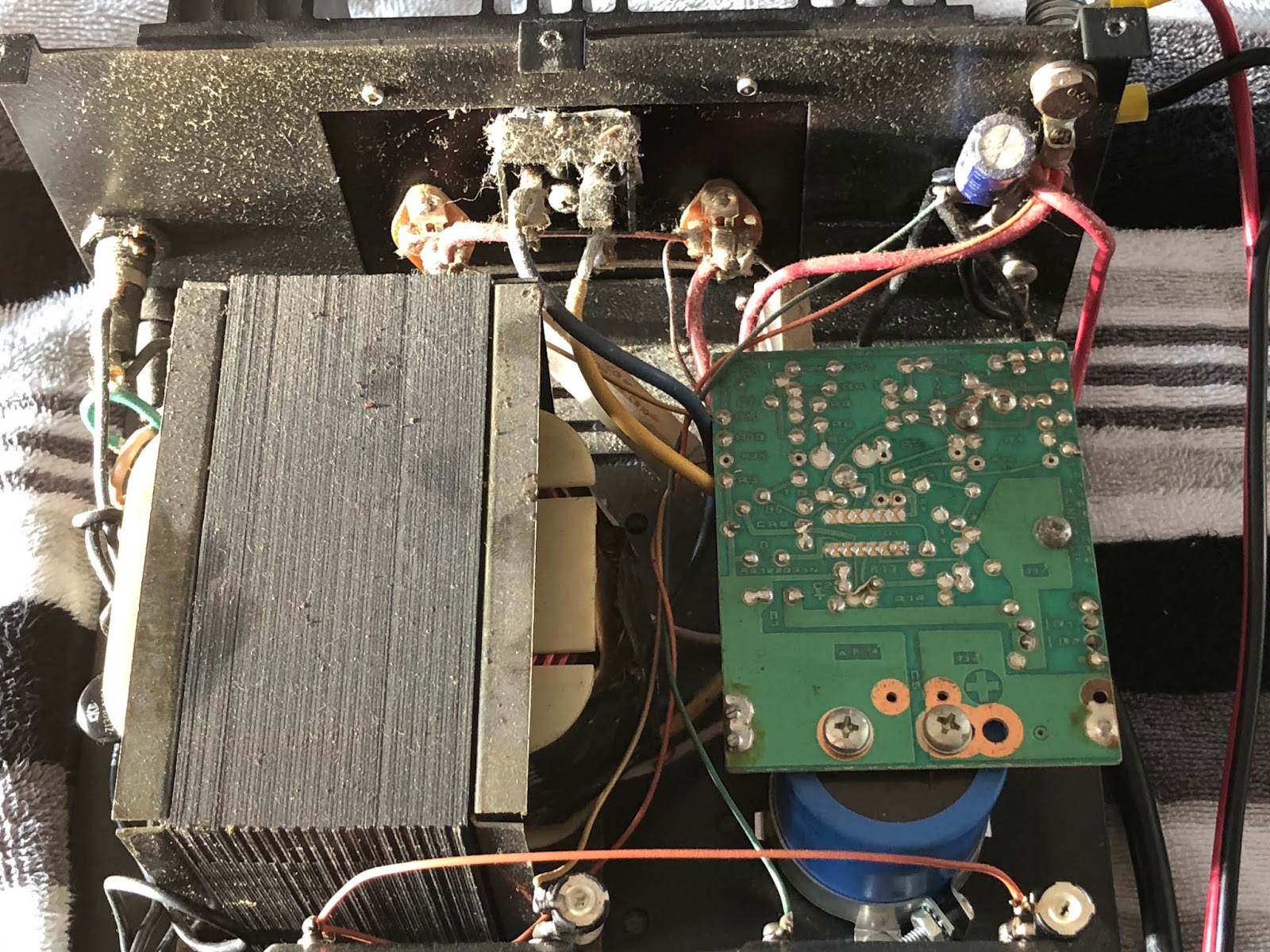 |
| Dusty but looks ok |
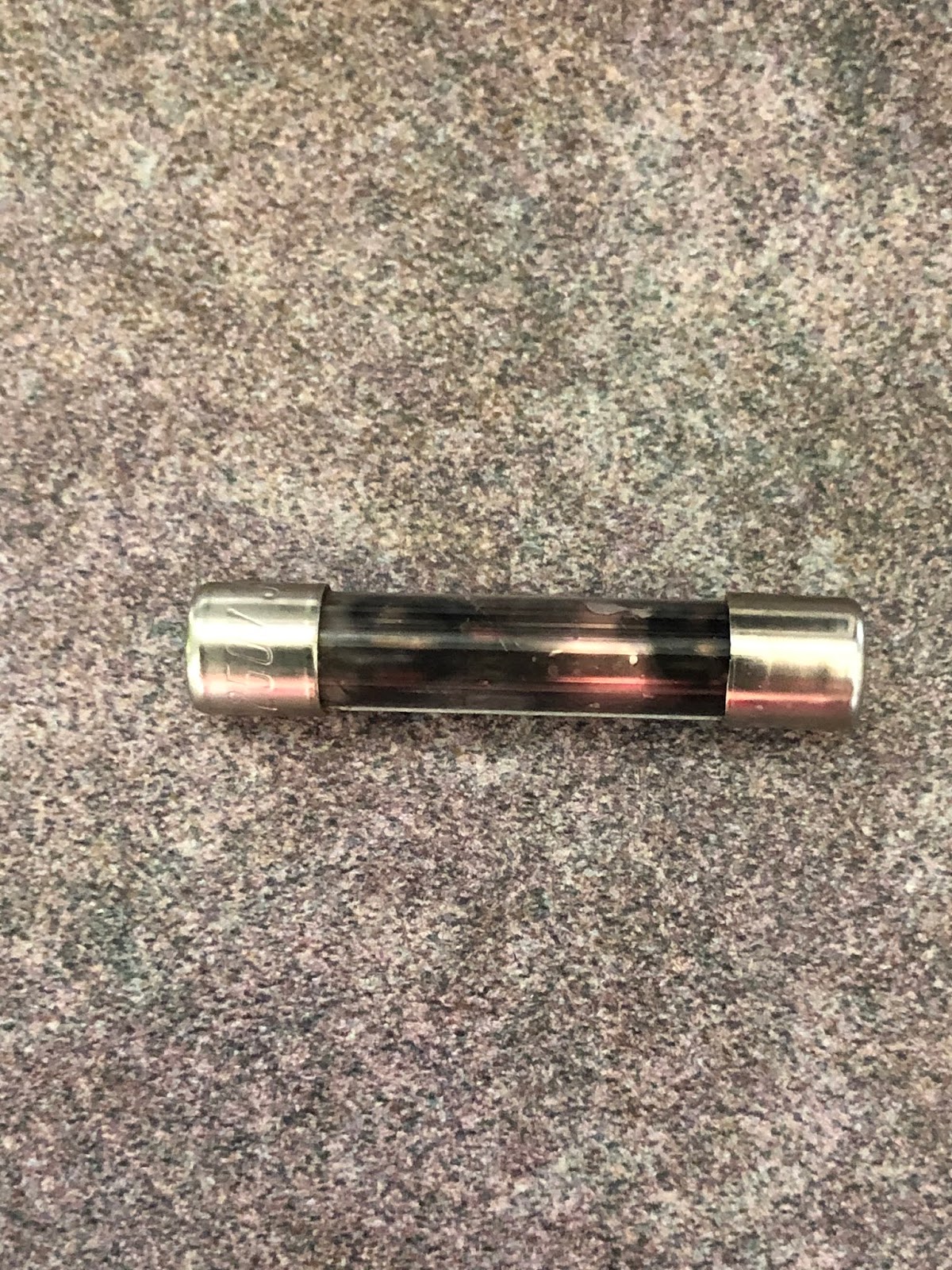
I was not able to see anything in the power supply with a visual check. Checking the schematic diagram I checked out the power on switch and it was good, next
 |
| Bad Varistor |
 |
| Shorted diode |
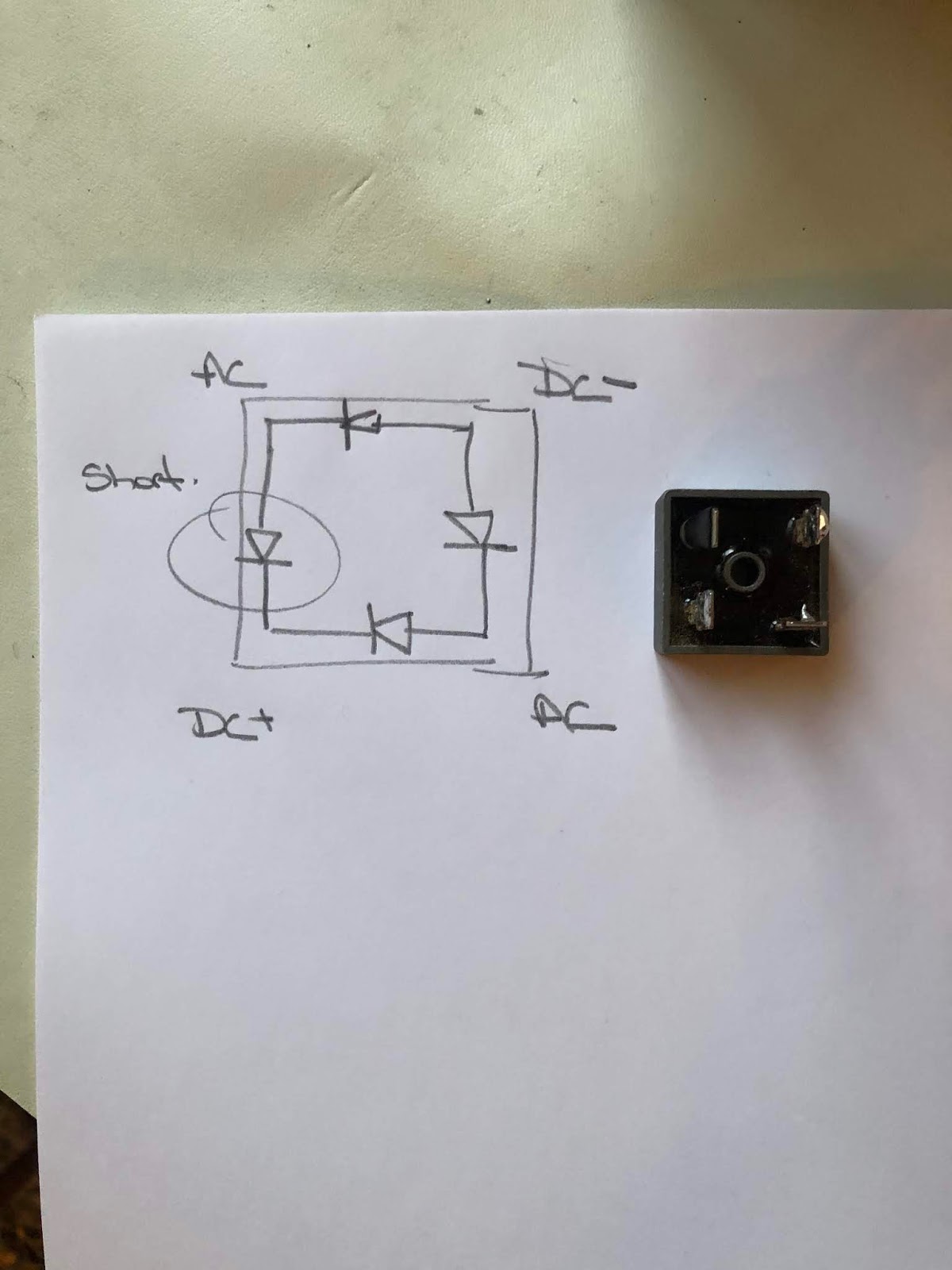
Mike Weir, VE9KK, is a regular contributor to AmateurRadio.com and writes from New Brunswick, Canada. Contact him at [email protected].
From Lightning Comes a New Icom IC-7610 (First Transmission)
Wow. What a radio!
One of the most useful (and, to me, amazing) features of this Icom IC-7610, is the IP+ function, which, when turned on, improves the Intermodulation Distortion (IMD) quality by optimizing the direct sampling system performance. This function optimizes the Analog/Digital Converter(ADC) against distortion when you receive a strong input signal. It also improves the Third-order Intercept Point (IP3) while minimizing the reduction of the receiver sensitivity.
In short: I was listening to an s-0 (i.e., no strength-meter movement) weak signal of a DX station, when right adjacent to the frequency came an s-7 signal, wiping out my ability to copy that weak signal. I turned on the IP+ and the distortion of the adjacent signal disappeared, and once again, I heard the weak signal IN THE CLEAR! WOW!
This video is a quick capture of my running the Olivia Digital Mode on HF, on the 30-Meter band. The transmissions are of a two-way Olivia digital-mode radio conversation between station K8CJM and station NW7US on 12 November 2019 (UTC date). K8CJM is located in Dayton, Ohio, and I am located in Lincoln, Nebraska. I’m running the radio at full power. The radio is rated as being able to handle 100% duty cycle at full power. The radio ran cool, no significant heating.
A few months ago, a lightning strike took out my ham radio station. The antenna was NOT connected, but I did not unplug the power supply chain and my computer from the wall. The surge came in through the power mains, and fried my uninterruptable power supply, the interfaces between my PC and radio, and fried the radio. Thankfully, all of that was covered by my homeowner’s insurance policy, less the steep deductible. My insurance covered all of the blown items, and that provided me this chance to obtain a repack version of the Icom IC-7610. I bought an extended four-year warranty.
CAUTION: Check the documentation of your transceiver/transmitter. NEVER run your radio’s power out at a level that exceeds what it can handle in reference to the duty cycle of the mode you are using. Olivia, for instance, is a 100-percent duty cycle mode. Morse code is NOT quite 100% duty cycle. Nor is SSB, a mode that operates with a duty cycle much lower than 100%. Your radio’s manual should tell you the specifications regarding the duty cycle it can handle! If you run more power than your radio can handle with the given duty cycle of the mode in use, you will blow your radio’s finals or in some other way damage the radio! Beware! I’ve warned you!
Compression and ALC!?
Some have noted that it appears that I’ve left on the Compression of the transmitted audio. However, the truth is that compression was not being used (as is proof by carefully taking note of the zero meter movement of the Compression activity). I had the radio set for 20-Meter USB operation on the Sub VFO. Compression was set for standard USB operation. Note also that the radio was transmitting USB-D1, which means the first data/soundcard input to the radio.
Also, some people complain about my use of ALC, because, in their view, ALC (automatic level control) is a no-no for data modes.
The notion that one must NEVER use ALC when transmitting digital modes is not accurate.
Multi-frequency shift keyed (MFSK) modes with low symbol rate–such as the Olivia digital modes–use a single carrier of constant amplitude, which is stepped (between 4, 8, 16 or 32 tone frequencies respectively) in a constant phase manner. As a result, no unwanted sidebands are generated, and no special amplifier (including a transmitter’s final stage) linearity requirements are necessary.
Whether the use of ALC matters or not depends on the transmitted digital mode.
For example, FSK (Frequency-Shift Keying; i.e., RTTY) is a constant-amplitude mode (frequency shift only). In such a case, the use of ALC will NOT distort the signal waveform.
PSK31 does contain amplitude shifts, as an example, therefore you don’t want any ALC action that could result in distortion of the amplitude changes in the waveform.
On the other hand, the WSJT manual says that its output is a constant-amplitude signal, meaning that good linearity is not necessary. In that case, the use of ALC will NOT distort the transmitted signal-amplitude waveform. You can use ALC or not, as you choose when you run WSJT modes, or Olivia (MFSK).
Clarification
Nowhere in this am I advocating running your audio really high, thinking that the ALC will take care of it. I am not saying that. I am saying that some ALC is not going to be an issue. You MUST not overdrive any part of the audio chain going into the transmitter!
Transmit audio out of the sound card remains at a constant amplitude, so there will be no significant change in power output if you adjust your input into the radio so that the ALC just stops moving the meter, or, you can have some ALC meter movement. You can adjust your audio to the transmitter either way.
If the transmitter filters have a significant degree of ripple in the passband then you may find that RF power output changes with the selected frequency in the waterfall when there is no ALC action. Allowing some ALC action can permit the ALC to act as an automatic gain adjustment to keep the output power level as you change frequencies.
Linear and Non-Linear
Regarding linear and non-linear operation (amplifiers, final stages): While a Class-C amplifier circuit has far higher efficiency than a linear circuit, a Class-C amplifier is not linear and is only suitable for the amplification of constant-envelope signals. Such signals include FM, FSK, MFSK, and CW (Morse code).
If Joe Taylor’s various modes (in WSJT software) are constant-envelope signals, than class-C works, right? At least, in theory.
Some Additional Cool History
The digital mode, Thor, came out of DominoEX when FEC was added. Here is an interesting history of FSQ that seems to confirm that FSQ is like MFSK, so no problem with a bit of ALC.
The following is from https://www.qsl.net/zl1bpu/MFSK/FSQweb.htm
History – Let’s review the general history of Amateur MFSK modes. The first Amateur MFSK mode developed anywhere was MFSK16, specified by Murray Greenman ZL1BPU, then first developed and coded by Nino Porcino IZ8BLY in 1999. Before MFSK16 arrived, long-distance (DX) QSOs using digital modes were very unreliable: reliant, as they were, on RTTY and later PSK31. MFSK16 changed all that, using 16 tones and strong error correction. Great for long path DX, but nobody could ever say it was easy to use, never mind slick (quick and agile)!
Over the next few years, many MFSK modes appeared, in fact too many! Most of these were aimed at improving performance on bands with QRM. Most used very strong error correction, some types a poor match for MFSK, and these were very clumsy in QSO, because of long delays.
The next major development, aimed at easy QSOs with a slick turnaround, was DominoEX, designed by Murray Greenman ZL1BPU and coded by Con Wassilieff ZL2AFP, which was released in 2009. Rather than using error correction as a brute-force approach, DominoEX was based on sound research and achieved its performance through carefully crafted modulation techniques that required no error correction. The result was a simpler, easier to tune, easily identified mode with a fast turn-around.
DominoEX is widely used and available in many software packages. A later development by Patrick F6CTE and then Dave W1HKJ added FEC to this mode (THOR) but did not add greatly to performance, and at the same time eroded the fast turn-around. The final DominoEX- related development was EXChat, a version of DominoEX designed specifically for text-message style chatting. While completely compatible with DominoEx, it operates in ‘Sentence Mode’, sending each short over when the operator presses ENTER. EXChat was developed by Con ZL2AFP and released in 2014.
Back in 2013, Con ZL2AFP developed an MFSK mode for LF and MF which used an unusual decoding method pioneered by Alberto I2PHD: a ‘syncless’ decoder, which used a voting system to decide when one tone finished and another began. The first use of this idea was in JASON (2002), which proved to be very sensitive, but very slow, partly because it was based on the ASCII alphabet. The new mode, WSQ2 (Weak Signal QSO, 2 baud) combined the syncless decoder with more tones, 33 in total, and an alphabet specially developed by Murray ZL1BPU, which could send each lower case letter (and common punctuation) in just one symbol, resulting in a very sensitive (-30 dB SNR) mode with a 5 WPM typing speed.
In the subsequent discussion in late 2014, between the developers ZL2AFP and ZL1BPU, it was realized that if the computer had enough processing power to handle it, WSQ2 could be ‘sped up’ to become a useful HF chat mode. This required a large amount of development and retuning of the software to achieve adequate speed was involved, along with much ionospheric simulator and on-air testing used to select the most appropriate parameters.
Tests proved that the idea not only worked well, but it also had marked advantages over existing HF MFSK modes, even DominoEX. As expected, the new mode was found to have superior tolerance of signal timing variation, typically caused by multi-path reception, and would also receive with no change of settings over a wide range of signaling speeds.
So this is how FSQ came about. It uses the highly efficient WSQ character alphabet, IFK+ coding, the same number of tones as WSQ (33), but runs a whole lot faster, up to 60 WPM, and uses different tone spacing. The symbol rate (signaling speed) is modest (six tones per second or less), but each individual tone transmitted carries a surprising amount of information, resulting in a high text transmission speed. And it operates in ‘Chat’ (sentence) mode, which allows the user to type as fast as possible since they type only while receiving.
The ability to send messages and commands selectively has opened a huge array of communications possibilities.
What Makes FSQ Different
Incremental Keying – FSQ uses Offset Incremental Frequency Keying (IFK+), a type of differential Multi-Frequency Shift Keying (MFSK) with properties that make it moderately drift-proof and easy to tune. IFK+ also has excellent tolerance of multi-path reception.
IFK was developed by Steve Olney VK2XV. IFK+ (with code rotation) was proposed by Murray Greenman ZL1BPU and first used in DominoEX. IFK+ prevents repeated same tones without complex coding and provides improved rejection of propagation-related inter-symbol interference. In the context of sync-less decoding, the IFK+ code rotation also prevents repeated identical tones, which could not have been detected by this method.
Efficient Alphabet – In FSQ, a relatively high typing speed at a modest baud rate comes about because the alphabet coding is very efficient. All lower case letters and the most common punctuation can be sent in just one symbol and all other characters (the total alphabet contains 104 characters) in just two symbols. (The alphabet is listed below). This is a simple example of a Varicode, where it takes less time to send the more common characters. The character rate is close to six per second (60 WPM), the same as RTTY, but at only 1/8th of the baud rate. (RTTY has only one bit of information per symbol, 7.5 symbols per character, and wastes a third of its information on synchronization, and despite this, works poorly on HF).
No Sync – Another important factor in the design of FSQ is that no synchronizing process is required to locate and decode the received characters. Lack of sync means that reception is much less influenced by propagation timing changes that affect almost all other modes since timing is quite unimportant to FSQ; it almost completely eliminates impulse noise disruption, and it also contributes to very fast acquisition of the signal (decoding reliably within one symbol of the start of reception). Fast acquisition removes the need for the addition of extra idle characters at the start of transmission, and this leads to a very slick system. Add high resistance to QRM and QRN, thanks to the low baud rate, and you have a system so robust that it does not need error correction.
Cool.
See you on the bands!
Visit, subscribe: NW7US Radio Communications and Propagation YouTube Channel
Ham Radio Operating Ethics and Operating Procedures
In 2008, John Devoldere, ON4UN, and, Mark Demeuleneere, ON4WW, wrote a comprehensive document entitled “Ethics and Operating Procedures for the Radio Amateur.” The purpose of this document was for it to become a universal guide on operating ethics and procedures.
This document was accepted by the IARU (International Amateur Radio Union) Administrative Council as representing their view on the subject. During subsequent Regional IARU meetings it was emphasized that the document be made available to the Amateur Radio Community via all available means, at no cost, and in as many languages as possible.
The document has since been translated into more than 25 languages. In some countries, the document is also offered in printed format and many Amateur Radio websites have a link to the document. Our most sincere thanks go to all our friends who spent hundreds of hours to take care of these translations.
To achieve easier access to all of the existing versions and languages of the document, the authors have set up the Ham Radio Ethics and Operating Procedures web site at:
https://www.hamradio-operating-ethics.org/versions/
It contains a listing of all versions/languages, sorted by country, where you can download the translations in any of the following forms:
*PDF or Word documents from various countries
*Directly from the different Radio Societies’ web sites
*A downloadable PowerPoint Slideshow Presentation (available in one of three languages–English, French and Dutch)
John, ON4UN, and Mark, ON4WW
Visit, subscribe: NW7US Radio Communications and Propagation YouTube Channel
 Ham Radio Deluxe |
 W5SWL Electronics |
 Ham Radio Prep |
 KB3IFH QSL Cards  Hip Ham Shirts  HamRadioAuctions HamRadioAuctions Reliance Antennas Reliance Antennas Enigma Shop Enigma Shop |  morseDX  Ni4L Antennas  R&L Electronics R&L Electronics antennas.us antennas.us Ears to Our World Ears to Our World |
- Matt W1MST, Managing Editor
