 |
 LHS Episode #342: The Weekender XLVII
 1 May 2020 | by
It's time once again for The Weekender. This is our bi-weekly departure into the world of amateur radio contests, open source conventions, special events, listener challenges, hedonism and just plain fun. Thanks for listening and, if you happen to get a chance, feel free to call us or e-mail and send us some feedback. Tell us how we're doing. We'd love to hear from you.
73 de The LHS Crew
Russ Woodman, K5TUX, co-hosts the Linux in the Ham Shack podcast which is available for download in both MP3 and OGG audio format. Contact him at [email protected].
LHS Episode #341: That’s a Spicy Meatball

Welcome to the 341st installment of Linux in the Ham Shack. In this episode, the hosts discuss topics including IARU workshops, ventilators built by hams, a folding Yagi for satellite work, indoor gardens, Fedora on Lenovo, Ubuntu 20.04, Manjaro and much more. Thank you for listening and we hope you have a great week. Stay safe, stay indoors and play radio!
73 de The LHS Crew
Russ Woodman, K5TUX, co-hosts the Linux in the Ham Shack podcast which is available for download in both MP3 and OGG audio format. Contact him at [email protected].
Building a Simple CW Practice Tone Generator
Feeling an increased interest in my area for the subject of this article, I made some simple audio oscillators that can be useful for CW practice. I could not stop myself from re-making on the breadboard some schematics that I made many, many years ago, improve them and write an article about them.
The first generator is a 2 bipolar transistors oscillator. One is pnp and one is npn. In my version of this schematics (there are plenty of versions of it on the Internet) I use 3 Volt as power supply. It works without any change from 1.5 v to 6 V. After 6 V the tone changes a bit and it might be necessary to adjust the 68 KOhm resistor in order to keep the generated tone in the 800 Hz – 1000 Hz range. It would work, anyhow. But at 3 V the transistors do not run hot. I used 2N3904 and 2N3906. The consumption is under 10 mA and the total power is under 30 mW. The schematics:

I made it on a breadboard, and I used a power bank with a power supply adapter:

My target current for LEDs is 0.5 mA. They work fine at higher current, with a shorter life span. They can be seen OK even at 50 micro Amps. Pictures and a table with currents and voltages for common LEDs are published by me in SARC the Communicator from December 2018, page 40:
https://drive.google.com/file/d/1cEcXlUV_vNMkhf_3JRmFZma-B6vU00-O/view
LEDs became more and more efficient in the last years, and the days when they needed 20 mA are gone. They are so efficient that they are even used in street lightning.
You can see and hear this simple audio tone generator at:
https://youtu.be/d2I5sujsM_c
Another simple tone generator is done with a TTL inverter integrated circuit, SN7404:

The keying is done in the speaker/LED ground circuit. In this way the oscillator functions continuously, and it does not change the frequency when the manipulator is pressed. The consumption is under 1 mA without keying and around 20 mA when the manipulator is pressed. The audio frequency is dictated by R1 and C1. F = 1/(1.1*R1*C1). The R1 value of 15 KOhm generates a sound of somehow higher tone; in practice I tries with 68 KOhm and 47 KOhm, too. All those 3 values work, and you should use the formula for the tone of your choice. The sound is more pleasant at this second tone generator because:
- The rectangular signal is 50% – 50%, while at the first generator there is a train of short impulses, something like 95% – 5%.
- The oscillator is always powered, so it has its frequency stabilized already in the moment(s) of keying.
- The oscillator part is separated from the speaker/LED output by an inverter buffer (the inverter between the pins 8 and 9 of the IC SN7404.
On the breadboard it looks like this:

You can see it and hear it in function on YouTube at:
https://youtu.be/e0-t8pNq5rw
A version of the above uses SN74HC00 instead of SN7400 (SN74HC04). The 14 pins integrated circuit has inside 4 NOT AND gates. One of the gates is used to block or allow the oscillation. It requires a very small current to pass through the manipulating key/switch:

I also drawn the schematic to show the integrated circuit in it:

Based on previous schematics I made a “heavy-duty” CW tone generator; if your neighbors did not know you are a ham radio, this is a good opportunity to hear you and find out. I did not want to jump over the top, so I limited the audio power at some 1.3 Watts (in the video I showed how to make it 2 W), but it is possible to obtain 3 Watts by simply playing with the values of the resistors connected in the base of the final 2SD882 transistor:

I mention here again that the R1 resistor of 15 K might impose a too high tone for some taste, and maybe 68 KOhm or 47 KOhm would generate more pleasant tones (lower). I tried all 3 values for R1 and all work OK and can be used. The inverters 1, 2 and 3 (the lower 3 inverters from SN7404) oscillate and supply with signal the buffer inverter connected between the pins 9 and 8. The output of this last inverter goes through R2 and R5 to the base of the final transistor 2SD882. If Q2 (2N3904) is not put in the circuit, the speaker will be loud, continuously with audio signal, and the LED will lit. But the signal path is cut to the ground by Q2, and there is no sound on the speaker. The base of Q2 is connected with R6 (15 KOhm) to plus 5 Volts. The CW manipulation is done in the base of Q2. In this way the manipulator switches very small current – otherwise the switching would have been done in the emitter of Q1 and hundreds of mA would have been on the contacts of the CW key. C2 limits the unwanted clicks of the contacts.
It seems I created a new schematic that nobody else did (yet). The final transistor does not go into saturation – so there is still reserve to play with the values of R2 and R5 (to reduce them) and to obtain more audio power. By just shortcutting R5 the total power will become 2 Watts. But even with 1.3 Watts it is enough for a classroom, especially if the speaker is inside a dedicated box. The LED requires here a smaller series resistor R3 (1 KOhm) exactly because there is some voltage on the emitter-collector of Q1 and it does not shortcut to the ground. The consumption in standby (power supplied) is 4 mA.
The breadboard is in the following picture, showing the maximum consumption of 262 mA, 1.31 Watts:

You can see it and hear it in function on YouTube at:
https://youtu.be/hhRU2ucu3Us
The first part of that video is with R5 shortcut. In the second part of the video I removed the shortcut green wire and I repeated the sound test and measurements.
Here is the “heavy-duty” version with SN7400 (SN 74HC00) integrated circuit:

The maximum power can be obtained by reducing R1 from 2 KOhm towards 270 Ohm. Using less than 270 Ohm would put in danger the last NAND gate, because it knows to supply only 16 mA.
Note: all pictures from this article can be found in higher resolution at:
https://github.com/danielromila/Simple-CW-practice-tone-generators
Daniel Romila, VE7LCG is a special contributor to AmateurRadio.com and writes from British Columbia, Canada. Contact him at [email protected].
Weekly Propagation Summary – 2020 Apr 27 16:10 UTC
Here is this week’s space weather and geophysical report, issued 2020 Apr 20 0123 UTC.
Highlights of Solar and Geomagnetic Activity 13 – 19 April 2020
Solar activity was very low throughout the reporting period. No sunspots were obseved on the visible disk and no Earth-directed CMEs were observed in available coronagraph imagery.
No proton events were observed at geosynchronous orbit.
The greater than 2 MeV electron flux at geosynchronous orbit was at normal to moderate levels throughout the reporting period.
Geomagnetic field activity ranged from quiet to unsettled. Unsettled levels were observed on 14-15 Apr in response to several periods of prolonged southward Bz. The remainder of the reporting period observed quiet conditions.
Forecast of Solar and Geomagnetic Activity 20 April – 16 May 2020
Solar activity is expected to be very low throughout the outlook period.
No proton events are expected at geosynchronous orbit.
The greater than 2 MeV electron flux at geosynchronous orbit is expected to be at mostly normal to moderate levels. 29-30 April will likely observed high levels in response to coronal hole influence.
Geomagnetic field activity is expected to be at quiet to active levels. Active levels are likely on 20 Apr, 27 Apr and 05 May; unsettled levels are likely on 21-23 Apr and 30 Apr. All enhancements in geomagnetic active are in response to multiple, recurrent CH HSSs. The remainder of the outlook period is expected to observed quiet conditions.
Don’t forget to visit our live space weather and radio propagation web site, at: http://SunSpotWatch.com/
Live Aurora mapping is at http://aurora.sunspotwatch.com/
If you are on Twitter, please follow these two users: 1. https://Twitter.com/NW7US 2. https://Twitter.com/hfradiospacewx
– – – – – – – – – – – – –
Be sure to subscribe to our space weather and propagation email group, on Groups.io
https://groups.io/g/propagation-and-space-weather
Spread the word!
– – – – – – – – – – – – –
Links of interest:
+ Amazon space weather books: http://g.nw7us.us/fbssw-aSWSC
+ https://Twitter.com/NW7US
+ https://Twitter.com/hfradiospacewx
Space Weather and Ham Radio YouTube Channel News:
I am working on launching a YouTube channel overhaul, that includes series of videos about space weather, radio signal propagation, and more.
Additionally, I am working on improving the educational efforts via the email, Facebook, YouTube, Tumblr, and other activities.
You can help!
Please consider becoming a Patron of these space weather and radio communications services, beginning with the YouTube channel:
https://www.patreon.com/NW7US
The YouTube channel:
https://YouTube.com/NW7US
..
Visit, subscribe: NW7US Radio Communications and Propagation YouTube Channel
ICQ Podcast Episode 323 – Radio Communication Museum
In this episode, Martin M1MRB is joined by Leslie Butterfield G0CIB, Edmund Spicer M0MNG and Dan Romanchik KB6NU to discuss the latest Amateur / Ham Radio news. Colin M6BOY rounds up the news in brief and this episode’s feature is the National Communication Museum.
ICQ AMATEUR/HAM RADIO PODCAST DONORS
We would like to thank our Ben Harrison (AJ6NH) and monthly and annual subscription donors for keeping the podcast advert free. To donate, please visit - http://www.icqpodcast.com/donate
- Centenarian Radio Amateur on BBC Radio Solent - Historic First Trans-Atlantic Contact Made on 432 MHz - Tweet with Morse code - Amateur Radio on BBC Three Counties Radio - Morse Code App - RSGB Launches National Mental Health Campaign in Partnership with the NHS - Essex Ham Foundation Online Training Breaks Records - Japan’s Radio Amateurs Gain Expanded Access to 160 and 80 Metres
Colin Butler, M6BOY, is the host of the ICQ Podcast, a weekly radio show about Amateur Radio. Contact him at [email protected].
Icom 7610 heat sink issue
 |
| Bottom cover removed |
 |
| No issues with heat sinks. |
Mike Weir, VE9KK, is a regular contributor to AmateurRadio.com and writes from New Brunswick, Canada. Contact him at [email protected].
Hunting For NDBs In CLE255
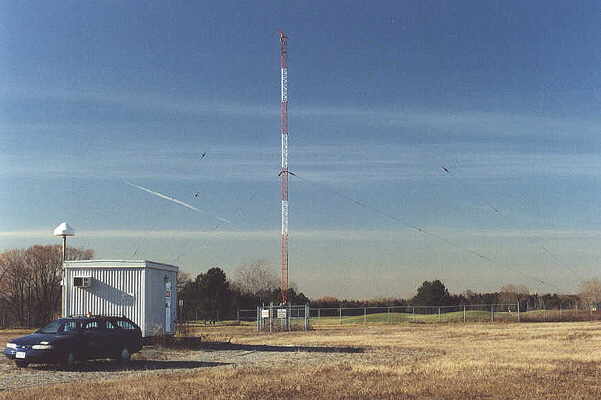
It's another CLE weekend!
During these stressful times, the CLE might hopefully provide some peaceful relief for you.
'CLE's are 'Co-ordinated Listening Events, and NDB DXers around the world focus their listening time on one small slice of the NDB spectrum.
This time the hunting ground is the 15kHz slice from 385.0 - 399.9 kHz. kHz
A good target for this one is little 'OO' (391kHz) in Oshawa, Ontario, shown above. 'OO-391' has a measured output of just over 7 watts yet is heard consistently all over North America including the west coast as well as in Europe! Hearing 'OO' is a very good test for your receiving system!
Listen for 'OO's' upper sideband on 391.402kHz with your receiver in the CW mode.
From CLE coordinator Brian Keyte (G3SIA), comes the following CLE info:
Hello all,
Have you tried one of our Co-ordinated Listening Events yet?
Whether short logs or long ones, making them is enjoyed by
beginners and experts alike - and reading them is enjoyed by all.
Our 255th Coordinated Listening Event starts this Friday. We
should have plenty of NDBs to find in this 15 kHz frequency range.
Even the Pacific region (Oceania) is quite well supplied this time.
Days: Friday 24 April - Monday 27 April 2020
Times: Start and end at midday your LOCAL time
Range: 385 - 399.9 kHz
Please log all the NDBs that you can identify with nominal (listed)
frequencies in the range - it includes 385 kHz, but not 400 kHz
- plus any UNIDs that you come across there.
Send your final log to the List (no attachments please and ideally
in a plain text email) with 'FINAL CLE255' in its title (important).
Show on each line:
# The Date (e.g. '2020-04-24', etc., or just '24' )
# The Time in UTC (the day changes at 00:00 UTC).
# kHz - the nominal published frequency, if known.
# The Call Ident.
Please show those main items FIRST. Other optional details
such as Location and Distance go LATER in the same line.
As always, of course, tell us your own location and give brief
details of the equipment that you were using during the Event.
We will send the usual 'Any More Logs?' email at about
19:00 UTC on Tuesday so you can check that your log has
been found OK.
Do make sure that your log has arrived on the List by
08:00 UTC on Wednesday 29 April at the very latest.
We hope to complete making the combined results within
a day or two.
You can find full details about current and past CLEs from the
CLE page http://www.ndblist.info/cle.htm It includes access
to the CLE255 seeklists for your part of the World, prepared
from all the previous loggings in Rxx.
Good listening
- enjoy the CLE and take care.
Brian and Joachim
------------------------------------------------------------------
From: Brian Keyte G3SIA ndbcle'at'gmail.com
Location: Surrey, SE England (CLE coordinator)
------------------------------------------------------------------
(If you would like to listen remotely you could use any one remote
receiver for your loggings, stating its location and owner and with
their permission if required. A remote listener may NOT also use
another receiver, local or remote, to make further loggings for the
same CLE)
These listening events serve several purposes. They:
- determine, worldwide, which beacons are actually in service and on-the-air so the online database can be kept up-to-date
- determine, worldwide, which beacons are out-of-service or have gone silent since the last CLE covering this range
- will indicate the state of propagation conditions at the various participant locations
- will give you an indication of how well your LF/MF receiving system is working
- give participants a fun yet challenging activity to keep their listening skills honed
The NDB List Group is a great place to learn more about the 'Art of NDB DXing' or to meet other listeners in your region. There is a lot of good information available there and new members are always very welcome. As well, you can follow the results of other CLE participants from night to night as propagation is always an active topic of discussion.
You need not be an NDB List member to participate in the CLEs and all reports, no matter how small, are of much value to the organizers.
Remember - 'First-time' logs are always VERY welcome!
Reports may be sent to the NDB List Group or e-mailed to CLE co-ordinator, Brian Keyte (G3SIA), whose address appears above. If you are a member of the group, all final results will also be e-mailed and posted there.
Please ... give the CLE a try ... then let us know what NDB's can be heard from your location! Your report can then be added to the worldwide database to help keep it up-to-date.
Have fun and good hunting!
Steve McDonald, VE7SL, is a regular contributor to AmateurRadio.com and writes from British Columbia, Canada. Contact him at [email protected].
 Ham Radio Deluxe |
 W5SWL Electronics |
 Ham Radio Prep |
 KB3IFH QSL Cards  Hip Ham Shirts  HamRadioAuctions HamRadioAuctions Reliance Antennas Reliance Antennas Enigma Shop Enigma Shop |  morseDX  Ni4L Antennas  R&L Electronics R&L Electronics antennas.us antennas.us Ears to Our World Ears to Our World |
- Matt W1MST, Managing Editor
