 |
 Yes we can make quality in the West
 18 July 2020 | by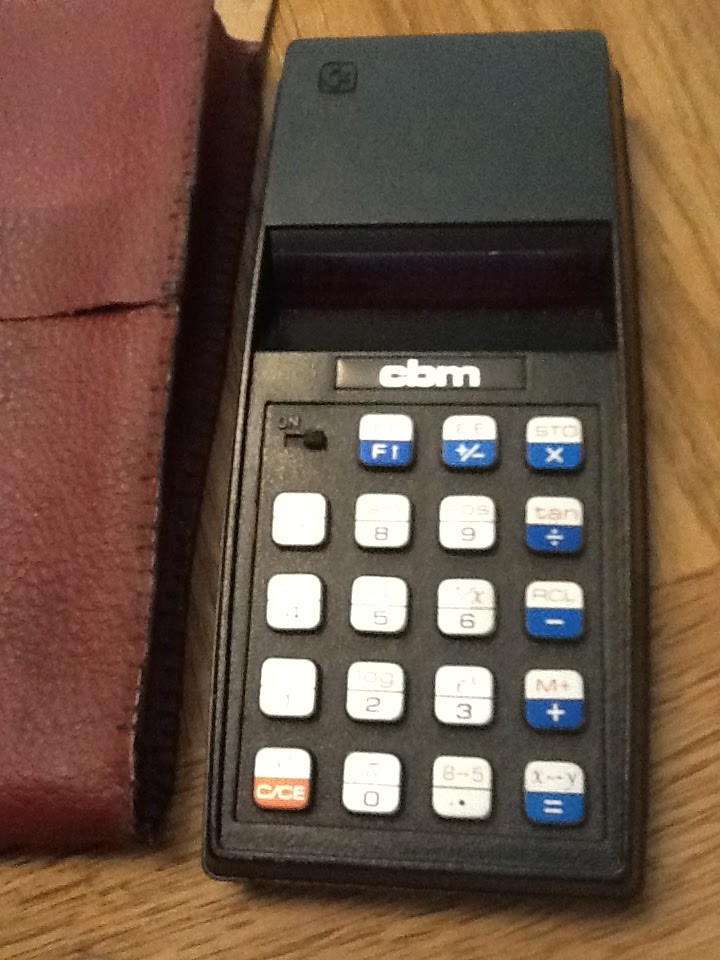
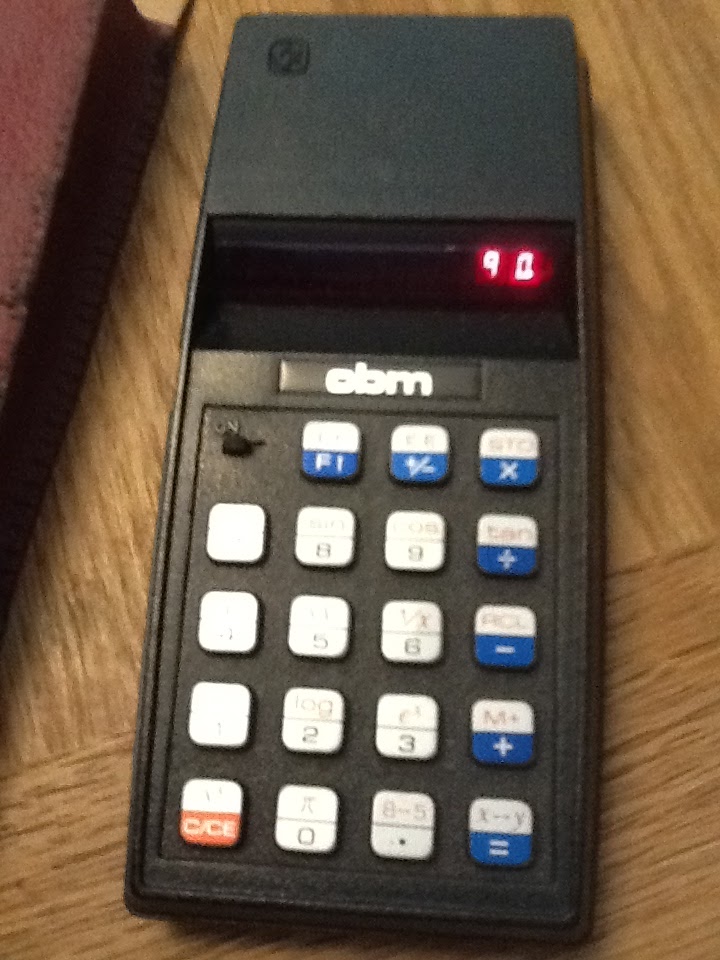
Simple functions, and LED tunnel display, but inserting a new 9V battery it sprung into life.
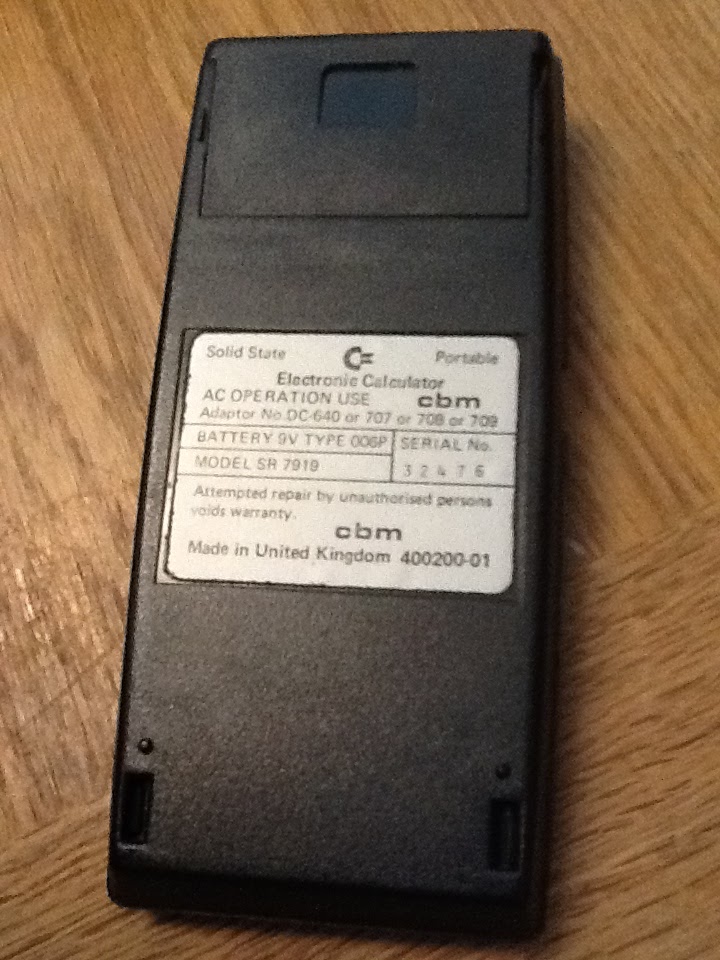
The best bit came when I read the back plate, yes it was made in the "United Kingdom".
This should give hope for us all in the West that we made quality products that last the test of time, and should prove production should return once again.
Steve, G1KQH, is a regular contributor to AmateurRadio.com and writes from England. Contact him at [email protected].
2020 Colorado 14er Event
 August 1 & 2, 2020
Saturday and Sunday
www.ham14er.org
Amateur Radio operators from around Colorado will be climbing many of Colorado’s 14,000-foot mountains and Summits On The Air (SOTA) peaks to set up amateur radio stations in an effort to communicate with other radio amateurs across the state and around the world. Join in on the fun during the 29th annual event and see how many of the mountaintop stations you can contact. The covers the entire weekend but many mountaintop activators will hit the trail early with the goal of being off the summits by noon due to lightning safety concerns.
The event includes all Summits On the Air (SOTA) summits, which adds over 1800 potential summits! If you aren’t up to climbing a 14er, there are many other summits to choose from with a wide range of difficulty. See the Colorado SOTA web page at w0c-sota.org
Radio operators who plan to activate a summit should post their intent on the ham14er group via the ham14er groups.io website. Also, be sure to check out the event information at http://www.ham14er.org
Frequencies used during the event
Activity can occur on any amateur band including HF and VHF. The 2m fm band plan uses a “primary frequency and move up” approach. The 2m fm primary frequency is 147.42 MHz. At the beginning of the event, operators should try calling on 147.42 MHz. As activity increases on that frequency, move on up the band using the 30 kHz steps. Don’t just hang out on 147.42 MHz…move up! The next standard simplex frequency up from 147.42 MHz is 147.45 MHz, followed by 147.48 and 147.51 MHz.
For a complete list of suggested HF, VHF and UHF frequencies see this web page.
Warning: Climbing mountains is inherently a dangerous activity.
Do not attempt this without proper training, equipment and preparation.
There is a lot more information available here: www.ham14er.org
Sponsored by The Colorado 14er Event Task Force
Also be aware that the SOCAL SOTAFEST is happening on the same weekend, which means there will be plenty of SOTA activity on the ham bands! See http://socalsota.com
The post 2020 Colorado 14er Event appeared first on The KØNR Radio Site.
Bob Witte, KØNR, is a regular contributor to AmateurRadio.com and writes from Colorado, USA. Contact him at [email protected].
Weekly Propagation Summary – 2020 Jul 13 16:10 UTC
Here is this week’s space weather and geophysical report, issued 2020 Jul 13 0246 UTC.
Highlights of Solar and Geomagnetic Activity 06 – 12 July 2020
Solar activity was very low throughout the summary period. Region 2766 (N05, L=122, class/area Bxo/010 on 10 Jul) was the only spotted region and decayed to plage by 11 Jul.
A filament eruption near S29W18 produced a faint, slow-moving CME signature in LASCO/SOHO C2 imagery beginning at 09/0724 UTC. Analysis and modeling of the event suggested a possible glancing blow from the CME around 14 Jul.
No proton events were observed at geosynchronous orbit.
The greater than 2 MeV electron flux at geosynchronous orbit was at normal to moderate levels throughout the summary period.
Geomagnetic field activity was quiet. No significant periods of southward Bz were observed.
Forecast of Solar and Geomagnetic Activity 13 July – 08 August 2020
Solar activity is expected to be very low over the outlook period.
No proton events are expected at geosynchronous orbit.
The greater than 2 MeV electron flux at geosynchronous orbit is expected to continue at normal to moderate levels.
Geomagnetic field activity is expected to range from quiet to active levels. Unsettled conditions are likely on 13 Jul and 31 Jul – 01 Aug in response to coronal hole influence. Active conditions are likely on 14 Jul due to the anticipated arrival of a slow-moving transient that left the Sun on 09 Jul. The remainder of the outlook period is expected to be at quiet levels under a nominal solar wind environment.
Don’t forget to visit our live space weather and radio propagation web site, at: http://SunSpotWatch.com/
Live Aurora mapping is at http://aurora.sunspotwatch.com/
If you are on Twitter, please follow these two users: 1. https://Twitter.com/NW7US 2. https://Twitter.com/hfradiospacewx
– – – – – – – – – – – – –
Be sure to subscribe to our space weather and propagation email group, on Groups.io
https://groups.io/g/propagation-and-space-weather
Spread the word!
– – – – – – – – – – – – –
Links of interest:
+ Amazon space weather books: http://g.nw7us.us/fbssw-aSWSC
+ https://Twitter.com/NW7US
+ https://Twitter.com/hfradiospacewx
Space Weather and Ham Radio YouTube Channel News:
I am working on launching a YouTube channel overhaul, that includes series of videos about space weather, radio signal propagation, and more.
Additionally, I am working on improving the educational efforts via the email, Facebook, YouTube, Tumblr, and other activities.
You can help!
Please consider becoming a Patron of these space weather and radio communications services, beginning with the YouTube channel:
https://www.patreon.com/NW7US
The YouTube channel:
https://YouTube.com/NW7US
..
Visit, subscribe: NW7US Radio Communications and Propagation YouTube Channel
NEOPHYTE Adventures

I've just added a new page to my website, The VE7SL Radio Notebook, that describes my NEOPHYTE 1 regenerative receiver spring construction project. The new page can be found here.
Like most simple regens, its performance far exceeds its simple circuit expectations. My listening adventures with it continue during The Radio Board's annual Homebrew DX Contest which runs from July 11 - 24th. You may want to give it a try, after of course, you've checked-out my new web page!
Steve McDonald, VE7SL, is a regular contributor to AmateurRadio.com and writes from British Columbia, Canada. Contact him at [email protected].
LHS Episode #356: The Weekender LII

It's time once again for The Weekender. This is our bi-weekly departure into the world of amateur radio contests, open source conventions, special events, listener challenges, hedonism and just plain fun. Thanks for listening and, if you happen to get a chance, feel free to call us or e-mail and send us some feedback. Tell us how we're doing. We'd love to hear from you.
73 de The LHS Crew
Russ Woodman, K5TUX, co-hosts the Linux in the Ham Shack podcast which is available for download in both MP3 and OGG audio format. Contact him at [email protected].
13 Colonies success!
With only 3 stations to get in the log the challenge began, I had DX Summit running in the background checking for spots. Since I wanted to keep my CW stretch going it seemed the remaining station's spots were either digi or SSB! The other issues I ran into were when K2C and K2D were operating CW they were lost down in the noise floor. I could hear clear as day the stations working them but the Colony stations were silent. The other issue was with GB13COL was rarely operating CW and I was determined to make all contacts using CW.
My operating strategy was to find the needed stations calling CQ before they were spotted, this was exactly what happened with K2D in Connecticut. He was calling CQ and was weak but there and so I gave him a shot and low and behold he came back to me BUT he was not able to copy my reply. We tried a few time but he then began to call CQ again so it was not a "true" contact. The propagation gods were smiling on me as his signal jumped to about S8 BUT the spotting network gods were laughing at me because he was just spotted and the crowd was growing fast! I tried to throw my 100-watt signal in the fray but the Endfed antenna did not stand a chance against the kilowatt and a beam. The name of the game was to wait for an opening as I hoped the big guns would make their contact and move on.
K2D's signal was starting to fade again, this was how 40m was treating me most of the time. Now the crowds started to die down and he was just calling CQ with no response. He was at the noise floor again and I was having no success. He then jumped to S8 again and I gave him a go and finally, I was in the log!
It was now time to concentrate on K2C in Rhode island and from the comments on the spotting network, K2C was not on all that often......hmmm this is going to be difficult I thought and I had to snag him before he was spotted. There were times when he was spotted in the CW portion but the pileup was crazy, it actually sounded like a super rare DX location was on the air. I was constantly checking DX summit on my laptop in the living room for K2C hoping if I pounced early the pileup would not be at the crazy point yet. My dear wife commented to me that I looked like a stalker when it came to hunting K2C!!
Evening came and in the past, I noticed that GB13COL had been spotted in the evening using CW, so I went to the shack in search of GB13COL before he was spotted. I was on 40m searching the waterfall for signals and there was one that popped up. I tuned them in and it was K2C......OMG no spots yet, this was my chance to make a clean sweep and get my final Colony using CW. Where my ears deceiving me....he was calling CQ and no takers. I tried calling him but nothing he had no copy and continued to call CQ. I knew it was just a matter of time before he was found and then spotted! As Steve Martin would say "I'm a wild and crazy guy" and it was time to be that person! Normally while on 40m my power is set to 40-50 watts. The reason for this is any higher than 50 watts odd things happen to our washing machine, LED lights and so on in the house. I figured if things go wonky in my home it may be happening to those around me. Thus my power on 40m does not go beyond 50 watts......or at least until now.
I looked to the left and then to the right......with an evil grin on my face the power was cranked to 100 watts. I turned the lights out in the shack and with my head lowered but still a grin on my face I put my call out.......it was answered by K2C and he was in the log. With the lights still out I looked out the window to make sure no homes were on fire, all looked good and I was thrilled.
I had accomplished my clean sweep of all 13 Colony stations using CW and it was now time to set my sights on GB13COL.
I was not determined to work the final bonus station using CW. I had 2 days left to hunt, track and get GB13COL in the log but from following the comments again on DX Summit this final station was rarely operating CW and seemed to hang out on digi and SSB. I tried very hard when they were CW to even hear them but absolutely nothing was heard. I now had one day left and during the day I tried and tried when they were CW and again nothing was heard.
Evening came and they were spotted using FT8..........I am going to give them a go as CW was just not going to work out for this station.
Into the shack I went and started the PC and then the radio and low and behold there they were on the waterfall. Before transmitting I observe the waterfall to see a who is transmitting where. There is no sense jumping into the fray if I am transmitting overtop of someone else as this way neither of us is heard. About 5 minutes went past and I was not in the log yet and then my call came across with a signal report from GB13COL! I was thrilled and sent my report back to make the contact complete and just waiting for his 73RRR BUT I then I saw that GB13COL was transmitting again with my signal report as he did not hear my report. NOOOOOOO so again and again I sent my report and nothing and eventually he started to call CQ again. I was not in the log.....well not yet I was this close and not giving up. I stopped transmitting to get a feel for the waterfall and find a clear spot. I found my spot and after a few minutes of calling he came back to me and I was in the log!!!!!
This was a nice challenge spread over a few days and for sure I will be taking part in this event next year. It's time to send off for my clean sweep plus 2 bonus station certificate. All but one were contacted using CW but I know for sure that GB13COL would not have made it into the log if I waited for a CW contact.
Mike Weir, VE9KK, is a regular contributor to AmateurRadio.com and writes from New Brunswick, Canada. Contact him at [email protected].
Six Meters Is the New VHF On-Ramp
Many hams start out with ham radio by using FM on the 2-meter band (and maybe the 70 cm band). Clearly, the Technician license privileges are focused on VHF with 2 meters (146 MHz) being the most popular band. I wrote about common types of equipment that hams choose to support their operating habits here: Your First (and Second) Ham Transceiver.

Some hams get interested in the other modes on VHF, with 2m SSB being one of the most popular. The wavelength is a convenient size such that mobile antennas (with either vertical or horizontal polarization) are possible. For a home station, a decent 2m yagi antenna can easily be installed. With even a modest antenna, hams routinely work hundreds of miles using SSB or CW on 2 meters. It used to be that you could purchase an all-mode 2m transceiver to get into working weak-signal VHF. Because of these things, I always considered 2 meters to be the starter band for serious VHF operating.
Six Meters – The Magic Band
While operating the ARRL June VHF Contest, I noticed a trend with activity on six meters (50 MHz). There were quite a few stations on the air that appeared to be new to VHF contesting. For whatever reason, they took advantage of the sporadic-e propagation during the contest to make VHF contacts.
There are two driving factors for this: the inclusion of 50 MHz capability on many HF transceivers and the emergence of the FT8 mode. The inclusion of 50 MHz on HF radios has been going on for some time now and hams can “try out 6 meters” by just tuning up one of their HF antennas. It may not work great, but it will usually work. Another option is to put up a simple wire antenna tuned for 6m, such as a halfwave dipole or an end-fed wire. Using FT8 is a great way to squeeze out contacts when signals are poor, so it can help compensate for the suboptimal antenna. Once the operator gets a taste of 6m operating, upgrading the antenna is a modest step that can improve their station without buying any new equipment.
This means that 6 meters has become the on-ramp to (more) serious VHF operating. This is probably been happening for a few years now and it is just taking me a while to notice it.
The post Six Meters Is the New VHF On-Ramp appeared first on The KØNR Radio Site.
Bob Witte, KØNR, is a regular contributor to AmateurRadio.com and writes from Colorado, USA. Contact him at [email protected].
 Ham Radio Deluxe |
 W5SWL Electronics |
 Ham Radio Prep |
 KB3IFH QSL Cards  Hip Ham Shirts  HamRadioAuctions HamRadioAuctions Reliance Antennas Reliance Antennas Enigma Shop Enigma Shop |  morseDX  Ni4L Antennas  R&L Electronics R&L Electronics antennas.us antennas.us Ears to Our World Ears to Our World |
- Matt W1MST, Managing Editor
