 |
 LHS Episode #358: The Weekender LIII
 24 July 2020 | by
It's time once again for The Weekender. This is our bi-weekly departure into the world of amateur radio contests, open source conventions, special events, listener challenges, hedonism and just plain fun. Thanks for listening and, if you happen to get a chance, feel free to call us or e-mail and send us some feedback. Tell us how we're doing. We'd love to hear from you.
73 de The LHS Crew
Russ Woodman, K5TUX, co-hosts the Linux in the Ham Shack podcast which is available for download in both MP3 and OGG audio format. Contact him at [email protected].
LHS Episode #357: Lethal Weapon

Welcome to the 357th installment of Linux in the Ham Shack. In this episode, the hosts talk about the new amateur radio youth database, Mortty, the Icom IC-705, an open-source COVID-19 tracker, TrueNAS, SDR++ and much more. Stay safe and sane out there and thank you for listening.
73 de The LHS Crew
Russ Woodman, K5TUX, co-hosts the Linux in the Ham Shack podcast which is available for download in both MP3 and OGG audio format. Contact him at [email protected].
Weekly Propagation Summary – 2020 Jul 20 16:10 UTC

Here is this week’s space weather and geophysical report, issued 2020 Jul 20 0242 UTC.
Highlights of Solar and Geomagnetic Activity 13 – 19 July 2020
Solar activity was very low throughout the period. No active regions with sunspots were observed over the past week. The passage of a slow-moving CME from 08 Jul was observed on 13-14 Jul. Near the end of the period, a faint, slow-moving CME was observed off the western limb in STEREO-A imagery beginning at around 19/0524 UTC. Analysis of this event remains underway at the time of this writing.
No proton events were observed at geosynchronous orbit.
The greater than 2 MeV electron flux at geosynchronous orbit was at normal-to-moderate levels throughout the period.
Geomagnetic field activity reached active levels between 13/0000-0900 UTC due to a combination of positive polarity CH HSS and CME (08 Jul) effects. Quiet to unsettled conditions were observed on 13 Jul. Quiet conditions were observed throughout the remainder of the period.
Forecast of Solar and Geomagnetic Activity 20 July – 15 August 2020
Solar activity is expected to be very low throughout the outlook period.
No proton events are expected at geosynchronous orbit.
The greater than 2 MeV electron flux at geosynchronous orbit is expected to be normal-to-moderate throughout the outlook period.
Geomagnetic field activity is expected to be quiet to unsettled on 23-24 Jul and 31 Jul-01 Aug. Quiet conditions are expected to prevail throughout the rest of the period.
Don’t forget to visit our live space weather and radio propagation web site, at: http://SunSpotWatch.com/
Live Aurora mapping is at http://aurora.sunspotwatch.com/
If you are on Twitter, please follow these two users: 1. https://Twitter.com/NW7US 2. https://Twitter.com/hfradiospacewx
– – – – – – – – – – – – –
Be sure to subscribe to our space weather and propagation email group, on Groups.io
https://groups.io/g/propagation-and-space-weather
Spread the word!
– – – – – – – – – – – – –
Links of interest:
+ Amazon space weather books: http://g.nw7us.us/fbssw-aSWSC
+ https://Twitter.com/NW7US
+ https://Twitter.com/hfradiospacewx
Space Weather and Ham Radio YouTube Channel News:
I am working on launching a YouTube channel overhaul, that includes series of videos about space weather, radio signal propagation, and more.
Additionally, I am working on improving the educational efforts via the email, Facebook, YouTube, Tumblr, and other activities.
You can help!
Please consider becoming a Patron of these space weather and radio communications services, beginning with the YouTube channel:
https://www.patreon.com/NW7US
The YouTube channel:
https://YouTube.com/NW7US
..
Visit, subscribe: NW7US Radio Communications and Propagation YouTube Channel
ICQ Podcast Episode 329 – Radio Questions Answered
In this episode, Martin M1MRB is joined by Dan Romanchik KB6NU, Edmund Spicer M0MNG and Ruth Willet KM4LAO to discuss the latest Amateur / Ham Radio news. Colin M6BOY rounds up the news in brief and this episode’s feature is Radio Questions Answered.
ICQ AMATEUR/HAM RADIO PODCAST DONORS
We would like to thank Daryll McCaffrey, Ed Efchak (WX2R), Andrew Whybrow (M0IRU), David Bowie, Ed Jones (K8MEJ), Phil Heckingbottom (VK6ADF), Dino Papas KLØS, Gayln True Hall and two anonymous donors along with our monthly and annual subscription donors for keeping the podcast advert free. To donate, please visit - http://www.icqpodcast.com/donate
- Successful Foundation Webinar - 5000 km plus Opening on 144 MHz from Cape Verde Islands to Europe - PRESENTER OPINION: The Rebirth of HF? - The Uncertain Future of Ham Radio - Proposed Shortwave Station in Illinois Prompts an Objection - DIY Weather Satellite Ground Station - UK National Hamfest 2020 Cancelled - European SOTA Activity Day 19th September 2020 - ILLW on Track for 2020
Colin Butler, M6BOY, is the host of the ICQ Podcast, a weekly radio show about Amateur Radio. Contact him at [email protected].
Hunting For NDBs In CLE258 – Pick Five!

Next weekend's CLE is something a little different. Listeners are asked to pick five frequencies only, to listen on, and then find as many beacons as they can!
During these stressful times, CLE258 might provide some much needed distraction for you.
I'm sure most listeners will find their own strategy for picking their five frequencies. Will it be the five that have given you the most loggings? The five that have provided the most loggings in North America or Europe? Will it be the five that are not being bothered by your stronger pest signals? Choose wisely and enjoy the challenge.
From CLE coordinator Brian Keyte (G3SIA), comes the following CLE info:
-----------------------------------------------------------------------
- determine, worldwide, which beacons are actually in service and on-the-air so the online database can be kept up-to-date
- determine, worldwide, which beacons are out-of-service or have gone silent since the last CLE covering this range
- will indicate the state of propagation conditions at the various participant locations
- will give you an indication of how well your LF/MF receiving system is working
- give participants a fun yet challenging activity to keep their listening skills honed
The NDB List Group is a great place to learn more about the 'Art of NDB DXing' or to meet other listeners in your region. There is a lot of good information available there and new members are always very welcome. As well, you can follow the results of other CLE participants from night to night as propagation is always an active topic of discussion.
You need not be an NDB List member to participate in the CLEs and all reports, no matter how small, are of much value to the organizers.
Remember - 'First-time' logs are always VERY welcome!
Reports may be sent to the NDB List Group or e-mailed to CLE co-ordinator, Brian Keyte (G3SIA), whose address appears above. If you are a member of the group, all final results will also be e-mailed and posted there.
Please ... give the CLE a try ... then let us know what NDB's can be heard from your location! Your report can then be added to the worldwide database to help keep it up-to-date.
Have fun and good hunting!
Steve McDonald, VE7SL, is a regular contributor to AmateurRadio.com and writes from British Columbia, Canada. Contact him at [email protected].
AmateurLogic 145: Saturday In The Park
AmateurLogic.TV Episode 145 is now available for download.
We’ve got Summertime outdoor Ham Radio fun. Emile and friends at the W5SLA club do Field Day from a new location. Tommy’s unconventional Field Day. Join George, Tommy, and Ray for Saturday in the park with a great group of new portable antennas. Mike introduces the Grove Beginner Kit for Arduino. At this low price, even Emile is impressed.
1:14:58
George Thomas, W5JDX, is co-host of AmateurLogic.TV, an original amateur radio video program hosted by George Thomas (W5JDX), Tommy Martin (N5ZNO), Peter Berrett (VK3PB), and Emile Diodene (KE5QKR). Contact him at [email protected].
Where have you gone G1KQH?
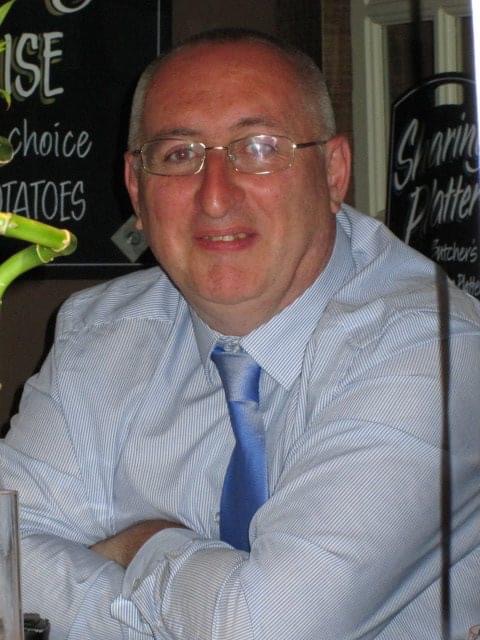
Steve, G1KQH, is a regular contributor to AmateurRadio.com and writes from England. Contact him at [email protected].
 Ham Radio Deluxe |
 W5SWL Electronics |
 Ham Radio Prep |
 KB3IFH QSL Cards  Hip Ham Shirts  HamRadioAuctions HamRadioAuctions Reliance Antennas Reliance Antennas Enigma Shop Enigma Shop |  morseDX  Ni4L Antennas  R&L Electronics R&L Electronics antennas.us antennas.us Ears to Our World Ears to Our World |
- Matt W1MST, Managing Editor
