 |
 What has happened to Elecraft?
 9 February 2021 | by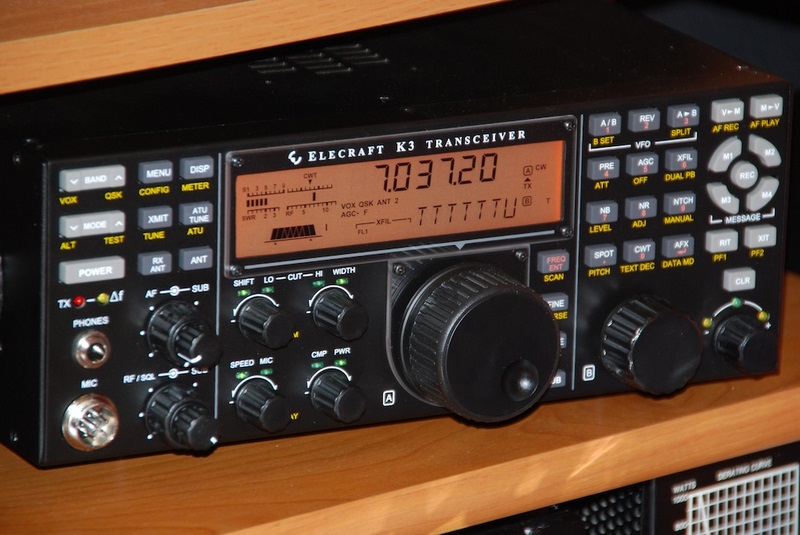
For the first time in a very long time, my radio shack is without an Elecraft product. I was and still am a big Elecraft fan and had 2 Elecraft K2's that I built, KX1, K3 and finally a KX3. The only rig I had left was the KX3 and a short time ago that rig was sold off. As with most hams sold equipment becomes ham bucks for new things. I may regret selling my KX3 but at this time that has not happened. I really needed to upgrade my PC and it was the KX3 funds that allowed me to do that.
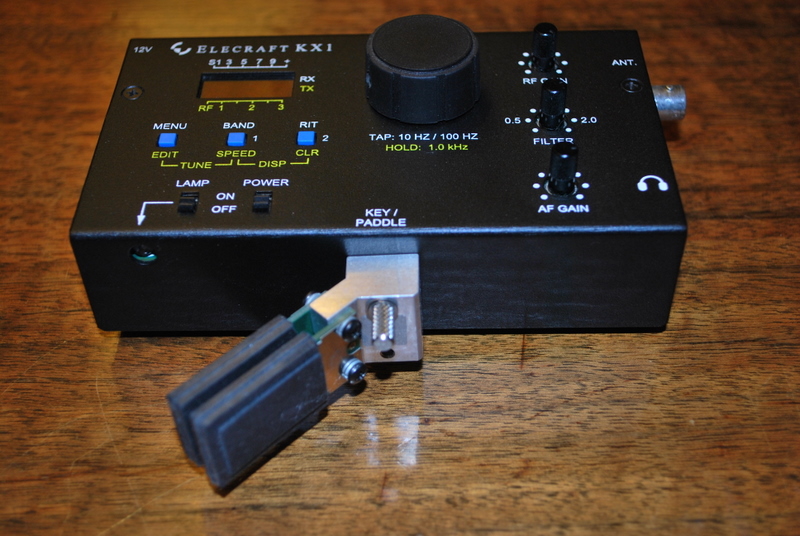 |
| My KX1 |
I was on the internet this afternoon and wanted for old time sake visit the Elecraft website and what I found was shocking! I went to the order/shipping status page as I was feeling the fuzzies for maybe another K2 to build. I saw the K4 and its ongoing status update link but then I saw "K3S no longer available" I took a double-take! That was the flagship of Elecraft. It gets better......the K3/K3S add-on kits are for the most part " availability TBD" so much for an upgradable radio.
Then there were the back orders KX3, KPA100 amp, KX2 and K2. I am not sure if it's COVID that has put things in a tailspin but as an Elecraft fan, I was shocked to see this.
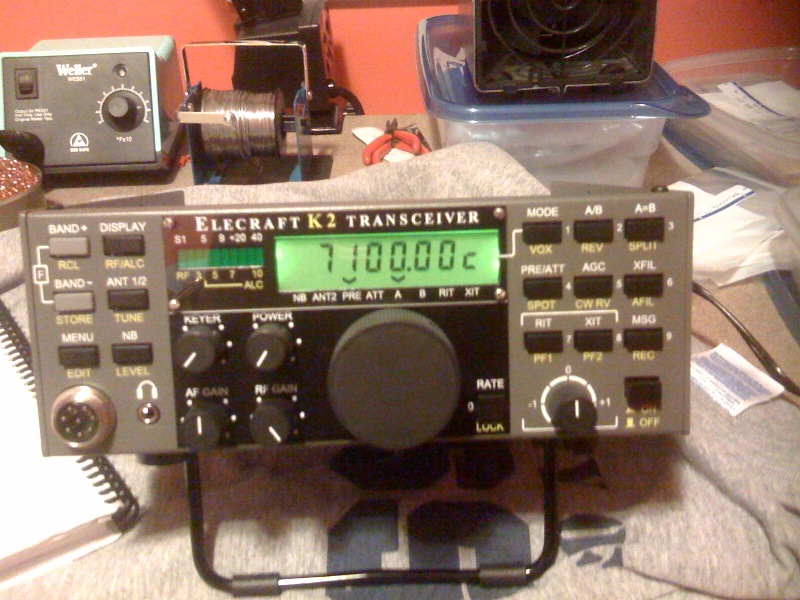 |
| One of my K2's |
Mike Weir, VE9KK, is a regular contributor to AmateurRadio.com and writes from New Brunswick, Canada. Contact him at [email protected].
The 2 Meter Band: Much More Than FM
Way back in the Wayback machine, when I was working on getting my Technician license (in the 20th century), I recall looking at the frequency bands available to Techs. Technicians had operating privileges for everything above 50 MHz, which looked like a lot of useful spectrum to me. The idea at the time was that Technicians were exploring the new frontier of amazingly high frequencies. Since then, the Technician license has morphed to be the entry level license.
ICOM has a good graphic that shows all of the ham bands and shows the common subbands for various modes. I snipped out the portion that covers the most popular VHF/UHF bands (below). Wow, look at all the stuff you can do! Also, it is 4 MHz of spectrum, big enough to fit eleven 20 meter bands inside it. (Yeah, yeah, the propagation is a lot different.) Speaking of bandwidth, take a look at the 70 cm band, with 30 MHz of spectrum. (Not shown is the 23 cm band, which spans 60 MHz.) The higher you go in frequency, the more spectrum there is.
Most people think of the 2-meter band as just FM and repeaters, but it is much more than that. I copied the 2-meter band graphic and added my own notatation on the various uses of the band.
 Much of the band is allocated to FM, which is consistent with the popularity of the mode. I didn’t mark all of the FM segments, so refer to the color coding to see them. But there is much more than FM simplex and repeaters. Down on the low end is the CW-only segment and EME activity (Earth-Moon-Earth or moonbounce). The “weak-signal” enthusiasts tend to use the SSB portion, with the SSB calling frequency of 144.200 MHz. You may often hear CW in the SSB subband and radio hams flip back and forth between the modes depending on propagation. Meteor scatter is mostly done via the WSJT-X mode of MSK144 around 144.140 MHz.
Automatic Packet Reported System (APRS) activity is mostly on 144.390 MHz, using FM-based 1200-baud packet radios. Other packet radio usage is not shown but is usually around 145.01 MHz. The 2m band is very attractive for satellite use, with VHF propagation properties and manageable doppler shift for Low Earth Orbit (LEO) satellites. The downlink from the International Space Station (ISS) is usually 145.80 MHz.
Over time, I’ve used all of these 2m modes mentioned above, with the exception of EME. I am still working on that one and I hope to have a new 2m Yagi installed sometime this year that will enable it.
73 Bob K0NR
The post The 2 Meter Band: Much More Than FM appeared first on The KØNR Radio Site.
Bob Witte, KØNR, is a regular contributor to AmateurRadio.com and writes from Colorado, USA. Contact him at [email protected].
LHS Episode #392: Display Server Deathmatch

Hello and welcome to the 392nd episode of Linux in the Ham Shack. In this episode, the hosts discuss amateur radio related horror films, an ISS EVA snafu, ham radio in the BSA, YOTA, Microsoft on the Raspberry Pi, software freedom, display servers and much more. We hope you enjoy this episode and also have a safe and prosperous upcoming week.
73 de The LHS Crew
Russ Woodman, K5TUX, co-hosts the Linux in the Ham Shack podcast which is available for download in both MP3 and OGG audio format. Contact him at [email protected].
LHS Episode #391: The Weekender LXV

Hello and welcome to Episode 390 of Linux in the Ham Shack. In this episode, the hosts interview Jason, KM4ACK, the author of the Build-a-Pi shack computer build script. We cover where to get the script, how to use it to create your shack machine and a few tips and tricks for better operation and configuration of your ham radio applications. Jason also has an informative YouTube channel and is a great resource. Hope you enjoy this episode and have fun building a Pi for your shack and operating often.
73 de The LHS Crew
Russ Woodman, K5TUX, co-hosts the Linux in the Ham Shack podcast which is available for download in both MP3 and OGG audio format. Contact him at [email protected].
A 5763 Crystal Power Oscillator For the Neophyte Regen
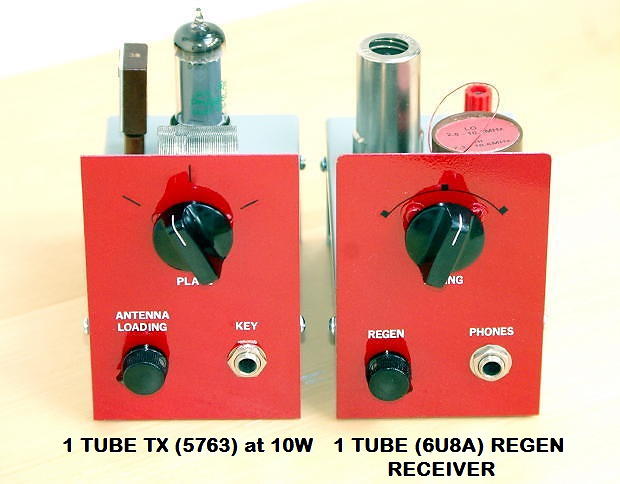
I've just added a new page to my main website, 'The VE7SL Radio Notebook' that describes the recent construction and operating adventures with the small companion transmitter built to pair with my NEOPHYTE REGEN. I may have worked several of you with the pair already and if so, many thanks. I hope to work the rest of you soon!
Steve McDonald, VE7SL, is a regular contributor to AmateurRadio.com and writes from British Columbia, Canada. Contact him at [email protected].
LHS Episode #390: Build-a-Pi Deep Dive

Hello and welcome to Episode 390 of Linux in the Ham Shack. In this episode, the hosts interview Jason, KM4ACK, the author of the Build-a-Pi shack computer build script. We cover where to get the script, how to use it to create your shack machine and a few tips and tricks for better operation and configuration of your ham radio applications. Jason also has an informative YouTube channel and is a great resource. Hope you enjoy this episode and have fun building a Pi for your shack and operating often.
73 de The LHS Crew
Russ Woodman, K5TUX, co-hosts the Linux in the Ham Shack podcast which is available for download in both MP3 and OGG audio format. Contact him at [email protected].
Ham College 73
Ham College episode 73 is now available for download.
Extra Class Exam Questions – Part 11.
E2E Operating methods: operating HF digital modes.
1:07:26
George Thomas, W5JDX, is co-host of AmateurLogic.TV, an original amateur radio video program hosted by George Thomas (W5JDX), Tommy Martin (N5ZNO), Peter Berrett (VK3PB), and Emile Diodene (KE5QKR). Contact him at [email protected].
 Ham Radio Deluxe |
 W5SWL Electronics |
 Ham Radio Prep |
 KB3IFH QSL Cards  Hip Ham Shirts  HamRadioAuctions HamRadioAuctions Reliance Antennas Reliance Antennas Enigma Shop Enigma Shop |  morseDX  Ni4L Antennas  R&L Electronics R&L Electronics antennas.us antennas.us Ears to Our World Ears to Our World |
- Matt W1MST, Managing Editor
