 |
 Ham Radio Odyssey | XR0Y’s 21st Century Journal | Part Eight
 12 April 2010 | by
 XR0Y videoblog – part 8 from SQ8X on Vimeo.
Believe in your signal.

Scot Morrison, KA3DRR, is a regular contributor to AmateurRadio.com and writes from California, USA.
Bye bye Beaconworld
The Beaconworld website will be closing down in May. If you’ve never heard of it before, neither had I until I read about it in M0XPD’s blog. But having visited the site, it seems to be an excellent and comprehensive resource for anyone interested in beacon DXing. It’s a shame that it will disappear even though it is being closed for reasons that I can understand.
Have a look while it’s still here. Perhaps someone will step in and offer to take over the site and carry it on, or at least to preserve the pages as they are.

Julian Moss, G4ILO, is a regular contributor to AmateurRadio.com and writes from Cumbria, England. Contact him at [email protected].
Motorola Radius GP300
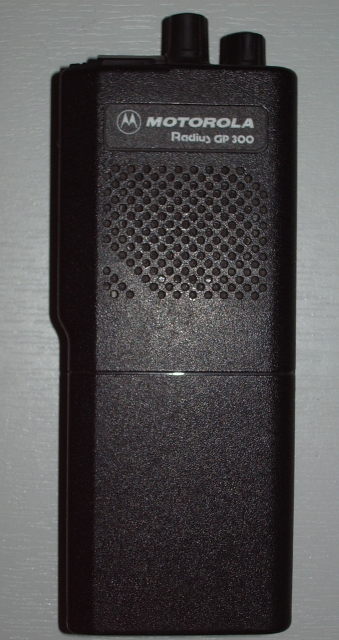 I seem to be collecting VHF handhelds at the moment. This is the Motorola Radius GP300 I bought for £1 at the Blackpool radio exhibition yesterday. The seller had quite a number of shiny new-looking commercial handhelds in a heap on the table, all without batteries, which were being sold for £1 each. He told me they were all UHF. Most were Midland radios, but there was this one Motorola which in the end I decided to get because I thought it might be easier to find information about it. I should have got one of the Midlands as well, after all, it was only a quid!
Today I took a closer look at what I had bought, and tried to find out something about it from the internet. From the model number I was able to find out the capabilities of the radio and I actually have a VHF handheld which can cover 144 – 176MHz in 12.5kHz steps, 8 programmed channels with 5W output. I can’t test if it works because I don’t have an adapter for the strange type of antenna socket, but Motorola to BNC adapters are available on eBay. However for the radio to be any use I will need to program it with some 2m band frequencies.
There is information on the web showing how to build a programming interface, but you can actually buy one ready made from Hong Kong for little more than the cost of the parts. The difficulty appears to be getting hold of the all-important programming software. Apparently it was very expensive and Motorola doesn’t turn a blind eye to free sharing of it among the amateur community so I was unable to find any download link.
None of the sites that give information about programming these radios provide any help about how to get hold of the software and they are obviously fed up with being asked about it. So there probably isn’t much that I am going to be able to do with this radio. A pity, as it seems to be well regarded judging by the reviews on eHam, presumably posted by users who got them from dealers pre-programmed with the channels of their choice.

Julian Moss, G4ILO, is a regular contributor to AmateurRadio.com and writes from Cumbria, England. Contact him at [email protected].
APRS absurdity
Following a posting and subsequent clarification on the APRS UK Yahoo Group I have discovered that in order to legally operate an APRS digipeater or Internet Gateway it is necessary to apply for a Notice of Variation (NoV) to my license that must include the nomination of at least three people who can close down the station within 30 minutes, even if the station will only be operated when I myself am present.
The reason for needing an NoV is because all authorization to transmit third party traffic (i.e. traffic not from you, nor for you) was removed from the new Lifetime License that was introduced in 2004. I don’t actually have any problem with needing an NoV, though I’m sure I am not the only person who used packet radio back in the ’80s without any special dispensation and didn’t realise that this was no longer possible. However, the requirement for the NoV application to nominate three closedown operators even if the gateway or digipeater will only be operated when the licensee is present is simply ludicrous, as well as being a major obstacle for anyone who does not have three people who can meet that requirement. If the rules are silly, I won’t play the game.
As I understand it, it is legal to transmit position reports on RF (because they are from you), it is legal to transmit APRS messages (because they are from you) and it is legal to run a receive-only Internet Gateway (because you are not retransmitting what you receive.) But digipeating or transmitting packets received from the Internet for other stations heard by you is carrying third party traffic and therefore illegal without an NoV. I think many people such as myself who are not dedicated APRS operators but see it as just another mode to use from time to time will take the easier option of operating without an NoV even though in the opinion of Rob Compton M0ZPU receive-only gateways “cause problems to the network in terms of it’s capability to carry messaging … by causing “dead-ends” to intelligent routing (where software utilises the reverse route for a message).”
It’s hardly surprising that the RF APRS network in the UK is so poor compared to the USA and other parts of the world.

Julian Moss, G4ILO, is a regular contributor to AmateurRadio.com and writes from Cumbria, England. Contact him at [email protected].
Blackpool weekend
I hadn’t been to a hamfest (or radio rally as such events are known over here) for several years. On Friday I mentioned to Olga that the Northern Amateur Radio Societies Association Amateur Radio, Computer and Electronics Exhibition was being held at Blackpool on Sunday and it was supposed to be quite a good one and she said “why not go?” I then suggested that we book a hotel for the Saturday night so we could travel down the day before and see some of the sights of Blackpool, which neither of us had been to before. So we did.
The sights of Blackpool served only to help me understand why most Brits these days go to Spain for their holidays, but the NARSA Exhibition lived up to its reputation and was well worth the trip. I spent very little but came back with a large bundle of components most of which I will probably never use, plus an apparently unused Motorola Radius GP 300 handheld, sans battery, which I was unable to resist as the price was £1. It was also nice to meet in person several people I had previously only worked on the air, exchanged emails with or who were readers of my blog.
It’s impossible to give a full picture of an event this size so I’ll just mention a few of the stands that were of particular interest.
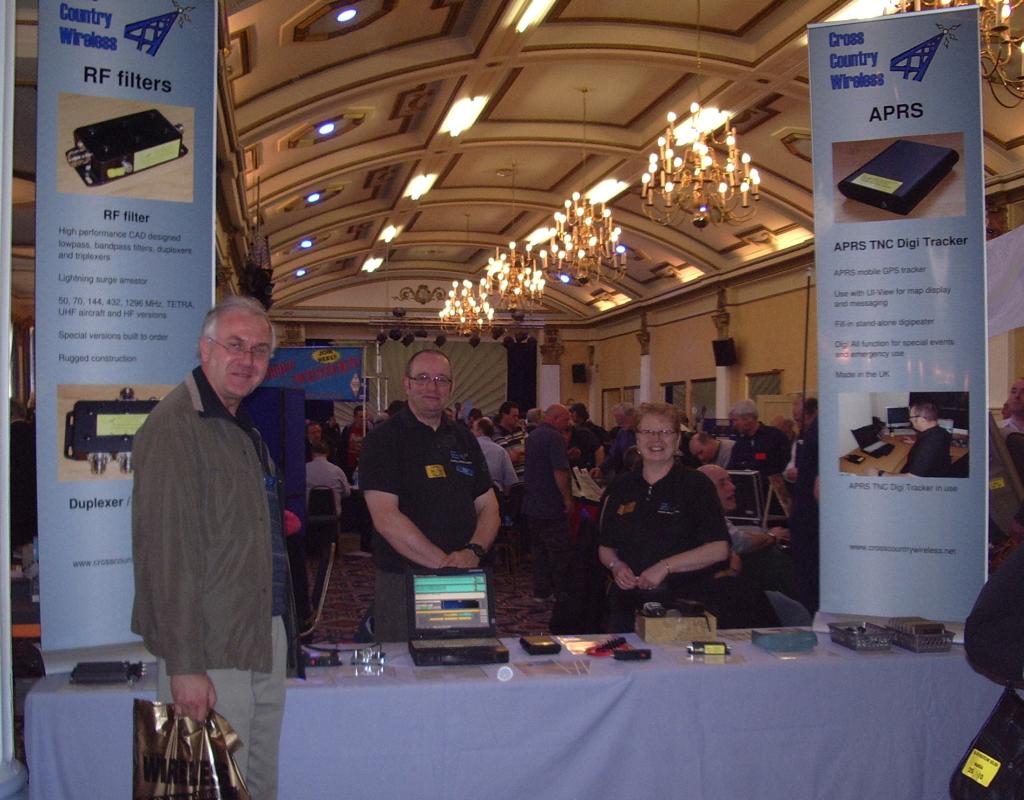 Occupying a prime position right by the entrance was the stand of Cross Country Wireless run by Chris G4HYG and his XYL. He was displaying the new end-fed antennas I mentioned a couple of days ago, as well as his well-established APRS products and the new program APRS Messenger. Chris commented that the number of visits to his site increased noticeably after I’d mentioned the antennas in my blog – hopefully he got some sales as well!
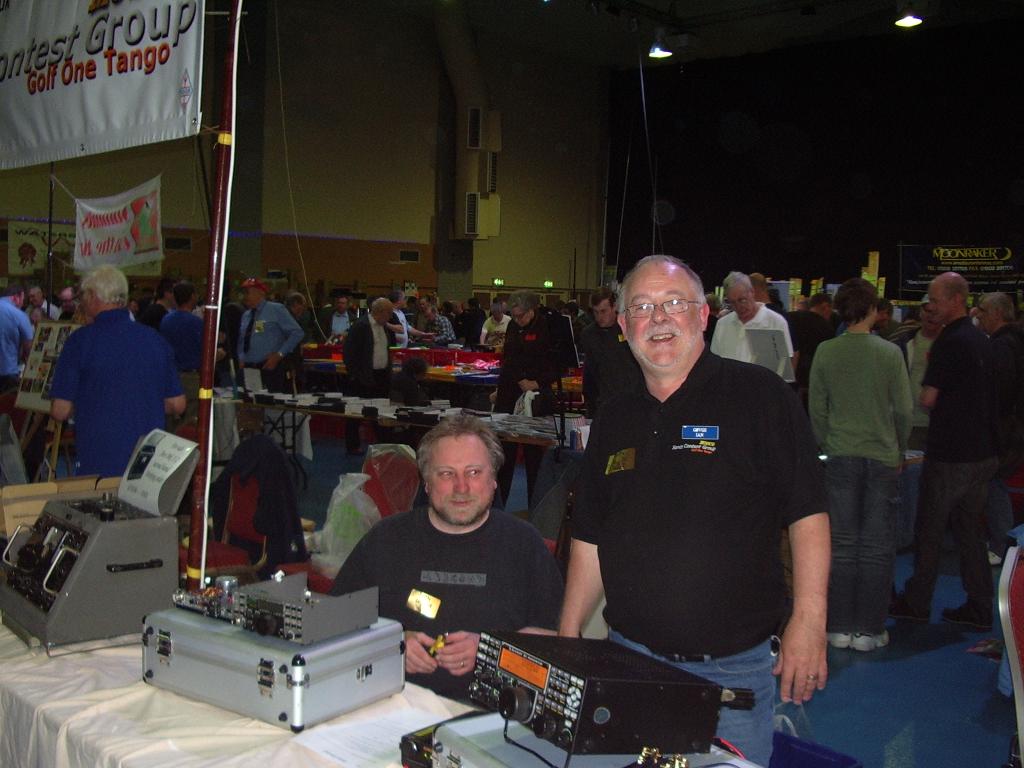 Ian G0VGS and Kev G6FKE were manning the Sands Contest Group stand and also giving visitors a chance to look at the K2 and K3 transceivers by Elecraft.
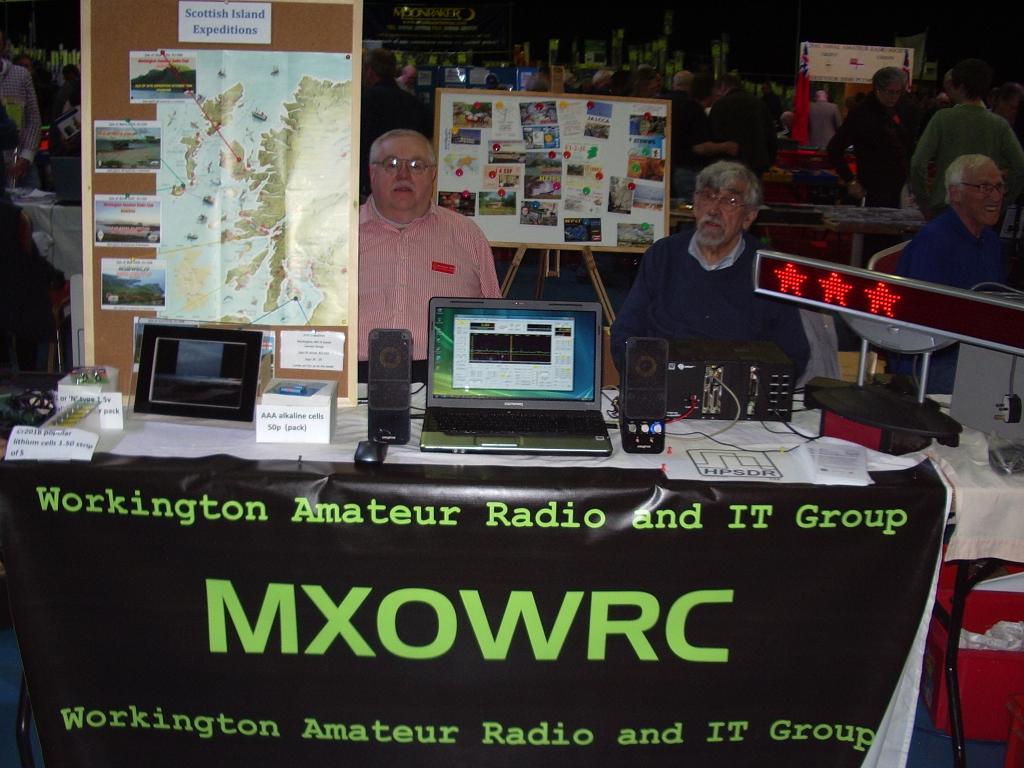 My local club, Workington Radio Club is a NARSA member and had an impressive stand, manned in this picture by Barry G0RZI and Tony G1OAE.
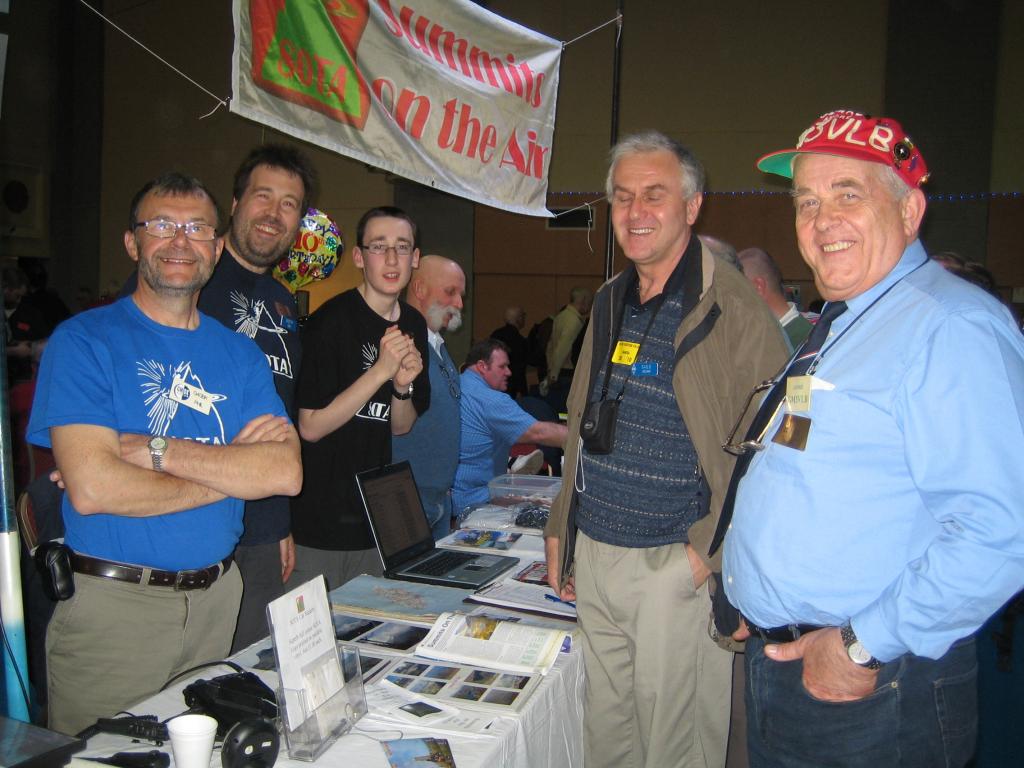 Summits On The Air also had a stand where I was able to chat about WOTA with Tom M1EYP and his son Jimmy M3EYP, and meet Phil G4OBK who is the top activator in the Wainwrights On The Air (WOTA) scheme (and the only one so far to have earned a certificate.) Olga took this picture but unfortunately she caught me just as I blinked!
It was a very enjoyable day, but now you’ll have to excuse me, I have a large bag of components to sort out!

Julian Moss, G4ILO, is a regular contributor to AmateurRadio.com and writes from Cumbria, England. Contact him at [email protected].
K6MM’s 160m No Excuses Vertical
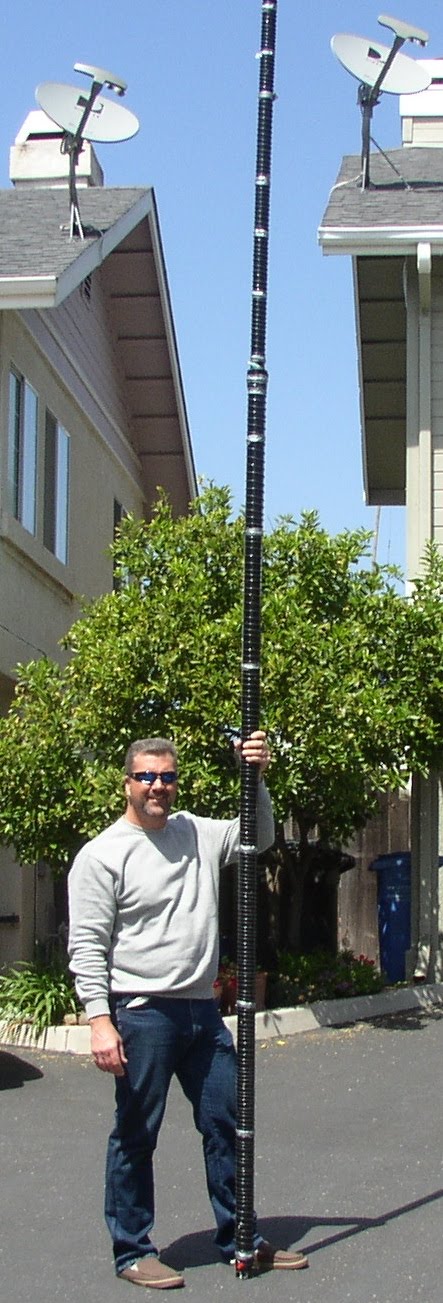 Photograph One illustrates completion of vertical section(s) one and two. I worked my lower back while winding but I’m confident the helical wind itself met my exacting standards. Duct tape used to secure every twelfth or so winding. My plan is glue the helical wind after field testing and final standing wave measurements are taken.
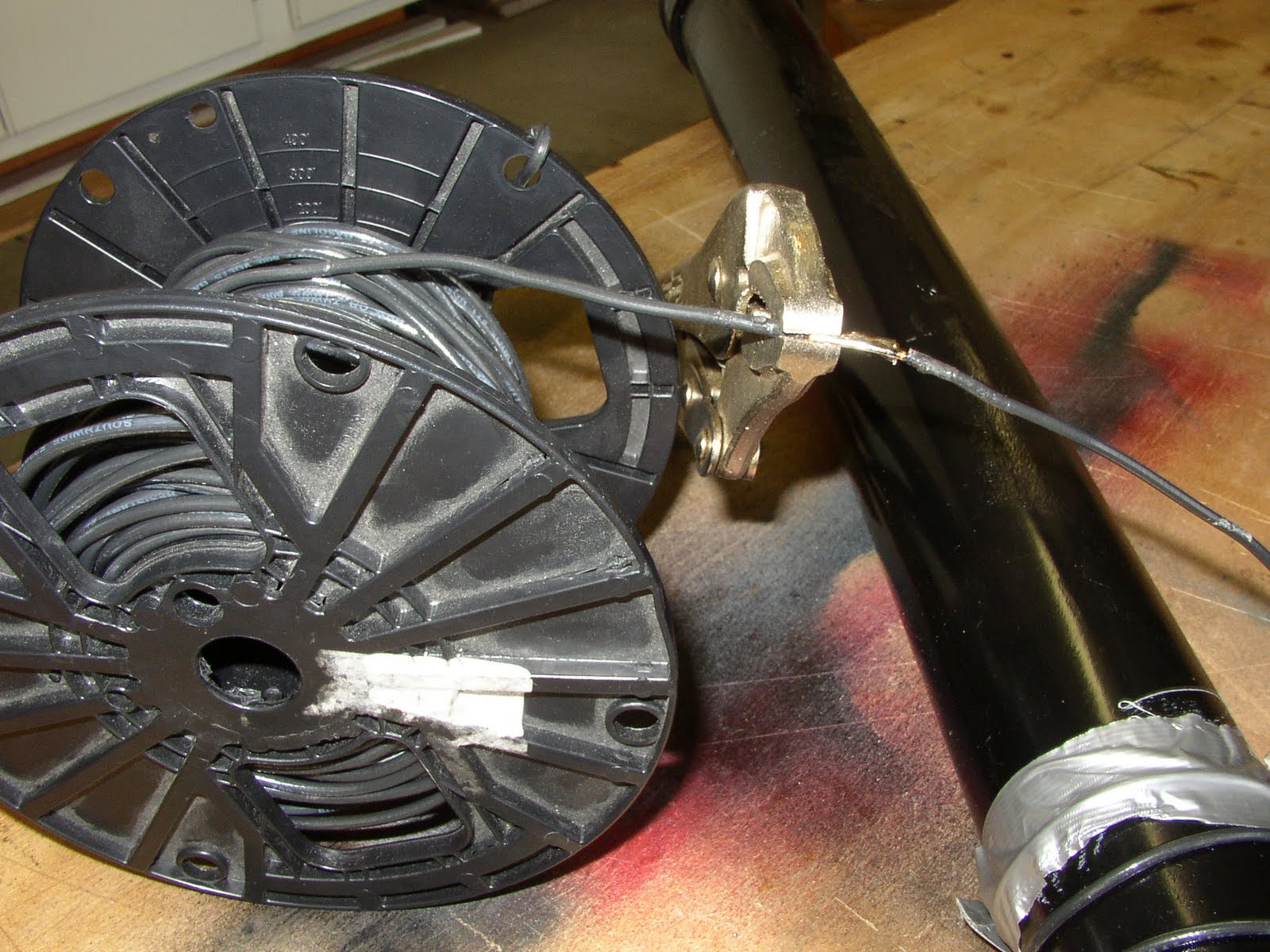 Photograph two taken of third man or a pair of vice grips used to secure first section wire splice. We discussed the wire splice illustration in the ARRL’s Antenna Handbook and concluded its six inch requirement with twist is best for dipole-like tensions. I scraped enamel coating from each AWG #14 solid core wire prior to soldering.
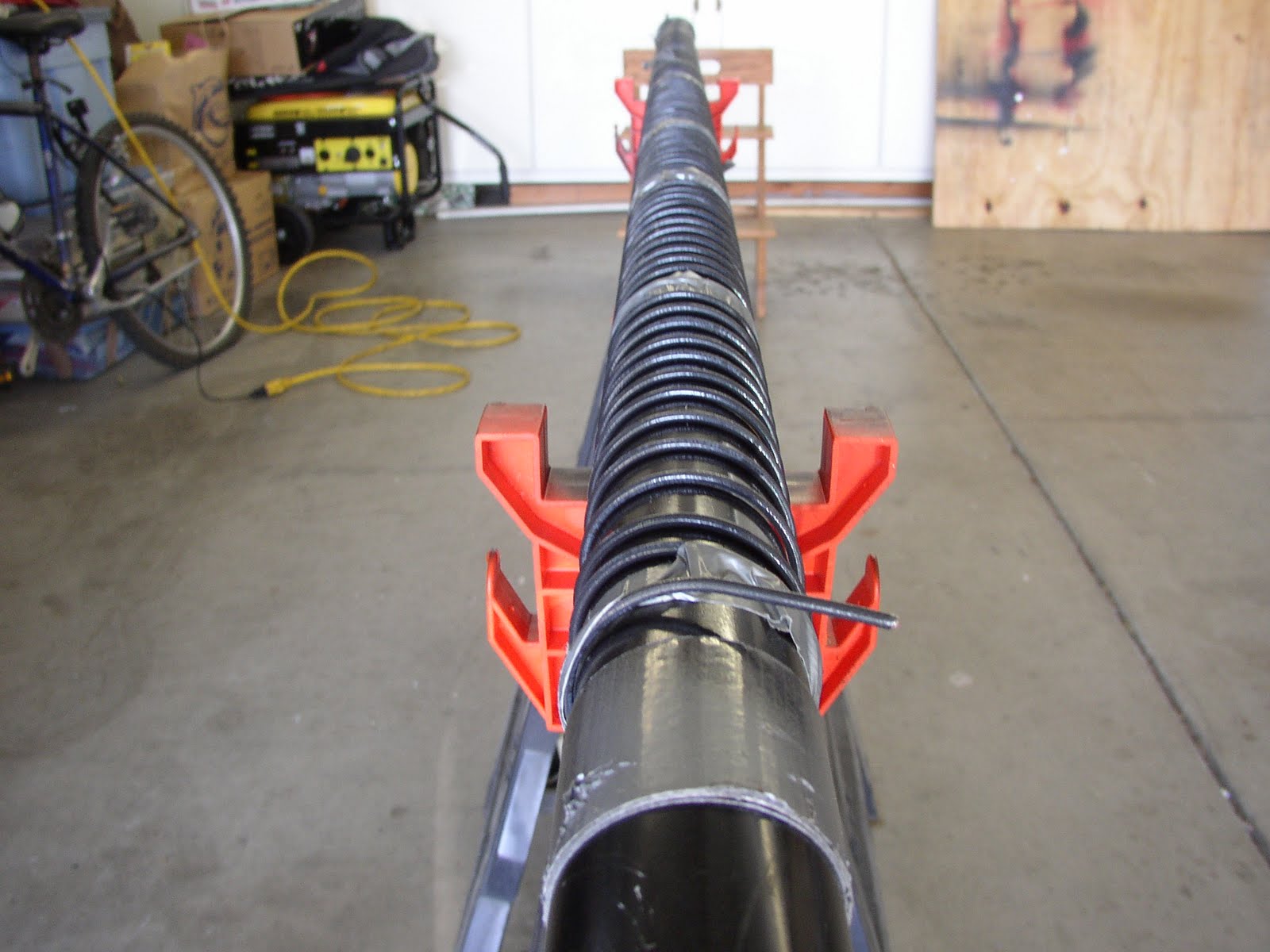 Photograph three depicts section one and two layout after completion of winding using a spool as illustrated in photograph two. The spool facilitated downward and upward motion creating enough necessary tension to wind antenna wire.
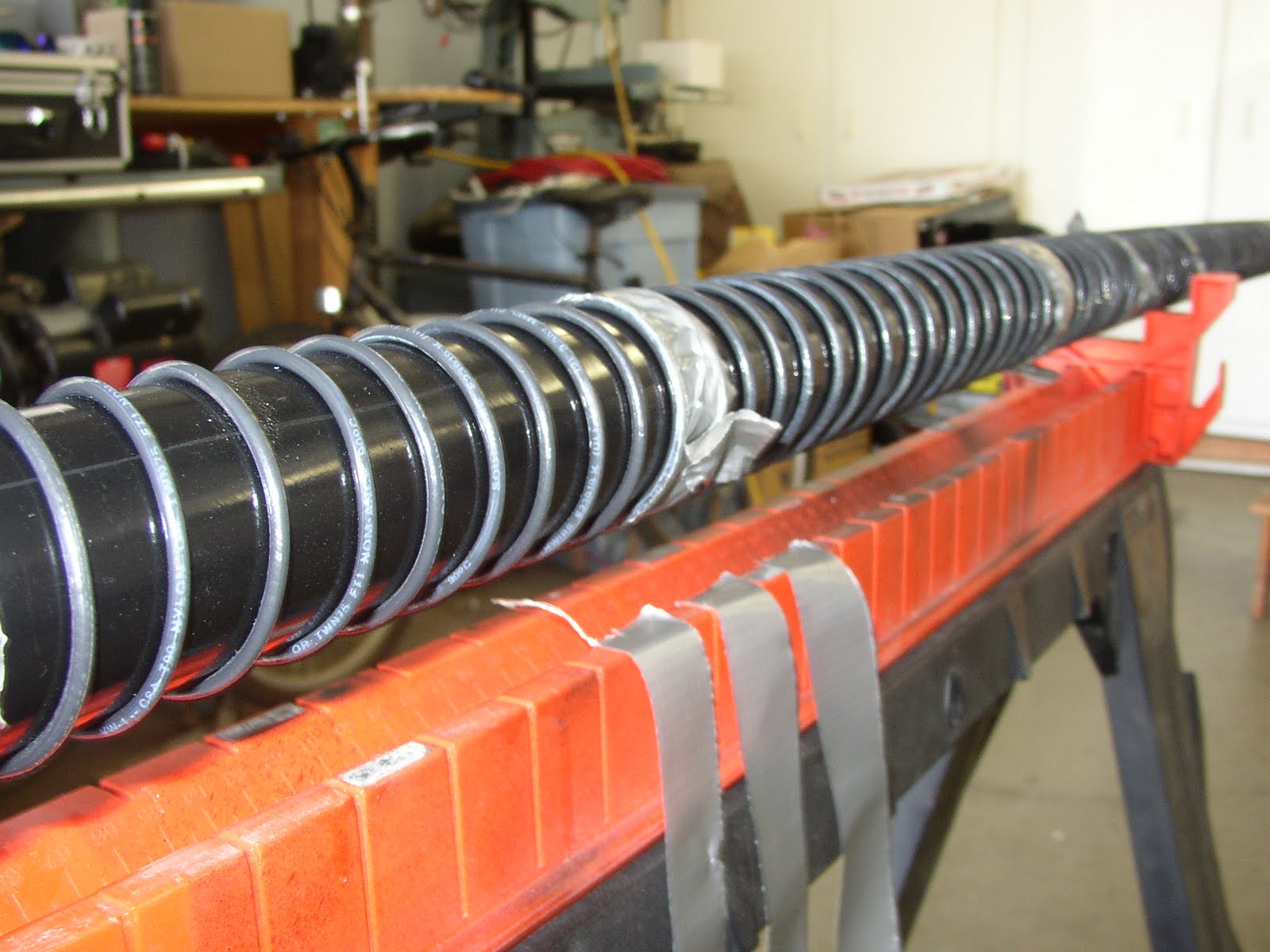 Photograph four captures approximate 1/2 inch winds thus far consuming 201 feet of copper wire between first and second sections.
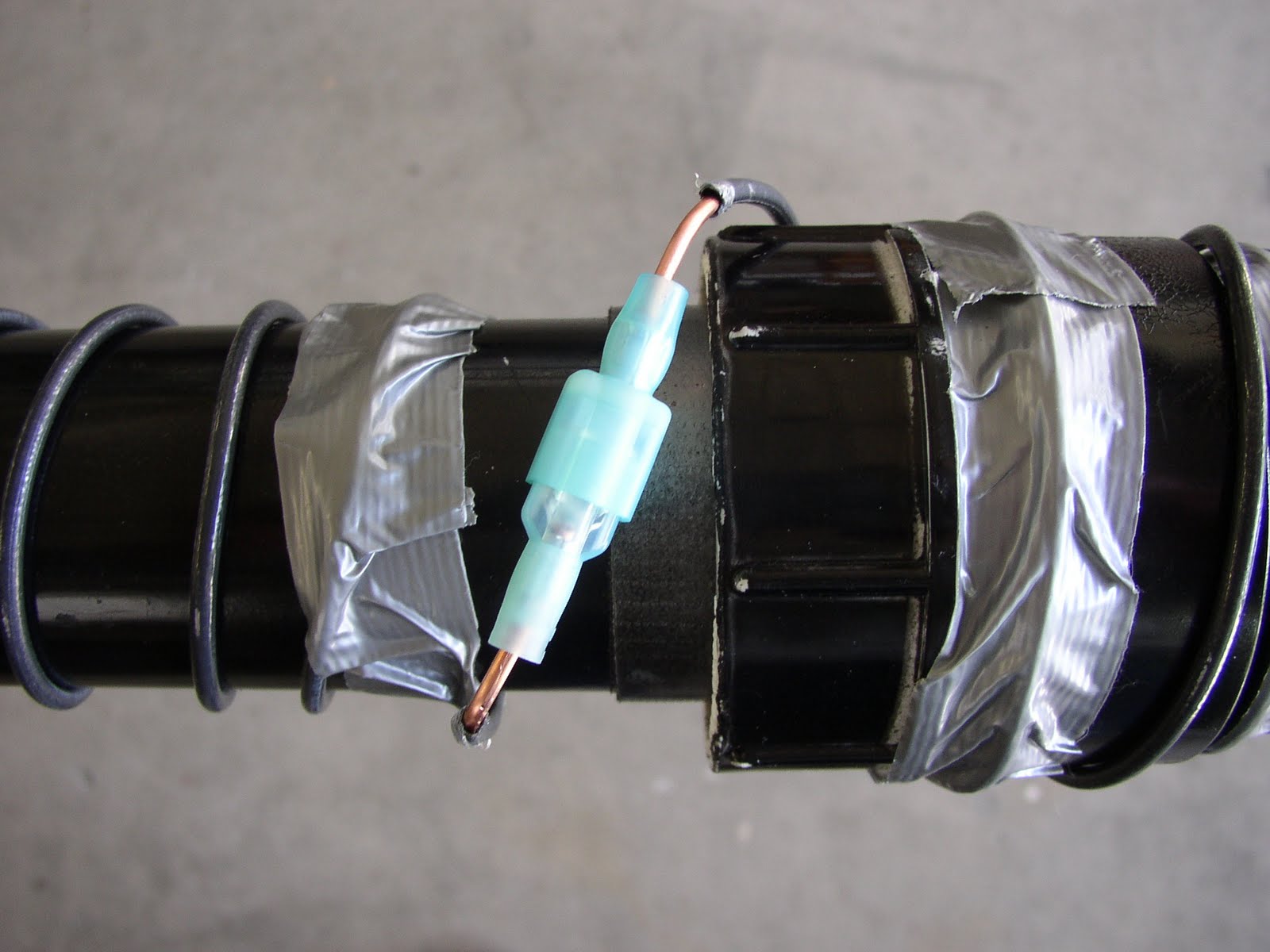 Photograph five taken of a pair of slugs used to connect both sections. I opted for this type of connection as mechanically sound versus alligator clips given the potential for lateral motion. I’m constructing the antenna as a portable type rather than fixed. However I might be corrected on connection terms because I simply forgot after leaving the hardware store.
Remaining Project Objectives.
Section one is 45 percent complete and we’re fast approaching capacitance hat construction in the near future. Likewise, we’re discussing type of feed line for example, coaxial or window line as suggested in K6MM’s instructions. Furthermore, I’m brainstorming how-to fit 1/4 wave radials into the lot in the backyard, any suggestions?
73 from the shack relaxation zone.
P.S. Read K3LR’s method of installing a PL259 connector with photographs (link).

Scot Morrison, KA3DRR, is a regular contributor to AmateurRadio.com and writes from California, USA.
Ham Radio Odyssey | XR0Y’s 21st Century Journal | Part Seven
XR0Y Videoblog part 7 from SQ8X on Vimeo.
Team work leads to success.
Obstacles whatever they maybe either strengthen a team or creates cliquish-like behavior ultimately diminishing team potential. In the previous installment, Stan faced his deepest challenge through the darkest of the night. Instead, when everything from weather to human nature seemed against him, SQ8X followed the team’s mission and goal statement.
Zbig, SP7HOV tied in the entire experience while Stan questioned him about the RTTY swarm on 17 meters, “Beautiful.”
Believe in your signal.

Scot Morrison, KA3DRR, is a regular contributor to AmateurRadio.com and writes from California, USA.
 Ham Radio Deluxe |
 W5SWL Electronics |
 Ham Radio Prep |
 KB3IFH QSL Cards  Hip Ham Shirts  HamRadioAuctions HamRadioAuctions Reliance Antennas Reliance Antennas Enigma Shop Enigma Shop |  morseDX  Ni4L Antennas  R&L Electronics R&L Electronics antennas.us antennas.us QRV QRV |
- Matt W1MST, Managing Editor
