 |
 Unique QRP Rig Design
 21 April 2010 | by

Anthony Good, K3NG, is a regular contributor to AmateurRadio.com and writes from Pennsylvania, USA. Contact him at [email protected].
Measuring milliwatts
One K3 setup adjustment that I have never done is to check the power level of my K3 transverter output, because I don’t have an RF millivoltmeter. I do, however, have an Elecraft DL1 dummy load which has a test point fed by a 1N5711 diode and capacitor. You can take voltage readings there, and then calculate power using the formula:
Power = (( Voltage * 1.414) + 0.15) ^2 / 50
and I normally use this whenever I want an accurate power measurement rather than rely on the readings of analogue meters.
 What I don’t know is whether this is accurate enough to measure power at levels as low as 1mW. So I asked the question on the Elecraft email reflector, rashly forgetting that the function of of the reflector is for users to flame each other and speculate on or redesign Elecraft products. Don, W3FPR, who was usually good for an answer to a technical question, has left the reflector after he was flamed for some imagined breach of netiquette. Frankly, the reflector is now worthless. I wish Elecraft would create an announcements-only mailing list so that one could stay informed of new developments and firmware updates without having to see all the ego clashes and endless questions about problems with USB serial adapters.
When I measured, using the DL1 and my DVM, the output from the K3 transverter port with the level set to 1mW, I got a reading of 36mV. Plugging that into the formula, I get 0.8mW. But the 0.15 is, I presume, a “fudge factor” to compensate for the voltage drop in the detector diode, which gives me a result of 0.45mW even if zero voltage was detected. So I’m wondering if my 0.8mW is within the limits of error of my measurement method and that I should leave my transverter drive level as it is. I assembled my K3 myself and the transverter board was added later so I don’t believe the level has ever been set at the factory.

Julian Moss, G4ILO, is a regular contributor to AmateurRadio.com and writes from Cumbria, England. Contact him at [email protected].
Under the volcano
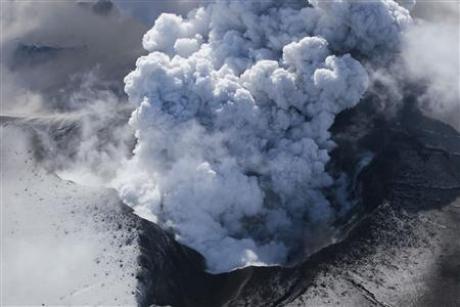 On a clear day from here you can normally see at any one time two or three vapour trails from transatlantic jets at 35,000 feet on their way to London’s airports. For five days there have been none. The weather has been fine and the sky blue, so blue that it’s easy to doubt whether the density of dust from the Eyjafjallajokull volcano in Iceland poses any real threat to aviation, or whether it is just bureaucrats being over-cautious.
Whatever the risk, the aviation ban is real and there can be no-one in Britain who has not been affected by it one way or another. The first effect we noticed was when we went to a classical music concert last Friday in Carlisle. The piano soloist was unable to get there so the Mozart piano concerto was played by a stand-in.
I received an email from one Hong Kong eBay seller to tell me that the programming interface for the Motorola radio I bought at Blackpool which I ordered from him would take longer to arrive. I expect other items I have ordered from eBay and elsewhere, including a transmitter module for my dedicated Echolink node radio, will be similarly delayed, as there is no air mail. We take for granted that we can order things from China or the USA and have them in a few days. Not any longer.
Friends of ours who are due to return from Ukraine tomorrow are probably not going to be able to make it unless London Luton airport is miraculously opened. They are due to return to work on Thursday and are very anxious not to provide their employers with an excuse to terminate their contracts.
That’s the situation now, but with seismologists saying that the volcano could continue to erupt off and on for the next year or two and even suggesting that another, larger Icelandic volcano is due for an eruption, what is the future for the airline industry? If there’s a high probablility of getting stranded abroad like so many people are now, how many are going to decide to change their travel plans and stay close to home for the next few months? I will, for sure.
I dare say canny investors will be selling airline shares and investing in shipping. And I don’t suppose it will be long before the first package holiday companies start going bankrupt because of all the refunds and cancellations. Like the banking collapse, I think this is another event that is going to have permanent repercussions.
Trust Nature to cut us down to size. We humans think we are so powerful we can end global warming, yet in a few hours the earth achieved what governments alone could never have managed – a complete grounding of aviation. I suspect that a really big volcanic eruption could have a bigger impact on global climate than any of the measures agreed by the politicians.

Julian Moss, G4ILO, is a regular contributor to AmateurRadio.com and writes from Cumbria, England. Contact him at [email protected].
Could D-Star destroy ham radio?
In a comment to an old posting about D-Star in G4VXE’s blog, Lee N2LEE accuses me of being closed to new ideas. Does it matter that the AMBE codec is patented if it is the best one for the job, he asks? And how can you compare Echolink/IRLP to D-Star when D-Star is an digital end to end system with routing, linking and networking built in to the system so you can just enter someone’s callsign and the network will find them automatically?
To me, ham radio is not and never has been about reliable point to point communication. Communication is just the end-product of a process of experimentation and construction, or a pastime (think contests, DXing) where the unreliability and unpredictability of it is what makes it a challenge.
D-Star’s use of a proprietary codec closes that aspect of the system to experimentation. It doesn’t even permit interested amateurs to look at the code and see how it works. This is contrary to the spirit of amateur radio and the openness that has facilitated most developments to date by letting one idea lead to another. But to be honest I’m not all that bothered about the issue because codec technology, whether proprietary or not, is a closed book to most. I am more concerned about the possibility that digital voice modes might one day make analogue modes obsolete so that building a simple phone transmitter using SSB, FM or AM becomes a pointless activity. Ham radio does not have to slavishly adopt new technology, especially if that technology forces more of us to become appliance operators by making simple rigs that anyone can build obsolete.
As for digital end to end routing, why do we need it? We already have a system that can do that. It is called the mobile phone network. I didn’t get into ham radio in order to be able to do something ordinary people can already do. I want to be able to do things that they can’t. The unpredictability of propagation and the uncertainty of who you might work on a given band at any time are what makes a ham radio contact more interesting and more of an accomplishment than making a phone call. D-Star may be very clever technology but what it delivers is not what ham radio is about.
If the time ever comes when I think to myself “why am I struggling to make this contact on 20m SSB or whatever when I could simply type the guy’s call into my D-Star radio and have a comfortable chat” then that is the day I will give up the hobby for good. And I make no excuses for resisting the adoption of technologies that will bring that day closer.

Julian Moss, G4ILO, is a regular contributor to AmateurRadio.com and writes from Cumbria, England. Contact him at [email protected].
3830 Claimed Scores | 2010 NS Spring Ladder VIII | Low Power
 Atlantic Single Operator.
- NO3M | 45 Qs | 34 Mults | 1,530 Points [NCC].
- K4BAI | 44 Qs | 33 Mults | 1,452 Points [SECC].
- W4OC | 43 Qs | 32 Mults | 1,376 Points [SECC].
n = 10 scores submitted in this division.
East Central Single Operator.
- N4OGW | 54 Qs | 34 Mults | 1,836 Points [ACG].
- W9RE | 49 Qs | 31 Mults | 1,519 Points [SMC].
- K9BGL | 48 Qs | 30 Mults | 1,440 Points [SMC].
n = 14 scores submitted in this division.
West Central Single Operator.
- N3BB | 55 Qs | 40 Mults | 2,160 Points [CTDXCC].
- WD0T (@KD0S) | 51 Qs | 34 Mults | 1,734 Points.
- W0BH | 49 Qs | 30 Mults | 1,470 Points.
n = 9 scores submitted in this division.
West Single Operator.
- W7WHY | 41 Qs | 26 Mults | 1,066 Points [WVDXC].
- VA7ST | 25 Qs | 22 Mults | 550 Points.
- NG7M | 25 Qs | 17 Mults | 425 Points [Utah Contest Club].
n = 3 scores submitted in this division.
NCCC in CA/NV Single Operator.
- N6RO | 50 Qs | 34 Mults | 1,700 Points.
- W0YK | 48 Qs | 34 Mults | 1,632 Points [Loma Prieta Contest].
- N6ZFO | 46 Qs | 32 Mults | 1,472 Points.
n = 7 scores submitted in this division.
Thursday Night Madness resumes its eighth season and the fastest 30 minutes in RadioSport is better than ever. This week’s club banner position goes to the Central Texas DX and Contest Club lead by the looming 100 foot tower himself — Jim, N3BB.
His accomplishment was not a given with N4OGW and W9RE competing in round one of the NS Spring Ladder. Undoubtedly, Jim’s commitment to the mantra of practice, practice, practice paid handsome dividends both for himself and the club. An accomplishment well executed from his location.
Please take note, the fastest 30 minutes in RadioSport affectionately known as Thursday Night Madness, reorganized its divisions this season — West, West Central, East Central, and Atlantic.
Contest on!

Scot Morrison, KA3DRR, is a regular contributor to AmateurRadio.com and writes from California, USA.
GroundWave Video
The genesis for this project is local. The Union Express video captures a pair of surfers traveling the coastline of California from Los Angeles to San Francisco and back. The premise is anyone can do this, the trip is cost effective, and there is a story around every corner. Enjoy.
Live to surf, surf to live.
P.S. Still getting worked on the inside near beach break however I paddled into a reform wave that shaped up into a juicy right north of Pismo Pier. My session summed up as good exercise both cardiovascular and anaerobic.

Scot Morrison, KA3DRR, is a regular contributor to AmateurRadio.com and writes from California, USA.
Arecibo success
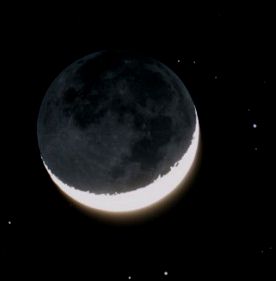 This evening I managed to hear signals bounced off the moon using an FT-817 and an antenna made from a stick and a few bits of wire.
I took the battery out of the clock / weather station to silence its interference and went down to the bottom of the garden with the home made antenna and the FT-817. I couldn’t see the moon this evening as it was cloudy – in fact, attempting to drizzle – but I pointed the beam in the same general direction as last time, turned it vertical to minimize the QRN and started tuning around 432.045MHz. After a minute or so I heard some weak CW.
If I had to give a signal report it would have been 319, the signal was about equal to the noise. Sometimes it would pop up a few dB above the noise for a second or two, and I heard the call KP4AO (though not all in one go), reports being sent, R, 73 and BK, but I couldn’t make out any other calls.
I had the computer interface plugged in to the FT-817 so I brought down the Samsung NC10 netbook which I have been using for my Echolink node and tried to make recordings of what I heard using Sound Recorder in order to listen to them again and even put some samples here. But for some reason when I played them back on my shack PC all I could hear was noise – the CW had all but disappeared. What a disappointment, to have no record of this rare event.
Then, on a sudden stroke of inspiration, I changed my computer sound card settings so that I was using the Realtek internal sound card – normally used for HF digital modes – to play back the audio in place of the cheap USB “dongle” I normally use for computer sound. What a difference! Instead of just hiss with a barely detectable hint that a CW signal might have been there, I now heard the KP4AO signal via the moon just as I heard it live off-air. I have converted a couple of samples to MP3 format without much loss of fidelity so you can hear for yourself what I heard:
- Here is a short sound clip from KP4AO recorded at 1937 UTC
- And here is a slightly longer one recorded around 1945 UTC
The CW certainly is weak but you can pick out letters now and again. If you manage to pick any calls out of those samples then you have better ears than me (which is certainly possible.)
An interesting evening’s experiment. Not just because I heard signals bounced off the moon for the first time ever but also for the unexpected demonstration of how weak signals get lost when you use a cheap sound card. I had been planning on using one of those USB dongles to make my own SignalLink interface. I think it’s back to the drawing board on that one.

Julian Moss, G4ILO, is a regular contributor to AmateurRadio.com and writes from Cumbria, England. Contact him at [email protected].
 Ham Radio Deluxe |
 W5SWL Electronics |
 Ham Radio Prep |
 KB3IFH QSL Cards  Hip Ham Shirts  HamRadioAuctions HamRadioAuctions Reliance Antennas Reliance Antennas Enigma Shop Enigma Shop |  morseDX  Ni4L Antennas  R&L Electronics R&L Electronics antennas.us antennas.us QRV QRV |
- Matt W1MST, Managing Editor
