 |
 HF APRS mobile with F/OE1CWJ
 23 August 2010 | by
Julian Moss, G4ILO, is a regular contributor to AmateurRadio.com and writes from Cumbria, England. Contact him at [email protected].
K4AHO Jim’s Rockmite Mods
Here’s an email from my good friend and cohort in the Central Florida QRP Group. Jim wanted to share his latest mods for the Rockmites and some thoughts on the NEScaf filter. I think you will enjoy his notes too …
Kelly,
I thought I would bring you up to date on my latest project. I just finished a Small Wonder 20+ and used it on the Flight of the Bumblebees. I found my earbuds a little weak on audio output and the IF bandwidth of the SW20+ a bit wide for my liking. I read the specifications on the NEScaf filter offered by the New England QRP group and decided that that would be the best solution to my problem and be usable on other radios as well. I ordered, built and installed the NEScaf board in a TenTec TG-24 enclosure. I tried it on the SW20 and it sounded like a viable solution.

The Rockmite and NEScaf filter in Ten Tec Enclosures
I also have a 40 Meter Rockmite in a TG-24 enclosure and decided I would see how well the RM/NEScaf combination sounded. The Rockmite, of course, uses a DC receiver and the bandwidth is determined by the upper response of your ears… My RM sounds like about 40 khz wide, hears the whole band for me as my response is in the upper tens of kHz. Yes, I know, at my age 69 it shouldn’t be but is. Been tested. At any rate suddenly the Rockmite bandwidth is manageable. I had some audio artifacts, whistles and the RM sidetone would drive the NEScaf into cutoff which only a power cycle would clear. I googled the problem and Charlie KE2SP advised lowering the NEScaf input Z with a 10 to 47 ohm input load. I installed a 27 ohm resistor on the input connector and suddenly all artifacts, whistles and sidetone problems disappeared. WOW, the RM is really sounding great! Except the RX/TX was very low. I measured it at 500 cycles and the NEScaf would not tune down that low…

Closer Look at the Finished Rockmite and NEScaf
After considering several approaches to the problem and considering that the RM crystals don’t oscillate on exactly the QRP frequencies, I settled on completely revamping the RX/TX method used in the RM. Using the RM40 as a test bed, I removed D5, D6, R9 and R10. I purchased 2 Murata trimmers( TZ03 Series) from Skycraft, our local Surplus emporium, and installed them in the holes for D6 and D5, R9 combination of holes. I had to cut a small run on the right side (antenna connector side) to isolate that pad from Vcc and jumper to two trimmers together… I also had to drill out the pads to accept the trimmer leads. The Fet Q2 does a great job in switching to second trimmer in and out for the offset. The alignment was not difficult but I recommend using a freq counter connected thru a times 10 scope probe to the physical top of R5 (base of Q5). Don’t have to key the Tx to see the freq… I set the trimmer in the D6 position for the higher freq (7.030750 Mhz) and the other trimmer for the lower frequency (7.030000 Mhz. The trimmers I use are available at Digikey. I used the Red colored model (4.2 to 20pf, N750) but the Blue colored (2.7 to 10pf, NPO) might have been a better choice. These guys are Digikey p/n 490-1971-ND and are $0.43 each… I also changed the RM40 volume control from an audio control (1 Megohm) to a RF front end attenuator control (1.5 kohm) and there is a noticeable improvement in the overload and broadcaster breakthru problem. I strongly recommend these changes. If you can build the RM you can certainly modify it… If you break it, build another… I plan to make the same modification to my RM80. (CLICK THE THUMBNAILS for larger view)

Rockmite Mode Closeup 1

Rockmite another closeup

The Inner Workings of the NEScaf and Rockmite
How did it work? Well, the RM/Nescaf stack is now a real radio not just a toy. I worked WD8MHT Raul in Waynesville, NC one morning this week and we had a great conversation. He was 569 to me and I was 439 to him. His TS570 was working hard but copied me no problem. The amazing thing for me was that there was a really strong signal at 700 cycles and Raul was about 200 cycles higher. I tuned the Nescaf center freq on Raul and sharpened the bandpass and turned up the volume and he was armchair copy the entire QSO… WOW, not a struggle… I have since used the NEScaf on my SW20+ and yes, it works great…
I have attached a couple of pictures of the stack and the innards of the RM for reference. The switch on the front is for a future expansion.
72
Jim
K4AHO
Kelly McClelland, K4UPG, is a regular contributor to AmateurRadio.com and writes from Florida, USA. Contact him at [email protected].
Time to call it a day
QRZ.com has just come back online after another lengthy server outage. Scanning the forums I came across this lengthy personal attack on me by 2W0UZO over postings I made about the ROS digital mode several months ago in this blog.
I thought about how to respond but I decided I could not be bothered to dignify his diatribe with a reply. However it has given me cause to reflect on why I bother writing this blog when it seems that no matter how hard I try to explain the reasons why I hold a particular opinion the usual response from the other side is that I am “against innovation”, “against new licensees” or whatever stereotypical old-fart criticism they wish to label me with.
Jeff KE9V has decided to pack in ham radio blogging. I think I’ll follow his example. Just think how much more time I’ll have to actually do things with the radio.

Julian Moss, G4ILO, is a regular contributor to AmateurRadio.com and writes from Cumbria, England. Contact him at [email protected].
Droid Invasion
73 from the anywhere, anytime shack.

Scot Morrison, KA3DRR, is a regular contributor to AmateurRadio.com and writes from California, USA.
A week’s holiday on the Isle of Wight
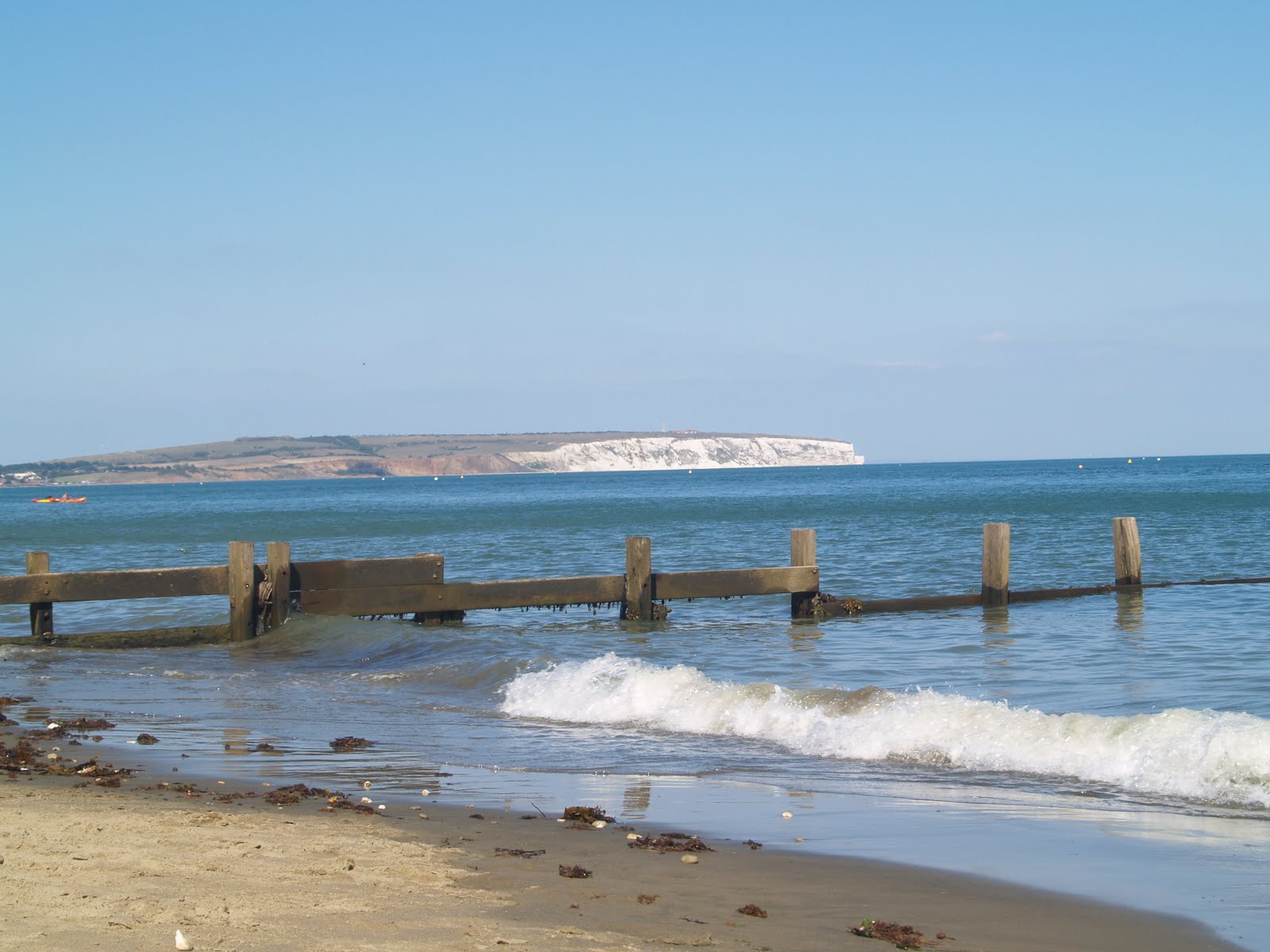
We’re just back from a week’s holiday at Shanklin on the Isle of Wight. Very nice it was too and I think we were probably pretty lucky with the weather. There was certainly some sun and we enjoyed being out and about.
I took a variety of radio gear; FT817 and HF/VHF antennas, IC-E92ED, Wouxun 70MHz and DVAP Dongle. In the end, I really only used the IC-E92ED handheld. Our apartment was located high above Shanklin on the cliffs and I discovered that I could hear all sorts of things on VHF and UHF.
On 19th and 20th August, there was a nice temperature inversion across the English Channel. I heard and worked a number of French and Belgian repeaters across the water, just using the rubber duck antenna on the IC-E92.
Still no QSOs on the Wouxun 70MHz, but having read the review in the latest Practical Wireless, I think the helical antenna is worse than I expected. It may be time to get one of the Garex Flexwhips and see how that improves performance!
Echolink made it possible to connect to my local repeater, GB3TD, using the IC-E92 to access GB3BR in Brighton (a huge signal over a fairly long sea path) and connecting the two repeaters together. Echolink using the iPhone was less successful, owing to a slow GPRS data connection.
Enjoyable mix of radio – all very simple, but plenty of interest all the same.

Tim Kirby, G4VXE, is a regular contributor to AmateurRadio.com and writes from Oxfordshire, England. Contact him at [email protected].
The Windows Genuine Disadvantage
If you visited a shop whose owner appeared to suspect you of being a thief and sometimes insisted on searching your bags before you left, you would probably take your custom elsewhere. And that’s pretty much how I feel about Microsoft. Several times in the last few years since the company developed its obsession with software piracy I have been subjected to heart-stopping moments when, instead of working normally when started up in the morning, one of my computers decided that my copy of Windows wasn’t genuine and I had to waste time jumping through hoops to prove that it was.
The latest occurrence was this morning when I switched on the shack computer – an HP mini-tower – in order to start my APRS gateway, Microsoft Security Essentials popped up a message saying “You may be a victim of software counterfeiting” and stating that it would stop working in 30 days unless I did something about it. It offered a link to check the system. This opened in Firefox where I was requested to download a plug-in. After that I was asked to click a Continue button which was supposed to run the validation check. Nothing appeared to happen. Eventually I tried the second option provided for browsers on which the first one wouldn’t work, which downloaded an .hta file to my desktop. With no other instruction as to what to do next, I clicked on it – all the time wondering if this wasn’t some clever software hoax to trick me into installing malware on my system. Fortunately it wasn’t. I was informed that, hoorah, hoorah, my copy of Windows supplied by HP was indeed genuine after all. Thank you, Microsoft, that’s ten minutes of my life you just wasted. But by the by, if you must be so anal about pirate copies why do you have to make the checks so intrusive and complicated?
The previous time something like that happened was the trigger for me to dump Windows and install Linux on my shack computer. However, as I have written previously, I found Linux forced me to make too many sacrifices which is why in the end I went back to Windows. Linux the OS is fine, it’s the lack of high quality applications (particularly in the ham radio sphere) and the decision by many hardware manufacturers not to provide Linux drivers that makes it frustrating. Having said that, most of the programs I regularly use are either available in Linux versions (like Fldigi) or will run on it under wine (like APRSIS32.) But the truth is, the older I get the more I feel that life is too short for faffing around with computers.

Julian Moss, G4ILO, is a regular contributor to AmateurRadio.com and writes from Cumbria, England. Contact him at [email protected].
Droid Docks
Continuing my series of posts from my Droid mobile device while watching Garbage Moguls on National Geographic this evening.
My first attempt at docking the Droid failed. Why so? Accessories are as important to the bottomline as the device itself. I bought one of those nifty protective shells, hip, slick, and cool. The red casing dressed up the Droid however someone in engineering obviously did not dress their device to the nines.
The red casing was an eighth inch to big for the dock. Yes, Houston, no go on docking the Droid.
Gene Kranz would never tolerate such a situation even though we fly missions to space based on the bottom line of the lowest bidder. Well, I made a command decision that is, remove one part of the case and continue the mission.
Success, if only partial, because mission critical software was not installed on the mothership. I fired up my wireless connection and contacted Motorola for a device driver. They delivered bits and bytes of required code necessary for docking.
Mission success as Droid spoke with mothership and downloaded essential life support software such as R34P and SolderSmoke recordings. My ear buds hummed with dual channel CW/SSB from WRTC 2010 and SolderSmoke. There is yet one more piece of mothership software missing to complete my mission portfolio.
73 from the anywhere, anytime shack.

Scot Morrison, KA3DRR, is a regular contributor to AmateurRadio.com and writes from California, USA.
 Ham Radio Deluxe |
 W5SWL Electronics |
 Ham Radio Prep |
 KB3IFH QSL Cards  Hip Ham Shirts  HamRadioAuctions HamRadioAuctions Reliance Antennas Reliance Antennas Enigma Shop Enigma Shop |  morseDX  Ni4L Antennas  R&L Electronics R&L Electronics antennas.us antennas.us QRV QRV |
- Matt W1MST, Managing Editor
