 |
 Pin 1 and a Pound of Ferrite
 20 September 2010 | by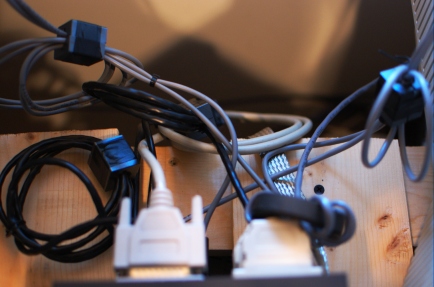
The commonly-held wisdom goes that an “ounce of prevention is worth a pound of cure.” As things typically go around the K8GU station, 50% of problems are solved by prevention and 50% by cure. Today, it was a cure. Readers of the blog are no doubt aware that I have a recently-discovered problem with QRM between my radios when they were on the 20- and 40-meter bands. (I didn’t notice this problem until I got both of the TS-930′s up and going again; so, it’s probably the result of the “new” station location and arrangement.)
I pulled the 20- and 40-meter W3NQN filters out of the circuit and measured them. They benefited from a little tweaking, but nothing that would have caused the problem. I put them back in and was rewarded with much lower VSWR in across both bands.
It didn’t matter which of the radios was on 20 and which was on 40, the interference, a popping hash that followed the leading edge of my keying, was there. The next step was to put a dummy load on the output of one radio, then both radios. Even when transmitting into the dummy load, the interference remained. This suggested to me that the problem was very close by. All of my gear is bonded together with heavy straps. So, I wasn’t too worried that it would be difficult to find. I noticed that the 40-meter LED flickered on my KK1L band decoder box following my keying. It became the prime suspect.
I found some split beads that AD8P and I bought from AA1K in the Dayton flea market a few years ago. I’m not sure what mix they are, probably 43 or possibly 77. Winding a few turns of the band data lines from each radio through the beads knocked down the interference a good bit. I slapped some more on the audio lines going to the Heil HCS that I use for SO2R audio and the interference disappeared. But, I was using the dummy load on one of the radios. As soon as I went back to the external antennas, the inteference came back.
Next, I dug out a couple of the 2.4-inch diamater mix-31 toroids that I purchased in the first K9YC “group buy” of these parts back in 2005 or 2006. I wrapped the DC power supply line to the KK1L box and the AC supply to the HCS. And, the problems pretty much disappeared. At least one of these is due to what K9YC calles “the pin 1 problem.” Basically, if the shield is brought through the metal enclosure to the circuit board, it conducts (noise) current that’s riding on it into the enclosure. So, I need to dissect the HCS and KK1L boxes to see if I can find a deeper fix than just slapping ferrite on the outside.
But, there’s hope for SO2R in this week’s NSL!
Ethan Miller, K8GU, is a regular contributor to AmateurRadio.com and writes from Maryland, USA. Contact him at [email protected].
Salmon Run And Ham Radio Fun
Logging Qs this afternoon in the Salmon Run was a lot of ham radio fun
inside the shack relaxation zone. Signals ranged from arm chair copy
to light with more than one unique call going into the database. I
listened on 15 and 10m yet Cycle 24 needs a little more punch for my
low profile, low power station. Admittedly, there are a few of us
local ops, wishing upon a sunspot where the high bands are fully
juiced.
A few locals either upgraded their antenna systems or performed
maintenance chores like treating for corrosion or added a new antenna.
Sunspots or the lack thereof has not stopped anyone from having fun
with ham radio. Fred has nearly completed his Route 66 award and his
VUCC received its certification.
Traditional cards continue arriving in the mailbox with countries like
Chile and Galapogas Islands now confirmed in addition to blogger AE5X
and longtime RadioSport operators. My approach is crafting fun out of
our tradition of exchanging cards like KB6NU who collects a callsign
that makes a word.

Scot Morrison, KA3DRR, is a regular contributor to AmateurRadio.com and writes from California, USA.
A message from space. Well not strictly FROM space
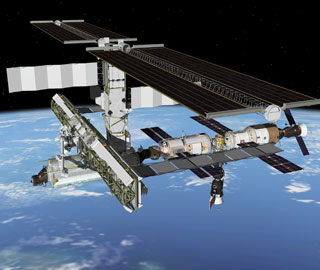
I came back from a nice walk through the countryside, having picked a lovely amount of blackberries, damsons and sloes and popped into the shack. Earlier today, I’d started up my APRSIS client (APRSIS32 by Lynn, KJ4ERJ) and left it running.
I noticed there was a message waiting from Julian, G4ILO-6. I opened it up and to my surprise, it said ‘Hi via ISS’. Julian had launched a packet on 2m, it had been digipeated by the International Space Station and then come back to earth where it had been received by other iGates on the APRS network and found its way to me.
Thanks Julian for a really interesting message!
If you want to read about how this works and see the stations that have been heard by the International Space Station have a look here.

Tim Kirby, G4VXE, is a regular contributor to AmateurRadio.com and writes from Oxfordshire, England. Contact him at [email protected].
ISS success
Over the last few days Lynn, KJ4ERJ has been adding some very cool features to APRSISCE/32 which I’ve been helping to test. The ISS packet digipeater is still operating so as there were several good passes during the daytime I’ve been playing on it as well.
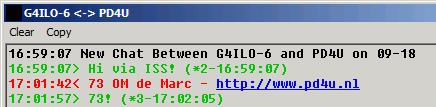
Today I managed to hear my own beacon repeated back by the space station, and this time it was also gated to the internet by TF8TTY so my call showed up on the map of stations heard through the ISS at ariss.net. I also managed to send a couple of messages through the bird. Tim, G4VXE was impressed to receive a greeting relayed via the space station. I also managed a two-way exchange with Marc, PD4U, which I think counts as an actual satellite contact.
Of course, whilst it’s fun to bounce radio waves off a satellite it isn’t a very practical method of communication. The ISS is the best QTH ever and it can hear all the activity on a frequency at the same time, so communication is only possible if not too many people use it. Lots of messages never get anywhere because they are sent at the same time as messages from other people which you can’t avoid transmitting over because you can’t hear them. The space station decodes only the strongest, so turning the power up improves your chances of success quite a bit. You can get through the ISS using a hand-held VX-8, but only at 4 o’clock in the morning when most sane people are asleep, unless you are incredibly lucky.
The new feature in APRSISCE that I mentioned is the ability to open separate windows so you can track individual stations at a more detailed mapping level. Lynn has called this Multi-Track(TM) and he thinks it will be very popular with emergency communications teams who will be able to see the entire area of the event in the main window and see exactly where individual team members are at the same time. It’s only available in the development (beta test) versions at the moment, though.

Julian Moss, G4ILO, is a regular contributor to AmateurRadio.com and writes from Cumbria, England. Contact him at [email protected].
The DX Code Of Conduct
It’s been several years (about 2 1/2) since I last editorialized about DX behavior in this blog. I try not to get on my soapbox too often, but I think I can write again on that same subject now that some time has passed.
Actually, I’ll let someone else do most of the work for me this time, after a bit of an introduction. In response to the increasingly poor standard of operating practice being heard on the bands, particularly when working DX, the First Class CW Operators Club formulated a draft DX Code of Conduct that they are trying to publicize. You can follow the links on their website, but they’ve also created a website at http://dx-code.org/ that has a number of useful resources (as well as the code itself, of course). I recommend that you visit their website and click around to learn more.
- I will listen, and listen, and then listen again before calling.
- I will only call if I can copy the DX station properly.
- I will not trust the cluster and will be sure of the DX station’s call sign before calling.
- I will not interfere with the DX station nor anyone calling and will never tune up on the DX frequency or in the QSX slot.
- I will wait for the DX station to end a contact before I call.
- I will always send my full call sign.
- I will call and then listen for a reasonable interval. I will not call continuously.
- I will not transmit when the DX operator calls another call sign, not mine.
- I will not transmit when the DX operator queries a call sign not like mine.
- I will not transmit when the DX station calls other geographic areas than mine.
- When the DX operator calls me, I will not repeat my call sign unless I think he has copied it incorrectly.
- I will be thankful if and when I do make a contact.
- I will respect my fellow hams and conduct myself so as to earn their respect.

David Kozinn, K2DBK, is a regular contributor to AmateurRadio.com and writes from New Jersey, USA. Contact him at [email protected].
EEVblog entertains nerds!
I enjoy Dave Jones’ Electrical Engineering Video Blog, or EEVblog. He recently submitted this video to a competition. It is a 90 second compilation showing the entertaining side of what he shares with followers and makes a great commercial for the EEVblog, so I include it here in case you have never watched one of his videos. Warning, best not to watch this with the kids or grandma in earshot!
Don’t go thinking that Dave just fools around on his videos. There is some pretty good information in the posts, so give his site a try if you like electronics.


Alan Steele, VA3STL, is a regular contributor to AmateurRadio.com and writes from Ottawa, Ontario. Contact him at [email protected].
VHF/UHF firepower
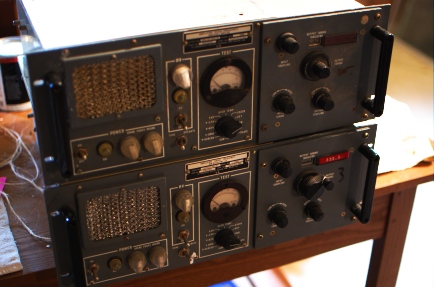
As if I don’t have enough projects already, I recently obtained these two surplus FAA AM-6155 amplifiers on, as usual, very attractive terms. I don’t have the equipment to properly test them at this point. But, that is coming. The FAA specified these to do 50 watts continuous duty AM. With modification, they will do about 300-400 clean watts with 10 watts of drive on 144, 222, and 432 MHz. Once I get the first two working (on 222 and 432), I plan to find two more of them and use them on 50 and 144 MHz. For 50 MHz, I plan to remove the VHF/UHF cavity and components and install an RF deck using the same Amperex DX393 or Eimac 8930 tube. Comments and ideas welcome. They’re a lot cheaper than bricks! One of my units appears to be at least partially converted already, but I’ve only had it open for a few minutes with my brother Seth, who got all of the mechanical aptitude in the family.
Note: Thanks to WY3X for catching my error on the tube type. He also notes that 300 watts would be a conservative maximum on 432. I plan to run the amps with very low drive after tuning so I can compete in the ARRL’s low power category at 100 watts on 222 and 432.
Ethan Miller, K8GU, is a regular contributor to AmateurRadio.com and writes from Maryland, USA. Contact him at [email protected].
 Ham Radio Deluxe |
 W5SWL Electronics |
 Ham Radio Prep |
 KB3IFH QSL Cards  Hip Ham Shirts  HamRadioAuctions HamRadioAuctions Reliance Antennas Reliance Antennas Enigma Shop Enigma Shop |  morseDX  Ni4L Antennas  R&L Electronics R&L Electronics antennas.us antennas.us QRV QRV |
- Matt W1MST, Managing Editor
