 |
 LHS Episode #455: Rocket
 28 February 2022 | by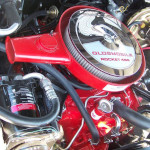
Hello and welcome to the 455th installment of Linux in the Ham Shack. In this short-topics episode, the hosts discuss the inevitable topic of the invasion of Ukraine and how amateur radio is related. Also discussed are the upcoming YOTA camp for 2022, the Steam Deck, the Github Advisory Database, a new release of FreeDV and much more. Thank you for listening and have a great week. Our thoughts are with the people of Ukraine. Stay safe out there and stay strong.
73 de The LHS Crew
Russ Woodman, K5TUX, co-hosts the Linux in the Ham Shack podcast which is available for download in both MP3 and OGG audio format. Contact him at [email protected].
ICQ Podcast Episode 371 – Improving your SSB Contact Ratio
In this episode, Martin Butler (M1MRB) is joined by Dan Romanchik KB6NU, Edmund Spicer M0MNG and Ed Durrant DD5LP to discuss the latest Amateur / Ham Radio news. Colin (M6BOY) rounds up the news in brief and in the episode's feature Improving your SSB contact ratio.
We would like to thank Daryll McCathery (VK6DMC ), David Pyle (KW1DX), avid Reid (W6KL), and our monthly and annual subscription donors for keeping the podcast advert free. To donate, please visit - http://www.icqpodcast.com/donate
- Enthusiast's Radio Collection in the Press
- New Postage Stamps Feature Amateur Radio in Greece
- Amateur Radio - A Life-Long Technical Hobby
- Avro Lancaster 80th Anniversary of the 1st operational sortie
- Amateur Radio in Ukraine
- Amateur Radio Emergency Communication may be hit by New Fees
- Frederike DH9FD - Germany's Youngest Class A radio amateur
Colin Butler, M6BOY, is the host of the ICQ Podcast, a weekly radio show about Amateur Radio. Contact him at [email protected].
Ham College 86
Ham College episode 86 is now available for download.
Extra Class Exam Questions – Part 24
E6A Semiconductor materials and devices: semiconductor materials; germanium, silicon, P-type, N-type; transistor types: NPN, PNP, junction, field-effect transistors: enhancement mode; depletion mode; MOS; CMOS; N-channel; P-channel
George Thomas, W5JDX, is co-host of AmateurLogic.TV, an original amateur radio video program hosted by George Thomas (W5JDX), Tommy Martin (N5ZNO), Peter Berrett (VK3PB), and Emile Diodene (KE5QKR). Contact him at [email protected].
I Lost My Logbook and I Feel Fine
Late last year I applied an operating system update to my Macbook and my solid state hard drive peed all over itself. Long story short, I was unable to boot from the drive or read it and I had to start all over with a different hard drive and a fresh OS installation. I was able to recover all my files from the cloud except a recent backup of my logbook. It appears backups of my logbook, which MacLogger DX apparently stored in a hidden directory not in the Documents folder, was not being backed up to the cloud. The last logbook backup I can locate is from 2015.
But honestly, I don’t care. I’m declaring logbook bankruptcy and starting over. I already have some plaques on the wall for DXCC and WAS. I’m not in any race or competition. I’m not contributing any more to the radio art if I’ve made 10,000 QSOs rather than 500.
It’s a new day, and a fresh new logbook. It’s rather refreshing.
This article originally appeared on Radio Artisan.
Anthony, K3NG, is a regular contributor to AmateurRadio.com.
I Lost My Logbook and I Feel Fine
Late last year I applied an operating system update to my Macbook and my solid state hard drive peed all over itself. Long story short, I was unable to boot from the drive or read it and I had to start all over with a different hard drive and a fresh OS installation. I was able to recover all my files from the cloud except a recent backup of my logbook. It appears backups of my logbook, which MacLogger DX apparently stored in a hidden directory not in the Documents folder, was not being backed up to the cloud. The last logbook backup I can locate is from 2015.
But honestly, I don’t care. I’m declaring logbook bankruptcy and starting over. I already have some plaques on the wall for DXCC and WAS. I’m not in any race or competition. I’m not contributing any more to the radio art if I’ve made 10,000 QSOs rather than 500.
It’s a new day, and a fresh new logbook. It’s rather refreshing.
This article originally appeared on Radio Artisan.
Anthony, K3NG, is a regular contributor to AmateurRadio.com.
LHS Episode #454: Bottles Deep Dive

Hello and welcome to the 454th episode of Linux in the Ham Shack. In this episode, the hosts discuss a project called Bottles, born of a concept from CrossOver Linux, which creates a quasi virtualization and containerization platform for running Windows applications under Linux. The discussion ranges from theory to installation and implementation and configuration. We hope you enjoy this episode and that it's informational as well. Have a great week.
73 de The LHS Crew
Russ Woodman, K5TUX, co-hosts the Linux in the Ham Shack podcast which is available for download in both MP3 and OGG audio format. Contact him at [email protected].
Hunting For NDBs In CLE277
 |
| ZYC-254 kHz Calgary, Alberta (http://www.ve3gop.com) |
Another month has zipped by which means it's time for another CLE weekend!
When tuning for NDBs, put your receiver in the CW mode and listen for the NDB's CW identifier, repeated every few seconds. Listen for U.S. NDB identifiers approximately 1 kHz higher or lower than the published transmitted frequency since these beacons are modulated with a 1020 Hz tone approximately.
For example, 'AA' near Fargo, ND, transmitted on 365 kHz and its upper sideband CW identifier was tuned at 366.025 kHz while its lower sideband CW ident could be tuned at 363.946 kHz. Its USB tone was actually 1025 Hz while its LSB tone was 1054 Hz.
Often, one sideband will be much stronger than the other so if you don't hear the first one, try listening on the other sideband.
Canadian NDBs normally have an USB tone only, usually very close to 400 Hz. They also have a long dash (keydown) following the CW identifier.
All NDBs heard in North America will be listed in the RNA database (updated daily) while those heard in Europe may be found in the REU database. Beacons heard outside of these regions will be found in the RWW database.
From CLE organizers comes the following CLE info:
Hello all,
This coming weekend we have another chance to enjoy a Coordinated Listening
Event.
All CLE logs will be very welcome, short or long.
Days: Friday 25 Feb. - Monday 28 Feb.
Times: Start and end at midday, local time at the receiver.
Listening for Normal NDBs in the ranges:
240.0 - 259.9 kHz plus 420.0 - 439.9 kHz
(BOTH ranges are for ALL listeners)
Please log the NDBs you can identify that are listed in the ranges, plus any
UNIDs that you come across there.
You can find details of the beacons in those ranges, lists and maps, if you
go to http://www.ndblist.info/cle.htm and click on 'CLE SEEKLIST'.
Send your final CLE log to ndblist'at'groups.io with CLE277 and FINAL in
the email Subject.
Please show on EVERY LINE of your log:
# The full Date (or Day no.) e.g. ‘2022-02-25’ (or just ‘25’)
and UTC (the day changes at 00:00 UTC)
# kHz (the beacon's nominal published frequency if you know it)
# The Call Ident.
Other optional details - Location, Distance, etc. - go LATER in the same
line (or in footnotes). Please make your log useful to old and new members
alike by ALWAYS including your own location (and 6-character Locator if you know it) and brief details of the equipment and aerial(s) that you were
using.
We will send an 'Any More Logs?' email at about 20:00 UTC on Tuesday evening so you can check that your log has been found OK.
To be included in the combined results your log must have arrived by 09:00
UTC on Wednesday 2nd March at the very latest.
We hope to complete making the Combined Results within a day or two.
Good listening
Brian and Joachim
---------------------------------------------------------------------
From: Brian Keyte G3SIA ndbcle'at'ndblist.info
Location: Surrey, SE England (CLE coordinator)
---------------------------------------------------------------------
If you are interested in some remote listening - maybe
due to local difficulties - you could use any one remote
receiver for your loggings, stating its location and with
the owner’s permission if required.
( e.g. see kiwisdr.com )
A remote listener may NOT also use another receiver,
local or remote, to make more loggings for the same CLE.
These listening events serve several purposes. They
• determine, worldwide, which beacons are out-of-service or have gone silent since the last CLE covering this range
• will indicate the state of propagation conditions at the various participant locations
• will give you an indication of how well your LF/MF receiving system is working
• give participants a fun yet challenging activity to keep their listening skills honed
Final details can be found at the NDB List website, and worldwide results, for every participant, will be posted there a few days after the event.
The NDB List Group is a great place to learn more about the 'Art of NDB DXing' or to meet other DXers in your region. There is a lot of good information available there and new members are always very welcome. As well, you can follow the results of other CLE participants from night to night as propagation is always an active topic of discussion.
You need not be an NDB List member to participate in the CLEs and all reports, no matter how small, are of much value to the organizers.
Remember - 'First-time' logs are always VERY welcome!
Reports may be sent to the NDB List Group or e-mailed to CLE co-ordinator, Brian Keyte (G3SIA), whose address appears above. If you are a member of the group, all final results will also be e-mailed and posted there.
Please ... give the CLE a try ... then let us know what NDB's can be heard from your location! Your report can then be added to the worldwide database to help keep it up-to-date.
Have fun and good hunting!
Steve McDonald, VE7SL, is a regular contributor to AmateurRadio.com and writes from British Columbia, Canada. Contact him at [email protected].
 Ham Radio Deluxe |
 W5SWL Electronics |
 Ham Radio Prep |
 KB3IFH QSL Cards  Hip Ham Shirts  HamRadioAuctions HamRadioAuctions Reliance Antennas Reliance Antennas Enigma Shop Enigma Shop |  morseDX  Ni4L Antennas  R&L Electronics R&L Electronics antennas.us antennas.us Ears to Our World Ears to Our World |
- Matt W1MST, Managing Editor
