 |
 Handiham World for 24 November 2010
 24 November 2010 | by
 Happy Thanksgiving!

Don’t forget that the Handiham Internet remote base stations are available for members to use throughout the upcoming holiday week.
The Handiham office will be closed Thursday, November 25, and Friday, November 26 for an extended Thanksgiving holiday. We will reopen on Monday, November 29. Wednesday, November 24 we close early.
Even though this is a holiday week, the Handiham nets will go on as usual at their regularly-scheduled times. If a net control station is not available, we will have a roundtable conversation on the frequency. Sometimes I think that there is even more amateur radio activity on holidays, simply because those folks who might ordinarily be at work will instead have an opportunity to head for the ham shack and get on the air. Of course if you have guests at your home, you need to be polite and see to their needs first. Hey, maybe they would like to see your radio equipment and learn about amateur radio!
Earlier this week I spoke with a Handiham member who was asking if we still have a 20 m net. Well, the 20 m net is listed on many websites as still being active, but it has really fallen out of use during the lengthy sunspot minimum. Now that we are coming into a period of higher solar activity, we will start the 20 m net again. The net time is Monday morning at 9:30 AM United States Central Standard Time. Our net always stands down if the Salvation Army Net is on the frequency. The 20 m frequency is 14.265 MHz. Please join us on Monday morning and let’s see if there is interest in continuing this net or if we should take a look at a different time and frequency. To summarize:
Things to remember about the Handiham 20 meter net:
We meet on 14.265 MHz SSB Net time is Monday at 9:30 AM Central Standard Time Net control station needed; volunteers welcome! Everyone is welcome – you don’t need to be Handiham Radio Club member. We always stand down for the Salvation Army Net if they happen to be on the frequency.
I have to admit that I am not all that thrilled with a Monday morning net on 20 m. The band is probably not going to be open to the West Coast all that well, and in the early days when the net time and frequency was originally chosen, it was truly the bad old days for people with disabilities and they were usually stuck at home during the day without jobs. Today is different and many people with disabilities, including Handiham members, have regular employment and are thus not available for a daytime net. Nonetheless, we will soldier on and try the daytime net again and see what happens. In the for-what-it’s-worth department, the daytime EchoLink net does actually offer the possibility of people to check in via computer from their place of employment, hopefully during break time! So I do think that we have daytime activity covered pretty well. It is still the evening 75 m net that needs testing, and we will begin doing that tonight at 8 PM, just one half hour after the Wednesday evening EchoLink net begins. That will give the EchoLink net control station a chance to announce that the 75 m net will be starting at 8 PM United States Central Standard Time. Let’s plan to be on 3.715 MHz, plus or minus QRM. I do need to remind you that this frequency is in the Advanced Class portion of the 75 m band. You must have at least an Advanced Class license to transmit on 3.715 MHz, although anyone, licensed or not, is free to listen on that frequency. As we go ahead and develop this net, we can always change the times and frequencies if that should prove necessary. If there is no net control station available at any given net time, we can just have a friendly roundtable on the frequency. Please feel free to use the Internet remote base stations to check in or to listen, especially if skip conditions for your part of the country (or world) do not favor 75 m. Remember that the EchoLink feature is available for listening.
I’m not going to make any promises about when I will be able to participate in nets this week, although I’m certainly going to try to get on the air as much as I can. We are going to have a house full of guests that will include extended family, and my son Will, KC0LJL, is driving back home from university with three Japanese exchange students who will stay with us over the extended Thanksgiving holiday. You can bet that it’s going to be pretty busy around my QTH, but you never know when you might be able to introduce a new person to amateur radio, especially if they can get on the air and talk to someone from their home country!
So, from the staff, volunteers, members, and supporters of the Handihams, we wish you a wonderful Thanksgiving holiday, and we hope to hear you on the air!
Patrick Tice, WA0TDA
Handiham System Manager

Pat Tice, WA0TDA, is the manager of HANDI-HAM and a regular contributor to AmateurRadio.com. Contact him at [email protected].
LHS Episode #052: Amateur Fantasies
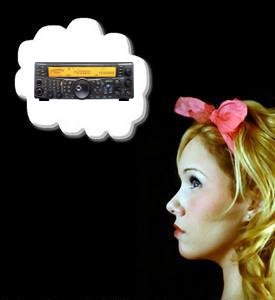 Hello, podcast listeners! It has been an extra week that you've had to wait for our landmark episode 50 to be released. I (Russ) had planned to do an episode from his hotel room in San Jose. Unfortunately, the network there was so bad it was impossible to record so everything was pushed back.
In this episode, we talk about life, love and amateur radio. OK, not really. But we touch on a number of interesting topics including the necessity of logging in amateur radio, theoretical nonsense like Internet via Moonbounce and, thanks to a couple of missives from AD7MI, we wax philosophical on our ideal ham shacks--computers running Linux included of course.
Thank you for being a listener of our show. If you're new: Welcome! Please tell everyone you know where they can find us. And keep fighting the good fight.
73 de The LHS Guys
Russ Woodman, K5TUX, co-hosts the Linux in the Ham Shack podcast which is available for download in both MP3 and OGG audio format. Contact him at [email protected].
Free Lake District Wallpaper
I have received many favourable comments whenever I have posted pictures from some of my local walks in this blog. I’m sure this has more to do with the beauty of the landscape than my skill as a photographer or the quality of my camera. Still, your appreciation of my pictures gave me the idea that I could use some of them to create desktop backgrounds or wallpapers that I could give away as promotional freebies from a website that needs more visitors. Here’s a sample of one of them.
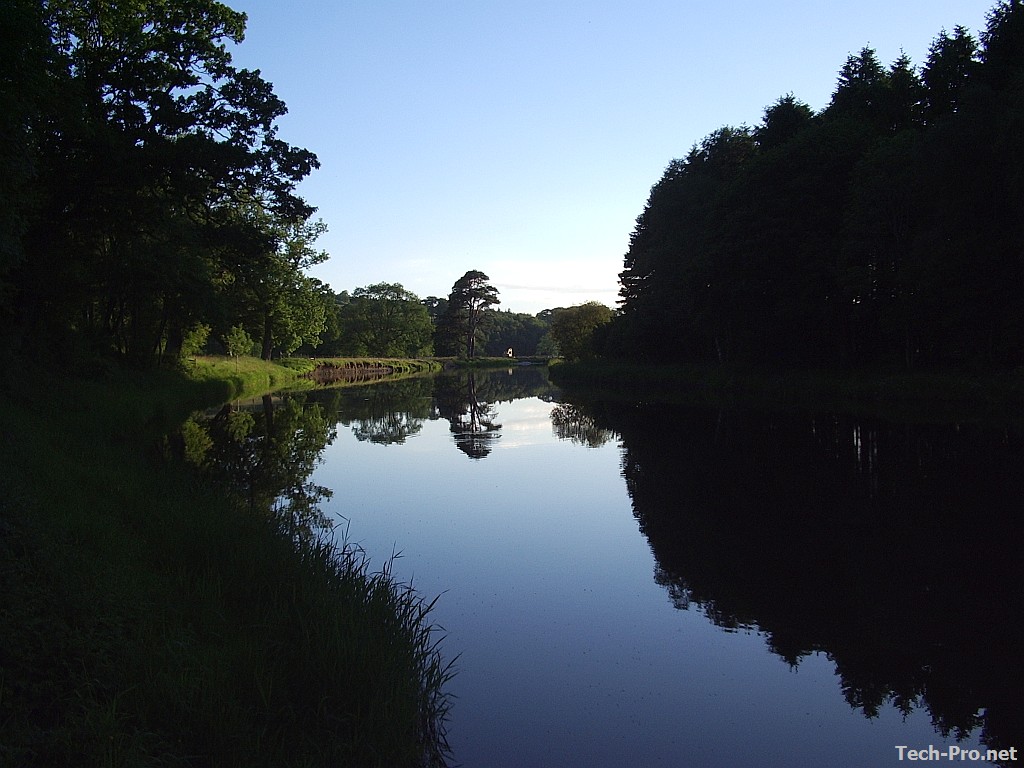
If you would like a view from the English Lakes to brighten up your desktop, please visit Free Desktop Wallpapers. I hope you find something there you like. And please feel free to post the link anywhere it might be seen by others who would enjoy the images. Every little helps!

Julian Moss, G4ILO, is a regular contributor to AmateurRadio.com and writes from Cumbria, England. Contact him at [email protected].
An afternoon’s WSPR on 7MHz
It’s a long while since I spent a whole afternoon on a single HF band, but it’s quite an interesting thing to do, watching the propagation change. I decided I would try my 1W WSPR tests again. I started off at around 1230z.
Reports from around the UK and near Europe were constant, with distances as little as 20km (thanks to Peter, 2E0SQL just over the hill in Oxford!) and further into Germany. Interestingly, Peter, running 5W was heard at consistently further afield than me, as you’d expect, but I was keen to stick at the 1W power level and see how it performed.
As the afternoon wore on, some of the UK stations faded, and I started to be heard by LA9JO in the far north of Norway at just under 2200kms. Late afternoon too, I heard UA3ARC in KO85 (though he did not report hearing me until much later in the day). After around 1815z or so, I stopped copying very much at all and wondered whether I should continue transmitting.
I was glad I did though, as around 1915z I was reported in Spain and Portugal and I wondered whether this was a precursor to the path to the USA opening. Sure enough it was and on the next transmit period, I was very pleased to be heard by K1JT and WB2JEP. After a few minutes more, reports dried up for a while, though then things seemed to swing around to the east with reports from EW1LN and UA3ARC, as well as some Italian stations.
Just before I closed at around 2230z, there were more reports from further into the USA, with AD3X at 5683kms and most distant for the day’s trials was W3GXT at 5747kms.
Lots of fun and I was pleased to see how the 1W signal propagated. With the CQWW CW contest set to take over the bands next weekend, I think I can guarantee it won’t be worth playing WSPR, But it might be interesting to spend some time at the 1W power level and see just how many contacts I can make on CW. I’m guessing not many, but I’d love to be proven wrong!

Tim Kirby, G4VXE, is a regular contributor to AmateurRadio.com and writes from Oxfordshire, England. Contact him at [email protected].
VHF/UHF QSOs of the week
Continuing my idea of plotting up what I hear on VHF/UHF from the car, here’s the map from last week. Nice to get back on GB3FX (Farnham 50MHz) for a couple of QSOs with Roger, G4HZA who I used to work often in the mornings. I was also pleased to work M1ELK/M on Beacon Hill near Newbury on 145MHz simplex (those simplex contacts are gold-dust) and interested to hear a mobile on the hills near Bromsgrove in Worcestershire, which is a good haul from here
View Heard this week 19/11 in a larger map
Not shown on the map are D-STAR QSOs made from home, of course. But I had a particularly enjoyable QSO on Wednesday evening with Keith, WD8AFB in Orlando. I’ve spoken to Keith a couple of times before and we share an interest in low power HF portable operating which it’s always fun to talk about. Keith had just got an FT817 and was trying to find the optimum antenna to use from hotel rooms when he’s out on the road.

Tim Kirby, G4VXE, is a regular contributor to AmateurRadio.com and writes from Oxfordshire, England. Contact him at [email protected].
Central FL QRP Group
Calling all Central Florida QRP Ops… there’s a small group of us in Orlando that like to gather together on the 2nd Saturday of the month for some breakfast, show n tell, and portable ops in a nearby park.

Antenna Tweakers

Operating site

K3RLL in action with KX-1
We just had a nice time of antenna tweaking and operating down by Lake Sylvan. There’s still room for more of you, so mark your calendars and plan to join us on the 10th of December 2010. Leave me a comment if you’d like me to send an email reminder to join us, or if you’d like to get on our list for future outings. Snowbirds are welcome too!
72,
Kelly K4UPG PB #173
Kelly McClelland, K4UPG, is a regular contributor to AmateurRadio.com and writes from Florida, USA. Contact him at [email protected].
In contrast
In contrast to my giving up the frequency for a DX station while in the middle of a “run” during a contest (as I recently mentioned), I heard a particularly bad bit of operating on last Sunday while trying to work Bob, VP8LP in the Falkland Islands. I’ve worked Bob before on several bands but needed a contact from him on 15m. He had an excellent signal and was steadily working stations, the vast majority of which were good operators, standing by when Bob was working another station and not responding when Bob wasn’t calling them. (Please see my post about The DX Code of Conduct if you haven’t already.) There was, unfortunately, one exception to the “good guys” on the frequency.
As Bob was steadily working the pile, a ham started calling K7NRA on the frequency. After he did this once or twice, assuming that perhaps he was unaware that there was another station on the frequency, I responded to him and said that the frequency was in use and gave my callsign. (The other ham was using his callsign, or what I presume was his, though I neglected to note it. While normally I don’t like to “pick on” people in a public forum, what was going on was heard by dozens of other hams, and if I could remember what it was, I’d post it here.) The other ham said “Well, there’s supposed to be a special event for K7NRA on this frequency and I’m going to call him, this is his announced frequency”.
It was pretty clear that the guy calling wasn’t hearing K7NRA, and aside from that fact that he refused to stop interfering with an active frequency, his general technique was awful. He was calling “blind” (meaning he didn’t hear the other station), and kept calling “CQ CQ CQ CQ CQ CQ K7NRA”, which doesn’t actually make a lot of sense. CQ generally means “calling all stations”, thus saying “CQ K7NRA” means “calling all stations with a callsign of K7NRA”; by definition there will only be one. There are exceptions to using a “directed CQ”, such as when calling “CQ DX” (looking for any DX station) or “CQ NJ” (looking for a station in New Jersey), but proper procedure when calling a particular station is to simply call the station. If I were to call that station, I’d say “K7NRA this is K2DBK” or, if K7NRA was listening for other stations, I would likely just give my callsign only.
Several other stations responded to the caller (some more politely, and some, unfortunately much less so), and he refused to move, insisting that he had “as much right to the frequency as anyone”. Unless he had an emergency (which clearly was not the case), what he said was not true. The FCC rules governing the amateur radio service state that nobody can “own” a particular frequency (including by “publishing” use of a particular frequency at a particular time), and further, if any frequency is in use, with the exception of use in an emergency, nobody is required to relinquish the frequency for another station. Thus, the caller was not only wrong, but he was violating the rule that says “No amateur operator shall willfully or maliciously interfere with or cause interference to any radio communication or signal.”
The guy would not give up, and continued to attempt to call K7NRA repeatedly. The worst of it was when one station was speaking with Bob, and was showing ham radio to a young Boy Scout for the first time. All the others stations on the frequency patiently stood by while Bob spoke with the youngster, all except the guy calling K7NRA, who simply wouldn’t stop. Several hams were telling him (in language that probably violated another part of the FCC rules) exactly what they thought of him, to no avail. While this was happening, it occurred to me what a terrible impression this was making on the young Scout. Is this how we want to entice others into our hobby?
After the contact with the scout was over, Bob, who could hear the guy calling the K7 station, finally said “The station calling CQ, this is VP8LP, please go ahead”. That did the trick, the station stopped calling. Bob called several more times with no response, and finally said “well, I guess I’ve figured out how to shut him up!” and went back to working the pileup.
I would like to say that Bob’s comment had a permanent effect, but unfortunately that was not the case. The caller kept coming back, Bob would respond to the “gentleman calling CQ”, which would usually shut him up for a while, and so on. This went on for a while, with the occasional argument back and forth between the guy calling K7 and others on the frequency, until finally propagation changed enough that he was no longer heard on the frequency.
After this was over, I did a little research to see what “special event” he was talking about, since an initial check of the spot clusters didn’t show any activity for K7NRA. After a little digging I discovered that in fact the Yavapai Amateur Radio Club was, in fact, doing a special event to celebrate the “birthday” of the NRA, as described on their website. The frequency occupied by VP8LP was also one of the frequencies advertised (21.355mHz), but what our caller failed to notice was that the event was scheduled for the 17th of November, not the 14th of November, when this all occurred. This caller was not only wrong from a legal and ethical standpoint, he managed to get a lot of people annoyed at him by trying to work an activity that wasn’t even happening. As they say, you can’t outlaw stupidity.

David Kozinn, K2DBK, is a regular contributor to AmateurRadio.com and writes from New Jersey, USA. Contact him at [email protected].
 Ham Radio Deluxe |
 W5SWL Electronics |
 Ham Radio Prep |
 KB3IFH QSL Cards  Hip Ham Shirts  HamRadioAuctions HamRadioAuctions Reliance Antennas Reliance Antennas Enigma Shop Enigma Shop |  morseDX  Ni4L Antennas  R&L Electronics R&L Electronics antennas.us antennas.us QRV QRV |
- Matt W1MST, Managing Editor
