 |
 High Pike [LDW-107] and Carrock Fell [LDW-105]
 30 April 2011 | by
 Sometimes conditions on the fell-tops are not what you expect when you leave home. Yesterday, having no desire to watch the big event in London, I decided to have a big event of my own, namely to activate two of the Northern Fells for Wainwrights On The Air (WOTA). Although the weather was a little hazy there had been several sunny days and I anticipated two leisurely activations lazing in the grass and basking in the sun beside my guyed WOTA Pole, perhaps even some DX due to atmospheric conditions. I did notice a chilly breeze as I went out to the car, so I went back and got an extra fleece. That turned out to be a good move.

It was about 45 minutes drive to the parking spot at Caldbeck Common. I set off on a circuitous but easy climb up to High Pike, the first summit, working Jimmy on Blencathra who was using a special Wedding call MR3EYP/P on the way. No getting away completely from thoughts of the big event in London.
Half way up I noticed the wind was getting stronger and chillier. The extra fleece was quickly donned, and I worked another activator with a Royal call, MR1EYO/P on Red Screes. By the time I reached the summit I felt conditions were such that I didn’t want to stay long up there. After a contact with Bill G4WSB/P on Grasmoor whose voice was at times unintelligible due to wind getting into the mic of his Quansheng, I walked down from the summit in search of a slightly less windy spot to eat my packed lunch.
Whilst eating my lunch I weakly heard Derek 2E0MIX/P on Maiden Moor but I didn’t dare nip up to the top to make a contact in case my rucksack and other things blew away. When I did return to the summit I found the wind was blowing icy rain into my face. I didn’t have any enthusiasm for putting the WOTA Pole up as I didn’t intend staying there long enough for the effort to be worthwhile. I also didn’t want to get the non-waterproof Kenwood TH-D72 – which I’d taken after realizing the limitations of the receiver of the VX-8R – wet. So I sat on the stone bench near the wind break on the summit and using the 8in. helical rubber duck rapidly worked 7 of the ‘usual suspects’, contest-style, then stuffed the Kenwood in the rucksack and set off on my way to the next summit.
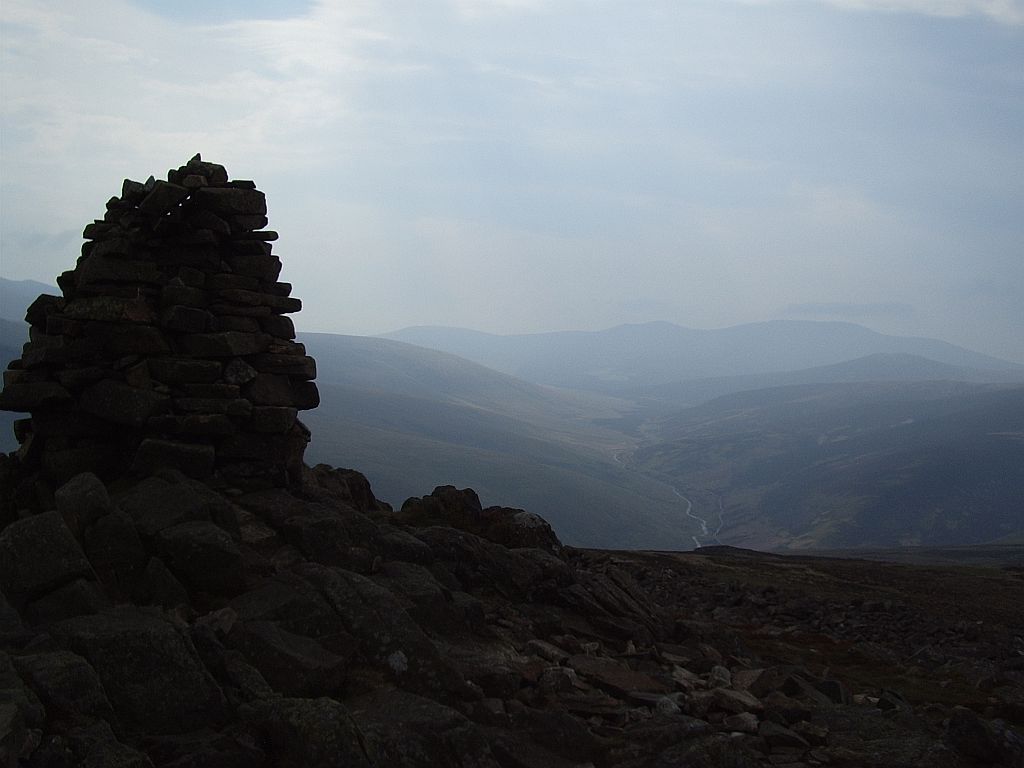
Carrock Fell is is a rocky summit with a big cairn, overlooking a valley. By the time I got there the rain had stopped and the wind had dropped a bit and seemed less cold. There were numerous large rocks scattered about making inviting seats. I decided to put up the WOTA Pole. First, I had a fight untangling the guys, which had knotted themselves together. Then, while pulling up the antenna using the third guy, doing my trick of using my walking stick as a bottom section for extra height, there was a crack and the antenna fell back on the ground. The jointing piece between the lower two sections of plastic tube had cracked. Arrgh!
So I was forced once again to do the activation using the 8in. helical rubber duck. However one piece of equipment favourably surprised me. Well, two, really. I began to get used to the Kenwood TH-D72 and felt that perhaps it is a viable alternative to the VX-8GR to use on activations. I received several APRS messages while I was up in the hills and found it easy to read and reply to them. Before I set off I used ?APRSO to load APRS objects for the two summits into the radio which I used to help navigation and check proximity. Very useful, though having to page forward a couple of times is less convenient than the VX-8’s all in one view.
I’m still not convinced that the Kenwood’s snazzy metallic grey paint and plasticky casing isn’t going to start showing marks from the rough and tumble of use up in the mountains. And the radio does sometimes do things I don’t understand, like beep and do nothing when I press the PTT, or beep and mute the audio of the station I’m listening to until I press the PTT again. I think this may be something to do with the APRS functions but it confuses me. The battery endurance doesn’t seem to be as good as the Yaesu either. But I’m learning to love it.
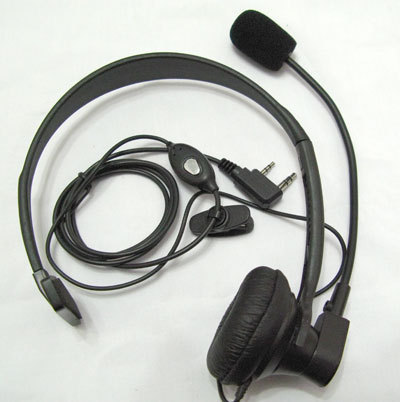
This was also the first time I could try out a headset for the Kenwood that I’d bought for £3.99 on eBay. The price, which included shipping from Hong Kong, was so low I doubted that it could be any good. But it was also cheap enough to be worth a gamble. It turned out to be the ideal accessory for operating from windy hilltops. The microphone has a foam muffler and even with my head turned so that wind was blowing on to the mic stations reported that there was only very slight wind noise, not enough to interfere with copy. With my head turned away there was no wind noise at all. Experienced activators will know just how hard it is, when it is windy, to find a position that keeps the wind out of the mic on the front of the radio.
Despite the unexpectedly nasty weather I had a nice walk and two successful activations. I may have one last try with the WOTA Pole. I will superglue the cracked jointing piece and then try reinforcing them with nylon cable ties. If that doesn’t help then I must give up the idea or accept that it will only work with longer tubes and only one joining section.

Julian Moss, G4ILO, is a regular contributor to AmateurRadio.com and writes from Cumbria, England. Contact him at [email protected].
High Pike [LDW-107] and Carrock Fell [LDW-105]
Sometimes conditions on the fell-tops are not what you expect when you leave home. Yesterday, having no desire to watch the big event in London, I decided to have a big event of my own, namely to activate two of the Northern Fells for Wainwrights On The Air (WOTA). Although the weather was a little hazy there had been several sunny days and I anticipated two leisurely activations lazing in the grass and basking in the sun beside my guyed WOTA Pole, perhaps even some DX due to atmospheric conditions. I did notice a chilly breeze as I went out to the car, so I went back and got an extra fleece. That turned out to be a good move.
It was about 45 minutes drive to the parking spot at Caldbeck Common. I set off on a circuitous but easy climb up to High Pike, the first summit, working Jimmy on Blencathra who was using a special Wedding call MR3EYP/P on the way. No getting away completely from thoughts of the big event in London.
Half way up I noticed the wind was getting stronger and chillier. The extra fleece was quickly donned, and I worked another activator with a Royal call, MR1EYO/P on Red Screes. By the time I reached the summit I felt conditions were such that I didn’t want to stay long up there. After a contact with Bill G4WSB/P on Grasmoor whose voice was at times unintelligible due to wind getting into the mic of his Quansheng, I walked down from the summit in search of a slightly less windy spot to eat my packed lunch.
Whilst eating my lunch I weakly heard Derek 2E0MIX/P on Maiden Moor but I didn’t dare nip up to the top to make a contact in case my rucksack and other things blew away. When I did return to the summit I found the wind was blowing icy rain into my face. I didn’t have any enthusiasm for putting the WOTA Pole up as I didn’t intend staying there long enough for the effort to be worthwhile. I also didn’t want to get the non-waterproof Kenwood TH-D72 – which I’d taken after realizing the limitations of the receiver of the VX-8R – wet. So I sat on the stone bench near the wind break on the summit and using the 8in. helical rubber duck rapidly worked 7 of the ‘usual suspects’, contest-style, then stuffed the Kenwood in the rucksack and set off on my way to the next summit.
Carrock Fell is is a rocky summit with a big cairn, overlooking a valley. By the time I got there the rain had stopped and the wind had dropped a bit and seemed less cold. There were numerous large rocks scattered about making inviting seats. I decided to put up the WOTA Pole. First, I had a fight untangling the guys, which had knotted themselves together. Then, while pulling up the antenna using the third guy, doing my trick of using my walking stick as a bottom section for extra height, there was a crack and the antenna fell back on the ground. The jointing piece between the lower two sections of plastic tube had cracked. Arrgh!
So I was forced once again to do the activation using the 8in. helical rubber duck. However one piece of equipment favourably surprised me. Well, two, really. I began to get used to the Kenwood TH-D72 and felt that perhaps it is a viable alternative to the VX-8GR to use on activations. I received several APRS messages while I was up in the hills and found it easy to read and reply to them. Before I set off I used ?APRSO to load APRS objects for the two summits into the radio which I used to help navigation and check proximity. Very useful, though having to page forward a couple of times is less convenient than the VX-8’s all in one view.
I’m still not convinced that the Kenwood’s snazzy metallic grey paint and plasticky casing isn’t going to start showing marks from the rough and tumble of use up in the mountains. And the radio does sometimes do things I don’t understand, like beep and do nothing when I press the PTT, or beep and mute the audio of the station I’m listening to until I press the PTT again. I think this may be something to do with the APRS functions but it confuses me. The battery endurance doesn’t seem to be as good as the Yaesu either. But I’m learning to love it.
This was also the first time I could try out a headset for the Kenwood that I’d bought for £3.99 on eBay. The price, which included shipping from Hong Kong, was so low I doubted that it could be any good. But it was also cheap enough to be worth a gamble. It turned out to be the ideal accessory for operating from windy hilltops. The microphone has a foam muffler and even with my head turned so that wind was blowing on to the mic stations reported that there was only very slight wind noise, not enough to interfere with copy. With my head turned away there was no wind noise at all. Experienced activators will know just how hard it is, when it is windy, to find a position that keeps the wind out of the mic on the front of the radio.
Despite the unexpectedly nasty weather I had a nice walk and two successful activations. I may have one last try with the WOTA Pole. I will superglue the cracked jointing piece and then try reinforcing them with nylon cable ties. If that doesn’t help then I must give up the idea or accept that it will only work with longer tubes and only one joining section.
Julian Moss, G4ILO, is a regular contributor to AmateurRadio.com and writes from Cumbria, England. Contact him at [email protected].
QRP at Bamarang
Last weekend I had a great time playing radio. Along with half a dozen other families and all our kids we went to spend the Easter weekend at the “mud brick mansion” at Bamarang on the Shoalhaven River, a few km west of Nowra on the south coast of New South Wales. Courtesy of the pod on my car I was able to take quite a few radio bits and pieces along.
We enjoyed perfect autumn weather while it rained back home in Sydney!
I even managed to build the neat little EFHW (End Fed Half Wave) Tuner designed by Stu, KI6J on a shady verandah. The kit had arrived a few days earlier and I made sure I had everything I needed to build it away from my attic/shack/workshop. In fact the weekend became a sort of trial for field day and a great way to identify the essentials. If there’s a lot of gear on hand an awful amount of time can be wasted deciding which bits to use and how.
I was inspired by reports about the EFHW tuner and the appeal of not having to worry about ground radials. What clinched it for me was a photo I saw on one of the (far too many) qrp email groups I try to follow showing a ham on a mountain side beneath his arching squid pole with the little tuner matching the hi-Z of the half-wave antenna to the 50 ohms expectations of the tiny transceiver which was probably an ATS3b.
So that was my mission for the weekend.
The tuner kit went together in a very short time. Before accepting my order Stu, KI6J sent me a powerpoint of the assembly instructions so I was sure I could handle the construction. The fiddliest bit was the tiny binocular ferrite core transformer for the bridge. Fortunately he provided enough wire in the kit for me to botch it the first time round and do it perfectly the second!
After a couple of leisurely hours mostly taken up with drilling holes in a tiny plastic box it was working on the test lash-up. The polyvaricon is delightfully sharp. You tune by dimming the LED – and then switch out the bridge to transmit.

The KI6J EFHW Tuner kit almost complete with the 5k ohms test load in place. The builder provides the enclosure and connectors. (Photo sourced from instructions)
I had a 10m (almost 33 feet) squid pole (aka Jackite or crappie pole) with a tiny pulley from a boating store attached to the top with cable ties. I used the guy ropes from my Buddipole setup to hold the pole up straight. It stayed up all weekend.
The half wavelength formula in feet is 477/freq in MHz, or just on 68 feet (20.7m) for the code end of 40m. The far end of this was held up – via a plastic button insulator – by a fishing line launched up into a tree using a half-filled plastic drink bottle. All too easy! The near end of the antenna simply terminates in a banana plug that connects to the little tuner. I also connected a short 5-6 foot counterpoise, which was essential.
I had a great time playing with the tuner and my new SDR-Cube pumping out a whole watt of RF, as well as the trusty little FT-817.
Now I have a clear idea of what’s required for an effective little kit of gear to take up a hill for relatively speedy SOTA style deployment. And maybe I’ll fill the water bottle for those trips.
If you’re interested in getting hold of one of these nifty little EFHW Tuner kits you should contact Stu KI6J at [email protected]. US$27 included shipping across the Pacific Ocean! Fast and very fair!

My blissed-out second operator in the field at Bamarang, near Nowra NSW. He helped me retain my QRP calm.
During a trip into the township to replenish supplies I found a fishing tackle shop with an Easter sale on, and bought a couple of handy Plano tackle boxes and some inexpensive 10m lengths of nylon coated stainless steel ‘leader line’ wire which I’m sure can be used for a handy weatherproof dipole. As long I don’t have to solder the stuff.
Stephen Rapley, VK2RH, is a regular contributor to AmateurRadio.com and writes from New South Wales, Australia. Contact him at [email protected].
Monitoring Solar Cycle 24
 Now that solar cycle 24 is definitely underway, it’s good to be able to monitor what the sun is doing since as hams, it dramatically affects our ability to communicate. I’ve used dx.qsl.net/propagation/ for a long time as a site that I can go to for a quick overview of what’s going on, but for more in-depth information I’ll stop by solarham.com (aka http://solarcycle24.com). Kevin, VE3EN put this site together in 2006 to track the status of the then-upcoming solar cycle 24, and he’s kept improving it since then. On that site, there’s information about the current solar conditions (flux, sunspots, flares, etc.), historical data (such as the chart I’ve included in this post), solar images, and a message board where there are some fascinating discussions, many by recognized experts in their field. Kevin’s even built a version of his site that’s perfect for viewing on mobile devices, so you can view it while on the go.
Kevin’s been funding this site primarily on his own since it’s inception, although he does have a way to make a donation if you so choose. He’s been very low-key about this, but on a recent visit, I saw that he’s got an impossible-to-miss banner up on his website asking for help. Apparently his full-time job has been “off-shored” and he’s not sure that he’ll be able to keep the site available. If you click on that link it will explain the situation more fully. I have no interest in this site other than as a visitor, but if you find it useful, you might want to consider making a donation to help keep the site (and Kevin) going.

David Kozinn, K2DBK, is a regular contributor to AmateurRadio.com and writes from New Jersey, USA. Contact him at [email protected].
Handheld receiver blocking shootout
Ever since my outing on to Ling Fell yesterday I have been bugged by not knowing for sure whether the problems I experienced with the VX-8GR were really caused by receiver overload or blocking. I like the construction and features of the Yaesu. But a radio that makes you miss some of the contacts you have laboriously sweated up a summit to make is about as much use as a chocolate teapot. I wondered if I could devise a test to give me an idea of the relative strengths of the different 2m radios. I did, and the candidates are lined up in order of merit below, the worst on the left and the best on the right.

The test methodology was crude. I connected each radio to my dual band vertical and tuned in a weakish station: the GB3AS repeater on 145.600MHz, which is normally an S3 signal – fully readable but with some background noise on the audio. I then transmitted a carrier on 144.025MHz using another radio on a helical antenna a few metres from the vertical. I tried two power levels of the interfering signal, 3.5W (“high power”) and 0.5W (“low power”), these being the available power levels of the test radio. This 8dB difference in the interfering signal level had different effects on the ability to receive the repeater signal.
I am well aware of the limitations of the test I carried out. In real life SOTA or WOTA use a radio may be subjected to strong in-band signals from activators on other summits but they will not be as strong as the signal from a radio a few metres away from the antenna. A radio is likely to be subjected to strong signals from outside the amateur band such as pagers and other commercial signals, which the bandpass filters in modern radios due to the marketing-driven necessity of providing wideband receive coverage will do nothing to attenuate. Many strong signals may mix together to cause intermodulation effects if not blocking. However, a receiver that can handle a strong in-band interfering signal is likely also to be better at coping with many strong signals being received over a range of frequencies. So I think my test results have some validity.
Beginning with the worst receiver, the results are as follows.
- VX-8GR. This receiver was the worst affected by blocking. Noticeable desensing of the repeater signal occurred when the in-band carrier was on low power, while a weak noisy “4 by 1” signal was killed completely. The repeater signal cut out completely when the in-band carrier was keyed on high power. Engaging the RX ATT (menu option 1) caused the repeater signal to drop below the squelch threshold so it was not much help though it did reduce the desensing effect on stronger signals.
- JMT-228. The VX-8 was slightly worse than the Jin Ma Tong JT-228, a £30 Chinese handheld bought on eBay. In fairness, the JT-228 is slightly less sensitive than the Japanese ham radios (judging by the signal to noise ratio on weak signals) which may have helped it a bit. Desensing was noticed when the in-band carrier was on low power, and the repeater signal cut out when it was on high power.
- TH-D72. The Kenwood TH-D72 may only be third worst (or third best) but in fact it was a whole lot better. No detectable desensing occurred when the in-band carrier was on low power. Some desensing occurred, in the form of a drop in S-meter reading and increased noise on the audio, when the carrier was on high power.
- GP-300. Excellent performance was given by the Motorola GP-300. No desensing was noticed when the in-band carrier was on low power. There was a very slight but hardly noticeable increase in background noise level when the carrier was keyed on high power.
- TH-205E. I bought this old boat anchor as a “spares or repair” radio for £6 on eBay for the fun of seeing if I could get it going. With the high capacity battery pack it is about the weight and bulk of an FT-817 and not something I would particularly want to haul up a summit. But no desensing of the repeater signal was observed even when the in-band carrier was keyed on high power, making this the best performing receiver of all.
Out of interest I also carried out the test on my FT-817ND and the Kenwood TM-D710 I use as my 2m base station. The FT-817ND was slightly better than the TH-D72: there was no effect with the low power carrier but the high power one brought a noticeable background hiss on the signal. The TM-D710 performed close to the TH-205E. There was barely any noticeable effect from the high power in-band carrier.
I think the results of these tests, crude though they are, are interesting. The bigger the radio, the more likely it is to have a receiver able to handle adjacent strong signals. Paying lots of money for the latest technology is no guarantee of getting a better receiver. In fact, just the opposite. An ex-commercial handheld or a ham band one from the days when wide band receive coverage was not considered important will work better than the latest marvels.
Were it not that I find the full APRS functionality of the VX-8GR and TH-D72 useful, I’d be tempted to sell both those radios and just use a dumb tracker plugged into the mic socket of one of the others tuned to 144.800. Either I use the VX-8GR for APRS only and carry another radio for making contacts or I must try harder to love the TH-D72. Decisions, decisions. But at least I now have a bit more information to base them on.

Julian Moss, G4ILO, is a regular contributor to AmateurRadio.com and writes from Cumbria, England. Contact him at [email protected].
Handheld receiver blocking shootout
Ever since my outing on to Ling Fell yesterday I have been bugged by not knowing for sure whether the problems I experienced with the VX-8GR were really caused by receiver overload or blocking. I like the construction and features of the Yaesu. But a radio that makes you miss some of the contacts you have laboriously sweated up a summit to make is about as much use as a chocolate teapot. I wondered if I could devise a test to give me an idea of the relative strengths of the different 2m radios. I did, and the candidates are lined up in order of merit below, the worst on the left and the best on the right.
The test methodology was crude. I connected each radio to my dual band vertical and tuned in a weakish station: the GB3AS repeater on 145.600MHz, which is normally an S3 signal – fully readable but with some background noise on the audio. I then transmitted a carrier on 144.025MHz using another radio on a helical antenna a few metres from the vertical. I tried two power levels of the interfering signal, 3.5W (“high power”) and 0.5W (“low power”), these being the available power levels of the test radio. This 8dB difference in the interfering signal level had different effects on the ability to receive the repeater signal.
I am well aware of the limitations of the test I carried out. In real life SOTA or WOTA use a radio may be subjected to strong in-band signals from activators on other summits but they will not be as strong as the signal from a radio a few metres away from the antenna. A radio is likely to be subjected to strong signals from outside the amateur band such as pagers and other commercial signals, which the bandpass filters in modern radios due to the marketing-driven necessity of providing wideband receive coverage will do nothing to attenuate. Many strong signals may mix together to cause intermodulation effects if not blocking. However, a receiver that can handle a strong in-band interfering signal is likely also to be better at coping with many strong signals being received over a range of frequencies. So I think my test results have some validity.
Beginning with the worst receiver, the results are as follows.
- VX-8GR. This receiver was the worst affected by blocking. Noticeable desensing of the repeater signal occurred when the in-band carrier was on low power, while a weak noisy “4 by 1” signal was killed completely. The repeater signal cut out completely when the in-band carrier was keyed on high power. Engaging the RX ATT (menu option 1) caused the repeater signal to drop below the squelch threshold so it was not much help though it did reduce the desensing effect on stronger signals.
- JMT-228. The VX-8 was slightly worse than the Jin Ma Tong JT-228, a £30 Chinese handheld bought on eBay. In fairness, the JT-228 is slightly less sensitive than the Japanese ham radios (judging by the signal to noise ratio on weak signals) which may have helped it a bit. Desensing was noticed when the in-band carrier was on low power, and the repeater signal cut out when it was on high power.
- TH-D72. The Kenwood TH-D72 may only be third worst (or third best) but in fact it was a whole lot better. No detectable desensing occurred when the in-band carrier was on low power. Some desensing occurred, in the form of a drop in S-meter reading and increased noise on the audio, when the carrier was on high power.
- GP-300. Excellent performance was given by the Motorola GP-300. No desensing was noticed when the in-band carrier was on low power. There was a very slight but hardly noticeable increase in background noise level when the carrier was keyed on high power.
- TH-205E. I bought this old boat anchor as a “spares or repair” radio for £6 on eBay for the fun of seeing if I could get it going. With the high capacity battery pack it is about the weight and bulk of an FT-817 and not something I would particularly want to haul up a summit. But no desensing of the repeater signal was observed even when the in-band carrier was keyed on high power, making this the best performing receiver of all.
Out of interest I also carried out the test on my FT-817ND and the Kenwood TM-D710 I use as my 2m base station. The FT-817ND was slightly better than the TH-D72: there was no effect with the low power carrier but the high power one brought a noticeable background hiss on the signal. The TM-D710 performed close to the TH-205E. There was barely any noticeable effect from the high power in-band carrier.
I think the results of these tests, crude though they are, are interesting. The bigger the radio, the more likely it is to have a receiver able to handle adjacent strong signals. Paying lots of money for the latest technology is no guarantee of getting a better receiver. In fact, just the opposite. An ex-commercial handheld or a ham band one from the days when wide band receive coverage was not considered important will work better than the latest marvels.
Were it not that I find the full APRS functionality of the VX-8GR and TH-D72 useful, I’d be tempted to sell both those radios and just use a dumb tracker plugged into the mic socket of one of the others tuned to 144.800. Either I use the VX-8GR for APRS only and carry another radio for making contacts or I must try harder to love the TH-D72. Decisions, decisions. But at least I now have a bit more information to base them on.
Julian Moss, G4ILO, is a regular contributor to AmateurRadio.com and writes from Cumbria, England. Contact him at [email protected].
Jan Mayen Island DXpedition

Talk about the trip of a lifetime! This from their new website launched today:
Jan Mayen Island is a volcanic island in the Arctic Ocean and part of the Kingdom of Norway. It is 55 km (34 miles) long (southwest-northeast) and 373 km2 (144 mi2) in area, partly covered by glaciers (an area of 114.2 km2 or 44.1 mi2 around the Beerenberg). It has two parts: larger northeast Nord-Jan and smaller Sør-Jan, linked by an isthmus 2.5 km (1.6 mi) wide. It lies 600 km (about 400 mi) northeast of Iceland, 500 km (about 300 mi) east of central Greenland and 1,000 km (about 600 mi) west of the North Cape, Norway.
Jan Mayen island is not placed at the top of the 100 Most Wanted DXCC list, but it’s still very wanted in some areas and modes – especially West Coast of the USA, Japan, Oceania, Africa.
After a deep analysis of specific areas vs. modes, we decided to focus on CW and RTTY as our primary modes during JX7VPA.
Since our path towards Africa (where, according to feedback we received, it is still very wanted) will be a bit more difficult due to island’s terrain, we will try to test long path conditions if short path fails.
First day of our activity will be used to check openings toward different areas as conditions we will find at the island may be a big surprise due to polar day period 24/7.
The biggest threat we must face while at Jan Mayen is auroral activity. Since the island is in range of often Au oval’s activity, any increase of A/K indexes may result in deep RF blackouts. Please keep that in mind if our signals disappear from bands suddenly.
Take a moment to check out their website and of you’re a CW or RTTY op, mark your calendar for early July.
Matt Thomas, W1MST, is the managing editor of AmateurRadio.com. Contact him at [email protected].
 Ham Radio Deluxe |
 W5SWL Electronics |
 Ham Radio Prep |
 KB3IFH QSL Cards  Hip Ham Shirts  HamRadioAuctions HamRadioAuctions Reliance Antennas Reliance Antennas Enigma Shop Enigma Shop |  morseDX  Ni4L Antennas  R&L Electronics R&L Electronics antennas.us antennas.us QRV QRV |
- Matt W1MST, Managing Editor
