 |
 Sporadic E on 50 and 70MHz
 22 May 2011 | by
 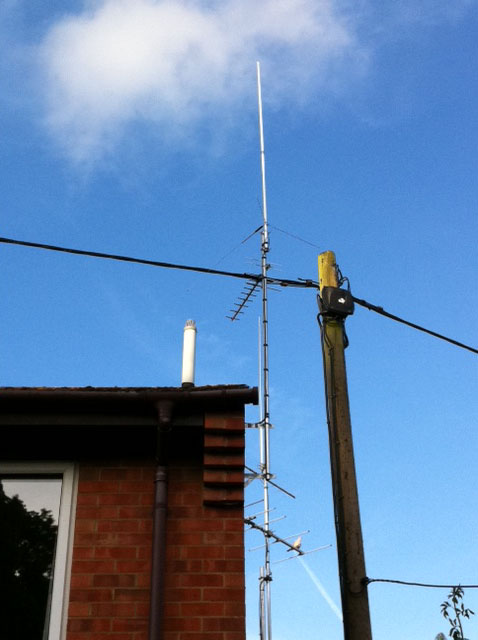 Over the last week, I’ve seen people reporting Es on 50MHz in particular, but by the time I’ve got home, I haven’t had the energy or time to go and have a look on the bands! But this weekend has been good.I’m particularly pleased to have had the opportunity to play as about 2 weeks ago, I got a Diamond V-2000 vertical for 50/144/433MHz up in the air. I’ll do a separate post about how it’s been working out on 144 and 433MHz and how I’ve been using it. However, this weekend was the first time I’ve used it in anger on 50MHz.Yesterday afternoon I noticed that 50MHz seemed to be open when I checked using the 70MHz vertical (which works on 50MHz too!). I swapped the V2000 over onto the FT-847. Over a period of a couple of hours I worked around 40 stations on 50MHz – exclusively on CW. Best DX was LZ1UQ in KN12 at around 2107km. Worked some new squares and some nice QSOs in general – and was pleased to note that the new vertical gave me a 2 or 3 S-point advantage over the old vertical (which has worked the US and Puerto Rico on 50MHz!).During the afternoon, I kept checking 70MHz and was very pleased to find LA6MV (JO59) calling CQ and even more pleased when he was able to hear me! I also heard LA4ANA (JO59) but didn’t work him. Heard the LA5VHF beacon from JO48 coming through as well. A little later, I also worked 9A2SB on 70MHz. This was using the 70MHz vertical.There was some Es around this morning (22nd May) as well, mostly the same stations that I worked yesterday on 50MHz, but made a couple of ‘new’ QSOs.The V2000 is noticeably quieter than the compromise antenna I’ve used before. It would be nice to have beams up for 50 and 70MHz, but given that my main interest is Es on those bands then the ‘vertical approach’ works out well. Incidentally, the picture makes the vertical look as if it’s very close to the power line… it’s not!

Tim Kirby, G4VXE, is a regular contributor to AmateurRadio.com and writes from Oxfordshire, England. Contact him at [email protected].
Sporadic E on 50 and 70MHz
Over the last week, I’ve seen people reporting Es on 50MHz in particular, but by the time I’ve got home, I haven’t had the energy or time to go and have a look on the bands! But this weekend has been good.I’m particularly pleased to have had the opportunity to play as about 2 weeks ago, I got a Diamond V-2000 vertical for 50/144/433MHz up in the air. I’ll do a separate post about how it’s been working out on 144 and 433MHz and how I’ve been using it. However, this weekend was the first time I’ve used it in anger on 50MHz.Yesterday afternoon I noticed that 50MHz seemed to be open when I checked using the 70MHz vertical (which works on 50MHz too!). I swapped the V2000 over onto the FT-847. Over a period of a couple of hours I worked around 40 stations on 50MHz – exclusively on CW. Best DX was LZ1UQ in KN12 at around 2107km. Worked some new squares and some nice QSOs in general – and was pleased to note that the new vertical gave me a 2 or 3 S-point advantage over the old vertical (which has worked the US and Puerto Rico on 50MHz!).During the afternoon, I kept checking 70MHz and was very pleased to find LA6MV (JO59) calling CQ and even more pleased when he was able to hear me! I also heard LA4ANA (JO59) but didn’t work him. Heard the LA5VHF beacon from JO48 coming through as well. A little later, I also worked 9A2SB on 70MHz. This was using the 70MHz vertical.There was some Es around this morning (22nd May) as well, mostly the same stations that I worked yesterday on 50MHz, but made a couple of ‘new’ QSOs.The V2000 is noticeably quieter than the compromise antenna I’ve used before. It would be nice to have beams up for 50 and 70MHz, but given that my main interest is Es on those bands then the ‘vertical approach’ works out well. Incidentally, the picture makes the vertical look as if it’s very close to the power line… it’s not!
Tim Kirby, G4VXE, is a regular contributor to AmateurRadio.com and writes from Oxfordshire, England. Contact him at [email protected].
The Rupture 2011
Thanks to some quick thinking on Sarah’s part, I was able to attend the Hamvention (Saturday only—the day that the sewer backed-up and “ruptured”…spewing nasty water down through the fleamarket) for the first time in a few years. This is a recap from my perspective.
- Attendance was down. The fleamarket was shrinking.
- There were a lot of lookers but few buyers in the fleamarket. Predict that the fleamarket will shrink further next year.
- There were still good deals to be found in the fleamarket—I picked up some LMR-600, a WA2AAU 2304-MHz amp (unmodified 1900-MHz PCS amp), a Rohn 45G rotator plate, some 20-GHz rated SMA relays, and some miscellaneous parts. And, I passed on a few good deals as well.
- I saw a lot more young people than I remember from past years. Or maybe I’m just getting older and the population of hams younger than me is growing on account of that.
- Hamabouts (and their drivers) were not so obnoxious as prior years.
- Hara Arena may be a dump (K1LT told me the story—don’t know if it’s true—that during the Rolling Stones first U.S. tour, they had been booked at Hara, but refused to play when they saw the facility); but, it’s perfect for the riff-raff who show up for the Hamvention.
- In the end, the Hamvention (like ham radio itself) is about the people you know and meet. I had fabulous eyeball QSOs with guys from almost all phases of my ham career (except the early years from 1993-2000). The VHF/UHF weak signal crowd is a pretty amazing bunch of hams. I had a great time getting to know some of them in the fleamarket.
Ethan Miller, K8GU, is a regular contributor to AmateurRadio.com and writes from Maryland, USA. Contact him at [email protected].
No charge
The object on the left of the picture is a 9600mAh external back-up battery for MP3 players, mobile phones and other 5V devices. I bought it on eBay (where else?) for $55.99 including shipping with the intention of using it to power my HTC Touch Pro smartphone so that it could run all day using GPS and internet connected apps like the APRS client APRSISCE. Previously I hadn’t been able to make much use of such applications when out and about on foot because if I was away from a power supply for more than a couple of hours the end result was a dead battery and a phone that could not be used to make phone calls.

The product arrived after a couple of weeks wait rather poorly packed in a jiffy bag containing the battery back-up unit, a 5V USB charger with the usual two-prong fold-out mains plug, and a USB cable with coiled lead and interchangeable power connectors. There was no box, nor any instructions so I had to figure things out for myself. Clearly the DC IN port was meant for the charger, the USB socket marked DC OUT was the output and the slide switch next to it turned the output on and off. The four LEDs showed the battery state for a few seconds after the POWER button to the left of it was pressed, and the charging state whilst charging.
There was no cable for charging, so I presumed I had to use the USB lead supplied for output and one of the interchangeable connectors. One of them did fit, though not very well, poorly enough in fact that it pulled out of the socket if there was the slightest tension on the coiled cable.
I started charging the power pack. Two lights lit up on the charger and the charge status showed two of the four LEDs lit. Next time I looked at it all the LEDs were off. Surely the batteries could not have charged so quickly? Eventually I measured the output from the charger and found it was about 0.25V. Clearly the charger had failed.
I sent an email to the eBay seller who was anxious enough about the possibility of receiving negative feedback to immediately promise to send a replacement. Meanwhile I found that the charger which came with my HTC phone had a USB output so I charged the battery pack with that. With hindsight that was rather foolhardy and I ought to have attempted to measure the current drawn first, but I got away with it. Though rated at 1.0 Amp output the HTC charger got fairly warm, but eventually the charge level reached full and the charger got cold again so I assume that it finished charging and the pack was fully charged.
The charger that came with the battery pack is labelled as an “MP3 Power Supply” and the output is rated at: DC 200mA +/- 30mA. Even the 1500mAh battery in the little Baofeng radio takes more than 400mA on charge. I managed to find a cable that would enable me to charge the battery pack from my workbench variable metered power supply and even when the battery pack is only half discharged it is drawing a current of almost 800mA. So I think the charger supplied simply blew up! I’m just hoping the eBay seller will provide a more adequate charger as a replacement. Sure, I can use my existing HTC phone charger. It may even be more convenient than having separate chargers for the two devices. But it would be nice to receive what one paid for.
By the way, if you ever wondered what is inside those Chinese wall-wart power supplies, how come they are so light, here are some pictures of the innards of the one that failed.
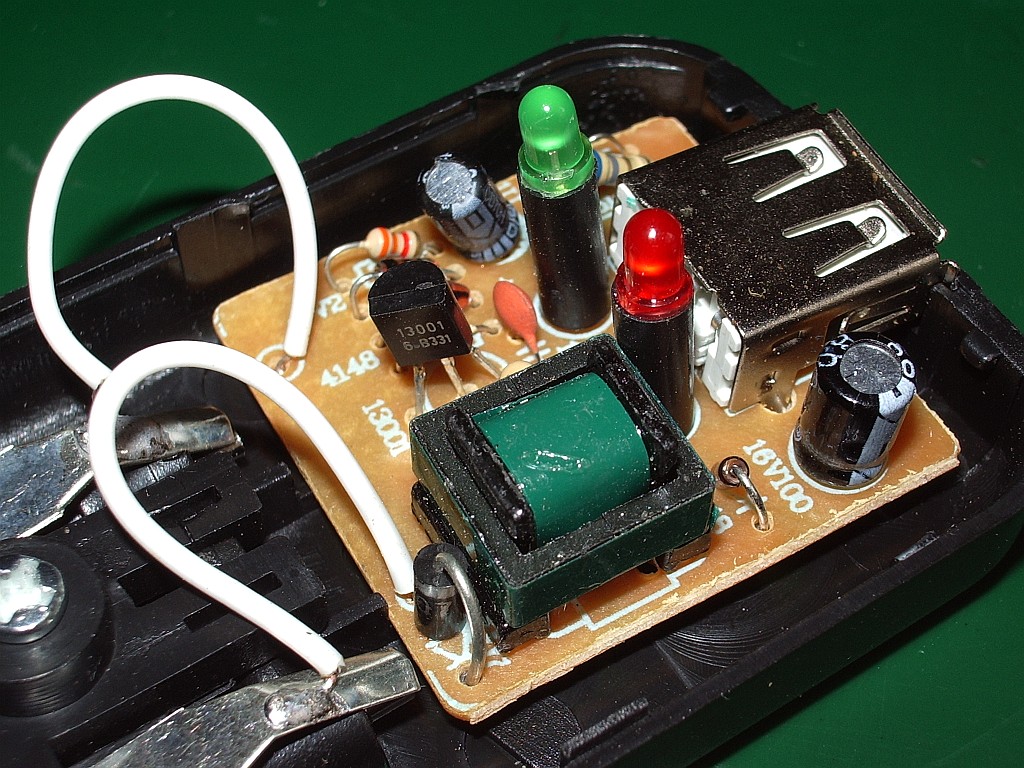
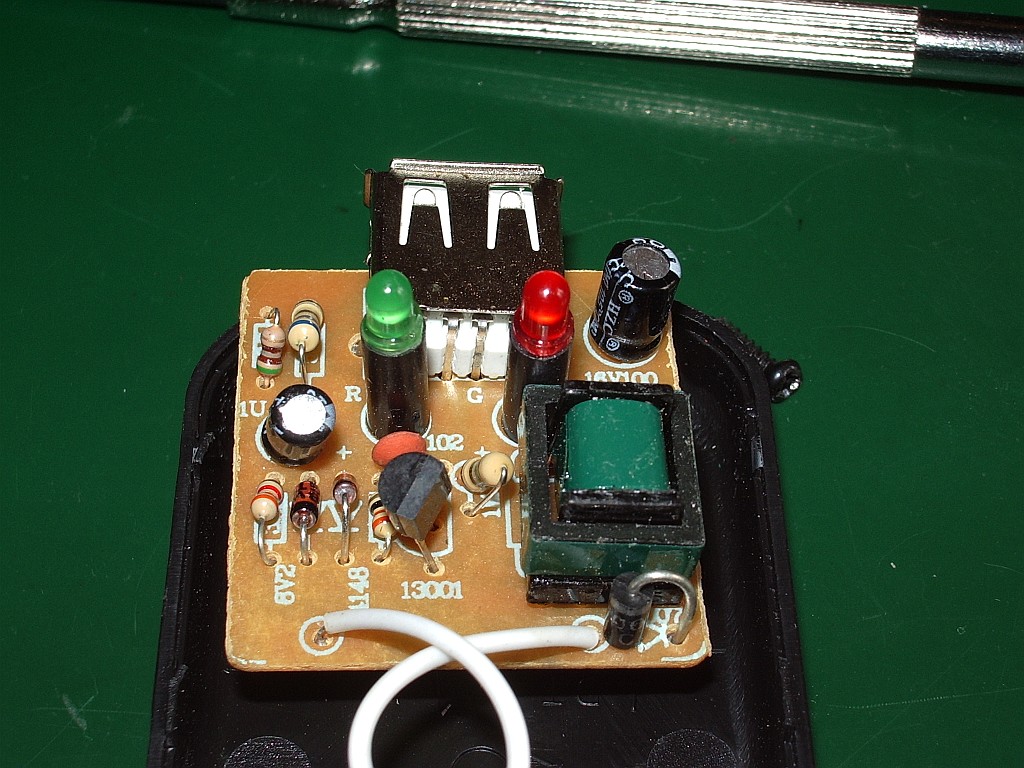

The answer, it seems, is not much. Call me old fashioned, but I’m just a bit apprehensive about having just a handful of components between my equipment and the 230V mains!
It’s a pity that this problem has occurred because I would have liked to have been able to recommend this battery pack to other users of APRSISCE on Windows Mobile. My initial test on the workbench suggest that this battery pack is more than capable of powering the phone with GPS and mobile data connection active during a day’s outing. The battery pack itself seems well made and I would guess that it is probably supplied by its Chinese manufacturer in a nice box with instructions and an adequately rated charger. The trouble in this case would seem to be caused by a cheapskate eBay seller.

Julian Moss, G4ILO, is a regular contributor to AmateurRadio.com and writes from Cumbria, England. Contact him at [email protected].
No charge
The object on the left of the picture is a 9600mAh external back-up battery for MP3 players, mobile phones and other 5V devices. I bought it on eBay (where else?) for $55.99 including shipping with the intention of using it to power my HTC Touch Pro smartphone so that it could run all day using GPS and internet connected apps like the APRS client APRSISCE. Previously I hadn’t been able to make much use of such applications when out and about on foot because if I was away from a power supply for more than a couple of hours the end result was a dead battery and a phone that could not be used to make phone calls.
The product arrived after a couple of weeks wait rather poorly packed in a jiffy bag containing the battery back-up unit, a 5V USB charger with the usual two-prong fold-out mains plug, and a USB cable with coiled lead and interchangeable power connectors. There was no box, nor any instructions so I had to figure things out for myself. Clearly the DC IN port was meant for the charger, the USB socket marked DC OUT was the output and the slide switch next to it turned the output on and off. The four LEDs showed the battery state for a few seconds after the POWER button to the left of it was pressed, and the charging state whilst charging.
There was no cable for charging, so I presumed I had to use the USB lead supplied for output and one of the interchangeable connectors. One of them did fit, though not very well, poorly enough in fact that it pulled out of the socket if there was the slightest tension on the coiled cable.
I started charging the power pack. Two lights lit up on the charger and the charge status showed two of the four LEDs lit. Next time I looked at it all the LEDs were off. Surely the batteries could not have charged so quickly? Eventually I measured the output from the charger and found it was about 0.25V. Clearly the charger had failed.
I sent an email to the eBay seller who was anxious enough about the possibility of receiving negative feedback to immediately promise to send a replacement. Meanwhile I found that the charger which came with my HTC phone had a USB output so I charged the battery pack with that. With hindsight that was rather foolhardy and I ought to have attempted to measure the current drawn first, but I got away with it. Though rated at 1.0 Amp output the HTC charger got fairly warm, but eventually the charge level reached full and the charger got cold again so I assume that it finished charging and the pack was fully charged.
The charger that came with the battery pack is labelled as an “MP3 Power Supply” and the output is rated at: DC 200mA +/- 30mA. Even the 1500mAh battery in the little Baofeng radio takes more than 400mA on charge. I managed to find a cable that would enable me to charge the battery pack from my workbench variable metered power supply and even when the battery pack is only half discharged it is drawing a current of almost 800mA. So I think the charger supplied simply blew up! I’m just hoping the eBay seller will provide a more adequate charger as a replacement. Sure, I can use my existing HTC phone charger. It may even be more convenient than having separate chargers for the two devices. But it would be nice to receive what one paid for.
By the way, if you ever wondered what is inside those Chinese wall-wart power supplies, how come they are so light, here are some pictures of the innards of the one that failed.
The answer, it seems, is not much. Call me old fashioned, but I’m just a bit apprehensive about having just a handful of components between my equipment and the 230V mains!
It’s a pity that this problem has occurred because I would have liked to have been able to recommend this battery pack to other users of APRSISCE on Windows Mobile. My initial test on the workbench suggest that this battery pack is more than capable of powering the phone with GPS and mobile data connection active during a day’s outing. The battery pack itself seems well made and I would guess that it is probably supplied by its Chinese manufacturer in a nice box with instructions and an adequately rated charger. The trouble in this case would seem to be caused by a cheapskate eBay seller.
Julian Moss, G4ILO, is a regular contributor to AmateurRadio.com and writes from Cumbria, England. Contact him at [email protected].
ICQ Podcast S04 E11 – Worldwide Contributors News (22 May 2011)
Series Four Episode Eleven of the ICQ Podcast has been released. News Stories include :-
- Apply to the National Amateur Radio Emergency Database
- International Lighthouse and Lightship Weekend Coming Soon
- CASHOTA Ireland and UK Activity Weekend
- Education Through Amateur Satellites
- New US 4-metre Band Beacon
- PSAs for Amateur Radio
- Thousands of Ham Radio Equipment Stolen
- Walton Fire Rescue Gets Ham Radios
- Enigma Exhibition
- New Radio Listening Guides for Asia-Pacific
- New 40m beacon tests NAVIS conditions
- Decline in UK Amateur Exam Passes
- Saluting Those That Serve
Your feedback, Steve Nichols (G0KYA) Propogation Report, Down Under Report from Ed Durrant (VK2ARE) and a North American HamBrief from Chris Mathieu (N7ICE)
Colin Butler, M6BOY, is the host of the ICQ Podcast, a weekly radio show about Amateur Radio. Contact him at [email protected].
ICQ Podcast S04 E11 – Worldwide Contributors News (22 May 2011)
Series Four Episode Eleven of the ICQ Podcast has been released. News Stories include :-
- Apply to the National Amateur Radio Emergency Database
- International Lighthouse and Lightship Weekend Coming Soon
- CASHOTA Ireland and UK Activity Weekend
- Education Through Amateur Satellites
- New US 4-metre Band Beacon
- PSAs for Amateur Radio
- Thousands of Ham Radio Equipment Stolen
- Walton Fire Rescue Gets Ham Radios
- Enigma Exhibition
- New Radio Listening Guides for Asia-Pacific
- New 40m beacon tests NAVIS conditions
- Decline in UK Amateur Exam Passes
- Saluting Those That Serve
Your feedback, Steve Nichols (G0KYA) Propogation Report, Down Under Report from Ed Durrant (VK2ARE) and a North American HamBrief from Chris Mathieu (N7ICE)
Colin Butler, M6BOY, is the host of the ICQ Podcast, a weekly radio show about Amateur Radio. Contact him at [email protected].
 Ham Radio Deluxe |
 W5SWL Electronics |
 Ham Radio Prep |
 KB3IFH QSL Cards  Hip Ham Shirts  HamRadioAuctions HamRadioAuctions Reliance Antennas Reliance Antennas Enigma Shop Enigma Shop |  morseDX  Ni4L Antennas  R&L Electronics R&L Electronics antennas.us antennas.us QRV QRV |
- Matt W1MST, Managing Editor
