 |
 Ham Nation 22
 19 October 2011 | by
Hosts: Bob Heil (K9EID), Gordon West (WB6NOA), and George Thomas (W5JDX)
Bob’s trip to the National UK Hamfest and Lincoln Cathedral, 54th JOTA 2011, and a solder fumes extractor.
Guests: Doug Cook (KD5PDN) and Carey McCachern (KF5IXE)
Download or subscribe to this show at http://twit.tv/hn.
We invite you to read, add to, and amend our show notes at wiki.twit.tv.
Thanks to Joe Walsh who wrote and plays the Ham Nation theme.
Thanks to Cachefly for the bandwidth for this show.
http://dts.podtrac.com/redirect.mp4/twit.cachefly.net/video/hn/hn0022/hn0022_h264b_864x480_500.mp4
http://dts.podtrac.com/redirect.mp4/twit.cachefly.net/video/hn/hn0022/hn0022_h264b_640x368_256.mp4
http://www.podtrac.com/pts/redirect.mp3/twit.cachefly.net/hn0022.mp3
Dr. Bob Heil, K9EID, is the founder of Heil Sound and host of TWiT.tv's Ham Nation which streams live each Tuesday at 6:00pm PT (9:00pm ET) at http://live.twit.tv. Contact him at [email protected].
QRN a year ago…T32C? not here…
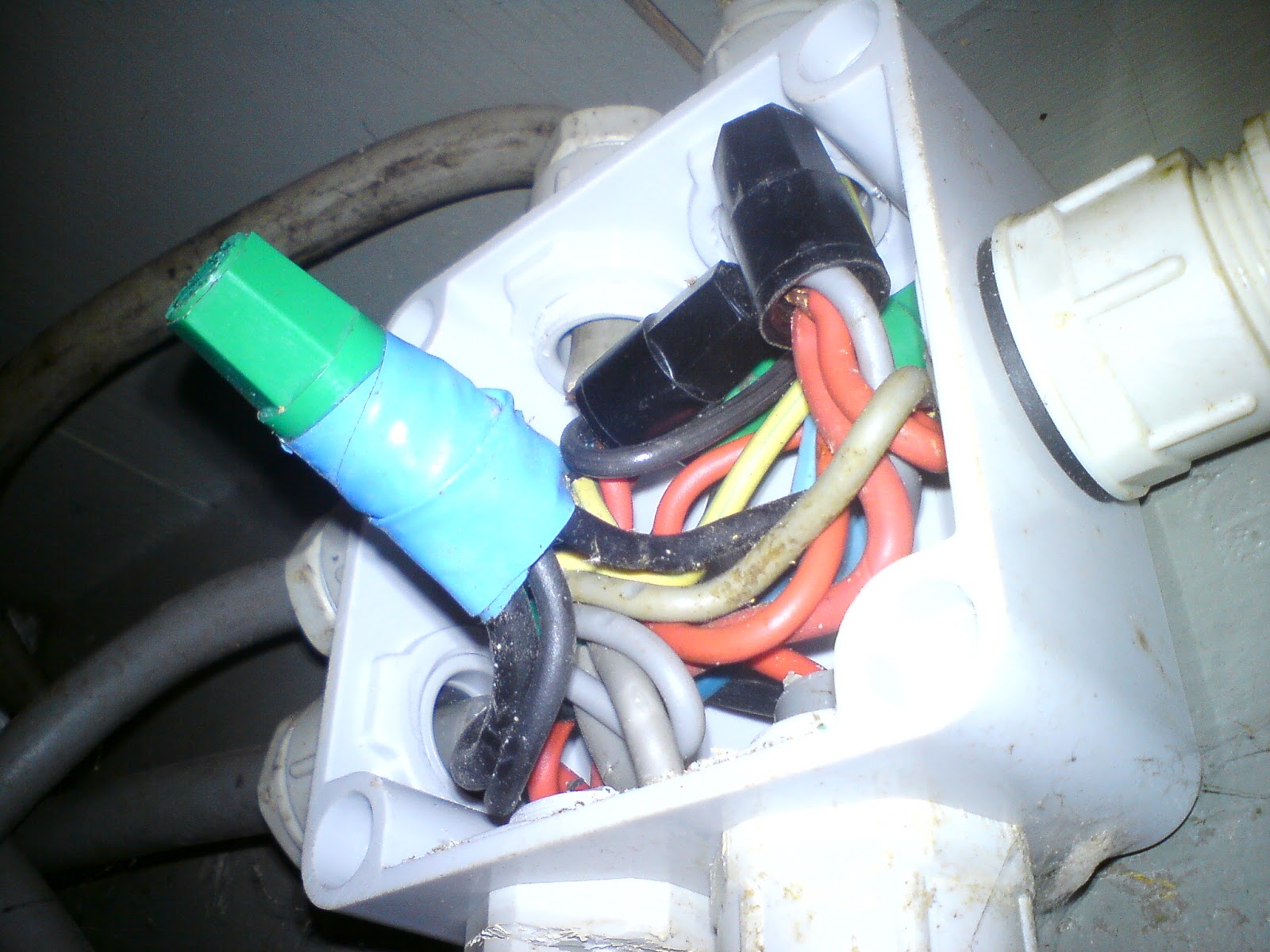
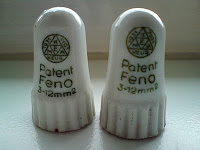
Remember that QRN I had a year ago. It suddenly disappeared after a few days. I never found the real troublemaker but suspected it came from the house or from nearby. Now since we are going to build a new bathroom next week, I had to rebuilt part of the house and wiring I came accross some mains wiring above the ceiling that probabely caused this QRN. When I opened a junction box and touched the wire nuts lights went on and off. Actually all connections were very poor made and the last owner of the house apparently tried to stick everything together with tape, besides that he probabely was colorblind. I removed all nuts and made new connections with new connectors no nuts again. As a result of that blindness wires were switched, I noticed a short circuit at first after reconnecting I thought. But in the end it seems the safety earth was used as switch wire, so it became a life wire as well. That was a 2 weeks ago, in the mean time I did a rebuilt and rewiring, that junction box has been removed together with a lot of other junk. I already made some preparations for the new radioshack and of course for the new bathroom and finally switched over to the new wiring last Sunday. Unfortenately I think other wiring in the house is just the same mess as this, although that wiring is from a earlier date I think around 1950-1960. I already removed parts of it when building the baby room last year and found some nice porcelain wire nuts at one of the old junction boxes. They are originally from the first mains wiring when the house was built, great to find such items in our 1935 house. Well despite a lack of time I’ve tried some radio as well looking for T32C in the evening, reading other blogs it seems they are easy to work from North America. But although I saw a lot of dx cluster spots on 20, 15, 12 and 10m from stations in Europe and even from the Netherlands I could not even hear a whisper from them. So I guess to work them you really need a beam from this part of the world, or I’m just not lucky? If time allows I’ll try again next few days till the DXpedition is over.
Bas, PE4BAS, is a regular contributor to AmateurRadio.com and writes from Groningen, Netherlands. Contact him at [email protected].
Handiham World for 19 October 2011
Welcome to Handiham World.
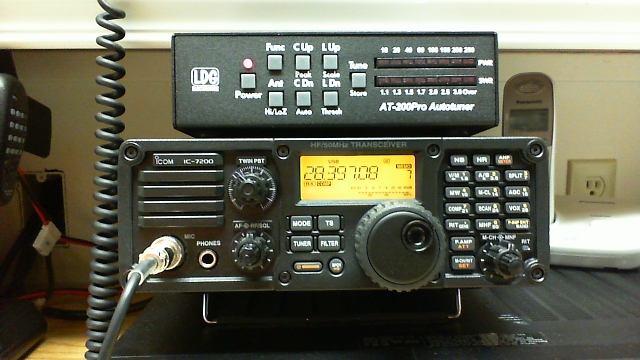
- Novice and Technician licensees may operate using single side band: between 28.300 and 28.500 MHz using up to 200 W.
- When the 10 m band is open as it is lately, high power is not necessary. Excellent contacts can be made even using very low power. Many stations will be using 100 W or less – in fact, I will amend that to say that MOST stations will be using 100 W or less. High power is simply not necessary, which puts Novice and Technician operators on a level playing field with other operators. Experience tells those of us who have been in amateur radio a long time that we are not going to bother turning on a linear amplifier to operate on the 10 m band.
- 10 m antennas are small and almost everyone can fit this kind of antenna into the space that they have available. Using our formula for a half wave dipole, 468 divided by 28.4 MHz (the middle of the Novice/Tech segment of the band), yields an antenna about 16 and one half feet long. That is a pretty manageable length! You would make each leg of a dipole 8 feet three inches long and feed it with 50 Ohm coax, such as RG-8X low loss if you must use a thinner cable or the standard size cable RG-213. Keep the coax run as short as possible in any case, because loss in the feedline increases as the operating frequency goes up. There is more loss per foot on 10 meters than on 75 meters. A quarter wave vertical antenna for 10 m is only a little over 8 feet high. If you want to construct a quad or Yagi antenna for 10 m, they are much smaller than 20 m directional antennas and thus have a smaller turning radius. A 10 m antenna is lighter and easier to handle, too.
- For our Technician Class Handiham members who have already purchased HF transceivers but who have never used them for anything but receiving, this is your chance to press that push to talk switch and enjoy operating SSB. Yes, I know that you have CW privileges on other HF bands, but this is PHONE, and conditions are so good that it is easy to make contacts. Of course Morse code contacts are easier and better during good band conditions, but the window for SSB is open right now.
- RF safety is a concern if you use indoor antennas on the 10 m band. Be sure to perform an RF safety evaluation and locate the antenna as far away from people as possible. Adjust the power level to achieve compliance. For more on how to do this, visit the ARRL website and check the TIS, or Technical Information Service. If you are a Technician Class operator who is studying for General, there is information both in your study materials and in the question pool.
 | It would be nice to extend these excellent Handiham resources to more members at a time when band conditions are so good. |
| Getting a taste of HF operation would surely make Techs excited about earning their General tickets. |
| The 10 m band is also a good place to learn more about HF operation because it is not as crowded and competitive a place to operate as bands like 20 m. |
| We are now hosting the software downloads for the W4MQ software. |
| The HF remote base stations do require some additional technical expertise to operate. Novice and Technician operators are usually the least experienced and need the most help getting things to work. Lyle, K0LR, and I don’t do much, if any, “tech support” on these stations because we simply do not have the time and most of the problems are located at the user’s own home computer anyway. My biggest fear is opening up a floodgate of emails and phone calls about how to install the software and get it to work. This is not an insignificant problem. An installation requires opening a free Skype account, getting audio settings correct, and then installing the W4MQ software and a required W4MQ update. After that, the software must be configured with the IP address of each station and the log in credentials. This is not a problem for a computer user with at least an intermediate skill level, but it is quite challenging for a user who does not know their way around a computer. |
| Technician users may get frustrated by operating practices on HF, which are much different than what they have experienced on FM repeaters. Of course you have to learn somewhere, but are we really ready to do a “sink or swim” exercise here? Maybe we need some training ahead of time, but we have none set up. |
[email protected]
Handiham Manager

Pat Tice, WA0TDA, is the manager of HANDI-HAM and a regular contributor to AmateurRadio.com. Contact him at [email protected].
The thrill of the hunt
I often think of amateur radio as if I’m on a hunting or fishing expedition. I know for younger and perhaps less patient individuals, this thrill may or may not be shared with the same excitement and enthusiasm. When I walk down the fourteen steps into my basement ham shack or drive up to the mountains for a few hours of portable, outdoors operating….I don’t always know what is waiting for me on the bands.
I’m reminded of an interview I did with Duncan McLaughlin, KU0DM back in episodes 28 and episode 29. I hope you’ll listen to those two older episodes. Duncan and I discussed the possible challenges of attracting todays youth into the hobby. The youth of today are growing up in the information age where everything is instant and immediate. Want to talk to someone on the other side of town? They probably have a cell phone. Want to talk to someone on the other side of the planet? They probably have Skype. Duncan believed the possible ice breaker was in the area of Radio Sport or contesting. Duncan described his philosophy as the difference between fishing and fish sticks. One can take a fishing pole to your favorite lake, pond or stream and may or may not catch a fish….but chances are the local grocery store will be well stocked in boxes of fish sticks. This simple, yet truly interesting way of looking at things is really what amateur radio is all about and in my opinion what makes it special.
While amateur radio requires a license in order to operate on the bands, what amateur radio gives us in return is a license to learn. What we learn might fall into the category of electronics, antennas, solar propagation etc. and these are all important. However, just as important, I enjoy learning more about the geography of those new DX stations I’ve been working.
Of course, when I see a station call sign such as a M0, ON or JA I do recognize them being geographically located in England, Belgium and Japan respectively. However, I’ve also really enjoyed learning more about the callsigns I’m not as familiar with such as UT, CT3 and my most recent DX entity of T32.
Yes our planet is large, but our wonderful hobby of amateur radio can make it much smaller if we let it. As most have probably heard, band conditions are getting better and better. Even for US technician class operators, the 10 meter band has been booming with lots of excellent DX opportunities. Go to your ham shacks and get those rigs fired up and enjoy the thrill of the hunt.
Until next time….
73 de KD0BIK (Jerry)
Jerry Taylor, KD0BIK, is a regular contributor to AmateurRadio.com and writes from Colorado, USA. He is the host of the Practical Amateur Radio Podcast. Contact him at [email protected].
LHS Show Notes #067
Introduction:
- It’s a ramblin’ show tonight.
Announcements:
- Texoma Hamarama 2011 will be October 21-22, 2011 at the Ardmore Convention Center, 2401 North Rockford Road, Ardmore, OK. Richard hopes to be there.
- If you attended the Huntsville, AL hamfest in August, let us know if you think it would be a good venue for LHS.
- Thanks, as always, to Gamma Leonis for the theme music.
Topics:
- Russ talks about the antenna feedline window passthrough panel he bought at Dayton. He’s also hoping to get a radio in his truck. Richard describes the window passthrough methods he’s used in the past, with foam pipe insulation or air conditioning insulation foam.
- Richard talks about the lack of ham radio activity in his area (Kaufman County, TX): no club, no RACES group, no ARES, etc. He called his ARRL SEC (Section Emergency Coordinator), Walt, KG5SOO, and learned that the local groups weren’t happy with the current ARES manager. The SEC says paperwork is being processed and the new emergency coordinator of Kaufman County, TX is Richard, KB5JBV! Currently, there are just two ARES members, Richard and the Emergency Manager, so if you’re in Kaufman County, TX, get in touch with Richard! (Congratulations, Richard!)
- There’s a new podcast out there: Richard’s Radio Adventures. Look for it on the Resonant Frequency feed.
- In Linux-related news, Russ lets us know that kernel.org was hacked a few weeks ago. Because the code was in an encrypted git repository, it was safe, but they moved it to github, anyway.
- Russ also says there was a brief period that GNU Emacs was packaged and distributed with a binary blob in it, which violates the GPL. It’s since been fixed.
- A security hole in SSL/TLS has been reported.
- Simon, HB9DRV, has sold the rights to his Ham Radio Deluxe software. Our hosts discuss the possible ramifications.
- Richard wanders into a discussion of Arch Linux. It seems there was an issue with Arch not being free (as in speech). However, Parabola GNU/Linux is Arch, but free of all the entanglements.
- If anyone out there is an Emergency Coordinator or Assistant Emergency Coordinator, send an email to Richard about how your EC is going. Richard is looking for advice on how to best set up the ARES EC organization in his county.
- Russ admits that his other podcast, QSK Netcast, has stalled, mostly due to a lack of his available time.
- Since some parts of the LHS website are now subscription only, Russ began researching SSL certificates. He found a couple of places that issue inexpensive or free browser-compatible certificates: CheapSSLs , under $10 per year, and StartSSL will issue personal certificates for free.
- Russ and Richard discuss their love for the Sansa Clips. Russ likes DoggCatcher for listening to podcasts on his Android phone.
- Richard talks about his secret antenna project. He’s now in an area with Codes, Covenents and Restrictions (CCRs) which preclude outside antennas. Years ago, he bought an Arrow dual-band J-pole antenna, and used it for packet and other stuff. Using some military surplus olive-drab fiberglass tent poles, he strapped the J-pole to the top of the tent poles and the poles to the top of an 8′ fence. He assures the neighbors that it’s just a flower pot hanger.

Contact Info:
- Contact Richard at [email protected], Russ at [email protected], or both at the same time at [email protected].
- Listen to the live stream every other Tuesday at 8:00pm Central time. Check the LHS web site for dates.
- Leave us a voice mail at 1-909-LHS-SHOW (1-909-547-7469), or record an introduction to the podcast.
- Sign up for the LHS mailing list.
- Sign up for the MAGNetcon mailing list.
- LHS merchandise is available at the Merch link on Web site. Check out the Badgerwear or buy one of the other LHS-branded items at PrintFection.com/lhs or Cafe Press. Thanks!
- Thanks to Dave from Gamma Leonis for the theme music.
Russ Woodman, K5TUX, co-hosts the Linux in the Ham Shack podcast which is available for download in both MP3 and OGG audio format. Contact him at [email protected].
Radio Tirana
Propagation on 10m today is as good as I can remember. I made a few nice contacts using SSB including Japan, India and Bahrain. I heard several Chinese stations as well but have yet to work one.
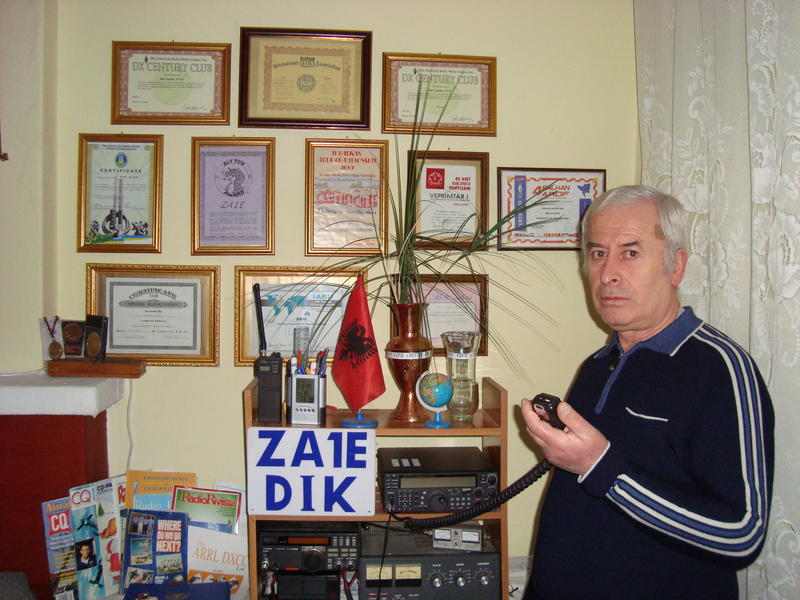
Not really DX but a new country for me was Albania, in the shape of Dik, ZA1E. Decades ago as a teenaged short wave listener I remember hearing Radio Tirana, a huge signal on 7.065MHz, smack in the middle of the 40m phone band. I wonder whether anyone ever listened to its broadcasts? They were pure anti-capitalist tirades read by a woman announcer who sounded like she had a beard and no sense of humour. They actually used phrases like “capitalist running dogs” if I remember correctly. At least Radio Moscow tried to make life on the other side of the iron curtain sound attractive.
I don’t think there was any ham radio activity in communist Albania and there still aren’t all that many hams there now so I was pleased to work Dik for a new one.

Julian Moss, G4ILO, is a regular contributor to AmateurRadio.com and writes from Cumbria, England. Contact him at [email protected].
A Look Back at the Heathkit AT-1 [VIDEO]
With Heathkit‘s recent announcement of them getting back into the kit building business, and Amateur Radio is one of those category of kits coming back, I thought that this little video look at Heathkit’s first Amateur Radio kit would be a good way to celebrate that.I know they announced it some time ago, but better late then never right? Well, this video wasn’t uploaded till about a month ago and I just found it. But You’re the first ones I’m sharing it with. My only complaint about this video, is the presenter is very mono tone. He doesn’t sound enthused with anything. But all in all, it’s still a nice video. Hope you enjoy!
73.
Rich also writes a Tech blog and posts stories every Tuesday and Thursday on Q103, Albany’s #1 Rock Station website, as well as Amateur Radio stories every Monday thru Friday on AmiZed Studios and hosts a podcast called The Kim & Rich Show with his fiance’ Kim Dunne.
Rich Gattie, KB2MOB, is a regular contributor to AmateurRadio.com and writes from New York, USA. Contact him at [email protected].
 Ham Radio Deluxe |
 W5SWL Electronics |
 Ham Radio Prep |
 KB3IFH QSL Cards  Hip Ham Shirts  HamRadioAuctions HamRadioAuctions Reliance Antennas Reliance Antennas Enigma Shop Enigma Shop |  morseDX  Ni4L Antennas  R&L Electronics R&L Electronics antennas.us antennas.us QRV QRV |
- Matt W1MST, Managing Editor
