 |
 Tis the season….for 70MHz FM!
 11 December 2011 | by
 Not much from me during the last few weeks. A busy time at work, with three new websites going live in the space of two weeks – so most brain cycles going towards that during the lunchtimes that I normally use for a bit of blogging!
Over the last couple of weeks, I’ve been turning the 70MHz FM rig on a bit more often. I realise that 70MHz FM is a winter band/mode for me. During the summer, the antenna is usually connected up to the CW/SSB rig in case of a bit of Sporadic E. With the chances of that significantly lower now, I’ve been enjoying some more local contacts.
Good to work Geoff, G3NPI near Buckingham last weekend and to hear how active the band is on FM now. Clearly the combination of PMR kit and imports from the Chinese market has been a popular one. Keen to work a few people using the new Wouxun Dual Band handhelds when it’s warm enough to go out portable again.
This morning I had a nice QSO with Ted G3XUX/P near Winchester. I worked Ted through the MB7FM parrot, but we were also able to exchange signals directly, which is nice over the 40-45 mile or so path between us. Listening to MB7FM whilst I was doing a few jobs showed several other stations active, so if you have 70MHz FM, it’s well worth switching the gear on and making some calls as you can.

Tim Kirby, G4VXE, is a regular contributor to AmateurRadio.com and writes from Oxfordshire, England. Contact him at [email protected].
ARRL 10m contest part 1

First of all thanks all that replied to my previous post and send me best wishes and health I really appreciated it. Actually I don’t feel that ill when I keep quiet. But from what I heard Pneumonia can be very treacherous and I don’t want to end at the hospital. So, I heated up the radioshack and did a few hours of DX on 10m today in the ARRL contest. So far not too bad. I worked VK as new DXCC on 10m SSB (VK6IR had the honor). And of course lot’s of other nice DXCCs. Actually when the USA/Canada came in strong the band was that crowded I decided to call CQ up in the 28.800-815 to take some rest and was surprised that there actually was response. I was even spotted on the DX cluster! Band closed very early but I already stopped at 15:15 UTC as my little QRP Anneli was awake from her afternoon nappy and I was very tired as well. Tomorrow is a new day with new chances.
Bas, PE4BAS, is a regular contributor to AmateurRadio.com and writes from Groningen, Netherlands. Contact him at [email protected].
December 2011 Giveaway Winners
First of all, I want to take a moment to thank the sponsor of this giveaway, Ed from Import Communications. This isn’t the first time Ed has sponsored a giveaway and I hope everyone appreciates his generosity and ham radio spirit. Anyone who has worked with Ed will tell you that he’s a great guy and full of integrity. It’s a real pleasure to work with him to help him give away great stuff!
If you’re one of the 16 winners, please send me an e-mail (editor at amateurradio dot com) with your name, callsign, and mailing address and I will compile the list and forward it to Ed.
Without further delay, here are the winners of our December 2011 giveaway: Read the rest of this post
Matt Thomas, W1MST, is the managing editor of AmateurRadio.com. Contact him at [email protected].
Ham Nation 28

Hosts: Bob Heil (K9EID), Gordon West (WB6NOA), and George Thomas (W5JDX)
Wayne (W6IRD) and Sharon (K6IRD) Spring show off their shack and workshop, manufacturer’s day at the Atlanta Ham Radio Outlet, surface mount soldering, and more.
Guest: Gary Pearce (KN4AQ)
Download or subscribe to this show at http://twit.tv/hn.
We invite you to read, add to, and amend our show notes at wiki.twit.tv.
Thanks to Joe Walsh who wrote and plays the Ham Nation theme.
Thanks to Cachefly for the bandwidth for this show.
http://dts.podtrac.com/redirect.mp4/twit.cachefly.net/video/hn/hn0028/hn0028_h264b_864x480_500.mp4
http://dts.podtrac.com/redirect.mp4/twit.cachefly.net/video/hn/hn0028/hn0028_h264b_640x368_256.mp4
http://www.podtrac.com/pts/redirect.mp3/twit.cachefly.net/hn0028.mp3
Dr. Bob Heil, K9EID, is the founder of Heil Sound and host of TWiT.tv's Ham Nation which streams live each Tuesday at 6:00pm PT (9:00pm ET) at http://live.twit.tv. Contact him at [email protected].
1200+ Mile Contact on 10 Meter Handheld
As Hams, we know the phrase “A little goes a long way” is very true in Ham Radio. Anyone working QRP can tell you that. There are people that have worked the other side of the planet with just a few watts. I worked Japan once with 5 watts with Grayline. But check out this video of 1200+ mile contact on a handheld.I didn’t even know they made 10 meter handhelds. But we can see one here in the video. As well as making that contact with just 5 watts of power. Not too shabby at all. I say keep this video handy for recruitment. This shows how radio can work.
73.
Rich Gattie, KB2MOB, is a regular contributor to AmateurRadio.com and writes from New York, USA. Contact him at [email protected].
Handiham World for 07 December 2011
Welcome to Handiham World!

[email protected]
Handiham Manager

Pat Tice, WA0TDA, is the manager of HANDI-HAM and a regular contributor to AmateurRadio.com. Contact him at [email protected].
Todays activity
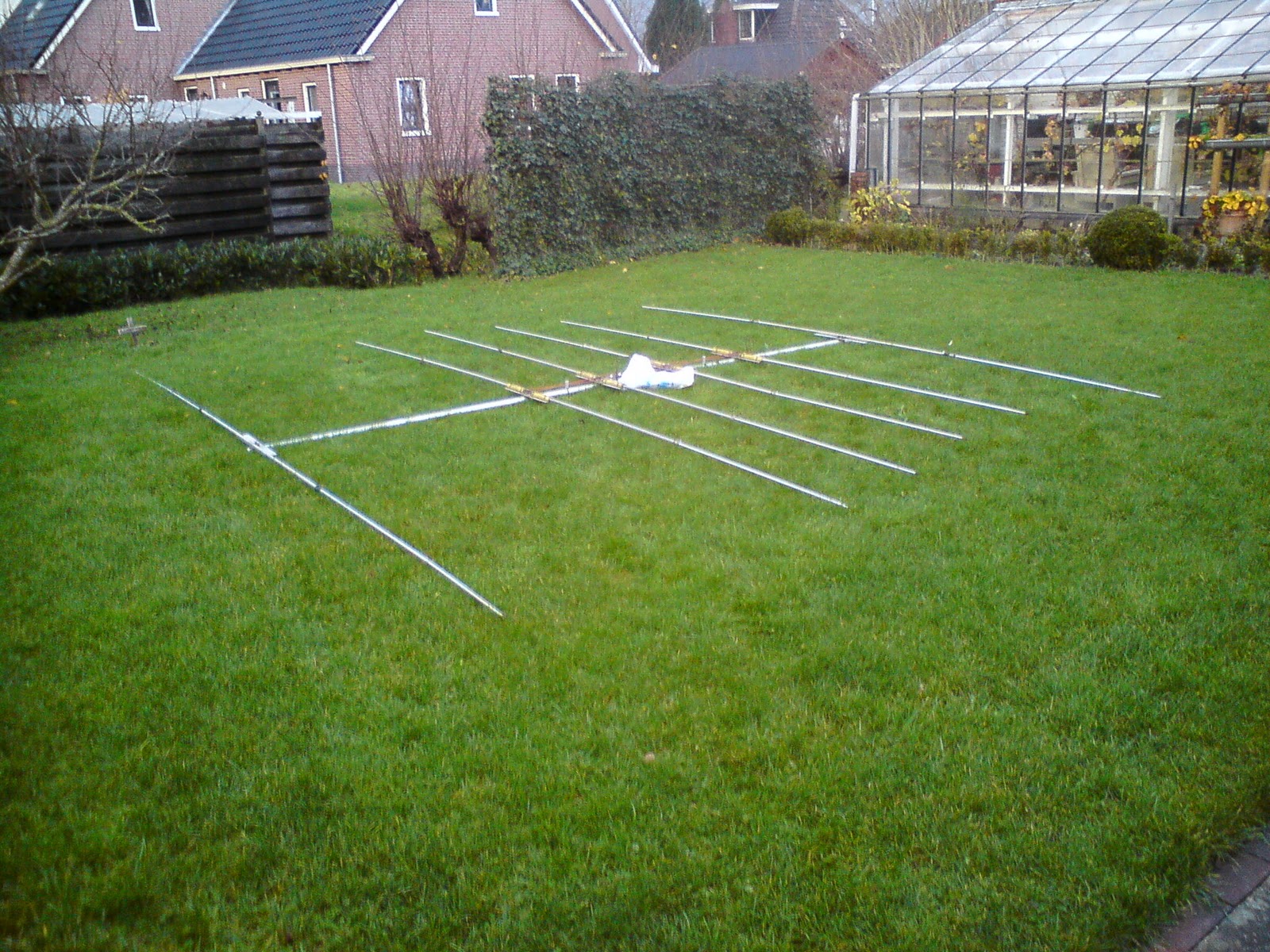
I actually put the old 6 elem. logcell together for the upcoming 10m contest. Never expected that I would actually use it again and forgot to mark bits and pieces. But overall putting it together went smooth. Unfortenately just when I was ready to get it up the small mast it there was a very heavy storm arriving with thunder, lightning, rain and hail. So, I hope to continue Saturday morning if weather and time alows. Some specs of this antenna. 4 elements fed, gain about 11dBi, front to back >30dB, front to side approx 25dB. Unfortenately I don’t have a heigh mast to put it on. So the specs will not be that good as on say 12 Mtr height. I think even on a low mast it will outperform my multiband vertical on 10m. We will see this weekend.
Bas, PE4BAS, is a regular contributor to AmateurRadio.com and writes from Groningen, Netherlands. Contact him at [email protected].
 Ham Radio Deluxe |
 W5SWL Electronics |
 Ham Radio Prep |
 KB3IFH QSL Cards  Hip Ham Shirts  HamRadioAuctions HamRadioAuctions Reliance Antennas Reliance Antennas Enigma Shop Enigma Shop |  morseDX  Ni4L Antennas  R&L Electronics R&L Electronics antennas.us antennas.us QRV QRV |
- Matt W1MST, Managing Editor
