 |
 RTTY Roundup Fun
 9 January 2012 | by
 If you were within earshot of an HF transceiver this past weekend and especially tuned through the data portion of the bands, I’m sure you heard the tell-tale signs of a digital contest taking place. You really can’t miss it. The quick bursts of RTTY signals going back and forth is music to some and a nightmare to others.
Between a heavily packed weekend consisting of an amateur radio breakfast on Saturday morning, taking the Christmas tree down along with the lights outside before the snow started falling and a few other misc. items on the “honey do” list, I managed to find about 3 hours of spare time to spend in the shack working the ARRL RTTY Roundup. During this time I logged 79 RTTY QSO’s mostly on 20 and 40 meters.
I must admit I don’t work a lot of RTTY contacts outside of contests and while I started getting serious about contesting in 2011 and actually submitted logs for several, digital contesting isn’t something I get overly excited about. This fact may sound odd, especially coming from someone who spends 75% or more of his on-air time working the digital modes.
In any event, as the title states….I did have fun and this is what matters to me. I’ve mapped out many of the contests (mostly State QSO Parties) I hope to operate in throughout 2012. I hope to make 2012 and my involvement in the radio sport aspect of the hobby a memorable one. So between many of the upcoming on-air contests and my SOTA involvement. You’ll be certain to hear CQ CQ CQ from KD0BIK throughout the year.
Until next time…
73 de KD0BIK
Jerry Taylor, KD0BIK, is a regular contributor to AmateurRadio.com and writes from Colorado, USA. He is the host of the Practical Amateur Radio Podcast. Contact him at [email protected].
Ham Radio As Seen on TV Quiz on the ARRL’s Website
My morning surf has brought me to the ARRL’s website with a nice little quiz about Ham Radio that has been on TV and in Hollywood. The recent news in the community about Tim Allen’s new TV show giving Ham Radio some “props”, has inspired this.

Do Not Adjust Your Set..
This quiz is thanks in part to the websites of AD7DB, KB9MWR and AC6V for the references. As I went through looking at it, some were pretty easy, and some were a little tougher. I didn’t check my answers to see how I did. I wanted to see what you posted for your results first. I know this is a pop quiz, but hey, my teacher did it to me in school, and I’m sure he/she did it to you too. So take the quiz and let us know how you did.
73.
[adrotate group=”2″]
Rich Gattie, KB2MOB, is a regular contributor to AmateurRadio.com and writes from New York, USA. Contact him at [email protected].
More Operatics
Paul PC4T may be taking a rest from blogging but he is still active. Yesterday evening I spotted him using the new Opera mode.
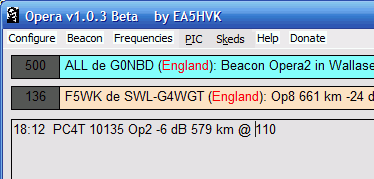
Andy K3UK has prepared a quick guide to using Opera which some may find helpful. As he points out, Opera is not a QSO mode. The only information that is sent in a beacon transmission is your callsign. Other information that is displayed in the software such as QTH, distance and bearing is sent over the internet back-channel by connected software clients.
Eldon WA0UWH has taken the Parallax Propeller code from my previous post and tried it out on the air. He has already received several reception reports.
Before I can do the same I will need to build a small PA / LPF with an output in the range 200mW to 500mW. Hopefully I can find a suitable circuit that uses standard components such as 2N3904 or 2N2222 which I have in my parts box. Suggestions welcome.

Julian Moss, G4ILO, is a regular contributor to AmateurRadio.com and writes from Cumbria, England. Contact him at [email protected].
Buy the Drop-In Charger
I’d like to pass along a tip that has taken me about 25 years of ham radio experience to figure out. I’ve owned many different models of handheld FM transceivers through the years and have always just used the standard “wall wart” charger to charge the batteries. 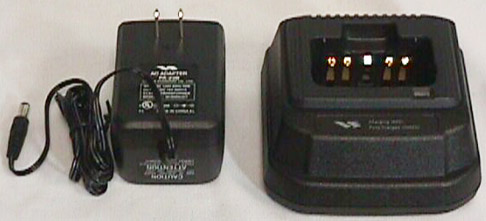
Recently, I decided to “splurge” and get desktop chargers for the pair of FT-60′s that inhabit our two-ham household. I never realized how handy the drop-in style charger could be until I had one…the HT is always sitting there ready to go. Most of these drop-in chargers are rapid chargers that sense the battery condition — charging them quickly but also dropping back to a trickle charge once they are full.
Since then, I’ve made it a point to always pick up a desktop charger with a new HT. Yes, it does cost $60 to 75 extra but it is well worth the convenience.
73, Bob K0NR
Bob Witte, KØNR, is a regular contributor to AmateurRadio.com and writes from Colorado, USA. Contact him at [email protected].
Down but not out!!!!!!


Mike Weir, VE9KK, is a regular contributor to AmateurRadio.com and writes from New Brunswick, Canada. Contact him at [email protected].
7-bit Barker Code and Matched Filter
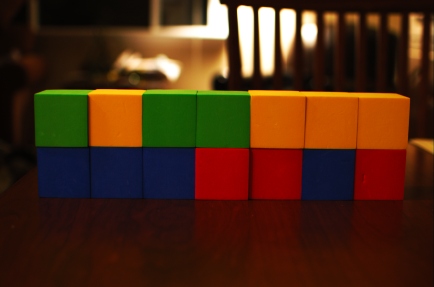
Teaching Evan the basics of radar signal processing with this baby-block 7-bit Barker code and its matched filter.
Ethan Miller, K8GU, is a regular contributor to AmateurRadio.com and writes from Maryland, USA. Contact him at [email protected].
Horizontal loop repaired & contesting 2012

The horizontal loop has been repaired. I lost 3 glasfiber mast parts, they are broken and cannot be repaired. I can probabely use them to make a tripod or so, I’ve seen that somewhere on the web. The loop is now at 7m and I got a better feeling about the mechanical strength this time. I decided not to repair the beam, it is too heavy for a aluminium mast and although I didn’t test it I don’t think it gives me an advantage in for example working DX in any direction at low height compared to my vertical. I really need to get my versa tower up again so I can install a beam for 10m like it should be. Well, in January it’s time to have my agenda and that of my XYL filled with the upcoming contests I really want to take part in. This is my list:
- 11/12-Feb:PACC contest
- 24/25-Mar: CQWW WPX SSB contest
- 1/2-Sept: Fieldday contest
- 29/30-Sept: CQWW RTTY contest
- 27/28-Okt: CQWW SSB contest
- 11-Nov: PA-beker contest
- 18-Nov: Friese 11 steden contest
- 24/25-Nov: CQWW CW contest
- 4-Dec: 10m RTTY contest
- 10/11-Dec: ARRL 10m contest
Bas, PE4BAS, is a regular contributor to AmateurRadio.com and writes from Groningen, Netherlands. Contact him at [email protected].
 Ham Radio Deluxe |
 W5SWL Electronics |
 Ham Radio Prep |
 KB3IFH QSL Cards  Hip Ham Shirts  HamRadioAuctions HamRadioAuctions Reliance Antennas Reliance Antennas Enigma Shop Enigma Shop |  morseDX  Ni4L Antennas  R&L Electronics R&L Electronics antennas.us antennas.us QRV QRV |
- Matt W1MST, Managing Editor
