 |
 Say Goodbye to the BNC
 24 February 2012 | by
 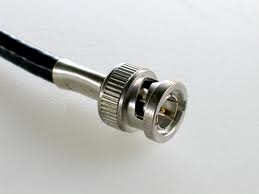 There was a discussion on Google+ the other day about how a particular handheld transceiver has an SMA connector, instead of the venerable BNC connector. I noted that many of the newer HTs are going with SMA, presumably because of the smaller size. In fact, I started thinking about it…I didn’t think you can buy an HT anymore with a BNC.
I took at look at some of the ham radio dealer websites to see if I was right. These radios all have SMA connectors: Alinco DJ-175T, DJ-C7T, DJ-G7T, DJ-G29T, DJ-V17T, DJ-V57T; ICOM IC-80AD, IC-92AD, IC-T70A, ID-31A: Kenwood TH-D72A, TH-F6A, TH-K20A; Yaesu FT-60R, FT-250R, FT-270R, VX-3R, VX-6R, VX-7R, VX-8R. The Wouxun radios are SMA but with a male connector on the radio (opposite gender compared to the other manufacturers…a topic for another day.)
But I did find three ICOM models that have BNC connectors: IC-V80, IC-V82, IC-U82.
The trend line is clear…the BNC is on the way out for amateur radio handheld transceivers.
Do I care?
Well, yes, I do.
I have a collection of extended length antennas that are much more efficient than the standard dummy load rubber duck. These are great for portable operation, mountaintopping, etc. I have not found very many of these antennas available with SMA connectors. Even if they were available, I am not sure I’d want to attach them to an SMA connector on an HT. For example, a 1/2-wave 2-Meter antenna is about 38 inches long — I am skeptical that an SMA provides enough mechanical strength to support it. Even with a BNC, I have always been very careful to not put too much strain on the connector.
We will have to see where this leads but it seems that the BNC will fade away for amateur use. Most mobile and base rigs use PL-259 and/or N connectors so HTs have been the main application for a BNC.
Goodbye, BNC, I am going to miss you.
73, Bob K0NR
Update on Feb 24: I’ve had several people suggest to me “just use a BNC-to-SMA adapter.” This certainly takes care of making a good electrical connection but mechanically they are generally weak.
Bob Witte, KØNR, is a regular contributor to AmateurRadio.com and writes from Colorado, USA. Contact him at [email protected].
Morsemail and LCWO.net
The time has come when I can’t put off learning Morse code any longer, With an interest in vintage amateur radio and the impending restoration of a Heathkit AT-1 I’m going to need to use CW sooner or later.
So I have been checking out resources for learning Morse code and stumbled across two that really intrigue me.
The first is LCWO.net, a web browser based Morse code learning tool that is usable on any internet connected computer. It is available free of charge and there is no software to install. LCWO.net keeps track of where you are in your lessons and where you need to concentrate your effort. The Koch method is the primary tool available but they also offer code group practice, callsign and plain text training modes along with a service to convert text to Morse MP3s for download and use offline.
Once you are on the way to CW proficiency and want to communicate with others you can always fire up a rig and get on the air … What if you don’t have a rig or need a confidence boost before ‘going live’?
Well, you could always send Morsemail using the Morsemail client from http://brasspounder.com:8873/.
Morsemail is, “A simple text format that encodes mark and space times to make it possible to send Morse coded messages via email” but a recently added feature allows for QSOs using a internet repeater hosted on brasspounder.com. You can use a mouse or actual key wired to the mouse or joystick buttons to send CW which can be emailed or sent through the repeater live.
Now I just have to carve out the time to sit down and use these resources!
Owen Morgan, KF5CZO, is a regular contributor to AmateurRadio.com and writes from Texas, USA. Contact him at [email protected].
Ham Nation 36

Hosts: Bob Heil (K9EID), Gordon West (WB6NOA), George Thomas (W5JDX), and Leo Laporte (W6TWT)
Ham Tails, building a homopolar motor, white noise explained, and more.
Guests: Amanda Alden (K1DDN) and Cheryl Lasek (K9BIK)
Download or subscribe to this show at http://twit.tv/hn.
We invite you to read, add to, and amend our show notes at wiki.twit.tv.
Thanks to Joe Walsh who wrote and plays the Ham Nation theme.
Thanks to Cachefly for the bandwidth for this show.
http://dts.podtrac.com/redirect.mp4/twit.cachefly.net/video/hn/hn0036/hn0036_h264b_864x480_500.mp4
http://dts.podtrac.com/redirect.mp4/twit.cachefly.net/video/hn/hn0036/hn0036_h264b_640x368_256.mp4
http://www.podtrac.com/pts/redirect.mp3/twit.cachefly.net/hn0036.mp3
Dr. Bob Heil, K9EID, is the founder of Heil Sound and host of TWiT.tv's Ham Nation which streams live each Tuesday at 6:00pm PT (9:00pm ET) at http://live.twit.tv. Contact him at [email protected].
The opposite of the other night
It’s like going from the ridiculous to the sublime.
Tonight a real treat was in store. My CQ on 40 Meters (yes, 40 Meters was quiet tonight, yay!) was answered by K4BXN, Crit who hails from Hendersonville, NC . Crit and I have QSO’ed a few times before; and as always, listening to his fist is pure pleasure. Crit was using an old bug with his K3, and if he hadn’t mentioned it, you would have thought for sure that he was using an electronic keyer and paddles.
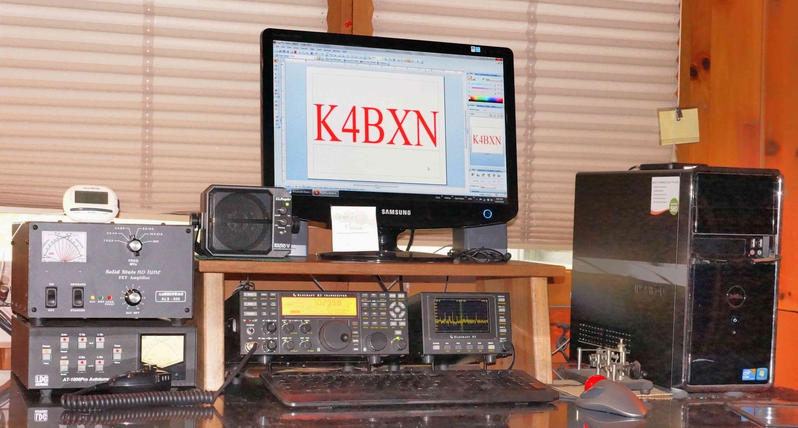
Perfect spacing and perfect sending – period. Music to my ears. And sending Morse like that with a bug is no mean feat. From my own experience, I know it’s so easy to develop a swing. Not that a swing is necessarily a bad thing – but it can be if you’re not careful. It takes a lot of practice and a lot of skill to be as good as K4BXN. But boy, is it a treat to listen to!
72 de Larry W2LJ
QRP – When you care to send the very least!

Larry Makoski, W2LJ, is a regular contributor to AmateurRadio.com and writes from New Jersey, USA. Contact him at [email protected].
nanoKeyer
I’m pleased to report that Oscar, DJ0MY, has created an open source hardware initiative and kit offering called nanoKeyer. This project utilizes my Arduino keyer code and the Arduino Nano, a smaller cousin of the Arduino Uno, but fully software compatible.

Oscar is offering the kit at a reasonable price, but also provides Gerber files on his site for those wishing to reproduce the hardware design. The hardware kit features three memory buttons, a speed potentiometer, a PS2 Keyboard connector, and optically-isolated keying and PTT lines. The Arduino Nano module that mates with the nanoKeyer supports the K3NG keyer code command line interface and K1EL Winkey emulation via the built-in USB port. The Arduino Nano is programmed via a typical Windows, Mac, or Linux machine with free software.

This kit offers commercial / contest quality performance and features in an open source package that can easily be assembled by beginners or customized by advanced experimenters.


Handiham World for 22 February 2012
Welcome to Handiham World.
Have you ever belonged to a book club or discussion group? Sometimes public libraries or local bookstores sponsor such activities. The idea is for everyone in the group to read a book and then come together to discuss it in a relaxed and cordial atmosphere.
I started thinking about this idea of having a discussion group while I was listening to one of our Handiham nets. As luck would have it, I was also browsing through the e-mail from my local radio club and one of the messages in my inbox had a list of potential radio club program topics. The idea of the book club discussion group and the message about radio club program topics started to mix and merge in my brain. Perhaps it would be a good idea to have a discussion topic on a regular basis during one of our nets, but make it related to a particular article about ham radio, much the same as a book club would discuss a particular novel. This would be different than the trivia net in that a roundtable discussion would be essential to make it work. The norm in many amateur radio nets is for the net control station to run the net in what I will call a “linear” format. In other words, the net control station opens the net with a preamble and then follows a pattern of calling for stations to check in with traffic or announcements or just to get on the station list for that day. Once checked into the net, a station operator need not feel obligated to check in a second or third time. In fact, if the net is run in this kind of linear format, the expectation is that permission will be requested from the net control station to “re-check” because it is assumed that once a station has checked in the net will move on to each new check-in in succession.
Of course this kind of linear format will not work in a discussion net. By its very nature, a discussion requires back-and-forth dialogue as ideas and concepts are presented and then commented on by the group. If you were sitting in a room at the library or bookstore with other book club members who have read the book of the month that has been assigned for discussion, how would you prefer that the chairs be arranged? My preference would be to put them in a circle rather than in a long line along one wall of the room. Having chairs in a circle promotes discussion, and what we want in a discussion group is the interchange of ideas. It is not an accident that this kind of ham radio net is called a “roundtable”. Sitting around the table encourages discussion.
So a linear format net is different in that very fundamental way from a roundtable discussion net. If you tune across the amateur radio bands and really get familiar with what is going on, you will soon learn that groups of friends meet at various places on the bands around the same time every day or evening. Most of these groups are really just informal roundtable sessions and did not have a specific net mission or formal structure. There are, however, some discussion nets that are more formal in that the discussion topic may be limited by the group to a particular interest area such as religion or aviation. What I would propose is something just a little bit different in that the discussion topic would change depending on which article is the assigned reading of the week. The net would discuss that particular article and then participants would be able to weigh in with their opinions and suggestions as well as comment on the opinions and suggestions of the other net participants.
One consideration with this kind of a targeted roundtable discussion group is that it tends to work best when there are not too many people trying to participate. If the group gets too large, this will hamper discussion because by the time everybody gets a chance to say their piece the allotted time for the net may be nearly over. As with any kind of a net, everything will run more smoothly when all of the participants know and follow the rules. Some of the basics are:
1. Always yield to the net control station.
2. Stick to the topic.
3. Be sure you have read the article before joining the net as a participant. If you have not read the article, don’t bother checking in but feel free to listen.
4. Try to be as brief and concise with your thoughts as possible so that everyone will have a chance to talk.
5. Play nice! Be respectful of everyone’s opinions.
6. Take notes during the discussion so that you can comment on what has been said while you are waiting for your turn.
7. Maintain good engineering standards for your station and computer system so that your audio is clean and easy to understand.
8. Be on time for the net. Remember, the discussion will begin right away so the expectation is that only the stations who are on time will participate in the discussion. Latecomers are welcome to listen to the discussion.
9. As the discussion comes to a close, be ready with ideas for the next week’s topic. At that point, the net control station can ask for other ideas and see if there is any consensus about the next article to be discussed. Sometimes this will not be possible to nail down, given the limited time available on the air. In that case, an e-mail message with a topic can be sent to the discussion group participants.
10. If the net decides that the topic will be carried over into the next week or that some other follow-up needs to be done, put that in your notes to make sure that you don’t forget to do whatever “homework” needs to be done before the next net session.
You can see that this is a whole different ballgame than the nets that we are used to. Most typical linear format nets require virtually no preparation and ask very little of participants. A discussion roundtable net requires a different level of commitment but at the same time can be a more rewarding experience because of the depth of your participation. Roundtable discussion nets are not for everyone, and no one need apologize if they are just not willing to commit the time and effort that this kind of net requires. I have often found myself tuning around the bands and listening to different roundtable conversations without actually participating. There is nothing wrong with doing a lot of listening – after all, you can learn a lot by listening. If a topic area seems beyond your understanding, listening is probably your best choice until you learn enough to join in. On the other hand, some people are adventuresome and jump off the highest diving board as soon as they get to the pool. “Learn by doing”, they will say, and they might just be right!
This morning I enjoyed listening on 3.930 MHz. “The Morning Group” is up here in Minnesota, but I’m sure you have similar groups located near you. Round table discussions need not be formalized with a net control station, nor do they have to have a scheduled topic. You may find this kind of informal net to be an interesting way to stay in touch with a small group of friends who share some of your interests. On the other hand, a directed net with a net control station can give a formal roundtable with a designated topic for the day just enough direction to make for a lively and fun conversation.
For Handiham World, I’m…
Patrick Tice, [email protected]
Handiham Manager

Pat Tice, WA0TDA, is the manager of HANDI-HAM and a regular contributor to AmateurRadio.com. Contact him at [email protected].
PARP 52–QSL Bureau and more
 The Practical Amateur Radio Podcast episode 52 is now available for download or stream. You can subscribe via iTunes, Zune or stream directly from MyAmateurRadio.com Want to stream on the go from your favorite smart phone device? You can do that as well via our mobile site.
In this new episode, I discuss the QSL Bureau Service as it relates to US Amateur’s. The bureau service is a great, inexpensive method of QSL’ing those DX contacts. Our featured website segment discusses the Ham Nation podcast/netcast as well as Mike Baxter, WA0XTT.
Please visit MyAmateurRadio.com to listen or download this new episode.
Thank you for listening and thank you for sharing your knowledge with others. The Practical Amateur Radio Podcast, creating Elmers one podcast at a time.
Until next time…
73 de KD0BIK
Jerry Taylor, KD0BIK, is a regular contributor to AmateurRadio.com and writes from Colorado, USA. He is the host of the Practical Amateur Radio Podcast. Contact him at [email protected].
 Ham Radio Deluxe |
 W5SWL Electronics |
 Ham Radio Prep |
 KB3IFH QSL Cards  Hip Ham Shirts  HamRadioAuctions HamRadioAuctions Reliance Antennas Reliance Antennas Enigma Shop Enigma Shop |  morseDX  Ni4L Antennas  R&L Electronics R&L Electronics antennas.us antennas.us QRV QRV |
- Matt W1MST, Managing Editor
